
Last updated: February 25, 2026
Key Takeaways
• Standard pumping schedule: Every 3-5 years for most households with proper maintenance
• Household size matters: 1-2 people can wait 6-12 years, while 5+ people need pumping every 1-3 years
• Tank capacity affects timing: Larger tanks (1,500+ gallons) extend intervals, smaller tanks require more frequent service
• Warning signs include: Slow drains, bad odors, standing water in yard, or sewage backups
• Professional inspection: Schedule every 1-3 years to monitor solids levels and determine actual pumping needs
• Usage patterns impact frequency: Heavy garbage disposal use, large families, or frequent guests require more frequent pumping
• Cost planning: Budget $300-600 per pumping service, with frequency directly affecting long-term expenses
Quick Answer
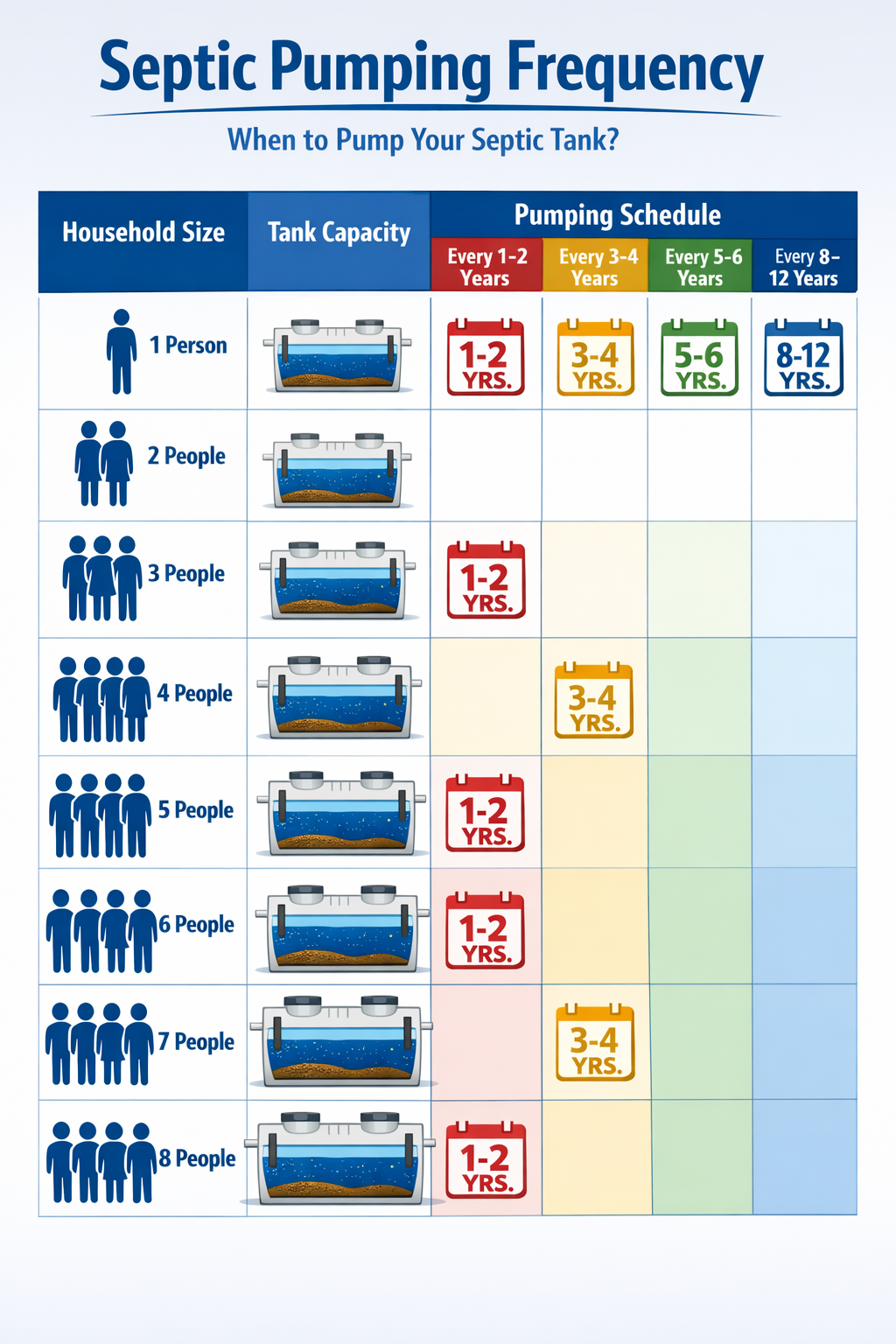
Most septic tanks need pumping every 3-5 years, but the exact timing depends on your household size, tank capacity, and usage patterns. A 1,000-gallon tank serving a family of four typically requires pumping every 3-4 years, while smaller households can extend this to 6-8 years. The key is monitoring solids accumulation rather than following a rigid schedule.
What Determines How Often Does a Septic Tank Need to Be Pumped?
Your septic tank’s pumping frequency depends on several interconnected factors that work together to determine waste accumulation rates. Understanding these variables helps you create a realistic maintenance schedule rather than guessing based on generic timelines.
Primary factors affecting pumping frequency:
• Household size – More people generate more wastewater and solid waste
• Tank capacity – Larger tanks hold more waste before reaching critical levels
• Water usage patterns – High-volume activities like frequent laundry increase system load
• Waste disposal habits – Garbage disposal use significantly increases solid waste accumulation
• Home occupancy changes – Guests, seasonal residents, or growing families alter usage patterns
The general rule is that septic tanks should be pumped when solids reach 20-30% of the tank’s total capacity. This threshold ensures proper separation of waste layers and prevents solids from entering your drain field, which can cause expensive system failures.
Choose professional inspection every 1-3 years if you want accurate monitoring rather than guessing when pumping becomes necessary. Many homeowners wait too long because they follow outdated advice or ignore usage changes that affect their system’s performance.
How Often Does a Septic Tank Need to Be Pumped Based on Household Size?
Household size directly correlates with waste generation, making it the most reliable predictor for pumping schedules. Each additional person increases both water usage and solid waste production, requiring more frequent maintenance to prevent system overload.
Pumping frequency by household size (1,000-gallon tank):
| Household Size | Pumping Frequency | Notes |
|---|---|---|
| 1 person | Every 9-12 years | Minimal waste generation |
| 2 people | Every 4-5 years | Standard usage patterns |
| 3-4 people | Every 2-4 years | Most common family size |
| 5 people | Every 2-3 years | Increased system load |
| 6+ people | Every 1-2 years | Heavy usage requires frequent service |
For families of four, pumping every 3-4 years typically maintains optimal system performance. However, this assumes normal water usage and minimal garbage disposal use. Households with teenagers, frequent guests, or high water consumption may need service every 2-3 years instead.
Common mistake: Using outdated household size calculations. If your family has grown, teenagers have moved back home, or you regularly host guests, adjust your pumping schedule accordingly. Many system failures occur because homeowners don’t account for occupancy changes that happened gradually over time.
Does Tank Size Affect How Often Does a Septic Tank Need to Be Pumped?
Tank capacity significantly impacts pumping frequency because larger tanks provide more storage space for solid waste accumulation. This extra capacity extends the time between pumping services, making larger tanks more cost-effective for busy households.
Pumping adjustments by tank size:
• 500-750 gallon tanks: Require pumping 1-2 times more frequently than standard schedules
• 1,000 gallon tanks: Follow standard pumping guidelines (baseline for most calculations)
• 1,250 gallon tanks: Extend intervals by 6-12 months compared to 1,000-gallon systems
• 1,500+ gallon tanks: Extend intervals by 1-2 years for equivalent household sizes
A family of four with a 1,500-gallon tank might pump every 4-5 years instead of every 3-4 years with a standard 1,000-gallon system. This difference can save hundreds of dollars annually while maintaining proper system function.
Tank size becomes especially important for larger households. A family of six with a 1,500-gallon tank might pump every 2-3 years, while the same family with a 1,000-gallon tank would need annual service to prevent problems.
Choose larger tanks if you’re building new construction, have a large family, or plan to expand your household. The upfront investment pays for itself through reduced pumping frequency and lower long-term maintenance costs.
FYI: Some links may be affiliate links, which means I may earn a small commission at no extra cost to you.
For homeowners looking to maintain their septic systems between pumpings, Septifix tablets can help break down waste and reduce odors with simple monthly treatments. While not a replacement for regular pumping, these tablets support healthy bacterial activity that keeps your system functioning efficiently.
What Are the Warning Signs Your Septic Tank Needs Pumping?
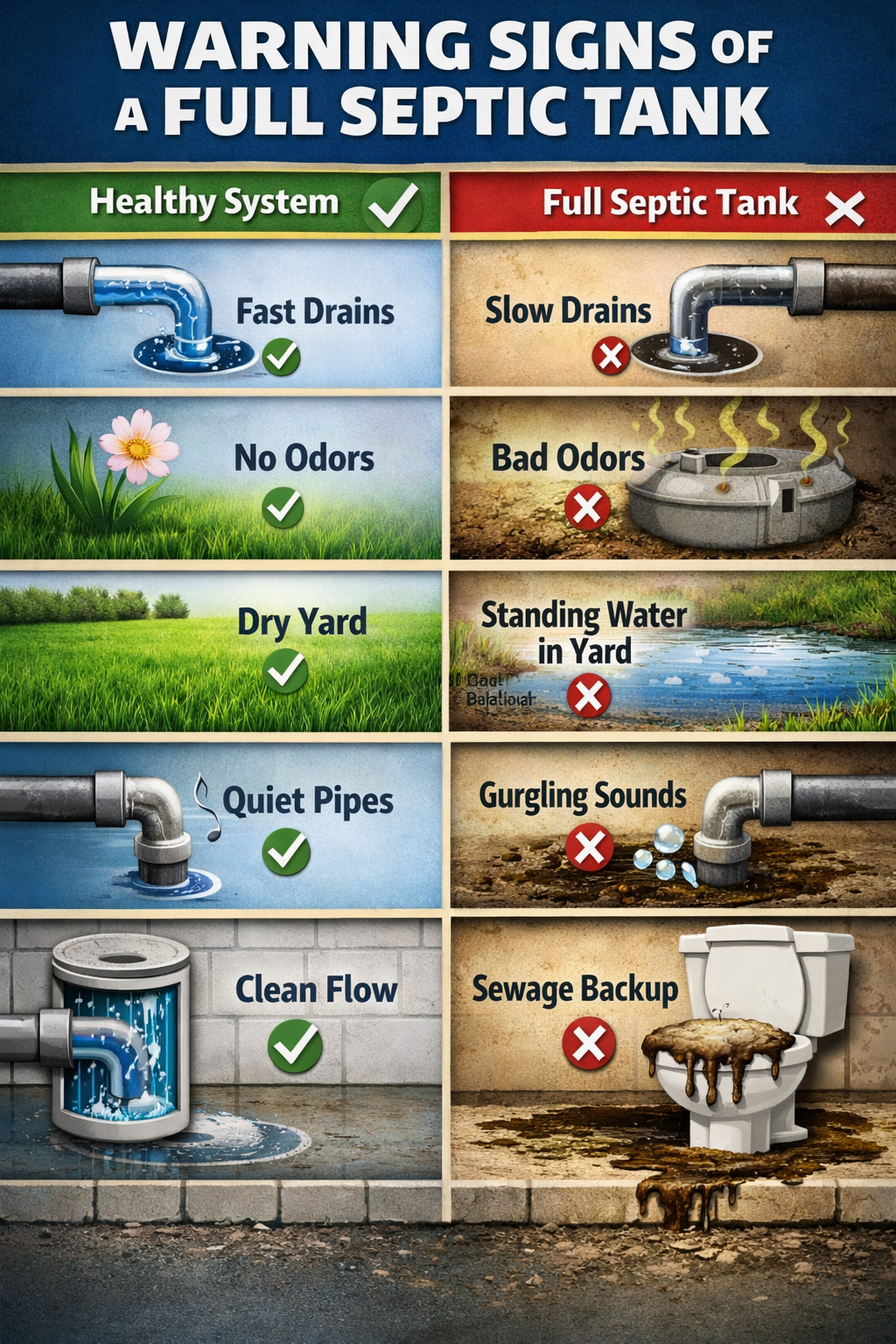
Recognizing early warning signs prevents emergency situations and costly repairs that result from waiting too long between pumping services. These symptoms indicate your tank is approaching or exceeding safe capacity limits.
Critical warning signs requiring immediate attention:
• Slow draining sinks, tubs, or toilets – Indicates system backup beginning
• Strong sewage odors around tank area or in your home
• Standing water or wet spots in your yard near the drain field
• Sewage backup in basement drains or lowest plumbing fixtures
• Gurgling sounds from drains when water flows out
• Lush green grass over the drain field (indicates system overload)
If you notice multiple warning signs simultaneously, schedule pumping immediately rather than waiting for your regular maintenance window. Signs of septic tank problems often appear gradually, making them easy to ignore until major issues develop.
Early intervention saves money: Pumping a tank that’s 80% full costs the same as pumping one that’s overflowing, but prevents thousands in drain field repairs. Many homeowners learn this lesson the expensive way when they ignore subtle warning signs.
The most reliable approach combines scheduled inspections with awareness of these warning signs. Professional technicians can measure actual solids levels rather than guessing based on symptoms that might indicate other problems.
How Usage Patterns Affect Septic Tank Pumping Frequency
Your daily habits and water usage patterns significantly impact waste accumulation rates, often requiring adjustments to standard pumping schedules. Understanding these factors helps you predict when your specific system needs service.
High-impact usage patterns:
• Garbage disposal use: Increases solid waste by 25-50%, requiring pumping every 1-2 years instead of 3-5 years
• Frequent laundry: Large families doing 8+ loads weekly accelerate tank filling
• Long showers or frequent baths: Excessive water volume disrupts waste separation
• Water softener discharge: High sodium content can kill beneficial bacteria
• Chemical drain cleaners: Disrupt bacterial balance needed for waste breakdown
Choose more frequent pumping (every 2-3 years) if your household uses garbage disposals regularly or has high water consumption. The convenience of disposing food waste through your sink comes with increased maintenance costs that many homeowners don’t anticipate.
Light usage households with minimal garbage disposal use, water-efficient appliances, and conservative water habits can often extend pumping intervals by 1-2 years beyond standard recommendations.
Common mistake: Assuming your usage is “normal” without actually measuring it. Track your water bill for seasonal patterns, count weekly laundry loads, and honestly assess garbage disposal usage to determine if you need adjusted maintenance schedules.
Creating Your Personal Septic Pumping Schedule
Developing a customized pumping schedule based on your specific situation ensures optimal system performance while avoiding unnecessary service calls. This approach balances cost savings with system protection.
Step-by-step schedule creation:
- Determine your baseline: Start with standard recommendations for your household size and tank capacity
- Adjust for usage patterns: Add or subtract 1-2 years based on your actual water consumption and waste generation
- Schedule initial inspection: Have a professional assess current solids levels to establish your starting point
- Monitor performance: Track any changes in drainage speed, odors, or other system indicators
- Adjust as needed: Modify your schedule based on inspection results and system performance
For most homeowners, a 3-4 year pumping schedule with annual inspections provides the best balance of cost and protection. This approach catches problems early while avoiding the expense of overly frequent pumping.
Professional inspection timing: Schedule inspections in spring or fall when weather permits easy access and you can address any issues before extreme temperatures arrive. Many service companies offer inspection and pumping packages that reduce overall costs.
Keep detailed records of pumping dates, inspection results, and any system problems. This documentation helps service technicians provide better recommendations and can be valuable if you sell your home.
Helpful Resource for Septic Maintenance
Between professional pumpings, maintaining healthy bacterial activity in your septic tank supports proper waste breakdown and system efficiency. Septifix tablets offer a simple monthly treatment that helps break down waste, reduce odors, and support the natural processes that keep your septic system working properly. While regular pumping remains essential, these treatments can help extend the time between services and prevent minor issues from becoming major problems.
Cost Considerations for Septic Tank Pumping
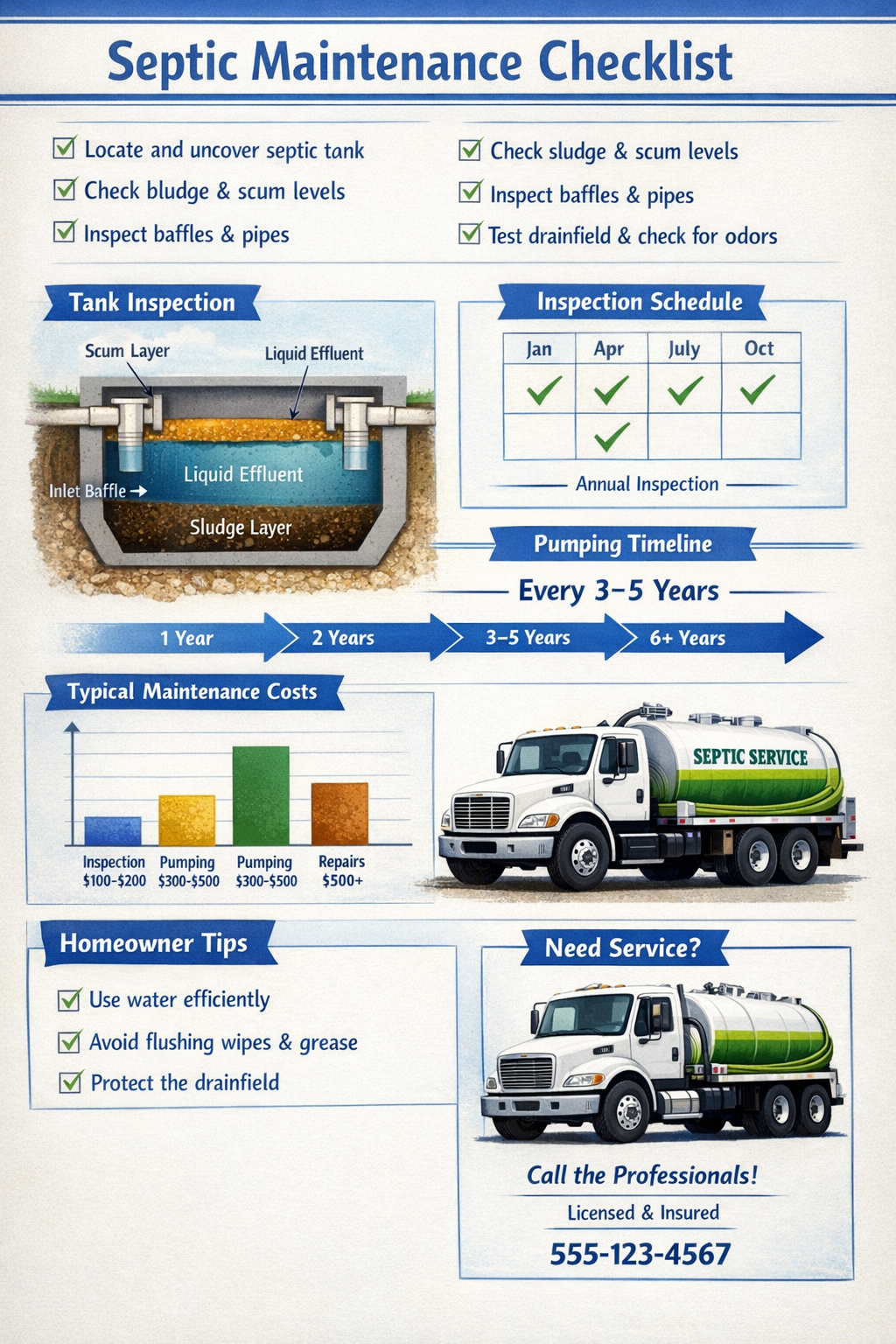
Understanding pumping costs helps you budget for maintenance and make informed decisions about service frequency. While pumping isn’t cheap, it’s significantly less expensive than drain field replacement or system reconstruction.
Typical pumping costs:
• Standard pumping service: $300-600 depending on tank size and location
• Emergency pumping: $500-800 due to urgency and potential complications
• Inspection fees: $100-300 if performed separately from pumping
• Additional services: $50-200 for filter cleaning, minor repairs, or difficult access
Annual cost comparison by pumping frequency:
- Every 3 years: $133-200 annually
- Every 5 years: $80-120 annually
- Every 7 years: $57-86 annually
While less frequent pumping saves money short-term, the risk of system failure increases significantly. Complete septic pumping costs vary by region, but emergency repairs typically cost 5-10 times more than preventive maintenance.
Budget tip: Set aside $150-200 annually for septic maintenance, including pumping, inspections, and minor repairs. This approach spreads costs evenly and ensures funds are available when service is needed.
Common Mistakes That Affect Pumping Frequency
Avoiding these frequent errors helps maintain proper system function and prevents premature failures that require expensive emergency interventions.
Critical mistakes to avoid:
• Waiting for problems before pumping – System damage often occurs before symptoms appear
• Using outdated household size calculations – Family changes require schedule adjustments
• Ignoring garbage disposal impact – Food waste significantly increases pumping needs
• Skipping regular inspections – Professional monitoring prevents emergency situations
• Using harsh chemicals – Antibacterial cleaners and drain chemicals disrupt beneficial bacteria
• Flushing inappropriate items – Wipes, medications, and non-biodegradable materials accelerate tank filling
The 20-year mistake: Many homeowners follow advice from when their system was installed without adjusting for household changes, usage pattern modifications, or updated best practices. Systems installed 15-20 years ago often had different design standards and maintenance recommendations.
Regular communication with your septic service provider helps avoid these mistakes. Experienced technicians can spot usage patterns that affect your system and recommend adjustments before problems develop.
FAQ
How often should I pump my septic tank with 2 people?
A 2-person household with a 1,000-gallon tank typically needs pumping every 4-5 years. Larger tanks can extend this to 6-8 years, while heavy water usage may require service every 3-4 years.
What happens if I don’t pump my septic tank regularly?
Skipping regular pumping causes solids to overflow into your drain field, potentially clogging pipes and requiring expensive system replacement. Learn more about consequences of delayed pumping.
Can I pump my septic tank too often?
Yes, overly frequent pumping wastes money and can disrupt beneficial bacteria needed for waste breakdown. Stick to schedules based on actual need rather than arbitrary timelines.
How do I know when my septic tank is full?
Warning signs include slow drains, sewage odors, standing water in your yard, or gurgling sounds from plumbing. Professional inspection provides accurate measurement of solids levels.
Does garbage disposal use really affect pumping frequency?
Yes, garbage disposals can increase solid waste accumulation by 25-50%, requiring pumping every 1-2 years instead of the standard 3-5 year schedule.
Should I pump before or after heavy usage periods?
Pump before anticipated heavy usage periods like holidays or extended guest visits to ensure maximum tank capacity when you need it most.
How long does septic tank pumping take?
Most pumping services take 1-3 hours depending on tank size, access difficulty, and whether additional services like inspection or filter cleaning are included.
Can I extend time between pumpings with additives?
While bacterial additives may support system health, they cannot replace regular pumping. Solids must be physically removed regardless of additive use.
What time of year is best for septic pumping?
Spring and fall offer the best conditions for pumping, with moderate weather and easier access. Avoid winter pumping in freezing climates when possible.
How do I find my septic tank for pumping?
Check your home’s original construction plans, look for inspection ports in your yard, or hire a professional locating service. Tank location tips can help identify your system.
Does tank age affect pumping frequency?
Older tanks may develop structural issues that affect capacity or function, potentially requiring more frequent pumping or system upgrades.
Should I be present during septic pumping?
Yes, being present allows you to ask questions, learn about your system’s condition, and address any concerns the technician identifies during service.
Conclusion
Determining how often does a septic tank need to be pumped requires balancing multiple factors including household size, tank capacity, and usage patterns. While the standard 3-5 year guideline works for many homeowners, your specific situation may require adjustments based on family size changes, water consumption habits, and system performance indicators.
Take action now:
- Calculate your baseline schedule using your household size and tank capacity
- Schedule a professional inspection to assess current solids levels and system condition
- Monitor warning signs like slow drains, odors, or standing water that indicate immediate pumping needs
- Keep detailed maintenance records to track system performance and optimize future service timing
- Budget for regular maintenance to avoid emergency situations and costly repairs
Remember that proper septic maintenance extends far beyond pumping frequency. Regular system care, water conservation, and appropriate waste disposal practices all contribute to optimal system performance and longevity.
Don’t wait for problems to develop. Contact a licensed septic professional to assess your system’s current condition and establish a maintenance schedule tailored to your specific needs. This proactive approach protects your investment and ensures reliable wastewater treatment for years to come.
References
[1] How Often To Pump A Septic Tank – https://clearriverenvironmental.com/how-often-to-pump-a-septic-tank/
[2] How Often To Pump Septic Tank – https://dandhsepticservices.com/how-often-to-pump-septic-tank/
[3] 5 Key Factors That Influence Septic Pumping Freq – https://www.wrenvironmental.com/blog/2025/november/5-key-factors-that-influence-septic-pumping-freq/
[4] How Often To Clean Septic Tanks Essential Guide – https://www.rciseptic.com/how-often-to-clean-septic-tanks-essential-guide