
How Much Does It Cost to Pump Septic Tank: Complete Pricing Guide

Last updated: February 20, 2026
Key Takeaways
• National average septic pumping costs range from $255–$600, with most homeowners paying around $400
• Tank size directly impacts price: 1,000-gallon tanks (most common) cost $225–$400 to pump
• Geographic location significantly affects pricing, with rural areas as low as $200 and urban areas exceeding $800
• Regular pumping every 3-5 years prevents costly repairs that can reach $15,000+ for drain field replacement
• Additional factors like tank accessibility and condition can add $50–$300+ to base pumping costs
Quick Answer
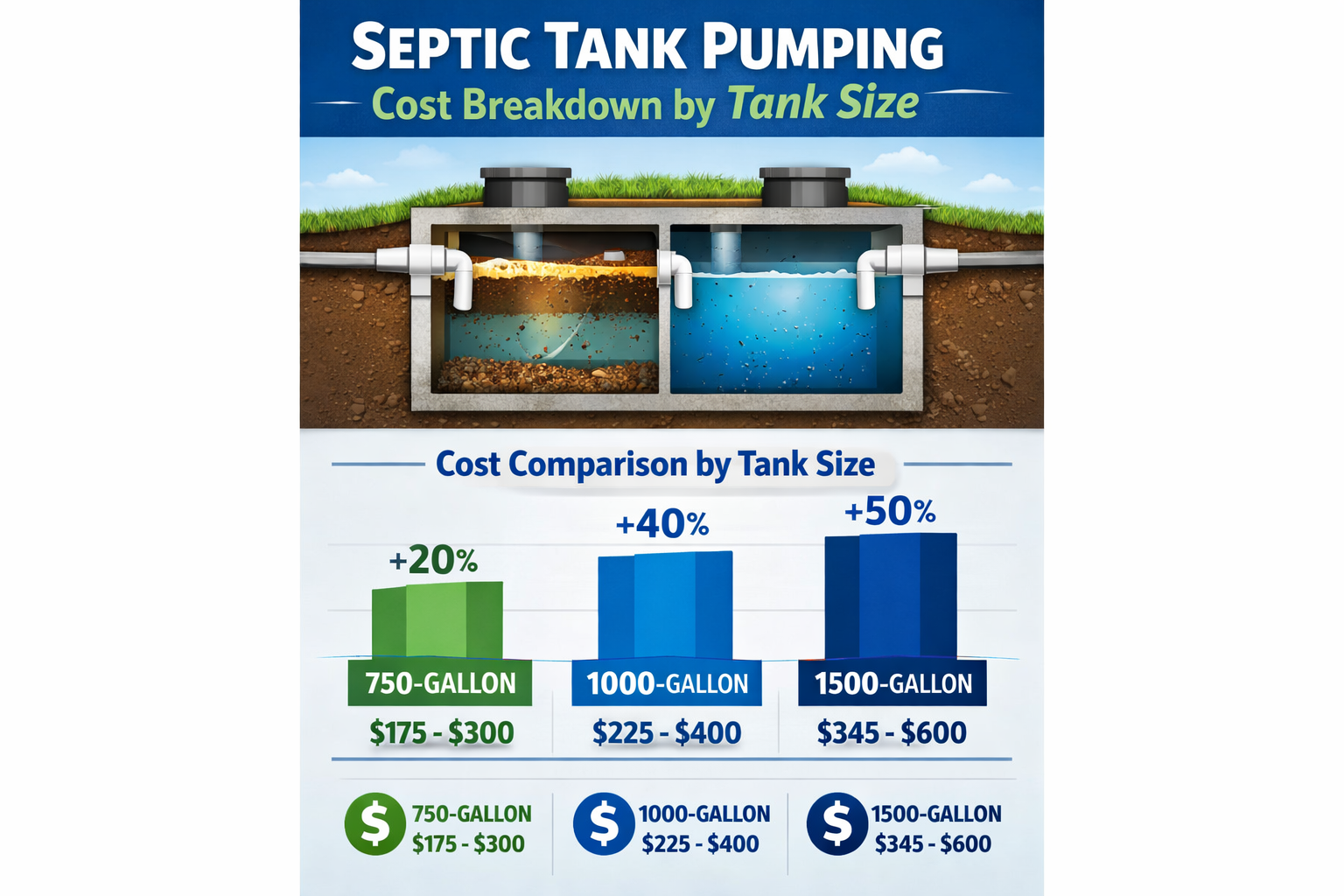
How much does it cost to pump septic tank? Most homeowners pay between $255–$600 for septic tank pumping, with a national average of around $400. The exact cost depends on your tank size, location, accessibility, and local service rates. Rural areas typically cost less ($200+) while urban markets can exceed $800.
What Determines How Much It Costs to Pump Septic Tank?
Septic tank pumping costs vary based on five main factors: tank size, geographic location, accessibility, tank condition, and local market rates. Understanding these variables helps you budget accurately and avoid surprise expenses.
Tank Size Impact on Costs
Your septic tank size is the primary cost driver. Here’s the typical breakdown by capacity:
• 750-gallon tanks: $175–$300
• 1,000-gallon tanks: $225–$400 (most common residential size)
• 1,500-gallon tanks: $345–$600
Most residential properties use 1,000-gallon tanks, making $225–$400 the standard range for typical homeowners. Larger households or commercial properties with bigger tanks pay proportionally more.
Geographic Location Differences
Location dramatically affects septic pumping prices. Rural areas with lower overhead costs often charge $200–$350, while high-cost urban markets can reach $600–$800+.
Choose local providers if you live in rural areas for better rates. Urban homeowners should get multiple quotes since competition varies significantly between metropolitan areas.
Common mistake: Assuming all providers in your area charge similar rates. Prices can vary by $100–$200+ between companies in the same region.
Tank Accessibility Factors
Easy access keeps costs low, while difficult access adds fees. Standard pricing assumes your tank lid is visible and accessible. Additional charges include:
• Digging fees: $50–$100+ for buried or hard-to-reach tanks
• Landscaping restoration: $25–$75 if plants or hardscaping must be moved
• Equipment access fees: $30–$50 for tight spaces requiring smaller trucks
Decision rule: If your tank hasn’t been pumped in 5+ years and you can’t locate the access lid, budget an extra $75–$150 for excavation work.
How Much Does It Cost to Pump Septic Tank by Region?
Regional pricing varies significantly due to local labor costs, competition, and regulations. Understanding your area’s typical rates helps you identify fair pricing and avoid overpaying.
High-Cost vs. Low-Cost Areas
Urban and high-cost-of-living areas typically charge $400–$800+ for standard pumping services. These regions include major metropolitan areas, coastal cities, and areas with strict environmental regulations.
Rural and lower-cost areas often range from $200–$450 for the same service. Lower overhead, reduced travel time between jobs, and less regulatory complexity contribute to these savings.
Regional Rate Examples
While specific pricing varies by local market conditions, general regional patterns include:
• Northeast urban areas: $450–$700+
• Southeast rural areas: $250–$400
• Midwest standard markets: $300–$500
• Western mountain/rural areas: $275–$450
• California/high-regulation areas: $500–$800+
Edge case: Some remote areas with limited service providers may charge premium rates ($600–$900) despite lower general cost of living due to travel distances and limited competition.
Pro tip: Get quotes from providers in neighboring towns if you’re near municipal boundaries. Service areas often overlap, and you might find better rates just outside city limits.
What Additional Costs Affect How Much It Costs to Pump Septic Tank?
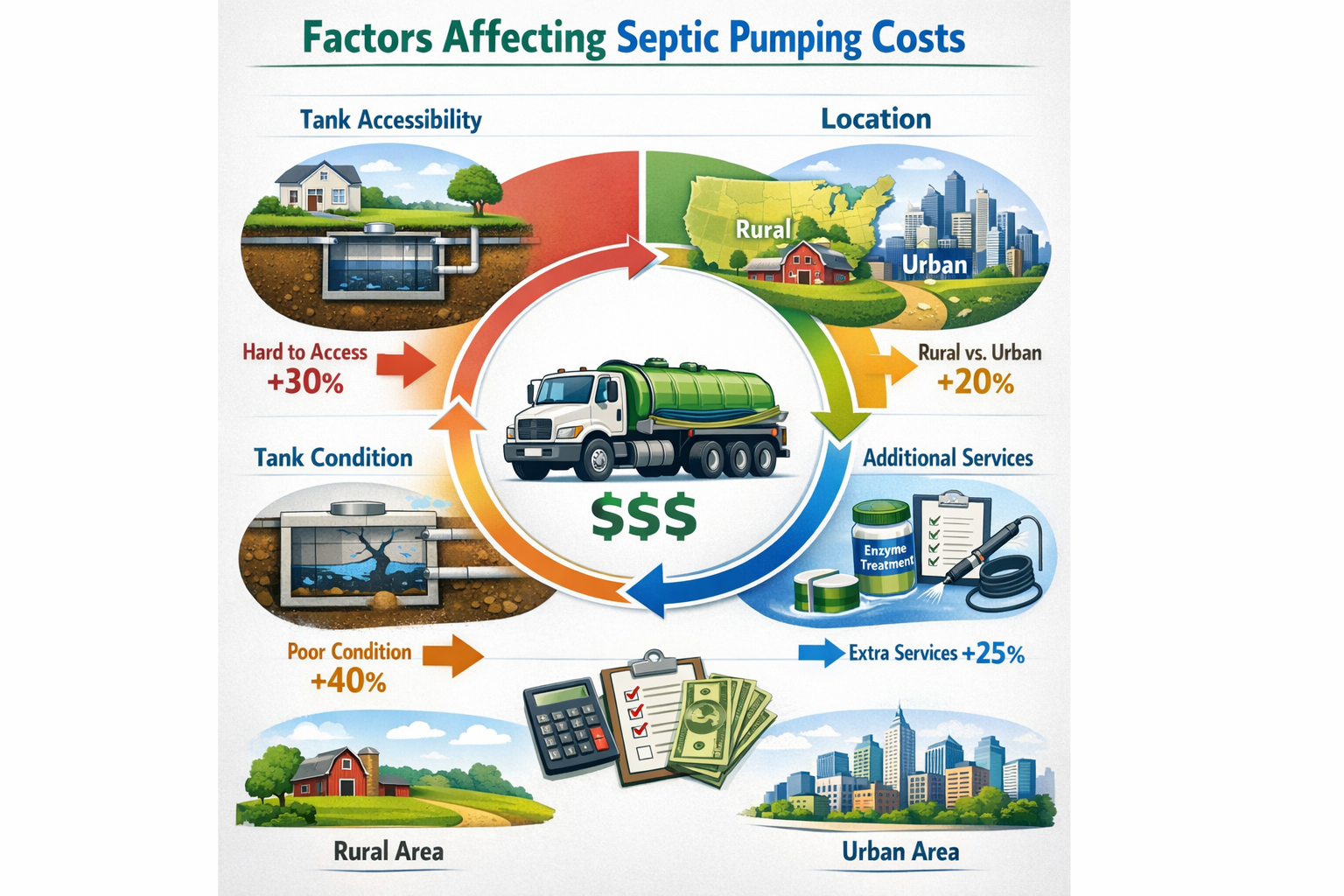
Beyond basic pumping, several additional services and factors can increase your total bill. Knowing these potential extras helps you budget accurately and understand quote variations between providers.
Inspection and Assessment Fees
Many pumping services include basic visual inspections, but comprehensive assessments cost extra:
• Basic visual inspection: Usually included in pumping fee
• Detailed system inspection: $100–$300 additional
• Camera inspection of pipes: $150–$400
• Drain field assessment: $200–$500
Choose detailed inspections if your system is 15+ years old or you’ve noticed performance issues. The upfront cost often prevents expensive emergency repairs.
Emergency and After-Hours Services
Standard pumping during business hours costs least. Premium timing adds significant fees:
• Weekend service: 25–50% surcharge
• Holiday pumping: 50–100% premium
• Emergency calls: $100–$300 additional fee
• After-hours service: $75–$200 extra
Common mistake: Waiting until your system backs up to call for service. This forces you into emergency pricing when regular scheduling would cost much less.
Tank Condition and Cleaning Requirements
Well-maintained tanks pump quickly and cost less. Neglected systems require extra time and specialized services:
• Standard pumping: Base rate for maintained systems
• Heavy buildup removal: $50–$150 additional
• Root removal: $75–$200 extra
• Damaged baffle repair: $100–$400
• Filter cleaning/replacement: $25–$100
FYI: Some links may be affiliate links, which means I may earn a small commission at no extra cost to you.
If you want to minimize these extra costs, consider using septic treatment products like Septifix tablets between pumpings. These help break down waste and reduce buildup, potentially saving you money on your next pumping service.
How Often Should You Pump to Control Costs?
Regular pumping every 3-5 years keeps costs predictable and prevents expensive system failures. The exact frequency depends on household size, tank capacity, and usage patterns.
Recommended Pumping Schedule
Most residential septic tanks need pumping every 3-5 years with proper maintenance. Here’s how to determine your ideal schedule:
• 1-2 people, 1,000-gallon tank: Every 4-5 years
• 3-4 people, 1,000-gallon tank: Every 3-4 years
• 5+ people, 1,000-gallon tank: Every 2-3 years
• Heavy usage households: Every 2-3 years regardless of size
Cost of Delayed Pumping
Skipping regular pumping creates expensive problems. When tanks overflow or back up, you face:
• Emergency pumping: $500–$800+ (double normal rates)
• System repairs: $500–$4,000+
• Drain field replacement: $3,000–$15,000+
• Property damage cleanup: $1,000–$10,000+
Decision rule: If it’s been 5+ years since your last pumping, schedule service immediately. The $300–$500 pumping cost prevents thousands in potential repairs.
Real example: A homeowner who delayed pumping for 8 years faced a $12,000 drain field replacement when solids clogged the system. Regular $400 pumping every 4 years would have prevented this entirely.
For more guidance on recognizing when your tank needs attention, check our guide on how to tell if your septic tank is full.
How to Save Money on Septic Tank Pumping Costs
Smart planning and maintenance reduce both pumping frequency and per-service costs. These strategies help homeowners minimize their long-term septic expenses.
Get Multiple Quotes
Always compare at least 3 quotes for septic pumping services. Prices can vary by $100–$300+ between providers in the same area. When comparing quotes, ensure they include:
• Same scope of service (pumping only vs. pumping + inspection)
• All potential additional fees clearly listed
• Service guarantees and follow-up policies
• Disposal fees included in quoted price
Schedule During Off-Peak Times
Timing your service strategically saves money:
• Weekday scheduling: Avoid weekend premiums
• Fall/winter pumping: Many areas offer lower rates during slower seasons
• Advance booking: Schedule 2-4 weeks ahead for better rates
• Group scheduling: Some providers offer discounts for neighborhood group services
Maintain Your System Between Pumpings
Proper maintenance extends time between pumpings and reduces per-service costs:
• Use septic-safe products only
• Avoid excessive water usage during short periods
• Never flush non-biodegradable items
• Add beneficial bacteria monthly to aid decomposition
Helpful resource: Regular use of quality septic treatments can significantly extend the time between pumpings. Products like Septifix tablets help maintain healthy bacterial levels and break down waste more efficiently, potentially saving you hundreds in reduced pumping frequency.
Improve Tank Accessibility
Making your tank easy to access reduces labor costs:
• Mark tank locations clearly for future service
• Keep access areas clear of landscaping and storage
• Install risers if your tank is buried deep ($200–$400 investment that saves $50–$100 per pumping)
• Maintain clear driveway access for service trucks
Long-term savings calculation: Installing risers costs $300 but saves $75 per pumping. After 4 pumpings (12-16 years), you’ve saved money while making future service more convenient.
To learn more about proper system care, visit our comprehensive septic tank maintenance guide.
When Septic Tank Pumping Costs Become Emergency Expenses

Ignoring regular maintenance transforms affordable pumping into expensive emergency repairs. Understanding warning signs helps you avoid crisis-level costs and system failures.
Warning Signs of Needed Pumping
These symptoms indicate immediate pumping is needed before costs escalate:
• Slow drains throughout the house
• Sewage odors around the tank or drain field
• Standing water over the septic area
• Gurgling sounds from drains or toilets
• Sewage backup in lowest-level drains
If you notice any of these issues, learn more about the causes in our guide on why septic tanks smell.
Emergency vs. Preventive Costs
Emergency pumping costs 2-3 times more than scheduled maintenance:
Preventive pumping: $255–$600 during normal business hours
Emergency pumping: $500–$1,200+ including after-hours fees and urgent scheduling
System failure costs: $2,000–$15,000+ for major repairs or replacement
Decision rule: If you notice any warning signs, call for service within 1-2 weeks. Waiting for convenient timing often forces emergency scheduling at premium rates.
Hidden Costs of Delayed Service
Beyond pumping fees, delayed maintenance creates cascading expenses:
• Property damage from sewage backups: $1,000–$10,000+
• Health department fines in some areas: $200–$2,000
• Temporary housing costs during major repairs: $100–$300 per day
• Lost property value from documented septic failures: $5,000–$20,000+
Real scenario: A family delayed pumping to save $400, then faced $8,000 in basement cleanup costs when their system backed up during heavy rains. The “savings” cost them 20 times more than preventive service.
For guidance on emergency situations, see our article on septic tanks backing up into the house.
FAQ
How much does it cost to pump a 1000-gallon septic tank?
A 1,000-gallon septic tank typically costs $225–$400 to pump, with most homeowners paying around $300–$350. This is the most common residential tank size.
Do I need to pump my septic tank every year?
No, most septic tanks need pumping every 3-5 years with normal use. Annual pumping is unnecessary and wasteful unless you have an unusually small tank or very high usage.
What’s the cheapest time of year to pump a septic tank?
Fall and winter often offer the lowest rates since demand is lower. Avoid spring and summer when many homeowners schedule service, driving up prices.
Can I pump my septic tank myself to save money?
No, septic pumping requires specialized equipment and proper waste disposal permits. DIY attempts are dangerous, illegal in most areas, and often cause expensive damage.
How much extra does emergency septic pumping cost?
Emergency pumping typically costs 50-100% more than scheduled service, adding $200–$400+ to your bill for after-hours or urgent scheduling.
Does tank accessibility really affect pumping costs?
Yes, difficult access can add $50–$150+ to your bill for digging, landscaping removal, or specialized equipment. Easy access keeps costs at base rates.
Should I get my tank inspected when pumping?
Basic visual inspection is usually included, but detailed inspections cost $100–$300 extra. Consider this if your system is 15+ years old or showing performance issues.
How do I know if I’m getting a fair price for pumping?
Get quotes from 3+ providers and compare total costs including all fees. Prices varying by $100+ between companies are common, so shopping around saves money.
What happens if I wait too long between pumpings?
Delayed pumping can cause system backups, drain field damage, and repairs costing $3,000–$15,000+. Regular pumping prevents these expensive failures.
Are there financing options for septic pumping?
Some companies offer payment plans for larger jobs, but basic pumping is typically paid at service. Emergency repairs may qualify for home improvement loans.
How much does septic pumping cost compared to city sewer bills?
Pumping every 4 years at $400 equals $100 annually, often less than monthly city sewer fees. Septic systems are usually more economical long-term.
Can regular maintenance reduce pumping frequency?
Yes, proper maintenance and septic treatments can extend time between pumpings from 3-4 years to 4-5 years, reducing long-term costs significantly.
Key Takeaways
• Budget $255–$600 for standard septic pumping, with $400 being the national average for most residential systems
• Tank size is the primary cost factor, with 1,000-gallon tanks (most common) costing $225–$400 to pump
• Geographic location significantly impacts pricing, ranging from $200 in rural areas to $800+ in expensive urban markets
• Additional costs for accessibility, inspections, and emergency service can add $50–$500+ to base pumping rates
• Regular pumping every 3-5 years prevents expensive repairs that can cost $3,000–$15,000+ for major system failures
• Getting multiple quotes saves $100–$300 since pricing varies significantly between providers in the same area
• Scheduling during off-peak times and maintaining easy access reduces costs through lower rates and fewer additional fees
• Emergency pumping costs 2-3 times more than scheduled maintenance, making regular service essential for budget control
• Proper maintenance between pumpings extends service intervals and reduces per-pumping costs through easier, faster service
• Investing in accessibility improvements like risers pays for itself within 4-5 pumping cycles while adding convenience
Conclusion
Understanding how much it costs to pump septic tank helps you budget effectively and avoid expensive surprises. With national averages ranging from $255–$600 and most homeowners paying around $400, regular pumping every 3-5 years is a smart investment that prevents costly system failures.
Take action now by scheduling your next pumping if it’s been 3+ years since your last service. Get quotes from multiple providers, ensure easy tank access, and maintain your system properly between services. These simple steps keep your septic costs predictable and your system running efficiently for years to come.
For ongoing system health, consider implementing a regular maintenance routine that includes proper usage habits and quality treatments. This proactive approach not only extends time between pumpings but also ensures your septic system continues operating reliably while minimizing long-term costs.
References
[1] Septic Tank Pumping Cost – https://todayshomeowner.com/plumbing/cost/septic-tank-pumping-cost/
[2] How Much Does It Cost To Pump A Septic Tank – https://rescueheroplumbing.com/how-much-does-it-cost-to-pump-a-septic-tank