
Signs Your Septic Tank Needs Maintenance: Essential Warning Signals Every Homeowner Should Know

Last updated: February 19, 2026
Key Takeaways
• Slow drains throughout your home are often the first warning sign your septic tank needs pumping
• Foul sewage odors near your tank or drain field indicate immediate maintenance needs
• Standing water or overly green grass over your septic area signals system overload
• Most septic tanks require pumping every 3-5 years regardless of usage patterns
• Preventive maintenance costs $300-700 while system replacement can exceed $20,000
Quick Answer
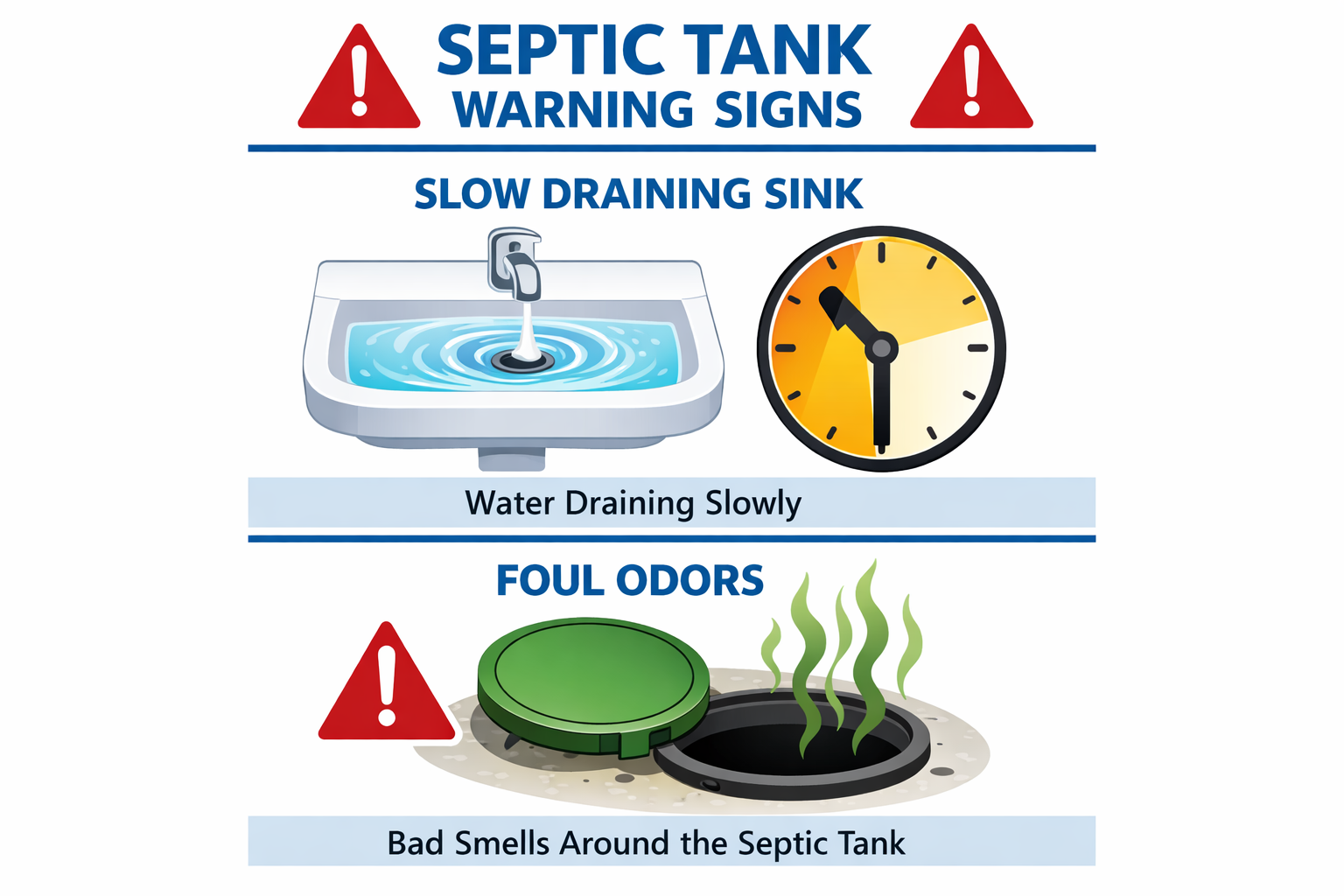
Your septic tank needs maintenance when you notice slow drains throughout your house, sewage odors near the tank area, or standing water over your drain field. Most systems require professional pumping every 3-5 years, but warning signs like gurgling sounds, sewage backups, or unusually lush grass patches indicate immediate attention is needed.
Picture this: you’re rushing to get ready for work when your bathroom sink starts draining like molasses, strange odors drift from your yard, and you notice your lawn has suspiciously green patches. These aren’t random household annoyances—they’re your septic system sending urgent signals that it needs maintenance. Recognizing the signs your septic tank needs maintenance early can save you thousands of dollars and prevent a sewage disaster that no homeowner wants to face.
What Are the Most Common Signs Your Septic Tank Needs Maintenance?
Slow drains throughout your house represent the most frequent early warning sign that your septic tank requires pumping or maintenance. When multiple fixtures drain slowly simultaneously, your tank has likely reached capacity.
The most reliable indicators include:
• Slow drainage in toilets, sinks, showers, and washing machines
• Sewage odors near the septic tank, access port, or drain field
• Standing water or consistently wet soil over the septic area
• Gurgling sounds from toilets and drains beyond normal operation
• Unusually green or fast-growing grass over the tank or drain field
• Sewage backups into sinks, tubs, or appearing outdoors
Choose immediate professional inspection if you notice sewage backups or standing water, as these indicate critical system failure. For slow drains or odors, schedule maintenance within 2-3 weeks to prevent escalation.
Common mistake: Homeowners often attribute slow drains to individual fixture problems rather than recognizing them as septic system warnings when they occur house-wide.
How Do Slow Drains Throughout Your House Indicate Septic Problems?
When all your drains slow down simultaneously, your septic tank has reached its functional capacity and can no longer process wastewater efficiently. This differs from single-drain clogs caused by local blockages.
System-wide drainage issues manifest as:
• Toilets that flush slowly or require multiple flushes
• Shower and bathtub water that pools before draining
• Kitchen and bathroom sinks that empty sluggishly
• Washing machine cycles that back up or overflow
• Floor drains in basements that gurgle or back up
The science behind this warning: when your septic tank fills with sludge and scum, the liquid waste level rises. This reduces the tank’s ability to accept new wastewater, creating a bottleneck that affects every drain in your home.
Choose professional pumping if: Multiple drains slow down over 2-3 days without improvement. Wait and monitor if: Only one fixture drains slowly, which likely indicates a localized clog.
For homeowners looking to maintain their septic system between professional services, understanding how your septic system works can help you recognize problems early.
Why Do Foul Odors Signal Your Septic Tank Needs Attention?
Strong sewage smells near your septic tank or drain field indicate the system cannot properly contain and process waste, requiring immediate maintenance attention.
Odor sources and their meanings:
• Tank access port smells: Indicates overfull conditions or damaged seals
• Drain field odors: Suggests wastewater surfacing due to system backup
• Indoor sewage smells: Points to severe backup conditions or plumbing issues
• Yard-wide odors: Indicates widespread system failure or overflow
Normal septic systems contain odors through proper venting and soil filtration. When you smell sewage, the system has exceeded its capacity or suffered component failure. These odors often intensify during wet weather when soil saturation prevents proper filtration.
Edge case consideration: Temporary odors during extremely hot weather may result from normal gas expansion, but persistent smells always warrant investigation.
If you’re experiencing persistent odors, our guide on why septic tanks smell provides detailed troubleshooting steps.
What Does Standing Water Over Your Septic Area Mean?
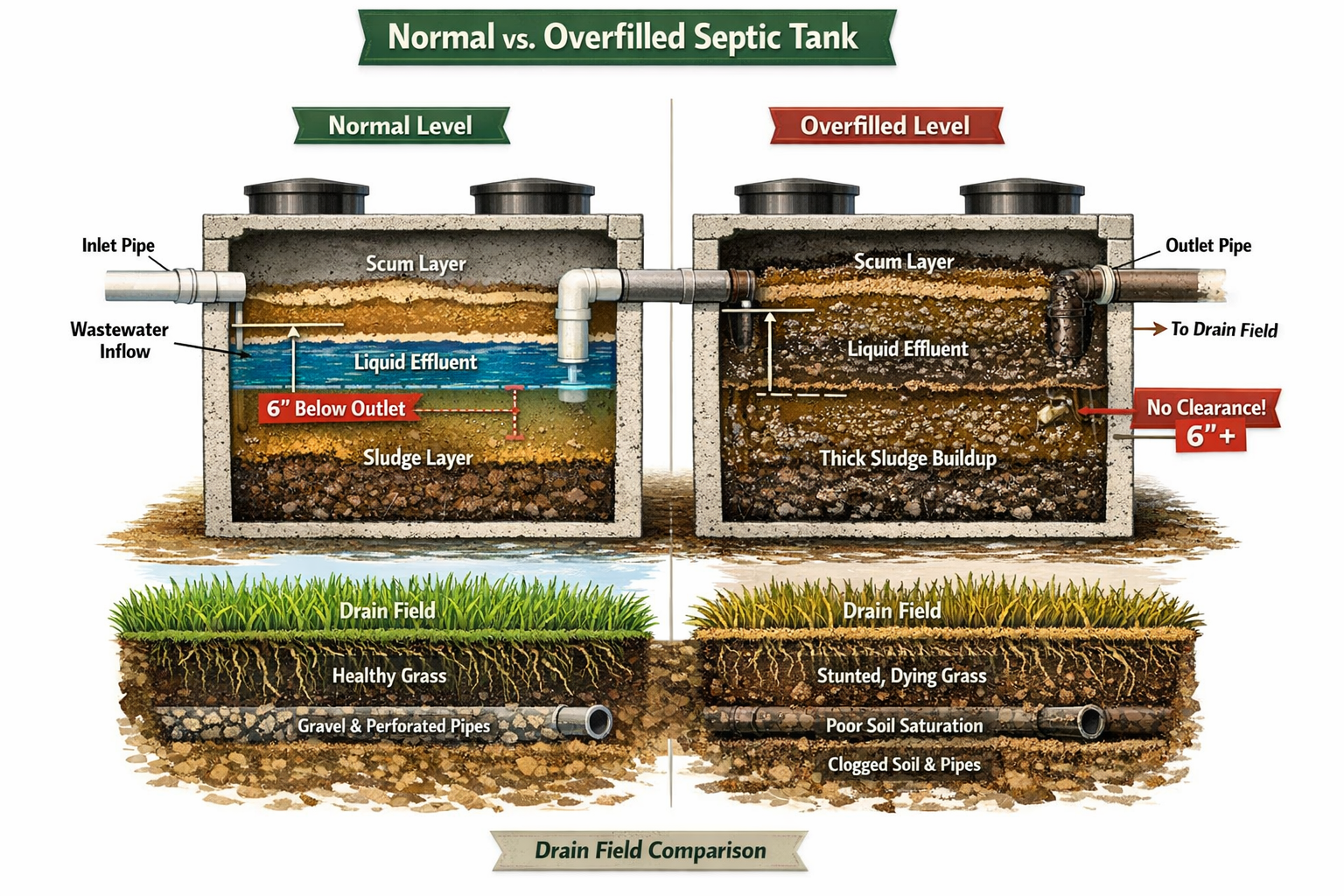
Consistently wet or spongy soil over your septic tank or drain field, especially without recent rainfall, indicates your system cannot absorb wastewater properly and requires immediate professional attention.
Standing water patterns reveal specific problems:
• Over the tank: Suggests overfull conditions or tank structural damage
• Over drain field lines: Indicates soil saturation or pipe blockages
• Pooling in low areas: Points to hydraulic overload or system failure
• Wet spots that persist: Shows continuous wastewater surfacing
Healthy septic systems distribute liquid waste through soil absorption. When water pools on the surface, the soil has reached saturation or the system has failed to process waste properly. This creates health hazards and environmental contamination risks.
Decision rule: Any standing water over septic components that persists more than 24 hours after rain requires professional inspection. Don’t wait—this indicates active system failure.
FYI: Some links may be affiliate links, which means I may earn a small commission at no extra cost to you.
For homeowners dealing with drainage issues, maintaining your septic system with quality treatments can help prevent these problems. Septifix tablets offer an easy way to break down waste buildup and support proper bacterial balance in your tank, potentially reducing the risk of overflow conditions.
Here are some of the most reliable septic tank treatment options for keeping your system clean, odor-free, and working properly—from breaking down waste and reducing buildup to helping prevent blockages and costly repairs. These easy-to-use tablets are trusted by many homeowners to maintain a healthy, efficient septic system with minimal effort.
👉 See how Septifix tablets can keep your septic system clean and efficient
How Often Should You Pump Your Septic Tank?
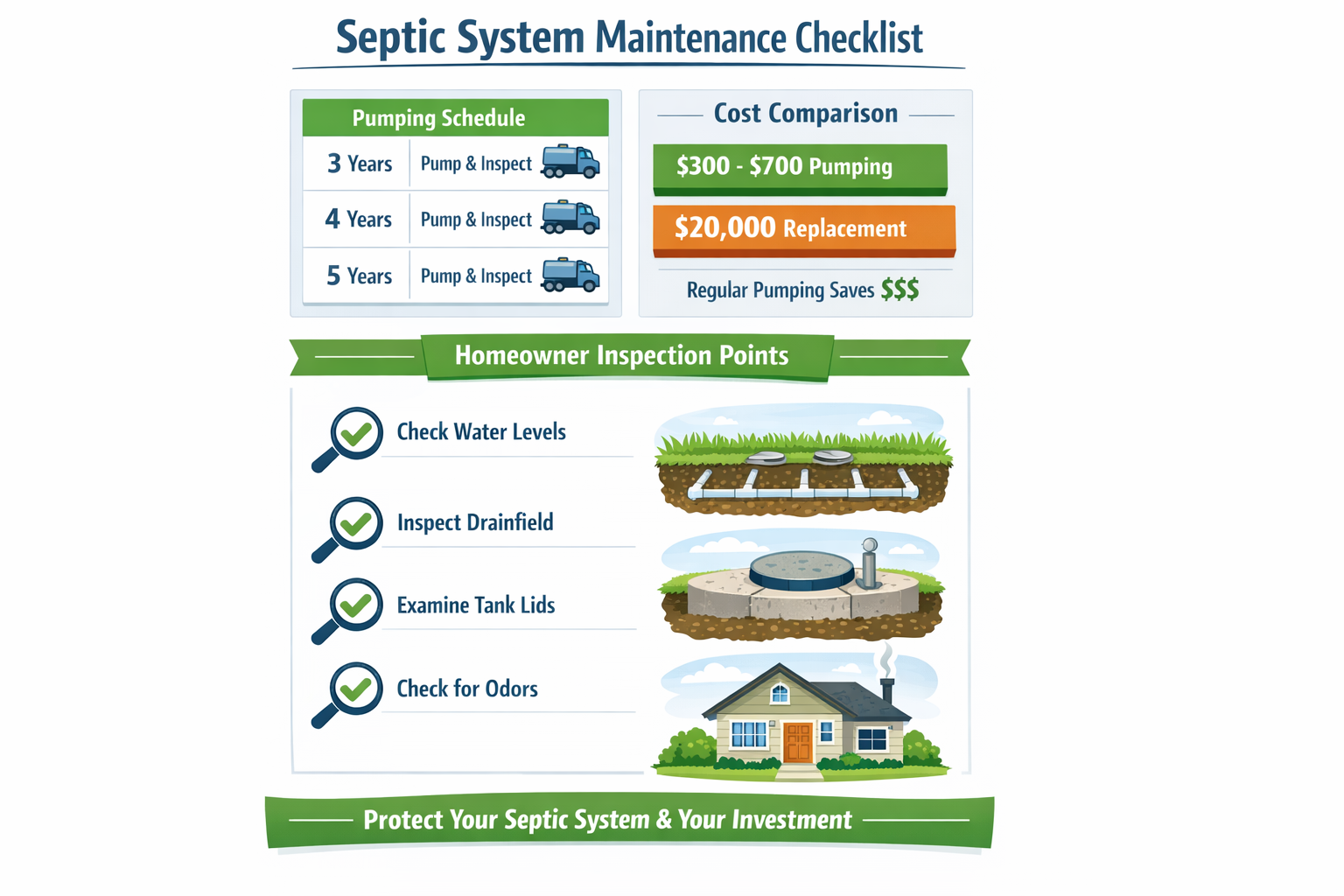
Most septic tanks require professional pumping every 3-5 years, though your specific schedule depends on household size, tank capacity, and water usage patterns.
Pumping frequency guidelines:
• 1-2 people: Every 4-5 years for standard 1,000-gallon tanks
• 3-4 people: Every 3-4 years depending on usage habits
• 5+ people: Every 2-3 years or more frequently with high water use
• Heavy usage households: Annual pumping may be necessary
The 3-5 year standard exists because sludge and scum layers accumulate regardless of water conservation efforts. Even the most efficient households cannot safely extend pumping intervals beyond 5 years. When solids reach within 6 inches of the tank outlet, pumping becomes critical to prevent drain field contamination.
Common mistake: Believing that low water usage eliminates pumping needs. Solid waste accumulates over time regardless of liquid volume.
Choose annual pumping if: You have a garbage disposal, host frequent guests, or notice any warning signs between regular service intervals.
To better understand when your tank reaches capacity, learn how to tell if your septic tank is full with our detailed guide.
What Do Gurgling Sounds From Your Drains Indicate?
Persistent gurgling sounds from toilets, sinks, or drains beyond normal operation indicate air displacement caused by septic system backup and warrant prompt professional evaluation.
Gurgling sound analysis:
• Toilet gurgling: Most common early warning of tank backup conditions
• Sink and shower sounds: Indicate widespread drainage system stress
• Multiple fixture gurgling: Suggests significant septic system overload
• Sounds during appliance use: Points to hydraulic system strain
Normal drains produce minimal noise during operation. Gurgling occurs when air cannot escape properly through the vent system because wastewater has backed up in the pipes. This creates a vacuum effect that produces the characteristic bubbling sounds.
Timing matters: Occasional gurgling during heavy water use may be normal, but constant sounds or gurgling during light usage indicates septic problems requiring attention.
If you’re experiencing these sounds, check our comprehensive guide on septic tank gurgling sounds for specific troubleshooting steps.
When Does Unusually Green Grass Signal Septic Problems?
Patches of exceptionally lush, fast-growing, or dark green grass over your septic tank or drain field indicate excess nutrients from wastewater leakage and suggest system maintenance needs.
Grass growth patterns to monitor:
• Bright green strips: Often follow drain field pipe layouts
• Faster growth rates: Grass grows noticeably quicker than surrounding areas
• Year-round green patches: Areas that stay green during dormant seasons
• Dense, thick growth: Unusually thick grass texture compared to other lawn areas
This occurs because wastewater contains nitrogen and other nutrients that act as fertilizer. When your septic system leaks or overflows, these nutrients reach grass roots directly rather than being properly filtered through soil. While this may seem beneficial, it indicates system failure that can contaminate groundwater.
Edge case: Newly installed systems may show slight grass color variations for 1-2 growing seasons as soil settles, but established systems should not create visible growth differences.
Choose immediate inspection if: Green patches appear suddenly or expand rapidly, especially when combined with other warning signs.
What Are the Costs of Preventive Maintenance vs. System Replacement?
Regular septic tank pumping costs $300-700 every 3-5 years, while complete system replacement can exceed $20,000, making preventive maintenance extremely cost-effective.
Cost breakdown comparison:
| Service Type | Cost Range | Frequency | 5-Year Total |
|---|---|---|---|
| Routine pumping | $300-700 | Every 3-5 years | $300-700 |
| Emergency pumping | $500-1,200 | As needed | Variable |
| Drain field repair | $3,000-10,000 | If neglected | $3,000+ |
| Complete replacement | $15,000-25,000 | System failure | $20,000+ |
Preventive maintenance extends system lifespan to 20-30 years when performed consistently. Neglected systems often fail within 10-15 years, requiring expensive emergency repairs or complete replacement. The math strongly favors regular maintenance over reactive approaches.
Additional hidden costs of system failure:
• Property damage from sewage backups
• Health department fines for environmental violations
• Temporary housing during major repairs
• Landscaping restoration after system replacement
Decision rule: If your last pumping cost more than $700 or required emergency service, establish a regular maintenance schedule to avoid future premium pricing.
For ongoing maintenance between professional services, consider adding beneficial bacteria treatments to support your system’s natural processes and potentially extend the time between pumpings.
How Do You Know When Your Septic System Is Failing Completely?
Complete septic system failure presents with sewage backups into your house, raw sewage surfacing in your yard, or widespread standing water that persists despite dry weather and requires immediate professional intervention.
Critical failure indicators:
• Raw sewage backup into bathtubs, sinks, or floor drains
• Toilet paper and solids visible on the ground near the tank or drain field
• Black, foul-smelling water pooling in multiple yard areas
• Health department violations or neighbor complaints about odors
• Well water contamination if you have a private well nearby
System failure typically results from years of deferred maintenance, allowing sludge buildup to clog drain field pipes permanently. Once the drain field fails, wastewater has nowhere to go except back into your house or up to the surface.
Emergency response steps:
- Stop all water usage immediately
- Contact a septic professional for emergency service
- Avoid contact with any surfaced sewage
- Document damage for insurance purposes
Common mistake: Continuing to use water fixtures when backups occur, which worsens the situation and increases cleanup costs.
If you suspect system failure, our guide on septic tank backing up into house provides emergency response steps.
What Maintenance Tasks Can Homeowners Perform Themselves?
Homeowners can safely perform basic inspections, water conservation, and proper waste disposal practices, but should leave pumping, repairs, and technical assessments to licensed professionals.
Safe DIY maintenance activities:
• Visual inspections of the tank area for obvious problems
• Water usage monitoring to reduce system strain
• Proper waste disposal education for household members
• Drain field protection from vehicles and heavy equipment
• Record keeping of pumping dates and maintenance history
Professional-only tasks:
• Tank pumping and sludge removal
• Structural repairs or component replacement
• Soil percolation testing
• System component inspections
• Permit applications and regulatory compliance
Regular visual checks help you spot problems early. Look for obvious signs like standing water, damaged tank lids, or unusual odors during monthly property walks. However, never attempt to open tank lids or enter confined spaces, which present serious safety hazards.
Safety rule: If you can see, smell, or hear a problem from ground level, document it and call professionals. Never investigate septic issues that require tools, tank access, or soil excavation.
Learn more about proper septic tank care to understand which tasks you can safely handle yourself.
Helpful Resource for Ongoing Maintenance
Between professional pumpings, maintaining proper bacterial balance in your septic tank can help prevent many common problems. Septifix tablets provide an easy way to support your system’s natural waste breakdown processes, potentially reducing buildup and extending the time between required services. These tablets can be particularly helpful if you’ve noticed early warning signs like slow drains or minor odors, though they’re not a substitute for professional pumping when your tank reaches capacity.
Frequently Asked Questions
How long can I wait if I notice slow drains?
Address slow drains within 2-3 weeks if they affect multiple fixtures throughout your house. Single-drain slowness may indicate localized clogs, but system-wide drainage issues suggest septic problems requiring prompt attention.
Can I pump my septic tank myself?
No, septic tank pumping requires specialized equipment and licensed professionals. DIY pumping attempts create safety hazards and may violate local regulations. Professional service typically costs $300-700 and includes proper waste disposal.
Do septic additives eliminate the need for pumping?
No, septic additives cannot eliminate pumping requirements. While quality bacterial treatments may help maintain system balance, solid waste accumulation requires mechanical removal every 3-5 years regardless of additive use.
What time of year is best for septic maintenance?
Spring and fall offer ideal conditions for septic maintenance, with moderate weather and accessible ground conditions. Avoid winter pumping when possible due to frozen ground complications, though emergency service remains available year-round.
How do I find my septic tank location?
Check your home’s original construction permits, property survey, or contact your local health department for septic system records. Most tanks are located 10-25 feet from the house in the direction of the main sewer line.
Can heavy rain cause septic problems?
Yes, excessive rainfall can saturate drain field soil and cause temporary backups in systems operating near capacity. However, persistent problems after rain subsides indicate maintenance needs rather than weather-related issues.
Should I worry about septic problems if I’m selling my house?
Yes, address septic issues before listing your property. Many buyers require septic inspections, and system problems can delay or derail sales. Preventive maintenance demonstrates responsible ownership and protects your investment.
How do I know if my drain field is failing?
Drain field failure presents as standing water over the field area, sewage odors, unusually green grass, or wet soil that persists without rain. These symptoms require immediate professional evaluation and often indicate expensive repair needs.
Can I use regular household cleaners with a septic system?
Use septic-safe cleaners in moderation. Avoid antibacterial products, bleach, and harsh chemicals that kill beneficial bacteria. Choose biodegradable cleaners and limit quantities to maintain proper bacterial balance in your tank.
What’s the difference between pumping and cleaning?
Pumping removes liquid and solid waste from your tank, while cleaning includes pumping plus tank interior washing and inspection. Most routine maintenance requires pumping only, with cleaning reserved for problem diagnosis or system restoration.
How can I reduce pumping frequency?
Conserve water, avoid garbage disposal use, and never flush non-biodegradable items. However, even the most efficient households cannot safely extend pumping beyond 5 years due to inevitable solid waste accumulation.
What happens if I ignore septic maintenance?
Neglected septic systems eventually fail, causing sewage backups, environmental contamination, and expensive emergency repairs. System replacement costs $15,000-25,000 compared to $300-700 for routine maintenance.
Key Takeaways
• Monitor multiple drainage fixtures throughout your home for simultaneous slowdowns, which indicate septic capacity issues requiring professional attention within 2-3 weeks
• Investigate persistent sewage odors near your tank or drain field immediately, as these signal system overload or component failure that can escalate rapidly
• Schedule pumping every 3-5 years regardless of household size or water conservation efforts, since solid waste accumulates continuously and cannot be eliminated through additives alone
• Watch for standing water or unusually green grass over your septic area, which indicates wastewater surfacing and requires immediate professional evaluation to prevent environmental contamination
• Budget $300-700 for routine maintenance every few years rather than risking $15,000-25,000 system replacement costs that result from neglected maintenance schedules
• Perform monthly visual inspections of your septic area for obvious problems, but leave technical assessments, pumping, and repairs to licensed professionals for safety and regulatory compliance
• Address warning signs promptly rather than waiting for complete system failure, as early intervention prevents expensive emergency repairs and protects your property value
• Keep detailed maintenance records including pumping dates, inspection results, and any problems noted, which helps professionals diagnose issues and may be required for property sales
• Understand that septic systems require ongoing maintenance regardless of age, usage patterns, or additive use, making preventive care essential for long-term system reliability
• Consider professional inspection if you notice any combination of warning signs, as multiple symptoms often indicate serious system problems requiring immediate attention rather than simple maintenance delays
References
[1] 7 Signs Its Time For Septic Repair Or Maintenance – https://www.proseptichv.com/7-signs-its-time-for-septic-repair-or-maintenance
[2] How Often To Pump Septic Tank – https://dandhsepticservices.com/how-often-to-pump-septic-tank/
[3] 7 Clear Signs Its Time To Schedule A Septic Tank Pump Out – https://www.awsanitation.com/post/7-clear-signs-its-time-to-schedule-a-septic-tank-pump-out
[4] Signs Your Septic System Is Failing Blog September 2025 – https://www.billsseweranddrain.com/signs-your-septic-system-is-failing-blog-september-2025
[5] 7 Signs Your Septic Tank Needs Pumping – https://www.wrenvironmental.com/blog/2025/september/7-signs-your-septic-tank-needs-pumping/
[6] 10 Signs Your Septic System Is Failing And What To Do About It – https://www.atsenvironmental.com/blog/10-signs-your-septic-system-is-failing-and-what-to-do-about-it/
[7] 5 New Years Resolutions For A Healthier Septic System In 2026 – https://www.metroseptic.com/blog/5-new-years-resolutions-for-a-healthier-septic-system-in-2026/