Last updated: February 23, 2026
Key Takeaways
- Solid accumulation reduces tank capacity and blocks pipes leading to your drain field
- Sewage backups occur when waste has nowhere to go, affecting toilets, sinks, and drains
- Drain field failure happens when solids clog soil pores, requiring expensive replacement
- Health risks increase from toxic gases, contaminated groundwater, and waterborne illnesses
- Repair costs skyrocket from hundreds for pumping to thousands for system replacement
- Legal issues arise including health department violations and property sale complications
- Environmental damage includes groundwater contamination and soil degradation
- Property value decreases due to failed systems and required disclosures
Quick Answer
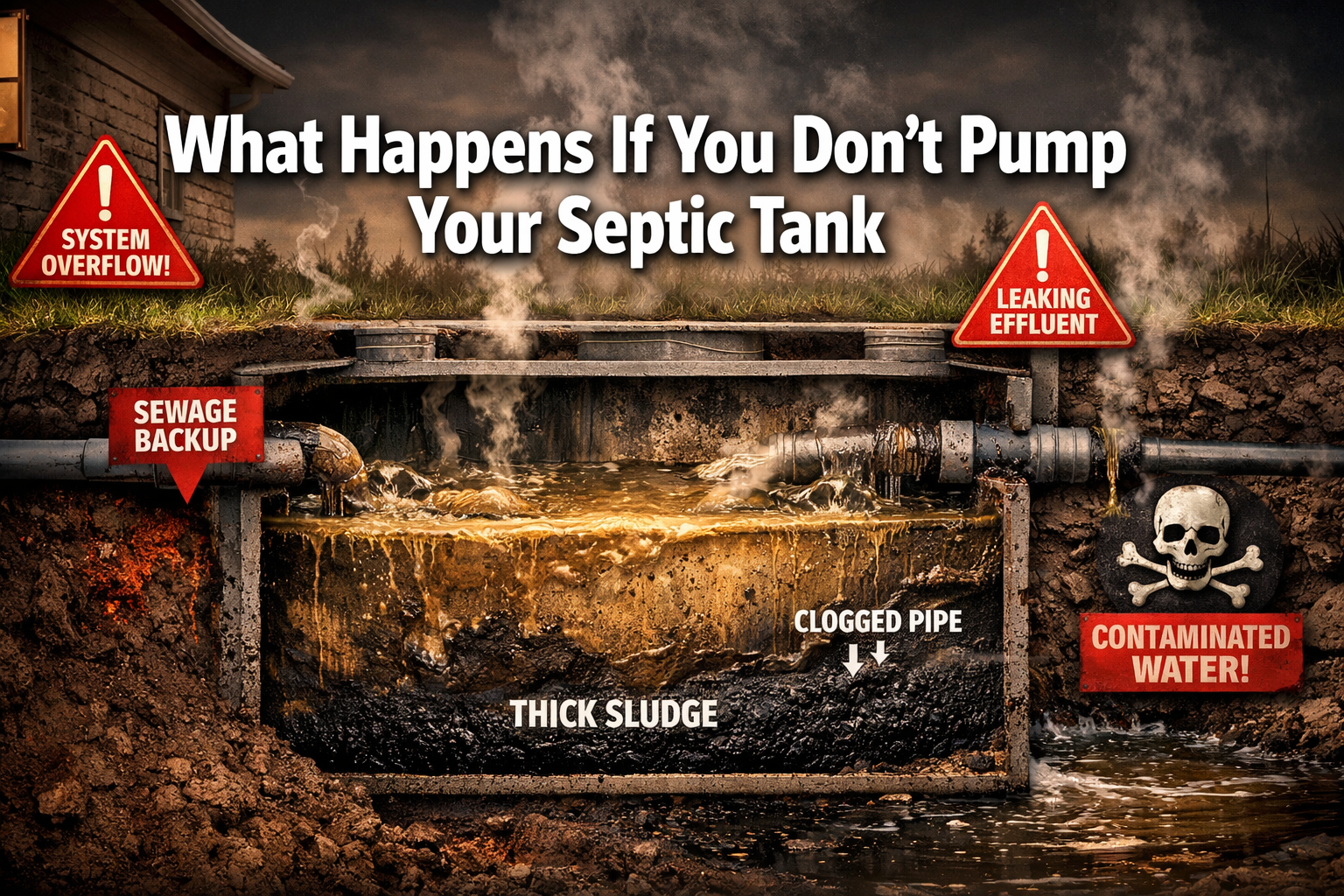
When you don’t pump your septic tank, solids accumulate and reduce the tank’s capacity until waste backs up into your home and clogs your drain field. This leads to sewage backups, expensive repairs, health hazards, and potential legal violations that can cost thousands of dollars to fix.
How Does Skipping Septic Pumping Affect Tank Function?
Skipping regular septic pumping destroys your tank’s ability to separate and treat waste properly. The tank becomes overwhelmed with accumulated solids that should have been removed during routine maintenance.
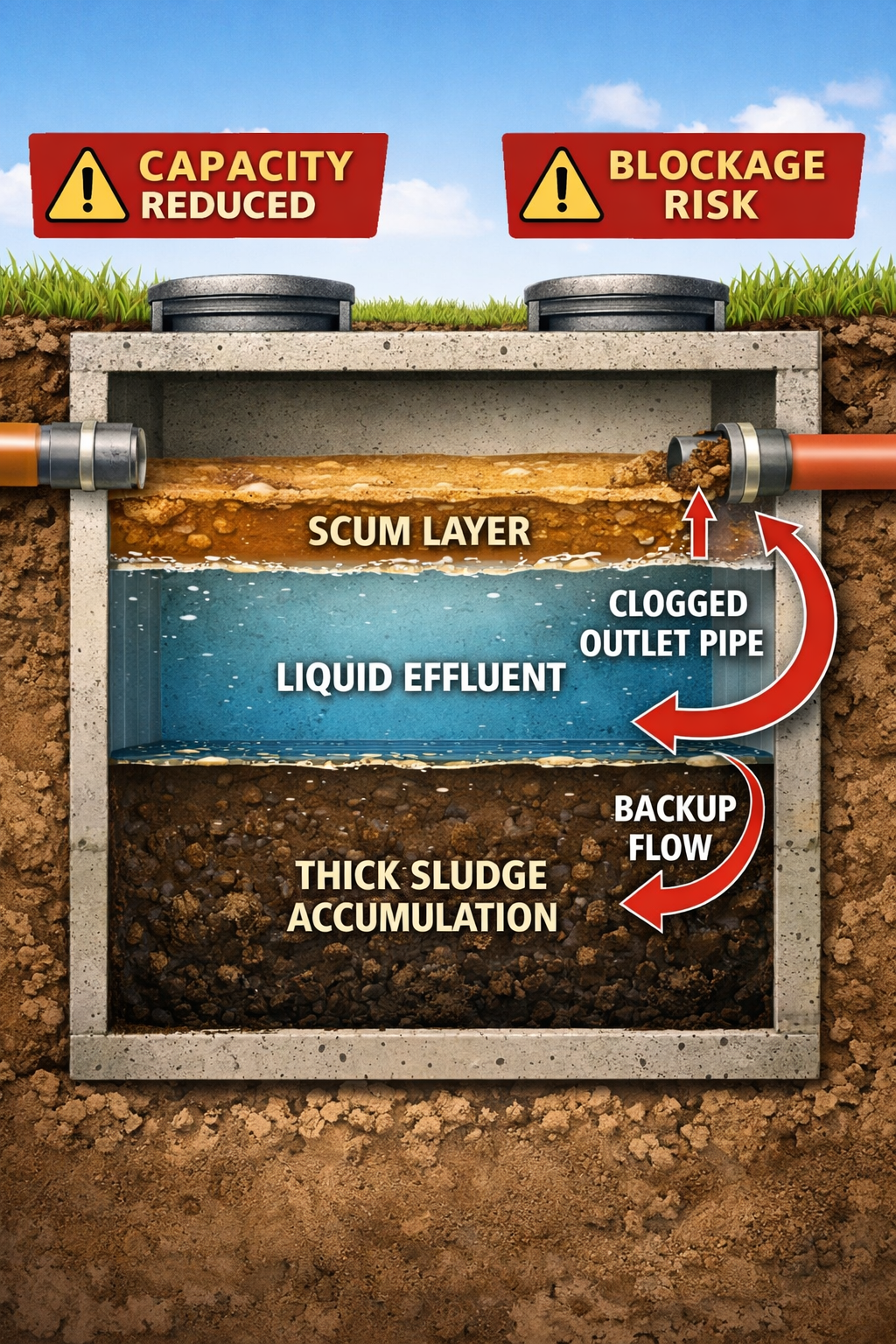
Your septic tank works by separating waste into three layers: floating scum on top, liquid effluent in the middle, and heavy sludge at the bottom. When you don’t pump regularly, the sludge layer grows thicker and eventually reaches the outlet pipe that feeds your drain field.
What happens to each layer:
- Scum layer becomes thicker and may block inlet pipes
- Liquid zone shrinks dramatically, reducing treatment time
- Sludge layer rises to dangerous levels and escapes the tank
Critical thresholds to know:
- Normal sludge should occupy less than 30% of tank depth
- When sludge reaches 50% depth, immediate pumping is essential
- Beyond 60% depth, solids will flow into your drain field
The tank loses its separation function entirely once solids start flowing out with liquid waste. At this point, your septic system becomes a simple pass-through rather than a treatment facility.
For homeowners wondering about how often to pump septic tank, most systems need pumping every 3-5 years depending on household size and usage patterns.
What Happens If You Don’t Pump Your Septic Tank: Immediate Problems
The first signs of trouble appear in your home when the tank can no longer handle incoming waste. You’ll notice these problems within weeks or months of reaching capacity.
Sewage backups become inevitable when waste has nowhere to go except back through your plumbing. This typically starts with slow drains and gurgling sounds, then progresses to actual sewage appearing in sinks, toilets, and floor drains.
Common immediate symptoms:
- Toilets flush slowly or won’t flush completely
- Sinks and tubs drain sluggishly or back up
- Gurgling sounds from drains and toilets
- Sewage odors inside your home
- Wet spots or standing water in your yard
Timeline of problems:
- Week 1-2: Slow drains and occasional gurgling
- Week 3-4: Frequent backups and strong odors
- Month 2+: Raw sewage in home and yard
The backup typically happens during high-usage periods like mornings when everyone showers or evenings when dishes are washed. Once backups start, they’ll become more frequent until the tank is pumped.
FYI: Some links may be affiliate links, which means I may earn a small commission at no extra cost to you.
If you’re dealing with these warning signs, products like Septifix tablets can help break down waste and reduce odors while you arrange for professional pumping. These monthly treatments help maintain bacterial balance and may provide temporary relief, though they’re not a substitute for proper pumping.
Understanding what happens when your septic tank is full can help you recognize these early warning signs before major damage occurs.
How Does Neglecting Pumping Damage Your Drain Field?
Drain field damage represents the most serious and expensive consequence of skipping septic pumping. Once solids enter your drain field, they clog the soil’s natural filtration system and may require complete replacement.
Drain field failure occurs in stages when accumulated sludge escapes your tank and flows into the distribution pipes. These solids clog the small pores in soil that normally filter and treat wastewater.
Progressive drain field damage:
- Initial clogging: Solids coat pipe perforations and reduce flow
- Soil saturation: Ground becomes waterlogged and can’t absorb waste
- Surface emergence: Raw sewage appears on your lawn or basement
- Complete failure: System requires excavation and replacement
Soil damage specifics:
- Clogged soil pores reduce absorption by 60-80%
- Bacterial mats form and block natural filtration
- Soil chemistry changes permanently in severe cases
- Recovery can take years even after proper repairs
Replacement costs breakdown:
- New drain field installation: $5,000-$15,000
- Soil testing and permits: $500-$1,500
- Excavation and restoration: $2,000-$5,000
- Total system replacement: $10,000-$25,000+
Choose immediate pumping if you notice wet spots in your yard or sewage odors outdoors. Waiting even a few weeks can turn a $400 pumping into a $15,000 drain field replacement.
For more details about drain field problems, see our guide on what happens when septic tank backs up.
What Health Risks Come from Not Pumping Your Septic Tank?
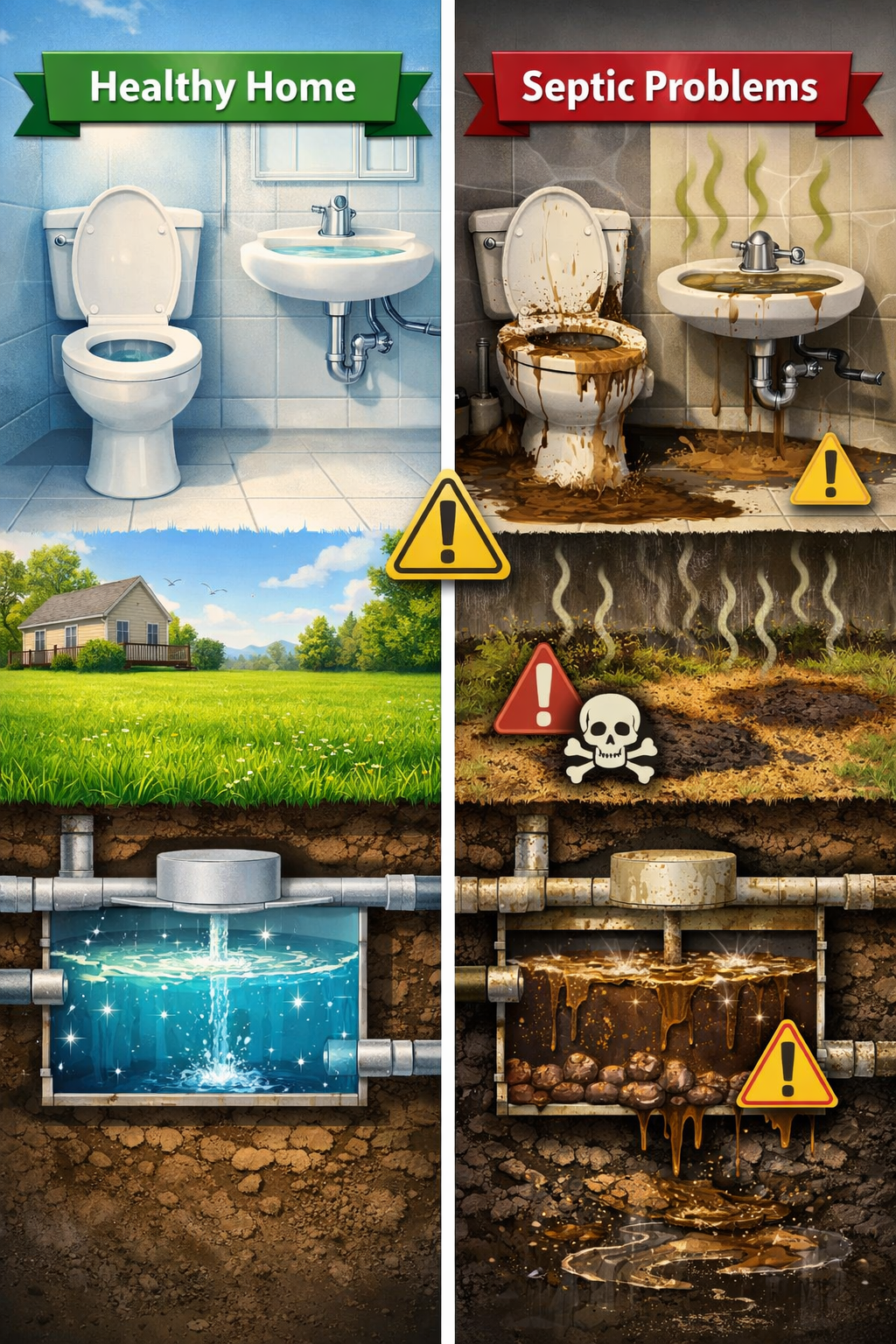
Neglecting septic pumping creates serious health hazards for your family and community through toxic gas exposure, contaminated water, and disease-carrying bacteria.
Toxic gas exposure becomes dangerous when sewage backs up into your home or yard. Methane and hydrogen sulfide gases can cause respiratory irritation and long-term health problems with continued exposure.
Immediate health threats:
- Respiratory issues: Coughing, throat irritation, breathing difficulty
- Skin contact: Rashes, infections from sewage exposure
- Waterborne illness: E. coli, salmonella, hepatitis from contaminated water
- Toxic gas poisoning: Headaches, nausea, dizziness in enclosed spaces
Groundwater contamination risks:
- Untreated sewage seeps into wells and aquifers
- Bacteria and viruses spread through water sources
- Chemical contaminants affect drinking water quality
- Contamination can persist for months or years
Vulnerable populations face higher risks:
- Children and elderly individuals
- People with compromised immune systems
- Pregnant women
- Anyone with respiratory conditions
Long-term exposure effects include chronic respiratory conditions, recurring infections, and increased cancer risk from prolonged contact with sewage gases and contaminated water.
If sewage backup occurs, evacuate affected areas immediately and contact professionals for cleanup. Don’t attempt to clean raw sewage yourself without proper protective equipment.
Learn to recognize signs your septic tank needs maintenance before health risks develop.
What Are the Financial Costs of Avoiding Septic Pumping?
The financial impact of skipping septic pumping grows exponentially from minor maintenance costs to major system replacement expenses that can reach tens of thousands of dollars.
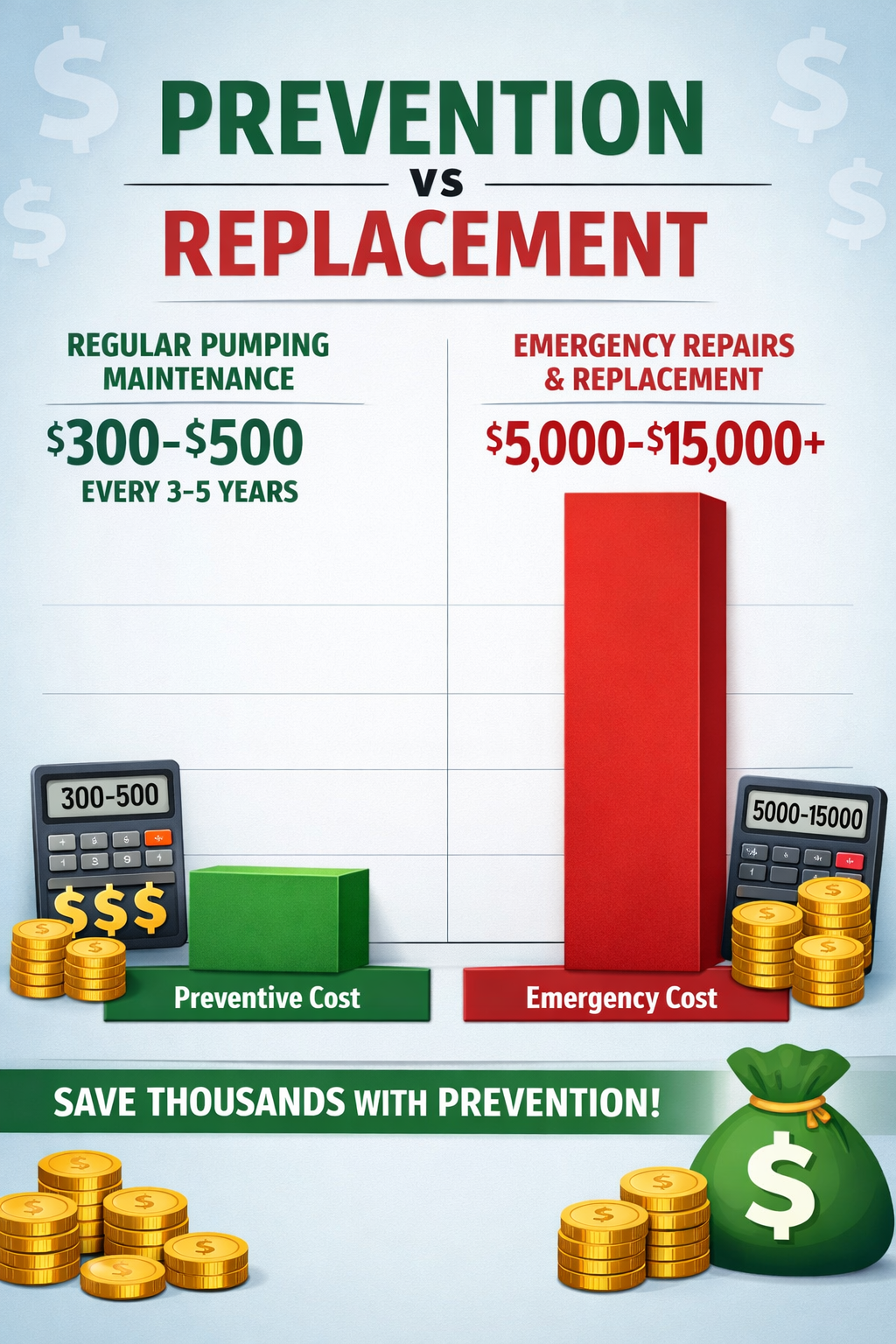
Regular pumping costs $300-$600 every 3-5 years, making it one of the most cost-effective home maintenance tasks. Compare this to emergency repairs that start at $2,000 and can exceed $25,000 for complete system replacement.
| Maintenance Level | Cost Range | Frequency | 5-Year Total |
|---|---|---|---|
| Regular pumping | $300-$600 | Every 3-5 years | $300-$1,000 |
| Emergency pumping | $800-$1,500 | As needed | $800-$3,000 |
| Tank repairs | $2,000-$5,000 | When damaged | $2,000-$5,000 |
| Drain field replacement | $5,000-$15,000 | When failed | $5,000-$15,000 |
| Complete system replacement | $10,000-$25,000+ | When condemned | $10,000-$25,000+ |
Hidden costs of neglect:
- Emergency service fees: 50-100% higher than scheduled pumping
- Property damage: Flooring, drywall, furniture replacement from backups
- Temporary housing: Hotel costs during major repairs
- Lost productivity: Time off work for emergency repairs
- Legal fees: Potential lawsuits from neighbor contamination
Insurance complications:
- Most homeowner policies exclude septic system damage
- Flood damage from septic backups often isn’t covered
- Negligent maintenance may void existing coverage
Property value impact:
- Failed septic systems reduce home value by $10,000-$30,000
- Buyers often demand seller-paid repairs or significant price reductions
- Homes can’t legally sell with known septic failures in most areas
Choose preventive pumping to avoid these escalating costs. The money saved on one emergency repair pays for decades of regular maintenance.
For detailed pricing information, check our complete guide to septic pumping costs.
What Legal Issues Result from Septic System Neglect?
Septic system failures create legal problems ranging from health department violations to property sale complications and potential liability for environmental damage.
Health department enforcement becomes inevitable when septic systems fail and create public health hazards. Local authorities have broad powers to address failing systems through citations, fines, and condemnation orders.
Common legal violations:
- Public health code violations: Fines of $500-$5,000 per day
- Environmental protection violations: Penalties up to $25,000
- Building code violations: Stop-work orders on property improvements
- Nuisance ordinances: Court orders requiring immediate repairs
Property sale complications:
- Mandatory disclosure: Failed systems must be disclosed to buyers
- Inspection requirements: Many areas require septic inspections before sale
- Repair obligations: Sellers often must fix systems before closing
- Financing issues: Lenders may refuse loans on properties with failed septics
Neighbor liability risks:
- Contamination claims: Lawsuits for groundwater or surface water damage
- Property damage: Liability for sewage affecting adjacent properties
- Health impacts: Potential claims for illness caused by contamination
- Nuisance suits: Legal action for odors and unsanitary conditions [5]
Criminal liability potential:
- Willful contamination: Criminal charges for knowing environmental damage
- Public endangerment: Charges when failures affect public water supplies
- Building code violations: Criminal penalties for operating illegal systems
Legal defense costs for septic-related lawsuits often exceed $10,000 even when you win the case. Settlement amounts for contamination claims can reach $50,000-$200,000 depending on the scope of damage.
Document all maintenance and repairs to protect yourself legally. Keep pumping records, inspection reports, and repair invoices for at least 10 years.
How Can You Prevent Problems from Skipping Septic Pumping?
Prevention starts with understanding your system’s pumping schedule and recognizing early warning signs before expensive damage occurs.
Establish a pumping schedule based on your household size, tank capacity, and water usage patterns. Most homes need pumping every 3-5 years, but high-usage households may need annual service.
Pumping frequency guidelines:
- 1-2 people: Every 4-5 years
- 3-4 people: Every 3-4 years
- 5+ people: Every 1-2 years
- Heavy water use: Reduce intervals by 1 year
Monitor warning signs regularly:
- Check drains for slow drainage or gurgling sounds
- Watch for wet spots or unusual grass growth in your yard
- Notice any sewage odors inside or outside your home
- Test toilets for slow flushing or incomplete drainage
Maintenance between pumping:
- Use septic-safe products only
- Avoid excessive water use during peak times
- Don’t flush non-biodegradable items
- Consider bacterial treatments to maintain healthy bacteria levels
Septifix tablets offer a simple monthly maintenance option that helps break down waste and maintain proper bacterial balance between pumpings. While not a replacement for pumping, these treatments can extend your system’s life and reduce odor problems.
Keep detailed records:
- Pumping dates and service provider information
- Tank inspection reports and recommendations
- Any repairs or modifications to your system
- Water usage patterns and household changes
Professional inspection schedule:
- Annual visual inspections of tank and drain field
- Professional inspections every 2-3 years
- Immediate inspection if warning signs appear
Learn how to tell if your septic tank is full so you can schedule pumping before problems develop.
Helpful Resource for Septic Maintenance
If you want a simple way to maintain your septic system between pumpings, Septifix tablets provide an easy monthly treatment option. These tablets help break down waste, reduce bad smells, and keep your septic tank working properly with just one flush per month.
Septifix won’t replace the need for regular pumping, but it can help prevent blockages, protect your plumbing, and potentially extend the time between pump-outs. The tablets work by introducing beneficial bacteria that break down waste more efficiently.
This can be particularly helpful if your household has high water usage or you’ve noticed early warning signs like slow drains or mild odors. Not required for every system, but useful for homeowners who want extra protection against costly septic problems.
Conclusion
Skipping septic tank pumping creates a cascade of problems that start with reduced tank capacity and end with expensive system failure, health hazards, and legal complications. What begins as accumulated sludge quickly progresses to sewage backups, drain field damage, and repair costs that can reach $25,000 or more.
The contrast between prevention and emergency response is stark: regular pumping costs $300-$600 every few years, while system replacement can cost 50 times more. Beyond money, failed septic systems threaten your family’s health through toxic gas exposure and contaminated water, while creating legal liability for environmental damage.
Take action now by:
- Scheduling pumping if it’s been more than 3 years since your last service
- Monitoring your system for warning signs like slow drains or sewage odors
- Keeping detailed maintenance records for legal protection
- Considering bacterial treatments to maintain system health between pumpings
Don’t wait for warning signs to appear. The consequences of neglecting septic pumping affect your health, finances, and legal standing in ways that can take years and tens of thousands of dollars to resolve. Regular maintenance protects your investment and keeps your family safe.
For immediate help, contact a licensed septic professional to assess your system and establish a proper maintenance schedule. Your septic system is too important to ignore.
FAQ
How long can you go without pumping a septic tank?
Most septic tanks need pumping every 3-5 years, but this varies by household size and usage. Going longer than 5 years significantly increases the risk of system failure and expensive repairs.
What are the first signs that your septic tank needs pumping?
Early signs include slow drains, gurgling sounds from toilets, sewage odors, wet spots in your yard, and toilets that won’t flush completely. These symptoms indicate your tank is approaching capacity.
Can a full septic tank cause sewage backup in your house?
Yes, when a septic tank becomes too full, sewage will back up through drains, toilets, and sinks in your home. This creates serious health hazards and property damage that requires immediate professional attention.
How much does emergency septic pumping cost compared to regular maintenance?
Emergency pumping typically costs $800-$1,500 compared to $300-$600 for scheduled maintenance. Emergency calls often include premium fees for after-hours service and urgent response.
Will homeowner’s insurance cover septic system damage from lack of maintenance?
Most homeowner’s insurance policies exclude septic system damage, especially when caused by poor maintenance. Flood damage from septic backups is also typically excluded from standard coverage.
Can you sell a house with a failed septic system?
You cannot legally sell a house with a known failed septic system without disclosure to buyers. Most sales require septic repairs before closing, and buyers often demand significant price reductions.
How does a failed septic system affect groundwater?
Failed septic systems allow untreated sewage to seep into groundwater, contaminating wells and aquifers with bacteria, viruses, and chemicals. This contamination can persist for months or years and affect entire neighborhoods.
What’s the difference between pumping and replacing a septic system?
Pumping removes accumulated solids and costs $300-$600, while system replacement involves installing new tanks and drain fields for $10,000-$25,000+. Regular pumping prevents the need for replacement.
Can bacterial treatments replace regular septic pumping?
No, bacterial treatments help maintain system health but cannot replace pumping. They break down waste more efficiently but don’t remove the accumulated solids that only pumping can eliminate.
How do you know if your drain field is damaged from lack of pumping?
Signs of drain field damage include sewage surfacing in your yard, persistent wet spots, strong odors outdoors, and lush grass growth over the drain field area. This damage often requires expensive replacement.
What legal penalties can result from septic system violations?
Legal penalties include health department fines of $500-$5,000 per day, environmental violations up to $25,000, and potential criminal charges for willful contamination of public water supplies.
How long does septic system replacement take after failure?
Complete septic system replacement typically takes 3-7 days for installation plus additional time for permits, soil testing, and inspections. The entire process can take 2-6 weeks depending on local requirements.
References
[1] What Happens When You Do Not Pump Your Septic Tank – https://westcoastsanitationinc.com/what-happens-when-you-do-not-pump-your-septic-tank/
[2] The Role Of Regular Inspections In Extending The Life Of Your Septic System – https://www.rosesepticservices.com/the-role-of-regular-inspections-in-extending-the-life-of-your-septic-system
[3] What Happens If You Wait Too Long Between Septic Pump Outs – https://www.awsanitation.com/post/what-happens-if-you-wait-too-long-between-septic-pump-outs
[4] The Consequences Of Neglecting Septic Maintenance In Lake Stevens – https://thesepticgroup.com/the-consequences-of-neglecting-septic-maintenance-in-lake-stevens/
[5] 5 Reasons Why Delaying Septic Tank Repairs Can Lead To Major Property Damage – https://www.epicplumbingllc.com/5-reasons-why-delaying-septic-tank-repairs-can-lead-to-major-property-damage
[6] What Happens If You Neglect Pumping Your Septic System – https://www.american-sanitation.com/blog/what-happens-if-you-neglect-pumping-your-septic-system/
[7] The Dangerous Effects Of Neglecting Your Septic Tank – https://www.shelleysseptictanks.com/the-dangerous-effects-of-neglecting-your-septic-tank
[8] Failed Septic System Here S What You Should Do – https://www.wrenvironmental.com/blog/2025/september/failed-septic-system-here-s-what-you-should-do-/