Essential Septic Tank Maintenance Tips for Homeowners
Last updated: February 19, 2026
Key Takeaways
• Pump your septic tank every 3-5 years based on household size and usage patterns
• Schedule professional inspections annually to catch problems before they become expensive repairs
• Use septic-safe products only and avoid flushing anything except human waste and toilet paper
• Spread water usage throughout the week to prevent system overload
• Protect your drain field by keeping vehicles and heavy equipment away from the area
Quick Answer
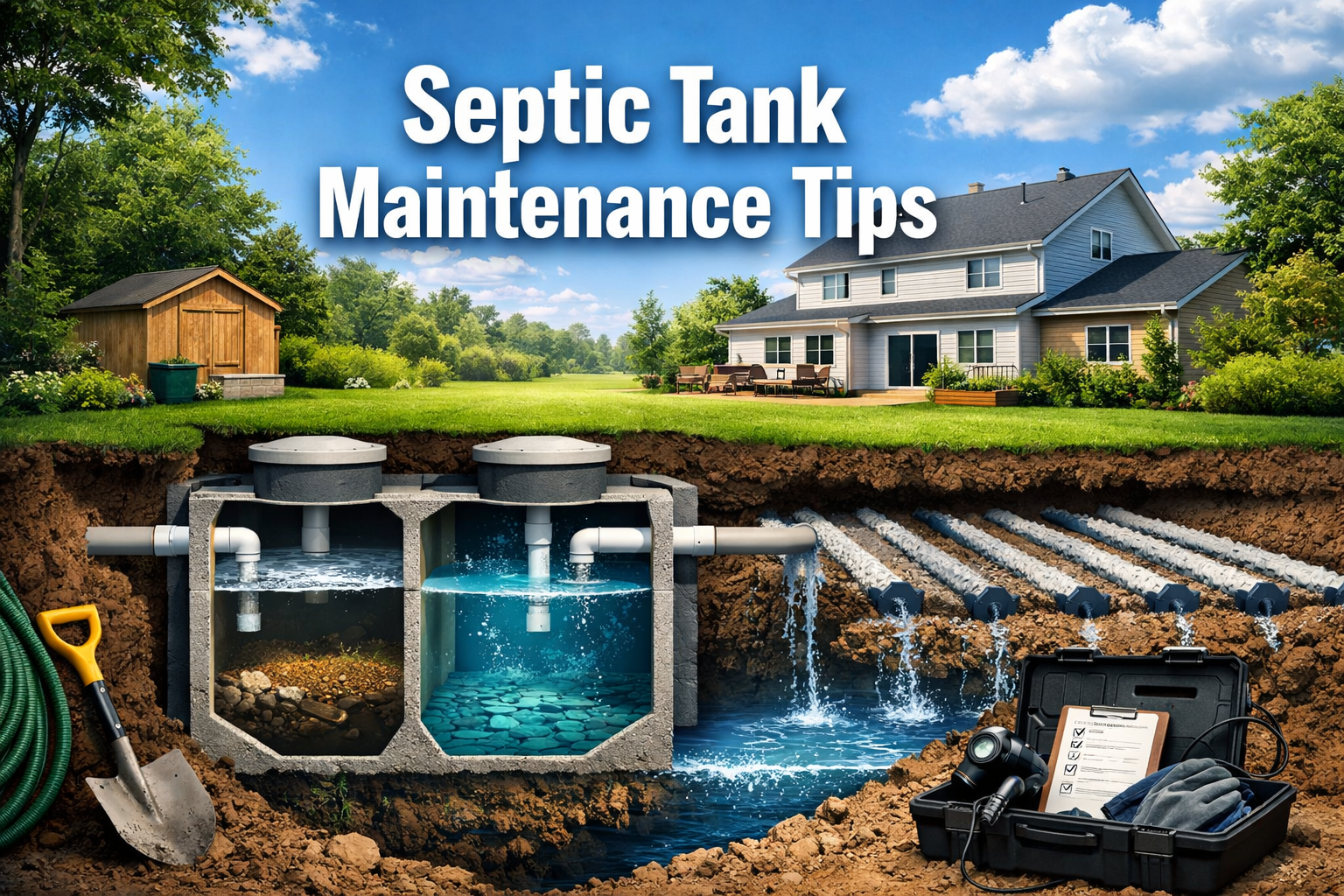
Proper septic tank maintenance requires regular pumping every 3-5 years, annual professional inspections, and careful attention to what goes down your drains. The most important septic tank maintenance tips include using only septic-safe products, spreading laundry loads throughout the week, and never flushing anything except human waste and toilet paper.
Your septic system is one of your home’s most critical but often overlooked components. When it works properly, you barely notice it exists. But when problems arise, you’re looking at thousands of dollars in repairs and potential health hazards for your family.
I’ve seen too many homeowners learn about septic tank maintenance tips the hard way—after their system backs up into their house or fails completely. The good news is that with the right maintenance approach, your septic system can last 20-30 years or more while protecting both your investment and the environment.
How Often Should You Pump Your Septic Tank?
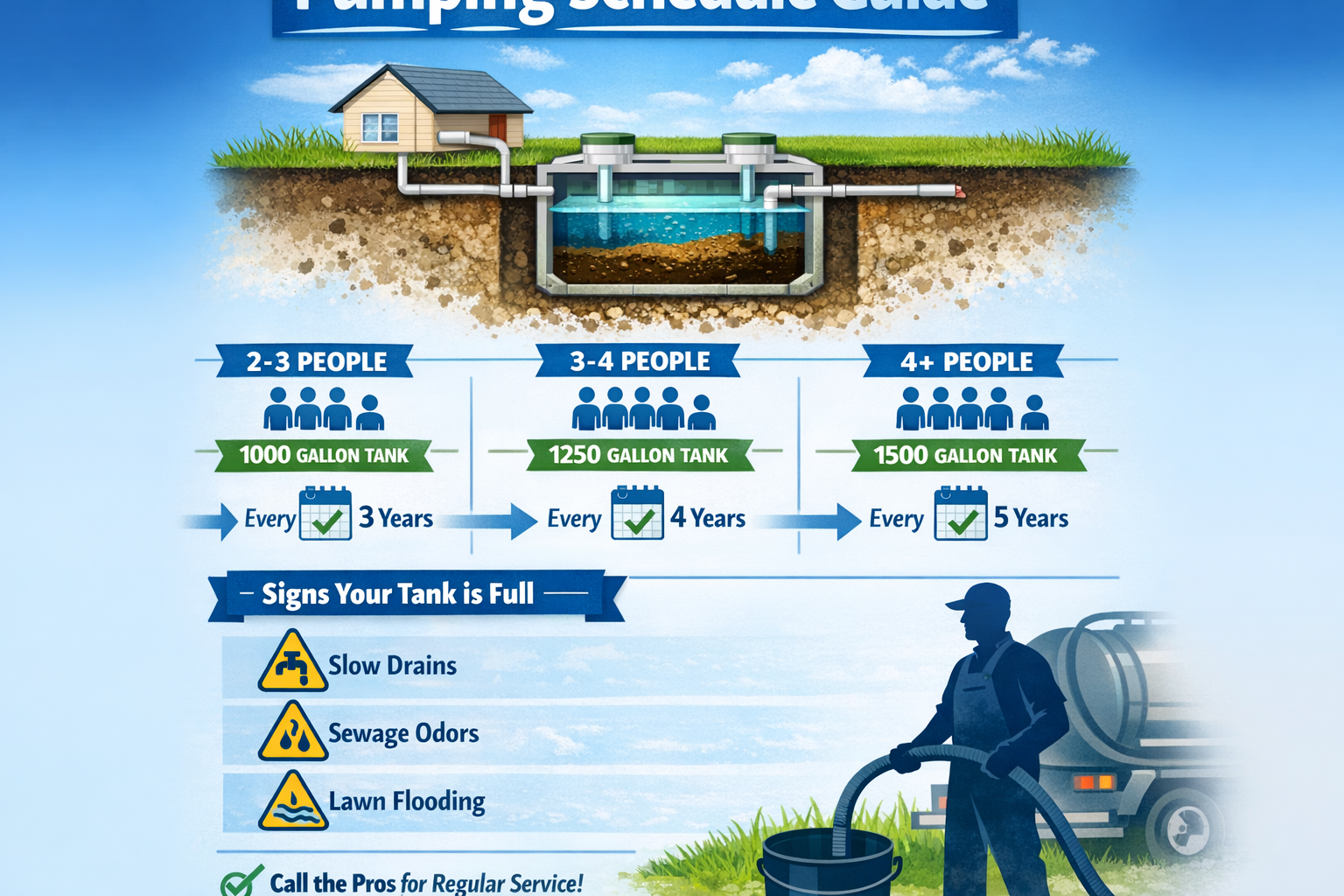
Pump your septic tank every 3-5 years for most households, but the exact timing depends on your tank size, household size, and water usage patterns.
The general rule is to pump when solids reach 20-30% of your tank’s capacity. A typical 1,000-gallon tank serving a family of four should be pumped every 3-4 years. Larger households or smaller tanks need more frequent pumping.
Factors That Affect Pumping Frequency
Household size: More people means more waste entering your system
- 1-2 people: Every 4-5 years
- 3-4 people: Every 3-4 years
- 5+ people: Every 2-3 years
Tank capacity: Smaller tanks fill up faster and need more frequent pumping
Water usage: High water usage pushes solids through the system before they can properly separate
Garbage disposal use: Avoid using garbage disposals with septic systems, as they add unnecessary solids
Common mistake: Waiting for warning signs before pumping. By the time you notice slow drains or odors, your system is already stressed and may need repairs beyond just pumping.
What Are the Most Important Septic Tank Maintenance Tips for Daily Use?
The most critical daily maintenance involves being selective about what enters your system and managing your water usage to prevent overload.
Your septic system relies on beneficial bacteria to break down waste. Everything you put down your drains either helps or hurts this natural process.
What You Should Never Flush or Pour Down Drains
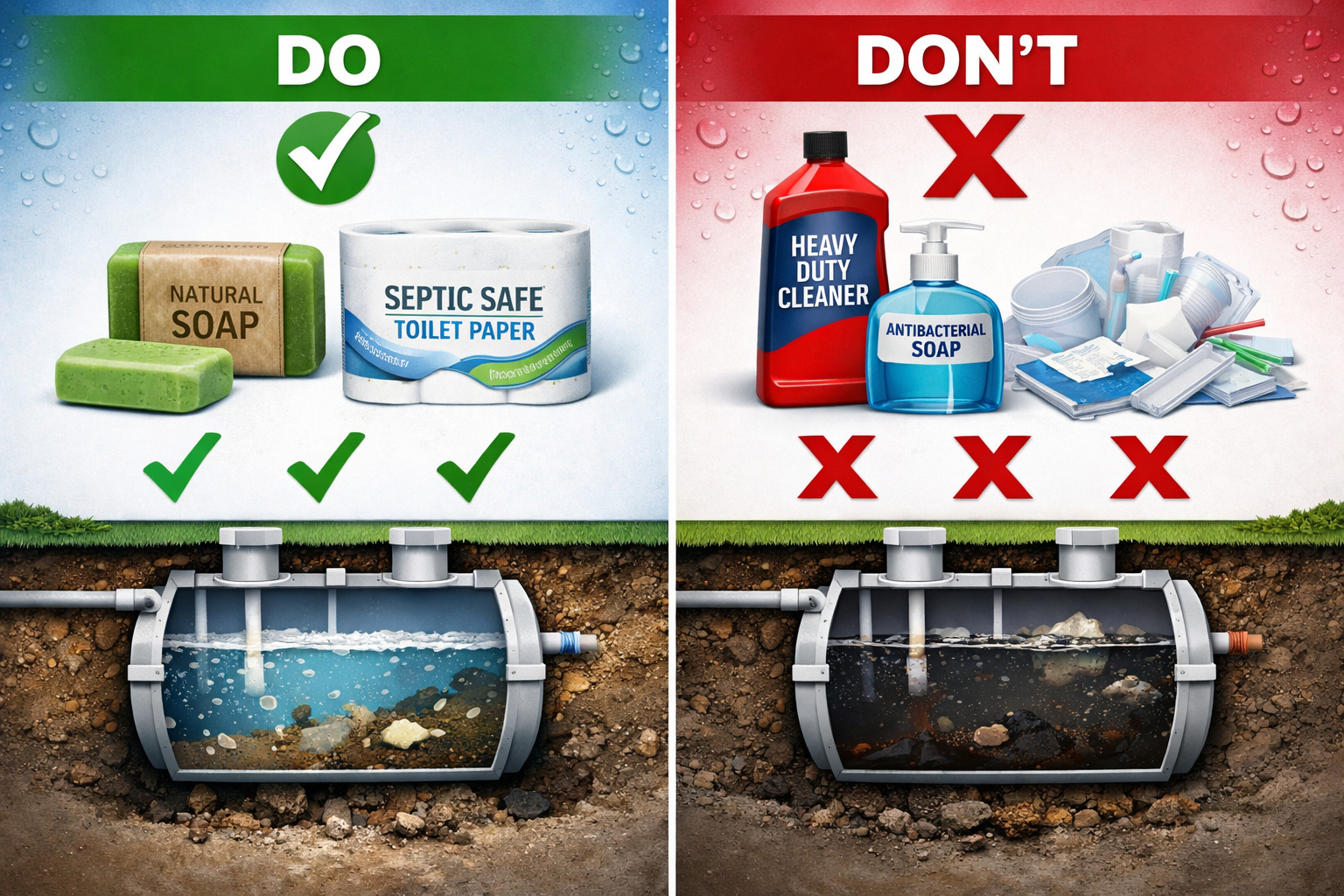
- Wipes of any kind (even those labeled “flushable”)
- Feminine hygiene products
- Grease, oil, and cooking fats
- Paper towels and tissues
- Coffee grounds and food scraps
- Harsh chemicals and antibacterial soaps
- Paint, solvents, and household chemicals
Septic-Safe Products to Use Instead
Choose liquid, biodegradable, and low-phosphate soaps for all your cleaning needs. Look for products specifically labeled as septic-safe.
Toilet paper: Use single-ply, septic-safe, or biodegradable options that break down quickly
Cleaning products: Avoid antibacterial soaps and harsh chemicals that kill beneficial bacteria in your tank
Decision rule: If you wouldn’t put it in a compost pile, don’t put it in your septic system.
FYI: Some links may be affiliate links, which means I may earn a small commission at no extra cost to you.
For homeowners looking for an easy way to maintain healthy bacteria levels in their septic system, products like Septifix tablets can help break down waste and reduce buildup. These easy-to-use tablets are designed to support your system’s natural processes without harsh chemicals that could disrupt the bacterial balance.
Here are some of the most reliable septic tank treatment options for keeping your system clean, odor-free, and working properly—from breaking down waste and reducing buildup to helping prevent blockages and costly repairs. These easy-to-use tablets are trusted by many homeowners to maintain a healthy, efficient septic system with minimal effort.
👉 See how Septifix tablets can keep your septic system clean and efficient
How Can You Manage Water Usage to Protect Your Septic System?
Spread your water usage throughout the week rather than concentrating it in one or two days, and fix any leaks immediately to prevent system overload.
Your septic tank needs time to separate solids, liquids, and oils. When you overwhelm it with too much water at once, solids get pushed into the drain field before they’re properly broken down.
Water Conservation Strategies
Spread laundry loads throughout the week instead of doing multiple loads on one day. This prevents hydraulic overload that can damage your system.
Install low-flow fixtures:
- Low-flow toilets (1.6 gallons per flush or less)
- Water-efficient showerheads
- High-efficiency washing machines and dishwashers
Fix leaks immediately: Even small drips waste unnecessary gallons and stress your system
Smart Water Usage Habits
- Take shorter showers
- Only run dishwashers and washing machines with full loads
- Don’t leave water running while brushing teeth or shaving
- Consider upgrading to high-efficiency appliances when replacements are needed
Edge case: If you have house guests or are hosting events, be extra mindful of water usage. Consider spacing out activities like multiple showers, laundry, and dishwashing over several days rather than concentrating them.
When Should You Schedule Professional Septic Inspections?
Schedule professional inspections every 1-3 years, with annual inspections recommended for systems that have electrical components like pumps or alarms.
Professional inspections catch problems early, before they become expensive emergencies. A qualified technician can assess sludge and scum levels, check for leaks, and ensure all components are working properly.
What Professional Inspections Include
Tank inspection: Measuring sludge and scum layers to determine if pumping is needed
Component check: Testing pumps, alarms, and electrical systems (if applicable)
Drain field assessment: Looking for signs of failure like wet spots, odors, or lush grass growth
Baffle inspection: Ensuring inlet and outlet baffles are intact and functioning
Signs You Need Immediate Professional Help
Call a septic professional right away if you notice:
- Sewage backing up into your house
- Strong septic odors around your tank or in your home
- Slow drains throughout your house
- Wet, soggy areas over your drain field
- Gurgling sounds from drains
Common mistake: Assuming you only need professional help when there’s a problem. Regular inspections are much less expensive than emergency repairs.
How Do You Protect Your Septic Drain Field?
Keep heavy vehicles, equipment, and structures off your drain field area, and maintain proper landscaping to prevent soil compaction and root damage.
Your drain field is where the final treatment of wastewater happens. Damage to this area is often the most expensive part of septic system repairs.
Drain Field Protection Rules
No heavy traffic: Keep cars, trucks, RVs, and heavy equipment off the drain field area
No structures: Don’t build decks, sheds, or other structures over the drain field
No deep-rooted plants: Avoid planting trees or large shrubs near the drain field, as roots can damage pipes
Proper grading: Ensure surface water drains away from the area, not toward it
Recommended Drain Field Landscaping
- Plant grass or other shallow-rooted ground cover
- Use the area for light recreational activities only
- Consider marking the boundaries so family and visitors know where it is
- Keep the area accessible for future maintenance
Decision rule: If it’s heavier than a riding lawnmower, keep it off your drain field.
What Septic Tank Treatment Options Work Best?
Bacterial additives can help maintain healthy bacteria levels in your tank, but they’re not a substitute for proper pumping and maintenance practices.
Understanding how septic tank treatment works can help you make informed decisions about maintaining your system’s bacterial balance.
Types of Septic Treatments
Bacterial additives: Help restore beneficial bacteria, especially after antibiotic use or harsh chemical exposure
Enzyme treatments: Break down organic matter and can help with minor clogs
Biological activators: Boost the natural processes already happening in your tank
When Treatment Products Are Most Helpful
- After family members have taken antibiotics
- Following accidental introduction of harsh chemicals
- In systems that see irregular use (vacation homes)
- As part of regular maintenance for optimal performance
For homeowners who want a simple, reliable option, Septifix tablets offer an easy way to support your septic system’s natural processes. These tablets help break down waste and reduce buildup while being gentle on the beneficial bacteria your system needs to function properly.
How Can You Tell If Your Septic Tank Needs Attention?
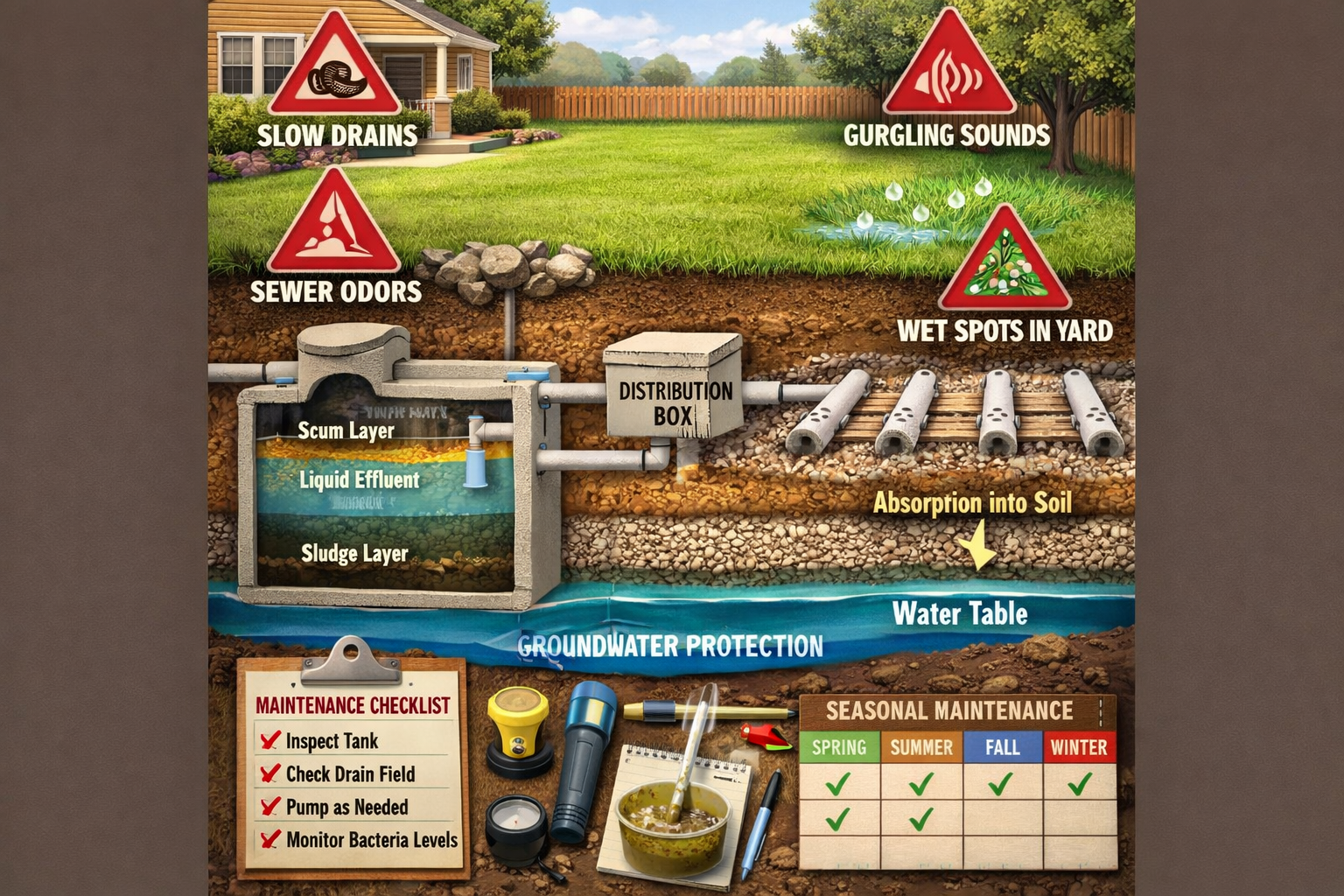
Watch for warning signs like slow drains, unusual odors, wet spots in your yard, or gurgling sounds from your plumbing fixtures.
Recognizing early warning signs can save you thousands in repair costs. Knowing when your septic tank is full or experiencing problems helps you take action before minor issues become major failures.
Early Warning Signs
Inside your home:
- Slow drains in multiple fixtures
- Gurgling sounds from toilets or drains
- Sewage odors in bathrooms or basement
- Water backing up in floor drains
Outside your home:
- Wet, soggy areas over the septic tank or drain field
- Unusually green or lush grass over the system
- Strong odors around the tank or drain field
- Standing water or sewage on the surface
What Each Warning Sign Means
Slow drains: Usually indicates your tank is full or there’s a blockage
Odors: Can signal tank problems, drain field issues, or ventilation problems
Wet spots: Often means your drain field is failing or overloaded
Gurgling sounds: Typically indicates air displacement due to blockages or full tank
Quick example: If you notice slow drains in just one fixture, it’s likely a localized plumbing issue. But if multiple drains are slow throughout your house, your septic system probably needs attention.
Frequently Asked Questions
How much does septic tank maintenance cost annually?
Basic maintenance including annual inspections runs $200-400 per year. Pumping every 3-5 years costs $300-600. This is far less expensive than system replacement, which can cost $15,000-25,000.
Can I pump my own septic tank?
No, septic tank pumping requires specialized equipment and proper waste disposal permits. Always hire licensed professionals who can safely handle sewage and dispose of it at approved facilities.
What happens if I skip regular maintenance?
Skipping maintenance leads to system failure, expensive repairs, and potential health hazards. You may face sewage backups, drain field replacement, or complete system replacement.
Are septic tank additives necessary?
Additives aren’t required for normal operation, but they can be helpful after antibiotic use or chemical exposure. Your system’s natural bacteria usually handle waste breakdown without assistance.
How long do septic systems last?
Well-maintained septic systems can last 20-30 years or more. Poor maintenance can cause failure in as little as 5-10 years.
What should I do if my septic alarm goes off?
Septic alarms usually indicate high water levels or pump failure. Reduce water usage immediately and call a professional within 24 hours.
Can I use bleach with a septic system?
Use bleach sparingly. Small amounts for cleaning won’t harm your system, but avoid large quantities or frequent use that could kill beneficial bacteria.
Should I add yeast or other home remedies to my septic tank?
Home remedies like yeast, baking soda, or sugar don’t improve septic function and may actually disrupt the bacterial balance. Stick to proven maintenance practices.
What’s the difference between septic-safe and regular toilet paper?
Septic-safe toilet paper breaks down faster and more completely, reducing the risk of clogs and extending time between pumpings.
Can heavy rain affect my septic system?
Yes, excessive water from heavy rain can overload your system. Ensure proper grading around your tank and drain field to direct surface water away.
Is it normal to smell my septic system occasionally?
Occasional mild odors during pumping or in very hot weather can be normal. Persistent strong odors indicate problems that need professional attention.
What permits do I need for septic maintenance?
Regular maintenance like pumping doesn’t require permits, but major repairs or system replacement typically need local health department permits and inspections.
Key Takeaways
• Pump every 3-5 years based on your household size and tank capacity—don’t wait for warning signs
• Schedule annual professional inspections to catch problems early and avoid expensive emergency repairs
• Use only septic-safe products and never flush anything except human waste and toilet paper
• Spread water usage throughout the week instead of concentrating laundry and other high-water activities
• Protect your drain field by keeping vehicles, structures, and deep-rooted plants away from the area
• Watch for warning signs like slow drains, odors, or wet spots and address them immediately
• Fix leaks promptly as even small drips can stress your system over time
• Consider bacterial treatments after antibiotic use or chemical exposure to restore system balance
• Keep detailed maintenance records to track pumping dates and identify patterns
• Budget for regular maintenance as it’s far less expensive than system replacement
Helpful Resource
If you’re looking for a simple way to support your septic system between professional maintenance visits, Septifix tablets can help maintain healthy bacteria levels and reduce waste buildup. These tablets are designed to work with your system’s natural processes, making septic maintenance easier for busy homeowners who want to protect their investment without complicated routines.
Conclusion
Proper septic tank maintenance doesn’t have to be complicated, but it does require consistency and attention to detail. The septic tank maintenance tips I’ve shared will help you avoid the costly mistakes that lead to system failure and expensive repairs.
Start by scheduling your next professional inspection if it’s been more than a year since your last one. Review what you’re putting down your drains and make the switch to septic-safe products. Most importantly, keep track of when your tank was last pumped and plan for the next service based on your household’s specific needs.
Remember, your septic system is working 24/7 to protect your family’s health and your property value. A small investment in regular maintenance will save you thousands in the long run and give you peace of mind knowing your system is operating safely and efficiently.
Take action today by implementing these maintenance practices, and your septic system will serve your family reliably for decades to come.
References
[1] Your Complete Guide To Septic Systems Care Maint – https://www.wrenvironmental.com/blog/2025/july/your-complete-guide-to-septic-systems-care-maint/
[2] Septic Tank Maintenance – https://www.vdwws.com/blog/septic-tank-maintenance
[3] How Often To Pump A Septic Tank – https://clearriverenvironmental.com/how-often-to-pump-a-septic-tank/
[4] Septic Longevity Tips – https://advancedsepticservicesfl.com/septic-longevity-tips/