How Often to Maintain Septic Tank: Complete 2026 Guide
Last updated: February 19, 2026
Key Takeaways
• Pump your septic tank every 3-5 years for most households, with smaller families extending to 4-5 years and larger families requiring 2-3 years
• Schedule professional inspections every 1-3 years to catch problems before they become expensive repairs
• Household size directly affects frequency – more people means more frequent pumping and maintenance
• Tank size and water usage patterns significantly impact how often maintenance is needed
• Regular maintenance costs $300-700 but prevents system failures that can cost $10,000+ to replace
Quick Answer
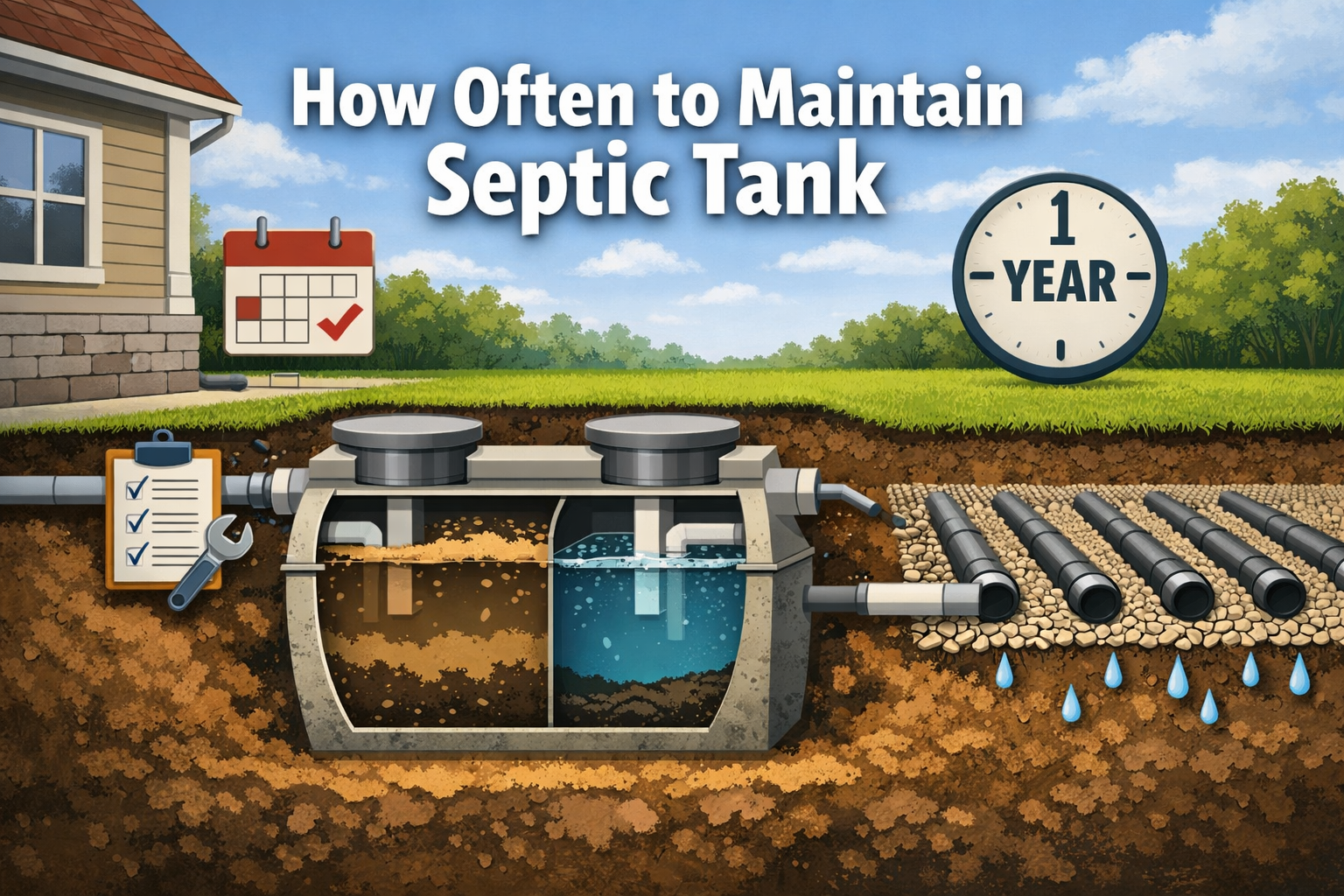
Most septic tanks need pumping every 3-5 years, but the exact frequency depends on household size, tank capacity, and water usage. Small households (1-2 people) can typically wait 4-5 years, while larger families (5+ people) may need pumping every 1-2 years. Professional inspections should occur every 1-3 years to monitor sludge levels and catch potential issues early.
Why Septic Tank Maintenance Frequency Matters
Regular septic maintenance prevents system failure and protects your property investment. A properly maintained septic system can last 25-30 years, while neglected systems often fail within 10-15 years, requiring complete replacement at costs exceeding $15,000.
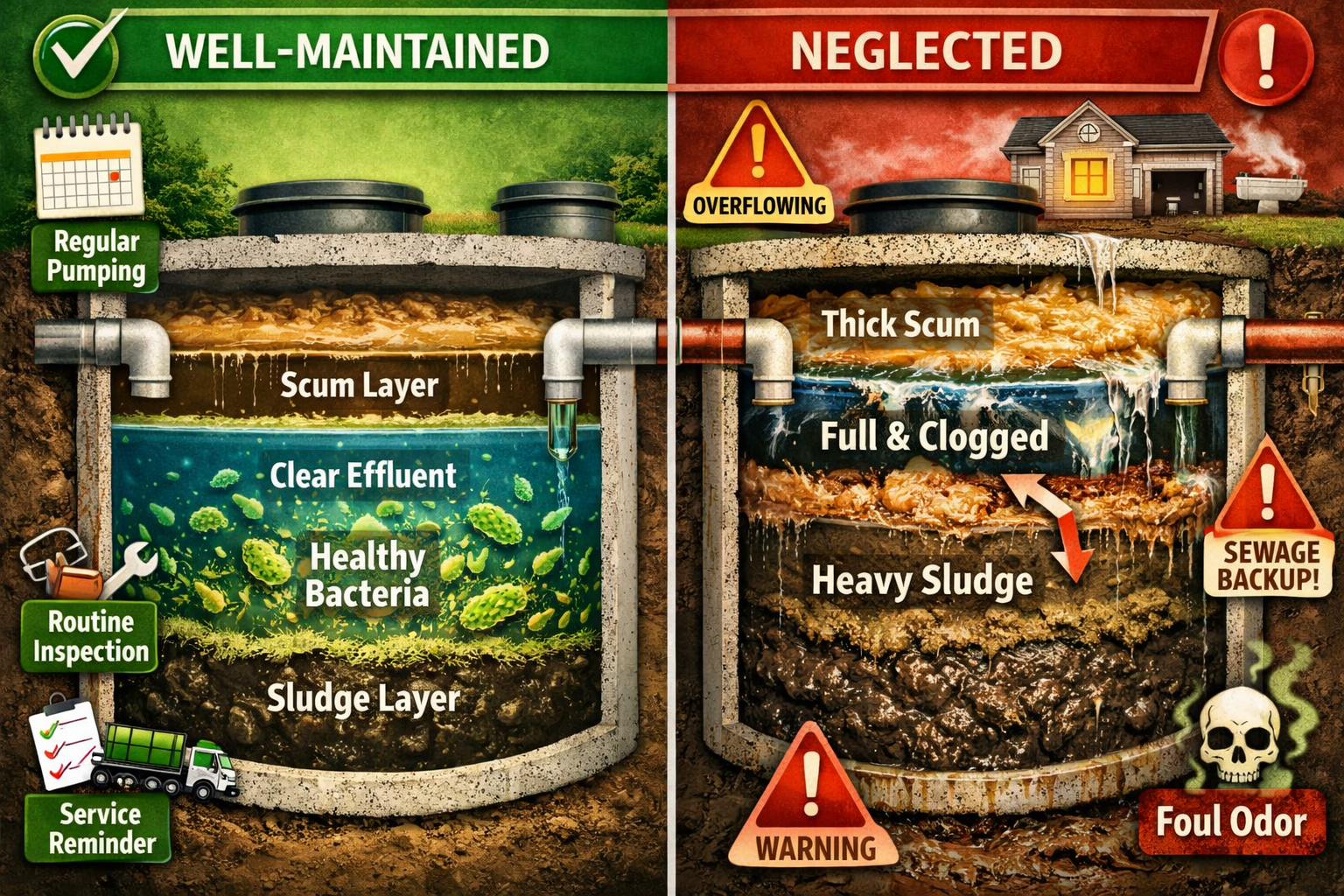
Your septic tank works by separating waste into three layers: scum (oils and grease) at the top, liquid effluent in the middle, and sludge (solid waste) at the bottom. Over time, the sludge and scum layers accumulate and reduce the tank’s effective capacity. When these layers become too thick, they can overflow into your drain field, causing backups, odors, and environmental contamination.
The key factors that determine maintenance frequency include:
• Household size – More people generate more waste
• Tank capacity – Larger tanks handle more waste before reaching capacity
• Water usage patterns – High water use fills tanks faster
• Waste disposal habits – Garbage disposals and harsh chemicals accelerate problems
• System age and condition – Older systems require more frequent attention
Understanding how often to maintain septic tank systems in your specific situation helps you avoid emergency repairs and keeps your system running efficiently for decades.
How Often Should You Pump Your Septic Tank Based on Household Size
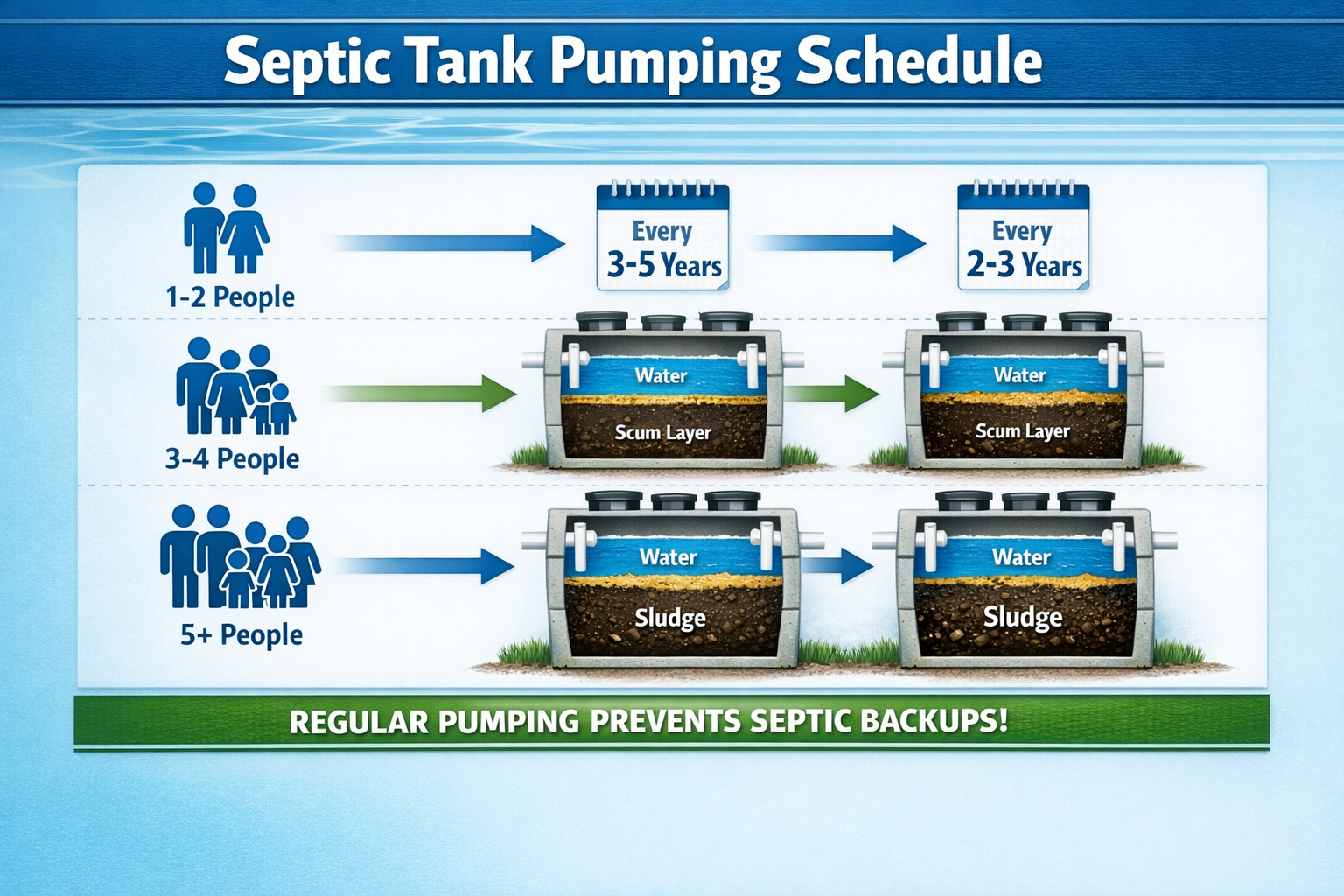
Household size is the primary factor determining septic tank pumping frequency. The EPA and state health departments recommend specific intervals based on the number of people in your home.
Small Households (1-2 People)
Pump every 4-5 years with a standard 1,000-gallon tank. Small households generate less waste and use less water, allowing longer intervals between pumpings. If you have a larger tank (1,500+ gallons), you may extend this to 5-7 years.
Choose 4-year intervals if you:
• Use a garbage disposal regularly
• Do frequent laundry loads
• Have guests often
• Live in an older home with higher water usage fixtures
Medium Households (3-4 People)
Pump every 2-3 years for optimal performance. This is the most common household size, and the 3-year interval works well for most families with standard water usage patterns.
Move to 2-year intervals if you:
• Have teenagers who take long showers
• Run multiple loads of laundry weekly
• Use a garbage disposal daily
• Have a smaller tank (under 1,000 gallons)
Large Households (5+ People)
Pump every 1-2 years to prevent overloading. Households with 8+ people sometimes require annual pumping. Large families generate significant waste volume and typically use substantial amounts of water.
Consider annual pumping if you:
• Have 6+ people in the household
• Use high-efficiency washing machines frequently
• Have multiple bathrooms in regular use
• Notice any early warning signs between pumpings
The relationship between household size and pumping frequency isn’t just about waste volume – it’s about maintaining the proper balance of bacteria and ensuring adequate settling time for solids to separate properly.
Professional Inspection Schedule: How Often to Maintain Septic Tank Health
Schedule professional septic inspections every 1-3 years, even when your tank doesn’t need pumping. These inspections catch problems early and help you determine the optimal pumping schedule for your specific system.
What Professional Inspections Include
Sludge and scum level measurement using specialized tools to determine how much solid waste has accumulated. Technicians measure the thickness of both layers and calculate remaining tank capacity.
Drain field assessment to check for standing water, odors, or overly green grass that indicates system problems. A failing drain field is expensive to repair and often preventable with proper maintenance.
Tank structural inspection examining the tank walls, baffles, and inlet/outlet pipes for cracks, corrosion, or damage. Early detection of structural issues prevents costly emergency repairs.
State-Specific Inspection Requirements
Some states mandate specific inspection frequencies:
• Massachusetts: Requires inspections every 2 years for most systems
• Florida coastal areas: Mandate annual inspections due to environmental sensitivity
• Pennsylvania and New Jersey: Recommend inspections every 2-3 years
Common inspection mistake: Waiting until you notice problems to call a professional. By the time you smell odors or see backups, damage has often already occurred to your drain field.
Pro tip: Schedule your inspection 6-12 months before your expected pumping date. This timing allows you to address any issues before they become emergencies and helps confirm whether pumping is actually needed.
Regular inspections also help you understand your system’s unique characteristics and adjust your maintenance schedule accordingly. Some tanks fill faster than expected due to high water usage, while others may go longer between pumpings if the household is particularly conservative with water use.
Tank Size and Capacity: How It Affects Maintenance Timing
Tank size directly impacts how often you need maintenance, with larger tanks extending intervals and smaller tanks requiring more frequent attention. Understanding your tank’s capacity helps you create an accurate maintenance schedule.
Standard Tank Sizes and Pumping Intervals
1,000-gallon tanks (most common residential size):
• 1-2 people: Every 4-5 years
• 3-4 people: Every 3 years
• 5+ people: Every 2 years
750-gallon tanks (smaller properties):
• 1-2 people: Every 3-4 years
• 3-4 people: Every 2-3 years
• 5+ people: Annual pumping often required
1,500+ gallon tanks (larger properties):
• 1-2 people: Every 5-7 years
• 3-4 people: Every 4-5 years
• 5+ people: Every 3-4 years
How to Determine Your Tank Size
Check your home’s septic system records from when it was installed or last inspected. Most counties require permits for septic installation, and these records include tank specifications.
Measure the tank dimensions if records aren’t available. A typical rectangular concrete tank that’s 8 feet long, 5 feet wide, and 5 feet deep holds approximately 1,000 gallons.
Ask during your next professional service – technicians can quickly determine tank capacity during pumping or inspection.
Why Tank Size Matters for Maintenance
Effective capacity decreases over time as sludge and scum layers build up. A 1,000-gallon tank with 200 gallons of accumulated solids only has 800 gallons of working capacity.
Smaller tanks reach capacity faster because they have less buffer space for waste accumulation. This is why 750-gallon tanks often need pumping every 2-3 years even with moderate usage.
Larger tanks provide more settling time for solids to separate properly, which improves treatment efficiency and extends the time between pumpings.
FYI: Some links may be affiliate links, which means I may earn a small commission at no extra cost to you.
Choose shorter intervals if your tank is undersized for your household. Many older homes have tanks that were adequate when installed but are now too small for modern water usage patterns. If you frequently run into capacity issues, consider upgrading to a larger tank or implementing water conservation measures.
For homeowners looking to maintain optimal septic health between pumpings, products like Septifix tablets can help break down waste and reduce buildup naturally. These easy-to-use treatments support your tank’s bacterial balance and may help extend intervals between professional services, though they don’t replace the need for regular pumping and inspections.
Here are some of the most reliable septic tank treatment options for keeping your system clean, odor-free, and working properly—from breaking down waste and reducing buildup to helping prevent blockages and costly repairs. These easy-to-use tablets are trusted by many homeowners to maintain a healthy, efficient septic system with minimal effort.
👉 See how Septifix tablets can keep your septic system clean and efficient
Water Usage Patterns That Change Maintenance Frequency
High water usage accelerates septic tank filling and requires more frequent maintenance. Understanding how your household’s water consumption affects your system helps you adjust maintenance schedules and prevent overloading.
High-Impact Water Usage Activities
Laundry loads contribute significantly to tank volume. Each load adds 25-40 gallons of water plus detergents and fabric softeners that can disrupt bacterial balance. Households doing 7+ loads weekly should consider shorter pumping intervals.
Long showers and frequent baths increase hydraulic loading on your system. A 15-minute shower uses 25-50 gallons depending on your showerhead. Families with teenagers or multiple daily showers often need pumping every 2-3 years regardless of household size.
Garbage disposal usage adds both water volume and organic matter to your tank. Regular disposal use can reduce pumping intervals by 6-12 months. Consider composting food scraps instead to reduce the load on your septic system.
Hot tub and pool drainage can overwhelm your system if discharged into household drains. Always drain these features away from your septic system to prevent hydraulic overload.
Water Conservation Strategies
Install low-flow fixtures to reduce daily water consumption by 20-30%. Low-flow toilets, efficient showerheads, and faucet aerators significantly decrease the volume entering your tank.
Spread laundry loads throughout the week instead of doing multiple loads on one day. This prevents hydraulic shock and gives your system time to process each load properly.
Fix leaks immediately – a running toilet can add hundreds of gallons daily to your tank. Even small leaks compound over time and force more frequent maintenance.
Time major water usage to avoid overloading your system. Don’t run the dishwasher, washing machine, and multiple showers simultaneously.
Seasonal Usage Variations
Summer months often see increased water usage from guests, swimming pools, and lawn irrigation. Monitor your system more closely during peak usage periods.
Holiday gatherings can temporarily stress your system with additional guests and cooking activities. Plan maintenance before major holiday seasons if your tank is approaching capacity.
Vacation homes may have irregular usage patterns that make standard schedules less applicable. Base maintenance timing on actual usage rather than calendar intervals.
Understanding these patterns helps you recognize when your specific situation might require more frequent maintenance than standard guidelines suggest. If you notice any signs your septic tank is full earlier than expected, adjust your schedule accordingly.
Warning Signs That Indicate Immediate Maintenance Needs
Don’t wait for your scheduled maintenance if you notice warning signs – early intervention prevents expensive system failures and environmental damage. Recognizing these symptoms helps you determine when immediate professional attention is needed.
Immediate Red Flags
Sewage backups in your home indicate your tank is full or your drain field is failing. This requires emergency service within 24-48 hours to prevent health hazards and property damage.
Strong sewage odors around your tank or drain field suggest system overload or structural problems. Properly functioning septic systems should be virtually odorless from the surface.
Standing water or wet spots over your drain field when it hasn’t rained recently indicates the system isn’t processing effluent properly. This often signals drain field failure or tank overflow.
Gurgling sounds from drains when you flush toilets or run water may indicate blockages or tank capacity issues. Learn more about septic tank gurgling sounds and their causes.
Early Warning Signs
Slow drains throughout your home (not just one fixture) often indicate your tank is approaching capacity. This is especially concerning if multiple drains slow down simultaneously. For detailed troubleshooting, see our guide on septic tank slow drain problems.
Unusually green or lush grass over your drain field suggests nutrient-rich effluent is reaching the surface. While grass needs nutrients, excessive growth indicates system problems.
High nitrate levels in nearby wells (if you have well water) can indicate septic system contamination of groundwater. Test well water annually if your septic system is nearby.
Toilet paper or other debris in your yard near the septic area indicates tank overflow or structural damage allowing contents to escape.
When to Call for Emergency Service
Call immediately if you experience:
• Sewage backing up into your home
• Strong sewage odors inside your house
• Standing sewage water in your yard
• Multiple drains backing up simultaneously
Schedule service within a week for:
• Persistent slow drains in multiple fixtures
• New odors around your tank area
• Changes in grass growth over your drain field
• Gurgling sounds from drains
Common mistake: Assuming problems will resolve themselves. Septic issues typically worsen quickly once symptoms appear, and early intervention is always less expensive than emergency repairs.
If you’re experiencing any of these warning signs, check our detailed guide on how to know if your septic tank is full for additional diagnostic information.
Regional Variations: How Climate and Regulations Affect Maintenance
Local climate conditions and state regulations significantly impact septic maintenance schedules. Understanding your area’s specific requirements helps ensure compliance and optimal system performance.
Cold Climate Considerations
Northern states require different maintenance timing due to freezing temperatures and ground conditions. Frozen ground makes pumping difficult or impossible, so schedule maintenance during warmer months.
Winter pumping challenges include:
• Difficulty accessing buried tank lids
• Frozen pipes preventing proper tank drainage
• Ground conditions that prevent heavy equipment access
• Increased risk of system damage from frozen components
Plan maintenance between April and October in areas with harsh winters. Many northern homeowners schedule pumping in late summer or early fall to ensure systems are in optimal condition before winter stress.
State-Specific Requirements
Massachusetts mandates pumping every 2-3 years for families with high water usage and requires strict inspection schedules every 2 years. The state also requires detailed maintenance records for property transfers.
Florida and Georgia recommend 3-year pumping intervals with mandatory inspections in environmentally sensitive coastal areas. These states focus heavily on groundwater protection due to high water tables.
Pennsylvania, New Jersey, and New York typically require 2-3 year intervals with additional requirements for systems near water sources or in high-density areas.
Environmental Factors
High water table areas may require more frequent maintenance because saturated soil conditions stress drain fields and reduce treatment efficiency.
Clay soil regions often need shorter intervals because clay doesn’t absorb effluent as readily as sandy soil, potentially causing backup issues.
Coastal areas face saltwater intrusion concerns that can affect system bacteria and require specialized maintenance approaches.
Drought conditions can stress septic systems by concentrating waste and reducing natural soil filtering. Some areas recommend additional treatments during extended dry periods.
HOA and Local Requirements
Homeowner associations may mandate specific maintenance schedules more frequent than state minimums. Review your HOA covenants for septic maintenance requirements.
Local health departments sometimes impose stricter standards than state regulations, especially in watershed protection areas or near sensitive environmental features.
Well water protection zones often require enhanced maintenance schedules and water quality testing to prevent contamination.
Research your local requirements by contacting your county health department or environmental services office. Many areas provide free guidance on optimal maintenance schedules for local conditions.
Understanding these regional variations helps you create a maintenance schedule that meets legal requirements while protecting your investment and the environment.
Cost-Benefit Analysis: Maintenance vs. Replacement
Regular septic maintenance costs $300-700 every few years but prevents system replacement costs of $15,000-25,000. Understanding the financial impact of maintenance decisions helps you make informed choices about your septic system care.
Routine Maintenance Costs
Professional pumping typically costs $300-500 for standard residential tanks. This includes waste removal, basic inspection, and disposal fees. Larger tanks or difficult access may increase costs to $600-700.
Annual inspections cost $150-300 and help identify problems before they become expensive repairs. Many companies offer discounts when you bundle inspection and pumping services.
Preventive treatments and additives range from $20-100 annually. While not always necessary, quality bacterial treatments can help maintain system balance and potentially extend pumping intervals.
Repair Costs When Maintenance Is Neglected
Drain field replacement costs $5,000-15,000 depending on soil conditions, system size, and local regulations. This is often required when tanks overflow repeatedly due to lack of pumping.
Tank replacement ranges from $3,000-8,000 for the tank itself, plus installation costs. Concrete tanks typically last 25-30 years with proper maintenance but may fail within 15 years without care.
Complete system replacement can exceed $25,000 in challenging soil conditions or areas requiring advanced treatment systems. This includes new tank, drain field, and often soil remediation.
Long-Term Financial Impact
Proper maintenance extends system life by 10-15 years compared to neglected systems. A system that lasts 30 years instead of 15 years saves you an entire replacement cycle.
Property value protection – functioning septic systems maintain property values, while failed systems can reduce home values by $10,000-20,000 and complicate sales.
Emergency repair costs are typically 2-3 times higher than planned maintenance due to urgent service fees, weekend rates, and potential property damage.
Cost Comparison Table
| Maintenance Schedule | 20-Year Cost | System Lifespan | Replacement Risk |
|---|---|---|---|
| Regular (3-5 years) | $2,000-3,500 | 25-30 years | Low |
| Delayed (6-8 years) | $1,200-2,000 | 15-20 years | Medium |
| Neglected (10+ years) | $500-800 | 10-15 years | High |
The math is clear: Regular maintenance costs about $100-175 annually but prevents replacement costs that can exceed $1,000 annually when amortized over system life.
Smart financial strategy: Set aside $150-200 annually in a septic maintenance fund. This covers routine pumping, inspections, and minor repairs while building reserves for eventual replacement.
For homeowners seeking cost-effective maintenance support between professional services, Septifix tablets offer an affordable way to maintain bacterial balance and reduce waste buildup. These treatments cost significantly less than emergency repairs and can help protect your investment in proper septic care.
Creating Your Personal Septic Maintenance Schedule
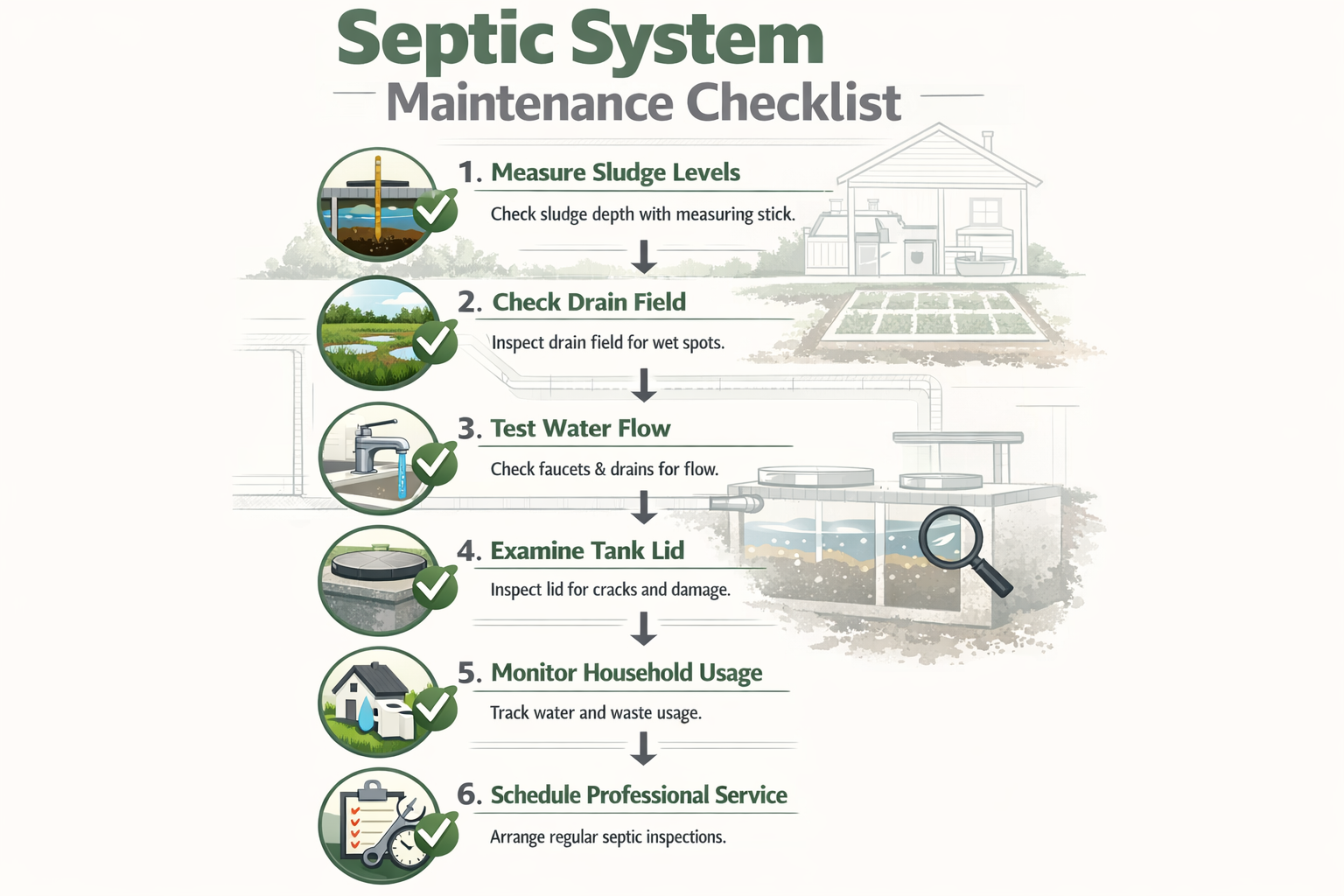
Develop a customized maintenance schedule based on your specific household characteristics and system requirements. A personalized approach ensures optimal performance while avoiding unnecessary costs or service gaps.
Step-by-Step Schedule Planning
1. Assess Your Baseline Factors
• Household size (current and planned changes)
• Tank capacity (check records or measure)
• System age and condition
• Local climate and soil conditions
• Current water usage patterns
2. Calculate Your Starting Interval
Use this decision framework:
• 1-2 people, 1000+ gallon tank: Start with 4-5 years
• 3-4 people, 1000 gallon tank: Start with 3 years
• 5+ people or <1000 gallon tank: Start with 2 years
• Adjust down 1 year if you have high water usage or garbage disposal
3. Plan Your First Professional Assessment
Schedule an inspection within 6-12 months to establish your system’s baseline condition. This helps calibrate your schedule to actual conditions rather than estimates.
Maintenance Calendar Template
Year 1: Professional inspection and pumping (if needed)
Year 2: Self-monitoring and basic maintenance
Year 3: Professional inspection, pumping based on sludge levels
Year 4-5: Continue cycle based on inspection results
Monthly tasks:
• Monitor water usage patterns
• Check for visible problems around tank and drain field
• Maintain household practices that protect system health
Annual tasks:
• Review and update maintenance schedule
• Budget for upcoming professional services
• Document any changes in household size or usage
Adjusting Your Schedule Over Time
Increase frequency if you notice:
• Warning signs appearing earlier than expected
• Changes in household size or water usage
• Aging system requiring more attention
• Local regulations becoming stricter
Decrease frequency if:
• Professional inspections consistently show minimal accumulation
• You’ve implemented significant water conservation measures
• Tank capacity is larger than initially estimated
• Household size has decreased permanently
Record Keeping Best Practices
Maintain a septic system log including:
• Pumping dates and waste volumes removed
• Inspection results and recommendations
• Any repairs or modifications made
• Changes in household size or usage patterns
• Costs for budgeting future services
Digital reminders help ensure you don’t forget scheduled maintenance. Set calendar alerts 6 months before planned services to allow scheduling flexibility.
Property records should include septic maintenance history for future owners and to demonstrate proper care if issues arise.
Common scheduling mistake: Setting rigid schedules without flexibility for changing conditions. Your maintenance needs may evolve as your household changes, so review and adjust your schedule annually.
For comprehensive guidance on recognizing when adjustments are needed, refer to our detailed guide on how to tell if your septic tank is full.
FAQ
How often should I pump my septic tank?
Most septic tanks need pumping every 3-5 years, but household size is the key factor. Small households (1-2 people) can typically wait 4-5 years, while larger families (5+ people) may need pumping every 1-2 years.
Can I go longer than 5 years between pumpings?
Only if you have a large tank (1,500+ gallons) and a small household (1-2 people). Even then, don’t exceed 7 years without professional inspection. Going too long risks system damage and expensive repairs.
How do I know if my tank needs pumping early?
Watch for slow drains, sewage odors, gurgling sounds, or standing water over your drain field. These signs indicate your tank may be full before your scheduled pumping date and requires immediate attention.
Does using a garbage disposal affect pumping frequency?
Yes, garbage disposals can reduce pumping intervals by 6-12 months because they add both water volume and organic matter to your tank. Consider composting food scraps instead to reduce system load.
Are septic tank additives worth using?
Quality bacterial treatments can help maintain system balance between pumpings, but they don’t replace the need for regular pumping. Avoid harsh chemical additives that can disrupt natural bacterial processes.
What happens if I never pump my septic tank?
Neglected tanks eventually overflow into drain fields, causing backups, environmental contamination, and system failure. Complete system replacement can cost $15,000-25,000 compared to $300-500 for routine pumping.
How much does septic tank pumping cost?
Professional pumping typically costs $300-700 depending on tank size and accessibility. This investment prevents much more expensive repairs and system replacement costs.
Can I pump my septic tank myself?
No, septic pumping requires specialized equipment and proper waste disposal. DIY attempts are dangerous, illegal in most areas, and can damage your system. Always use licensed professionals.
How often should I inspect my septic system?
Schedule professional inspections every 1-3 years, even when pumping isn’t needed. Inspections catch problems early and help determine optimal pumping schedules for your specific system.
Do I need to pump more often in winter?
Pumping frequency doesn’t change seasonally, but schedule maintenance during warmer months in cold climates. Frozen ground and pipes make winter pumping difficult or impossible.
What size septic tank do I have?
Check your home’s septic installation records or measure the tank dimensions. Most residential tanks are 1,000 gallons, but sizes range from 750-1,500+ gallons depending on home size and local codes.
Should I pump before selling my home?
Yes, pump and inspect your septic system before listing your property. Many buyers require septic inspections, and a well-maintained system supports your asking price and smooth closing process.
Key Takeaways
• Standard pumping interval is 3-5 years for most households, adjusted based on family size and tank capacity
• Professional inspections every 1-3 years help catch problems early and optimize your maintenance schedule
• Household size is the primary factor – more people require more frequent pumping and closer monitoring
• Water usage patterns significantly impact timing – high usage, garbage disposals, and inefficient fixtures require shorter intervals
• Warning signs require immediate attention – don’t wait for scheduled maintenance if you notice backups, odors, or slow drains
• Regional factors matter – climate, soil conditions, and local regulations affect optimal maintenance schedules
• Regular maintenance costs $300-700 but prevents system replacement costs exceeding $15,000
• Document everything – maintain records of pumping, inspections, and repairs for optimal system management
• Customize your schedule based on actual system performance rather than generic recommendations
• Early intervention saves money – addressing problems quickly prevents expensive emergency repairs and system failures
Helpful Resource
If you want a simple way to support your septic system between professional services, Septifix tablets can help keep your septic system clean and efficient. These easy-to-use treatments break down waste naturally and help maintain the bacterial balance that keeps your system working properly. While they don’t replace regular pumping and inspections, they’re a convenient option for homeowners who want to take proactive care of their septic investment with minimal effort.
Conclusion
Understanding how often to maintain septic tank systems protects your property investment and prevents costly emergency repairs. Most households need pumping every 3-5 years, but your specific schedule depends on family size, tank capacity, water usage, and local conditions.
The key to successful septic maintenance is creating a personalized schedule based on your actual system performance rather than generic guidelines. Start with standard recommendations, then adjust based on professional inspections and your household’s unique characteristics.
Take action now:
• Schedule a professional inspection if you haven’t had one in the past 2 years
• Calculate your estimated pumping interval based on household size and tank capacity
• Set calendar reminders for your next scheduled maintenance
• Begin documenting your system’s performance and maintenance history
• Contact local professionals to establish service relationships before you need emergency help
Remember, septic maintenance is an investment that pays dividends through extended system life, prevented repairs, and protected property values. The small cost of regular care prevents the massive expense of system replacement and gives you peace of mind that your home’s wastewater treatment is working safely and effectively.
For additional guidance on septic system care, explore our comprehensive resources on septic tank maintenance and common problems to keep your system running smoothly for decades to come.
SEO Meta Title: How Often to Maintain Septic Tank: Complete 2026 Guide
Meta Description: Learn how often to maintain septic tank systems based on household size, tank capacity, and usage. Expert pumping schedules, inspection timing, and cost-saving tips.
References
[1] How Often Should You Schedule Septic Tank Pumping – https://hellawater.com/how-often-should-you-schedule-septic-tank-pumping/
[2] How Often To Pump A Septic Tank – https://clearriverenvironmental.com/how-often-to-pump-a-septic-tank/
[3] Septic Tank Maintenance – https://www.vdwws.com/blog/septic-tank-maintenance
[4] How Often To Pump Septic Tank – https://dandhsepticservices.com/how-often-to-pump-septic-tank/