Understanding and Solving Your Septic Tank Slow Drains Problem
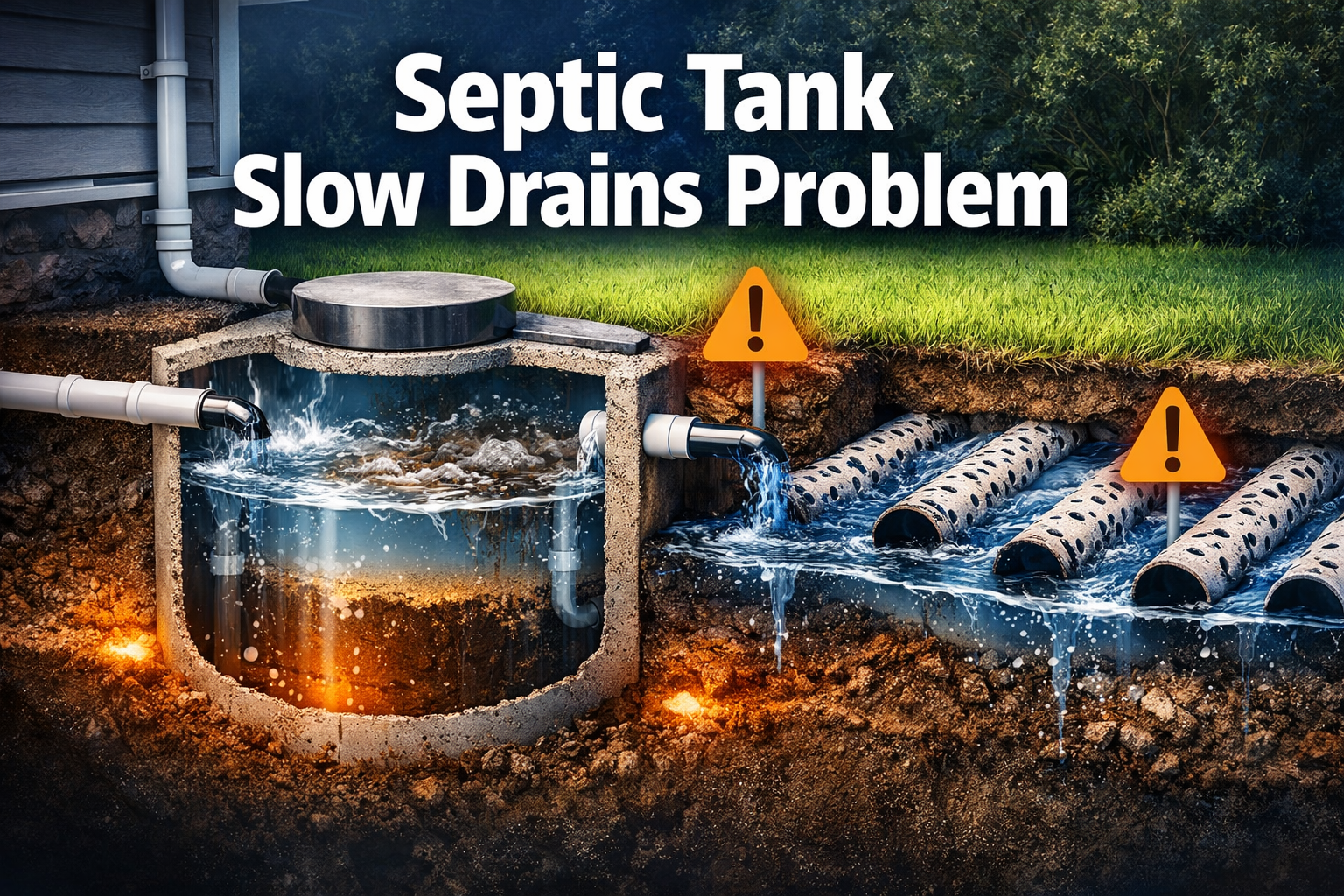
Picture this: you’re getting ready for work, and suddenly your bathroom sink takes forever to empty. Your shower leaves you standing in ankle-deep water, and your washing machine seems to struggle with every cycle. If you rely on a septic system, these frustrating slow drains might signal a serious Septic Tank Slow Drains Problem that could cost you thousands if left untreated. The good news? Most drainage issues can be prevented and resolved with the right knowledge and timely action.
Key Takeaways
- Full or overloaded septic tanks are the leading cause of slow drains throughout your home, requiring regular pumping every 3-5 years
- Early detection saves money – addressing slow drains promptly prevents costly system failures and emergency repairs
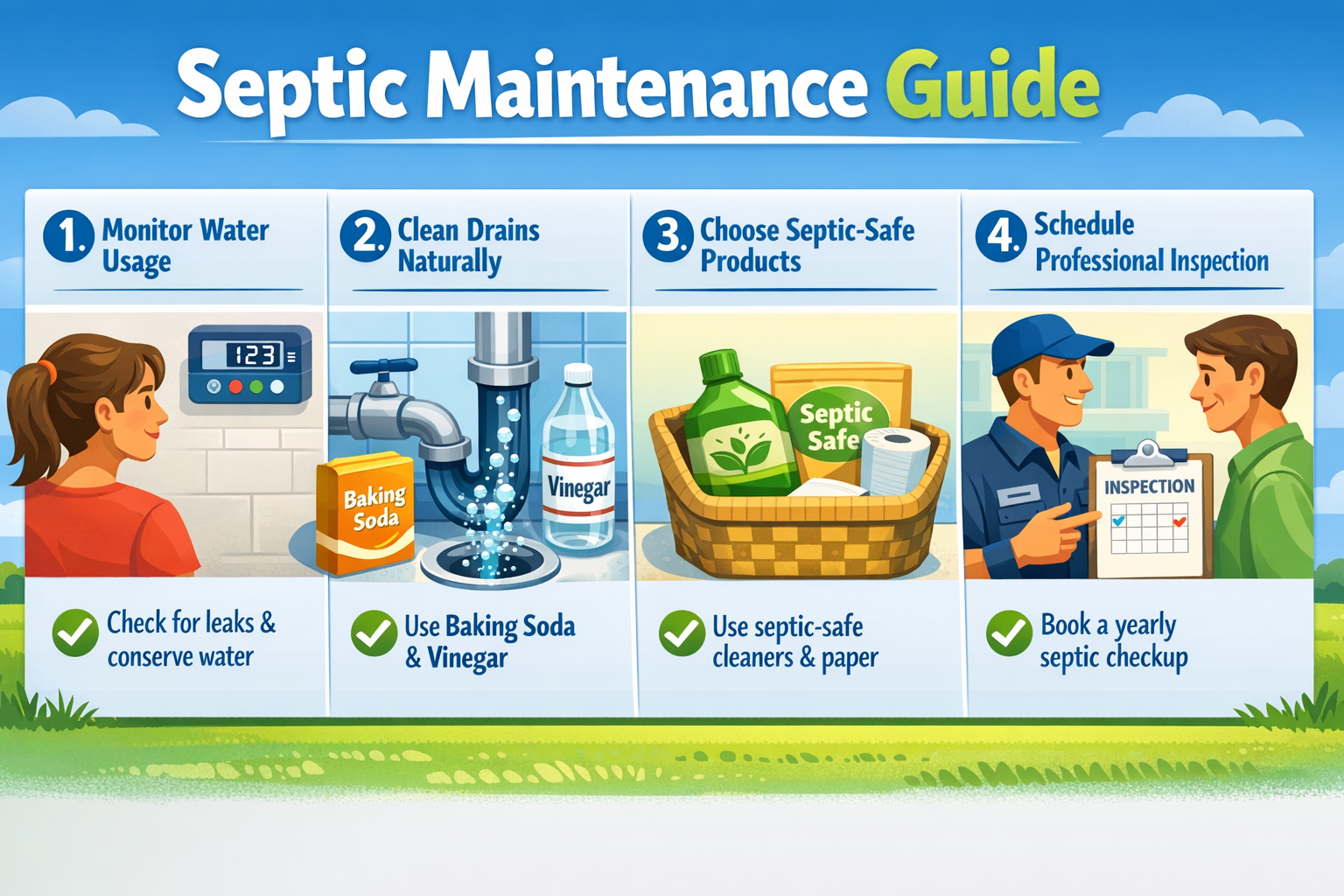
- Simple maintenance steps like reducing water usage, using septic-safe products, and natural cleaning methods can restore proper drainage
- Professional inspection becomes essential when multiple drains slow down simultaneously or DIY solutions fail
- Prevention is cheaper than replacement – maintaining your septic system costs far less than installing a new one
What Causes Septic Tank Slow Drains Problem
The Primary Culprit: Overloaded Septic Tanks
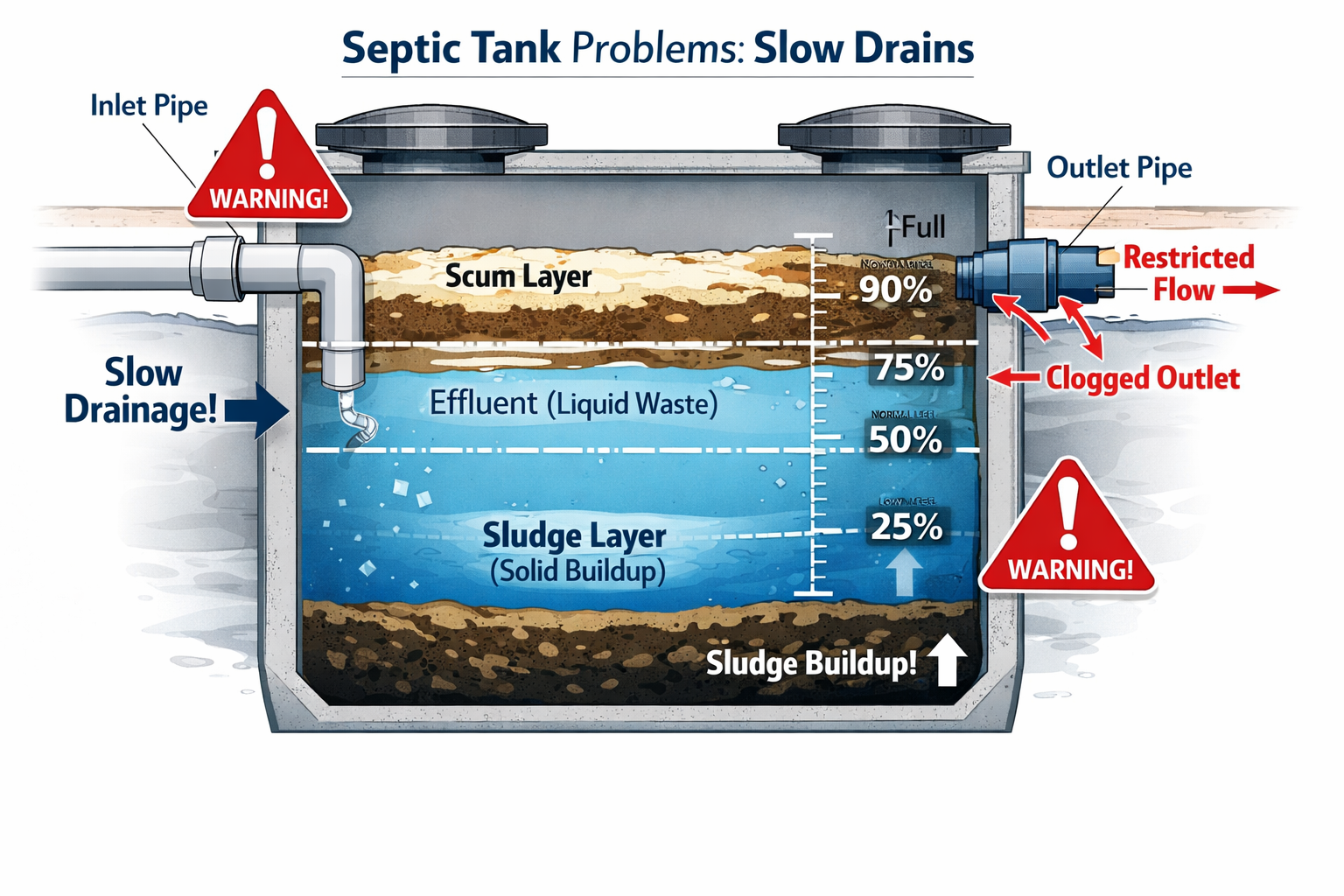
When I talk to homeowners about drainage issues, full or overloaded septic tanks emerge as the most common reason for slow drains throughout a home. Your septic tank works like a three-layer system where solids settle to the bottom, oils float to the top, and liquid wastewater flows out to the drain field. When solids build up and reduce space for wastewater, everything backs up.
Think of your septic tank like a busy restaurant kitchen. When dirty dishes pile up faster than they can be cleaned, the whole operation slows down. Similarly, when your tank fills with solids that haven’t been pumped out regularly, there’s simply no room for new wastewater to process efficiently.
Failing Drain Fields Create Bottlenecks
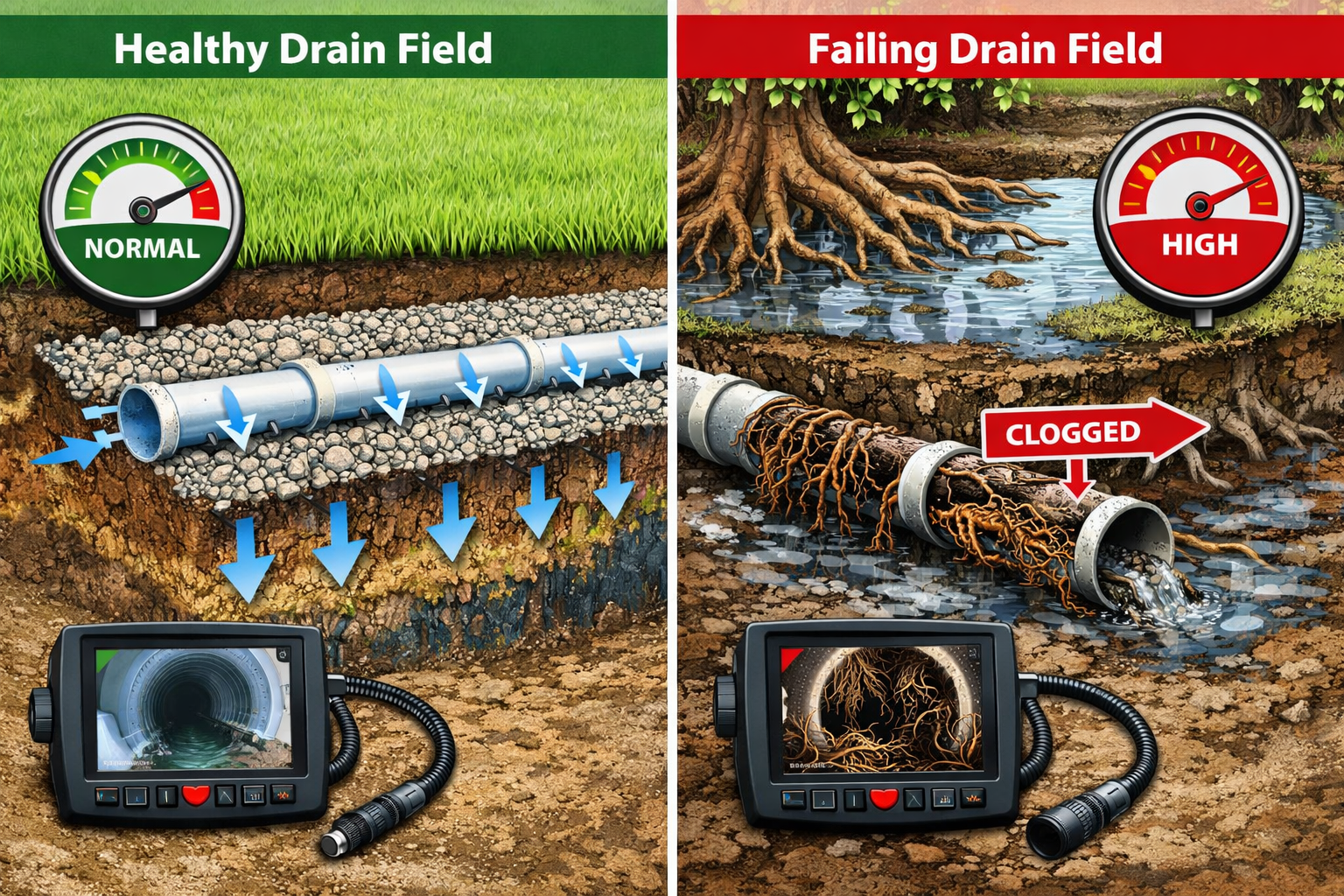
Failing drain fields cause slow drains when they become too full from excessive water usage, compacted soil, or clogged pipes. Your drain field acts as the final filtration system, and when it can’t absorb wastewater properly, everything backs up into your home’s plumbing.
I’ve seen drain fields fail from:
- Soil compaction from heavy vehicles or construction
- Excessive water usage overwhelming the system’s capacity
- Biomat buildup creating an impermeable layer
- Seasonal high water tables preventing proper absorption
Physical Blockages and Pipe Damage
Blocked or damaged pipes from tree roots and non-biodegradable materials like wipes and grease create obstructions that slow drainage. Tree roots are particularly problematic because they seek out moisture and nutrients, making your septic pipes an attractive target.
Tree root intrusion infiltrates tank walls and drain field pipes, causing blocked pipes, slow-flushing toilets, and gurgling sounds. These roots can crack pipes, create complete blockages, and even damage your tank structure.
Chemical Disruption of Natural Processes
Bacterial imbalance in the tank from harsh chemicals, antibacterial soaps, and excessive bleach disrupts waste decomposition and leads to solid buildup. Your septic system depends on beneficial bacteria to break down waste naturally. When these microorganisms die off from chemical exposure, solids accumulate faster than they decompose.
Common bacterial killers include:
- 🚫 Antibacterial soaps and sanitizers
- 🚫 Excessive bleach and harsh cleaners
- 🚫 Paint thinners and solvents
- 🚫 Prescription antibiotics (unavoidable but impactful)
For more guidance on maintaining your septic system naturally, check out our comprehensive septic care resources.
Identifying Signs of Septic Tank Slow Drains Problem
Early Warning Signals
Recognizing the early signs of drainage problems can save you from expensive emergency repairs. Here are the key indicators I tell homeowners to watch for:
Multiple Slow Drains
When several drains throughout your home slow down simultaneously, it’s rarely a coincidence. This pattern typically indicates a system-wide issue rather than individual pipe problems.
Gurgling Sounds
Strange noises from drains, toilets, or appliances often signal air trapped in your plumbing system due to poor drainage or blockages.
Sewage Odors
Persistent sewer smells inside or outside your home suggest wastewater isn’t flowing properly through your system.
Water Backups
Water appearing in floor drains, utility sinks, or the lowest drains in your home indicates serious drainage problems.
Progressive Symptoms
As septic problems worsen, you’ll notice escalating symptoms:
| Stage | Symptoms | Urgency Level |
|---|---|---|
| Early | Single drain running slowly, occasional gurgling | Monitor closely |
| Moderate | Multiple drains affected, noticeable odors | Take action soon |
| Severe | Water backups, standing water in yard | Immediate attention needed |
| Critical | Sewage surfacing, complete system failure | Emergency service required |
FYI: Some links may be affiliate links, which means I may earn a small commission at no extra cost to you.
During the moderate stage, many homeowners find success with natural maintenance approaches. If you want something structured to help maintain bacterial balance while addressing slow drains, Septifix tablets can be helpful for keeping your septic system clean and efficient. These easy-to-use tablets work to break down waste and reduce buildup, which many homeowners use as part of their regular maintenance routine.
When Multiple Systems Are Affected
Excessive water usage from running multiple appliances, long showers, or excessive laundry overloads systems designed for specific wastewater capacity. If your washing machine, dishwasher, and showers all seem to drain poorly, your system might be overwhelmed rather than blocked.
Pay attention to timing patterns:
- Do drains slow down after heavy water usage days?
- Are problems worse during certain seasons?
- Do issues coincide with specific activities like laundry or entertaining guests?
DIY Solutions for Septic Tank Slow Drains Problem
Natural Cleaning Methods That Work
Before calling professionals, try these septic-safe approaches that won’t harm your system’s beneficial bacteria:
Hot Water Flushing
Hot water flushing (120-140°F) helps dissolve soap scum, grease, and organic matter for minor clogs. Run hot water down slow drains for 10-15 minutes to help break up buildup. This method works particularly well for bathroom sinks and shower drains affected by soap residue.
Baking Soda and Vinegar Treatment
Baking soda and vinegar treatment (1/2 cup each) creates a fizzing reaction that breaks up organic material and pushes debris through pipes. Here’s my step-by-step process:
- Pour 1/2 cup baking soda down the slow drain
- Follow with 1/2 cup white vinegar
- Cover the drain with a plug or cloth for 30 minutes
- Flush with hot water for several minutes
This natural approach won’t harm your septic bacteria and often provides immediate improvement for minor blockages.
Water Usage Management
Reducing water usage through spacing out laundry, fixing leaks, taking shorter showers, and running full appliance loads prevents system overload. Smart water management often resolves slow drains without any other intervention.
Practical Water Conservation Steps:
- 🚿 Limit showers to 5-7 minutes
- 👕 Space laundry loads throughout the week
- 🔧 Fix leaky faucets and running toilets immediately
- 🍽️ Run dishwashers only when full
- 💧 Install low-flow fixtures where possible
What NOT to Use
Avoid these common mistakes that worsen septic problems:
❌ Chemical drain cleaners (destroy beneficial bacteria)
❌ Excessive bleach (disrupts biological processes)
❌ Enzyme products marketed for septic systems (often ineffective)
❌ High-pressure water jetting (DIY versions can damage pipes)
For additional tips on septic-safe practices, visit our frequently asked questions section.
Professional Solutions and When to Call Experts
Recognizing When DIY Isn’t Enough
While natural methods work well for minor issues, certain situations require professional intervention. Call experts when you experience:
- Multiple drains backing up simultaneously
- Sewage odors that persist after cleaning
- Water pooling in your yard near the septic area
- Complete drainage failure in any fixture
- Gurgling sounds that continue after DIY treatments
Professional Diagnostic Tools
Video inspections help professionals identify specific problems before recommending repairs or replacements [5]. Modern septic professionals use specialized equipment that provides clear answers about your system’s condition.
Advanced Diagnostic Methods:
- 📹 Camera inspections reveal pipe damage and blockages
- 🔍 Dye testing traces water flow patterns
- 📊 Flow rate measurements assess system capacity
- 🧪 Effluent sampling checks biological health
Professional Treatment Options
Professional hydro jetting uses high-pressure water to clear stubborn blockages. This method effectively removes tree roots, grease buildup, and other obstructions that resist DIY treatments.
Regular septic tank pumping removes accumulated solids and prevents blockages from reaching septic lines. Most systems need pumping every 3-5 years, but usage patterns and household size affect this timeline.
Pumping Schedule Guidelines:
| Household Size | Tank Size | Pumping Frequency |
|---|---|---|
| 1-2 people | 1000 gallons | Every 5-7 years |
| 3-4 people | 1000 gallons | Every 3-5 years |
| 5-6 people | 1000 gallons | Every 2-3 years |
| 3-4 people | 1500 gallons | Every 4-6 years |
Emergency Situations
Some drainage problems require immediate professional attention:
🚨 Sewage backup into your home
🚨 Standing water that won’t recede
🚨 Strong sewage odors throughout your property
🚨 Visible sewage surfacing in your yard
These situations pose health risks and can cause extensive property damage if not addressed quickly.
Prevention Strategies for Long-Term Success
Establishing Healthy Habits
The best approach to avoiding Septic Tank Slow Drains Problem involves consistent preventive care rather than reactive repairs. I recommend developing these daily and weekly habits:
Daily Practices:
- 🚽 Flush only toilet paper and waste (no wipes, feminine products, or medications)
- 🧽 Use septic-safe cleaning products exclusively
- 💧 Spread water usage throughout the day
- 🍽️ Scrape plates thoroughly before washing
Weekly Maintenance:
- 🔍 Monitor drain performance during regular use
- 🌡️ Run hot water through all drains weekly
- 📊 Track water usage patterns to identify spikes
- 🧹 Clean drain covers and remove visible debris
Smart Product Choices
Your product choices significantly impact septic health. Choose items specifically labeled as septic-safe, and avoid products containing:
- Antibacterial agents (triclosan, benzalkonium chloride)
- Phosphates (common in some detergents)
- Excessive surfactants (create foam that interferes with settling)
- Non-biodegradable ingredients
Landscaping Considerations
Proper landscaping protects your septic system from root intrusion and soil compaction:
Root Management:
- 🌳 Plant trees at least 30 feet from septic components
- 🌿 Choose shallow-rooted plants near drain fields
- ✂️ Trim existing roots before they reach pipes
- 🚫 Avoid fast-growing species like willows and poplars
Drain Field Protection:
- 🚗 Never drive vehicles over septic components
- 🏗️ Avoid construction near your system
- 💧 Ensure proper surface drainage away from the area
- 🌱 Maintain grass cover to prevent erosion
Recommended Maintenance Tools
If you want something simple to support your prevention efforts, Septifix tablets offer an easy way to maintain bacterial balance and help prevent the buildup that leads to slow drains. Many homeowners find these tablets helpful for keeping their septic system clean and efficient with minimal effort, though they’re certainly not required for basic maintenance.
For comprehensive guidance on septic system care, explore our complete resource library.
Cost Considerations and Budget Planning
Understanding Repair Costs
Addressing Septic Tank Slow Drains Problem early saves significant money compared to emergency repairs or system replacement. Here’s what different solutions typically cost:
DIY Solutions: $10-50
- Natural cleaning supplies
- Hot water and time
- Basic maintenance tools
Professional Maintenance: $200-500
- Tank pumping
- Basic inspections
- Minor repairs
Major Repairs: $1,000-5,000
- Pipe replacement
- Drain field repairs
- Tank component replacement
System Replacement: $10,000-25,000
- Complete system installation
- Permits and inspections
- Landscaping restoration
Creating a Maintenance Budget
Smart homeowners budget for septic maintenance just like other home systems. I recommend setting aside:
- $200-400 annually for routine maintenance
- $500-1,000 emergency fund for unexpected repairs
- $100-200 for septic-safe products and supplies
Return on Investment
Preventive maintenance provides excellent returns:
“Every dollar spent on preventive septic care saves an average of $10 in emergency repairs and extends system life by 5-10 years.”
Regular maintenance also:
- ✅ Maintains property value
- ✅ Prevents health hazards
- ✅ Avoids emergency service premiums
- ✅ Extends system lifespan
Environmental Impact and Responsibility
Protecting Groundwater Quality
Your septic system directly affects local groundwater quality. Proper maintenance prevents contamination that can impact:
- Drinking water wells in your neighborhood
- Local streams and lakes
- Soil health in surrounding areas
- Wildlife habitats dependent on clean water
Sustainable Practices
Environmentally conscious septic care includes:
🌍 Using biodegradable products exclusively
🌍 Minimizing chemical inputs to preserve beneficial bacteria
🌍 Conserving water to reduce system stress
🌍 Choosing natural treatment methods when possible
Community Responsibility
Well-maintained septic systems benefit entire communities by:
- Preventing groundwater contamination
- Reducing strain on municipal water treatment
- Maintaining property values neighborhood-wide
- Supporting local environmental health
For more information about our commitment to sustainable septic care, visit our about page.
Conclusion
Dealing with a Septic Tank Slow Drains Problem doesn’t have to become a nightmare scenario that drains your wallet and disrupts your daily routine. By understanding the root causes—from overloaded tanks and failing drain fields to bacterial imbalances and excessive water usage—you can take proactive steps to maintain your system’s health and prevent costly emergency repairs.
The key to success lies in early detection and consistent maintenance. Start by monitoring your drains for warning signs like multiple slow drains, gurgling sounds, and persistent odors. When problems arise, try natural solutions like hot water flushing and baking soda treatments before moving to professional interventions.
Your Next Steps:
- Assess your current situation – Check all drains and note any slow drainage patterns
- Implement immediate solutions – Try natural cleaning methods for minor issues
- Schedule professional maintenance – Arrange pumping if it’s been more than 3-5 years
- Establish prevention habits – Reduce water usage and switch to septic-safe products
- Create a maintenance budget – Set aside funds for regular care and emergency repairs
Remember, prevention costs far less than replacement. A new septic system can cost $10,000-25,000, while regular maintenance typically runs just $200-400 annually. By taking action now, you’re protecting both your investment and your family’s comfort.
If you’re experiencing persistent drainage issues despite trying these solutions, don’t hesitate to contact a professional. Early intervention prevents minor problems from becoming major disasters.
For ongoing support and additional resources, explore our comprehensive septic care guides and feel free to reach out with questions. Your septic system is a crucial part of your home’s infrastructure—treat it with the care it deserves, and it will serve you reliably for decades to come.
References
[1] Effective Solutions For Drain Field Issues And Septic System Restoration – https://www.cmattes.com/effective-solutions-for-drain-field-issues-and-septic-system-restoration
[2] The Invisible Septic System Problem Slow Drains And Their Causes – https://www.honey-wagonkc.com/blog/posts/the-invisible-septic-system-problem-slow-drains-and-their-causes.html
[3] 5 Common Septic Tank Problems And How To Fix Them – https://tidytanksepticservice.com/blog/5-common-septic-tank-problems-and-how-to-fix-them/
[5] What To Do When Your Septic D Box Is Clogged – https://www.coastalsepticsolutions.com/blog/what-to-do-when-your-septic-d-box-is-clogged
[6] 5 New Years Resolutions For A Healthier Septic System In 2026 – https://www.metroseptic.com/blog/5-new-years-resolutions-for-a-healthier-septic-system-in-2026/
[7] How Do You Unclog A Drain With A Septic System – https://www.wrenvironmental.com/blog/2022/may/how-do-you-unclog-a-drain-with-a-septic-system-/
[8] What To Do If Your Septic Line Clogged – https://www.birosseptic.com/blog/what-to-do-if-your-septic-line-clogged/