How to Tell If Your Septic Tank Is Full: Essential Warning Signs Every Homeowner Must Know

Picture this: You wake up on a Saturday morning, ready to enjoy your weekend, only to find sewage backing up into your shower. The smell is overwhelming, the cleanup is disgusting, and the repair bill? Let’s just say it could have paid for a nice vacation. This nightmare scenario is entirely preventable when you know how to tell if your septic tank is full before it becomes a costly disaster.
As a homeowner with a septic system, recognizing the early warning signs of a full tank is one of the most important skills you can develop. I’ve seen too many families face thousands of dollars in emergency repairs simply because they missed the subtle signals their septic system was sending. The good news? Your septic tank gives you plenty of advance warning before it fails completely.
Key Takeaways
• Multiple slow drains throughout your home simultaneously indicate your septic tank may be full and blocking normal waste flow
• Pooling water around the tank or drain field during dry weather is a clear sign of overflow that requires immediate attention
• Foul odors from drains, toilets, or your yard signal that your septic system is struggling to process waste properly
• Regular pumping every 3-5 years prevents most full tank problems and saves thousands in emergency repair costs
• Professional inspection using measuring tools can accurately determine if your tank has reached the critical 25-35% capacity threshold
Understanding Your Septic System and When It Becomes Full

Before diving into the warning signs, let’s establish what “full” actually means for your septic tank. Many homeowners think a septic tank should be empty, but that’s not how these systems work.
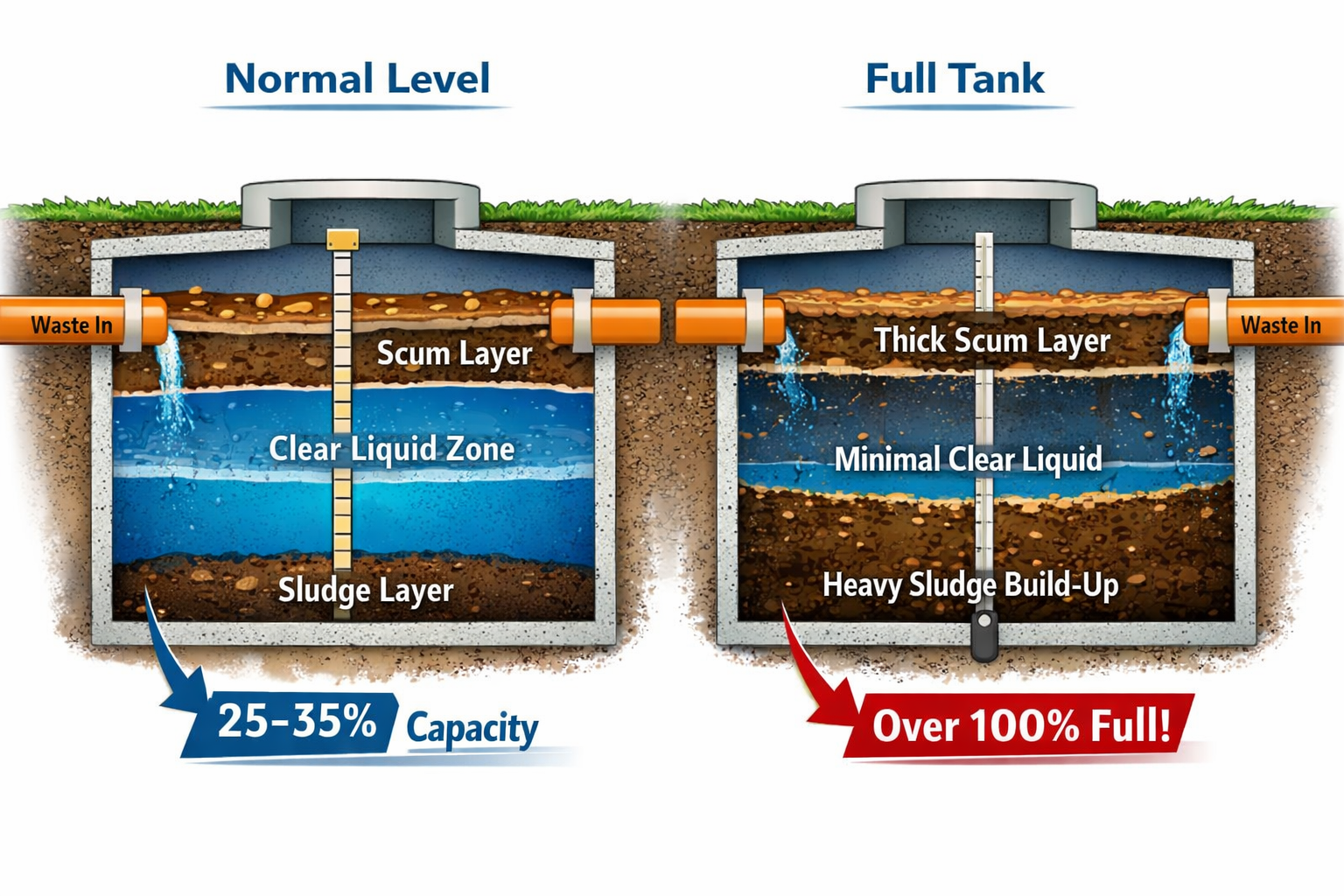
A properly functioning septic tank is always filled with liquid—that’s normal and necessary for the bacterial processes that break down waste. The tank becomes problematic when scum and sludge layers combined reach 25-35% of the tank’s working volume. At this point, there isn’t enough space for proper waste separation and treatment.
The Three-Layer System
Your septic tank operates with three distinct layers:
- Scum layer (top): Oils, grease, and floating debris
- Liquid layer (middle): Partially treated wastewater
- Sludge layer (bottom): Heavy solids that have settled
The normal liquid level sits at the bottom of the outlet pipe, with 8-12 inches of air space above[6]. When these layers become unbalanced due to accumulation, your system starts showing warning signs.
For comprehensive information about septic system basics, check out our complete septic care resources to better understand your system’s needs.
Early Warning Signs: How to Tell If Your Septic Tank Is Full
Recognizing these warning signs early can save you from expensive emergency repairs and unpleasant cleanup situations. Let me walk you through the most reliable indicators that your septic tank needs attention.
1. Multiple Slow Drains Throughout Your Home
One of the earliest signs of a full septic tank is slow drains throughout multiple fixtures simultaneously. This isn’t just one clogged sink—we’re talking about your bathroom sink, kitchen drain, shower, and toilet all draining slower than usual.
When your septic tank reaches capacity, it can’t accept new wastewater efficiently. This creates a backup effect that impacts your entire plumbing system. You might notice:
- Water taking longer to drain from sinks
- Showers that don’t empty as quickly
- Toilets that seem sluggish when flushing
- Bathtubs that hold water longer than normal
Important distinction: If only one fixture is slow, you likely have a localized clog. When multiple drains are affected simultaneously, your septic tank is the probable culprit.
2. Pooling Water Around Your Tank or Drain Field
Pooling water around the septic tank or drain field, especially during dry weather, is a serious red flag. This standing water indicates that your tank is overflowing and can’t properly process the incoming waste.
Look for these water accumulation patterns:
- Soggy areas around the tank location
- Standing water that doesn’t dry up after several days without rain
- Wet spots in your drain field during dry periods
- Muddy areas where the ground should be firm
This pooling water often contains untreated sewage, creating health hazards and environmental concerns. If you notice persistent wet areas, especially during dry weather, contact a septic professional immediately.
3. Unmistakable Foul Odors
Your nose is one of your best tools for detecting septic problems. Foul odors emanating from drains, the tank area, or drain field indicate that your system isn’t processing waste properly.
These odors typically smell like:
- Rotten eggs (hydrogen sulfide gas)
- Raw sewage (unmistakable and overwhelming)
- Sulfur or methane (sharp, chemical-like smells)
You might notice these odors:
- Coming from drains in your home
- Around the septic tank area in your yard
- Over the drain field or leach field
- Near plumbing vents on your roof
FYI: Some links may be affiliate links, which means I may earn a small commission at no extra cost to you.
If you’re dealing with persistent odors and want to help maintain your septic system’s bacterial balance, Septifix tablets can be helpful for breaking down waste and reducing buildup that contributes to unpleasant smells. These easy-to-use treatments support the natural processes in your tank.
4. Sewage Backup Into Your Home
Sewage backup into toilets, sinks, or showers represents the most obvious and costly sign of a full septic tank. This is an emergency situation that requires immediate professional attention.
Sewage backup typically appears as:
- Dark, foul-smelling water coming up through drains
- Toilet overflow that isn’t caused by a simple clog
- Shower or bathtub backup with sewage-contaminated water
- Sink drainage that reverses and brings up waste
When sewage backs up into your home, stop using all water fixtures immediately and call a septic pumping service. Continued use will only worsen the situation and increase cleanup costs.
5. Gurgling and Bubbling Sounds
Gurgling or bubbling sounds in pipes[2][3] might seem minor, but they’re actually early warning signs of septic system stress. These sounds indicate that air is trapped in your plumbing system due to poor drainage.
Listen for these sounds:
- Gurgling toilets when you flush
- Bubbling drains when water goes down
- Unusual pipe noises throughout your home
- Air bubbles coming up through drains
These sounds often occur because your full septic tank is creating pressure changes in your plumbing system. The trapped air has nowhere to go, creating these distinctive noises.
Visual Inspection Methods: How to Tell If Your Septic Tank Is Full
While the warning signs above are helpful, sometimes you need a more definitive answer about your tank’s condition. Visual inspection using a sludge judge or measuring stick through the tank’s inspection port is a standard diagnostic method[1].
Professional Measuring Techniques
Septic professionals use specialized tools to accurately measure sludge and scum levels:
Sludge Judge Method:
- A clear tube with a check valve at the bottom
- Lowered into the tank to measure sludge depth
- Provides accurate readings of accumulated solids
Measuring Stick Approach:
- A long pole with measurements marked
- Used to check liquid levels and layer depths
- Helps determine if pumping is necessary
What the Measurements Mean
Your septic tank needs pumping when:
- Sludge layer is within 6 inches of the outlet pipe
- Combined scum and sludge occupy 25-35% of tank volume
- Liquid level is higher than the outlet pipe
DIY Inspection Considerations
While homeowners can perform basic visual inspections, I strongly recommend professional assessment for several reasons:
- Safety concerns: Septic tanks contain dangerous gases
- Accuracy: Professionals have proper measuring tools
- Experience: They can identify problems you might miss
- Health risks: Exposure to raw sewage requires proper protection
If you’re committed to maintaining your septic system between professional visits, our septic care blog offers additional maintenance tips and guidance.
The Grass Is Always Greener: Unusual Vegetation Patterns
Here’s a sign that might surprise you: overly lush or fast-growing grass above the drain field[2][4] can indicate septic problems. While some greening is normal due to the nutrients in treated wastewater, excessive growth suggests system issues.
Normal vs. Problematic Vegetation
Normal patterns:
- Slightly greener grass over the drain field
- Consistent growth patterns
- Healthy but not excessive vegetation
Warning signs:
- Dramatically lusher grass in specific areas
- Rapid growth that requires frequent mowing
- Different colored vegetation (often darker green)
- Unusual plant growth in winter months
Why This Happens
When your septic tank is full or your drain field is failing:
- Untreated wastewater reaches the surface
- Excess nutrients (nitrogen and phosphorus) feed vegetation
- Constant moisture from system overflow promotes growth
- Sewage effluent acts like fertilizer
This lush growth might look appealing, but it indicates that untreated waste is too close to the surface—a serious environmental and health concern.
Health and Safety Risks of Ignoring a Full Septic Tank
Understanding the consequences of a full septic tank goes beyond inconvenience and repair costs. There are serious health and environmental risks that every homeowner should consider.
Water Contamination Concerns
Well water contamination with elevated nitrate levels is a serious risk when septic systems fail. If you have a private well, a failing septic system can contaminate your drinking water supply.
Signs of water contamination include:
- Unusual taste in your water
- Strange odors from faucets
- Discolored water (brown, yellow, or cloudy)
- High nitrate levels on water tests
Environmental Impact
A full or failing septic tank affects more than just your property:
- Groundwater pollution can spread to neighboring properties
- Surface water contamination affects local streams and lakes
- Soil contamination can persist for years
- Ecosystem disruption harms local wildlife and vegetation
Health Risks to Your Family
Exposure to sewage and contaminated water can cause:
- Gastrointestinal illnesses from bacterial contamination
- Skin and eye irritation from direct contact
- Respiratory problems from sewer gases
- Serious infections from pathogenic organisms
These health risks make early detection and prompt action essential for protecting your family’s wellbeing.
Maintenance Schedule: Preventing Full Tank Problems
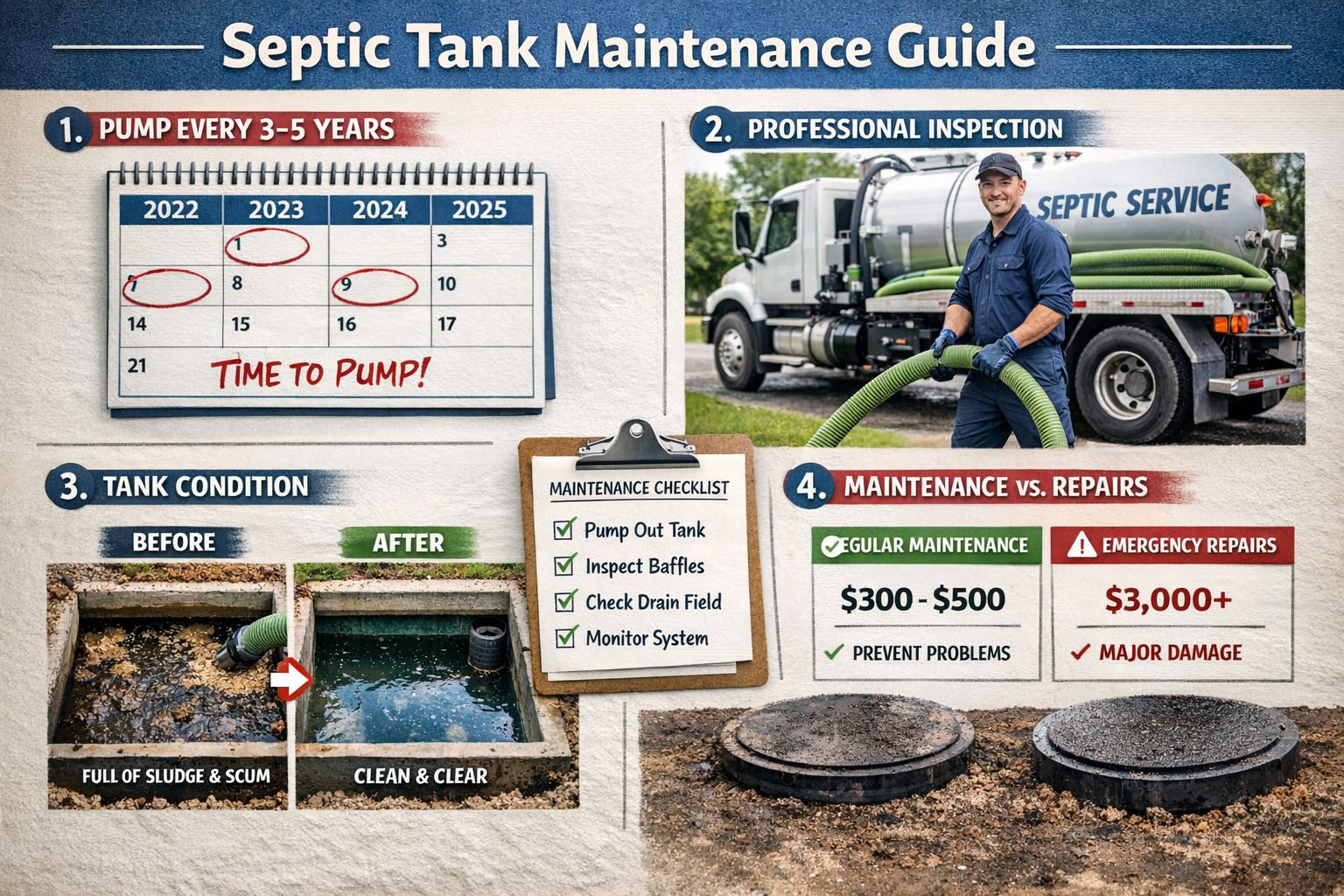
The best way to avoid the problems we’ve discussed is through regular maintenance. Septic tanks should be pumped every 3-5 years depending on usage frequency.
Factors Affecting Pumping Frequency
Several factors determine how often your tank needs pumping:
Household size:
- 1-2 people: Every 4-5 years
- 3-4 people: Every 3-4 years
- 5+ people: Every 2-3 years
Tank size:
- Smaller tanks fill faster
- Larger tanks can go longer between pumpings
- Tank age affects efficiency
Usage patterns:
- Heavy water use requires more frequent pumping
- Garbage disposal use increases solid accumulation
- Harsh chemicals disrupt bacterial processes
Creating a Maintenance Schedule
To stay ahead of problems:
- Record your last pumping date
- Calculate your next service based on household size
- Schedule annual inspections between pumpings
- Keep maintenance records for warranty and resale purposes
- Budget for regular service to avoid emergency costs
For detailed maintenance guidance and scheduling help, visit our FAQ section where we address common homeowner questions about septic care.
Between-Service Maintenance
While waiting for your next scheduled pumping, you can support your septic system’s health:
- Use septic-safe products for cleaning and personal care
- Avoid flushing non-biodegradable items
- Spread out laundry over several days instead of doing it all at once
- Fix leaky fixtures that add unnecessary water to your system
When to Call the Professionals
Knowing when to call for professional help can prevent minor issues from becoming major disasters. Here are clear guidelines for when professional intervention is necessary.
Emergency Situations (Call Immediately)
- Sewage backup into your home
- Strong sewage odors throughout your property
- Standing water around the tank or drain field
- Toilet or drain overflow that won’t stop
Schedule Professional Service When
- Multiple drains are running slowly
- Gurgling sounds persist in your plumbing
- Grass growth becomes unusually lush over the drain field
- It’s been 3+ years since your last pumping
- You’re unsure about any septic system symptoms
What to Expect from Professional Service
A reputable septic service will:
- Inspect your system thoroughly before pumping
- Measure sludge and scum levels accurately
- Pump the tank completely when necessary
- Check for damage or wear in tank components
- Provide recommendations for future maintenance
- Give you a written report of their findings
Questions to Ask Your Septic Professional
- How full was my tank?
- What’s the condition of my baffles and outlet filter?
- Are there any signs of tank damage?
- When should I schedule the next pumping?
- Are there any maintenance issues I should address?
Don’t hesitate to ask questions—a good septic professional wants you to understand your system and will gladly explain their findings.
Cost Considerations: Prevention vs. Emergency Repairs
Understanding the financial impact of septic maintenance versus emergency repairs can motivate you to stay on top of regular service.
Regular Maintenance Costs
Routine pumping: $300-$600 every 3-5 years
Annual inspections: $100-$300
Minor repairs: $150-$500
Total annual cost: $100-$200 when spread over time
Emergency Repair Costs
Emergency pumping: $500-$1,000+ (weekend/holiday rates)
Drain field replacement: $3,000-$10,000
Complete system replacement: $10,000-$25,000
Water damage cleanup: $2,000-$10,000
Health department fines: $500-$5,000+
The Math Is Clear
Regular maintenance costs roughly $100-$200 per year, while emergency repairs can cost $10,000-$25,000 or more. The choice is obvious: prevention is dramatically more affordable than emergency intervention.
Insurance Considerations
Most homeowner’s insurance policies do not cover septic system failures or related damage. This makes regular maintenance even more critical since you’ll likely pay for repairs out of pocket.
Helpful Tools for Septic System Maintenance
If you want to take a proactive approach to septic system care, there are some helpful tools and products that can support your system’s health between professional services.
Here are some of the most reliable septic tank treatment options for keeping your system clean, odor-free, and working properly—from breaking down waste and reducing buildup to helping prevent blockages and costly repairs. These easy-to-use tablets are trusted by many homeowners to maintain a healthy, efficient septic system with minimal effort.
👉 See how Septifix tablets can keep your septic system clean and efficient
These treatments work by:
- Supporting bacterial balance in your tank
- Breaking down organic waste more efficiently
- Reducing odors from your system
- Helping prevent costly blockages and backups
While not a replacement for regular pumping and professional maintenance, quality septic treatments can be a valuable part of your overall system care routine.
Regional Considerations and Climate Factors
Your location and local climate can significantly affect how quickly your septic tank fills and how often it needs attention.
Cold Climate Considerations
In colder regions:
- Bacterial activity slows in winter, reducing waste breakdown
- Frozen ground can affect drain field function
- Snow cover can hide warning signs like pooling water
- Heating systems may increase water usage
Warm Climate Factors
In warmer areas:
- Increased bacterial activity can improve waste processing
- Heavy rainfall can overwhelm drain fields
- Drought conditions can concentrate waste in tanks
- Year-round landscaping makes vegetation changes more noticeable
Soil Type Impact
Your soil composition affects system performance:
Clay soils: Slow drainage, may require more frequent pumping
Sandy soils: Fast drainage, but less filtration of contaminants
Rocky soils: May have installation limitations affecting capacity
High water table: Can interfere with proper system function
Understanding your local conditions helps you adjust maintenance schedules and watch for region-specific warning signs.
Conclusion
Learning how to tell if your septic tank is full is an essential skill that can save you thousands of dollars and protect your family’s health. The warning signs we’ve covered—slow drains, pooling water, foul odors, sewage backup, and unusual sounds—give you plenty of advance notice before a complete system failure occurs.
Remember these key action steps:
✅ Monitor multiple warning signs rather than waiting for obvious problems
✅ Schedule regular pumping every 3-5 years based on your household size
✅ Call professionals immediately for sewage backup or standing water
✅ Keep maintenance records to track your system’s performance
✅ Budget for regular service to avoid emergency repair costs
The most important takeaway is this: your septic system will always give you warning signs before it fails completely. By staying alert to these signals and maintaining a regular service schedule, you can avoid the nightmare scenarios that plague unprepared homeowners.
Don’t wait until you’re dealing with sewage in your shower or a $15,000 repair bill. Take action today by scheduling an inspection if you’ve noticed any warning signs, or by setting up a regular maintenance schedule if your system hasn’t been serviced recently.
Your future self—and your bank account—will thank you for taking proactive care of your septic system. For more septic care guidance and resources, visit our homepage where we make septic care simple for homeowners like you.
References
[1] How To Tell If Your Septic Tank Is Full – https://www.bdpplumbing.com/how-to-tell-if-your-septic-tank-is-full
[2] Signs Of A Full Septic Tank – https://efcnetwork.org/signs-of-a-full-septic-tank/
[3] Is My Septic Tank Full Or Clogged – https://www.wholesalesepticsupply.com/blogs/guides/is-my-septic-tank-full-or-clogged
[4] Signs Your Septic Tank Is Too Full When To Call The Pros – https://www.metroseptic.com/blog/signs-your-septic-tank-is-too-full-when-to-call-the-pros/
[6] How To Tell When Your Septic Tank Is Full 34490 – https://www.timfrankseptic.com/news/how-to-tell-when-your-septic-tank-is-full-34490