How Do You Know When Your Septic Tank Is Full: Essential Warning Signs Every Homeowner Must Recognize

Picture this: you’re enjoying a quiet Sunday morning when suddenly your toilet won’t flush properly, strange odors waft from your yard, and water starts pooling near your septic tank. If you’re wondering “how do you know when your septic tank is full,” you’re not alone—and recognizing these warning signs early can save you thousands of dollars in emergency repairs and protect your family’s health.
As a homeowner with a septic system, understanding when your tank reaches capacity is crucial for maintaining a safe, functional waste management system. In 2026, with rising costs for septic repairs and replacements, early detection of a full tank can be the difference between a routine $300 pumping service and a $15,000 system replacement.
Key Takeaways
• Slow drains and gurgling sounds across multiple fixtures are the earliest indicators your septic tank is approaching capacity
• Standing water and sewage odors around your tank or drain field signal immediate attention is needed to prevent health hazards
• Raw sewage backup into your home requires emergency professional intervention and poses serious health risks
• Regular pumping every 3-5 years prevents most fullness issues and extends your system’s lifespan significantly
• Professional inspection should be scheduled immediately if you notice multiple warning signs occurring simultaneously
Understanding How Septic Tanks Work and Fill Up
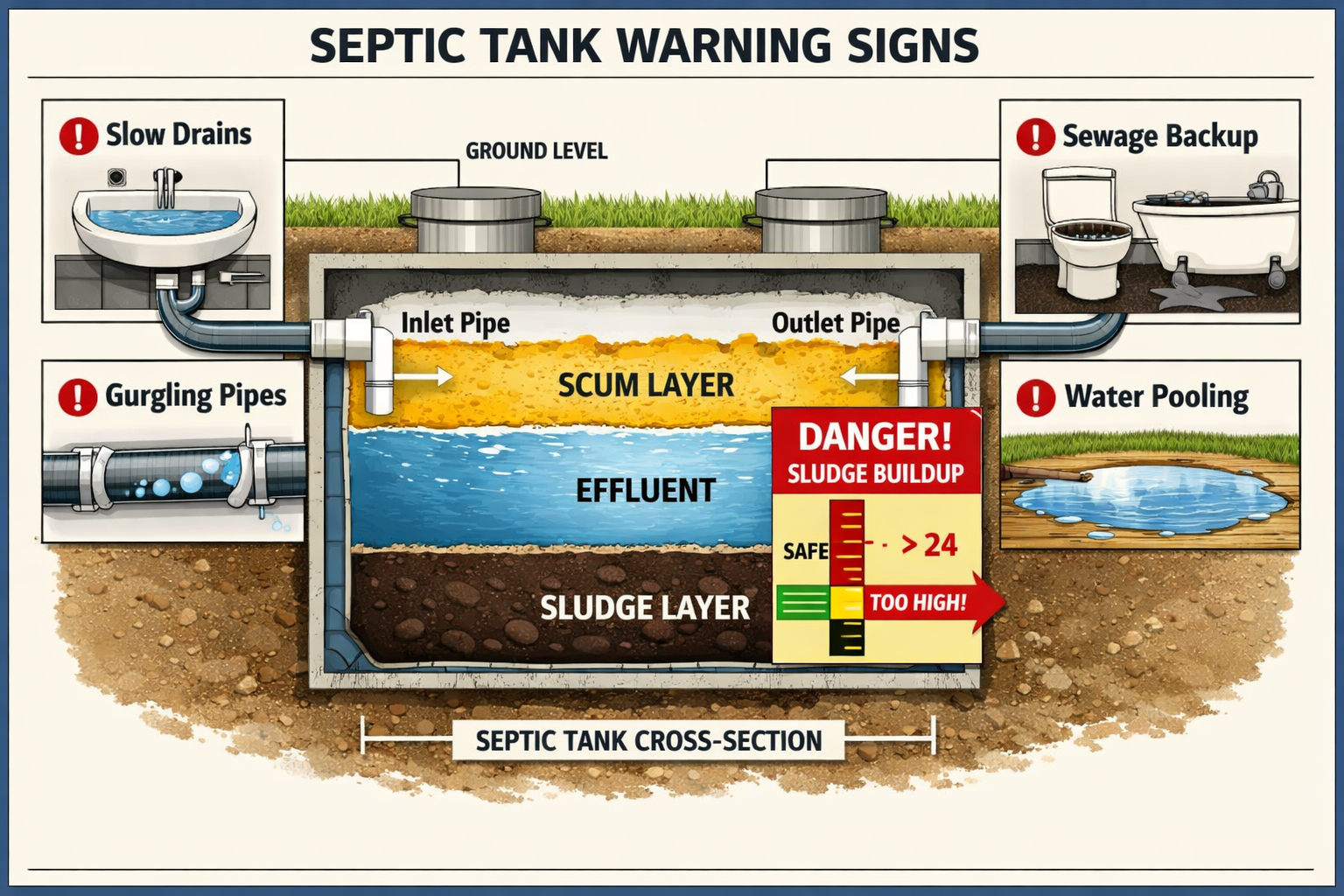
Before diving into the warning signs, it’s helpful to understand how your septic system operates. Your septic tank serves as a holding and treatment facility where waste separates into three distinct layers: floating scum on top, liquid effluent in the middle, and settled sludge at the bottom.
Over time, the sludge layer grows as solid waste accumulates faster than beneficial bacteria can break it down. When this sludge layer occupies one-third or more of your tank’s capacity, your system enters the danger zone where problems become increasingly likely.
The tank reaches different states of fullness:
- Normal operation: Tank maintains proper liquid levels with adequate space for waste separation
- Sludge-clogged: Solids accumulate beyond the system’s processing capacity
- Overfull: Liquid waste backs up due to poor drainage or excessive sludge buildup
For comprehensive information about septic system basics, visit our FAQ section where we cover common homeowner questions about tank maintenance and operation.
Primary Warning Signs: How Do You Know When Your Septic Tank Is Full
1. Slow Drains and Flushing Problems Throughout Your Home
The most common early indicator that your septic tank is reaching capacity is slow drainage across multiple fixtures in your home. Unlike a single clogged drain, septic-related drainage issues affect sinks, showers, toilets, and washing machines simultaneously.
Pay attention to these drainage warning signs:
- Toilets that flush slowly or incompletely
- Bathroom and kitchen sinks that drain sluggishly
- Showers that back up during use
- Washing machines that cause floor drains to overflow
- Multiple fixtures showing problems at the same time
Why this happens: When your septic tank fills with sludge, there’s less space for incoming wastewater. The system can’t process waste efficiently, causing backups that affect your entire home’s plumbing network.
2. Unpleasant Sewage Odors Around Your Property
Strong, persistent sewage smells near your septic tank, drain field, or even inside your home indicate waste buildup and potential overflow. These odors become particularly noticeable during warm weather when bacterial activity increases.
Common odor locations include:
- Around the septic tank: Direct indication of overflow or venting issues
- Over the drain field: Suggests effluent is surfacing instead of filtering properly
- Near household drains: Indicates backing up within your plumbing system
- In your yard: Shows wastewater is escaping the designated treatment areas
FYI: Some links may be affiliate links, which means I may earn a small commission at no extra cost to you.
If you’re dealing with persistent odors and want to maintain your septic system’s health between pumpings, Septifix tablets can help break down waste and reduce buildup that contributes to unpleasant smells. These easy-to-use treatments work to keep your system functioning efficiently while you arrange for professional service.
3. Gurgling and Bubbling Sounds in Your Plumbing
Regular gurgling or bubbling sounds coming from your pipes, particularly when using water fixtures, serve as diagnostic indicators of a full septic system. These sounds occur when air trapped in your plumbing system has nowhere to escape due to backed-up waste.
Listen for gurgling sounds when:
- Flushing toilets
- Draining bathtubs or showers
- Running washing machines
- Using kitchen or bathroom sinks
What causes the sounds: As your septic tank fills, proper air flow through the system becomes restricted. Water displacement creates air pockets that produce characteristic gurgling noises as they move through your pipes.
4. Standing Water and Pooling Around Your Septic System
Pooling or standing water around your septic tank or drain field area, especially when it hasn’t rained recently, signals overflow and creates potential health hazards. This water often contains harmful bacteria and should be avoided.
Watch for water accumulation:
- Directly over or around the septic tank
- Throughout the drain field area
- In low-lying areas of your yard
- Near septic system components like distribution boxes
Health concerns: Standing septic water can contain dangerous pathogens including E. coli, hepatitis, and other disease-causing organisms. Keep children and pets away from these areas and contact a professional immediately.
Advanced Warning Signs That Require Immediate Attention
Raw Sewage Backup Into Your Home
Raw sewage backing up into sinks, showers, toilets, or bathtubs represents the most serious and obvious sign requiring immediate professional intervention. This situation poses severe health risks and indicates your septic system has completely lost its ability to process waste.
Sewage backup typically appears first in:
- Lowest fixtures in your home (basement drains, first-floor bathrooms)
- Multiple drains simultaneously rather than isolated clogs
- Floor drains in basements, laundry rooms, or garages
- Shower stalls and bathtub drains
Emergency response: If you experience sewage backup, immediately stop using all water fixtures, evacuate the affected area, and contact a septic professional. Do not attempt to clean up raw sewage without proper protective equipment.
Unusually Lush Grass Over Your Drain Field
While healthy grass is normal, unusually lush or overly green grass over your drain field area, beyond normal expectations, suggests excess wastewater is seeping into the soil and acting as fertilizer. This indicates your system isn’t properly filtering effluent.
Signs of problematic vegetation include:
- Grass that’s significantly greener than surrounding areas
- Rapid growth requiring frequent mowing
- Soggy or spongy ground conditions
- Different grass texture or thickness over the drain field
Why this matters: Excess nutrients from unfiltered septic waste can create environmental problems and indicate your system is failing to treat wastewater properly before it reaches groundwater.
Well Water Contamination Indicators
If your home uses well water, high nitrate levels detected through water testing can indicate septic leakage is contaminating your groundwater supply. This represents a serious health and environmental concern requiring immediate attention.
Schedule well water testing if you notice:
- Changes in water taste or odor
- Multiple septic warning signs occurring together
- Neighbors reporting similar water quality issues
- Your septic system showing signs of failure
For additional resources about septic system maintenance and testing, check our comprehensive resources page with helpful guides and professional recommendations.
How Often Should You Pump Your Septic Tank?
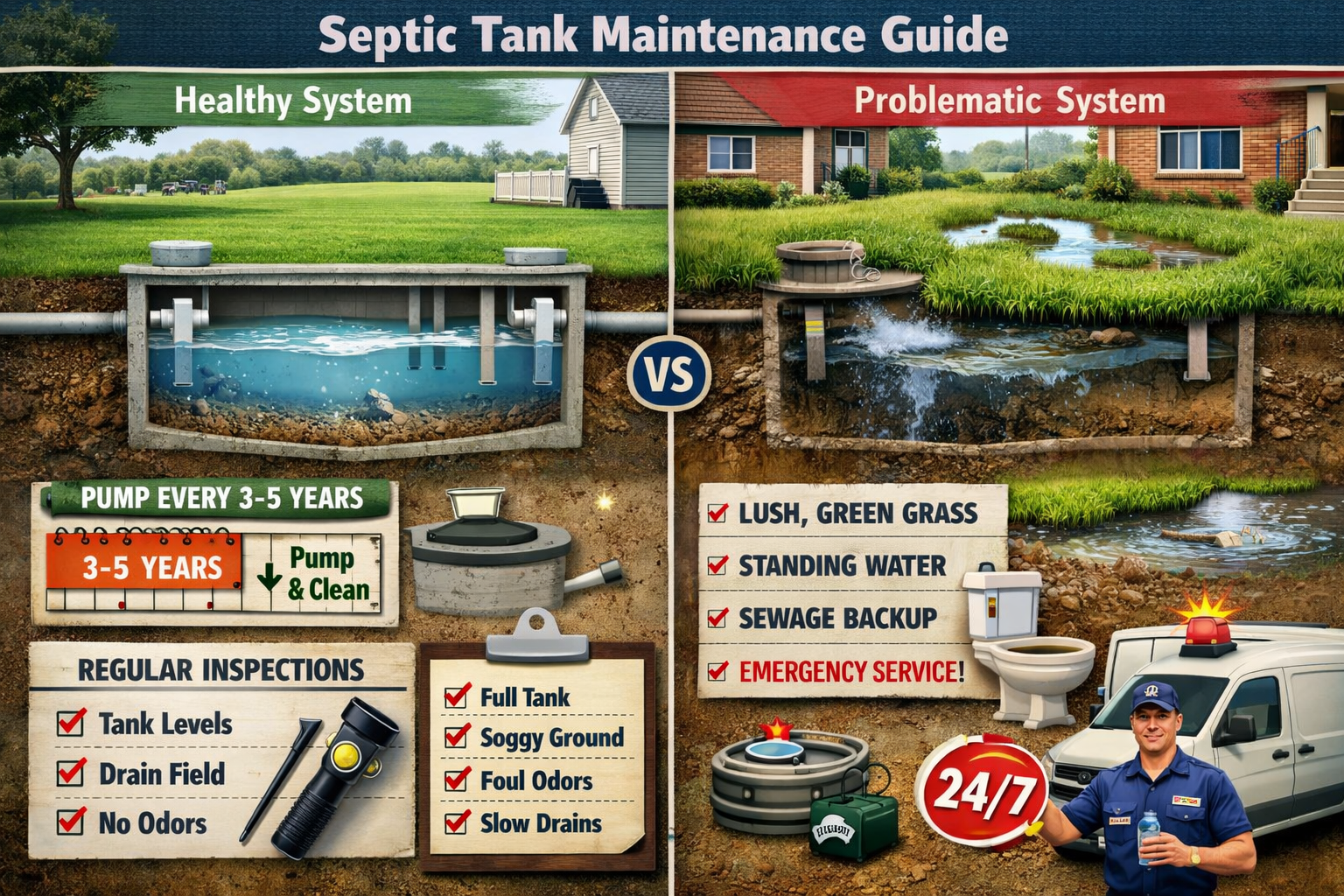
Pumping frequency should typically occur every 3-5 years, depending on your household size and tank capacity. Exceeding this timeline significantly increases the risk of experiencing fullness-related problems and system failure.
Factors Affecting Pumping Frequency
| Household Size | Tank Size | Recommended Pumping Frequency |
|---|---|---|
| 1-2 people | 1,000+ gallons | Every 5 years |
| 3-4 people | 1,000+ gallons | Every 3-4 years |
| 5+ people | 1,000+ gallons | Every 2-3 years |
| Any size | Under 1,000 gallons | Every 2-3 years |
Additional factors that may require more frequent pumping:
- Heavy use of garbage disposal
- Frequent laundry loads
- Use of water softeners
- Medications that affect bacterial activity
- Harsh chemical cleaners
Creating a Maintenance Schedule
Establish a regular maintenance routine to prevent your septic tank from reaching problematic fullness levels:
Annual tasks:
- Visual inspection of tank and drain field areas
- Check for standing water or unusual odors
- Monitor drainage performance throughout your home
- Schedule professional inspection every 3 years
Monthly monitoring:
- Note any changes in drainage speed
- Listen for unusual sounds in plumbing
- Observe grass growth patterns over drain field
- Test well water if applicable
What to Do When You Suspect Your Septic Tank Is Full
Immediate Steps to Take
When you notice warning signs indicating your septic tank may be full, take these immediate actions to prevent further problems:
- Reduce water usage throughout your home to minimize additional strain on the system
- Avoid using harsh chemicals that can kill beneficial bacteria
- Stop using garbage disposal until the issue is resolved
- Document symptoms you’ve observed for professional consultation
- Contact a licensed septic professional for inspection and pumping
Emergency Situations Requiring Professional Help
Contact septic professionals immediately if you experience:
- Raw sewage backup into your home
- Strong sewage odors inside your house
- Standing water containing visible waste
- Multiple warning signs occurring simultaneously
- Well water contamination concerns
Safety first: Never attempt to open or inspect your septic tank yourself. Septic tanks contain dangerous gases that can be fatal, and the structural integrity of tank covers can fail without warning.
Prevention Strategies: Keeping Your Septic Tank Healthy
Daily Habits That Protect Your System
Implementing proper daily habits significantly extends the time between necessary pumpings and helps prevent premature fullness:
✅ Do These Things:
- Use septic-safe toilet paper and cleaners
- Spread laundry loads throughout the week
- Fix leaky faucets and running toilets promptly
- Compost food scraps instead of using garbage disposal
- Use phosphate-free detergents and cleaners
❌ Avoid These Harmful Practices:
- Flushing non-biodegradable items (wipes, feminine products, medications)
- Pouring grease, oil, or paint down drains
- Using excessive amounts of household cleaners
- Overloading the system with simultaneous water usage
- Parking vehicles over the septic tank or drain field
Beneficial Maintenance Products
For homeowners looking to maintain optimal septic health between professional services, Septifix tablets offer a convenient way to support your system’s bacterial balance. These treatments help break down waste more efficiently and can reduce the buildup that leads to premature tank fullness, potentially extending the time between necessary pumpings.
Regular use of appropriate septic treatments, combined with proper household habits, creates the best environment for your system to function as designed.
Cost Considerations: Prevention vs. Emergency Repairs
Understanding the financial impact of septic tank maintenance helps motivate proper care and early intervention:
Routine Maintenance Costs (2026)
- Regular pumping: $300-$600 every 3-5 years
- Annual inspection: $100-$200
- Preventive treatments: $20-$50 annually
- Minor repairs: $200-$1,000
Emergency and Replacement Costs (2026)
- Emergency pumping: $500-$1,200
- Drain field repair: $3,000-$8,000
- Complete system replacement: $10,000-$25,000
- Environmental cleanup: $5,000-$15,000
The math is clear: Investing in regular maintenance and early intervention saves thousands compared to emergency repairs or system replacement.
When to Call Professionals vs. DIY Solutions
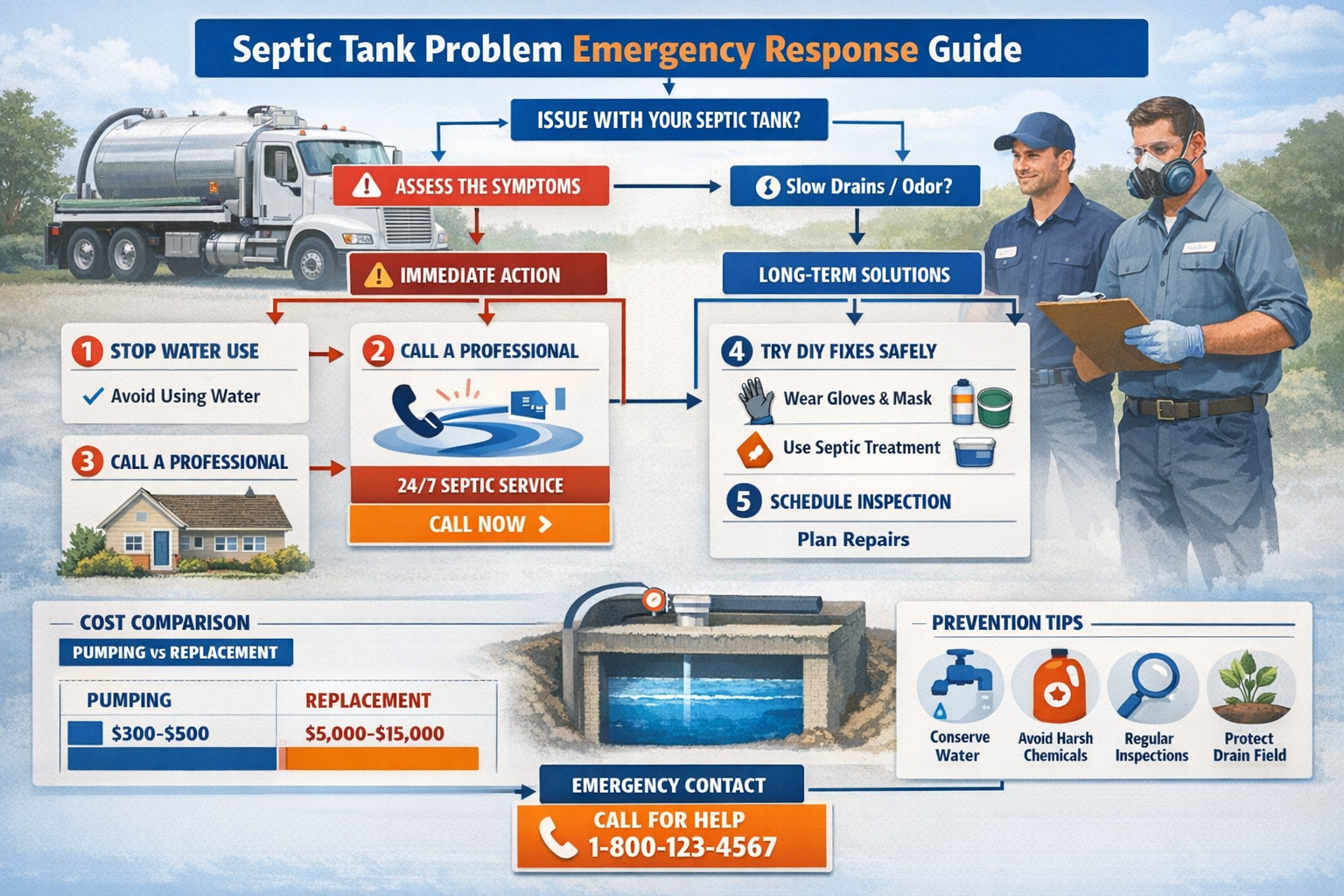
Professional Services Required For:
- Septic tank pumping and cleaning
- System inspections and diagnostics
- Repair of tanks, pipes, or drain fields
- Permit applications and regulatory compliance
- Raw sewage cleanup and remediation
Safe DIY Monitoring Includes:
- Visual inspection of your property for warning signs
- Monitoring drainage performance in your home
- Maintaining proper household habits
- Using appropriate septic-safe products
- Keeping records of maintenance and symptoms
Important safety note: Never attempt to open, enter, or repair septic tank components yourself. Professional equipment and training are required to safely work with septic systems.
For expert guidance and to connect with qualified professionals in your area, visit our contact page where we can help you find reliable septic service providers.
Helpful Resource for Long-Term Septic Health
If you want a simple, ongoing solution to help maintain your septic system between professional services, Septifix tablets can be a valuable addition to your maintenance routine. These treatments work continuously to break down waste and support the bacterial processes that keep your tank functioning efficiently.
While not a replacement for regular pumping and professional care, quality septic treatments can help extend your system’s life and reduce the frequency of problems that lead to emergency situations. Many homeowners find that consistent use of appropriate treatments helps them maintain optimal system performance with minimal effort.
Conclusion
Recognizing how you know when your septic tank is full can save you from costly emergency repairs and protect your family’s health. The key warning signs—slow drains, sewage odors, gurgling sounds, standing water, and sewage backup—provide clear indicators that your system needs immediate attention.
Take action now by:
- Scheduling regular pumping every 3-5 years based on your household size
- Monitoring your system monthly for early warning signs
- Implementing proper household habits to extend your system’s life
- Contacting professionals immediately when you notice multiple warning signs
- Keeping detailed records of maintenance and any problems you observe
Remember, septic system maintenance is far less expensive than emergency repairs or complete replacement. By staying vigilant and responding quickly to warning signs, you’ll ensure your septic system continues to protect your home and property for decades to come.
Don’t wait until you’re dealing with raw sewage in your basement or a $20,000 replacement bill. Start monitoring your system today, and when in doubt, consult with qualified septic professionals who can provide expert guidance tailored to your specific situation.
For more helpful information about septic care and maintenance, explore our blog where we regularly share expert tips and industry updates to help homeowners maintain healthy, efficient septic systems.
References
[1] Signs Of A Full Septic Tank – https://efcnetwork.org/signs-of-a-full-septic-tank/
[2] How To Tell If Your Septic Tank Is Full – https://gullettsanitation.com/2024/01/how-to-tell-if-your-septic-tank-is-full/
[3] How To Check If Your Septic Tank Is Full – https://www.guardianangelinspections.com/how-to-check-if-your-septic-tank-is-full
[4] Septic Tank Full – https://www.adt.com/resources/septic-tank-full
[5] Signs Your Septic Tank Is Full And Needs Emptying – https://jtserviceco.com/signs-your-septic-tank-is-full-and-needs-emptying/
[6] Warning Signs That Your Septic System Needs Pumping – https://fletcherseweranddrain.com/septic-system-pumping/warning-signs-that-your-septic-system-needs-pumping/
[7] 8 Signs It S Time For A Septic Tank Replacement – https://www.superiorsewerco.com/8-signs-it-s-time-for-a-septic-tank-replacement/