Septic Tank Gurgling Sound: Complete Guide to Causes and Solutions
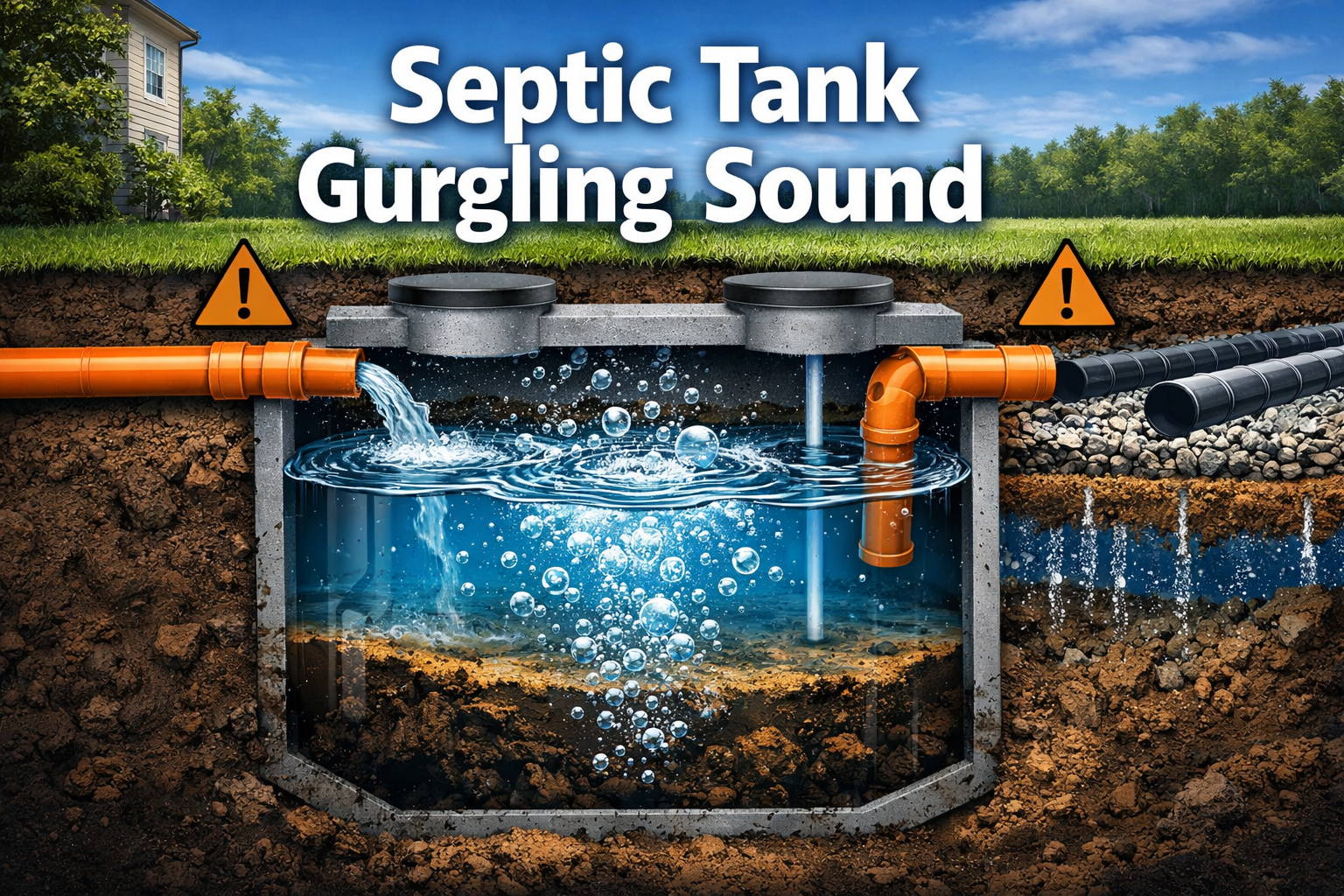
That strange gurgling sound coming from your drains isn’t just annoying—it’s your septic system trying to tell you something important. A septic tank gurgling sound typically indicates blockages, a full tank, or ventilation problems that need immediate attention to prevent costly damage to your system.
Key Takeaways
• Gurgling sounds usually mean your septic tank is full and needs pumping every 3-5 years
• Blocked drains or sewer pipes create air bubbles that cause the distinctive gurgling noise
• Vent pipe blockages prevent proper air circulation, leading to pressure imbalances
• Simple drain clogs can often be fixed with plunging, but persistent gurgling needs professional help
• Ignoring gurgling sounds can lead to sewage backups and expensive drainfield repairs
Quick Answer
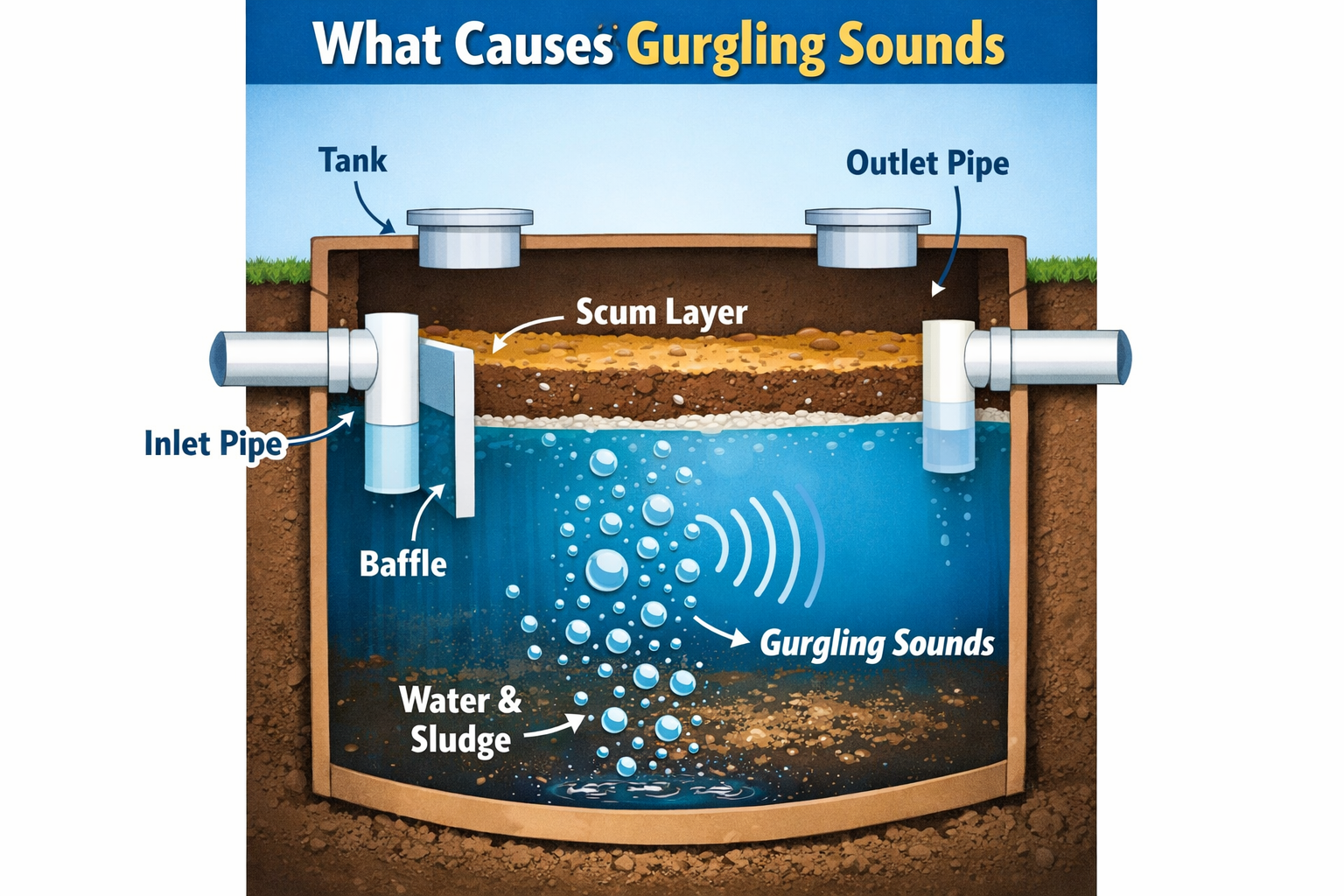
Septic tank gurgling sounds occur when air gets trapped in your plumbing system due to blockages, a full septic tank, or blocked vent pipes. The most common cause is a septic tank that’s reached capacity and needs pumping. While minor drain clogs might be fixable with a plunger, persistent gurgling usually requires professional inspection to prevent sewage backups and system failure.
What Is a Septic Tank Gurgling Sound?
A septic tank gurgling sound is the distinctive “glub-glub” or bubbling noise you hear coming from drains, toilets, or pipes when your septic system isn’t working properly. This sound happens when air bubbles get trapped in your plumbing and are forced through water or waste materials.
The gurgling occurs because your septic system relies on smooth water flow and proper air circulation. When something disrupts this balance—like a blockage or full tank—air gets trapped and creates those telltale bubbling sounds as it tries to escape through your drains.
Where you’ll typically hear gurgling:
- Kitchen sink drains
- Bathroom sinks and tubs
- Toilet bowls
- Floor drains in basements
- Pipes inside walls
Normal vs. concerning sounds: Occasional light gurgling after heavy water use might be normal, but persistent, loud gurgling—especially from multiple drains—signals a problem that needs attention.
Understanding these sounds helps you catch septic issues early, before they turn into expensive repairs or health hazards from sewage backups.
What Causes Septic Tank Gurgling Sound?
The most common cause of septic tank gurgling is a full septic tank that needs pumping, but several other issues can create these concerning sounds in your plumbing system.
Full Septic Tank
A septic tank that’s reached capacity is the leading cause of gurgling sounds throughout your home. When your tank fills up with solid waste and sludge, there’s no room for new wastewater to enter properly. This creates air pockets and backpressure that force air bubbles up through your drains, creating that distinctive gurgling noise.
Signs your tank is full:
- Gurgling from multiple drains
- Slow draining throughout the house
- Sewage odors near the tank
- Wet spots over the drainfield
Blocked Plumbing Drains
Individual drain blockages trap air bubbles that create gurgling as water tries to flow past the obstruction. Hair, grease, food particles, and soap buildup commonly cause these blockages in bathroom and kitchen drains.
Blocked Sewer Pipes
Obstructions in the main sewer line between your house and septic tank prevent proper drainage. Tree roots, collapsed pipes, or large debris can block these crucial pipes, causing air to bubble back through your home’s drains.
Drain Vent Blockages
Your plumbing system has vent pipes that allow sewer gases to escape and maintain proper air pressure. When these vents get blocked by leaves, bird nests, or debris, it creates pressure imbalances that result in gurgling sounds.
Drainfield Problems
A saturated or failing drainfield can’t absorb wastewater properly, causing backups that create gurgling throughout your system. This often happens when the soil becomes oversaturated or the drainfield pipes get damaged.
Choose professional inspection if gurgling persists after basic troubleshooting, as these issues require specialized equipment and expertise to diagnose accurately.
How to Diagnose Septic Tank Gurgling Sound Issues
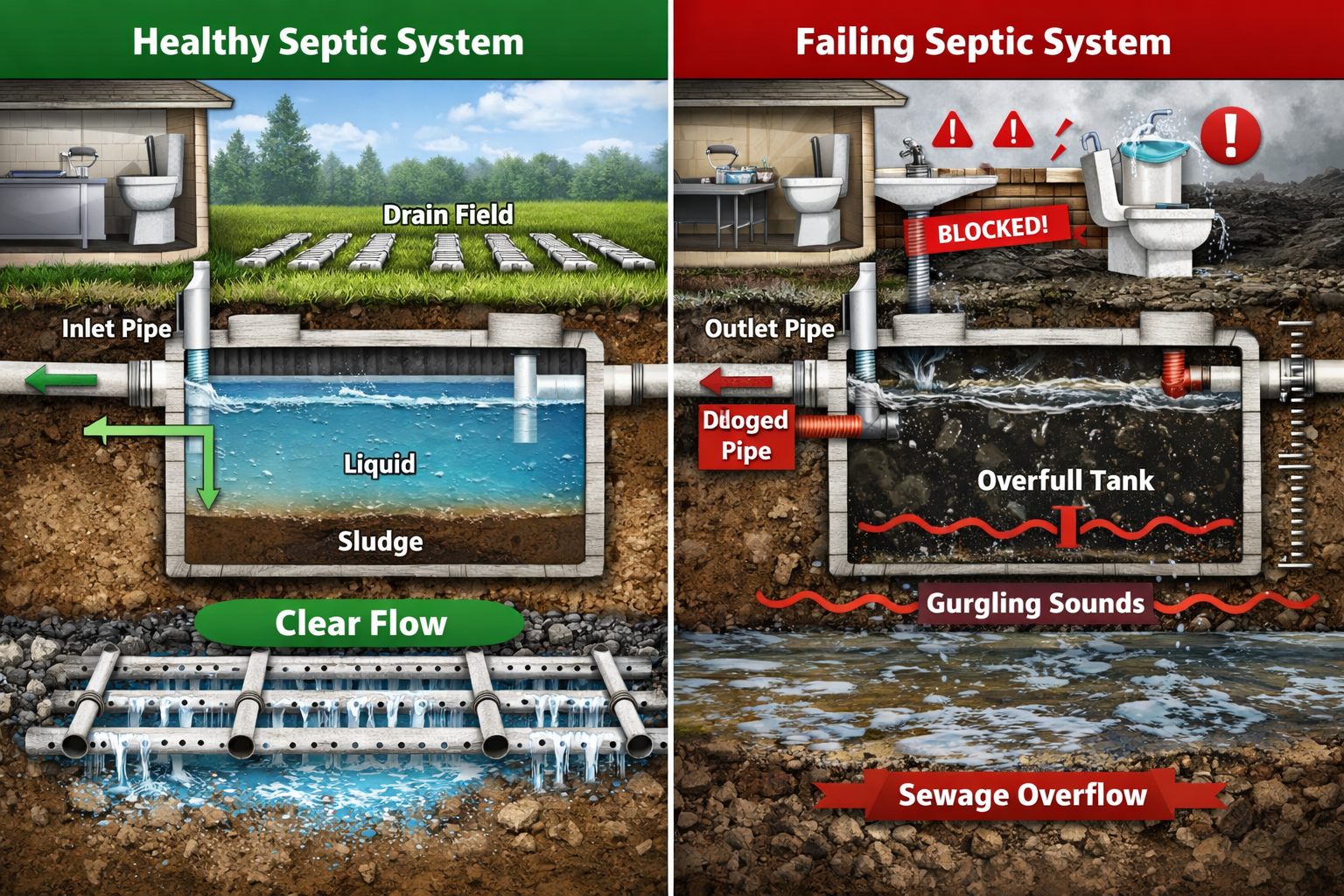
Start by determining whether the gurgling affects one drain or multiple locations, as this tells you if you’re dealing with a localized blockage or a system-wide problem.
Single Drain Gurgling
If only one sink, tub, or toilet gurgles, you likely have a localized drain blockage rather than a septic system issue.
Quick diagnostic steps:
- Test the affected drain – Run water and listen for gurgling intensity
- Check nearby drains – See if adjacent fixtures also gurgle
- Try plunging – A standard plunger might clear simple blockages
- Look for visible clogs – Remove drain covers to check for hair or debris
When it’s probably just a drain clog: The gurgling stops after plunging, water drains normally afterward, and no other fixtures are affected.
Multiple Drain Gurgling
Gurgling from several drains simultaneously almost always indicates a septic system problem that needs professional attention.
System-wide diagnostic checklist:
- Check when you last pumped – Most tanks need pumping every 3-5 years
- Note which drains gurgle – Kitchen and bathroom drains affected differently
- Test water usage patterns – Does gurgling worsen after showers or laundry?
- Inspect around your tank – Look for wet spots, odors, or standing water
Warning Signs That Need Immediate Attention
Call a professional immediately if you notice:
- Sewage backing up into your house
- Strong sewer odors throughout your home
- Multiple drains gurgling simultaneously
- Water pooling over your drainfield
- Toilets that won’t flush properly
Common mistake: Assuming multiple drain gurgling is just coincidental individual clogs. This usually indicates your septic tank is full and needs pumping to prevent sewage backups.
FYI: Some links may be affiliate links, which means I may earn a small commission at no extra cost to you.
For homeowners looking for simple preventive maintenance, products like Septifix tablets can help break down waste and reduce the buildup that leads to gurgling sounds. These monthly treatments help maintain proper bacterial balance in your tank, potentially extending the time between pumpings.
How to Fix Septic Tank Gurgling Sound Problems
The solution depends on whether you’re dealing with simple drain clogs or actual septic system issues, so start with basic troubleshooting before calling professionals.
DIY Solutions for Minor Issues
For single drain gurgling:
- Plunge the affected drain – Use a standard cup plunger with firm, steady motions
- Remove visible blockages – Take off drain covers and pull out hair or debris by hand
- Flush with hot water – Pour hot (not boiling) water down the drain to dissolve soap buildup
- Check drain vents – Look for obvious blockages on roof vent pipes
For minor septic maintenance:
- Reduce water usage temporarily to give your system time to process waste
- Avoid flushing non-biodegradable items like wipes or feminine products
- Add beneficial bacteria treatments to help break down waste more efficiently
When to Call Professionals
Contact septic professionals for:
- Gurgling from multiple drains that persists after basic troubleshooting
- Any signs of sewage backup or strong odors
- Suspected full septic tank (usually every 3-5 years)
- Blocked main sewer lines or vent pipes
- Drainfield problems or wet spots over the absorption area
What professionals can do:
- Pump your septic tank to remove accumulated solids
- Snake or hydro-jet blocked sewer lines
- Clear blocked vent pipes with specialized equipment
- Inspect and repair drainfield issues
- Perform camera inspections to locate exact blockage points
Cost Expectations
Typical service costs:
- Septic tank pumping: $200-$500 depending on tank size
- Drain cleaning: $100-$300 for basic blockages
- Sewer line repair: $500-$3,000 depending on damage extent
- Drainfield repair: $2,000-$10,000 for major issues
Money-saving tip: Regular pumping every 3-5 years costs much less than emergency repairs from neglected systems.
Choose professional service if gurgling continues after trying basic fixes, as persistent problems usually indicate issues that require specialized equipment and expertise to resolve safely.
Preventing Septic Tank Gurgling Sound
Prevention focuses on maintaining proper septic function through regular care and avoiding practices that overload or damage your system.
Regular Maintenance Schedule
Essential maintenance timeline:
- Pump every 3-5 years – More frequently for larger households or smaller tanks
- Annual inspections – Check for leaks, damage, or early warning signs
- Monthly bacterial treatments – Help maintain healthy waste breakdown
- Quarterly drain cleaning – Remove hair and debris before they cause blockages
Keep records: Track pumping dates, inspection results, and any repairs to identify patterns and plan future maintenance.
Smart Water Usage Habits
Spread out water usage:
- Don’t run multiple water-heavy appliances simultaneously
- Take shorter showers and fix leaky faucets promptly
- Use high-efficiency toilets and appliances when replacing old ones
- Install water-saving devices like low-flow showerheads
Laundry best practices:
- Spread loads throughout the week instead of doing them all on one day
- Use appropriate water levels for load sizes
- Choose biodegradable detergents without phosphates
What Not to Flush or Drain
Never put these down your drains:
- Cooking grease, oils, or fats
- Coffee grounds or food scraps
- Cat litter or pet waste
- Cigarette butts or ash
- Medications or chemicals
- Feminine hygiene products
- Baby wipes or “flushable” wipes
- Condoms or dental floss
Kitchen sink protection:
- Install a grease trap to catch cooking oils
- Scrape plates thoroughly before washing
- Use sink strainers to catch food particles
- Dispose of coffee grounds in compost, not down the drain
Common mistake: Thinking “flushable” wipes are safe for septic systems. These products don’t break down like toilet paper and commonly cause blockages that lead to gurgling sounds.
Helpful Resource for Ongoing Maintenance
For homeowners who want a simple, structured approach to septic care, Septifix tablets provide an easy monthly maintenance routine. One tablet per month helps break down waste, reduce odors, and maintain the bacterial balance that keeps your system running smoothly. While not required, this type of regular treatment can help prevent the waste buildup that often causes gurgling sounds and extends the time between expensive pumpings.
When Septic Tank Gurgling Sound Becomes an Emergency
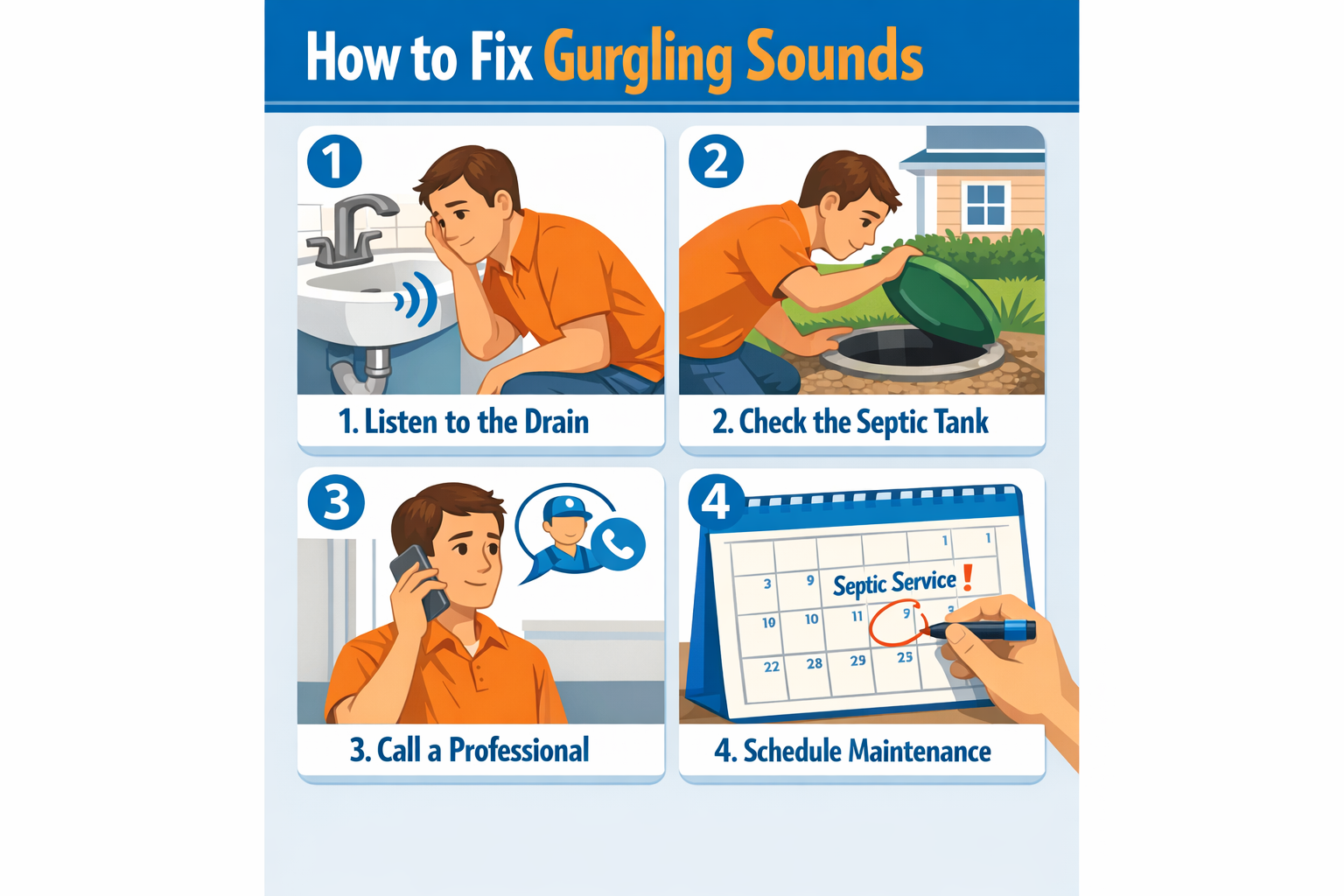
Certain combinations of symptoms with gurgling sounds indicate immediate septic emergencies that require urgent professional intervention to prevent health hazards and extensive property damage.
Emergency Warning Signs
Call emergency septic services immediately if you experience:
- Sewage backup into your house – Raw sewage coming up through drains, toilets, or floor drains
- Multiple toilets won’t flush – Combined with gurgling from several locations
- Strong sewer gas odors indoors – Especially if accompanied by gurgling sounds
- Standing sewage water – Visible sewage pooling around your septic tank or drainfield
- Gurgling plus slow drains system-wide – When basic troubleshooting doesn’t help within 24 hours
Health and Safety Risks
Immediate health concerns:
- Raw sewage contains dangerous bacteria, viruses, and parasites
- Sewer gases can be toxic in enclosed spaces
- Contaminated water can spread disease through contact or inhalation
- Sewage backups create serious sanitation hazards
Property damage risks:
- Sewage can damage flooring, walls, and personal belongings
- Prolonged moisture leads to mold growth
- Drainfield failure can contaminate groundwater
- Emergency repairs cost significantly more than preventive maintenance
Emergency Response Steps
If sewage backs up into your home:
- Stop using all water immediately – No flushing, washing, or draining
- Evacuate affected areas – Keep family and pets away from contaminated spaces
- Turn off electricity – If sewage reaches electrical outlets or appliances
- Call emergency septic services – Many companies offer 24/7 emergency response
- Document damage – Take photos for insurance claims before cleanup
While waiting for help:
- Ventilate affected areas if safe to do so
- Don’t try to clean sewage yourself without proper protective equipment
- Keep children and pets away from contaminated areas
- Avoid using any plumbing until professionals assess the situation
Don’t wait: Septic emergencies typically worsen rapidly and become more expensive to fix the longer you delay professional intervention.
FAQ
Q: Is it normal for my septic tank to make gurgling sounds occasionally?
A: Light, occasional gurgling after heavy water use might be normal, but persistent or loud gurgling from multiple drains indicates a problem that needs attention.
Q: How often should I pump my septic tank to prevent gurgling?
A: Most residential septic tanks need pumping every 3-5 years, depending on household size and usage patterns. Larger families or smaller tanks may need more frequent pumping.
Q: Can I fix septic tank gurgling myself?
A: You can try basic solutions like plunging individual drains or reducing water usage, but persistent gurgling usually requires professional diagnosis and repair.
Q: What’s the difference between drain gurgling and septic gurgling?
A: Single drain gurgling typically indicates a localized clog, while gurgling from multiple drains simultaneously usually means septic system problems.
Q: How much does it cost to fix septic tank gurgling?
A: Simple drain cleaning costs $100-$300, while septic tank pumping runs $200-$500. Major repairs like drainfield replacement can cost $2,000-$10,000.
Q: Will gurgling sounds go away on their own?
A: No, gurgling sounds indicate underlying problems that typically worsen over time without proper intervention. Early action prevents more expensive repairs.
Q: Can cold weather cause septic tank gurgling?
A: Cold weather can slow bacterial activity and cause temporary issues, but persistent gurgling in any season usually indicates problems that need professional attention.
Q: What should I do if my septic tank gurgles and smells bad?
A: Strong odors combined with gurgling often indicate serious problems. Stop using water immediately and call a septic professional for emergency service.
Q: How long can I ignore septic tank gurgling before it becomes serious?
A: Don’t ignore persistent gurgling for more than a few days. Early intervention prevents sewage backups and expensive emergency repairs.
Q: Do bacterial additives help with septic tank gurgling?
A: Quality bacterial treatments can help maintain proper waste breakdown and may reduce gurgling caused by poor bacterial balance, but they won’t fix full tanks or major blockages.
Q: Can tree roots cause septic tank gurgling sounds?
A: Yes, tree roots can infiltrate and block sewer pipes between your house and septic tank, creating the conditions that cause gurgling sounds.
Q: Should I use chemical drain cleaners for septic gurgling?
A: No, chemical drain cleaners can kill beneficial bacteria in your septic system and potentially damage pipes. Use mechanical methods like plunging instead.
Conclusion
Septic tank gurgling sounds serve as an early warning system for your septic system, alerting you to problems before they become expensive emergencies. The most common cause—a full septic tank—requires professional pumping every 3-5 years, while other issues like blocked drains or vent pipes need targeted solutions.
Take action when you hear persistent gurgling: Start with basic troubleshooting for single drains, but call professionals immediately if multiple drains gurgle simultaneously or if you notice sewage odors. The cost of preventive maintenance and early intervention is always less than emergency repairs from neglected systems.
Your next steps:
- Assess the scope – Determine if gurgling affects one drain or multiple locations
- Try basic fixes – Plunge individual drains and check for obvious blockages
- Schedule professional service – If gurgling persists or affects multiple drains
- Plan preventive maintenance – Set up regular pumping and inspection schedules
- Monitor your system – Watch for early warning signs and address them promptly
Remember, your septic system works hard to protect your family’s health and your property value. Responding quickly to gurgling sounds helps ensure it continues working effectively for years to come.
For more guidance on septic system care, explore our complete guide to septic tank maintenance and learn how to recognize when your tank needs pumping.
References
[1] Why Is My Septic Tank Gurgling – https://www.poophappens.com/why-is-my-septic-tank-gurgling/
[2] What Does It Mean If I Have Gurgling Septic Pipes – https://allclearseptic.com/what-does-it-mean-if-i-have-gurgling-septic-pipes/
[3] Why Is My Septic System Gurgling – https://www.acesepticandwaste.com/blog/why-is-my-septic-system-gurgling/
[4] Why Your Septic Tank Is Gurgling Outside – https://www.alltoconstruction.com/blog/why-your-septic-tank-is-gurgling-outside
[5] Glug Glug Septic System – https://supeckseptic.com/glug-glug-septic-system/
[6] Septic Tank Gurgling – https://www.american-sanitation.com/blog/septic-tank-gurgling/
[7] Sounds You Should And Shouldn T Hear From Your S – https://www.wrenvironmental.com/blog/2019/november/sounds-you-should-and-shouldn-t-hear-from-your-s/