
Signs of a Full Septic Tank: Critical Warning Signals Every Homeowner Must Know

Picture this: You’re hosting a family gathering when suddenly your toilet won’t flush, your kitchen sink gurgles ominously, and an unpleasant odor wafts through your home. If you rely on a septic system, these could be signs of a full septic tank that demands immediate attention. Ignoring these warning signals can lead to thousands of dollars in repairs, environmental contamination, and serious health hazards.
As a homeowner with a septic system, I’ve learned that recognizing the early signs of a full septic tank can save you from costly disasters and protect your property investment. In 2026, with rising repair costs and stricter environmental regulations, staying ahead of septic issues has never been more critical.
Key Takeaways
• Multiple slow drains throughout your home indicate your septic tank may be at capacity and requires immediate pumping
• Sewage odors and standing water around your tank or drain field are serious red flags that shouldn’t be ignored
• Most septic tanks need pumping every 3-5 years, but usage patterns and household size can affect this timeline
• Early detection saves money – addressing warning signs promptly prevents expensive system failures and replacements
• Professional inspection is essential when you notice multiple warning signs occurring simultaneously
Understanding How Your Septic System Works
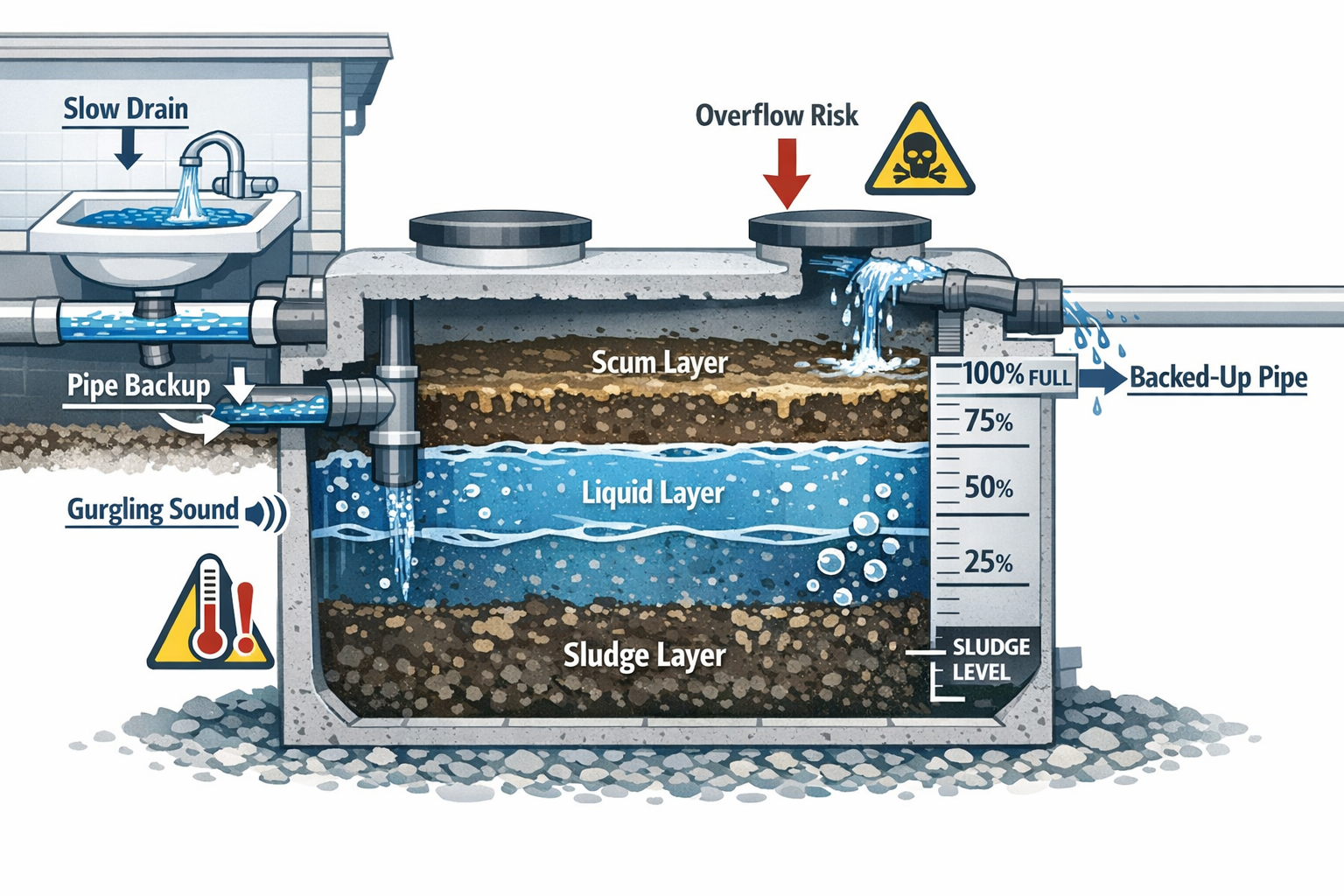
Before diving into the warning signs, it’s helpful to understand your septic system’s basic function. Your septic tank serves as a holding and treatment facility for all wastewater from your home. Solid waste settles to the bottom as sludge, oils and grease float to the top as scum, and liquid effluent flows to the drain field for further filtration.
When your tank reaches capacity, this delicate balance breaks down. The system can’t properly separate waste, leading to backups, overflows, and the various warning signs we’ll explore. Regular maintenance through our comprehensive septic care resources helps prevent these issues.
The Three-Layer System
Your septic tank operates on a three-layer principle:
- Top Layer (Scum): Oils, grease, and floating debris
- Middle Layer (Effluent): Liquid wastewater that flows to the drain field
- Bottom Layer (Sludge): Heavy solids that settle and decompose
When sludge accumulates beyond normal levels, it disrupts this system and triggers the warning signs we’ll discuss.
Early Warning Signs of a Full Septic Tank
🚨 Slow Drains Throughout Your Home
One of the first and most common signs of a full septic tank is slow drainage in multiple fixtures simultaneously. Unlike a single clogged drain, septic-related drainage issues affect your entire home’s plumbing system.
What to watch for:
- Kitchen sinks taking longer to empty
- Bathroom sinks draining sluggishly
- Showers backing up during use
- Washing machine cycles leaving standing water
When your septic tank reaches capacity, wastewater has nowhere to go, creating a bottleneck effect throughout your plumbing system. This is particularly noticeable when multiple family members use water simultaneously – like during morning routines or evening dishwashing.
🔧 Quick Test: Run water in your kitchen sink while someone flushes a toilet. If the sink drainage slows significantly, your septic system may be struggling.
💨 Unpleasant Sewage Odors
Strong sewage smells around your property are unmistakable signs of a full septic tank. These odors occur when your tank can’t properly contain and process waste, allowing gases to escape.
Common odor locations:
- Near the septic tank: Most obvious indicator of system problems
- Around drain field areas: Suggests overflow or system failure
- Inside your home: From drains, toilets, or basement areas
- Throughout your yard: Particularly concerning as it indicates widespread issues
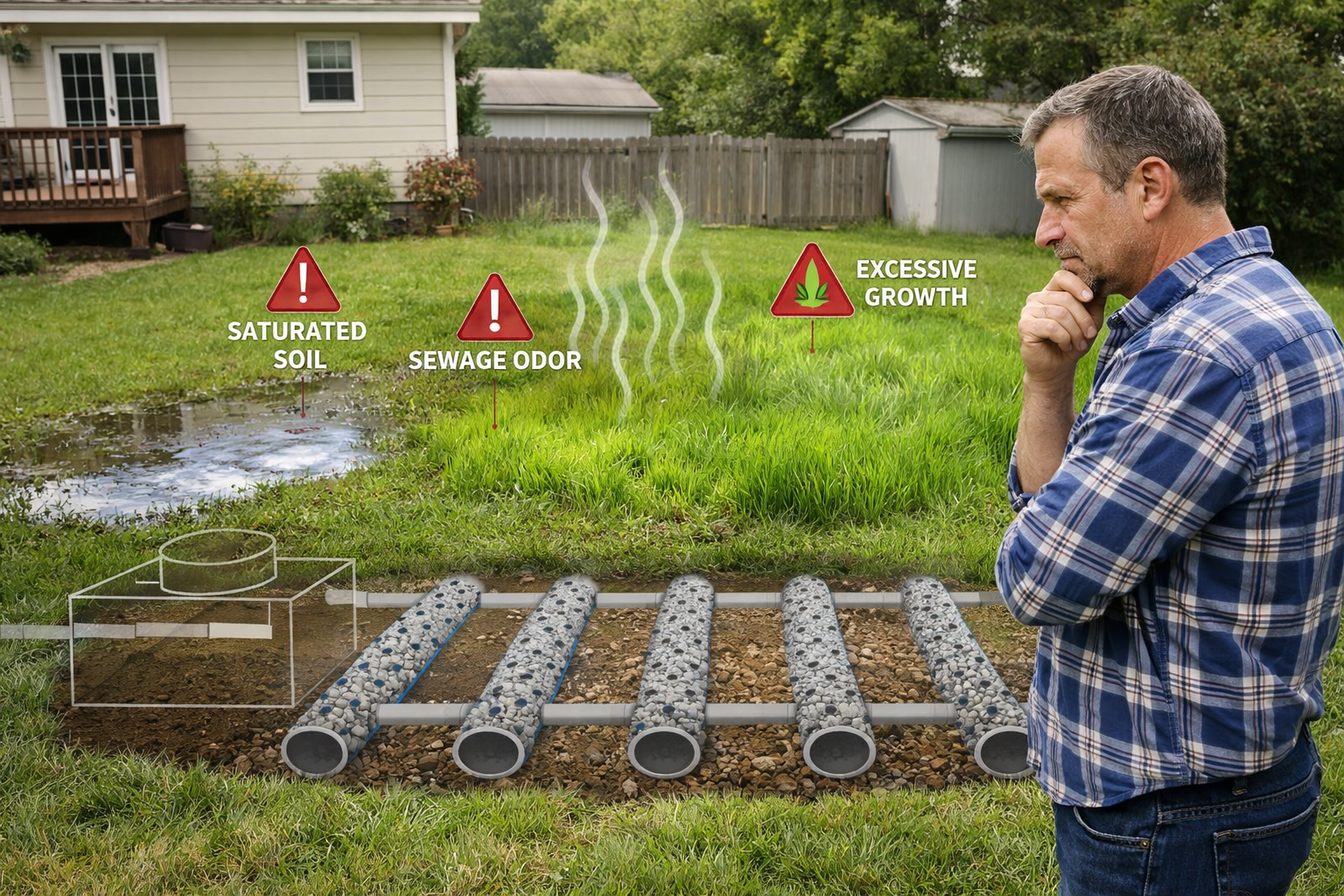
The smell resembles rotten eggs or raw sewage and becomes more pronounced during hot weather when bacterial activity increases[3]. If neighbors comment on odors from your property, take immediate action.
🌊 Standing Water and Pooling
Pooling water around your septic tank or drain field represents one of the most serious signs of a full septic tank. This occurs when your system can no longer absorb and process wastewater effectively.
Critical areas to monitor:
- Directly above the septic tank: Indicates tank overflow
- Throughout the drain field: Suggests system saturation
- Low-lying areas of your yard: Where overflow naturally collects
- Near septic system components: Around pipes, distribution boxes, or pumps
This standing water often contains harmful bacteria and contaminants, posing serious health risks to your family and pets. Never allow children or animals to play in these areas.
Advanced Warning Signs of a Full Septic Tank
🔊 Gurgling and Bubbling Sounds
Unusual sounds from your plumbing serve as important signs of a full septic tank that many homeowners overlook. These noises result from trapped air and restricted water flow when your system operates beyond capacity.
Listen for these sounds:
- Gurgling toilets when not in use
- Bubbling from sink drains during water usage
- Unusual noises from washing machine drainage
- Sounds from multiple fixtures occurring simultaneously
FYI: Some links may be affiliate links, which means I may earn a small commission at no extra cost to you.
These sounds often worsen during peak usage times and may be accompanied by slow drainage. If you’re hearing these warning signs regularly, consider using septic-safe treatments to help break down waste and reduce buildup. Products like Septifix tablets can help maintain your system’s bacterial balance while you arrange for professional pumping.
🌱 Exceptionally Lush Grass Growth
While slightly greener grass over your drain field is normal, excessively lush or overly green patches indicate signs of a full septic tank requiring attention.
What constitutes “too green”:
- Grass significantly darker than surrounding areas
- Rapid growth requiring frequent mowing
- Thick, spongy texture when walking on the area
- Growth during dormant seasons when other grass remains brown
This occurs because overflow from your full septic tank acts as fertilizer, providing excess nutrients to grass roots. While it might seem beneficial, it actually signals system failure that needs immediate professional attention.
🚽 Sewage Backups and Toilet Issues
Sewage backups represent the most severe signs of a full septic tank and require emergency response. These backups typically appear first in your home’s lowest fixtures – usually toilets and basement drains.
Backup warning signs:
- Toilets backing up repeatedly despite plunging
- Sewage appearing in bathtubs or showers
- Multiple fixtures backing up simultaneously
- Dark, foul-smelling water emerging from drains
⚠️ Health Warning: Sewage backups contain dangerous bacteria, viruses, and parasites. Avoid direct contact and seek professional cleanup services immediately.
Toilets often show the first signs because they have the most direct connection to your septic system. If your toilet struggles to flush or backs up frequently, don’t delay – contact a septic professional immediately.
Understanding Septic Tank Capacity and Maintenance Needs
When Pumping Becomes Necessary
Professional pumping becomes necessary when sludge accumulates to one-third or more of your tank’s capacity. Most households require septic tank pumping every 3-5 years, though several factors influence this timeline.
Factors affecting pumping frequency:
| Household Size | Recommended Frequency | Usage Considerations |
|---|---|---|
| 1-2 people | Every 4-5 years | Light water usage |
| 3-4 people | Every 3-4 years | Moderate usage |
| 5+ people | Every 2-3 years | Heavy usage |
| Garbage disposal use | Every 2-3 years | Increases solid waste |
Seasonal Considerations
Signs of a full septic tank often become more apparent during specific seasons:
🌧️ Spring and Fall:
- Heavy rains can overwhelm already-full systems
- Ground saturation prevents proper drain field function
- Increased indoor water usage during weather changes
☀️ Summer:
- Higher temperatures intensify odors
- Increased water usage from guests and activities
- Bacterial activity peaks, accelerating decomposition
❄️ Winter:
- Frozen ground can restrict drain field function
- Holiday gatherings increase system load
- Reduced bacterial activity slows waste breakdown
For comprehensive guidance on seasonal septic care, check our frequently asked questions section.
Health and Environmental Risks of Ignoring Warning Signs
Immediate Health Concerns
Ignoring signs of a full septic tank creates serious health risks for your family and community. Contaminated well water represents one of the most dangerous consequences, particularly in rural areas where homes rely on private wells.
Health risks include:
- Bacterial infections from E. coli and other pathogens
- Viral illnesses including hepatitis and gastroenteritis
- Parasitic infections from contaminated water sources
- Respiratory issues from sewage gases and odors
🩺 Medical Alert: If anyone in your household experiences unexplained gastrointestinal symptoms, have your well water tested immediately for contamination.
Environmental Impact
Full septic tanks don’t just threaten your property – they impact the broader environment:
- Groundwater contamination affects neighboring wells and water sources
- Surface water pollution harms local streams, ponds, and lakes
- Soil contamination damages local ecosystems and property values
- Nitrate pollution creates long-term environmental damage[1]
Professional Assessment and Emergency Response
When to Call Septic Professionals
Don’t wait for multiple signs of a full septic tank to appear simultaneously. Contact professionals immediately if you experience:
✅ Any sewage backup into your home
✅ Strong sewage odors lasting more than 24 hours
✅ Standing water around your septic system
✅ Multiple slow drains throughout your house
✅ Gurgling sounds from several fixtures
What Professionals Will Assess
During a septic inspection, professionals evaluate:
- Tank capacity and sludge levels
- Drain field condition and saturation
- System component functionality
- Overall system health and lifespan
- Compliance with local regulations
💰 Cost Consideration: Emergency septic repairs can cost $3,000-$10,000 or more, while routine pumping typically costs $200-$500. Early intervention saves significant money.
Preventive Maintenance and Long-term Care
Daily Habits That Protect Your System
Preventing signs of a full septic tank starts with mindful daily habits:
✅ Do:
- Use septic-safe toilet paper and cleaning products
- Spread laundry loads throughout the week
- Fix leaky faucets and running toilets promptly
- Dispose of grease and oils in the trash, not drains
❌ Don’t:
- Flush non-biodegradable items (wipes, feminine products, medications)
- Use excessive amounts of antibacterial soaps or cleaners
- Pour chemicals, paint, or solvents down drains
- Overload your system with excessive water usage
Helpful Maintenance Tools
If you want to maintain your septic system between professional services, Septifix tablets can help keep your system clean and efficient. These easy-to-use treatments help break down waste, reduce odors, and maintain proper bacterial balance – potentially extending the time between pumpings and preventing some warning signs from developing.
While not a replacement for professional maintenance, these tablets offer a simple way to support your system’s health with minimal effort. Many homeowners find them helpful for maintaining optimal system performance between scheduled services.
Creating a Maintenance Schedule
Track your septic system’s health with a simple maintenance calendar:
📅 Monthly:
- Visual inspection of tank and drain field areas
- Check for unusual odors or standing water
- Monitor drainage speed in multiple fixtures
📅 Annually:
- Professional system inspection
- Well water testing (if applicable)
- Review and update maintenance records
📅 Every 3-5 Years:
- Professional tank pumping and cleaning
- System component evaluation
- Drain field assessment
For additional maintenance guidance and expert tips, explore our comprehensive blog with seasonal care advice and troubleshooting guides.
Cost Analysis: Prevention vs. Emergency Repairs
Financial Impact of Ignoring Warning Signs
Understanding the financial implications helps prioritize septic maintenance:
🔧 Preventive Maintenance Costs:
- Annual inspection: $100-$300
- Routine pumping (3-5 years): $200-$500
- Minor repairs: $150-$800
- Total annual average: $200-$400
🚨 Emergency Repair Costs:
- System replacement: $8,000-$25,000
- Drain field repair: $3,000-$10,000
- Environmental cleanup: $5,000-$20,000
- Potential total: $16,000-$55,000
💡 Smart Investment: Spending $200-$400 annually on maintenance prevents potential costs exceeding $50,000.
Insurance Considerations
Most homeowner’s insurance policies don’t cover septic system failures resulting from poor maintenance. However, they may cover sudden, accidental damage from external factors. Review your policy and consider septic system insurance riders available in some areas.
Regional and Seasonal Factors Affecting Septic Systems
Climate Impact on Warning Signs
Signs of a full septic tank can vary based on your geographic location and local climate conditions:
🌴 Warm Climate Considerations:
- Year-round bacterial activity maintains consistent decomposition
- Higher evaporation rates can concentrate waste faster
- Increased water usage for pools, irrigation, and cooling
🏔️ Cold Climate Challenges:
- Frozen ground restricts drain field function during winter
- Reduced bacterial activity slows waste breakdown
- Spring thaws can overwhelm already-stressed systems
🌧️ High-Rainfall Areas:
- Saturated soil prevents proper effluent absorption
- Increased risk of system overflow during heavy rains
- Need for more frequent monitoring during wet seasons
Soil Type Considerations
Your local soil composition significantly affects how quickly signs of a full septic tank develop:
- Clay soils: Poor drainage extends waste contact time, requiring more frequent pumping
- Sandy soils: Rapid drainage may mask early warning signs but can lead to groundwater contamination
- Rocky terrain: Limited absorption capacity increases overflow risk
Advanced Diagnostic Techniques
Professional Testing Methods
When signs of a full septic tank appear, professionals use several diagnostic techniques:
🔬 Sludge Level Testing:
- Sludge judges measure accumulated solids
- Electronic sensors provide precise measurements
- Core sampling reveals waste composition
💧 Effluent Quality Analysis:
- Tests for proper bacterial balance
- Measures suspended solids and nutrients
- Identifies chemical contamination sources
📊 System Flow Analysis:
- Hydraulic load testing reveals capacity issues
- Distribution box evaluation ensures proper flow
- Drain field percolation testing measures absorption rates
DIY Monitoring Techniques
While professional assessment remains essential, homeowners can monitor basic indicators:
🏠 Simple Home Tests:
- Toilet paper test: Drop tissue in toilet – it should break down within 24 hours in septic-safe systems
- Water level check: Mark normal water levels in toilets and sinks to notice changes
- Drainage timing: Time how long sinks take to drain completely during normal usage
Technology and Modern Septic Solutions

Smart Monitoring Systems
2026 technology offers advanced solutions for detecting signs of a full septic tank before they become critical:
📱 Smart Septic Monitors:
- Real-time sludge level tracking
- Smartphone alerts for maintenance needs
- Historical data analysis for usage patterns
🔔 Alarm Systems:
- High-water level alerts
- Pump failure notifications
- Drain field saturation warnings
💻 Digital Maintenance Logs:
- Automated service reminders
- Contractor scheduling integration
- Regulatory compliance tracking
Eco-Friendly Treatment Options
Modern septic treatments focus on environmental responsibility while maintaining system health:
- Biological additives enhance natural bacterial processes
- Enzyme treatments break down specific waste types
- Oxygen-enhanced systems improve decomposition efficiency
Emergency Response Planning
Creating Your Action Plan
When signs of a full septic tank appear, having a prepared response plan saves time and money:
📋 Emergency Contact List:
- Primary septic service contractor
- Backup emergency services
- Local health department
- Insurance company contact information
🛠️ Immediate Response Steps:
- Stop all water usage to prevent additional backups
- Document problems with photos for insurance/contractors
- Protect family health by avoiding contaminated areas
- Contact professionals immediately for assessment
🏠 Temporary Measures:
- Redirect water usage to reduce system load
- Use portable facilities if necessary
- Ventilate affected areas to reduce odor exposure
- Keep pets and children away from contaminated zones
Communication with Neighbors
Septic system failures can affect neighboring properties, particularly in areas with shared water sources or close proximity systems:
- Notify nearby neighbors of potential contamination risks
- Share contractor information for community-wide maintenance
- Coordinate pumping schedules for potential cost savings
- Report environmental concerns to appropriate authorities
Helpful Resource for System Maintenance
If you want a simple option to help maintain your septic system between professional services, Septifix tablets offer an easy way to support proper bacterial balance and waste breakdown. These trusted tablets help many homeowners keep their systems running efficiently with minimal effort.
While professional pumping and maintenance remain essential, these tablets can help reduce buildup and maintain optimal system performance. They’re particularly useful for households that want to take proactive steps in preventing the warning signs we’ve discussed.
Remember, no treatment replaces proper maintenance, but having reliable tools to support your system’s health can provide peace of mind and potentially extend service intervals.
Conclusion
Recognizing signs of a full septic tank empowers you to protect your home, health, and financial investment. From slow drains and sewage odors to standing water and unusual sounds, these warning signals demand prompt attention to prevent costly disasters.
Take action today by:
✅ Scheduling a professional inspection if you’ve noticed any warning signs
✅ Creating a maintenance calendar with regular monitoring dates
✅ Establishing relationships with qualified septic professionals in your area
✅ Implementing daily habits that protect your system’s longevity
✅ Budgeting for routine maintenance to avoid emergency repair costs
Remember, early intervention saves thousands of dollars and protects your family’s health. Don’t wait for multiple warning signs to appear simultaneously – address issues promptly and maintain your system proactively.
Your septic system works hard to protect your home and environment. By staying vigilant for these warning signs and maintaining regular professional care, you’ll ensure reliable service for decades to come. For additional guidance and expert resources, visit our contact page to connect with septic care professionals in your area.
The cost of prevention is always less than the price of emergency repairs – invest in your septic system’s health today.
References
[1] Signs Of A Full Septic Tank – https://efcnetwork.org/signs-of-a-full-septic-tank/
[2] How To Tell If Your Septic Tank Is Full – https://www.bdpplumbing.com/how-to-tell-if-your-septic-tank-is-full
[3] Signs Your Septic Tank Is Too Full When To Call The Pros – https://www.metroseptic.com/blog/signs-your-septic-tank-is-too-full-when-to-call-the-pros/
[4] Signs Your Septic Tank Is Full And Needs Emptying – http://farmersseptic.com/signs-your-septic-tank-is-full-and-needs-emptying/