
Last updated: March 7, 2026
Key Takeaways
- Pump every 3-5 years based on household size and water usage to prevent system failure
- Schedule professional inspections every 3 years to catch problems early
- Use septic-safe products only to protect beneficial bacteria that break down waste
- Never flush non-biodegradable items like wipes, medications, or feminine products
- Conserve water actively to prevent overwhelming your system
- Protect your drain field from vehicles, heavy equipment, and invasive tree roots
- Keep detailed maintenance records for future service providers and warranty claims
- Know warning signs like slow drains, odors, and standing water around your system
Quick Answer
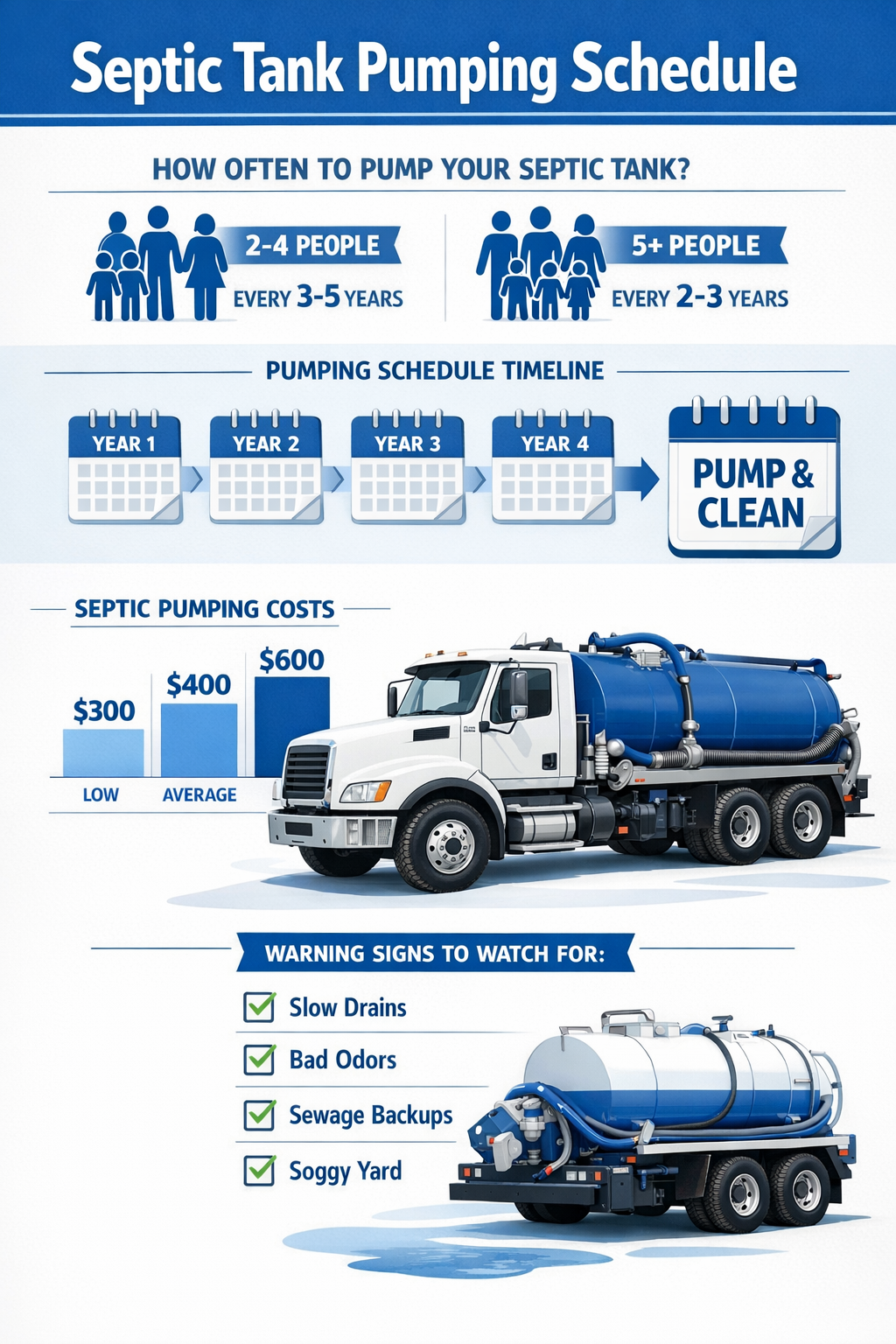
These 15 septic tank care tips every homeowner should know focus on three core areas: regular professional maintenance (pumping every 3-5 years and annual inspections), daily habits that protect your system (water conservation and septic-safe products), and drain field protection. Following these practices can extend your system’s life to 20-30 years and prevent costly repairs that often exceed $10,000.
How Often Should You Pump and Inspect Your Septic Tank?
Pump your septic tank every 3-5 years and schedule professional inspections every 3 years. Most residential septic tanks require pumping every three to five years, depending on household size and water usage. A typical pumping service costs a few hundred dollars and takes just a couple of hours.
1. Schedule Regular Pumping Every 3-5 Years
Your septic tank needs regular pumping to remove accumulated solids that can’t break down naturally. Households with 2-4 people typically need pumping every 3-5 years, while larger families may need more frequent service.
Choose 3-year intervals if you have:
- Large household (5+ people)
- Heavy water usage
- Garbage disposal use
- Older septic system
Septifix: Simple Septic Tank Care in One Tablet
Septifix tablets help break down waste, reduce bad smells, and keep your septic tank working properly. With one easy monthly flush, you can help prevent blockages, protect your plumbing, and avoid costly repairs.
👉 See how Septifix tablets can keep your septic system clean and efficient
2. Get Professional Inspections Every 3 Years
Have your septic system inspected every three years by a qualified professional, according to the North Carolina Department of Public Health and Human Services. However, some states recommend inspections every 3-5 years. These inspections catch problems before they become expensive repairs.
3. Monitor Tank Levels Between Services
Learn to recognize signs your septic tank is full between scheduled pumpings. Warning signs include slow drains, gurgling sounds, and sewage odors around your property.
What Daily Habits Protect Your Septic System?
Water conservation and using only septic-safe products are the most important daily habits for septic system health. Excessive water usage can overwhelm your septic system, leading to backups and failures.
4. Conserve Water Actively Throughout Your Home
Fix leaky faucets and toilets promptly, install low-flow fixtures, and spread out laundry loads throughout the week instead of doing them all at once. A running toilet or dripping sink can fail a septic system within days.
Water conservation strategies:
- Fix leaks immediately
- Install low-flow showerheads and toilets
- Run dishwashers and washing machines only with full loads
- Spread laundry throughout the week
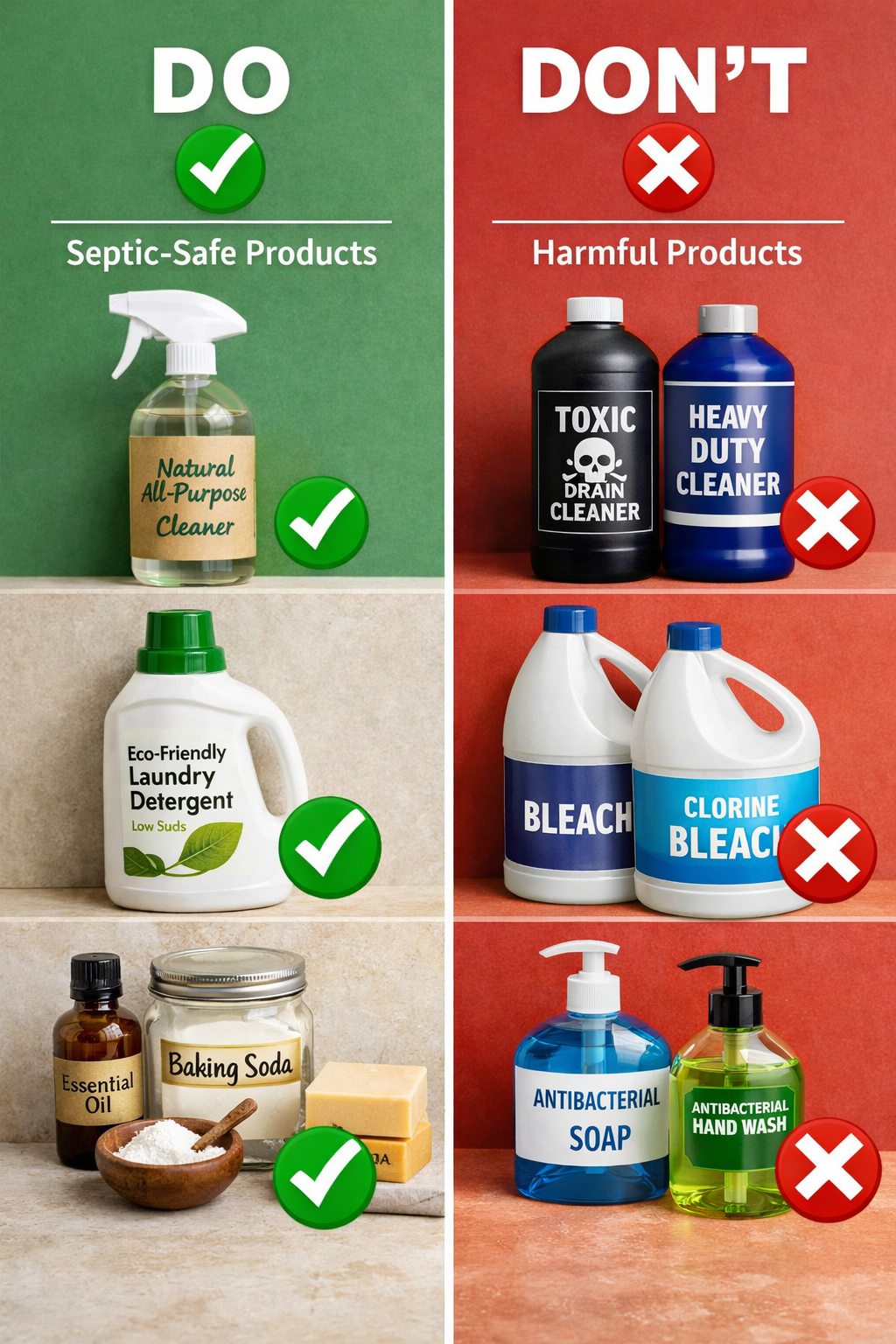
5. Use Only Septic-Safe and Biodegradable Products
Harsh chemicals like bleach and drain cleaners can kill beneficial bacteria in your tank that break down waste. Use low-suds, biodegradable, and phosphate-free detergents instead.
6. Never Flush Non-Biodegradable Items
Don’t flush wipes (even “flushable” ones), diapers, feminine hygiene products, paper towels, cat litter, or pet waste. These items can cause clogs and system failure.
Never flush these items:
- Baby wipes or “flushable” wipes
- Feminine hygiene products
- Condoms or contraceptives
- Paper towels or tissues
- Cat litter or pet waste
- Cigarette butts
7. Avoid Using Garbage Disposals
Garbage disposals let too many solids and greases enter the septic system, disrupting its function. Compost food scraps instead or dispose of them in regular trash.
8. Never Flush Medications Down Drains
Medications can disrupt the beneficial bacteria in your septic tank and contaminate groundwater. Take unused medications to pharmacy take-back programs instead.
9. Limit Grease and Oil Disposal
Don’t dispose of oils, grease, and harsh chemicals down your drains. These products can clog your septic system and disrupt its natural bacterial balance. Limit grease and oils, which can solidify and clog pipes or tanks.
How Do You Protect Your Septic Drain Field?
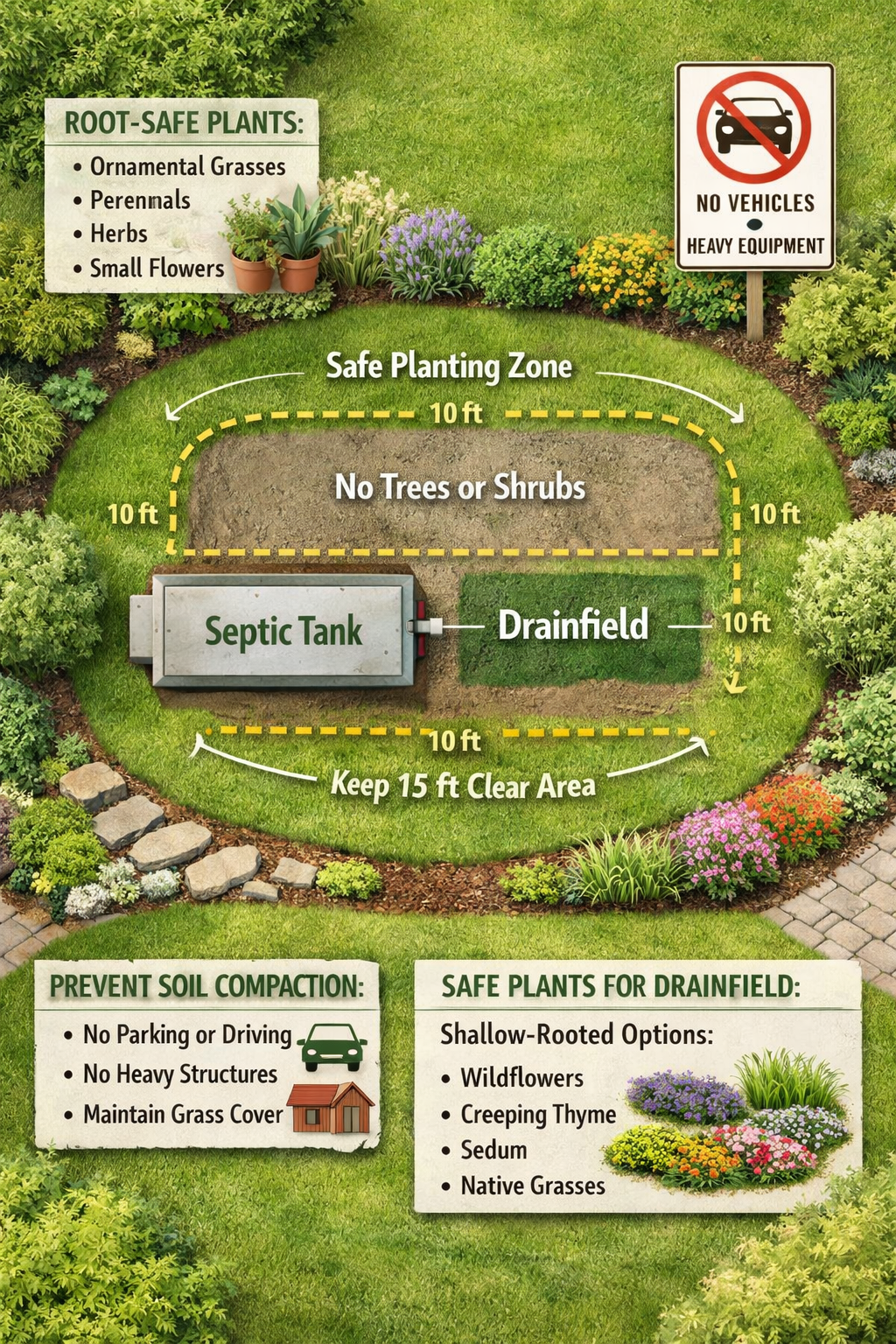
Keep vehicles off your drain field and plant trees at least 30 feet away to prevent soil compaction and root damage. Don’t park vehicles or place heavy equipment on the drain field to prevent soil compaction and damage.
10. Never Drive or Park on Your Drain Field
Soil compaction from vehicles can crush pipes and reduce the soil’s ability to filter wastewater. Even riding mowers can cause damage over time.
11. Plant Trees and Shrubs Away from Your System
Plant trees and shrubs away from the drain field to prevent root intrusion. Tree roots can clog or damage septic pipes, leading to expensive repairs.
Safe planting distances:
- Trees: 30+ feet from system
- Shrubs: 10+ feet from system
- Grass: Safe for drain field area
12. Maintain Proper Drainage Around Your System
Ensure surface water drains away from your septic tank and drain field. Poor drainage can saturate the soil and prevent proper wastewater treatment.
What Records and System Knowledge Should You Maintain?
Keep detailed maintenance records and know your system’s exact location to help service providers and prevent accidental damage. Maintain records of inspections, pumping, repairs, and permits issued.
13. Keep Detailed Maintenance Records
This provides valuable information for future service providers and helps you stay on top of maintenance needs. Include dates, service provider names, and any issues discovered.
Essential records to maintain:
- Pumping dates and service providers
- Inspection reports
- Repair receipts
- System permits and approvals
- Tank and drain field locations
14. Know Your System Location and Layout
Learn the location of your septic tank and drain field to avoid accidentally damaging them. Keep a sketch of your system with your maintenance records. This information helps with locating your septic tank for maintenance.
15. Understand How Your Septic System Works
Familiarize yourself with how your septic system works so you can better maintain it and recognize problems early. Understanding the basic process helps you make better decisions about what goes down your drains.
Septifix: Simple Septic Tank Care in One Tablet
Septifix tablets help break down waste, reduce bad smells, and keep your septic tank working properly. With one easy monthly flush, you can help prevent blockages, protect your plumbing, and avoid costly repairs.
👉 See how Septifix tablets can keep your septic system clean and efficient
Common Septic System Maintenance Mistakes to Avoid
The biggest mistake homeowners make is treating their septic system like a city sewer connection. Unlike municipal systems, septic tanks rely on beneficial bacteria and careful waste management.
Mistake 1: Using Too Much Water at Once
Doing multiple loads of laundry in one day can overwhelm your system. Spread water usage throughout the week.
Mistake 2: Ignoring Warning Signs
Don’t ignore signs your septic tank needs maintenance like slow drains or sewage odors. Early intervention prevents costly repairs.
Mistake 3: DIY Repairs
Septic systems are complex and regulated. Always hire qualified professionals for repairs and major maintenance.
FAQ
How often should I pump my septic tank?
Most residential septic tanks need pumping every 3-5 years, depending on household size and water usage.
Can I use bleach with a septic system?
Use bleach sparingly. Excessive bleach kills beneficial bacteria that break down waste in your tank.
What happens if I don’t pump my septic tank?
Unpumped tanks overflow with solids, causing backups, drain field damage, and potentially complete system failure requiring replacement.
Are “flushable” wipes really safe for septic systems?
No. Even wipes labeled “flushable” don’t break down properly and can cause clogs in septic systems.
How much does septic tank pumping cost?
Typical pumping services cost a few hundred dollars and take just a couple of hours.
Can I plant a garden over my drain field?
Plant only grass over drain fields. Vegetable gardens can be contaminated by wastewater, and deep roots can damage pipes.
How do I know if my septic system is failing?
Warning signs include sewage backups, persistent odors, standing water around the tank or drain field, and unusually green grass over the system.
Should I use septic tank additives?
Most septic professionals don’t recommend additives. Proper maintenance and septic-safe products are more effective than chemical additives.
How long do septic systems last?
Well-maintained septic systems typically last 20-30 years, though some components may need replacement sooner.
Can I install a hot tub if I have a septic system?
Hot tub drainage can overwhelm septic systems. Consult a septic professional before installation to ensure your system can handle the additional water volume.
Septifix: Simple Septic Tank Care in One Tablet
Septifix tablets help break down waste, reduce bad smells, and keep your septic tank working properly. With one easy monthly flush, you can help prevent blockages, protect your plumbing, and avoid costly repairs.
👉 See how Septifix tablets can keep your septic system clean and efficient
Conclusion
Following these 15 septic tank care tips every homeowner should know protects your investment and prevents costly emergency repairs. The key is consistency: pump every 3-5 years, use septic-safe products daily, conserve water, and protect your drain field from damage.
Start by scheduling your next pumping service if it’s been over 3 years, and create a maintenance record system to track future services. For comprehensive guidance on maintaining your system year-round, check our complete septic tank maintenance checklist.
Remember that proper septic care isn’t just about avoiding problems—it’s about protecting your property value, your family’s health, and the environment. A well-maintained septic system can serve your home reliably for decades.
References
[1] Why Regular Septic Maintenance Can Save You Thousands In 2026 – https://www.metroseptic.com/blog/why-regular-septic-maintenance-can-save-you-thousands-in-2026/
[2] Septicsmart Week 9 Care Tips Your Septic System And Health – https://www.dph.ncdhhs.gov/blog/2024/09/16/septicsmart-week-9-care-tips-your-septic-system-and-health
[3] Caring For Your Septic System – https://www.mass.gov/guides/caring-for-your-septic-system
[4] Septic System Maintenance Tips 2025 – https://martinseptic.com/septic-system-maintenance-tips-2025/
[5] How To Keep Your Septic System Running Smoothly A2122484638 – https://www.consumerreports.org/home-garden/plumbing/how-to-keep-your-septic-system-running-smoothly-a2122484638/
[6] Maintaining Your Septic System – https://bpmhd.org/maintaining-your-septic-system/