
How to Know If Your Septic Tank Is Full: Warning Signs Every Homeowner Should Recognize

Last updated: March 4, 2026

Key Takeaways
- Slow drains throughout your home are the most common early warning sign of a full septic tank
- Gurgling sounds from toilets and pipes indicate trapped air from system overflow
- Sewage odors inside or outside your home signal dangerous gas buildup from accumulated sludge
- Standing water around your drain field means your tank can’t handle additional waste
- Unusually green grass over your septic system indicates excess moisture from overflow
- Sewage backup into your home requires immediate professional attention
- Regular pumping every 3-5 years prevents most full tank problems
- Visual inspection of your system can catch problems before they become emergencies
Quick Answer
You can tell if your septic tank is full by watching for slow drains throughout your home, gurgling sounds from pipes, sewage odors, standing water around the drain field, or unusually lush grass over the tank area. These warning signs indicate your tank has reached capacity and needs immediate pumping to prevent sewage backup and costly system damage.
What Are the Most Common Signs Your Septic Tank Is Full?
Slow drains throughout your home are the primary indicator that your septic tank has reached capacity. When your tank fills up, wastewater can’t flow out properly, causing backups in sinks, showers, toilets, and laundry drains.
The most reliable warning signs include:
- Multiple slow drains – Not just one fixture, but several draining slowly
- Gurgling or bubbling sounds from toilets and pipes when water drains
- Strong sewage odors inside your home or near outdoor drains
- Standing water or wet spots around your drain field
- Unusually green, lush grass over your septic tank or drain field
- Sewage backup into your home through toilets or floor drains
Choose immediate action if you notice multiple signs together – this indicates your system is at or beyond capacity. A single slow drain might be a simple clog, but multiple symptoms point to tank fullness.
The key difference between normal septic function and a full tank is that problems affect your entire plumbing system, not just individual fixtures.
Why Do Septic Tanks Fill Up and Need Pumping?
Septic tanks naturally accumulate solid waste (sludge) at the bottom over time, which must be pumped out every 3-5 years to maintain proper function. As sludge builds up, it reduces the tank’s capacity to hold and process new wastewater.
Here’s how the process works:
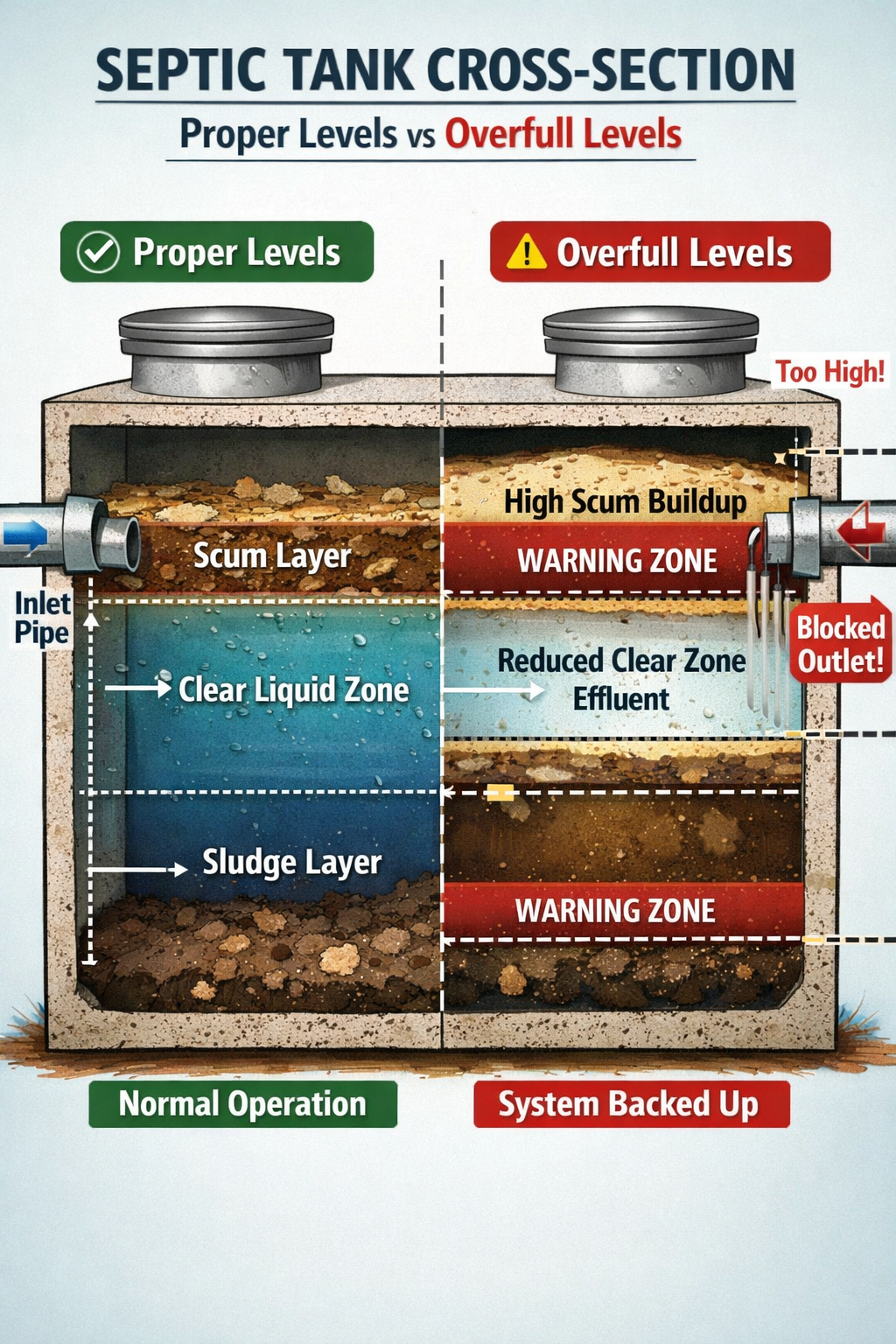
Normal Operation:
- Wastewater enters the tank and separates into three layers
- Scum floats on top, clear liquid stays in the middle, sludge settles at bottom
- Bacteria break down organic matter in the middle layer
- Treated water flows to the drain field
When Tanks Get Full:
- Sludge layer grows too thick, reducing liquid capacity
- Less space for new wastewater to settle and separate
- Untreated waste flows directly to drain field
- System becomes overwhelmed and backs up
Pumping frequency depends on household size and usage – a family of four typically needs pumping every 3-4 years, while smaller households can wait 4-5 years. Excessive water use, non-biodegradable items, and harsh chemicals can accelerate the filling process.
Common mistakes include waiting for obvious problems before pumping, which often means the damage is already done.
How to Inspect Your Septic System for Fullness
Start by checking all drains in your home for slow drainage, then move outside to inspect your drain field for standing water or unusual grass growth. A systematic approach helps you catch problems early.
Indoor Inspection Steps:
- Test all drains – Run water in sinks, showers, and tubs simultaneously
- Listen for sounds – Note any gurgling from toilets or pipes
- Check for odors – Smell around floor drains and bathroom fixtures
- Monitor toilet function – Look for slow flushing or incomplete drainage
Outdoor Inspection Steps:
- Locate your drain field – Usually a rectangular area 10-20 feet from your tank
- Look for standing water – Any pooling indicates system overflow
- Check grass growth – Unusually green or lush areas signal excess moisture
- Note any odors – Sewage smells outside indicate system problems
Safety note: Never remove septic tank lids yourself or attempt to measure sludge levels without professional equipment. Tank gases can be deadly, and falls into tanks are often fatal.
Perform this inspection monthly during heavy use periods and every few months during normal operation. Document any changes with photos to track progression.
What’s the Difference Between Normal Full and Overfull?
A “normally full” septic tank operates properly with wastewater flowing in and out as designed, while an overfull tank cannot process additional waste and causes backups. Understanding this distinction helps you recognize when action is needed.
Normal Full Tank:
- Intake and outlet pipes function properly
- Wastewater flows smoothly to drain field
- No odors or gurgling sounds
- Drains work at normal speed
- Sludge layer stays within acceptable limits
Overfull/Problem Tank:
- Sludge accumulation prevents proper drainage
- System fills completely but fails to drain
- Wastewater backs up into home
- Strong odors from gas buildup
- Multiple drain problems throughout house
The critical difference is function, not just volume. A properly maintained tank should always contain water – that’s normal. Problems arise when solid waste accumulates to the point where liquid can’t flow through the system effectively.
Choose professional pumping if your tank shows overfull symptoms even if it was recently serviced, as this may indicate drain field problems or system damage requiring repair.
When Should You Call a Professional?
Contact a septic professional immediately if you notice sewage backup into your home, standing water around your drain field, or multiple warning signs occurring together. These situations require urgent attention to prevent health hazards and system damage.
Emergency Situations (Call Today):
- Sewage backing up into toilets, sinks, or showers
- Raw sewage pooling in your yard
- Strong sewage odors inside your home
- Complete drain failure throughout the house
Schedule Service Soon (Within 1-2 Weeks):
- Multiple slow drains with gurgling sounds
- Persistent sewage odors outside
- Unusually wet areas around drain field
- It’s been 4+ years since last pumping
Routine Maintenance (Plan Ahead):
- Annual inspections
- Pumping every 3-5 years based on usage
- System performance checks
FYI: Some links may be affiliate links, which means I may earn a small commission at no extra cost to you.
Professional services typically cost $300-600 for pumping, but emergency repairs can cost thousands. Regular maintenance prevents most expensive problems and extends system life significantly.
The biggest mistake homeowners make is waiting until problems become severe before calling for help.
How to Prevent Your Septic Tank from Overfilling
Stick to regular pumping schedules and avoid flushing non-biodegradable items to keep your septic system functioning properly. Prevention costs far less than emergency repairs and system replacement.
Essential Prevention Steps:
- Schedule pumping every 3-5 years based on household size
- Use water efficiently – fix leaks, install low-flow fixtures
- Avoid harsh chemicals that kill beneficial bacteria
- Never flush non-biodegradables – wipes, feminine products, cat litter
- Spread laundry loads throughout the week instead of doing all at once
Water Usage Guidelines:
- Limit shower time and fix dripping faucets
- Run dishwashers and washing machines only with full loads
- Consider high-efficiency appliances to reduce water volume
- Avoid excessive water softener regeneration
What Not to Put Down Drains:
- Grease, oils, and cooking fats
- Coffee grounds and food scraps
- Medications and chemicals
- Paint, solvents, or automotive fluids
For homeowners looking to maintain their septic system health between pumpings, Septifix tablets can help break down waste and reduce buildup naturally. These easy-to-use treatments support the beneficial bacteria in your tank, potentially extending the time between required pumpings while keeping your system running smoothly.
Track your maintenance schedule with a simple calendar reminder system. Most smartphone apps can send annual or bi-annual reminders for inspections and pumping.
Helpful Resource for Septic System Maintenance
If you want a simple way to support your septic system between professional services, Septifix tablets offer a convenient maintenance solution. These tablets help break down waste, reduce odors, and support the natural bacterial processes that keep your septic tank functioning efficiently.
While not a replacement for regular pumping, Septifix can help prevent blockages and maintain system health with minimal effort. Many homeowners find that consistent use of quality septic treatments helps extend their system’s life and reduces the frequency of emergency calls.
The tablets are designed to work with your tank’s natural processes, making them a practical addition to your regular septic maintenance routine.
FAQ
How often should I check if my septic tank is full?
Inspect your system monthly by testing drains and checking for outdoor warning signs. Schedule professional pumping every 3-5 years regardless of apparent fullness.
Can I measure septic tank levels myself?
Never attempt to open septic tank lids or measure sludge levels yourself. Tank gases are toxic and potentially fatal. Always hire professionals for tank inspection.
What’s the first sign of a full septic tank?
Slow drains throughout your home, especially when multiple fixtures drain slowly at the same time, indicate your tank is approaching or at capacity.
How long does it take for a septic tank to fill up?
Most residential septic tanks fill with sludge over 3-5 years, depending on household size, water usage, and what goes down the drains.
Is it normal for septic tanks to have water in them?
Yes, septic tanks should always contain water – this is normal operation. Problems occur when solid waste accumulates and prevents proper drainage flow.
What happens if I ignore signs of a full septic tank?
Ignoring fullness signs leads to sewage backup into your home, drain field damage, environmental contamination, and repair costs of $3,000-15,000 or more.
Can heavy rain affect septic tank fullness?
Heavy rain can overwhelm an already full system faster, but shouldn’t cause problems in a properly maintained tank with adequate capacity.
Do septic tank additives help prevent overfilling?
Quality bacterial additives can help break down waste more efficiently, but they cannot replace regular pumping or fix an overfull tank.
How much does septic tank pumping cost?
Professional pumping typically costs $300-600, while emergency repairs from neglected systems can cost thousands of dollars.
Can I use my plumbing if my septic tank is full?
Minimize water use immediately if you suspect fullness, and stop using plumbing entirely if you see sewage backup. Call professionals before resuming normal use.
Conclusion
Recognizing how to know if your septic tank is full protects your home, health, and wallet from expensive emergency repairs. The key warning signs – slow drains, gurgling sounds, sewage odors, standing water, and unusual grass growth – give you time to act before serious problems develop.
Take action now by:
- Scheduling an inspection if you’ve noticed any warning signs
- Setting up regular pumping every 3-5 years based on your household size
- Implementing water conservation and proper waste disposal practices
- Creating calendar reminders for routine septic system maintenance
Remember that what happens when your septic tank is full can be costly and dangerous. Prevention through regular maintenance costs a fraction of emergency repairs and keeps your family safe from health hazards.
Don’t wait for obvious problems to appear. If you haven’t had your system inspected in over a year or pumped in more than four years, contact a septic professional today to assess your tank’s condition and prevent future problems.
References
[1] Signs Septic Tank Is Full – https://www.crystalhpe.com/signs-septic-tank-is-full/
[2] Signs Your Septic Tank Is Full And Needs Emptying – https://farmersseptic.com/signs-your-septic-tank-is-full-and-needs-emptying/
[4] How To Tell If Your Septic Tank Is Full Colorado Psi Vail – https://psivail.com/blog/how-to-tell-if-your-septic-tank-is-full-colorado-psi-vail/
[5] Signs Your Septic Tank Is Full And Needs Emptying – https://jtserviceco.com/signs-your-septic-tank-is-full-and-needs-emptying/
[6] Septic Tank Full – https://www.adt.com/resources/septic-tank-full
[7] 5 New Years Resolutions For A Healthier Septic System In 2026 – https://www.metroseptic.com/blog/5-new-years-resolutions-for-a-healthier-septic-system-in-2026/