Last updated: March 1, 2026
Key Takeaways
• Pump every 2-3 years for most households to prevent system failure and costly repairs
• Inspect annually to catch problems early and extend your system’s lifespan
• Clean septic filters every 6 months to maintain proper drainage and prevent backups
• Monitor water usage and spread laundry loads throughout the week to avoid overwhelming your system
• Keep detailed maintenance records for warranty claims, inspections, and home sales
• Watch for warning signs like slow drains, odors, or pooling water around your drain field
• Use septic-safe products and avoid flushing harmful items that can disrupt bacterial balance
• Protect your drain field by directing water away and avoiding heavy vehicles or structures
Quick Answer
A proper septic tank maintenance checklist includes pumping every 2-3 years, annual professional inspections, and regular filter cleaning every 6 months. You’ll also need to monitor daily water usage, use only septic-safe products, and watch for warning signs like slow drains or sewage odors that indicate problems requiring immediate attention.
How Often Should You Pump Your Septic Tank?
Most septic tanks need pumping every 2-3 years for households of four people, though this varies significantly based on tank size and daily water usage. Smaller households may extend this to 3-5 years, while larger families or homes with heavy water usage may need annual pumping.
Factors that affect pumping frequency:
- Household size and daily water consumption
- Tank capacity (measured in gallons)
- Amount of solids entering the system
- Use of garbage disposal (increases solids by 25-50%)
- Age and condition of your septic system
Choose more frequent pumping if you have:
- A garbage disposal unit
- More than four people in your household
- High water usage from large families or frequent guests
- An older septic system showing signs of wear
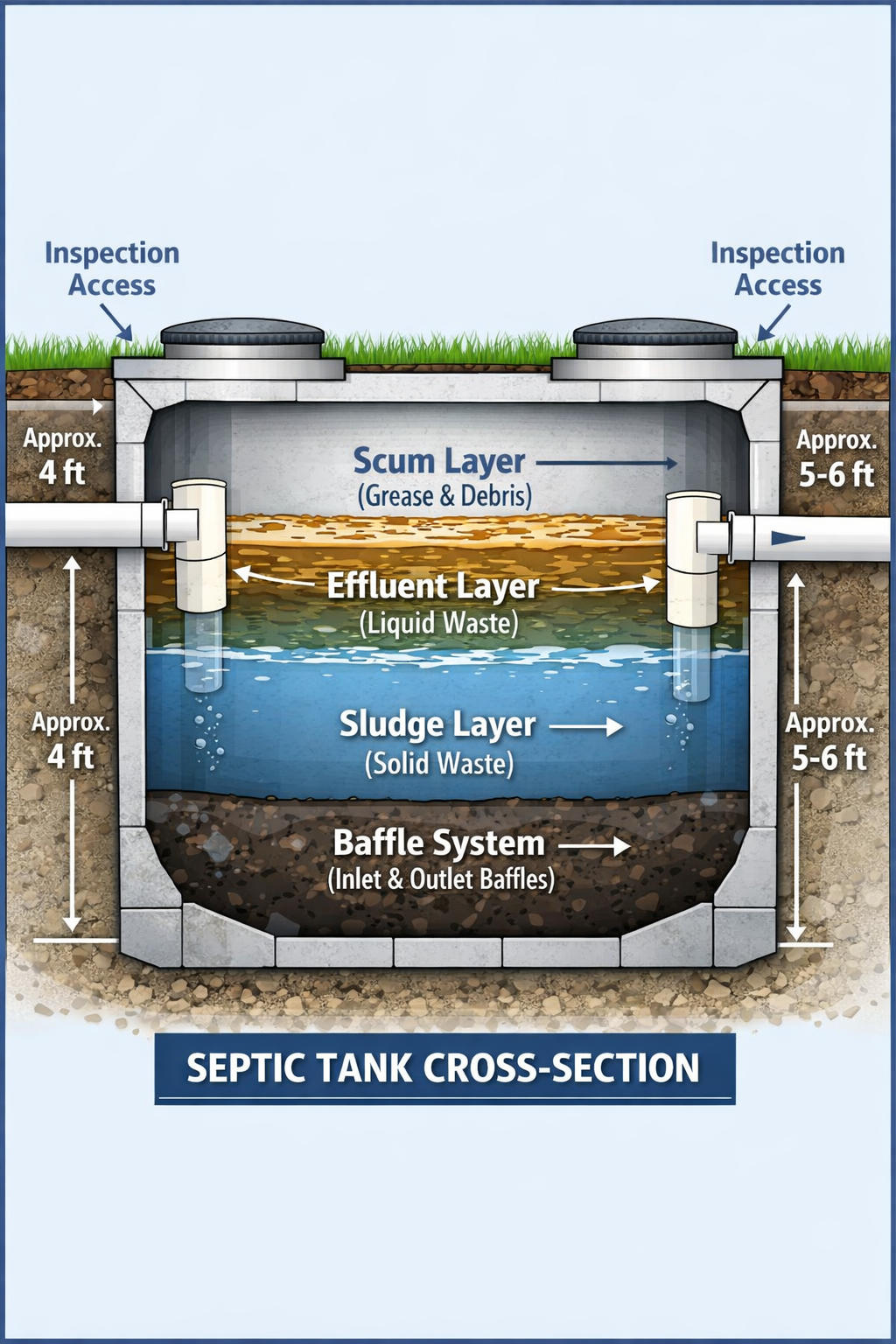
The key indicator for pumping is when sludge and scum layers exceed one-third of your tank’s total volume. Professional inspectors measure these layers during routine visits to determine if pumping is necessary before your scheduled maintenance.
What Should Be Included in Annual Septic Inspections?
Annual professional inspections should include measuring sludge and scum levels, checking all tank components, and evaluating drain field performance. A thorough inspection catches potential issues early and prevents expensive emergency repairs that can cost thousands of dollars.
Essential inspection components:
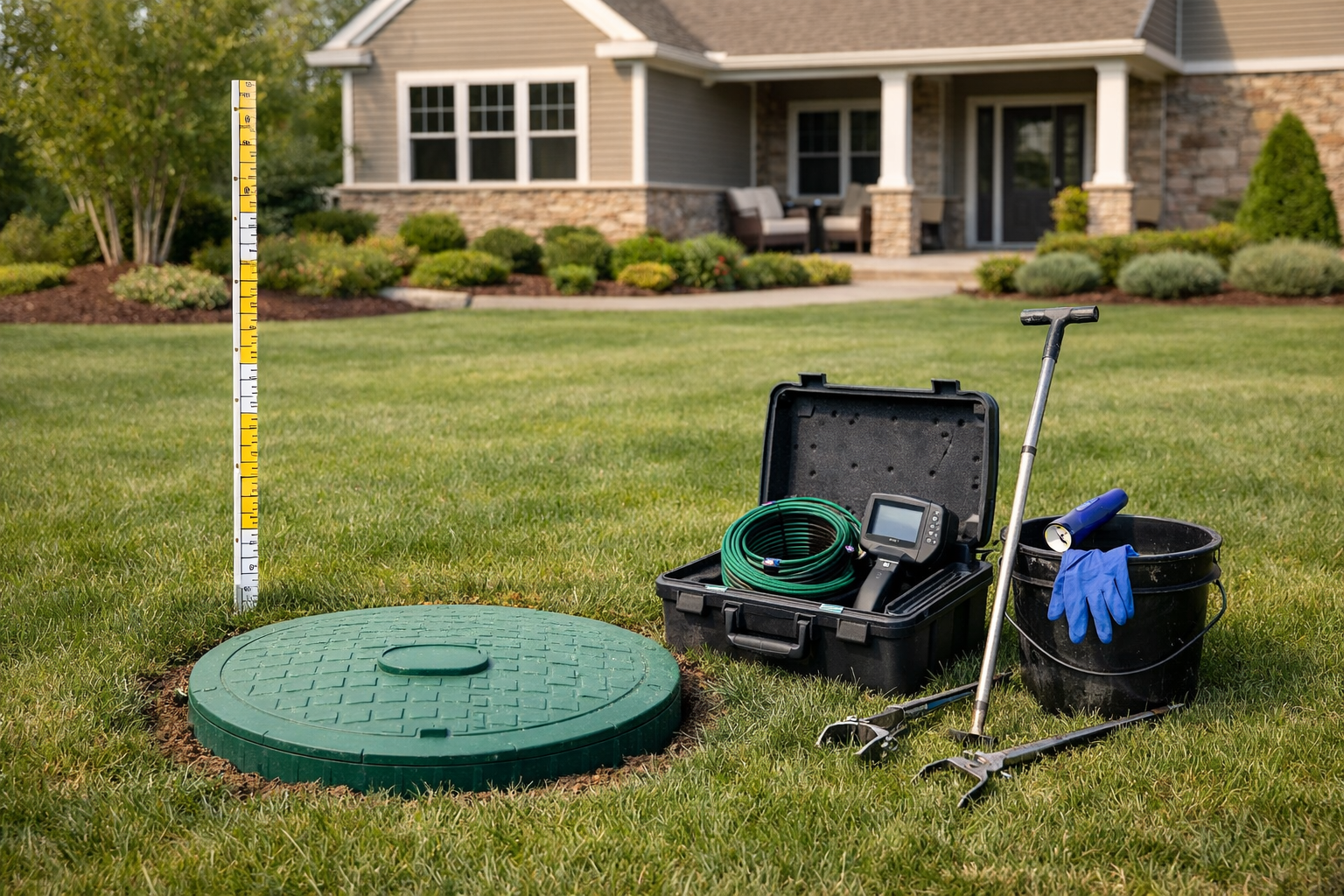
- Sludge and scum level measurement using specialized tools
- Baffle inspection to ensure proper waste separation
- Inlet and outlet pipe examination for clogs or damage
- Tank structural integrity checking for cracks or leaks
- Drain field assessment looking for pooling water or odors
- Filter condition and cleaning recommendations
Common problems inspectors identify:
- Excessive sludge buildup requiring immediate pumping
- Damaged baffles allowing solids into the drain field
- Tree root intrusion in pipes or tank
- Hydraulic overload from excessive water usage
Professional inspections typically cost between $200-400 but can save thousands in major repairs. How to locate your septic tank for maintenance becomes crucial before any inspection, so ensure your tank access points are clearly marked and accessible.
Your Monthly and Quarterly Septic Tank Maintenance Checklist
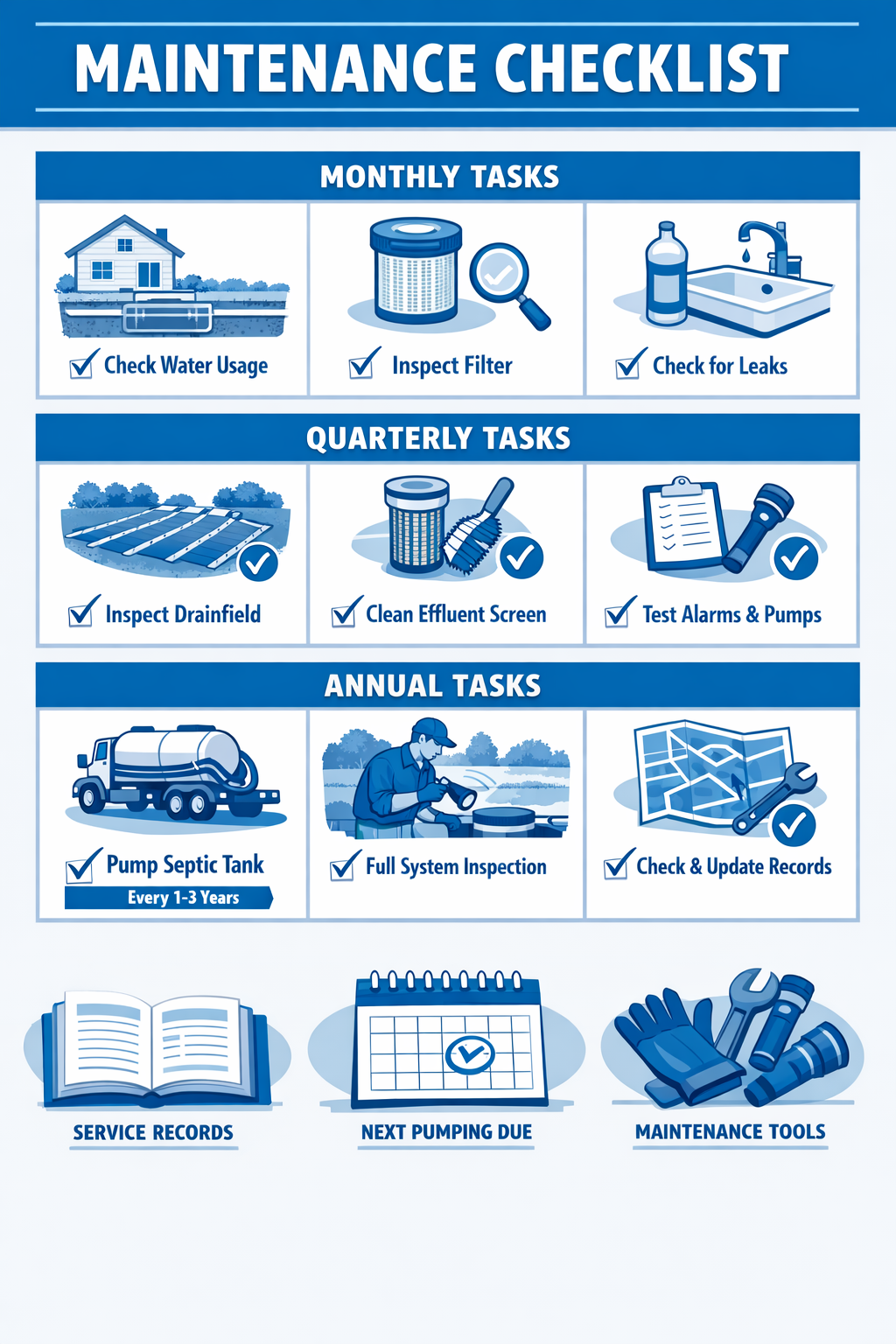
Monthly maintenance focuses on monitoring your system’s performance and protecting it from damage, while quarterly tasks involve more detailed inspections of accessible components. Consistent monthly monitoring helps you spot problems before they become emergencies.
Monthly maintenance tasks:
- Monitor water usage and spread laundry loads across multiple days
- Check for warning signs like slow drains, gurgling sounds, or sewage odors
- Inspect visible drain field areas for pooling water or unusually lush grass
- Review household products to ensure they’re septic-safe
- Document any changes in system performance or unusual observations
Quarterly maintenance activities:
- Clean effluent filter (if accessible) to remove trapped solids
- Inspect tank access covers for proper sealing and security
- Check water conservation devices like low-flow fixtures
- Review pumping schedule and contact professionals if needed
- Assess landscaping around tank and drain field areas
FYI: Some links may be affiliate links, which means I may earn a small commission at no extra cost to you.
For homeowners who want a simple way to support their septic system between professional services, Septifix tablets can help break down waste and reduce odors with just one monthly flush. While not a replacement for proper pumping and inspections, these tablets can help maintain bacterial balance and prevent minor blockages from becoming major problems.
How to Monitor Your Septic System for Warning Signs
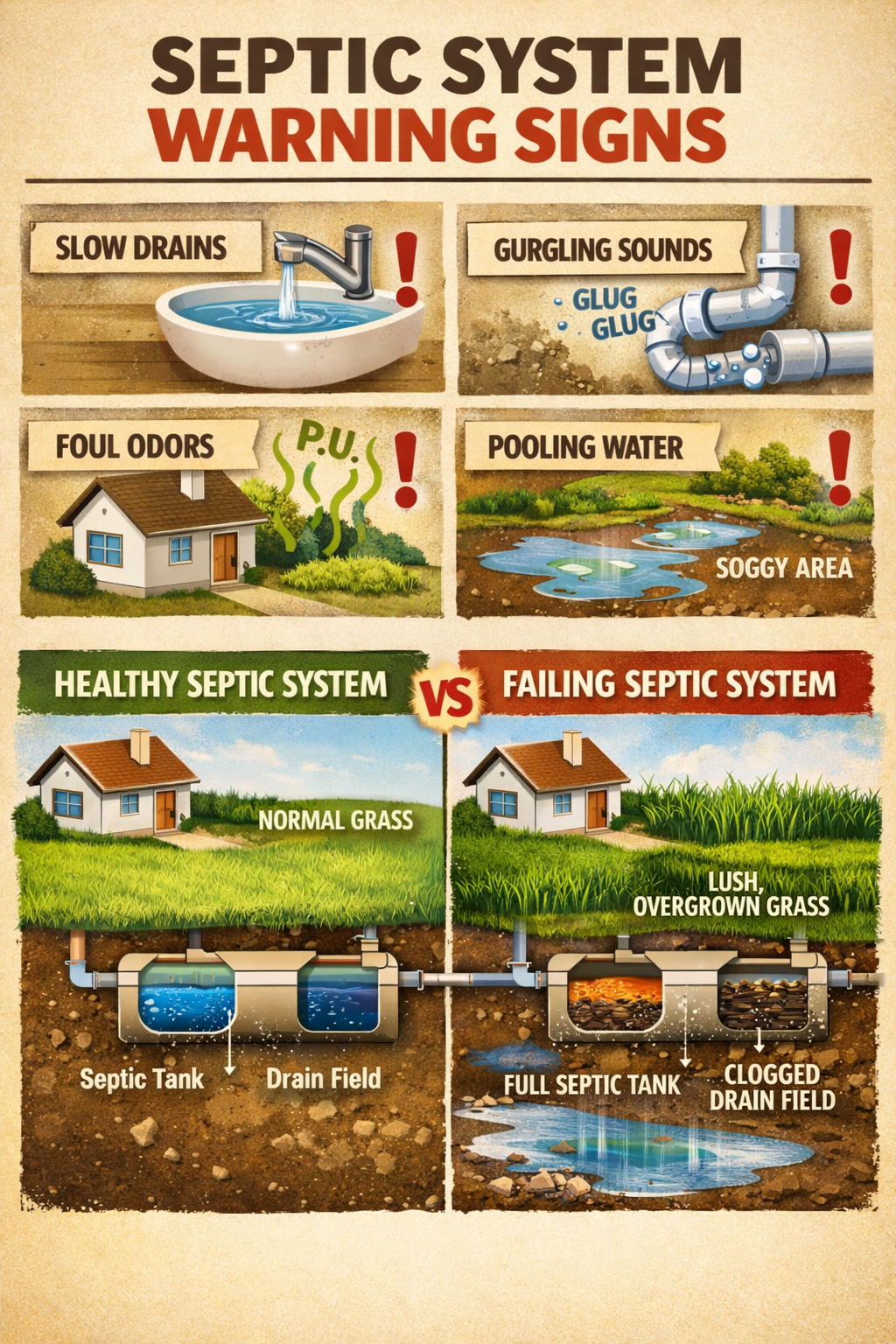
Signs your septic tank needs maintenance include slow drains, sewage odors, gurgling sounds, and pooling water around your drain field. Early detection of these warning signs can prevent complete system failure and protect your property from sewage backups.
Critical warning signs requiring immediate attention:
- Slow drains in multiple fixtures throughout your home
- Sewage odors inside your house or around the tank area
- Gurgling sounds from toilets, sinks, or drains
- Pooling water or wet spots over the drain field
- Lush grass growth in patches above your septic system
- Sewage backup in basement drains or lowest fixtures
Weekly monitoring routine:
- Test drain speed by running water in sinks and showers
- Listen for unusual sounds when using plumbing fixtures
- Check outdoor areas for standing water or strong odors
- Note any changes in toilet flushing or drainage patterns
When to call professionals immediately:
- Any sewage backup inside your home
- Strong sewage odors that persist for more than 24 hours
- Multiple slow drains developing simultaneously
- Visible sewage surfacing in your yard
Understanding what happens when your septic tank is full helps you recognize these warning signs and take action before minor issues become major emergencies requiring expensive repairs.
What Products Are Safe for Septic Systems?
Use biodegradable, low-phosphate products and single-ply toilet paper labeled “septic safe” to maintain healthy bacterial balance in your tank. Harsh chemicals and non-biodegradable items can kill beneficial bacteria that break down waste, leading to system failure and expensive repairs.
Septic-safe products to use:
- Toilet paper: Single-ply, biodegradable brands marked “septic safe”
- Laundry detergent: Liquid, low-phosphate, biodegradable formulas
- Dish soap: Plant-based, phosphate-free options
- Bathroom cleaners: Natural, enzyme-based products
- Body care: Biodegradable soaps and shampoos
Items that damage septic systems:
- Wet wipes (even those labeled “flushable”)
- Feminine hygiene products and diapers
- Cat litter and pet waste
- Dental floss and cotton swabs
- Grease, oils, and cooking fats
- Paint, solvents, and harsh chemicals
Laundry best practices:
- Limit to 1-2 loads per day maximum
- Use appropriate detergent amounts (more isn’t better)
- Spread washing throughout the week
- Consider high-efficiency machines that use less water
Kitchen guidelines:
- Scrape plates instead of using garbage disposal extensively
- Collect grease in containers for trash disposal
- Use sink strainers to catch food particles
- Run dishwasher only with full loads
How to Protect Your Septic Drain Field
Direct roof gutters and surface water away from your leach field, and avoid parking vehicles or placing structures over drain field areas. Your drain field is the final stage of waste treatment, and protecting it from damage ensures your entire septic system functions properly.
Drain field protection strategies:
- Water diversion: Install gutters, downspouts, and drainage to redirect roof water
- Traffic control: Never drive or park vehicles over drain field areas
- Landscaping: Plant only grass or shallow-rooted plants above the system
- Construction limits: Avoid building decks, pools, or structures over drain fields
Proper drain field maintenance:
- Regular inspection for standing water or sewage odors
- Grass mowing to maintain appropriate vegetation
- Tree management to prevent root intrusion into pipes
- Surface water control to prevent hydraulic overload
Common drain field mistakes:
- Planting trees or shrubs with deep root systems nearby
- Using the area for heavy equipment or vehicle storage
- Installing swimming pools or permanent structures
- Allowing livestock to graze or compact the soil
Signs of drain field problems:
- Pooling water that doesn’t drain within 24-48 hours
- Strong sewage odors in outdoor areas
- Unusually green or lush grass growth in patches
- Wet, soggy ground even during dry weather
Understanding how your septic tank system works helps you appreciate why drain field protection is crucial for long-term system health and performance.
Record Keeping and Documentation for Septic Maintenance
Maintain detailed records of all pumping, inspections, repairs, and system modifications for warranty claims, future maintenance planning, and home sales. Proper documentation can save you thousands of dollars and help professionals diagnose problems more effectively.
Essential records to maintain:
- Pumping dates and service provider information
- Inspection reports with sludge measurements and recommendations
- Repair invoices and warranty documentation
- System specifications including tank size and installation date
- Property maps showing tank and drain field locations
- Water usage patterns and household size changes
Digital record-keeping tips:
- Scan all paper documents for backup storage
- Use smartphone apps to photograph tank access points
- Create calendar reminders for scheduled maintenance
- Store documents in cloud storage for easy access
Information to track:
- Dates of service and types of work performed
- Costs and service provider contact information
- System performance notes and any problems observed
- Household changes affecting septic usage
- Product warranties and manufacturer information
Benefits of good record keeping:
- Faster problem diagnosis by service professionals
- Warranty claim documentation when needed
- Accurate maintenance scheduling and cost planning
- Valuable information for potential home buyers
- Historical data to optimize pumping frequency
Helpful Resource for Simple Septic Care
If you want a straightforward way to support your septic system between professional maintenance visits, Septifix tablets offer a convenient monthly solution. These tablets help break down waste, reduce unpleasant odors, and maintain the bacterial balance your septic tank needs to function properly.
With just one easy monthly flush, Septifix can help prevent minor blockages from developing into major problems while supporting the natural waste breakdown process. While it’s not a replacement for regular pumping and professional inspections, it can be a useful addition to your overall septic tank maintenance routine.
FAQ
How often should I pump my septic tank?
Most households need pumping every 2-3 years, but this depends on tank size, household size, and water usage. Smaller households may extend to 3-5 years, while larger families may need annual service.
What are the first signs my septic tank needs attention?
Watch for slow drains, gurgling sounds from plumbing fixtures, sewage odors inside or outside your home, and pooling water around your drain field area.
Can I clean my septic filter myself?
Yes, most effluent filters can be cleaned every 6 months by homeowners. Remove the filter, rinse with a garden hose, and reinstall. Always wear gloves and follow safety precautions.
How much does septic tank maintenance cost annually?
Annual costs typically range from $300-600 including inspections and filter cleaning. Pumping every 2-3 years adds $200-500 depending on your location and tank size.
What household products damage septic systems?
Avoid wet wipes, feminine products, cat litter, grease, harsh chemicals, and antibacterial soaps. These items can kill beneficial bacteria or cause clogs.
How do I find my septic tank for maintenance?
Check property records, look for inspection ports or access covers, or follow the main sewer line from your house. Professional services can also locate tanks using specialized equipment.
Is it normal for my septic tank to smell occasionally?
Occasional mild odors during windy conditions are normal, but persistent strong sewage smells indicate problems requiring immediate professional attention.
Can I use a garbage disposal with a septic system?
Yes, but use it sparingly. Garbage disposals increase solid waste by 25-50%, requiring more frequent pumping and potentially causing drain field problems.
How long do septic systems typically last?
Well-maintained septic systems can last 20-30 years or more. Poor maintenance, harsh chemicals, and system overload significantly reduce lifespan.
What should I do if my septic tank backs up?
Stop using water immediately, contact a septic professional for emergency service, and avoid using chemical drain cleaners which can worsen the problem.
Conclusion
Following a comprehensive septic tank maintenance checklist protects your investment and prevents costly emergency repairs. Regular pumping every 2-3 years, annual professional inspections, and consistent monitoring of warning signs keep your system running smoothly for decades.
The key to successful septic maintenance is consistency and prevention. By implementing monthly monitoring routines, using septic-safe products, and maintaining detailed records, you’ll catch problems early and extend your system’s lifespan significantly.
Take action today:
- Schedule your next inspection if it’s been over a year
- Learn the warning signs that indicate problems
- Review your household products and replace harsh chemicals
- Create a maintenance calendar with reminders for regular tasks
- Establish relationships with qualified local septic professionals
Remember that septic system maintenance is an investment in your property’s value and your family’s health. The small cost of regular maintenance prevents the major expense of system replacement, which can cost $15,000-25,000 or more.
References
[1] Septic System Maintenance Basics – https://www.feikemasanitation.com/blog/septic-system-maintenance-basics
[2] Your Complete Guide To Septic Systems Care Maint – https://www.wrenvironmental.com/blog/2025/july/your-complete-guide-to-septic-systems-care-maint/
[3] Maintenance Checklist – https://www.servicetitan.com/templates/septic/maintenance-checklist
[4] California Septic Tank Requirements – https://www.ntotank.com/blog/california-septic-tank-requirements
[5] Guide To Maintenance Checklist Of Septic Tank Pumping – https://gatewayseptic.com/blog/guide-to-maintenance-checklist-of-septic-tank-pumping/
[6] How Often To Clean Septic Tanks Essential Guide – https://www.rciseptic.com/how-often-to-clean-septic-tanks-essential-guide
[7] Septic System Repair Guidelines – https://smartsepticpros.com/blog/septic-system-repair-guidelines/
[8] Septic Tank Maintenance Checklist – https://www.angi.com/articles/septic-tank-maintenance-checklist.htm