
How to Locate Septic Tank for Maintenance: Complete Homeowner’s Guide

Last updated: February 19, 2026
Key Takeaways
• Most septic tanks are located 10-25 feet from your home’s foundation, following the main sewer line path
• Use a metal probe rod to systematically search areas where the tank is likely buried 1-3 feet underground
• Check building permits, septic records, and property surveys for documented tank locations before starting physical searches
• Professional locating services cost $200-500 but can save time and prevent damage from improper digging
• Regular maintenance requires knowing exact tank and distribution box locations for pumping access
Quick Answer
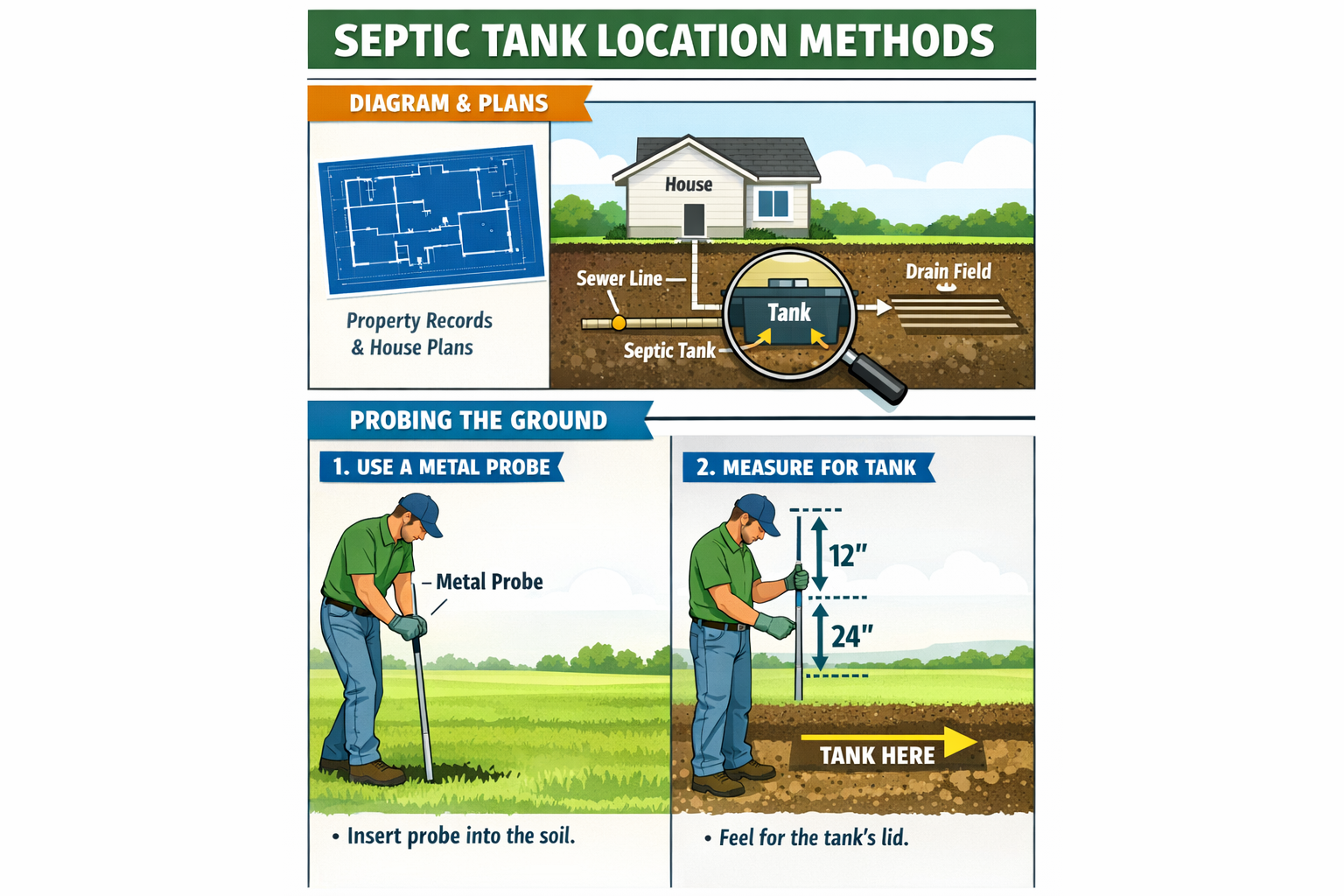
How to locate septic tank for maintenance starts with checking your property records and building permits for documented locations, then using a metal probe rod to systematically search 10-25 feet from your home following the main sewer line direction. Most residential septic tanks are buried 1-3 feet deep and can be found by probing every 2-3 feet in likely areas until you hit the solid tank top.
Picture this: you’re standing in your yard at 7 AM, watching a septic pumping truck pull into your driveway, and the technician asks, “Where’s your tank?” If you’re like many homeowners, that question triggers a moment of panic. Knowing how to locate septic tank for maintenance isn’t just helpful—it’s essential for preventing costly emergencies and keeping your system running smoothly.
Why You Need to Know Your Septic Tank Location
Finding your septic tank before you need emergency service saves both time and money. Professional pumping services charge extra fees when they have to locate tanks themselves, and emergency repairs become more expensive when technicians spend hours searching your property.
Immediate benefits of knowing your tank location include:
• Faster, cheaper pumping appointments
• Quick access during system backups or overflows
• Ability to perform basic inspections and maintenance
• Protection of your landscaping from unnecessary digging
Common mistake: Many homeowners assume their tank is directly behind the house. In reality, septic systems follow the path of your main sewer line, which may exit your home from the side or front depending on your home’s design and local terrain.
What Records to Check Before You Start Digging
Start your search with paperwork before picking up any tools. Your local health department, building permit office, or septic contractor likely has documentation showing your tank’s exact location.
Essential documents to request:
• Building permits from when your home was constructed
• Septic system installation records from your county health department
• Property surveys that may include utility and septic markings
• Previous pumping records from septic service companies
Contact your county’s environmental health department first. Most jurisdictions require permits for septic installations and keep detailed records including tank locations, sizes, and drain field layouts.
Pro tip: If you’ve had your tank pumped before, call the service company. They often keep GPS coordinates or detailed notes about tank locations for return visits.
How to Locate Septic Tank for Maintenance Using Basic Tools
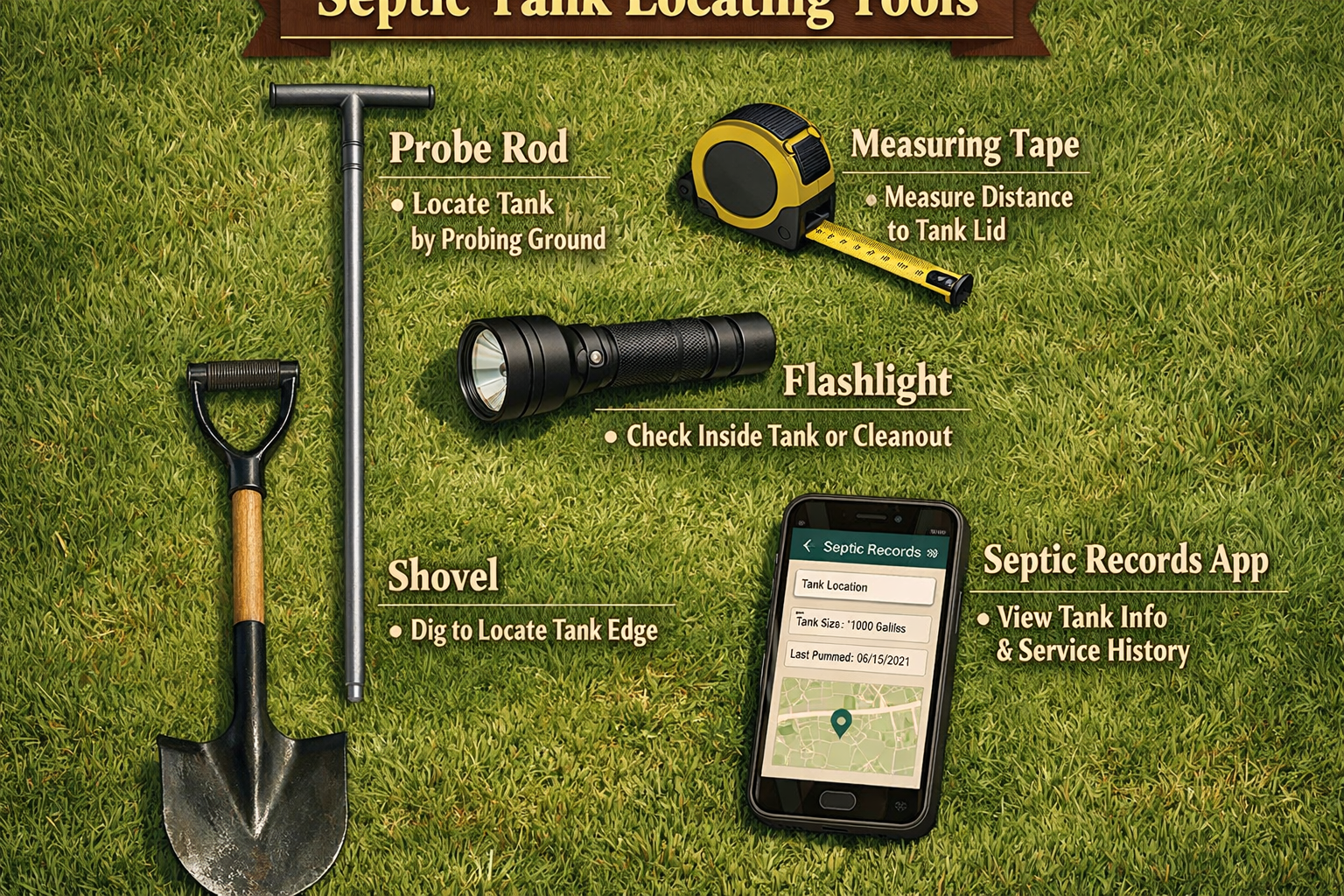
The most reliable method for how to locate septic tank for maintenance involves systematic probing with simple tools you can buy or rent locally.
Required tools for tank location:
• Metal probe rod (3-4 feet long, pointed tip)
• Measuring tape (50-100 feet)
• Flashlight for examining probe holes
• Spray paint to mark potential locations
• Shovel for final confirmation digging
Start by identifying where your main sewer line exits your house. This is usually visible in your basement or crawl space as the largest pipe leading outside. The septic tank will be positioned along this line’s path.
Step-by-step probing process:
- Measure 10-25 feet from your home’s foundation following the sewer line direction
- Begin systematic probing every 2-3 feet in a grid pattern
- Push the probe rod straight down until you hit resistance
- Listen and feel for the hollow sound or solid feel of a concrete tank top
- Mark positive hits with spray paint for further investigation
Most residential septic tanks are buried 1-3 feet deep, so you should hit the tank top relatively quickly when probing in the right area.
Decision rule: Choose professional locating if your property is larger than one acre, heavily landscaped, or if you haven’t found the tank after 2-3 hours of systematic probing.
Professional vs DIY Tank Location Methods
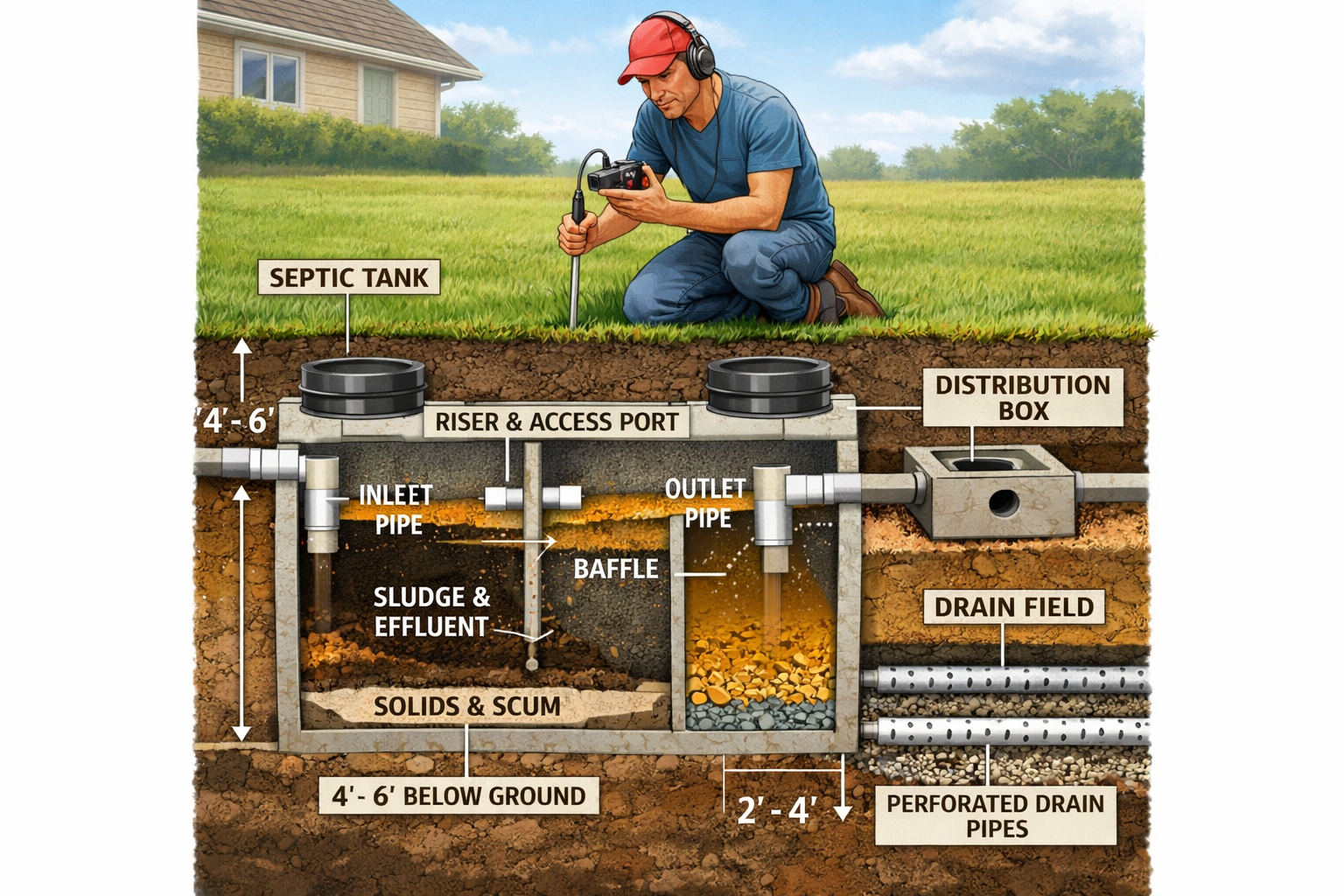
Professional septic locating services use electronic equipment and experience to find tanks quickly, while DIY methods rely on research, observation, and basic tools.
Professional locating advantages:
• Electronic detection equipment that identifies underground structures
• Experience reading property layouts and septic system designs
• GPS marking of exact tank and distribution box locations
• Damage prevention from improper digging or probing
DIY location advantages:
• No service fees (typically $200-500 for professional location)
• Immediate availability without scheduling appointments
• Learning your system layout for future maintenance needs
• Satisfaction of solving the problem yourself
When to choose professional help: If your initial research and probing don’t locate the tank within a reasonable timeframe, or if you’re dealing with an older system without good records. Professional services also make sense for commercial properties or complex residential systems.
Common DIY mistake: Probing too aggressively and damaging tank lids or distribution boxes. Use steady, controlled pressure rather than forceful jabbing motions.
Understanding Septic System Layout for Better Location
Knowing how to locate septic tank for maintenance requires understanding basic septic system design and typical installation patterns in residential properties.
Standard septic system components:
• Septic tank (main treatment chamber, usually rectangular)
• Distribution box (smaller square box, 10-20 feet from tank)
• Drain field (network of perforated pipes in gravel beds)
• Inspection ports (access points for monitoring and pumping)
Most residential systems follow predictable patterns based on lot size, soil conditions, and local regulations. The tank typically sits between your house and the drain field, with the distribution box positioned between the tank and field.
Typical residential layout patterns:
• Straight-line systems: Tank, distribution box, and drain field in a direct line from the house
• Offset systems: Tank positioned to one side due to obstacles like driveways or utilities
• Gravity-fed systems: Tank positioned downhill from the house following natural drainage
Edge case consideration: Homes built on slopes or with unusual lot configurations may have tanks positioned in unexpected locations. Check for areas where excavation would have been easier during original installation.
Understanding your system’s layout helps you locate not just the main tank but also the distribution box, which requires regular inspection and occasional maintenance.
Signs That Indicate Tank Location Areas
Physical clues around your property can guide your search and narrow down potential tank locations before you start probing.
Landscape indicators of septic tank location:
• Slightly depressed or raised areas in the lawn from soil settling
• Different grass growth patterns over the tank area
• Areas where snow melts faster in winter due to underground activity
• Concrete or metal covers partially visible at ground level
Vegetation clues:
• Greener grass over the tank from nutrient-rich soil
• Stunted plant growth in areas with poor drainage
• Areas where flowers or vegetables grow unusually well from soil enrichment
Walk your property systematically, looking for rectangular areas approximately 8-12 feet long and 4-6 feet wide where the ground appears different from surrounding areas [6].
Important note: These visual clues aren’t always reliable, especially in older installations where landscaping has been modified multiple times. Use them as starting points for probing rather than definitive locations.
FYI: Some links may be affiliate links, which means I may earn a small commission at no extra cost to you.
For homeowners who want to maintain their septic systems proactively after locating their tanks, Septifix tablets can help keep your septic system clean and efficient by breaking down waste buildup and maintaining healthy bacterial levels between professional pumpings.
Common Mistakes When Locating Septic Tanks
Avoiding these frequent errors can save time, prevent property damage, and ensure you find your tank efficiently.
Location search mistakes:
• Assuming the tank is directly behind the house without checking sewer line direction
• Probing too shallow and missing tanks buried deeper than expected
• Searching too close to the foundation where tanks are rarely installed
• Ignoring property records and starting with physical searches immediately
Safety and property mistakes:
• Probing near utility lines without calling 811 for utility marking
• Using excessive force when probing and damaging tank lids or pipes
• Digging large holes without confirming tank location first
• Searching during wet conditions when soil is unstable
Documentation mistakes:
• Not marking found locations with permanent markers or GPS coordinates
• Failing to measure distances from fixed reference points for future use
• Not photographing tank access points for maintenance records
Decision rule: If you haven’t found your tank after checking records, systematic probing, and looking for visual clues, contact a professional rather than continuing to dig randomly across your property.
Many homeowners waste entire weekends searching in wrong areas because they skip the research phase and rely only on guesswork about tank locations.
Helpful Resource for Ongoing Septic Maintenance
Once you’ve successfully located your septic tank, maintaining proper bacterial balance and waste breakdown becomes crucial for system longevity. Septifix tablets offer a convenient way to support your septic system’s health with regular treatments that help prevent the buildup issues that lead to expensive repairs.
These tablets work by introducing beneficial bacteria that break down waste more efficiently, potentially extending the time between pumpings and reducing the likelihood of system backups. While not required for every system, they can be particularly helpful for households with heavy usage or homes that have experienced previous septic issues.
What to Do After Finding Your Septic Tank
Successfully locating your tank is just the first step. Proper documentation and immediate assessment ensure you can access it easily for future maintenance needs.
Immediate documentation steps:
• Mark the exact location with permanent landscape markers or GPS coordinates
• Measure distances from your house corners and other fixed reference points
• Take photos of the tank access points and surrounding area
• Note the tank size and type for maintenance scheduling
Initial tank assessment:
• Check access port condition and ensure lids are secure and undamaged
• Look for obvious signs of damage like cracks, settling, or standing water
• Verify pumping access is clear and accessible for service vehicles
• Document any immediate concerns that need professional attention
Create a simple maintenance file with your tank location information, photos, and service history. This documentation proves invaluable for future pumping appointments, system inspections, and potential property sales.
Next steps for system care:
• Schedule pumping if your tank hasn’t been serviced in 3-5 years
• Plan regular inspections of access points and surrounding areas
• Consider professional septic system evaluation if you notice any performance issues
• Establish a maintenance schedule based on household size and usage patterns
FAQ
How deep are most septic tanks buried?
Most residential septic tanks are buried 1-3 feet deep, with the top of the tank typically 6-18 inches below ground surface. Depth varies based on local frost lines, soil conditions, and installation requirements.
Can I use a metal detector to find my septic tank?
Metal detectors can help locate steel tanks or metal components, but most modern septic tanks are concrete or plastic. A metal probe rod is more reliable for finding any tank type.
How far from the house is a septic tank usually located?
Septic tanks are typically positioned 10-25 feet from the house foundation, following local setback requirements and the path of the main sewer line.
What size probe rod do I need for tank location?
A 3-4 foot metal probe rod with a pointed tip works best for most residential applications. Longer rods become difficult to control, while shorter ones may not reach buried tanks.
Should I call 811 before probing for my septic tank?
Yes, always call 811 (Dig Safe) before any underground probing or digging. Utility companies will mark gas, electric, and water lines to prevent dangerous accidents.
How much does professional septic tank locating cost?
Professional locating services typically cost $200-500, depending on property size and complexity. This fee is often waived if you hire the same company for pumping services.
Can I locate my septic tank in winter?
Winter location is possible but more challenging due to frozen ground and snow cover. Look for areas where snow melts faster, indicating underground heat from septic activity.
What if I have multiple tanks on my property?
Larger homes or older systems may have multiple tanks or chambers. Check property records for system diagrams, and continue probing after finding the first tank to locate all components.
How do I know if I found the tank or just a rock?
Septic tanks produce a hollow sound when tapped and have flat, rectangular surfaces. Rocks are irregular and solid. Probe around suspected areas to outline the tank’s rectangular shape.
What should I do if my tank access is buried too deep?
Contact a septic professional to safely excavate and expose access ports. Proper access is essential for pumping and maintenance, and attempting deep excavation yourself can be dangerous.
Can tree roots interfere with finding my septic tank?
Large tree roots can make probing difficult and may indicate potential system damage. Probe carefully around root systems, and consider professional location if roots are extensive.
How often should I check my septic tank location markers?
Inspect location markers annually and after major landscaping projects. Replace damaged markers immediately to ensure easy access for future maintenance needs.
Key Takeaways
• Start with records research before physical searching—check building permits, septic installation records, and previous service documentation to save time and effort
• Use systematic probing methods with a metal probe rod in grid patterns 10-25 feet from your house, following the main sewer line direction for most efficient tank location
• Look for visual clues like different grass growth, slight ground depressions, or areas where snow melts faster to guide your search efforts
• Document everything once you find your tank—take photos, record GPS coordinates, and measure distances from fixed reference points for future maintenance access
• Consider professional help if DIY methods don’t work within 2-3 hours, especially for large properties or complex systems where electronic detection equipment proves more efficient
• Prioritize safety by calling 811 before probing, using controlled pressure when searching, and avoiding areas near known utility lines
• Plan for ongoing maintenance by ensuring clear access routes for pumping trucks and establishing regular inspection schedules based on your system’s age and usage
• Keep maintenance records organized with tank location information, service history, and system specifications for efficient future care
• Address access issues immediately if tank lids are buried too deep or damaged, as proper access is essential for routine pumping and emergency repairs
• Understand your complete system layout including distribution box and drain field locations for comprehensive maintenance planning and problem prevention
Understanding how to locate septic tank for maintenance empowers you to take control of your system’s care, reduce service costs, and prevent emergency situations. Whether you choose DIY methods or professional services, knowing your tank’s exact location is the foundation of effective septic system management.
For ongoing system health, consider incorporating beneficial bacteria treatments like Septifix tablets into your maintenance routine to support optimal waste breakdown and extend the time between professional pumpings.
References
[1] Your Complete Guide To Septic Systems Care Maint – https://www.wrenvironmental.com/blog/2025/july/your-complete-guide-to-septic-systems-care-maint/
[2] Septic System Maintenance – https://smartsepticpros.com/blog/septic-system-maintenance/
[3] California Septic Tank Guide – https://cacciaplumbing.com/blog/california-septic-tank-guide/
[4] Septic System Maintenance Basics – https://www.feikemasanitation.com/blog/septic-system-maintenance-basics
[5] Be Septic Safe Best Practices For Septic System Maintenance – https://hgic.clemson.edu/factsheet/be-septic-safe-best-practices-for-septic-system-maintenance/
[6] How To Clean Septic Tank – https://www.johnklineseptic.com/how-to-clean-septic-tank
[7] 5 New Years Resolutions For A Healthier Septic System In 2026 – https://www.metroseptic.com/blog/5-new-years-resolutions-for-a-healthier-septic-system-in-2026/