
Last updated: March 3, 2026
Key Takeaways
• Most septic tanks last 20-40 years with proper maintenance, averaging 25-30 years for well-maintained systems
• Concrete tanks are most durable at 40+ years, while steel tanks only last 15-20 years due to corrosion
• Drain fields typically fail first at 20-30 years, often before the tank itself needs replacement
• Regular pumping every 3 years extends system life significantly and prevents premature failure
• Tank material, soil conditions, and maintenance are the three biggest factors affecting lifespan
• Component replacement (baffles, pumps, distribution boxes) can extend overall system life
• Warning signs include slow drains, odors, and wet spots in the yard indicating system failure
• Replacement costs range from $15,000-$35,000 for complete system installation
Quick Answer
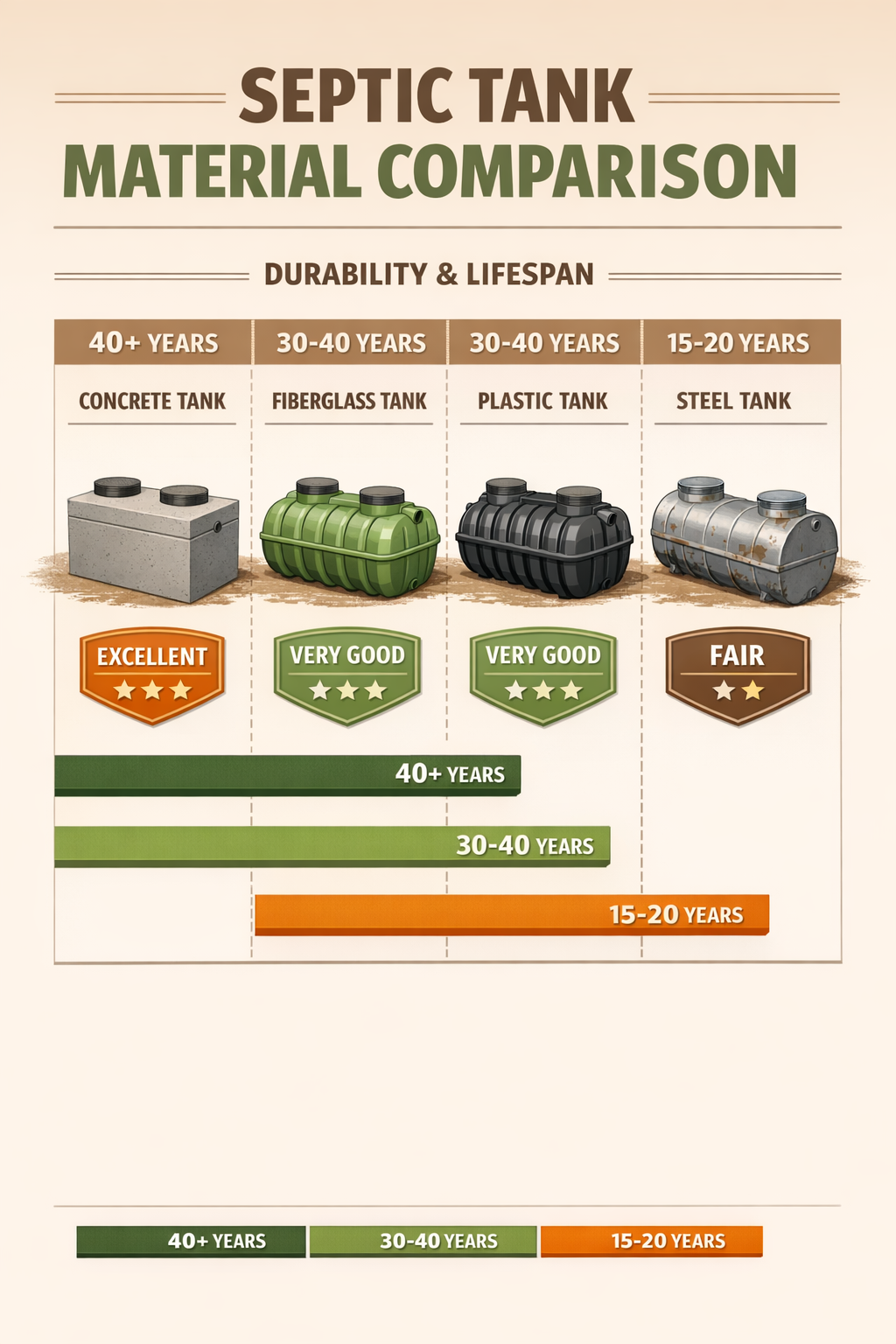
A septic tank typically lasts 20-40 years, with concrete tanks lasting the longest at 40+ years and steel tanks the shortest at 15-20 years. The drain field usually fails first around 20-30 years, making it the limiting factor for most systems. Regular maintenance, including pumping every 3 years and annual inspections after 15 years, can help your system reach its maximum lifespan.
What Determines How Long Does Septic Tank Last?
Tank material is the primary factor determining septic system lifespan. Concrete tanks can serve 40-100 years with proper maintenance, while steel tanks corrode within 15-20 years.
The three main factors affecting septic tank longevity are:
Tank Material Types:
- Concrete: 40+ years, most durable option
- Fiberglass: 30-40 years, lightweight and crack-resistant
- Plastic: 30-40 years, excellent for freeze-thaw climates
- Steel: 15-20 years, prone to rust and corrosion
Soil Conditions:
- Clay soils retain moisture and can shorten drain field life to 15-25 years
- Sandy soils drain well and extend system life to 30-40 years
- High water tables create additional stress on all components
- Soil acidity accelerates steel tank corrosion
Maintenance Quality:
- Regular pumping prevents solids from reaching the drain field
- Annual inspections catch problems before they become expensive
- Proper water usage prevents system overload
- Avoiding harsh chemicals protects beneficial bacteria
Choose concrete tanks if you want maximum longevity, but expect to pay more upfront. Steel tanks are cheaper initially but require replacement much sooner, making them less cost-effective long-term.
How Long Does Septic Tank Last by Material Type?
Concrete septic tanks offer the longest lifespan at 40+ years and can potentially last 40-100 years with excellent maintenance. They resist most environmental factors but can crack in extreme freeze-thaw cycles.
Material Comparison:
| Material | Lifespan | Pros | Cons |
|---|---|---|---|
| Concrete | 40+ years | Most durable, heavy (won’t shift) | Can crack, expensive to install |
| Fiberglass | 30-40 years | Lightweight, won’t crack | Can shift in soil, moderate cost |
| Plastic | 30-40 years | Freeze-thaw resistant, affordable | May float in high water tables |
| Steel | 15-20 years | Lowest upfront cost | Corrodes quickly, shortest life |
Concrete Tank Benefits:
- Withstands soil pressure and settling
- Resists most chemicals and environmental factors
- Heavy weight prevents shifting or floating
- Can be repaired if minor cracks develop
Why Steel Tanks Fail Quickly:
Steel tanks corrode from both inside (due to hydrogen sulfide gas) and outside (from soil moisture and acidity). This makes them unsuitable for areas with high soil acidity or moisture levels.
Best Choice for Different Situations:
- Rocky or shifting soil: Choose concrete for stability
- High water table: Avoid plastic tanks that may float
- Freeze-thaw climates: Plastic tanks handle temperature changes best
- Budget-conscious: Fiberglass offers good value for moderate lifespans
The extra cost of concrete tanks typically pays for itself through extended service life and fewer replacements.
Which Septic System Components Fail First?
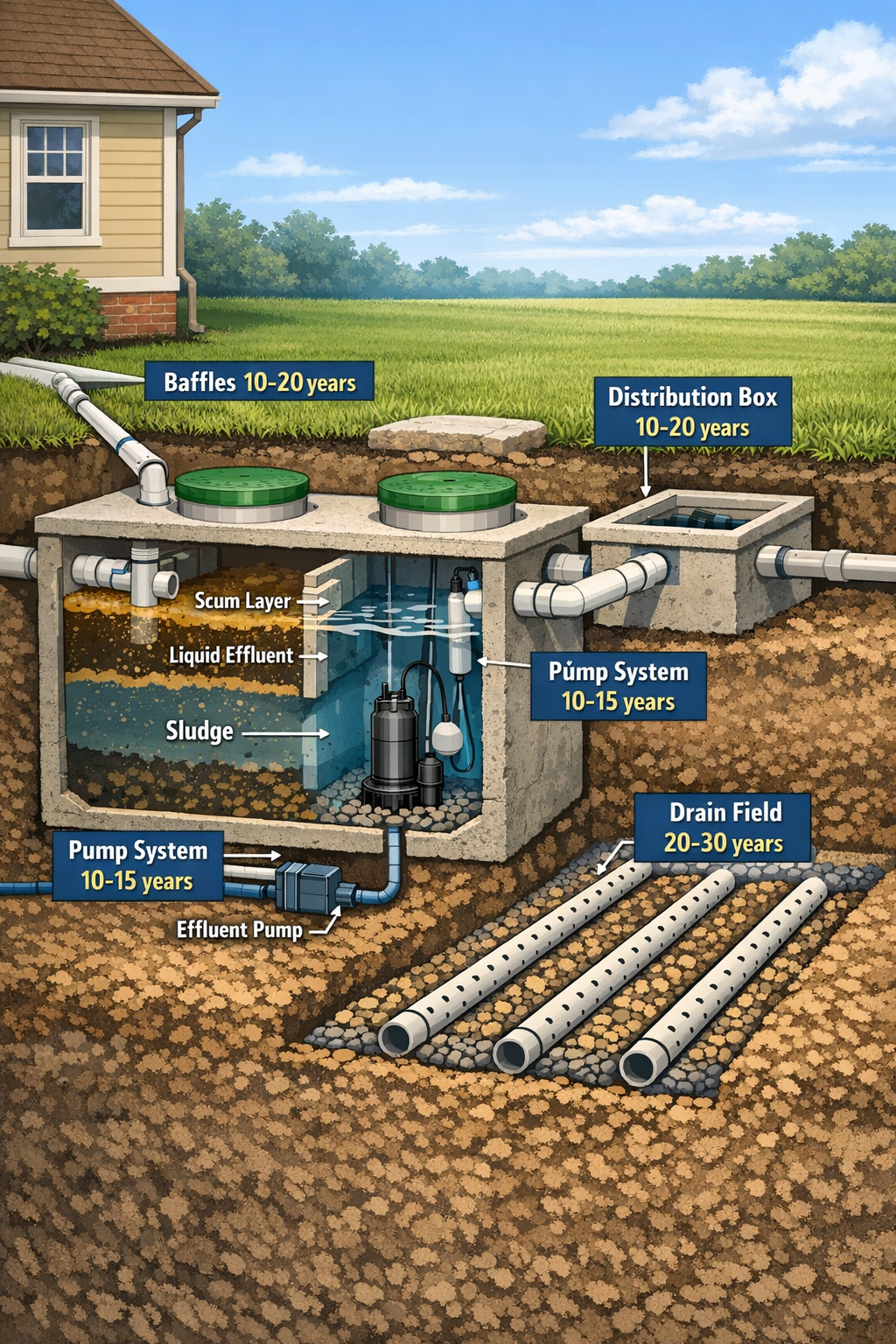
Drain fields typically fail first at 20-30 years, often before the tank itself needs replacement. This makes the drain field the limiting factor for most septic systems, not the tank.
Component Failure Timeline:
- Baffles: 10-20 years (first to fail, cheapest to replace)
- Distribution boxes: 10-20 years ($800-$2,000 replacement)
- Pumps: 10-15 years in pressure systems ($1,200-$2,500 replacement)
- Drain field: 20-30 years (most expensive component)
- Tank: 20-40+ years depending on material
Why Drain Fields Fail:
Drain fields become clogged when solids escape the tank due to infrequent pumping or baffle failure. Once soil pores clog with organic matter, they cannot be cleaned and require complete replacement.
Baffle Replacement Benefits:
Replacing failed baffles for $500-$1,500 can prevent drain field damage that costs $10,000-$25,000 to repair. This makes baffle maintenance one of the most cost-effective investments.
Pump System Considerations:
If your system uses pumps for pressure distribution, expect replacement every 10-15 years. Annual pump inspections help catch problems before complete failure occurs.
FYI: Some links may be affiliate links, which means I may earn a small commission at no extra cost to you.
For homeowners looking to extend component life and prevent premature failures, Septifix tablets can help break down waste more effectively and reduce the strain on your entire system. With one easy monthly flush, these tablets help maintain proper bacterial balance and can reduce the buildup that leads to early component failure.
Monitor your system for early warning signs like slow drains or gurgling sounds, which often indicate component problems before complete failure.
What Factors Can Shorten How Long Does Septic Tank Last?
Poor maintenance practices can cut septic system lifespan in half, reducing a 30-year system to 15 years or less. The most damaging factor is infrequent pumping, which allows solids to reach and clog the drain field.
Major Lifespan Reducers:
- Infrequent pumping: Allows solids to escape and clog drain field
- Excessive water usage: Overloads system capacity and prevents proper settling
- Harsh chemicals: Kills beneficial bacteria needed for waste breakdown
- Non-biodegradable items: Clogs pipes and damages components
- Heavy vehicle traffic: Compacts soil over drain field
Water Usage Impact:
Using more than 70 gallons per person per day can overwhelm your system. High-efficiency appliances and fixing leaks can significantly extend system life.
Chemical Damage:
Bleach, antibacterial soaps, and drain cleaners kill the bacteria that break down waste. Even small amounts can disrupt the biological process for weeks.
Physical Damage Risks:
- Driving over the drain field compacts soil and crushes pipes
- Planting trees near the system can cause root intrusion
- Construction activities can damage buried components
Soil-Related Factors:
Clay soils that drain poorly can shorten drain field life to 15-25 years instead of the typical 20-30 years. High water tables create similar problems by preventing proper effluent absorption.
Common Homeowner Mistakes:
Using garbage disposals increases solid waste by 30-50%, requiring more frequent pumping. Flushing cat litter, feminine products, or medications can cause immediate system problems.
The key is treating your septic system gently and maintaining it regularly. Small preventive actions save thousands in premature replacement costs.
How to Maximize How Long Does Septic Tank Last
Regular pumping every 3 years during the first 15 years, then annually afterward, is the single most effective way to maximize septic system lifespan. This prevents solids from reaching the drain field and causing expensive damage.
Essential Maintenance Schedule:
- Years 1-15: Pump every 3 years, inspect every 3 years
- Years 15+: Pump annually, inspect annually
- Component checks: Baffles every 5 years, pumps annually if present
- Professional inspection: Every 3-5 years for early problem detection
Daily Usage Best Practices:
- Limit water usage to 70 gallons per person per day
- Spread laundry loads throughout the week
- Fix leaks immediately to prevent system overload
- Use septic-safe toilet paper and cleaning products
What to Never Put Down Drains:
- Grease, oils, or fats (solidify and clog pipes)
- Non-biodegradable items (wipes, feminine products, cat litter)
- Harsh chemicals (bleach, drain cleaners, antibacterial soaps)
- Medications (disrupt bacterial balance)
Drain Field Protection:
- Never drive vehicles over the drain field area
- Plant only grass over the system (no trees or shrubs)
- Divert surface water away from the drain field
- Avoid compacting soil with heavy equipment
Helpful Maintenance Tool:
If you want a simple way to support your system between pumpings, Septifix tablets offer an easy monthly maintenance solution. These tablets help break down waste more effectively and maintain the bacterial balance your system needs to function properly, potentially extending the time between major maintenance needs.
Professional Inspection Benefits:
Annual inspections after year 15 catch problems like baffle failure ($500-$1,500 fix) before they cause drain field damage ($10,000-$25,000 replacement).
Water Conservation Tips:
- Install high-efficiency toilets and showerheads
- Run dishwashers and washing machines only with full loads
- Take shorter showers to reduce daily water volume
Following these practices can help your system reach its maximum potential lifespan and avoid premature replacement costs.
Signs Your Septic Tank Needs Replacement
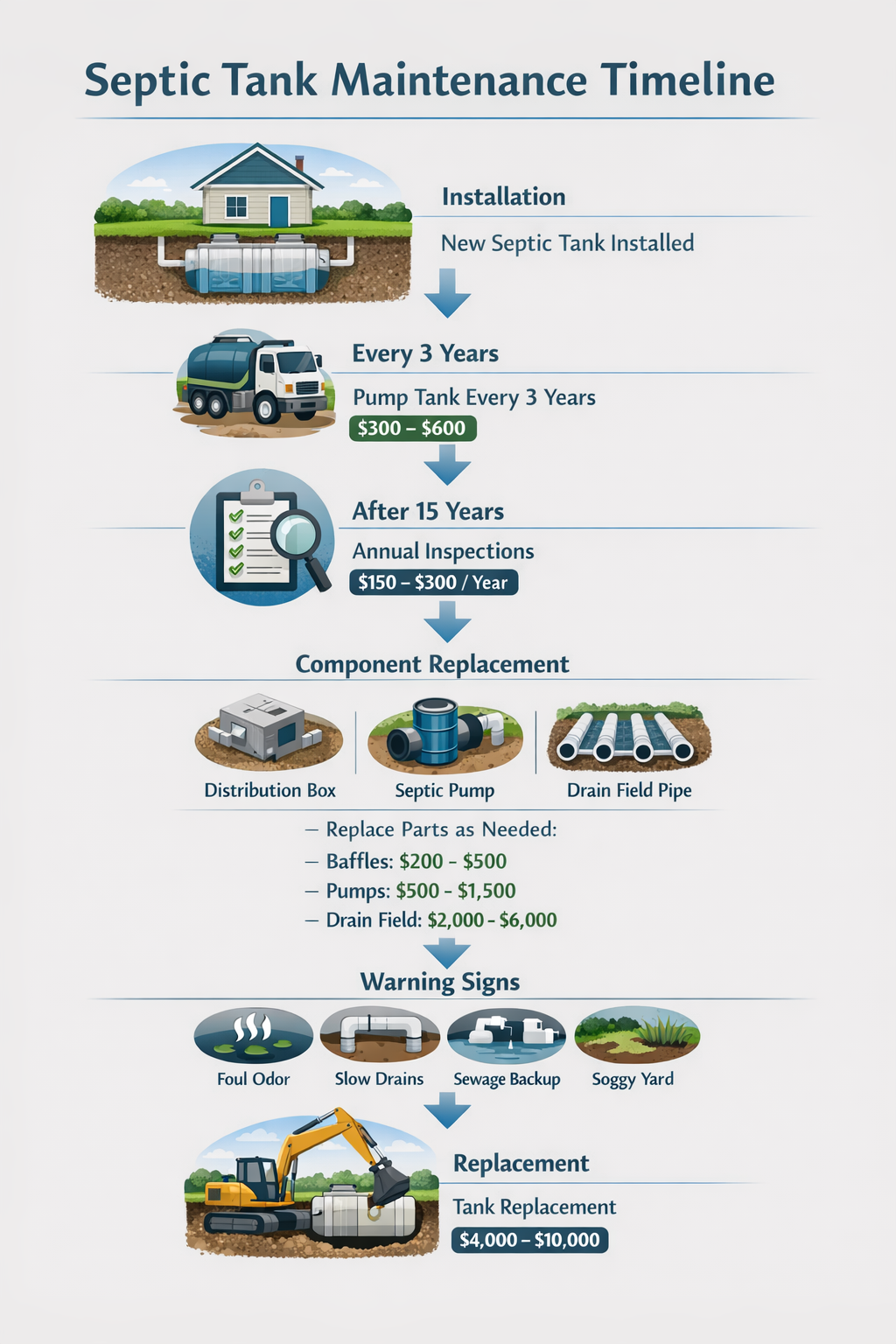
Persistent sewage backups, standing water in the yard, and strong odors that don’t resolve after pumping indicate your septic system may need replacement rather than repair. These symptoms suggest drain field failure, which typically requires complete system replacement.
Critical Warning Signs:
- Sewage backups: Especially in lowest drains or after pumping
- Yard flooding: Standing water or soggy areas over the drain field
- Strong odors: Sewage smells that persist after maintenance
- Slow drains: Multiple fixtures draining slowly throughout the house
- Gurgling sounds: Toilets or drains making unusual noises
When Repair vs. Replacement Makes Sense:
- Repair: Single component failure (baffles, pumps, distribution boxes)
- Replacement: Drain field failure, tank structural damage, or multiple component failures
- Age factor: Systems over 25 years with major problems often need replacement
Drain Field Failure Indicators:
Wet spots, lush grass growth, or sewage odors in the yard indicate drain field problems. Unlike tank issues, drain field failure usually requires complete system replacement because soil cannot be “cleaned.”
Professional Assessment Timing:
Call a septic professional immediately if you experience sewage backups or yard flooding. These problems worsen rapidly and can create health hazards or environmental violations.
Cost Considerations:
- Component repairs: $500-$2,500 depending on the part
- Partial replacement: $5,000-$15,000 for drain field only
- Complete replacement: $15,000-$35,000 for entire system
Emergency vs. Planned Replacement:
Emergency replacements cost 20-30% more than planned replacements. Regular inspections help you plan replacement timing and avoid emergency situations.
System Age Guidelines:
- Under 15 years: Most problems are repairable
- 15-25 years: Evaluate repair costs vs. remaining lifespan
- Over 25 years: Replacement often more cost-effective than major repairs
Don’t ignore early warning signs. What starts as a minor issue can quickly become a major environmental and financial problem requiring immediate attention.
FAQ
Q: How often should I pump my septic tank to maximize its lifespan?
A: Pump every 3 years for the first 15 years, then annually after that. This schedule prevents solids from reaching the drain field and extends overall system life significantly.
Q: Which septic tank material lasts the longest?
A: Concrete tanks last the longest at 40+ years and can potentially serve 40-100 years with proper maintenance. They’re the most durable option despite higher upfront costs.
Q: Can I extend my septic system’s life beyond the typical range?
A: Yes, with excellent maintenance including regular pumping, annual inspections, water conservation, and avoiding harsh chemicals, systems can exceed their expected lifespan by 5-10 years.
Q: What’s the most common reason septic systems fail early?
A: Infrequent pumping is the leading cause of premature failure. It allows solids to reach the drain field, causing clogs that require expensive replacement.
Q: How much does it cost to replace a septic system?
A: Complete replacement costs $15,000-$35,000 depending on system type, soil conditions, and local regulations. Mound systems cost $20,000-$35,000 due to their complexity.
Q: Should I replace my steel septic tank before it fails?
A: Yes, consider replacement after 15 years for steel tanks. Waiting for failure risks environmental contamination and emergency replacement costs that are 20-30% higher.
Q: Can tree roots damage my septic system?
A: Yes, tree roots seek water and can infiltrate pipes and tanks, causing cracks and clogs. Plant trees at least 30 feet away from your septic system.
Q: How do I know if my drain field is failing?
A: Look for standing water, sewage odors, or unusually lush grass growth over the drain field area. These indicate the soil can no longer absorb effluent properly.
Q: Is it worth repairing an old septic system?
A: For systems under 20 years, repairs usually make sense. For systems over 25 years with major problems, replacement is often more cost-effective long-term.
Q: What happens if I don’t maintain my septic system?
A: Poor maintenance can cut system lifespan in half and lead to environmental contamination, health hazards, and emergency replacement costs exceeding $40,000.
Q: Can I install a new septic system in the same location?
A: Sometimes, but it depends on soil conditions and local regulations. Failed drain fields often require new locations, which may need additional permits and site work.
Q: How long do septic system components other than the tank last?
A: Baffles last 10-20 years, distribution boxes 10-20 years, pumps 10-15 years, and drain fields 20-30 years. The drain field typically determines overall system lifespan.
Conclusion
Understanding how long does septic tank last helps you plan maintenance and budget for eventual replacement. Most septic systems serve 20-40 years, with concrete tanks lasting longest and drain fields typically failing first around 20-30 years.
The key to maximizing your system’s lifespan lies in consistent maintenance: pumping every 3 years initially, then annually after 15 years, combined with water conservation and avoiding harsh chemicals. These simple practices can extend your system’s life and prevent premature failure that costs $15,000-$35,000 to fix.
Take action now by:
- Scheduling your next pumping if it’s been over 3 years
- Having your system inspected if it’s over 15 years old
- Learning the warning signs of septic system problems before they become emergencies
- Implementing a regular maintenance routine to protect your investment
Remember, the cost of regular maintenance is far less than emergency replacement. By understanding your system’s expected lifespan and maintaining it properly, you can avoid the stress and expense of unexpected septic system failure.
For more detailed guidance on septic care, explore our complete maintenance checklist and learn how often to pump your specific system based on household size and usage patterns.
References
[1] How Long Does A Septic System Last – https://michigansaves.org/news/how-long-does-a-septic-system-last/
[2] How Long Does A Septic System Last In New Jersey – https://www.atsenvironmental.com/blog/how-long-does-a-septic-system-last-in-new-jersey/
[3] How Long Should A Septic Tank Last Expert Insights Tips – https://www.rciseptic.com/how-long-should-a-septic-tank-last-expert-insights-tips