How Often to Pump Septic Tank: Complete Homeowner’s Guide

Last updated: February 20, 2026
Key Takeaways
- Most septic tanks need pumping every 3-5 years, but frequency depends on household size and usage patterns
- Larger families require more frequent pumping – every 1-2 years for households with 5+ people
- Tank size matters – smaller tanks fill faster and need more frequent service
- Warning signs include slow drains, odors, and gurgling sounds that indicate your tank needs immediate attention
- Regular pumping prevents costly repairs and extends your septic system’s lifespan
Quick Answer
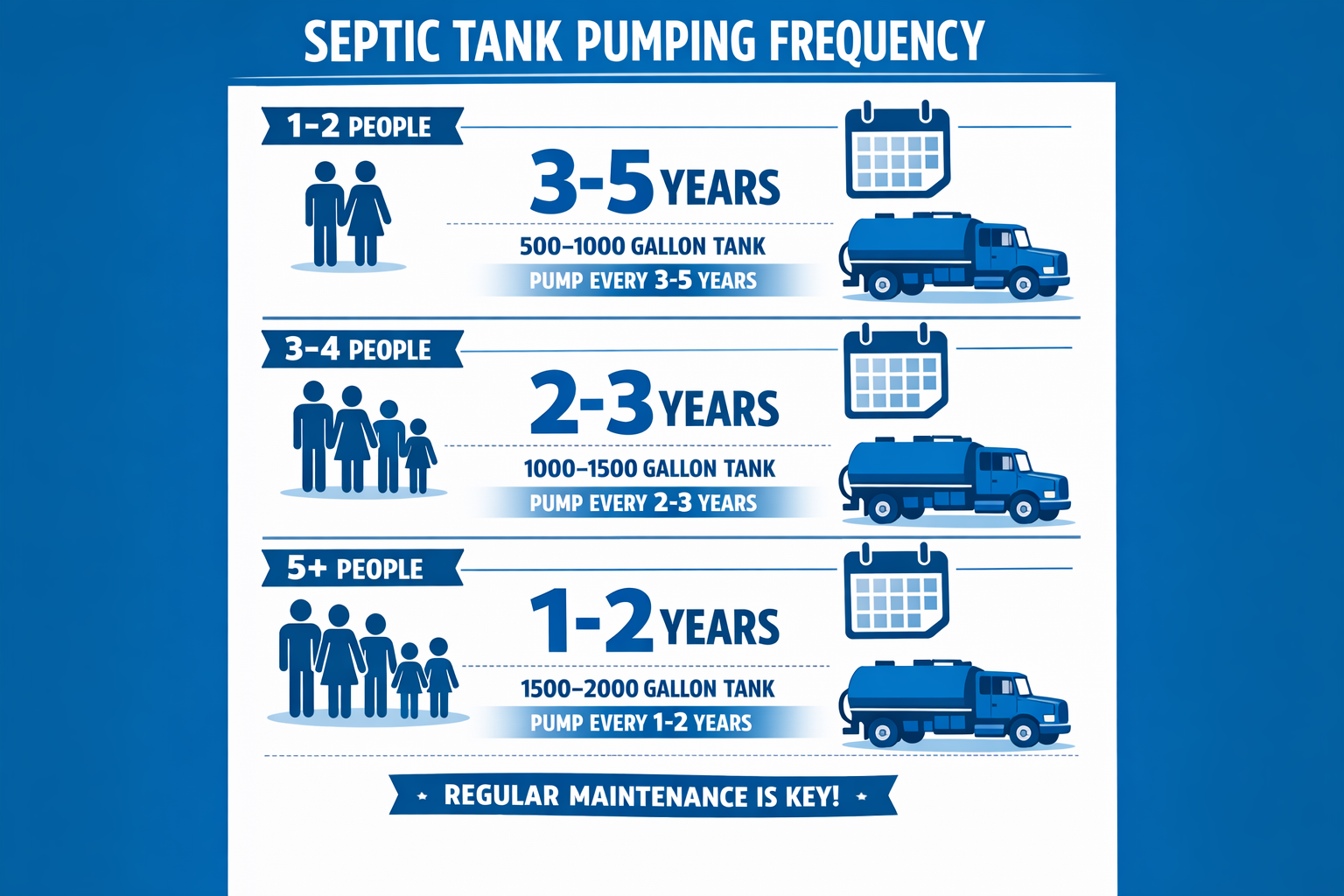
Most residential septic tanks should be pumped every 3-5 years for average households, but this varies significantly based on family size, tank capacity, and water usage habits. Households with 3-4 people typically need pumping every 2-3 years, while larger families of 5+ people should pump every 1-2 years to prevent system failures and costly repairs.
Your septic tank is working around the clock to process your household’s wastewater, but without regular pumping, it can quickly become overwhelmed and fail. Understanding how often to pump septic tank systems isn’t just about following a schedule – it’s about protecting your property investment and avoiding emergency repairs that can cost thousands of dollars.
What Determines How Often to Pump Septic Tank Systems?
The frequency of septic tank pumping depends on four main factors: household size, tank capacity, water usage patterns, and the amount of solids entering your system. These variables work together to determine how quickly your tank fills with sludge and scum that can’t break down naturally.
Household Size Impact
Your family size directly affects how often you’ll need pumping services:
- 1-2 people: Every 3-5 years for standard tanks
- 3-4 people: Every 2-3 years to maintain proper function
- 5+ people: Every 1-2 years due to increased waste volume
Tank Capacity Considerations
Larger tanks can hold more solids before requiring service. A practical rule suggests pumping approximately once per 1,000 gallons of tank capacity[4]. For example:
- 500-gallon tanks (4-person household): Every 2 years
- 1,000-gallon tanks (4-person household): Every 2-3 years
- 1,500-gallon tanks (1-2 people): Every 4-6 years
Water Usage Patterns
Heavy water users fill their tanks faster because increased liquid volume pushes solids into the drain field prematurely. High-efficiency appliances and water conservation can extend pumping intervals.
Common mistake: Assuming all households follow the same schedule. A family that does multiple loads of laundry daily will need more frequent pumping than a household with minimal water usage.
Standard Pumping Frequency Guidelines by Household Size
For most homeowners, following these household-size guidelines provides a reliable starting point for septic tank maintenance scheduling. However, you should adjust these recommendations based on your specific usage patterns and tank capacity.
Small Households (1-2 People)
Small households typically generate less waste and can extend pumping intervals:
- Standard recommendation: Every 3-5 years
- Conservative approach: Every 3 years for maximum system protection
- Large tank advantage: 1,500-gallon tanks may go 4-6 years between pumpings
Medium Households (3-4 People)
This represents the average American household and follows standard industry recommendations:
- Recommended frequency: Every 2-3 years
- Tank size factor: 1,000-gallon tanks work well with 2-3 year intervals
- Usage consideration: Heavy garbage disposal use may require annual pumping
Large Households (5+ People)
Large families produce significantly more waste and require frequent attention:
- Required frequency: Every 1-2 years
- High-usage households: May need pumping every 6 months
- Cost consideration: More frequent pumping prevents expensive system replacement
Decision rule: Choose the shorter interval if you have high water usage, use garbage disposals frequently, or notice any warning signs between scheduled pumpings.
For homeowners looking to maintain their septic systems between pumpings, septic tank treatment options can help break down waste and reduce buildup naturally.
How Tank Size Affects Pumping Frequency
Larger septic tanks can hold more solids and typically require less frequent pumping, but the relationship isn’t always proportional to size. Tank capacity must be matched to household size and usage patterns for optimal performance.
Capacity-to-Frequency Relationship
The general rule suggests that tank capacity directly influences pumping intervals:
| Tank Size | Household Size | Pumping Frequency |
|---|---|---|
| 500 gallons | 1-2 people | Every 2-3 years |
| 750 gallons | 2-3 people | Every 2-3 years |
| 1,000 gallons | 3-4 people | Every 2-3 years |
| 1,250 gallons | 4-5 people | Every 2-3 years |
| 1,500 gallons | 5-6 people | Every 2-4 years |
Undersized vs. Oversized Tanks
Undersized tanks for your household create several problems:
- Fill with solids much faster than expected
- Require pumping every 1-2 years regardless of family size
- Risk system failure and drain field damage
- May need replacement to handle household demands
Oversized tanks offer benefits but aren’t always better:
- Allow longer intervals between pumpings
- Provide buffer during high-usage periods
- Cost more initially but may save money long-term
- Still require regular inspection and maintenance
Edge case: Very large tanks (2,000+ gallons) for small households might go 5-7 years between pumpings, but annual inspections remain essential to monitor system health.
Understanding how septic tank systems work helps homeowners appreciate why tank size and pumping frequency must be carefully matched.
Warning Signs Your Septic Tank Needs Immediate Pumping
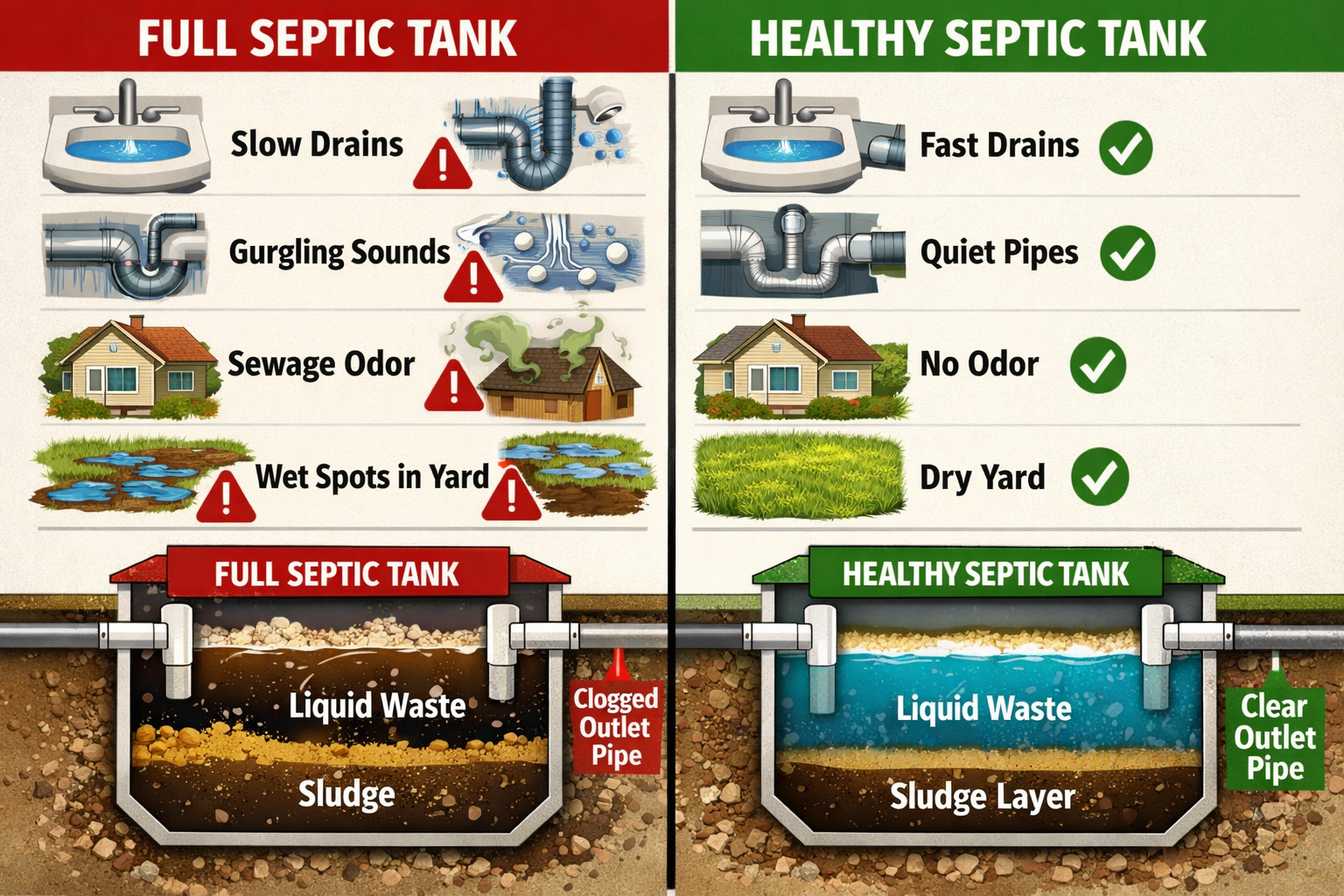
If you notice slow drains, sewage odors, or gurgling sounds from your plumbing, your septic tank likely needs immediate pumping regardless of your normal schedule. These warning signs indicate your system is approaching or has reached capacity.
Critical Warning Signs
Watch for these urgent indicators that require immediate professional attention:
Drainage Issues:
- Slow-draining sinks, tubs, and toilets
- Water backing up in floor drains
- Multiple fixtures draining slowly simultaneously
- Toilets that won’t flush properly
Odor Problems:
- Strong sewage smells near the tank or drain field
- Persistent odors inside your home
- Rotten egg smells from drains or fixtures
- Outdoor areas that smell like sewage
Visual and Audio Clues:
- Gurgling sounds from drains or toilets
- Wet, soggy areas over the drain field
- Bright green grass over the septic area
- Standing water or sewage on the surface
When to Call for Emergency Service
Contact a septic professional immediately if you experience:
- Sewage backing up into your home
- Multiple drains backing up simultaneously
- Strong sewage odors throughout your property
- Visible sewage on your lawn or around the tank
Common mistake: Waiting for multiple warning signs before calling for service. One persistent symptom often indicates your tank is full and needs immediate attention.
For detailed guidance on recognizing these problems, check our guide on signs your septic tank needs maintenance.
FYI: Some links may be affiliate links, which means I may earn a small commission at no extra cost to you.
Many homeowners find that using septic tank treatments between pumpings helps maintain their system’s health. Septifix tablets can keep your septic system clean and efficient by breaking down waste and reducing buildup, potentially extending the time between required pumpings while keeping your system running smoothly.
Factors That Increase Pumping Frequency Needs
Heavy garbage disposal use, frequent laundry loads, and certain household chemicals can significantly increase how often you need septic tank pumping. Understanding these factors helps you adjust your maintenance schedule and potentially reduce pumping frequency through better habits.
High-Impact Usage Patterns
Garbage Disposal Use:
- Adds significant solid waste to your tank
- Can reduce pumping intervals by 50% or more
- Households with heavy disposal use may need pumping every 6 months
- Consider composting food scraps instead
Laundry and Water Usage:
- Multiple daily loads push solids through the system too quickly
- High-efficiency washers help but don’t eliminate the issue
- Spread laundry loads throughout the week
- Fix leaky fixtures that add unnecessary water volume
Household Chemical Impact:
- Antibacterial soaps kill beneficial tank bacteria
- Harsh cleaning chemicals disrupt the natural breakdown process
- Excessive bleach use can harm system function
- Choose septic-safe products when possible
Lifestyle Factors
Entertaining and Guests:
- Frequent parties or overnight guests increase waste volume
- Holiday gatherings can overwhelm your system temporarily
- Consider pumping before extended periods of high usage
- Monitor your system more closely during busy periods
Home-Based Businesses:
- Hair salons, daycare centers, or other businesses increase usage
- May require commercial-grade pumping schedules
- Check local regulations for business septic requirements
- Consider upgrading to a larger tank if needed
Decision rule: If your household fits multiple high-usage categories, pump on the shorter end of recommended intervals and consider annual inspections.
Cost-Effective Pumping Schedule Planning
Planning your septic pumping schedule around seasonal availability and bundling services can save you hundreds of dollars annually while ensuring proper system maintenance. Smart scheduling also helps you avoid emergency service calls during peak seasons.
Seasonal Timing Strategies
Best Times for Pumping:
- Spring: After winter freeze-thaw cycles, before summer usage peaks
- Fall: Before winter weather makes access difficult
- Avoid summer: Peak season means higher prices and limited availability
- Avoid winter: Frozen ground and weather delays increase costs
Budget-Friendly Approaches
Annual Maintenance Planning:
- Schedule pumping and inspection together for package discounts
- Book during off-peak seasons for lower rates
- Establish relationships with local contractors for better pricing
- Keep records to track actual usage patterns vs. recommended schedules
Long-Term Cost Considerations:
| Pumping Frequency | Annual Cost | System Lifespan | Total 20-Year Cost |
|---|---|---|---|
| Every 2 years | $200-300 | 25-30 years | $2,000-3,000 |
| Every 5 years | $100-150 | 15-20 years | $2,000-3,000 + replacement |
| Emergency only | $500+ | 10-15 years | $5,000+ + early replacement |
Money-saving tip: Regular pumping every 2-3 years costs less over time than waiting for problems and paying emergency rates plus potential system replacement costs.
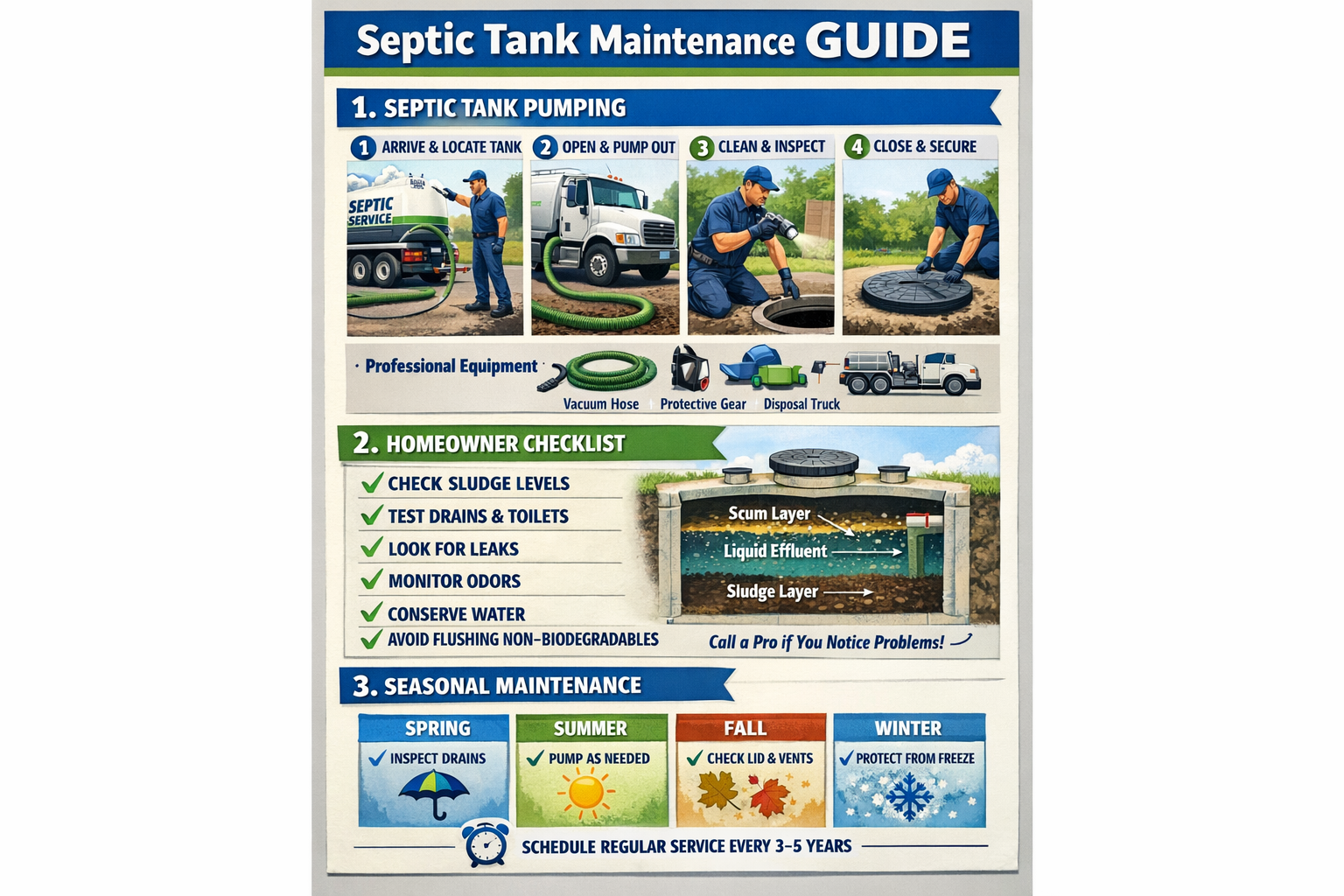
Learn more about comprehensive septic tank maintenance practices that can help extend your system’s life and reduce overall costs.
Professional vs. DIY Pumping: What You Need to Know
Septic tank pumping requires specialized equipment and proper waste disposal permits, making it a job for licensed professionals rather than a DIY project. However, homeowners can handle many maintenance tasks that support their pumping schedule.
Why Professional Pumping is Essential
Equipment Requirements:
- Vacuum trucks with 1,000+ gallon capacity
- Specialized pumps and hoses for tank access
- Safety equipment for confined space work
- Proper waste transport and disposal systems
Legal and Safety Considerations:
- Licensed disposal at approved waste treatment facilities
- Proper handling of hazardous gases and materials
- Insurance coverage for property damage
- Local permits and regulatory compliance
Professional Service Benefits:
- Complete tank inspection during pumping
- Identification of potential problems before they become expensive
- Proper cleaning of inlet and outlet baffles
- Documentation for warranty and resale purposes
What Homeowners Can Do
Between-Pumping Maintenance:
- Locate and mark your tank and access ports
- Keep detailed records of pumping dates and observations
- Monitor water usage and implement conservation measures
- Use septic-safe products and avoid harmful chemicals
Preparation for Professional Service:
- Clear access paths to your tank location
- Remove covers or mark buried access points
- Document any recent problems or concerns
- Gather maintenance records for the service technician
Common mistake: Attempting to pump your own tank to save money. Professional pumping typically costs $200-500, while improper DIY attempts can cause thousands in damage and environmental violations.
For help locating your system before professional service, see our guide on how to locate septic tank for maintenance.
Helpful Resource for System Maintenance
If you want a simple way to maintain your septic system between professional pumpings, Septifix tablets offer an easy solution. These trusted septic tank treatment tablets help break down waste, reduce odors, and support the natural bacterial processes that keep your system running efficiently. Many homeowners use them monthly to maintain optimal system health and potentially extend the time between required pumpings.
Here are some of the most reliable septic tank treatment options for keeping your system clean, odor-free, and working properly—from breaking down waste and reducing buildup to helping prevent blockages and costly repairs. These easy-to-use tablets are trusted by many homeowners to maintain a healthy, efficient septic system with minimal effort.
👉 See how Septifix tablets can keep your septic system clean and efficient
Frequently Asked Questions
How often should I pump my septic tank if I live alone?
Single-person households can typically go 3-5 years between pumpings, depending on tank size and water usage. Larger tanks (1,500+ gallons) may extend this to 4-6 years with conservative water use.
Can I extend pumping intervals by using septic tank additives?
Quality bacterial treatments can help maintain system health but shouldn’t be used to significantly extend pumping intervals. Stick to recommended schedules based on household size and tank capacity for best results.
What happens if I wait too long between pumpings?
Overfull tanks can cause sewage backups, drain field damage, and complete system failure. Emergency repairs often cost $3,000-10,000+ compared to regular $200-500 pumping costs.
How do I know if my tank is the right size for my household?
Tanks should provide approximately 250-300 gallons per bedroom or household member. If you’re pumping more than twice yearly, your tank may be undersized for your family’s needs.
Should I pump before or after heavy usage periods?
Pump before anticipated heavy usage (holidays, extended guests) to provide maximum capacity. This prevents overflow during peak demand periods.
Can heavy rain affect my pumping schedule?
Excessive groundwater infiltration can fill tanks faster and may require more frequent pumping. Have your system inspected if you notice problems after heavy rains.
Is it normal for my tank to smell after pumping?
Mild odors for 24-48 hours after pumping are normal as the bacterial balance reestablishes. Persistent strong odors may indicate ventilation or system problems.
How long does professional pumping take?
Most residential tank pumping takes 30-60 minutes, including inspection time. Difficult access or very full tanks may take longer.
Can I use my plumbing immediately after pumping?
Yes, you can resume normal water usage immediately after pumping. The tank will begin the natural treatment process with fresh wastewater.
What records should I keep about pumping?
Document pumping dates, service provider, tank condition notes, and any recommended repairs. This information helps track system performance and may be required for property sales.
Do garbage disposals really affect pumping frequency that much?
Yes, garbage disposals can increase solid waste by 25-50%, potentially requiring annual instead of bi-annual pumping. Consider composting food scraps to reduce this impact.
Should I pump all my tanks at the same time?
If you have multiple tanks (septic tank plus pump tank), coordinate pumping to save on service call fees. However, they may not need service at the same intervals.
Key Takeaways
- Follow household-size guidelines: 1-2 people every 3-5 years, 3-4 people every 2-3 years, 5+ people every 1-2 years
- Tank size matters significantly: Larger tanks allow longer intervals, but proper sizing for your household is crucial
- Watch for warning signs: Slow drains, odors, and gurgling sounds indicate immediate pumping needs regardless of schedule
- High-usage factors require adjustment: Garbage disposals, frequent laundry, and large gatherings may double pumping frequency needs
- Professional service is essential: Proper equipment, disposal permits, and safety requirements make DIY pumping impractical and potentially illegal
- Plan for cost savings: Schedule during off-peak seasons and bundle with inspections for better rates
- Regular maintenance prevents emergencies: Consistent pumping every 2-3 years costs far less than emergency repairs and system replacement
- Keep detailed records: Documentation helps track performance, plan maintenance, and may be required for property transactions
- Consider usage patterns: Adjust standard recommendations based on your specific water usage, family size changes, and lifestyle factors
- Never exceed 5 years: Even large tanks with small households should be pumped at least every 5 years to prevent system damage
Conclusion
Understanding how often to pump septic tank systems protects your property investment and prevents costly emergency repairs. Most households need pumping every 2-3 years, but your specific schedule depends on family size, tank capacity, and usage patterns. Regular professional pumping, combined with proper maintenance practices, keeps your septic system functioning efficiently for decades.
Start by determining your household’s recommended pumping frequency using the guidelines above, then schedule your next service during off-peak seasons for better rates. Keep detailed records of all maintenance, watch for warning signs between pumpings, and never wait more than 5 years regardless of your tank size or household composition.
Take action today by scheduling your next pumping if it’s been more than 3 years, or contact a local septic professional for an inspection if you’re unsure about your system’s current condition. Your septic system works hard every day – give it the regular maintenance it needs to keep protecting your home and property value.
For more comprehensive guidance, explore our complete septic tank maintenance guide and learn about how often to maintain septic tank systems beyond just pumping.
References
[1] How Often Should You Pump Your Septic Tank – https://alphaenvironmental.net/blog/how-often-should-you-pump-your-septic-tank/
[3] Frequency Of Septic Tank Pumping For Different Household Sizes – https://www.unitedsewerservice.com/frequency-of-septic-tank-pumping-for-different-household-sizes/
[4] 5 Key Factors That Influence Septic Pumping Freq – https://www.wrenvironmental.com/blog/2025/november/5-key-factors-that-influence-septic-pumping-freq/
[5] How Often Should You Schedule Septic Pumping – https://www.aaasewerserviceidahofalls.com/how-often-should-you-schedule-septic-pumping
[6] How Often To Pump Septic Tank – https://dandhsepticservices.com/how-often-to-pump-septic-tank/
[9] How Often To Pump Septic Tank Family Of 4 – https://dillonseptic.com/how-often-to-pump-septic-tank-family-of-4/