
Disclosure: This post contains affiliate links. I may earn a commission if you buy through them.

Last updated: April 3, 2026
Quick Answer: Septic tank smells are most often caused by a full tank, blocked vents, broken baffles, or a saturated drain field. Effective septic tank smell troubleshooting starts by locating where the odor is coming from — indoors or outdoors — then working through a short checklist of fixable causes before calling a professional.
Septifix: Simple Septic Tank Care in One Tablet
Septifix tablets help break down waste, reduce bad smells, and keep your septic tank working properly. With one easy monthly flush, you can help prevent blockages, protect your plumbing, and avoid costly repairs.
👉 Discover the benefits of using Septifix for hassle-free septic maintenance
Key Takeaways
- Hydrogen sulfide (rotten egg smell) and methane are the two main odor-causing gases in septic systems
- A full tank is the most common reason for outdoor septic odors — pumping every 3–5 years prevents this
- Indoor odors usually point to dry water traps, blocked plumbing vents, or cracked drain pipes
- Broken baffles cost $500–$1,500 to replace and will cause persistent odors even after pumping
- Pumping alone won’t fix odors caused by broken baffles, failed drain fields, or damaged vents
- Drain field saturation shows up as unusually green or wet patches of grass above the leach lines
- Enzyme-based cleaners support bacterial balance; harsh chemicals disrupt it and worsen odors
- Schedule a professional inspection within 1–2 weeks of noticing persistent odors
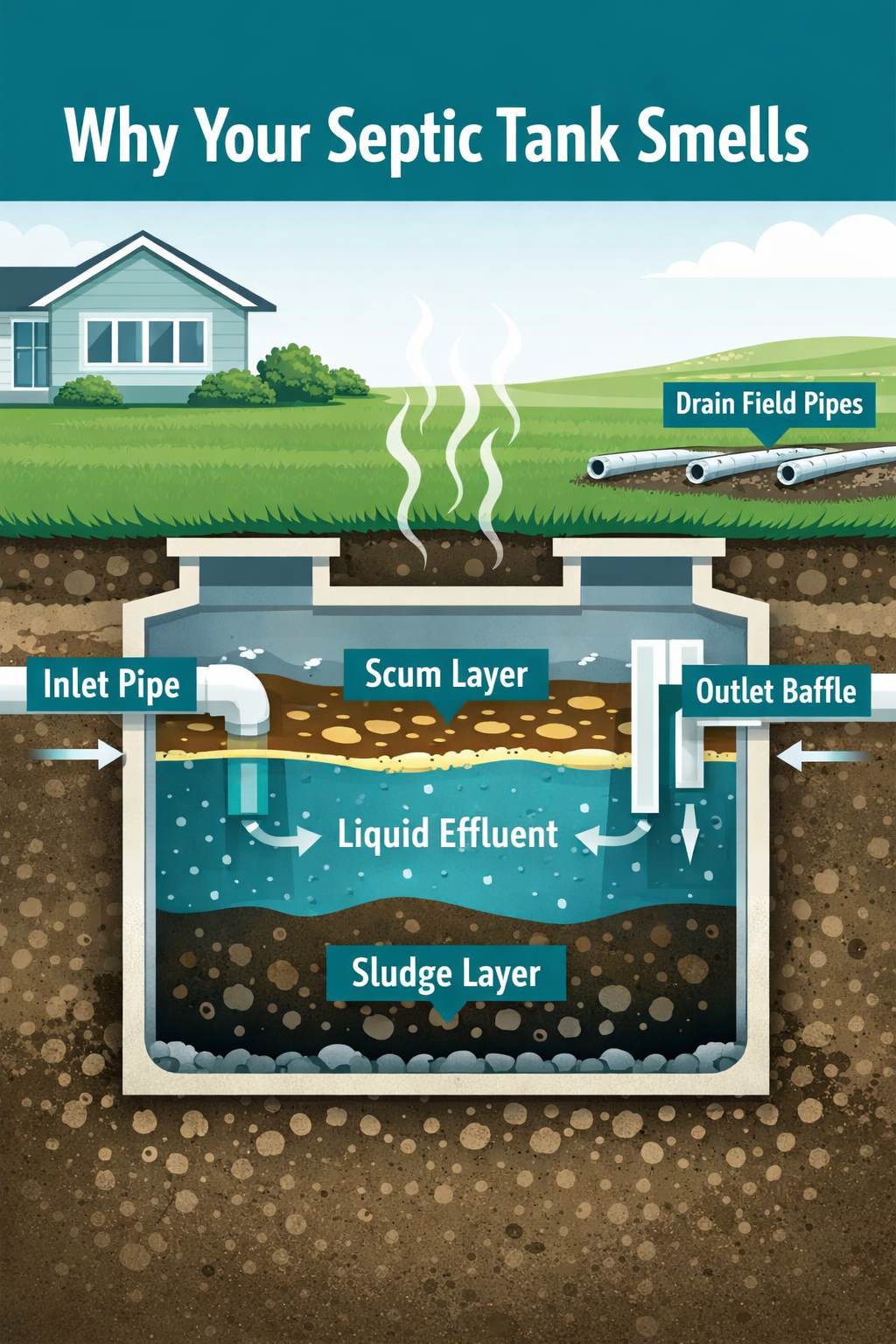
What Causes Septic Tank Smells? (And Why Location Matters)
Septic odors come from two gases: hydrogen sulfide, which smells like rotten eggs, and methane, which is odorless but flammable. Knowing where the smell is strongest — inside the house, near the tank lid, or over the drain field — tells you which problem you’re dealing with.
Smell location guide:
| Where You Smell It | Most Likely Cause |
|---|---|
| Inside bathrooms or kitchen | Dry P-trap, blocked vent pipe, cracked drain pipe |
| Near the septic tank lid | Full tank, damaged lid seal, or broken baffle |
| Over the drain field | Saturated or clogged leach lines |
| Entire yard | Overfull tank or major drain field failure |
| Only in cold/windy weather | Downdraft pushing vent gases back indoors |
Start with the location. It saves time and avoids unnecessary service calls.
Section 1: Septic Tank Slow Drain Solution
Slow drains are often the first sign something is wrong with your septic system — and they’re frequently linked to the same root causes as odors.
The short answer: Slow drains in a home with a septic system usually mean the tank is too full, the outlet baffle is clogged, or solid waste has reached the drain field. Address it early before it becomes a backup.
Common causes of slow drains:
- Full tank: When sludge and scum layers take up too much space, water can’t flow out fast enough. Check our guide on what happens when your septic tank is full for the full picture.
- Clogged outlet baffle: Solids escape into the drain field and block the outlet pipe.
- Flushed non-biodegradables: Wipes, paper towels, and feminine products are top offenders. See what not to put in a septic tank for a complete list.
- Grease buildup: Cooking oil coats pipes and hardens over time.
- Bacterial imbalance: Antibacterial soaps and bleach kill the bacteria that break down waste, slowing the whole process.
DIY slow-drain fix checklist:
- ✅ Run hot water down each drain for 2 minutes to clear minor buildup
- ✅ Use an enzyme-based drain cleaner (not chemical drain openers like Drano — they harm tank bacteria)
- ✅ Check if all drains are slow (whole-house = tank issue) vs. one drain (localized clog)
- ✅ Reduce water use for 24–48 hours to let the tank recover
- ✅ If no improvement, schedule a pump-out
For ongoing bacterial support, many homeowners use Septifix tablets — a monthly treatment that adds oxygen-releasing bacteria directly to the tank, helping break down solids and reduce the conditions that cause slow drains and odors.
Common mistake: Using a chemical drain cleaner when all drains are slow. That treats the symptom, not the cause, and kills the bacteria your tank needs to function.

Section 2: Septic Tank Smell Troubleshooting — Step-by-Step
Persistent septic odors don’t always mean a failing system. Many causes are fixable without a major service call — if you know where to look.
Step 1: Check for a full tank first
A full tank is the most frequent cause of outdoor septic smells. When solid sludge fills the tank, gases and raw sewage back up through the drain field or escape through lid gaps. If your tank hasn’t been pumped in 3–5 years, that’s your starting point.
Step 2: Inspect plumbing vents
Plumbing vent pipes on your roof allow sewer gases to escape safely. Leaves, bird nests, or ice can block them, forcing gases back into the house. Check the vent stack visually from the ground. If you suspect a blockage, a plumber can clear it in under an hour.
Fix for persistent downdrafts: Install a charcoal vent filter on the roof stack. It neutralizes hydrogen sulfide before it reaches living areas.
Step 3: Check every P-trap in the house
Every drain — sinks, floor drains, laundry tubs — needs a water-filled P-trap to block sewer gas. Rarely used drains dry out, and the trap loses its seal. The fix is simple: run water down each drain for 30 seconds.
Step 4: Look for broken baffles
Baffles inside the tank direct the flow and prevent scum from escaping. When they crack or collapse, gases vent improperly and solids reach the drain field. Broken baffles cost $500–$1,500 to replace and require a professional inspection to diagnose. Pumping alone won’t fix this.
Step 5: Use enzyme treatments to restore bacterial balance
Harsh cleaners, antibacterial soaps, and excess bleach kill the bacteria that process waste. Restoring that balance with a bacterial additive can reduce odor-causing gas production. Septifix tablets are one option homeowners use for this — they contain aerobic bacteria and sodium carbonate, which raises pH and reduces hydrogen sulfide production.
For a deeper look at odor causes and solutions, see our complete guide to reducing septic tank odors and our septic tank odors solutions guide.
Quick indoor odor remedies (while you troubleshoot):
- Place activated charcoal or baking soda near problem drains to absorb odors
- Run exhaust fans in bathrooms and open windows to improve airflow
- Pour a cup of water into the floor drains weekly if they’re rarely used
💡 Schedule an inspection within 1–2 weeks of noticing persistent odors — catching problems early is almost always cheaper than waiting.

Section 3: Septic Tank Drain Field Problems
Drain field issues are the most serious — and most expensive — source of septic odors. They also tend to develop slowly, so early detection matters.
The short answer: A saturated or clogged drain field can’t absorb effluent properly, causing odors, wet spots, and eventual sewage backup. The warning signs are visible in your yard before the system fully fails.
Warning signs of drain field problems:
- 🌿 Unusually lush, green grass directly above the leach lines
- 💧 Soggy or spongy ground over the drain field, even in dry weather
- 🦠 Sewage odors concentrated in the yard near the field
- 🚽 Slow drains or backups throughout the house
- 🌊 Standing water or puddles above the drain field
What causes drain field failure?
- Solids overload: When a tank isn’t pumped regularly, solids escape into the leach lines and clog them
- Root intrusion: Tree roots grow into perforated drain pipes
- Soil saturation: Heavy rain or a high water table prevents absorption
- Biomat buildup: A layer of anaerobic bacteria forms on the soil surface and blocks drainage
For more on this, our guide on troubleshooting septic tank issues covers drain field failure in detail.
What you can do:
- Reduce water use immediately to give the field time to dry out
- Divert surface water away from the drain field area
- Avoid parking or driving over the field — compacted soil worsens drainage
- Have the field inspected — a professional can assess whether aeration or partial replacement is needed
For ongoing prevention, Septifix tablets help reduce the solid load reaching your drain field by improving waste breakdown inside the tank itself — which is the most practical first line of defense against field problems.
Edge case: If your drain field smells only after heavy rain, the issue may be temporary soil saturation rather than a failing field. Monitor it for a week before calling for service.
Frequently Asked Questions
Q: Why does my septic tank smell after it was just pumped?
Pumping removes solids but doesn’t fix structural problems. If odors persist after pumping, the cause is likely broken baffles, a damaged vent pipe, or a compromised drain field.
Q: Is a septic smell dangerous?
Hydrogen sulfide at low concentrations causes the rotten egg odor and is unpleasant but not immediately dangerous outdoors. Methane is odorless but flammable. Concentrated exposure in enclosed spaces (like near an open tank) is a serious safety risk .
Q: How often should I pump my septic tank?
Every 3–5 years for a typical household, though frequency depends on tank size and number of occupants. See our septic tank pumping frequency guide for specifics.
Q: Can I use bleach to clean drains connected to a septic system?
Occasional small amounts won’t destroy your system, but regular heavy bleach use kills the bacteria that break down waste, leading to buildup, slow drains, and odors.
Q: Why does my bathroom smell like sewage, but my tank isn’t full?
A dry P-trap is the most common cause. Run water down every drain in the house, including floor drains and guest bathroom sinks. If the smell persists, check the vent stack for blockages.
Q: What’s the fastest way to reduce septic odors indoors?
Run water in all drains to refill P-traps, place activated charcoal near problem areas, and improve ventilation. These steps work within hours while you identify the root cause.
Q: Can tree roots cause septic smells?
Yes. Roots can crack pipes leading to or from the tank, allowing gases to escape into the soil and sometimes back into the house. A camera inspection can confirm this.
Q: Do septic additives actually help with odors?
Enzyme and bacterial additives can help restore bacterial balance and reduce hydrogen sulfide production, especially after antibiotic use or heavy chemical cleaning. They’re a supplement to regular maintenance, not a replacement for pumping.
Conclusion: Your Septic Smell Action Plan
Septic tank smell troubleshooting doesn’t have to be overwhelming. Work through the problem in order: locate the smell, check the obvious causes (full tank, dry P-traps, blocked vents), then move to structural issues (baffles, drain field) if the basics don’t resolve it.
Your next steps:
- This week: Run water in all drains, check vent stacks visually, and note when/where the smell is strongest
- Within 30 days: Schedule a pump-out if it’s been more than 3 years, or sooner if you have slow drains
- Ongoing: Use enzyme-based treatments monthly, avoid flushing non-biodegradables, and follow a regular septic maintenance schedule
- If odors persist after pumping: Book a professional inspection within 1–2 weeks
For slow drains, persistent odors, and drain field protection, Septifix tablets offer a straightforward monthly treatment that supports bacterial health across all three problem areas covered in this guide.
A well-maintained septic system should be odor-free. If yours isn’t, now you know exactly where to start.
References
[1] Why Does Septic Tank Smell – https://swenvironmental.com/why-does-septic-tank-smell/
[2] Why Does My Septic Tank Smell Even After It S Be – https://www.wrenvironmental.com/blog/2026/january/why-does-my-septic-tank-smell-even-after-it-s-be/
[3] Why Is My Septic Tank Smelling Bad – https://www.scorpionsepticservices.com/blog/why-is-my-septic-tank-smelling-bad
[4] Septic Odors – https://www.atsenvironmental.com/blog/septic-odors/