

Last updated: April 3, 2026
Quick Answer: Slow drains in a septic system are usually caused by a full tank, a clogged filter, a blocked inlet pipe, or a failing drain field. The right septic tank slow-drain solution depends on which part of the system is failing. Start by checking whether one drain or multiple drains are slow — that single clue tells you where the problem lives.
Septifix: Simple Septic Tank Care in One Tablet
Septifix tablets help break down waste, reduce bad smells, and keep your septic tank working properly. With one easy monthly flush, you can help prevent blockages, protect your plumbing, and avoid costly repairs.
👉 Discover the benefits of using Septifix for hassle-free septic maintenance
Key Takeaways
- Multiple slow drains throughout the house almost always point to a septic or drain field issue, not a simple pipe clog
- A tank that hasn’t been pumped in over three years needs professional inspection right away
- Biological enzyme treatments and bacteria additives can restore flow in mildly saturated drain fields
- Avoid bleach and antimicrobial soaps — they kill the beneficial bacteria your system depends on
- Reducing household water use (the average person uses up to 70 gallons per day) directly lowers system stress
- Modern drain field rejuvenation methods like hydrojetting and soil fracturing show 90–95% success rates
- Septic odors indoors are a warning sign that should never be ignored — they often signal a full tank or venting issue
- Regular pumping every 3–5 years is the single most effective maintenance habit for any septic system
Disclosure: This post contains affiliate links. I may earn a commission if you buy through them.
Section 1: Septic Tank Slow Drain Solution — Diagnosing and Fixing the Problem
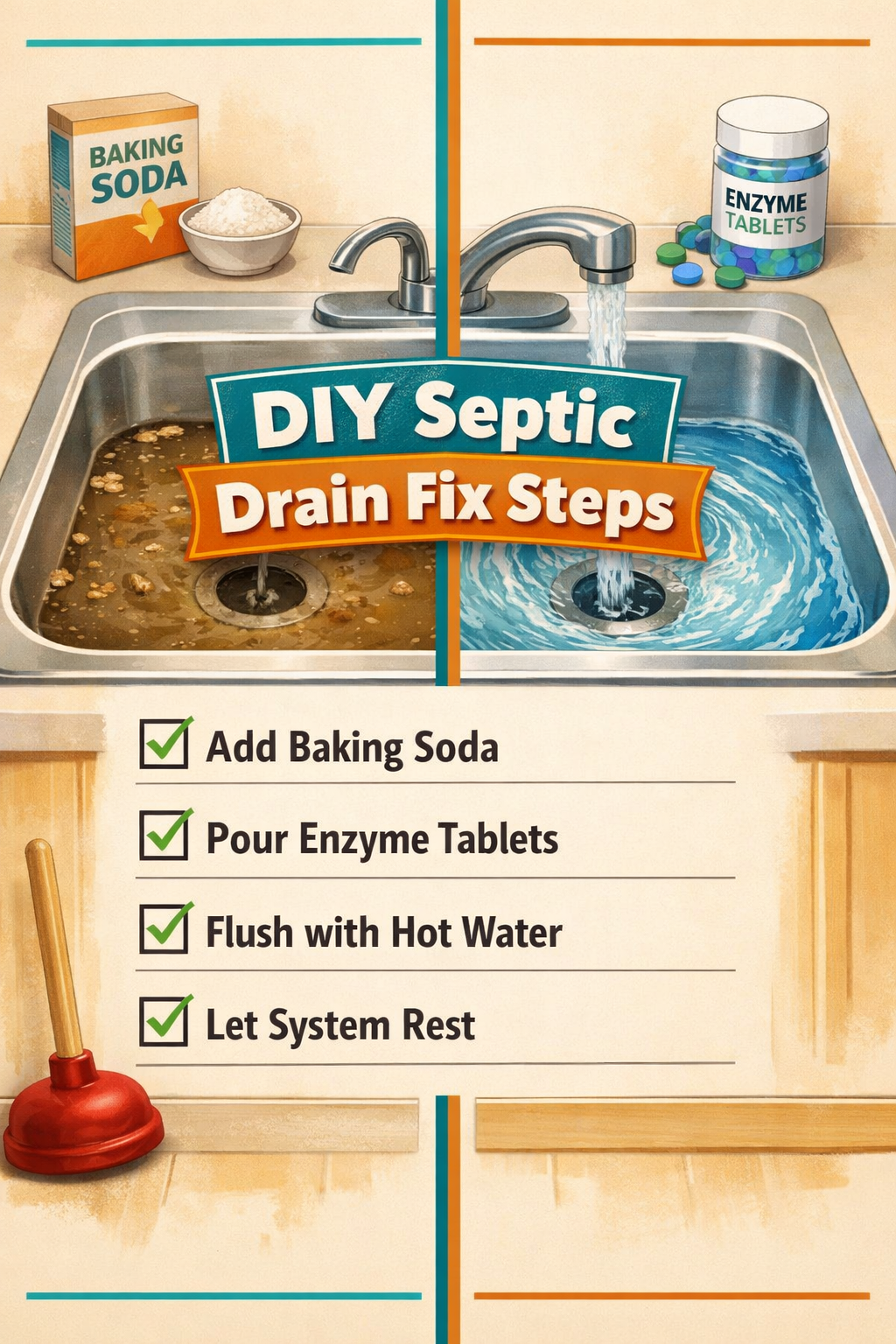
The fastest way to find a septic tank slow-drain solution is to count how many drains are affected. One slow drain usually means a localized pipe clog. Multiple slow drains throughout the house — sinks, showers, and toilets all sluggish at once — signal a systemic septic problem that needs a different approach entirely.
Is It One Drain or All of Them?
| Symptom | Likely Cause | First Step |
|---|---|---|
| One slow drain | Hair, grease, or pipe clog | Plunge or snake the drain |
| Multiple slow drains | Full tank or drain field issue | Inspect tank, check pump schedule |
| Gurgling sounds in multiple fixtures | Blocked inlet or full tank | Call for inspection |
| Sewage is backing up into the lowest fixtures | Tank overflow or blocked outlet | Emergency pump-out |
Common mistake: Many homeowners plunge individual drains repeatedly when the real problem is a full tank. Plunging won’t help if the tank is overloaded — it just delays the diagnosis.
Step-by-Step: Finding Your Septic Tank Slow Drain Solution
- Check the tank age and pump history. If it’s been more than three years since the last pump-out, schedule one before doing anything else.
- Inspect the effluent filter. A clogged filter (usually located at the outlet baffle) is one of the most common and easiest-to-fix causes of slow drains. See our guide on septic tank filter maintenance for step-by-step cleaning instructions.
- Reduce water use immediately. Cut back on laundry loads, showers, and dishwasher cycles. This gives the system breathing room while you diagnose the issue.
- Add a biological treatment. Enzyme-based bacteria tablets like Septifix can help restore bacterial balance and break down waste buildup in the tank, supporting better flow to the drain field.
- Avoid harsh chemicals. Bleach, drain cleaners, and antimicrobial soaps kill the beneficial bacteria that your system needs to process waste.
- Call a professional if drains don’t improve within 48–72 hours after reducing water use and adding biological treatment.
Pull quote: “If every drain in your house is slow at the same time, stop plunging and start thinking about your tank. That’s where the real problem is.”
For a broader look at warning signs, check out signs your septic tank needs maintenance before things get worse.
Section 2: Septic Tank Smell Troubleshooting — What the Odors Are Telling You
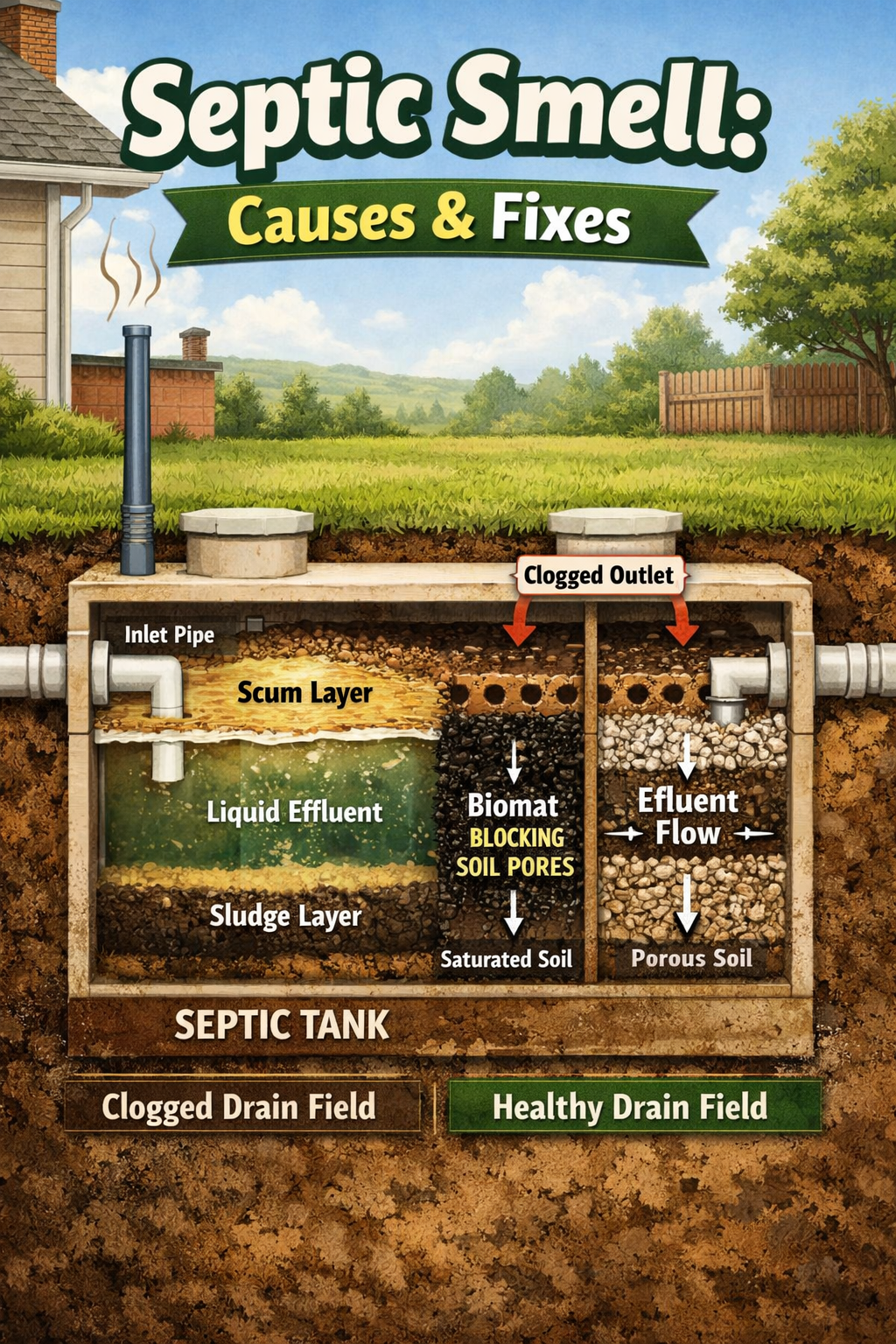
Septic odors — inside or outside the home — are your system’s way of sending an alert. The smell itself is a clue: sulfur or rotten-egg odors near drains usually mean gases are escaping through the plumbing. Outdoor odors near the tank or yard often point to a full tank, a cracked lid, or a saturated drain field.
Common Septic Smell Sources and Fixes
Indoors:
- Dry P-traps: Unused drains (guest bathrooms, floor drains) lose their water seal. Fix: pour a cup of water down the drain.
- Blocked vent pipe: Vent pipes on the roof allow gases to escape safely. A blocked vent pushes odors back into the house. Fix: inspect and clear the vent stack.
- Full or overloaded tank: Gases back up through plumbing when the tank can’t process waste fast enough. Fix: pump the tank.
Outdoors:
- Soggy ground near the tank: Indicates overflow or a cracked tank lid.
- Odors over the drain field: Often a sign of biomat buildup or a saturated leach field (see Section 3).
- Smell near the tank lid: The lid may be cracked or improperly sealed.
Choose this fix if: The smell is only outdoors after heavy rain — saturated soil temporarily reduces drain field absorption, and the odor usually clears within a day or two on its own.
Choose this fix if: The smell is indoors and persistent — that’s almost always a tank, venting, or P-trap issue that needs attention right away.
Adding Septifix tablets monthly can help reduce odor-causing hydrogen sulfide gas by boosting the aerobic bacterial population in your tank, which processes waste more completely and produces fewer foul gases.
For a full breakdown of odor causes and remedies, our septic tank odors solutions guide covers every scenario in detail.
Section 3: Septic Tank Drain Field Problems — Causes, Solutions, and When to Call a Pro
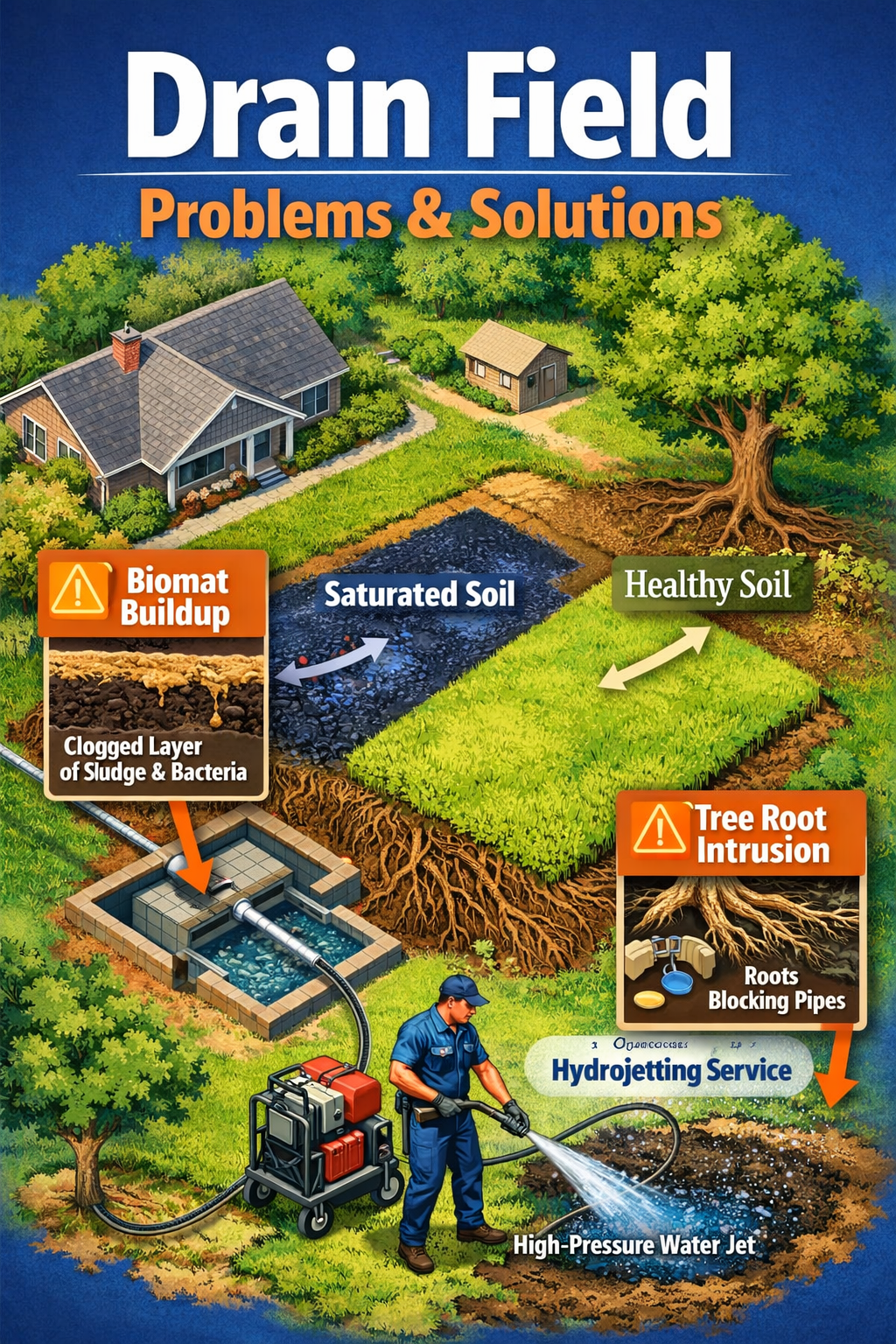
A failing drain field is the most serious — and most expensive — septic problem a homeowner can face. The drain field (also called a leach field) is where treated wastewater from the tank filters into the soil. When it fails, water has nowhere to go, and slow drains, soggy yards, and sewage odors follow quickly.
Why Drain Fields Fail
- Biomat buildup: A layer of anaerobic bacteria and organic matter coats the soil pores, blocking water absorption. This is the most common cause of drain field failure.
- Hydraulic overload: Too much water enters the system faster than the soil can absorb it. This often happens in large households or during heavy rain seasons.
- Root intrusion: Tree roots seek out moisture and can crack pipes or block flow.
- Age and compaction: Soil compaction from vehicles or foot traffic over the field reduces absorption capacity.
Drain Field Rejuvenation: What Actually Works
Modern non-invasive techniques have improved significantly. According to industry data, methods like soil fracturing, hydrojetting, and mechanical aeration now show 90–95% success rates at restoring drain field function at a fraction of replacement costs.
Biological treatment is often the first step for a mildly saturated field. Specialized bacteria and enzyme products break down the biomat layer and restore soil permeability. Results can take days to months, depending on how severe the buildup is. Using Septifix tablets regularly as a preventive measure helps keep the biomat from forming in the first place.
Critical rule: Stop using antimicrobial soaps and bleach-based cleaners while treating a drain field biologically. These products kill the bacteria doing the repair work.
When to call a professional:
- Standing water or sewage odor over the drain field
- Drains are still slow after pumping and biological treatment
- The system is more than 20–25 years old
For a deeper look at what happens when problems go unaddressed, read our guide on troubleshooting septic tank issues.
You can also learn more about how to unclog a septic drain if you suspect a blockage between the tank and the field.
FAQ: Septic Tank Slow Drain Solution
Q: Can I fix slow septic drains myself?
Yes, for mild cases. Check the filter, reduce water use, and add a biological enzyme treatment. If multiple drains are slow and the tank hasn’t been pumped recently, call a professional.
Q: How do I know if my slow drain is a septic problem or a regular pipe clog?
If only one drain is slow, it’s likely a pipe clog. If multiple drains throughout the house are slow at the same time, it’s almost certainly a septic issue.
Q: How often should I pump my septic tank to prevent slow drains?
Most households need pumping every 3–5 years. Check out our complete guide on how often to pump your septic tank for a schedule based on household size.
Q: Do septic tank additives actually help with slow drains?
Enzyme and bacteria-based additives can help restore bacterial balance and break down waste, especially after antibiotic use or heavy cleaning product use. They work best as a supplement to regular pumping, not a replacement.
Q: What should I never pour down the drain with a septic system?
Bleach, drain cleaners, grease, wipes (even “flushable” ones), and antimicrobial soaps. These disrupt the bacterial ecosystem your system depends on.
Q: Can a drain field be repaired without full replacement?
Often, yes. Biological treatments, hydrojetting, and soil fracturing can restore function in many cases, with success rates as high as 90–95%.
Q: How long does biological drain field treatment take to work?
Results vary. Mild biomat buildup may clear in a few days. Severe cases can take several months of consistent treatment.
Q: What causes septic odors inside the house?
Usually, a dry P-trap, a blocked vent pipe, or a full tank. Indoor odors are a more urgent warning sign than outdoor ones.
Conclusion: Your Action Plan for a Healthy Septic System in 2026
Slow drains, bad smells, and soggy yards are all symptoms — the real problem is almost always one of three things: a full tank, a clogged filter, or a struggling drain field. Here’s what to do right now:
- If multiple drains are slow: Stop adding water to the system and call for a pump-out inspection.
- If you smell odors indoors: Check P-traps, inspect the vent stack, and assess when the tank was last pumped.
- If the drain field shows signs of stress: Start biological treatment, reduce water use, and avoid all antimicrobial products.
- For ongoing prevention: Pump every 3–5 years, use natural cleaning products, and add a monthly bacteria treatment like Septifix to keep bacterial populations healthy.
For a complete maintenance routine, our septic tank maintenance checklist gives you everything in one place. And if you want to go deeper on natural septic tank care methods, we cover eco-friendly options that protect both your system and the environment.
A well-maintained septic system can last 25–40 years. The difference between a $300 pump-out and a $15,000 drain field replacement often comes down to catching the warning signs early and acting on them fast.
References
[1] Watch – https://www.youtube.com/watch?v=tP6DEXSmbCM
[2] How To Fix A Saturated Septic Leach Field – https://ecostrong.com/blogs/tips-tricks/how-to-fix-a-saturated-septic-leach-field
[3] Septic System Performance – https://www.moneratec.com/blog/septic-system-performance/
[4] Whats The Best Way To Fix Septic Drainfield Issues Before They Get Worse – https://biomicrobics.com/uncategorized/whats-the-best-way-to-fix-septic-drainfield-issues-before-they-get-worse/
[5] Drain Field Rejuvenation – https://www.vdwws.com/blog/drain-field-rejuvenation
[6] Slow Drains Throughout The House Is It Septic – https://www.septicbluecharlotte.com/slow-drains-throughout-the-house-is-it-septic