
Disclosure: This post contains affiliate links. I may earn a commission if you buy through them.
Septic Tank Drain Field Problems: Warning Signs, Causes & Fixes
Last updated: April 3, 2026
Quick Answer: Septic tank drain-field problems occur when wastewater can no longer be properly absorbed into the soil, causing backups, odors, and soggy ground above the field lines. The most common causes are skipped pump-outs, biomat buildup, root intrusion, and soil oversaturation. Caught early, many drain field issues can be treated without full replacement — but ignored problems almost always lead to costly system failure.
Septifix: Simple Septic Tank Care in One Tablet
Septifix tablets help break down waste, reduce bad smells, and keep your septic tank working properly. With one easy monthly flush, you can help prevent blockages, protect your plumbing, and avoid costly repairs.
👉 See how Septifix tablets can keep your septic system clean and efficient
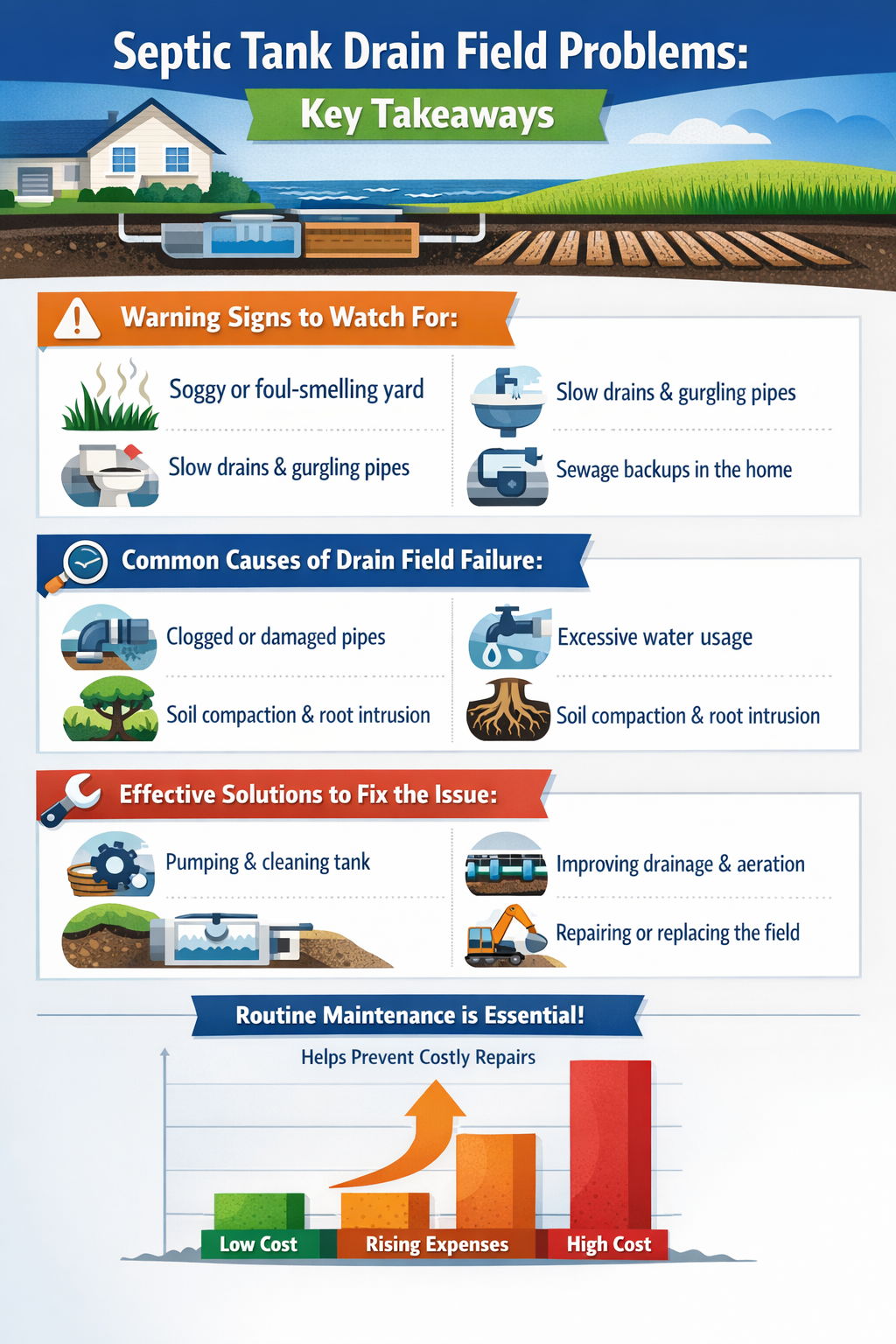
Key Takeaways
- Drain fields typically last 20–30 years, but poor maintenance can cut that lifespan significantly
- Skipped septic pump-outs are the single most preventable cause of early drain field failure
- Warning signs include slow indoor drains, sewage odors, soggy ground, and unusually green grass strips above field lines
- Biomat buildup — a black sludge layer that blocks soil absorption — is a major long-term failure cause
- Tree roots drawn to moisture can crack pipes and disrupt soil absorption
- Minor clogs and biomat issues can sometimes be treated with jetting or bacterial treatments; full saturation requires replacement
- Pumping your tank every 3–5 years is the most effective way to protect your drain field
- Redirecting surface water away from the drain field area reduces oversaturation risk
What Are Septic Tank Drain Field Problems and Why Do They Happen?
Septic tank drain-field problems occur when the leach field — the underground network of perforated pipes that disperses treated wastewater into the soil — becomes blocked, saturated, or damaged. When the field can’t absorb liquid fast enough, wastewater backs up into your home or surfaces in your yard.
Most septic systems malfunction due to poor maintenance or design flaws, particularly when installed in sites with inadequate soils, excessive slopes, or high groundwater tables. Understanding how a septic field absorbs wastewater helps clarify why these problems develop and what makes them worse over time.
The main causes of drain field failure include:
- Skipped pump-outs — solids overflow from the tank into the field pipes and clog the gravel bed
- Biomat buildup — a layer of anaerobic microorganisms forms a black sludge that seals soil pores
- Oversaturation — too much water entering the system at once, or soil already saturated from rain
- Root intrusion — tree and shrub roots grow toward moisture and physically break pipes
- Soil compaction — heavy vehicles or foot traffic over the field crushes the pipe network and compresses the soil
- Design or installation flaws — wrong pipe depth, poor soil permeability, or high groundwater
Choose X if… If your drain field is less than 15 years old and you’ve kept up with pumping, a targeted treatment or jetting may resolve the issue. If the system is older than 25 years and showing widespread saturation, replacement is likely the more practical path.
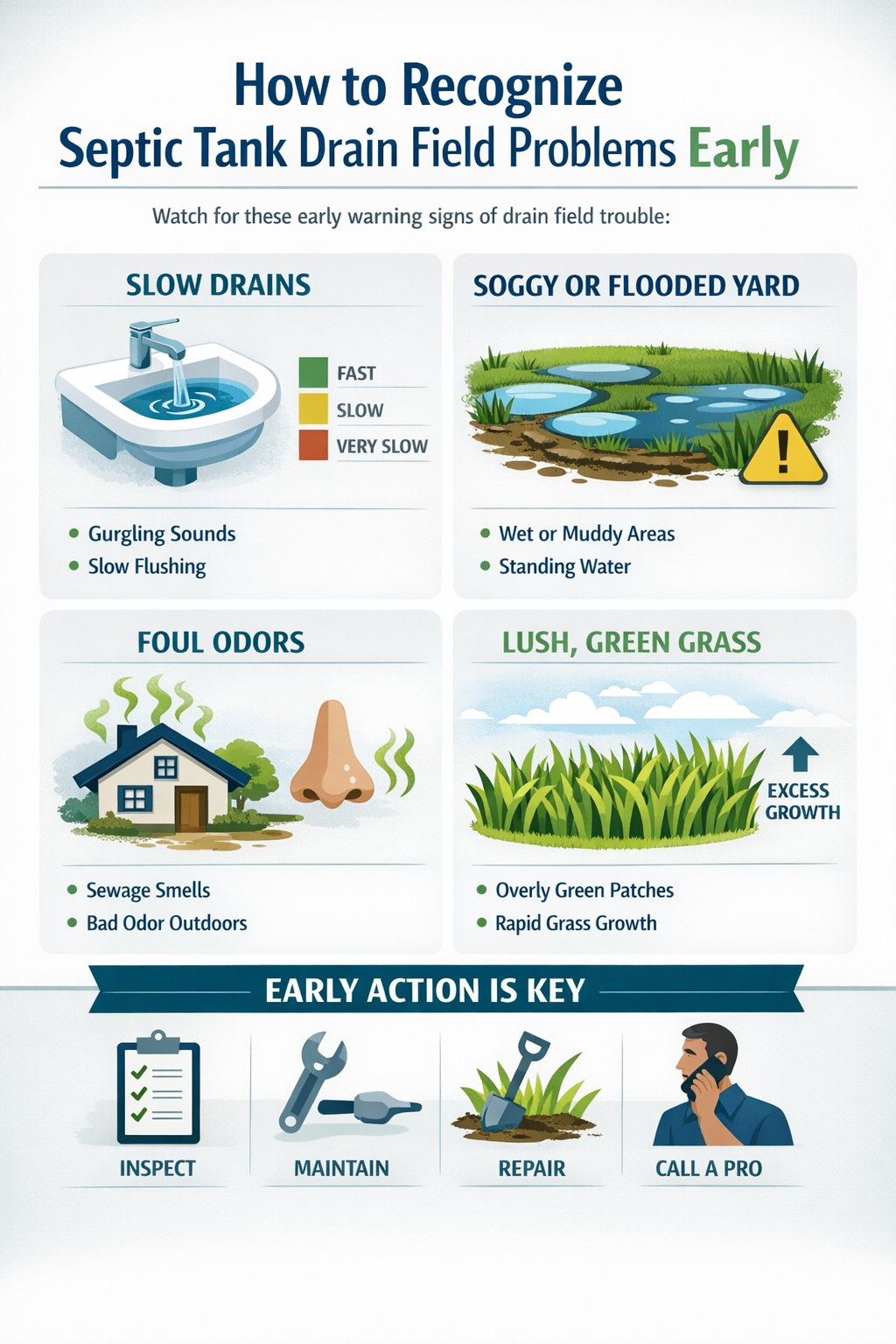
How to Recognize Septic Tank Drain Field Problems Early

The earlier you catch drain field trouble, the cheaper the fix. Most homeowners notice something is wrong indoors first, then spot outdoor signs as the problem worsens.
Indoor warning signs:
- Slow-draining sinks, tubs, or toilets that don’t respond to plunging
- Gurgling sounds from drains or toilets
- Sewage odors inside the home, especially near floor drains
- Toilets back up when washing machines run
Outdoor warning signs:
- Soggy or spongy ground directly above the drain field
- Bright green, fast-growing grass strips above field lines (a sign of nutrient-rich effluent near the surface)
- Standing water or puddles in the yard that don’t dry out after rain
- Sewage smells near the drain field area, especially after heavy rain or snowmelt
If you’re noticing sewage odors both inside and outside, that’s a strong indicator that the field is failing rather than the tank simply being full. For a deeper look at odor sources, see our complete guide to septic tank odor solutions.
Common mistake: Many homeowners assume slow drains mean a clogged pipe inside the house. If multiple fixtures drain slowly at the same time, the problem is almost always in the septic system, not the household plumbing.
Section 1: Septic Tank Slow Drain Solutions
Slow drains connected to a septic system usually point to one of three things: a full tank, a clogged inlet baffle, or a failing drain field. Identifying which one saves you from throwing money at the wrong fix.
Step-by-step approach:
- Check when the tank was last pumped. If it’s been more than 3–5 years, schedule a pump-out first. Solids overflow is the leading cause of field clogs.
- Inspect all drains. If only one fixture is slow, it’s likely a household clog. If all fixtures are slow, the issue is downstream.
- Look for outdoor signs. Soggy ground or odors confirm the field is involved.
- Consider a bacterial treatment. Enzyme and bacterial additives can help break down organic buildup in mild cases. Septifix tablets are a popular option for homeowners looking to boost bacterial activity in the tank and field lines, which can help restore flow in early-stage biomat situations.
- Call a professional for jetting. Hydro-jetting clears pipe blockages that bacteria can’t dissolve.
For more details on clearing blocked lines, our guide on how to unclog a septic drain walks through each method step by step.
What to avoid: Don’t pour chemical drain cleaners into a septic system. They kill the beneficial bacteria your tank needs to function and can accelerate biomat formation.
Section 2: Septic Tank Smell Troubleshooting
Septic odors are one of the most common complaints from homeowners — and one of the most misdiagnosed. The smell can come from the tank, the field, or even the venting system inside your home.
| Odor Location | Likely Cause | First Step |
|---|---|---|
| Failing wax seal or a full tank | Dry P-trap or full tank | Run water in unused drains; check tank level |
| Inside the home (near the toilet) | Check and reseal the lid | Inspect wax ring; schedule pump-out |
| Outside near the drain field | Lid not sealed properly | Outside near the tank lid |
| Allow the field to dry; divert surface water | Field saturation or biomat | Inspect field; reduce water use |
| After heavy rain | Soil oversaturation | Allow field to dry; divert surface water |
Sewage odors near the drain field that worsen after rain almost always signal oversaturation or a failing biomat layer. Reducing household water use for several days can give the field time to recover in mild cases.
For persistent indoor odors, Septifix tablets can help restore bacterial balance in the tank, which reduces the production of hydrogen sulfide — the gas responsible for that rotten egg smell. They work by releasing oxygen and beneficial bacteria directly into the tank.
Our detailed septic odor reduction guide for 2026 covers every odor source with specific fixes for each.
Section 3: How to Fix Septic Tank Drain Field Problems
Fixing a drain field depends entirely on what’s causing the problem. Minor issues respond to treatment; severe failure requires replacement. Knowing which situation you’re in before calling a contractor saves time and money.
Treatment options by severity:
| Problem | Severity | Solution |
|---|---|---|
| Early biomat buildup | Mild | Bacterial/enzyme treatments, reduced water use |
| Clogged pipes | Moderate | Hydro-jetting, pipe inspection |
| Root intrusion | Moderate–Severe | Root cutting, pipe repair or replacement |
| Soil compaction | Moderate | Aeration, resting the field |
| Full saturation | Severe | Field resting (weeks to months) or replacement |
| Complete field failure | Severe | Full replacement or ATU installation |
For mild to moderate biomat issues, Septifix tablets can support recovery by introducing aerobic bacteria that help break down the organic layer blocking soil pores. This works best when combined with reduced water use and a recent pump-out.
For root intrusion, keep trees and large shrubs at least 30 feet from the drain field. Fast-growing species like willows and poplars should be planted even farther away.
For properties with high water tables, limited lot size, or poor soil permeability, Advanced Treatment Units (ATUs) are worth considering. They treat wastewater more thoroughly before dispersal, reducing the load on the soil.
Prevent future problems with these habits:
- Pump the tank every 3–5 years without exception
- Spread laundry loads throughout the week instead of doing them all in one day
- Never park vehicles or place heavy structures over the drain field
- Divert roof gutters and surface runoff away from the field area
- Avoid flushing anything other than waste and toilet paper — see our guide on what not to put in a septic tank for a full list
For a complete maintenance routine, our best septic tank maintenance practices guide covers everything from pumping schedules to daily habits.
How Much Does It Cost to Fix a Drain Field?
Repair costs vary widely based on the severity of the problem and your location. Here are general estimates (not guarantees — get local quotes):
| Repair Type | Estimated Cost Range |
|---|---|
| Hydro-jetting / pipe cleaning | $300–$700 |
| Root cutting and pipe repair | $500–$1,500 |
| Partial field replacement | $3,000–$8,000 |
| Full drain field replacement | $8,000–$20,000+ |
| ATU installation | $10,000–$25,000+ |
Regular pump-outs, which typically cost $300–$600 depending on tank size and location, are far cheaper than any of the repairs above. For current pricing details, see our complete septic tank pumping cost guide.
FAQ: Septic Tank Drain Field Problems
Q: How do I know if my drain field is failing or if it’s just the tank?
A: If pumping the tank doesn’t resolve slow drains or odors within a few days, the drain field is likely involved. Outdoor signs like soggy ground and green grass strips above field lines point specifically to field failure.
Q: Can a drain field repair itself?
A: In cases of temporary oversaturation, yes — resting the field and reducing water use for several weeks can allow soil to recover. Biomat and root damage generally don’t resolve without active treatment or repair.
Q: How long does a drain field last?
A: Drain fields typically last 20–30 years under normal use, though poor maintenance or difficult soil conditions can shorten this significantly.
Q: What kills a drain field fastest?
A: Skipping pump-outs is the single fastest way to destroy a drain field. Solids overflow into the pipes and permanently clog the gravel bed.
Q: Is it safe to be near a failing drain field?
A: No. Surfacing sewage contains pathogens. Keep children and pets away from wet or odorous areas above the field, and call a professional promptly.
Q: Can I plant a garden over my drain field?
A: Shallow-rooted plants like grass or wildflowers are fine. Avoid vegetables (due to pathogen risk) and any plants with deep or aggressive roots.
Q: Do septic additives actually help drain fields?
A: Bacterial and enzyme additives can help with early-stage biomat and organic buildup, especially when used alongside proper pumping. They’re not a substitute for pump-outs or professional repair for serious failures.
Q: How do I reduce water load on my drain field?
A: Fix leaking faucets and running toilets, spread laundry loads over multiple days, install low-flow fixtures, and avoid long showers during wet periods when soil is already saturated.
Conclusion
Septic tank drain field problems rarely appear overnight — they build up over months or years of skipped maintenance, heavy water use, and neglect. The good news is that most failures are preventable, and many early-stage issues are fixable without replacing the entire system.
Your action plan for 2026:
- Check your pump-out date. If it’s been more than 3–5 years, schedule one now.
- Walk your drain field. Look for soggy spots, green strips, or odors.
- Reduce daily water load. Fix leaks, spread laundry, and install low-flow fixtures.
- Add a bacterial treatment. For early biomat or odor issues, Septifix tablets can support tank and field health between pump-outs.
- Call a pro if outdoor signs are present. Surfacing effluent is a health hazard and a regulatory issue — don’t wait.
A well-maintained drain field protects your home, your family’s health, and your property value. For a full maintenance routine, bookmark our complete septic tank maintenance schedule and follow it year-round.
References
[1] Septic Drain Field Issues Every Homeowner Should Watch For – https://septicservicescfl.com/septic-drain-field-issues-every-homeowner-should-watch-for/
[2] The Most Common Issues According To Experts On Septic Tank And Drainfield Troubleshooting – https://biomicrobics.com/articles/the-most-common-issues-according-to-experts-on-septic-tank-and-drainfield-troubleshooting/
[3] Drainfield Woes Causes Signs And Your Best Solutions – https://elvisservicecompany.com/news/drainfield-woes-causes-signs-and-your-best-solutions/
[4] Drain Field Problems Vs Tank Problems How NJ Homeowners Can Tell The Difference – https://longhillcontractingllc.com/drain-field-problems-vs-tank-problems-how-nj-homeowners-can-tell-the-difference/
[5] Resolving Septic System Malfunctions – https://www.epa.gov/septic/resolving-septic-system-malfunctions
[6] Septic System Failure Signs – https://www.premiertechaqua.com/en-us/blog/septic-system-failure-signs
[7] Drain Field Rejuvenation – https://www.vdwws.com/blog/drain-field-rejuvenation
[8] Common Septic Tank Drain Field Problems – https://advancedsepticpumping.com/blog/common-septic-tank-drain-field-problems/