

Last updated: March 28, 2026
Quick Answer: The most common septic tank problems are slow drains, sewage odors, soggy yard patches, and sewage backup — and most can be fixed or prevented with regular pumping (every 3–5 years), careful water use, and keeping harmful products out of the system. Catching problems early saves thousands of dollars in repairs.
Septifix: Simple Septic Tank Care in One Tablet
Septifix tablets help break down waste, reduce bad smells, and keep your septic tank working properly. With one easy monthly flush, you can help prevent blockages, protect your plumbing, and avoid costly repairs.
👉 See how Septifix tablets can keep your septic system clean and efficient
Key Takeaways
- Slow drains are usually the first warning sign that your septic system needs attention
- Most septic systems fail because of poor maintenance, not old age
- Pumping every 3–5 years is the single most effective thing you can do to avoid costly repairs
- Never flush wipes, grease, or harsh chemicals — they kill the bacteria your tank needs to function
- A soggy or smelly yard near your drain field is a serious warning sign that needs immediate action
- The EPA recommends a full system inspection every 1–3 years
- Many repairs (replacing baffles, fixing pipes) are far cheaper than a full system replacement
- Smart septic monitors can now detect problems before they become emergencies
What Are the Most Common Septic Tank Problems?
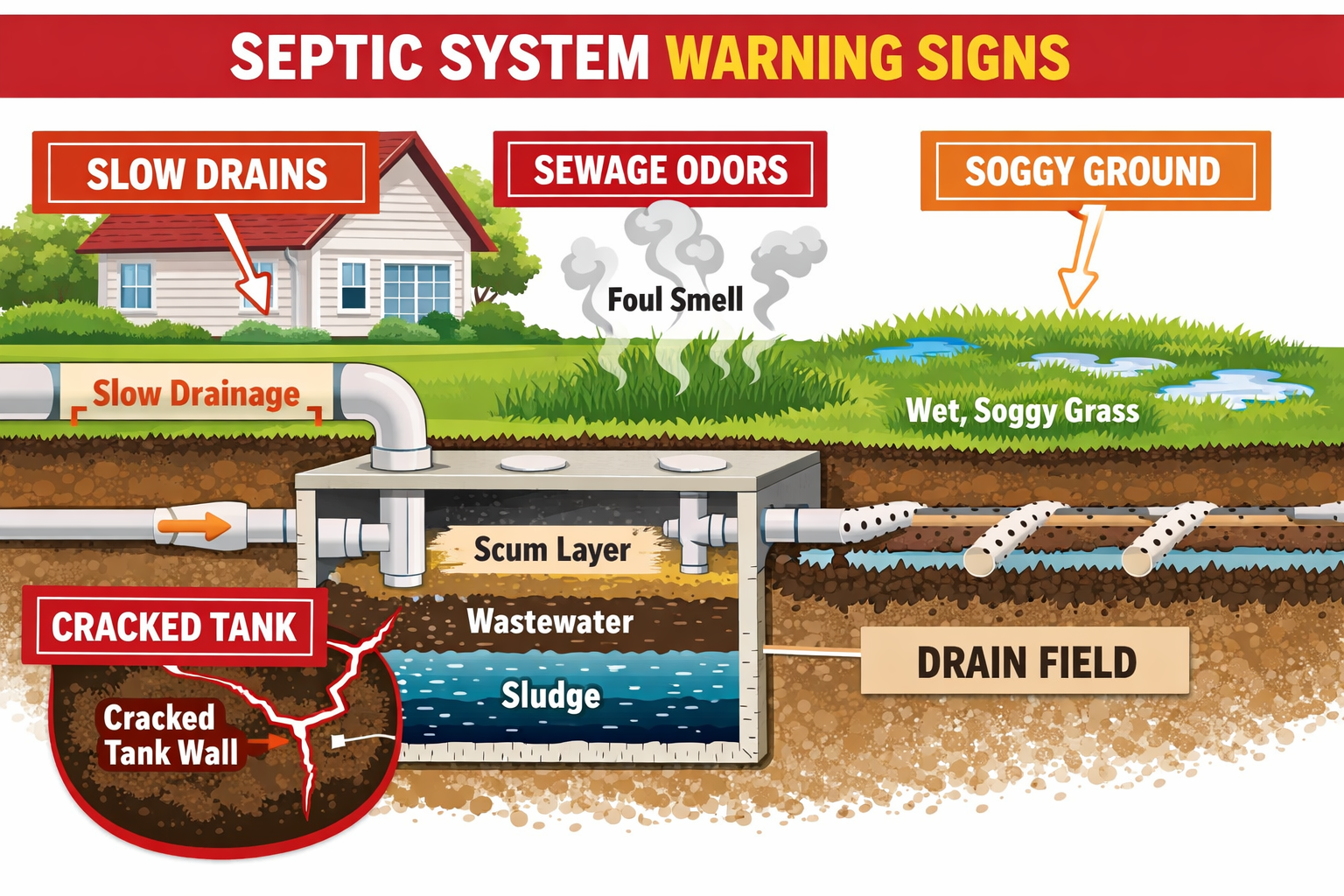
The most common septic tank problems are slow drains, sewage odors, backups, soggy ground above the drain field, and system overload from too much water use. Most of these problems develop slowly and give you warning signs before they become expensive emergencies.
Here’s a quick overview of the problems you’re most likely to face:
| Problem | Common Cause | Urgency |
|---|---|---|
| Slow drains (all fixtures) | Full tank or clogged pipes | Moderate — act within days |
| Sewage odor indoors | Sewage odor in the yard | High — act immediately |
| Soggy patches in the yard | Drain field failure | High — act immediately |
| Sewage backup in the home | Drain field overload or failure | High — call a pro |
| Lush green grass over the tank | Full tank or blocked pipe | Emergency |
| Gurgling sounds in pipes | Partial blockage or venting issue | Moderate |
| Lush green grass over tank | Possible leak or overflow | Moderate to high |
Common mistake: Many homeowners assume slow drains are a simple plumbing clog and use chemical drain cleaners. Those chemicals kill the beneficial bacteria in your septic tank, making the underlying problem worse.
Signs Septic Tank Problems Checklist: How to Spot Trouble Early
Slow drains are often the first sign of septic tank problems, and catching them early can mean the difference between a $300 pump-out and a $15,000 drain field replacement. Use this checklist to spot trouble before it escalates.
🔍 Early Warning Signs (Act Within a Week)
- All drains in the house are draining slowly (not just one)
- Gurgling sounds coming from toilets or sinks after flushing
- The toilet bubbles when you run the washing machine or dishwasher
- Mild sewage smell near drains or outside near the tank
⚠️ Serious Warning Signs (Act Within 24–48 Hours)
- Strong sewage odor inside the house or in the yard
- Wet, spongy ground above the drain field — even in dry weather
- Unusually bright green grass growing directly over the tank or drain field
- Sewage is backing up into the lowest drains in your home
For a deeper look at warning signs, see our guide to 12 warning signs your septic tank needs immediate care.
🚨 Emergency Signs (Call a Pro Now)
- Raw sewage surfacing in your yard
- Sewage backup in multiple fixtures at once
- Sewage smell combined with standing water near the tank
Pull quote: “Most septic systems fail due to poor maintenance — not old age. Routine inspections and pumping are the most reliable way to prevent system failure.” — EPA
If you’re unsure whether your tank is full, this guide on how to know if your septic tank is full walks you through the signs.
DIY Septic Tank Fixes for Homeowners: What You Can Actually Do Yourself
Homeowners can handle several septic tank problems without calling a professional — including reducing water load, clearing minor drain clogs, restoring bacterial balance, and fixing odor issues. However, anything involving the tank lid, drain field, or sewage backup requires a licensed pro.
✅ Safe DIY Fixes You Can Do Today
1. Reduce water load immediately
If you suspect your tank is full or stressed, cut water use for 24–48 hours. Spread laundry over several days instead of doing multiple loads at once. This gives the system time to process what’s already in it.
2. Use enzyme or bacterial additives
If your tank’s bacterial balance is disrupted (from antibiotics, bleach, or harsh cleaners), a monthly bacterial additive can help restore it. Look for products with live bacteria and enzymes — not just chemicals.
3. Fix a slow drain with a drain snake
If only one drain is slow (not all of them), the problem is likely a localized pipe clog, not the septic tank. Use a manual or electric drain snake before assuming it’s a tank issue.
4. Address indoor septic odors
Pour water into floor drains that rarely get used — dry P-traps let sewer gas back into the house. Also, check that your roof vent pipe isn’t blocked by leaves or a bird’s nest.
5. Stop flushing problem items
Check out our full list of what not to put in a septic tank — including wipes labeled “flushable,” grease, medications, and harsh cleaners.
When to stop DIYing and call a pro:
- Sewage is backing up into the house
- You see wet spots or odors in the yard
- Multiple fixtures are draining slowly at once
- You haven’t pumped in more than 5 years
For more hands-on tips, see our DIY septic tank maintenance guide.
Slow Drains Septic Tank Fix Guide: Step-by-Step
Slow drains throughout the house — not just one fixture — almost always point to a septic system issue rather than a simple pipe clog. The fix depends on the cause, so you need to diagnose before you act.
Step-by-Step: Diagnosing and Fixing Slow Drains
Step 1: Identify whether it’s one drain or all drains.
One slow drain = likely a localized clog. All drains slow = likely a septic issue.
Step 2: Check when the tank was last pumped.
If it’s been more than 3–5 years, schedule a pump-out. This is the most common cause of slow drains throughout a home.
Step 3: Reduce water use for 24 hours.
This takes pressure off an overloaded tank and can temporarily restore drain speed.
Step 4: Avoid chemical drain cleaners.
Products like Drano kill the bacteria in your septic tank. Use a drain snake for localized clogs instead.
Step 5: Schedule a professional inspection.
If slow drains persist after pumping, the drain field may be partially clogged. A professional can use camera inspection to identify the exact blockage location.
Edge case: If drains are slow only after heavy rain, your drain field may be saturated. See the section below on septic care after heavy rain.
Septic Tank Care After Heavy Rain: What to Do
Heavy rain can temporarily overload your septic system by saturating the soil around the drain field, which prevents it from absorbing liquid properly. This is a common but often overlooked cause of slow drains and backup.
During and After Heavy Rain:
- Reduce household water use for 2–3 days after significant rainfall. Every gallon you send to the tank is a gallon the saturated drain field has to absorb.
- Don’t do laundry or run the dishwasher more than necessary until the ground dries out.
- Redirect surface water away from the drain field. Gutters, downspouts, and landscaping should direct runoff away from the septic area.
- Don’t drive or park on the drain field — wet soil compresses easily and can crush the distribution pipes.
- Watch for warning signs like gurgling drains or yard odors after rain. These are signs the system is overwhelmed, not just temporarily stressed.
If you notice problems after every rain, your drain field may have a drainage design issue that needs professional evaluation.
How to Avoid Costly Septic Tank Repairs: The Prevention Checklist
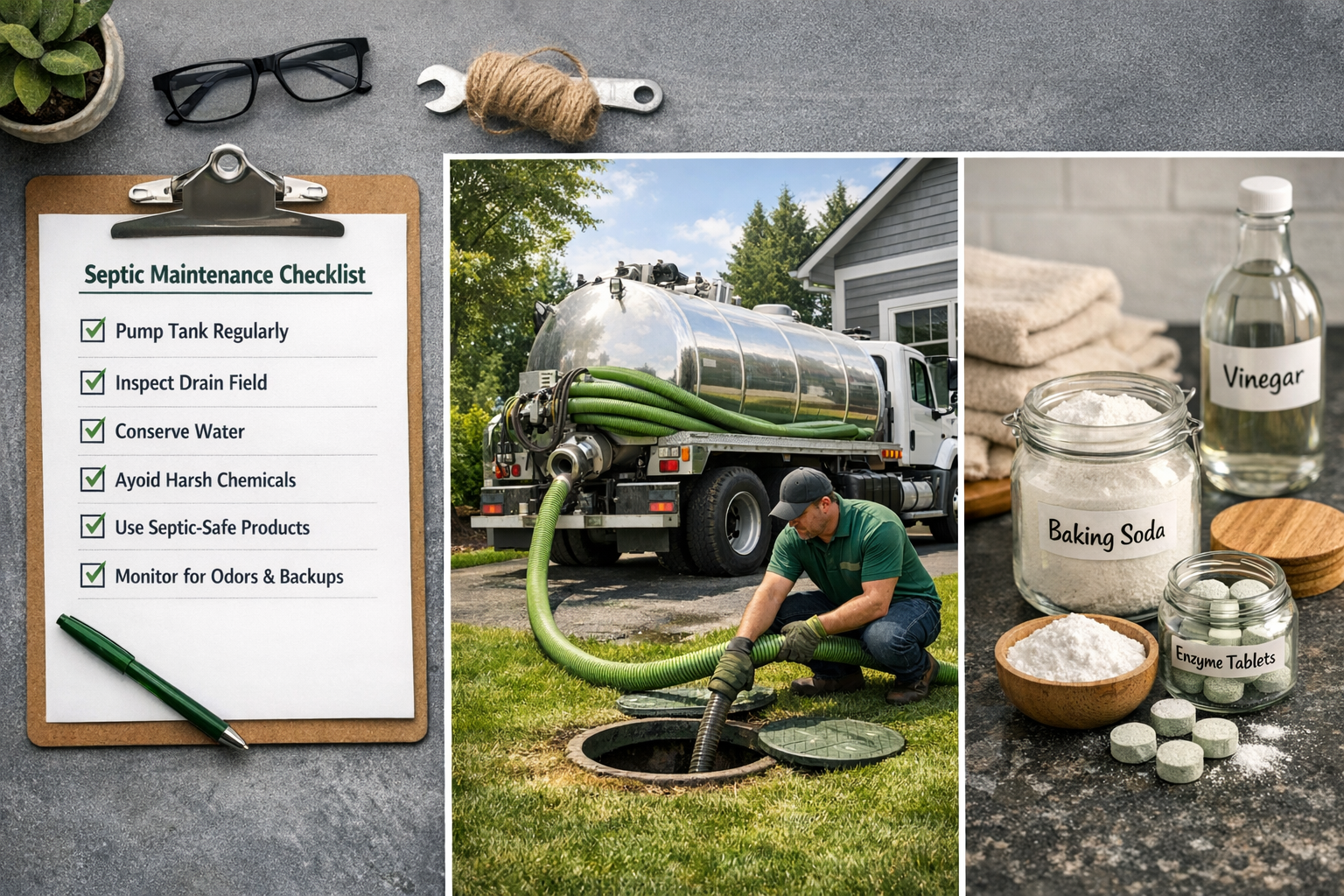
The best way to avoid costly septic tank repairs is consistent, simple maintenance. According to the EPA, most septic failures are caused by neglect, not system age or design flaws. A few hundred dollars spent on routine care prevents repairs that can run into the tens of thousands.
Prevent Septic Tank Problems Checklist
Every Day:
- Only flush toilet paper (no wipes, paper towels, or hygiene products)
- Avoid pouring grease, oil, or harsh chemicals down drains
- Space out water-heavy activities (laundry, showers, dishwasher)
Every Month:
- Add a bacterial/enzyme treatment if your system needs a boost
- Check for slow drains or unusual odors
- Look for wet spots or unusually green grass over the tank or drain field
Every Year:
- Inspect the area around the tank and drain field visually
- Make sure the tank access lid is secure and not cracked
- Check that gutters and downspouts direct water away from the drain field
Every 1–3 Years:
- Schedule a professional system inspection (EPA recommendation)
- Have the effluent filter cleaned if your system has one
Every 3–5 Years:
- Pump the tank — this is non-negotiable
- Have baffles and internal components inspected during pumping
For a complete version, see our septic tank maintenance checklist.
Septifix: Simple Septic Tank Care in One Tablet
Septifix tablets help break down waste, reduce bad smells, and keep your septic tank working properly. With one easy monthly flush, you can help prevent blockages, protect your plumbing, and avoid costly repairs.
👉 See how Septifix tablets can keep your septic system clean and efficient
What Does Professional Pumping Actually Include?
A proper pump-out isn’t just emptying the tank. A good service includes:
- Removing all solids, sludge, and scum layers
- Inspecting baffles for damage or deterioration
- Checking for cracks in the tank walls
- Measuring sludge depth to assess how quickly the tank fills
- Verifying the drain field outlet is clear
Pumping typically costs a few hundred dollars and takes a couple of hours — far less than the cost of drain field repair or replacement.
When Is It a Septic Tank Problem vs. a Plumbing Problem?
One slow drain is almost always a plumbing issue. Multiple slow drains, gurgling sounds in multiple fixtures, or sewage odors in the yard point to the septic system. Knowing the difference saves you from calling the wrong professional.
| Symptom | Likely Cause | Who to Call |
|---|---|---|
| One slow drain | Pipe clog | Plumber |
| All drains slow | Full tank or drain field issue | Septic company |
| Gurgling in multiple fixtures | Septic system overload | Septic company |
| Sewage smell in yard | Drain field failure | Septic company |
| Sewage backup in one fixture | Local pipe clog | Plumber |
| Sewage backup in multiple fixtures | Tank full or main line blocked | Septic company |
Choose a septic company if more than one fixture is affected, or if you notice any yard symptoms.
Choose a plumber if the problem is isolated to one drain or toilet, and the tank was recently pumped.
What Happens When a Drain Field Fails — and Can It Be Fixed?
A failing drain field is the most serious and expensive septic tank problem. When solids overflow from an overfull tank into the drain field, they clog the soil pores that absorb liquid — a process called biomat failure. Once this happens, it’s very difficult to reverse.
Signs of Drain Field Failure:
- Persistent wet spots or standing water over the drain field
- Sewage odors in the yard, even in dry weather
- Sewage surfacing above ground
- Slow drains that don’t improve after pumping
Repair Options (Least to Most Expensive):
- Pump the tank and rest the system — works if caught very early
- Aeration treatment — can sometimes break down biomat in mild cases
- Drain field rejuvenation products — limited effectiveness, worth trying before full replacement
- Partial drain field repair — replacing damaged sections of distribution pipe
- Full drain field replacement — necessary in advanced failure cases
Important: Drain field replacement is one of the most expensive home repairs you’ll face. The best fix is prevention — pump on schedule and never let solids reach the drain field.
For more on what happens when things go wrong, see what happens when a septic tank backs up.
Natural and Eco-Friendly Fixes for Septic Tank Problems
Natural solutions work best for maintenance and mild imbalances — not for emergencies or drain field failure. They’re safe for your tank’s bacterial ecosystem and better for the environment.
Natural Fixes That Actually Work:
- Baking soda — safe to use occasionally for drain deodorizing; won’t harm tank bacteria
- Enzyme drain treatments — break down grease and organic matter in pipes without killing bacteria
- Bacterial additives — helpful after antibiotic use or heavy bleach use to restore microbial balance
- Yeast — some homeowners use active dry yeast monthly as a low-cost bacterial booster (not proven by research, but generally considered safe)
- Reducing water use — the simplest and most effective “natural” fix for an overloaded system
What to Avoid:
- Bleach and antibacterial cleaners (kill tank bacteria)
- Chemical drain openers (damage pipes and kill bacteria)
- Garbage disposals (add too many solids to the tank)
For a full breakdown of eco-friendly approaches, see our guide on natural septic tank care methods.
FAQ: Septic Tank Problems and Fixes
Q: How do I know if my septic tank is full or just clogged?
A: If multiple drains are slow and it’s been 3–5 years since your last pump-out, the tank is likely full. If only one drain is slow, it’s probably a pipe clog. A professional can confirm with an inspection.
Q: Can I use bleach if I have a septic tank?
A: Occasional, small amounts of bleach (like in a load of laundry) are generally tolerable. Regular heavy use kills the bacteria your tank needs to break down waste and will cause system problems over time.
Q: What’s the cheapest way to fix a septic problem?
A: Pumping the tank is often the cheapest fix and solves most common problems. Targeted repairs, such as replacing a damaged baffle or fixing a pipe section, are far cheaper than a full system replacement.
Q: How often should I pump my septic tank?
A: Most residential tanks need pumping every 3–5 years, depending on household size and water use [1]. Larger households or smaller tanks may need pumping more frequently.
Q: Why does my septic tank smell after heavy rain?
A: Rain saturates the soil around the drain field, reducing its ability to absorb liquid. This can push odors back up through drains or out of the ground. Reduce water use for a few days, and the odor usually clears.
Q: Is it safe to be near a septic tank?
A: The tank area is generally safe to walk near, but never open the tank lid without proper training — septic gases can be lethal. For safety guidelines, see our essential septic tank safety tips.
Q: Can I plant a garden over my septic drain field?
A: Shallow-rooted grass is fine over a drain field. Avoid deep-rooted plants, trees, or shrubs — roots can crack pipes and disrupt the system. Never plant a vegetable garden over the drain field.
Q: What happens if I ignore a slow drain connected to my septic system?
A: Slow drains are an early warning sign. Ignoring them allows the tank to overfill, which pushes solids into the drain field. Once solids reach the drain field, biomat failure can occur — and that’s a much more expensive problem.
Q: Do septic additives really work?
A: Bacterial and enzyme additives can help restore balance after disruption (like heavy antibiotic or bleach use). They’re not a substitute for pumping and won’t fix a full or failing tank.
Q: How long does a septic tank last?
A: A well-maintained concrete or fiberglass tank can last 20–40 years or more. The drain field typically lasts 25–30 years with proper care. Neglect significantly shortens both lifespans.
Septifix: Simple Septic Tank Care in One Tablet
Septifix tablets help break down waste, reduce bad smells, and keep your septic tank working properly. With one easy monthly flush, you can help prevent blockages, protect your plumbing, and avoid costly repairs.
👉 See how Septifix tablets can keep your septic system clean and efficient
Conclusion: Practical Next Steps for Septic Tank Problems and Fixes
Septic tank problems and fixes don’t have to be overwhelming. The vast majority of issues — slow drains, odors, minor backups — come down to one thing: the tank is overdue for maintenance. Start there.
Your Action Plan:
- Check when your tank was last pumped. If it’s been more than 3 years, schedule a pump-out now.
- Do a quick visual inspection. Walk the yard above your tank and drain field. Look for wet spots, odors, or unusually green grass.
- Review what goes down your drains. Cut out wipes, grease, and harsh chemicals starting today.
- Save the warning signs checklist from this article and review it every few months.
- Schedule a professional inspection if you haven’t had one in the past 1–3 years.
The cost of prevention is always lower than the cost of repair. A pump-out every few years is one of the smartest investments a homeowner with a septic system can make — and it protects your property, your family’s health, and the environment around your home.
For a full maintenance routine, explore our complete septic tank care and repair guide.
References
[1] Why Regular Septic Maintenance Can Save You Thousands In 2026 – https://www.metroseptic.com/blog/why-regular-septic-maintenance-can-save-you-thousands-in-2026/
[3] Common Septic System Problems And Fixes – https://martinseptic.com/common-septic-system-problems-and-fixes/
[4] Septic Tank Problems Signs 2025 – https://www.lanikseptic.com/septic-tank-problems-signs-2025/
[5] Resolving Septic System Malfunctions – https://www.epa.gov/septic/resolving-septic-system-malfunctions
[6] Failed Septic System Here’s What You Should Do – https://www.wrenvironmental.com/blog/2025/september/failed-septic-system-here-s-what-you-should-do-/