
Last updated: March 27, 2026
Quick Answer: Most septic system problems — slow drains, bad odors, wet spots in the yard — come down to a full tank, a clogged filter, or disrupted bacteria. Start by checking your pumping history and water usage. If the tank was last pumped more than 3 years ago, schedule a pump-out first. If problems persist after that, work through the diagnostic steps in this guide before calling a professional.
Septifix: Simple Septic Tank Care in One Tablet
Septifix tablets help break down waste, reduce bad smells, and keep your septic tank working properly. With one easy monthly flush, you can help prevent blockages, protect your plumbing, and avoid costly repairs.
👉 Discover the benefits of using Septifix for hassle-free septic maintenance
Key Takeaways
- The EPA recommends pumping your septic tank every 3 to 5 years and inspecting the full system every 1 to 3 years
- Slow drains in multiple fixtures usually point to a full tank or clogged effluent filter, not a plumbing clog
- Sewage odors indoors or outdoors are a red flag — don’t ignore them
- Wet, spongy grass over the drainfield means the soil is saturated and the system needs attention fast
- Broken baffles allow solids to reach the drainfield, causing complete system failure
- Most septic failures come from poor maintenance, not design flaws
- Never flush wipes, grease, or harsh chemicals — they kill the bacteria your tank depends on
- A pump-out silences alarms but doesn’t fix the underlying cause
- Clean your effluent filter every six months to protect the drainfield
- Heavy rain can temporarily saturate the drainfield — reduce water use for 24 to 48 hours after major storms
What Are the Signs Septic Tank Needs Troubleshooting?
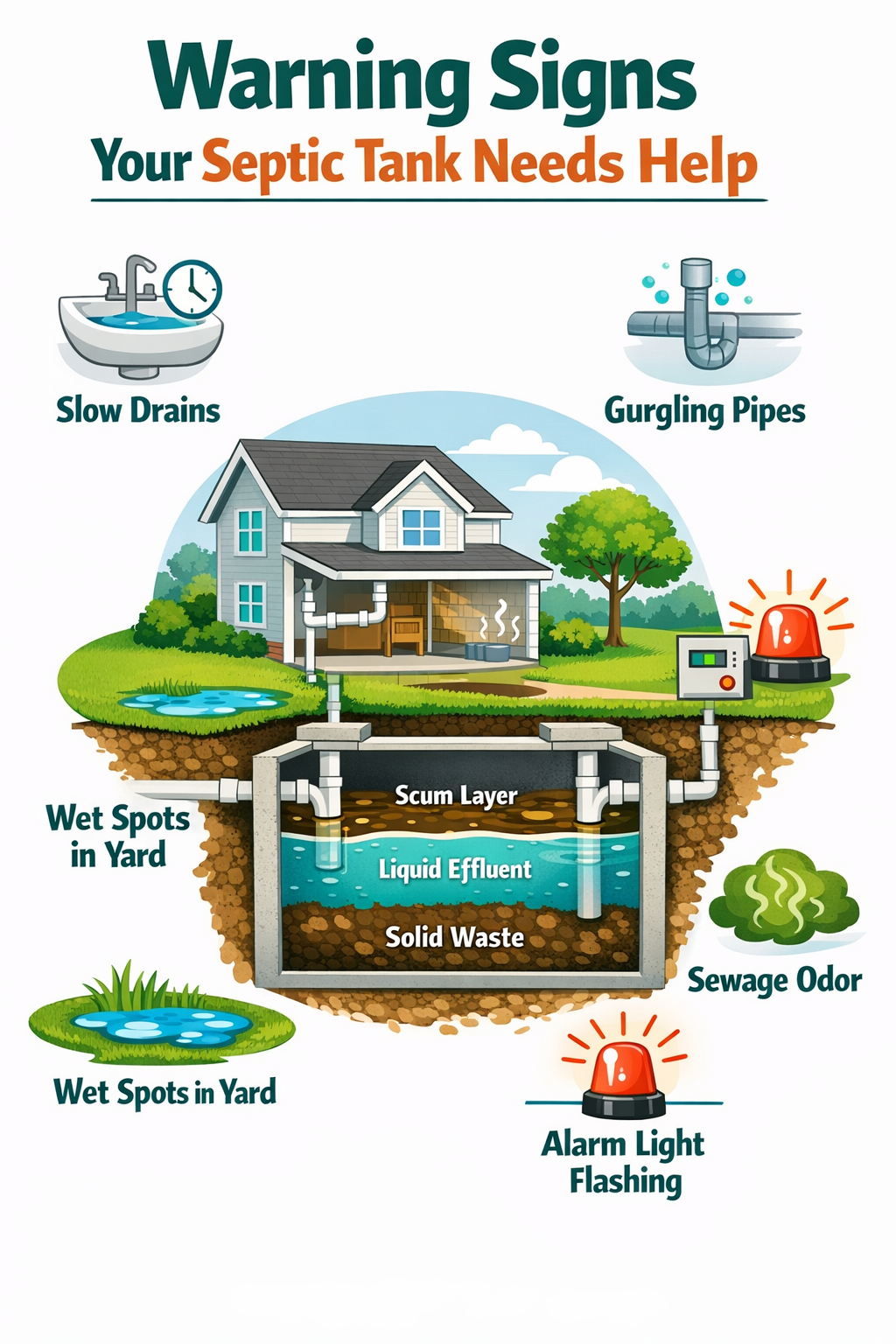
If you’re seeing slow drains, gurgling sounds, foul smells, or soggy patches of grass near your yard, your septic system is telling you something is wrong. These signs rarely appear all at once — usually one symptom shows up first, and others follow if the problem goes unchecked.
Here are the most common warning signs to watch for:
Inside your home:
- 🚽 Toilets flush slowly or gurgle after flushing
- 🚿 Showers and sinks drain slowly — especially on lower floors
- 💧 Sewage smell coming from drains or toilets
- 🔔 Septic alarm light is on or beeping
Outside your home:
- 🌿 Bright green, unusually lush grass over the drainfield
- 💦 Wet or spongy ground above the septic tank or drainfield
- 🤢 Rotten egg or sewage odor in the yard
- 🪣 Standing water near the tank or field lines
Pull quote: “A soggy drainfield isn’t just a lawn problem — it’s a system failure in progress. Act within 24 to 48 hours.”
Any one of these signs warrants investigation. Multiple signs appearing together mean the system needs attention right away. For a deeper look at what these symptoms mean, see our guide on troubleshooting septic tank issues.
Common Septic Tank Problems Solved: A Diagnostic Overview
The most common septic problems are a full tank, a clogged effluent filter, pump failure, broken baffles, or a saturated drainfield. Each has a different fix, and identifying the right cause saves you time and money.
| Problem | Most Likely Cause | DIY Fix? | Call a Pro? |
|---|---|---|---|
| Slow drains (all fixtures) | Full tank or clogged filter | Check filter first | If pumping doesn’t help |
| Sewage smell indoors | Dry P-trap or full tank | Run water in unused drains | If smell persists |
| Sewage smell outdoors | Full tank, drainfield failure | Reduce water use | Yes, if smell continues |
| Wet yard / soggy grass | Saturated drainfield | Reduce water use | Yes, if it doesn’t drain |
| Alarm light on | High water level, pump failure | Silence alarm, reduce use | If alarm stays on 10–15 hrs |
| Gurgling pipes | Partial clog or full tank | Check for clogs | If gurgling continues |
| Sewage backup in home | Severe blockage or full system | Stop water use immediately | Yes — emergency |
Common mistake: Many homeowners assume slow drains mean a plumbing clog and pour drain cleaner down the sink. Harsh chemicals kill the bacteria in your septic tank, making the problem worse. Always rule out septic causes first.
DIY Septic Tank Troubleshooting Steps: Where to Start
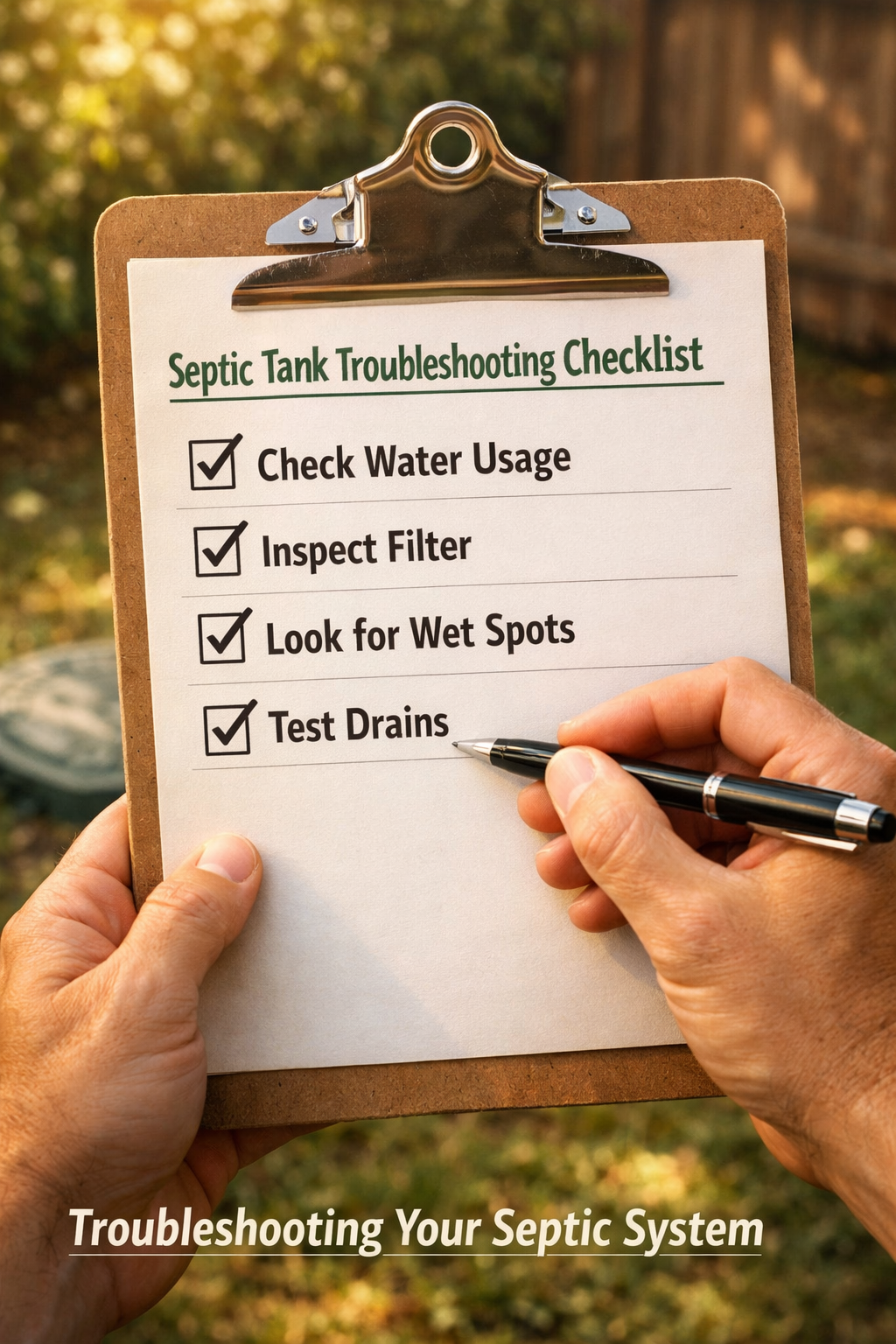
Start with the simplest checks before spending money on a service call. This step-by-step process works for most homeowners and takes less than 30 minutes.
Step 1: Check Your Pumping History
When was your tank last pumped? If it’s been more than 3 to 5 years, a full tank is the most likely culprit. Schedule a pump-out before doing anything else.
Step 2: Inspect the Effluent Filter
Your effluent filter sits inside the outlet baffle of the tank. A clogged filter blocks water from moving to the drainfield and causes backups. Clean it every six months. If you’ve never cleaned it, start there.
Step 3: Check Water Usage
Did you have guests recently? Run multiple loads of laundry in one day? Overloading the system with water faster than it can process is a leading cause of temporary backups. Reduce water use for 24 to 48 hours and see if symptoms improve.
Step 4: Look for Physical Signs Outside
Walk the yard above your tank and drainfield. Feel for soft, wet ground. Look for unusually green grass. Smell for odors. These clues tell you whether the problem is in the tank or the field.
Step 5: Check the Alarm Panel (If You Have One)
If your system has an alarm, a beeping or lit panel means water levels are too high. Silence the alarm, cut water use, and wait. If the alarm stays on for more than 10 to 15 hours despite minimal water use, call a professional.
For more on what to look for when the tank is full, see our guide on signs your septic tank needs pumping.
Slow Drains Septic Tank Fix Guide
Slow drains affecting multiple fixtures at once almost always point to the septic system, not individual plumbing lines. A single slow drain is usually a local clog. Multiple slow drains — especially on the ground floor — mean the tank or drainfield needs attention.
How to Fix Slow Drains Step by Step
- Stop using harsh drain cleaners. They kill beneficial bacteria and don’t fix septic-related slowdowns.
- Run hot water (not boiling) down slow drains to help loosen minor buildup in pipes.
- Check the effluent filter — a clogged filter is one of the most common causes of slow drainage.
- Reduce household water use for 24 to 48 hours to let the system catch up.
- Schedule a pump-out if the tank hasn’t been serviced in 3+ years.
- Add septic-safe bacteria after pumping to restore the biological balance. See our guide on how to add bacteria to your septic tank.
If slow drains persist after pumping, the drainfield may be clogged or failing. That’s a job for a licensed septic professional.
Choose this fix if: All drains in the house are slow, especially toilets and ground-floor fixtures. Skip DIY drain cleaners entirely — they make septic problems worse.
Septifix: Simple Septic Tank Care in One Tablet
Septifix tablets help break down waste, reduce bad smells, and keep your septic tank working properly. With one easy monthly flush, you can help prevent blockages, protect your plumbing, and avoid costly repairs.
👉 Discover the benefits of using Septifix for hassle-free septic maintenance
Prevent Septic Tank Problems Checklist: Your Year-Round Maintenance Plan
The best septic troubleshooting is prevention. Most failures are caused by skipping routine maintenance. Use this checklist to stay ahead of problems.
✅ Monthly
- Avoid flushing anything besides toilet paper and human waste
- Don’t pour grease, oil, or harsh cleaners down drains
- Spread laundry loads throughout the week instead of doing them all in one day
✅ Every 6 Months
- Clean the effluent filter
- Check for odors near the tank and drainfield
- Inspect the area above the tank for wet spots or lush grass
✅ Every 1 to 3 Years
- Have the full system inspected by a licensed professional
- Check baffles for damage or corrosion
- Review your pumping schedule based on household size
✅ Every 3 to 5 Years
- Pump the tank
- Ask the pumper to inspect for cracks, baffle damage, and filter condition
For a full maintenance schedule, see our complete septic tank maintenance checklist.
Septic Tank Care After Heavy Rain
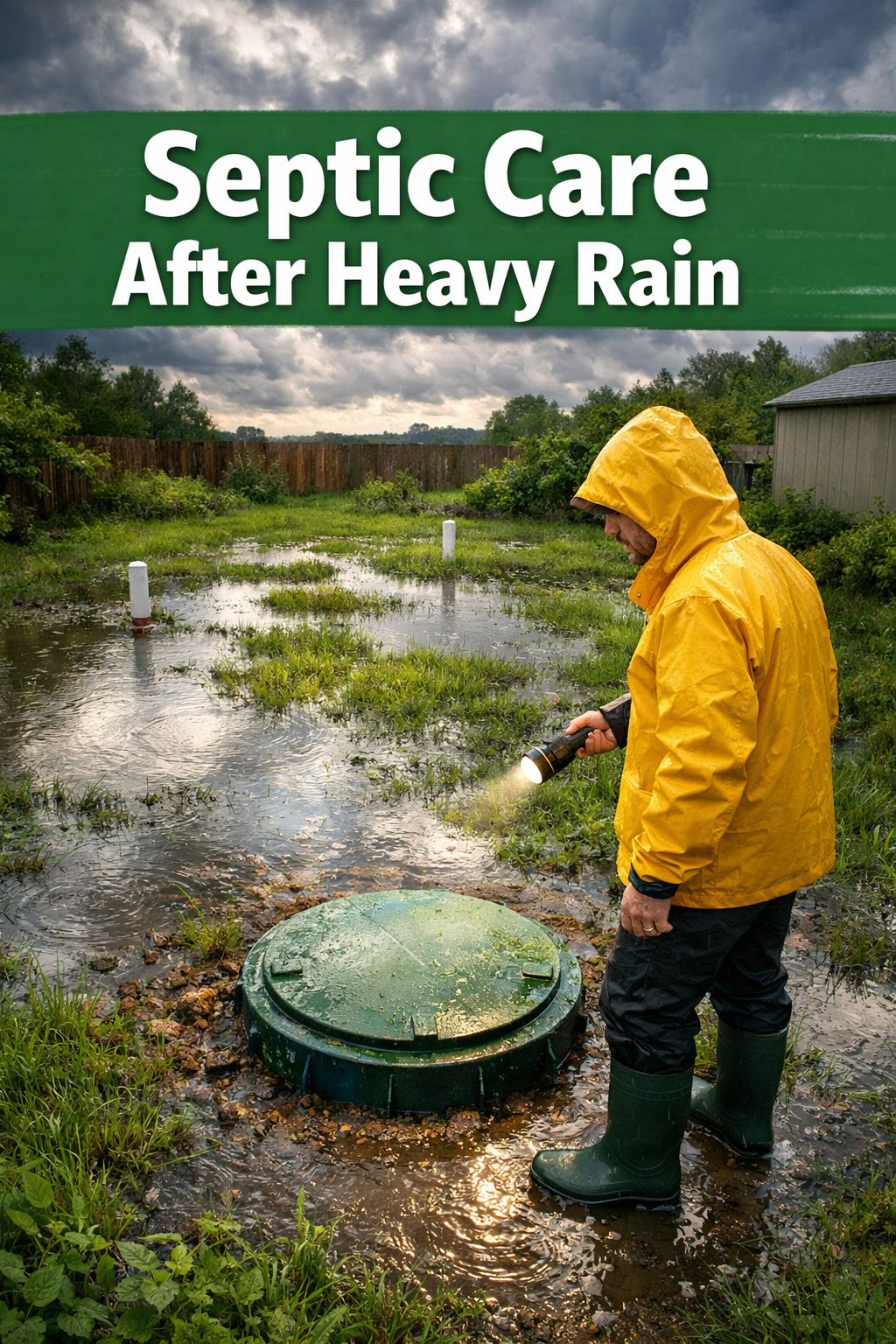
Heavy rain temporarily saturates the soil around your drainfield, which slows or stops the system’s ability to absorb wastewater. This is one of the most common reasons septic systems act up after storms — and it’s usually temporary.
When the ground is waterlogged, wastewater has nowhere to go. It backs up into the tank, and from there, into your home’s drains.
What to Do After Heavy Rain
- Reduce water use immediately. Every flush and every shower adds to the backup.
- Avoid doing laundry for 24 to 48 hours after heavy rain.
- Don’t drive or park on the drainfield — wet soil compresses easily and damages the field lines.
- Check for standing water above the tank or field. If it doesn’t drain within 48 hours after the rain stops, call a professional.
- Don’t pump the tank during or right after heavy rain. Saturated soil can cause an empty tank to float or shift.
Edge case: If your drainfield stays wet for more than a week after rain stops, the field may be aging out. Soil that’s been absorbing wastewater for 20+ years can become permanently saturated. This requires professional evaluation and possibly field replacement.
For cold-weather-specific advice, see our winter septic tank maintenance guide.
When to Call a Professional: Septic Tank Troubleshooting Guide for Serious Problems
Some septic problems are beyond DIY fixes. Knowing when to stop troubleshooting and call a pro protects your health, your property, and your wallet.
Call a licensed septic professional if:
- Sewage is backing up into your home (this is a health emergency)
- The alarm stays on for more than 10 to 15 hours despite reducing water use
- Wet, smelly patches in the yard don’t improve within 48 hours after rain
- You notice sewage odors that persist after pumping
- The tank was recently pumped but problems returned quickly
- You suspect broken baffles — broken baffles allow solids to flow into the drainfield, causing complete system clogs
- The system is more than 25 to 30 years old and hasn’t been recently inspected
Important: Pumping the tank is a temporary fix for alarms and backups, not a permanent solution. If the underlying issue is a failed pump, a broken baffle, or a clogged drainfield, the problem will return. A professional inspection identifies the root cause.
To understand what a professional looks for, see our guide on what happens during a septic inspection.
FAQ: Septic Tank Troubleshooting Guide
Q: How do I know if my septic tank is full or just clogged?
A full tank causes slow drains in multiple fixtures and may produce outdoor odors. A clog usually affects just one drain. If multiple drains are slow and the tank hasn’t been pumped in 3+ years, it’s likely full.
Q: Can I use bleach or drain cleaner with a septic system?
Avoid bleach and chemical drain cleaners. They kill the bacteria that break down waste in your tank. Use septic-safe products only.
Q: What does a septic alarm mean?
A septic alarm means water levels in the tank are too high. Reduce water use immediately. If the alarm stays on for more than 10 to 15 hours, call a professional.
Q: How often should I pump my septic tank?
Every 3 to 5 years for most households, depending on tank size and number of occupants. Larger families may need more frequent pumping.
Q: Why does my yard smell like sewage after rain?
Rain saturates the soil, which can push gases up through the ground near the drainfield. It can also mean the drainfield is overloaded. Reduce water use and monitor for 48 hours.
Q: Is it safe to be in the house if the septic is backing up?
Sewage backup is a health hazard. Avoid contact with sewage water, ventilate the area, and call a professional immediately.
Q: Can I add bacteria to fix a slow septic system?
Bacteria additives can help restore balance after heavy chemical use or a pump-out, but they won’t fix a full tank or a clogged drainfield. They’re a supplement, not a cure-all.
Q: What should I never flush down the toilet with a septic system?
Never flush wipes (even “flushable” ones), feminine hygiene products, paper towels, medications, grease, or coffee grounds. See our full guide on what not to put in a septic tank.
Q: How long does a septic system last?
A well-maintained system can last 25 to 40 years or more. The drainfield is usually the first component to wear out.
Q: My tank was just pumped but drains are still slow. Why?
The problem may be a clogged effluent filter, a broken baffle, or a failing drainfield. Pumping removes solids but doesn’t fix structural or field issues.
Septifix: Simple Septic Tank Care in One Tablet
Septifix tablets help break down waste, reduce bad smells, and keep your septic tank working properly. With one easy monthly flush, you can help prevent blockages, protect your plumbing, and avoid costly repairs.
👉 Discover the benefits of using Septifix for hassle-free septic maintenance
Conclusion: Take Action Before Small Problems Become Big Bills
A working septic system is easy to ignore — until it isn’t. The good news is that most problems follow a clear pattern: the tank fills up, the filter clogs, water use spikes, or the drainfield gets overwhelmed. All of these are preventable with a simple routine.
Your action plan:
- Check your pumping date. If it’s been more than 3 to 5 years, schedule a pump-out now.
- Clean your effluent filter every six months — it takes 15 minutes and prevents expensive drainfield damage.
- Reduce water use after heavy rain or when you notice early symptoms.
- Never flush non-septic-safe items or pour chemicals down the drain.
- Get a professional inspection every 1 to 3 years to catch problems early.
The most expensive septic repairs — drainfield replacement, baffle repair, full system replacement — almost always come from skipped maintenance. A little attention twice a year keeps the system running and protects your home’s value.
For a complete care routine you can follow year-round, visit our complete septic tank care routine guide.
References
[1] Septic Air Pump Alarm Troubleshooting Guide – https://www.vdwws.com/blog/septic-air-pump-alarm-troubleshooting-guide
[2] Resolving Septic System Malfunctions – https://www.epa.gov/septic/resolving-septic-system-malfunctions
[3] Troubleshooting Septic System Problems – https://www.securityseptic.com/troubleshooting-septic-system-problems/
[4] Septic Tank And Drainfield Troubleshooting For Novices – https://biomicrobics.com/articles/septic-tank-and-drainfield-troubleshooting-for-novices/
[5] Caring For Your Septic System – https://www.mass.gov/guides/caring-for-your-septic-system
[8] Septic System Troubleshooting How To Identify And Solve Common Issues – https://www.scorpionsepticservices.com/blog/septic-system-troubleshooting-how-to-identify-and-solve-common-issues
[9] Troubleshooting Septic Tanks Common Problems And Prevention Tips – https://ecoseptic.com.au/troubleshooting-septic-tanks-common-problems-and-prevention-tips/