
Disclosure: This post contains affiliate links. I may earn a commission if you buy through them.
Last updated: April 10, 2026
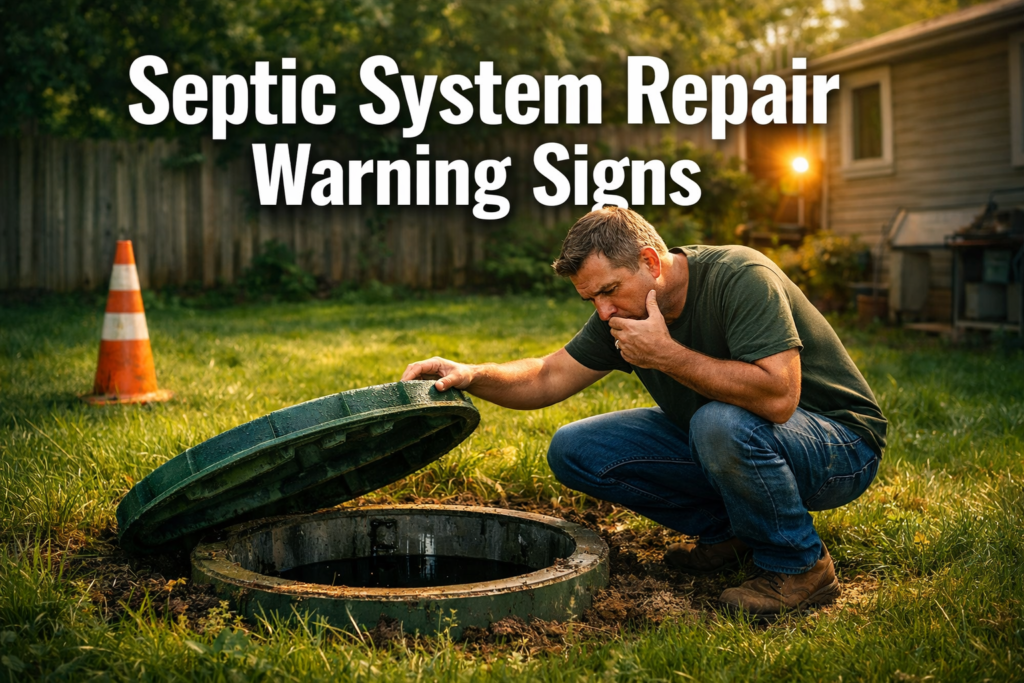
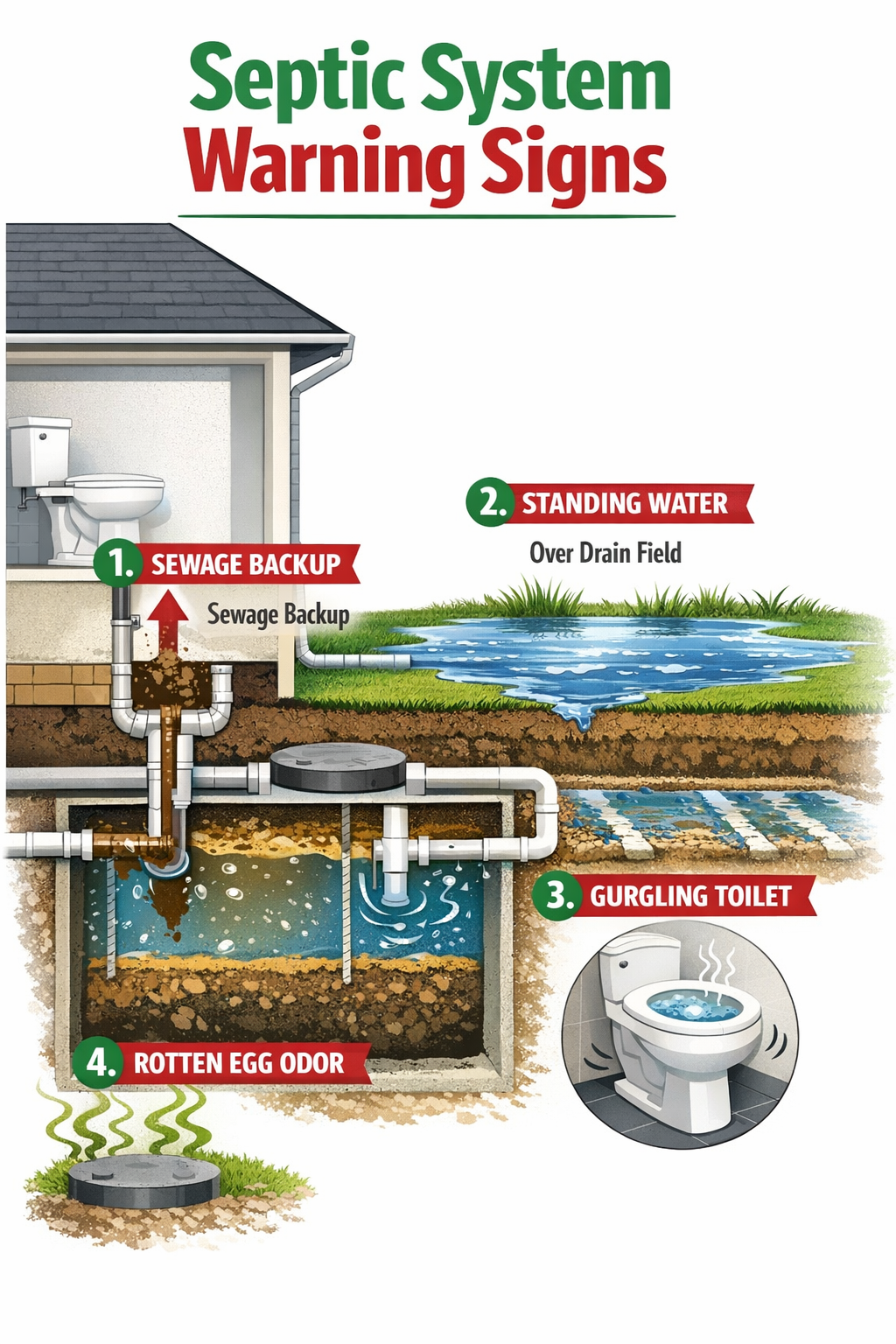
Quick Answer: The most urgent septic system repair warning signs are sewage backing up into your home, foul, rotten-egg odors near the tank or in the yard, standing water over the drain field, and multiple slow drains throughout the house. Any one of these signals means you need professional attention fast — waiting makes the damage worse and far more expensive.
Septifix: Simple Septic Tank Care in One Tablet
Septifix tablets help break down waste, reduce bad smells, and keep your septic tank working properly. With one easy monthly flush, you can help prevent blockages, protect your plumbing, and avoid costly repairs.👉 Discover the benefits of using Septifix for hassle-free septic maintenance
Key Takeaways
- Sewage backups inside the home are the most severe warning sign and require immediate professional help
- System-wide slow drains across multiple fixtures point to a full tank or failing drain field, not just a simple clog
- Rotten-egg odors near the tank, yard, or inside the house are a clear sign of system failure
- Standing water or unusually lush green grass over the drain field means wastewater isn’t draining correctly
- Gurgling sounds from toilets or drains signal a blockage or airlock in the septic system
- The EPA estimates 56% of septic tanks fail inspections — routine maintenance is your best defense
- Septic tanks should be pumped every three to five years; skipping this is one of the most common mistakes homeowners make
- A monthly bacterial treatment like Septifix Tablets can help maintain healthy tank biology and reduce the risk of early failure
- Early action on warning signs almost always costs less than emergency repair or full system replacement
What Are the Most Common Septic System Repair Warning Signs?
The most common septic system repair warning signs fall into five categories: sewage backups, slow drains, foul odors, standing water, and unusual sounds. Recognizing these early gives you time to fix a small problem before it becomes a $10,000 replacement.
Here’s a quick-reference table of the main warning signs and their likely causes:
| Warning Sign | Likely Cause | Urgency |
|---|---|---|
| Sewage backup in drains/toilets | Complete clog or collapsed pipe | 🔴 Emergency |
| Multiple slow drains | Full tank or drain field failure | 🔴 Act within days |
| Rotten-egg odor indoors or outdoors | Gas buildup, system failure | 🔴 Act within days |
| Leaking effluent fertilizes the soil | Wastewater not absorbing | 🟠 Call a pro soon |
| Gurgling drains or toilets | Blockage or airlock | 🟠 Monitor closely |
| Lush green grass over drain field | Lush green grass over the drain field | 🟡 Schedule inspection |
| Septic alarm going off | High water level, pump issue | 🔴 Act immediately |
| Nitrates in well water | System leak contaminating groundwater | 🔴 Emergency |
“Ignoring early warning signs can turn a $300 pump-out into a $15,000 drain field replacement.” — A consistent finding across professional septic service providers
Why Is Sewage Backup the Most Urgent Septic System Repair Warning Sign?
A sewage backup is the most severe indicator that your septic system needs immediate repair. Wastewater coming back up through drains, overflowing toilets, or pooled sewage in your yard means the system has failed — often due to a complete clog, collapsed piping, or an overfull tank.
What to do if sewage backs up:
- Stop using all water in the home immediately (no flushing, no laundry, no dishwasher)
- Keep family and pets away from any pooled sewage in the yard
- Call a licensed septic professional — this is not a DIY situation
- Do not use chemical drain cleaners; they can damage tank bacteria and pipes
For a detailed look at what happens during a backup event, see our guide on what happens when a septic tank backs up.
Common mistake: Many homeowners assume a backed-up toilet is just a simple clog and reach for a plunger. If multiple fixtures are backing up at once, the problem is almost certainly in the septic system, not the individual drain line.
How Do Slow Drains Signal Septic System Problems?
Multiple slow drains throughout your home — sinks, tubs, and toilets all draining sluggishly at the same time — are a reliable early warning sign of septic system trouble. A single slow drain is usually a localized clog. When several fixtures slow down together, the issue is almost always a full tank or a drain field that’s no longer absorbing wastewater properly.
Choose this rule: If only one drain is slow, try a drain snake or natural cleaner first. If two or more fixtures are slow simultaneously, call a septic professional.
Related signs that often appear alongside slow drains:
- Gurgling or bubbling sounds from toilets after flushing
- Water backs up in the tub when you flush the toilet
- Toilets that need multiple flushes to clear
For more on what these sounds mean, check out our article on 12 warning signs your septic tank needs immediate care.
What Do Foul Odors Around the Yard or Home Indicate?
Foul sewage odors — especially a rotten-egg smell — near the septic tank, drain field, or inside the home are a clear sign that the system is failing. Healthy septic systems contain odors underground. When you can smell them at the surface, gas is escaping through cracks, loose lids, or saturated soil.
Where odors show up and what they mean:
- Inside the home: Gases are backing up through drain pipes — often a sign of a full tank or venting problem
- Near the tank lid: The lid may be cracked or not sealed properly
- Over the drain field: Effluent is surfacing instead of absorbing into the soil
For practical solutions, our complete guide to reducing septic tank odors covers both DIY fixes and when to call a pro.
One effective preventive step: use a monthly bacterial treatment to keep your tank’s biology balanced. Septifix Tablets dissolve slowly in the tank, releasing oxygen-producing bacteria that break down waste and reduce odor-causing compounds. Check the current price here.
What Does Standing Water or Lush Grass Over the Drain Field Mean?
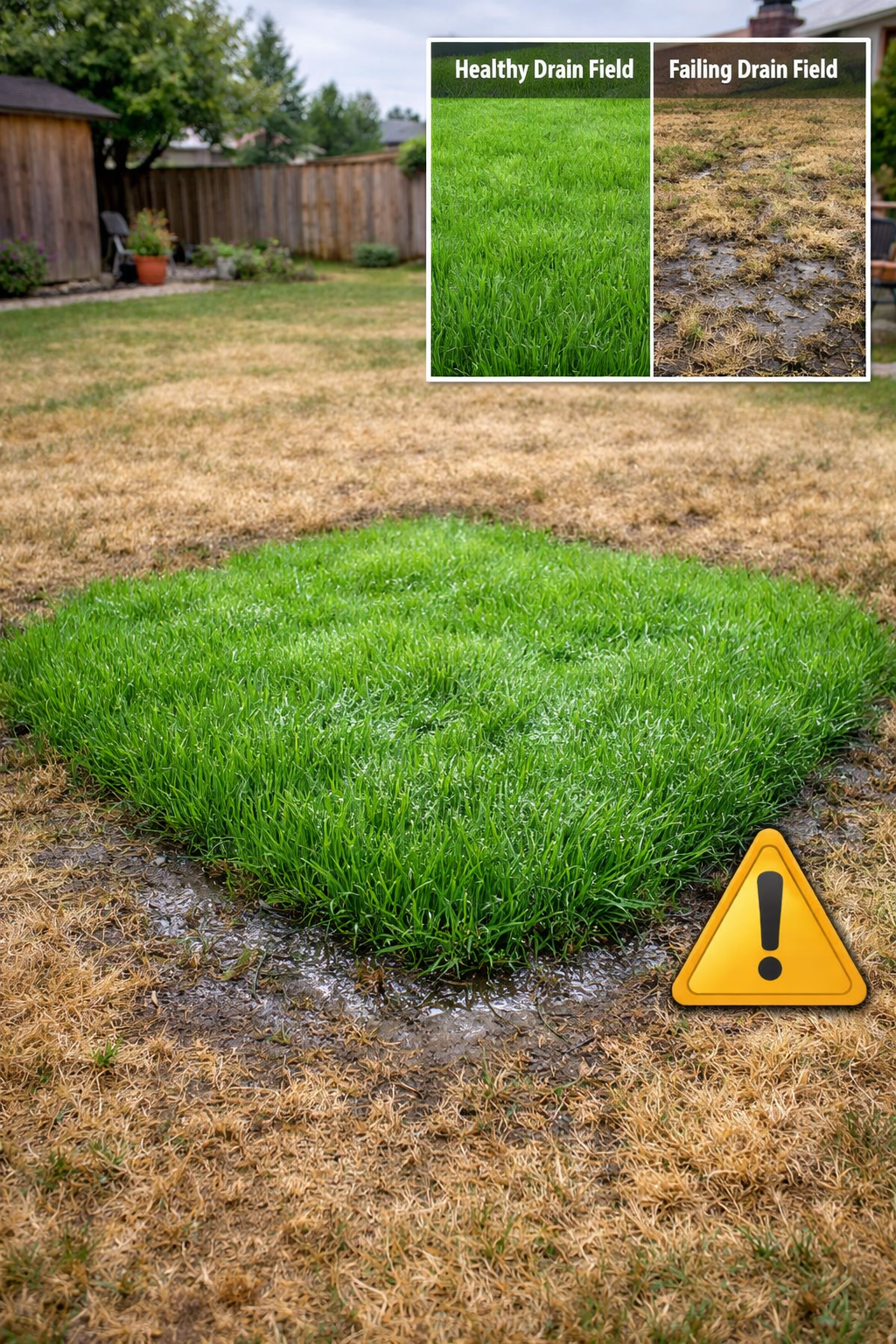
Standing water or soggy patches near the septic tank or drain field mean wastewater is not draining correctly and is surfacing instead. This is a serious septic system repair warning sign because surfacing effluent is both a health hazard and an environmental violation in most states.
Unusually lush, green grass growing directly over the drain field — especially when the surrounding lawn looks dry — is a subtler version of the same problem. The leaking effluent is essentially fertilizing that strip of grass.
When this happens:
- After heavy rain, some temporary saturation is normal; persistent wet spots are not
- Year-round: indicates the drain field is saturated or failing
- After a long dry spell, if the grass is still greener there, the field is likely leaking
This issue often requires professional drain field repair or replacement. Learn more about how a septic field absorbs wastewater to understand what’s going wrong.
Are There Physical Tank Defects That Count as Septic System Repair Warning Signs?
Yes — visible physical damage to the tank itself is a direct warning sign that repair is needed. Cracks in the tank body, a loose or damaged lid, and exposed or corroded baffles all warrant immediate attention.
Signs of physical tank problems:
- Sunken or uneven ground above the tank (possible tank collapse)
- Visible cracks around the tank access lid
- Rust stains or corrosion on metal components
- You can’t remember the last time the tank was pumped
Septic tanks should be pumped every three to five years, depending on household size and tank capacity [2]. Skipping this is one of the fastest ways to accelerate system failure. Use our signs your septic tank needs pumping guide to check if you’re overdue.
Can Water Quality Changes Signal a Failing Septic System?
Yes. If a water test shows bacteria, nitrates, or nitrites in your well water, your septic system may be leaking and contaminating the groundwater supply. This is especially relevant for rural homeowners with both a private well and a septic system on the same property.
Edge case to watch: Well contamination from a septic system doesn’t always come with obvious yard symptoms. You may have no odors, no slow drains, and no standing water — but the system is still leaking underground. Annual water testing is the only reliable way to catch this early.
If you suspect contamination, stop using the well for drinking and cooking immediately and contact your county health department.
How Can You Prevent These Warning Signs From Developing?
Preventing septic system repair warning signs comes down to three habits: regular pumping, protecting what goes into the tank, and maintaining healthy bacterial activity. Most failures are preventable with consistent care.
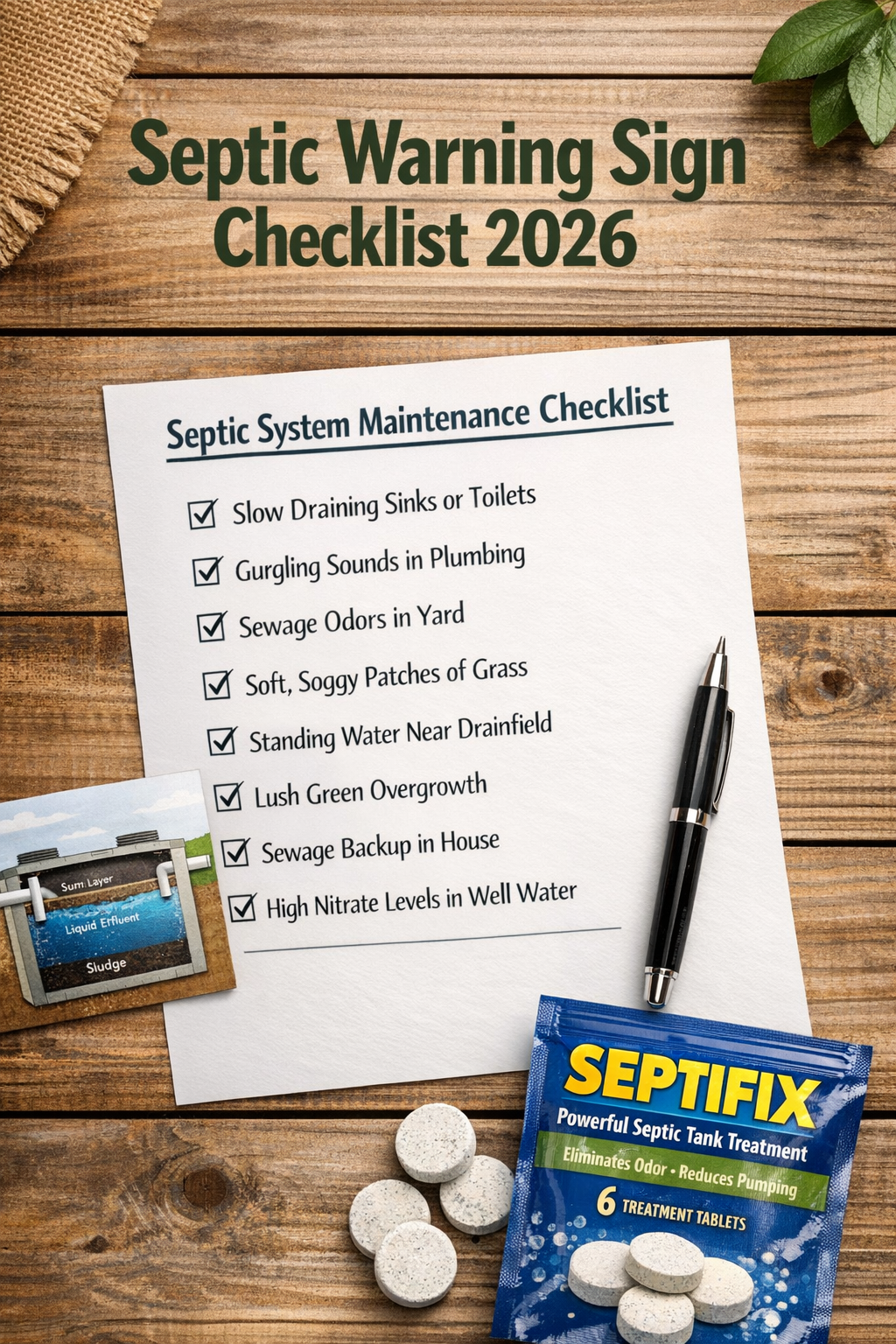
Simple prevention checklist:
- ✅ Pump the tank every 3–5 years (sooner for larger households)
- ✅ Never flush wipes, grease, medications, or harsh chemicals [see our guide on what not to put in a septic tank]
- ✅ Spread laundry loads throughout the week instead of doing them all at once
- ✅ Keep heavy vehicles and deep-rooted plants away from the drain field
- ✅ Use a monthly bacterial treatment to support tank health
For ongoing maintenance, a product like Septifix Tablets adds beneficial bacteria and oxygen directly to the tank each month, helping break down solids and reduce the buildup that leads to clogs and odors. Try Septifix here and see if it fits your routine.
For a full maintenance plan, our complete septic tank maintenance checklist is a good starting point.
FAQ: Septic System Repair Warning Signs
Q: How do I know if my slow drain is a septic problem or just a clog?
A: If only one drain is slow, it’s likely a localized clog. If multiple drains throughout the house are slow at the same time, it’s almost certainly a septic system issue.
Q: Is a gurgling toilet always a septic warning sign?
A: Not always, but it’s worth investigating. Occasional gurgling after a large flush can be normal. Persistent gurgling, especially across multiple fixtures, points to a blockage or septic system backup.
Q: How often should I have my septic system inspected?
A: A professional inspection every one to three years is a good standard. Pumping should happen every three to five years. If you’re buying a home with a septic system, always get an inspection before closing.
Q: Can I use bleach and household cleaners if I have a septic tank?
A: Occasional, moderate use of standard household cleaners is generally fine. Avoid pouring large amounts of bleach, antibacterial soap, or drain chemicals down the drain regularly, as these can kill the bacteria your tank needs to function.
Q: What does the septic alarm going off mean?
A: Most septic alarms trigger when the water level in the tank rises too high, which can indicate a pump malfunction or a nearly full tank. Treat it as urgent and call a professional.
Q: How much does septic repair typically cost?
A: Costs vary widely. A pump-out runs roughly $300–$600. Minor repairs (replacing a baffle or lid) may cost $200–$500. Drain field repair or replacement can run $5,000–$20,000 or more, depending on your location and system size. Early action always saves money.
Q: Can a septic system fail even if I don’t notice any warning signs?
A: Yes. Groundwater contamination from a slow leak may produce no visible symptoms. Annual well water testing is the best way to catch hidden failures.
Q: What is the EPA’s finding on septic system inspections?
A: According to the EPA, 56% of septic tanks fail to pass inspections — a striking figure that underscores how common undetected problems are.
Q: Is green grass over the drain field always a bad sign?
A: If the grass over your drain field is noticeably greener and lusher than the surrounding lawn, especially during dry weather, it’s a warning sign that effluent is surfacing and fertilizing the soil.
Q: What’s the first thing I should do if I suspect septic trouble?
A: Stop using water in the home as much as possible and call a licensed septic professional. Don’t wait to see if the problem resolves on its own — it rarely does.
Conclusion
Spotting septic system repair warning signs early is the difference between a manageable service call and a major excavation project. The signs covered in this guide — sewage backups, slow drains, foul odors, standing water, gurgling sounds, and physical tank damage — are your system’s way of asking for help. Don’t ignore them.
Your action plan for 2026:
- Walk your yard and check for wet spots, lush patches, or odors near the drain field
- Note whether any drains in the house are slow or gurgling
- Check when your tank was last pumped — if it’s been more than five years, schedule a pump-out
- Start a monthly bacterial treatment routine to protect tank health
For ongoing protection, Septifix Tablets offer a simple, monthly solution that supports the bacterial balance your tank depends on — get the deal and add it to your maintenance routine today.
For a deeper dive into keeping your system running well, our complete guide to septic tank care and repair covers everything from routine pumping to emergency troubleshooting.
References
[1] What Warning Signs Should You Be Looking Out For – https://www.calcasieu.gov/services/planning-development/sewage-inspection-program/what-warning-signs-should-you-be-looking-out-for
[2] 7 Signs Its Time For Septic Repair or Maintenance – https://www.proseptichv.com/7-signs-its-time-for-septic-repair-or-maintenance
Tags: septic system repair, septic tank warning signs, slow drains, septic odor elimination, drain field failure, septic tank maintenance, septic backup, septic system inspection, septic tank pumping, septic tank care, septic emergency, septic system longevity