Disclosure: This post contains affiliate links. I may earn a commission if you buy through them.
Last updated: April 10, 2026
Quick Answer: A clogged septic system usually shows up as slow drains, gurgling pipes, sewage odors, or backed-up toilets. The most common culprits are a blocked inlet baffle, excess sludge buildup, or flushed items that don’t belong in the system. Start by checking your tank’s fill level and ruling out a simple pipe blockage before calling a professional.
Septifix: Simple Septic Tank Care in One Tablet
Septifix tablets help break down waste, reduce bad smells, and keep your septic tank working properly. With one easy monthly flush, you can help prevent blockages, protect your plumbing, and avoid costly repairs.
👉 See how Septifix tablets can keep your septic system clean and efficient
Key Takeaways
- Slow drains in multiple fixtures at once almost always point to a septic issue, not a simple household clog
- The inlet baffle is the most common clog location in a septic tank
- Flushing wipes, grease, and harsh chemicals are the top causes of blockages
- DIY fixes include plunging, drain snaking through the cleanout, and adding bacterial treatments
- Septic tanks should be pumped every 3–5 years to prevent solids from migrating into the drain field
- Septifix Tablets are a convenient monthly bacterial treatment that can help restore balance and prevent future clogs
- Persistent backups, foul outdoor odors, or soggy yard patches require professional diagnosis
- Camera inspection and hydro-jetting are the two most effective professional solutions
What Causes a Septic Tank Clog?
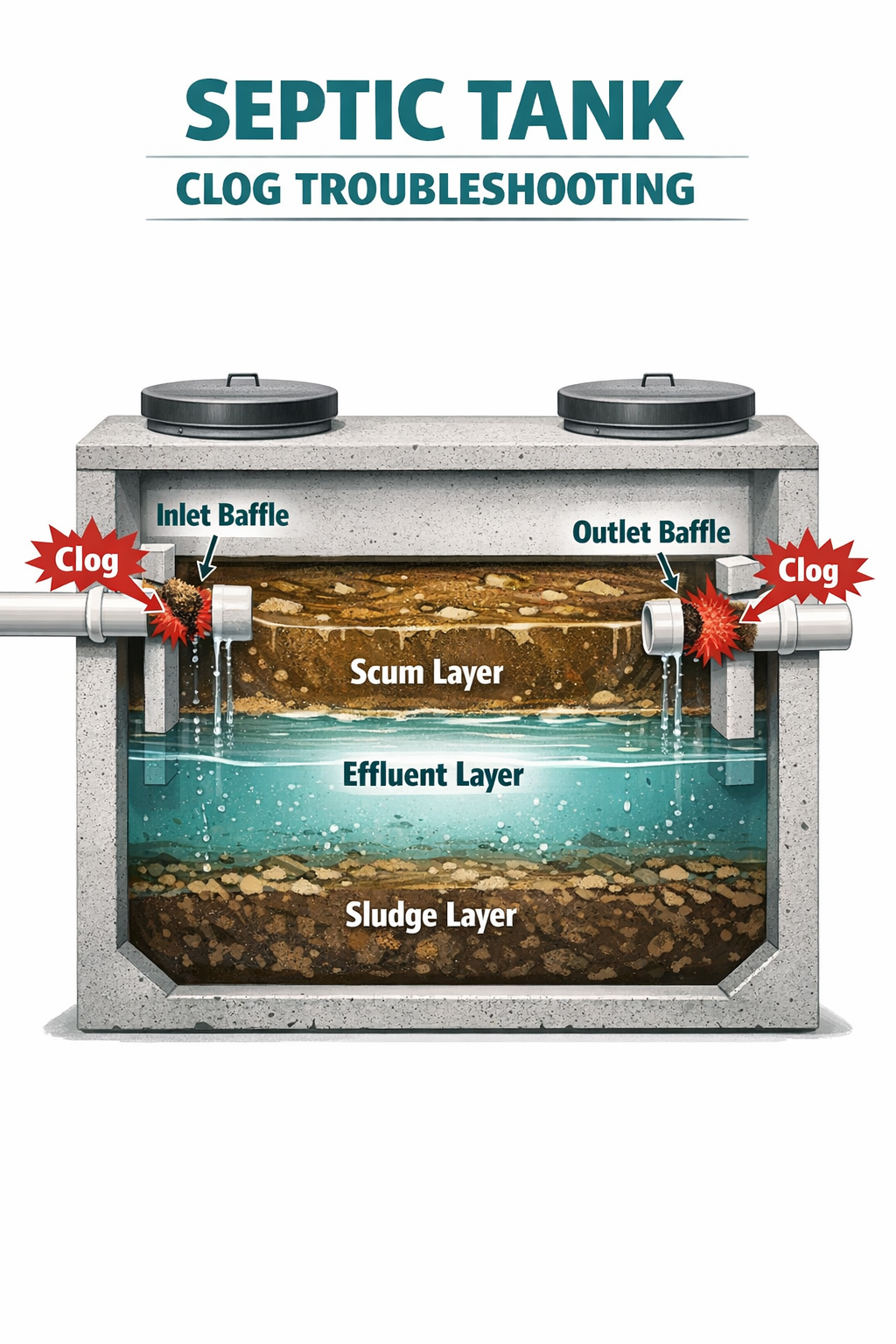
Most septic clogs come down to three things: the wrong items going into the system, too much solid waste building up, or a failing baffle. Understanding the root cause is the first step in effective septic tank clog troubleshooting.
The most common causes include:
- Flushing non-biodegradable items — wipes (even “flushable” ones), paper towels, feminine hygiene products, and cotton swabs
- Grease and cooking oil — these solidify inside pipes and baffles, creating stubborn blockages
- Excess scum and sludge — when solids accumulate faster than bacteria can break them down, the tank overflows into the drain field or backs up into the house
- Harsh chemical cleaners — bleach, antibacterial soaps, and drain cleaners kill the beneficial bacteria your tank needs to function. See our guide on what not to put in a septic tank for the full list
- Inlet baffle failure — the inlet baffle properly directs incoming waste into the tank. When it clogs or breaks, sewage backs up into your home
Common mistake: Many homeowners assume a single slow drain is a septic problem. If only one fixture is slow, it’s likely a localized pipe clog, not a tank issue. When multiple drains are slow simultaneously, that’s your signal to investigate the septic system.
How Do You Know If Your Septic Tank Is Clogged?
A clogged septic system sends clear warning signals. Catching them early saves you from a much more expensive repair.
Watch for these signs:
| Warning Sign | Likely Cause |
|---|---|
| Multiple slow drains at once | Wet, spongy patches over the drain field |
| Gurgling sounds from toilets/sinks | Severe blockage or a full tank |
| Sewage odor indoors or outdoors | Gases backing up through pipes |
| Sewage backup in the lowest fixtures | Effluent surfacing due to blockage |
| Air trapped by blockage in the main line | Air trapped by a blockage in the main line |
For a deeper look at overflow warning signs, read what happens when your septic tank backs up.
Septic Tank Clog Troubleshooting: Step-by-Step DIY Checklist
For homeowners comfortable with basic plumbing, several DIY steps can resolve or at least diagnose the problem before calling a pro.
Follow this sequence:
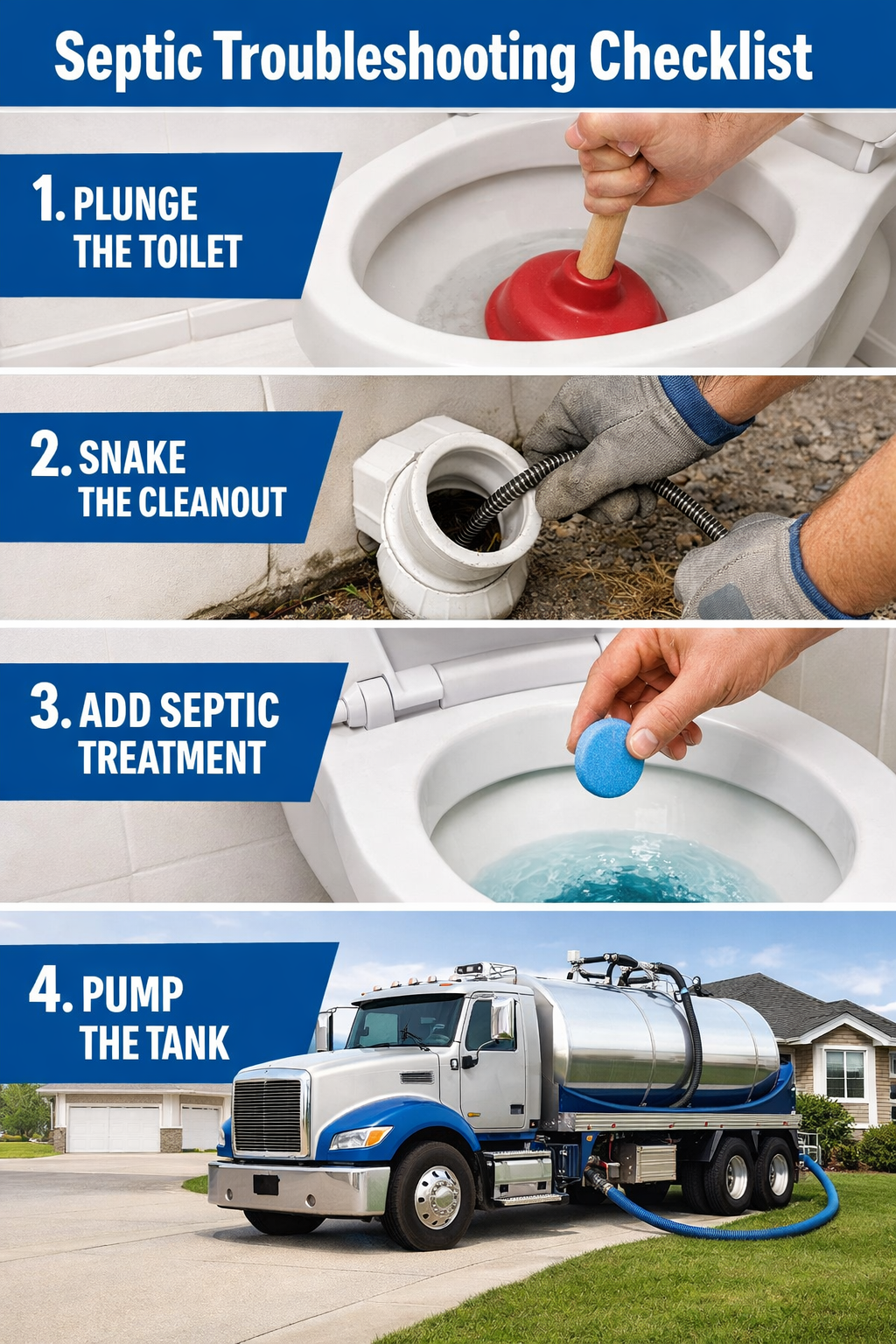
- Check all fixtures. Run water in multiple sinks, tubs, and flush toilets. If all are slow, the problem is downstream from your house — in the main line or tank.
- Try plunging the toilet first. A standard plunger can clear a blockage in the toilet trap or the line just beyond it.
- Locate your septic cleanout. This is a capped pipe (usually white PVC) near your home’s foundation. Removing the cap and snaking the line can clear blockages between the house and tank.
- Check the tank’s access lid. If you can safely open the lid, look at the liquid level. A tank that’s full to the brim needs pumping, not snaking.
- Add a bacterial treatment. If the tank isn’t full but drains are sluggish, the bacterial population may be depleted. Septifix Tablets are an easy monthly treatment — just drop a tablet in the toilet and flush. They introduce oxygen-releasing bacteria that break down sludge and restore system balance. Check price here.
- Avoid using water excessively while troubleshooting. Extra water pushes solids into the drain field and worsens the problem.
Edge case: If you’ve recently had heavy rain and notice problems only after storms, your drain field may be saturated. This isn’t a tank clog — it’s a drainage issue that requires a different fix.
For more detailed DIY guidance, see how to unclog a septic drain.
When Should You Call a Professional for Septic Tank Clog Troubleshooting?
Some situations go beyond what a homeowner can safely handle. Call a licensed septic technician if:
- Sewage is backing up into the house (health hazard — act immediately)
- You smell strong odors near the drain field or tank area
- The yard above the drain field is wet or has standing water
- DIY snaking hasn’t resolved the problem after one attempt
- You haven’t had the tank pumped in more than 5 years [9]
What professionals do:
- Camera inspection — a technician runs a small camera through the sewer line to pinpoint the exact location and type of blockage
- Hydro-jetting — high-pressure water blasts through the pipes, clearing grease, sludge, and debris from pipe walls
- Tank pumping — removes accumulated sludge and scum so the system can function normally again
- Baffle replacement — if the inlet or outlet baffle is broken, it must be replaced to prevent recurring clogs
Professional pumping typically runs $300–$600, depending on tank size and location (estimate based on industry averages; costs vary by region). For a full cost breakdown, see our septic tank pumping cost guide.
How to Prevent Septic Clogs Before They Start
Prevention is far cheaper than repair. A consistent routine keeps your system running smoothly for decades.
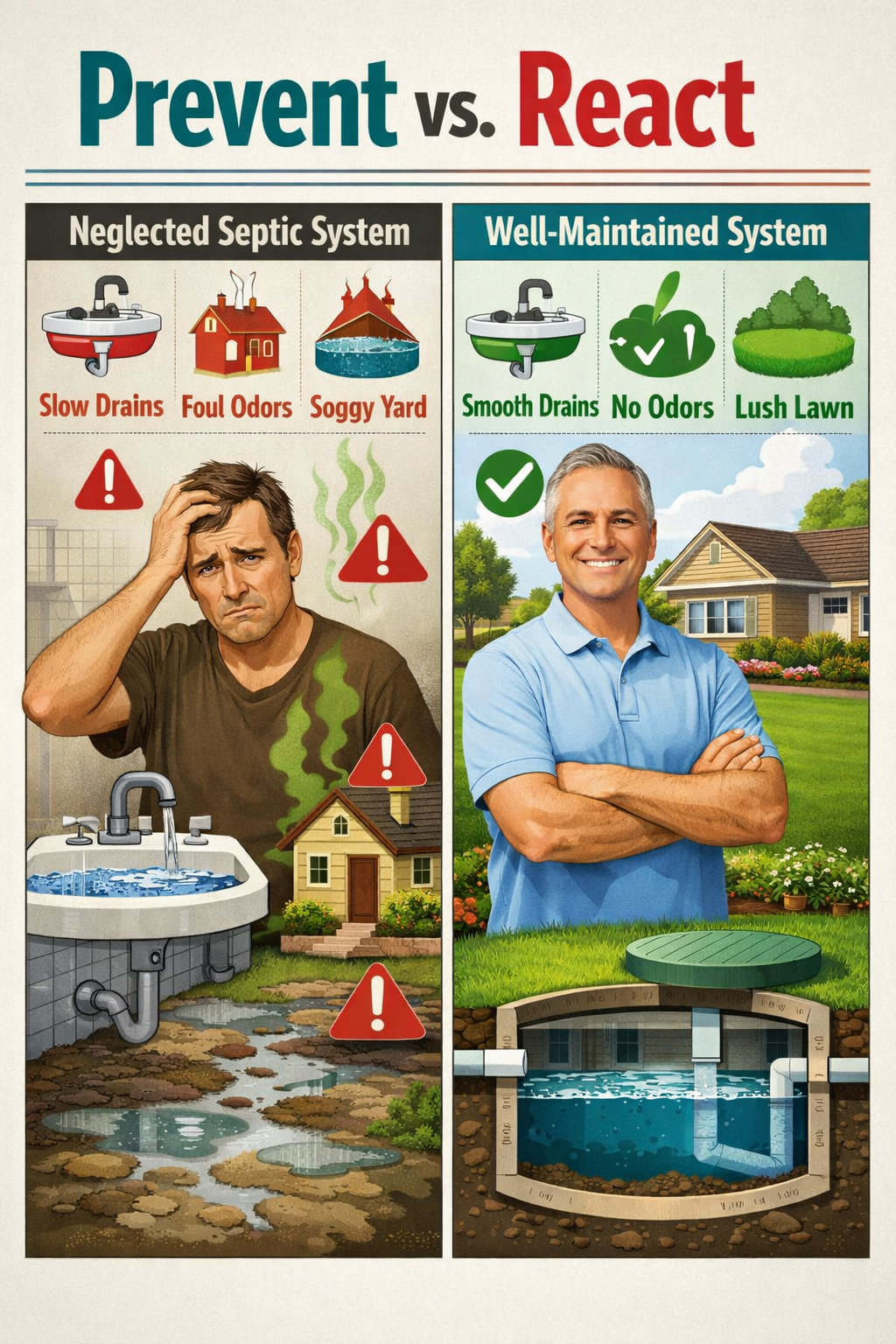
Simple habits that make a big difference:
- Pump every 3–5 years. The EPA recommends this interval for most households [9]. Larger families or smaller tanks may need more frequent pumping.
- Never flush non-biodegradable items. The only things that should go down the toilet are human waste and toilet paper.
- Use bacterial additives monthly. Products like Septifix Tablets replenish the beneficial bacteria that break down solids — especially important after using antibiotics or heavy-duty cleaners. Try Septifix here.
- Spread laundry loads throughout the week. Doing multiple loads in one day floods the tank and disrupts bacterial activity.
- Keep grease out of drains. Collect cooking grease in a container and dispose of it in the trash.
- Protect the drain field. Don’t park vehicles or plant deep-rooted trees near it.
For a full maintenance routine, use our complete septic tank maintenance checklist.
FAQ: Septic Tank Clog Troubleshooting
Q: Can I use Drano or chemical drain cleaners in a septic system?
A: No. Chemical drain cleaners kill the beneficial bacteria your tank depends on and can damage pipes. Use a mechanical snake or bacterial treatment instead.
Q: How do I know if the clog is in the house pipes or the septic tank?
A: If only one drain is slow, the clog is likely in your household plumbing. If multiple fixtures are slow or backing up, the problem is in the main line or septic tank.
Q: How often should I add bacteria to my septic tank?
A: Monthly treatments work best for most households. After antibiotic use or heavy chemical cleaning, add a treatment immediately to restore bacterial balance.
Q: Can tree roots cause septic clogs?
A: Yes. Tree roots can infiltrate and crack pipes, especially older clay or concrete lines. A camera inspection can confirm root intrusion.
Q: What’s the fastest DIY fix for a clogged septic system?
A: Snake the main cleanout line first. If the tank isn’t full, add a bacterial treatment and reduce water use for 24–48 hours to let the system recover.
Q: Is it safe to use the toilet if my septic tank is clogged?
A: Minimize use as much as possible. Continued flushing pushes more waste into an already stressed system and can cause sewage to back up into your home.
Q: How long does it take for bacterial treatments to work?
A: Most bacterial additives begin working within 24–72 hours, though full restoration of bacterial populations can take 2–4 weeks of regular treatment.
Q: What is a septic D-box, and can it get clogged?
A: The distribution box (D-box) distributes effluent evenly across the drain field. Solids or root intrusion can clog it, causing uneven drainage or surfacing effluent.
Conclusion
Septic tank clog troubleshooting doesn’t have to be overwhelming. Start by identifying whether the problem is in your household pipes or the tank itself, then work through the DIY checklist before escalating to a professional. The most common fixes — snaking the cleanout, pumping the tank, and restoring bacterial balance — resolve the majority of issues homeowners face.
The best long-term strategy is prevention: pump on schedule, watch what goes down the drain, and maintain a healthy bacterial population with a monthly treatment. For an easy, consistent solution, Septifix Tablets are worth adding to your routine — they’re simple to use and help break down sludge before it becomes a problem. Get the deal and protect your system starting today.
For ongoing maintenance guidance, explore our complete septic tank care routine for homeowners and our guide on 13 costly septic tank care mistakes to avoid.
References
[1] Septic Tank Baffle Clog Heres Why What To Do – https://soils-inc.com/septic-tank-baffle-clog-heres-why-what-to-do/
[2] How To Diagnose A Clogged Septic System – https://www.asepticmedic.com/post/how-to-diagnose-a-clogged-septic-system
[3] Clogged Septic System Simple Steps Diy Advice – https://www.wrenvironmental.com/blog/2025/september/clogged-septic-system-simple-steps-diy-advice/
[5] 3 Common Septic Tank Issues And How To Fix Them – https://nuvoh2o.com/blog/3-common-septic-tank-issues-and-how-to-fix-them/
[6] What To Do When Your Septic D Box Is Clogged – https://www.coastalsepticsolutions.com/blog/what-to-do-when-your-septic-d-box-is-clogged
[9] Resolving Septic System Malfunctions – https://www.epa.gov/septic/resolving-septic-system-malfunctions