
Disclosure: This post contains affiliate links. I may earn a commission if you buy through them.
Last updated: April 10, 2026
Quick Answer
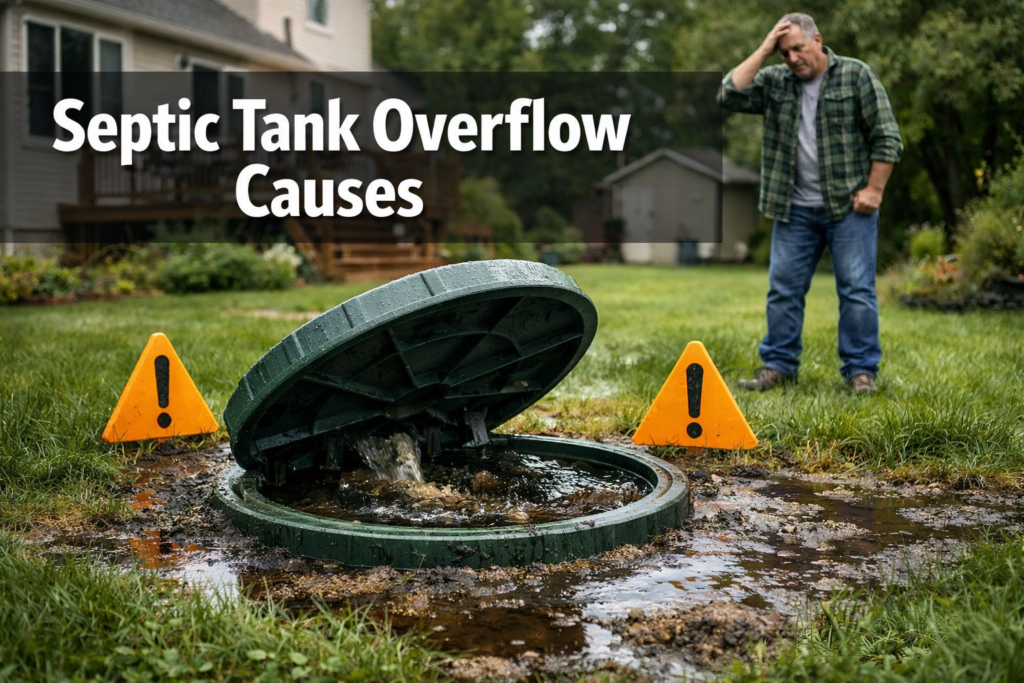
Septic tank overflow is most often caused by a failing drain field, sludge buildup from infrequent pumping, blockages from non-biodegradable materials, or excessive household water use. Heavy rainfall, tree root intrusion, and a high water table can also push a system past its limits. Identifying the specific cause early is the fastest way to prevent costly repairs.
Septifix: Simple Septic Tank Care in One Tablet
Septifix tablets help break down waste, reduce bad smells, and keep your septic tank working properly. With one easy monthly flush, you can help prevent blockages, protect your plumbing, and avoid costly repairs.
👉 See how Septifix tablets can keep your septic system clean and efficient
Key Takeaways
- Drain field failure is the single most common septic tank overflow cause — when the field can’t absorb wastewater, the tank backs up fast
- Skipping pump-outs lets sludge and scum build up until there’s no room left for incoming wastewater
- Flushing the wrong items — wipes, grease, paper towels — creates blockages that restrict flow throughout the system
- Heavy rain and high water tables saturate the soil around the drain field, stopping absorption entirely
- Tree roots can crack pipes and form dense blockages underground without any visible warning signs
- Leaky toilets and dripping faucets silently add hundreds of gallons per day to your tank
- Harsh cleaning chemicals kill the beneficial bacteria your tank needs to break down waste
- Biomat buildup — a slimy layer in the drain field — gradually reduces absorption over months or years
- Monthly bacterial treatments (like Septifix Tablets) can restore bacterial balance and prevent overflow before it starts
- Most overflow situations are preventable with a consistent maintenance routine
What Are the Most Common Septic Tank Overflow Causes?
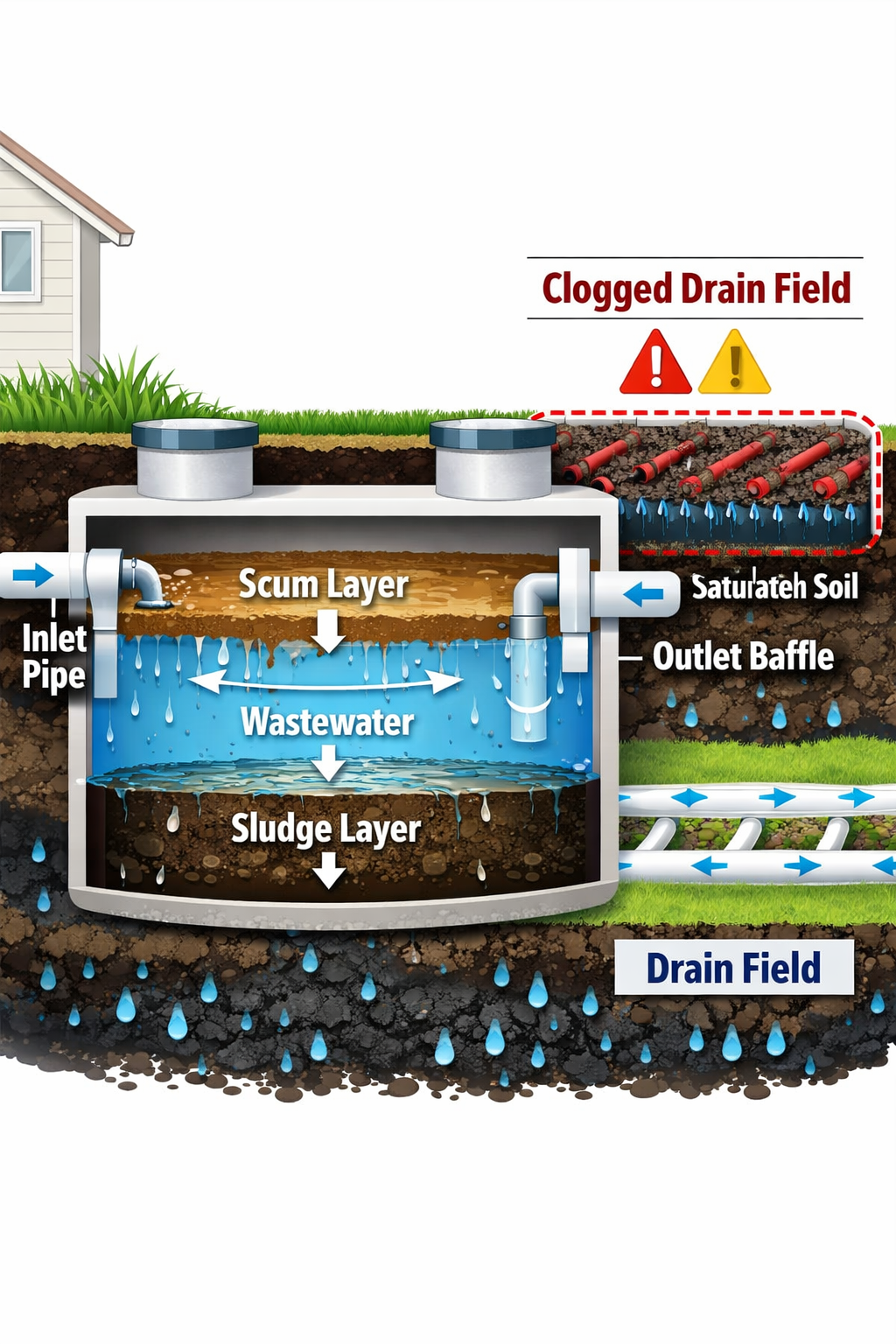
The top septic tank overflow causes fall into three categories: physical blockages, system overload, and drain field failure. Understanding which category applies to your situation tells you whether you need a pump-out, a plumber, or a full drain field inspection.
Here’s a quick breakdown:
| Cause | Category | DIY Fix? |
|---|---|---|
| Drain field failure | System failure | No — call a pro |
| Sludge/scum buildup | Overload | Pump-out needed |
| Non-biodegradable blockages | Physical blockage | Partial DIY |
| Excessive water use | Overload | Yes — reduce usage |
| Tree root intrusion | Physical blockage | Pro required |
| Heavy rainfall / high water table | Environmental | Temporary — monitor |
| Leaking plumbing fixtures | Overload | DIY fix |
| Bacterial deficiency | System imbalance | Yes — add bacteria |
| Biomat clogging | System failure | Pro assessment |
| Rainwater infiltration | Environmental | Grading/cover repair |
Why Does a Failing Drain Field Cause Overflow?
A malfunctioning drain field is the leading cause of septic tank overflow [3]. The drain field’s job is to absorb and filter treated wastewater into the surrounding soil. When it fails, liquid has nowhere to go — so it backs up into the tank and eventually into your home or yard.
Signs your drain field may be failing:
- Soggy or spongy ground over the drain field area
- Bright green grass growing only over the field (even in dry weather)
- Sewage odors outdoors near the field
- Multiple drains are backing up at the same time
Common drain field failure triggers:
- Biomat buildup: A slimy biological layer that coats soil pores and blocks absorption
- Soil compaction: Parking cars or heavy equipment over the field crushes the soil and collapses pipes
- Pipe damage: Crushed or cracked distribution pipes prevent even wastewater distribution
“Once a drain field is saturated or biologically clogged, simply pumping the tank won’t solve the problem — the field itself needs attention.”
If you’re seeing these signs, check out our complete guide to troubleshooting septic tank issues for next steps.
How Does Sludge Buildup Lead to Overflow?
Infrequent pumping is one of the most preventable causes of septic tank overflow. Every septic tank accumulates a layer of solid sludge at the bottom and a floating scum layer at the top. When these layers grow too thick, they leave almost no room for wastewater, and the system overflows.
How often should you pump?
Most households need pumping every 3 to 5 years, but this depends on tank size and the number of people in the home. For a personalized schedule, see our septic tank pumping frequency guide.
Choose to pump sooner if:
- You have more than 4 people in the household
- You use a garbage disposal regularly
- You’ve noticed slow drains or gurgling sounds
Common mistake: Many homeowners assume that if the drains are running fine, the tank is fine. In reality, a tank can be dangerously full before any indoor symptoms appear. Learn how to tell if your septic tank is full before it becomes an emergency.
What Items Cause Blockages and Overflow?
Flushing or draining the wrong materials is a direct and avoidable cause of septic tank overflow. Non-biodegradable solids don’t break down in the tank — they accumulate, clog pipes, and restrict wastewater flow throughout the system.
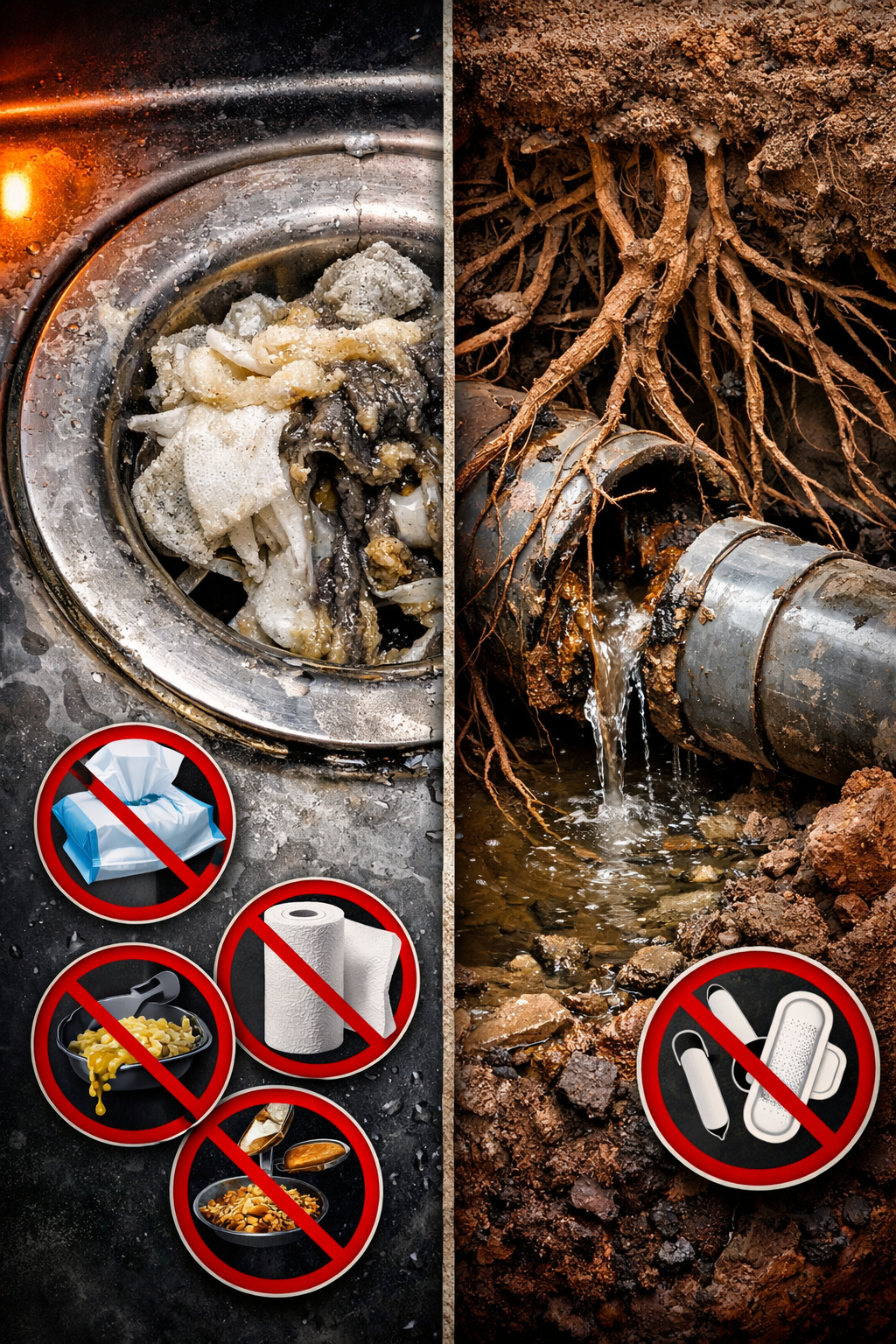
Never flush or drain these items:
- 🚫 Baby wipes and “flushable” wipes
- 🚫 Paper towels and facial tissues
- 🚫 Feminine hygiene products
- 🚫 Cooking grease and oils
- 🚫 Coffee grounds
- 🚫 Medications
- 🚫 Bleach-heavy cleaning products (these kill beneficial bacteria)
- 🚫 Paint, solvents, or harsh chemicals
For a full list, see our guide on what not to put in a septic tank.
Edge case — “flushable” wipes: These are one of the most common culprits. Despite the label, they don’t break down fast enough for septic systems and regularly cause blockages at the outlet baffle or in the drain field pipes.
Can Heavy Rain Cause a Septic Tank to Overflow?
Yes — heavy or prolonged rainfall is a significant environmental septic tank overflow cause, especially for systems that are already near capacity. When the soil around the drain field becomes waterlogged, it simply can’t absorb any more liquid. Wastewater backs up into the tank and, eventually, into the home.
A high water table compounds the problem. In low-lying areas or after extended wet seasons, the water table can rise high enough to submerge the drain field entirely. This is a temporary condition in most cases, but it can cause serious damage if the tank overflows repeatedly.
What you can do:
- Reduce household water use during and after heavy rain events
- Check that the tank lid and covers are sealed — poor grading or damaged covers allow rainwater to enter directly
- Avoid doing laundry or running the dishwasher for 24 to 48 hours after major storms
How Do Tree Roots and Plumbing Leaks Contribute to Overflow?
Tree roots and undetected leaks are two sneaky septic tank overflow causes that can go unnoticed for months or years.
Tree roots actively seek out moisture and nutrients. They grow into pipe joints and cracks, forming dense blockages that restrict or completely stop wastewater flow [1]. By the time you notice symptoms, roots may have already caused structural pipe damage.
- Prevention: Keep trees and large shrubs at least 10 feet away from any septic system component
- Detection: A professional camera inspection can spot root intrusion before it causes overflow
Plumbing leaks are equally deceptive. A running toilet can waste 200 or more gallons per day (estimate based on standard toilet leak rates). That extra water goes directly into your septic tank, filling it far faster than normal.
Quick leak check:
- Turn off all water in the house
- Watch your water meter for 15 minutes
- If the meter moves, you have a leak
Fix any dripping faucets, running toilets, or damaged supply lines promptly. It’s one of the simplest ways to extend the time between pump-outs.
How Does Bacterial Deficiency Cause Overflow?
Healthy septic tanks rely on billions of anaerobic bacteria to break down solid waste. When that bacterial population is depleted — usually by antibacterial soaps, bleach cleaners, or antibiotic medications — solids accumulate faster than normal, and the tank fills up sooner.
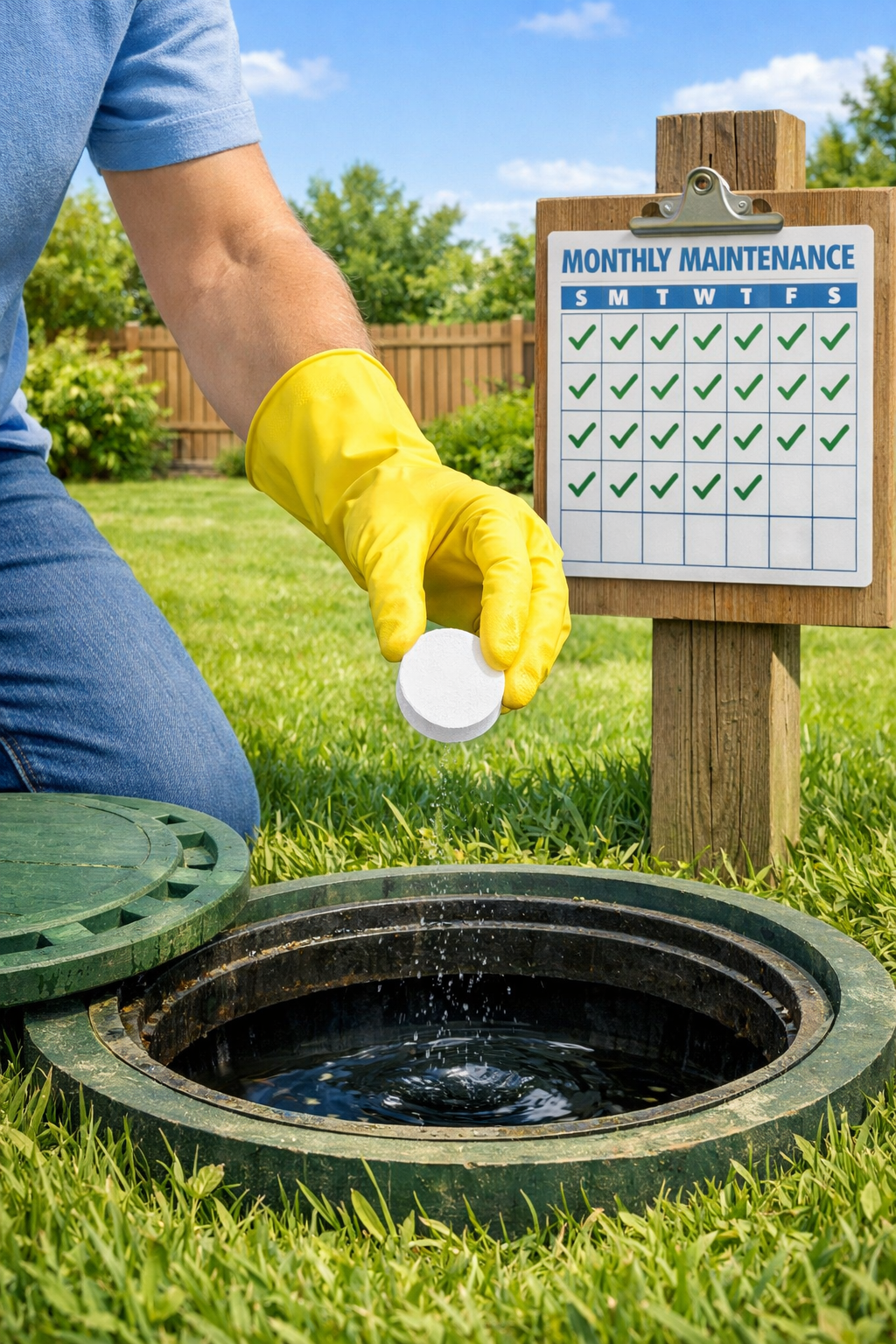
This is where a monthly bacterial treatment makes a real difference. Septifix Tablets are designed to replenish the beneficial bacteria your tank needs to digest waste efficiently, reduce sludge buildup, and control odors — all with one tablet per month dropped directly into the toilet.
Signs of bacterial deficiency:
- Strong sewage odors from drains or the yard (see our septic tank odor solutions guide)
- Sludge is building up faster than expected between pump-outs
- Slow drains without a clear physical blockage
For more on keeping bacteria levels healthy, read our guide on how to add bacteria to a septic tank.
What Are the Warning Signs of Septic Tank Overflow?
Catching overflow early can save thousands of dollars in repairs. Here are the most reliable warning signs:
Indoors:
- Slow drains in multiple fixtures at once
- Gurgling sounds from toilets or drains
- Sewage backing up into tubs or floor drains
- Foul odors from drains
Outdoors:
- Wet, soggy patches of ground above the tank or drain field
- Unusually lush, green grass over the drain field
- Standing water or puddles near the tank
- Sewage smell in the yard
If you’re seeing any of these, read our article on what happens when your septic tank backs up to understand what comes next.
FAQ: Septic Tank Overflow Causes
Q: What is the number one cause of septic tank overflow?
A: Drain field failure is the most common cause. When the field can’t absorb wastewater, the tank backs up regardless of how recently it was pumped.
Q: Can too much rain cause a septic tank to overflow?
A: Yes. Heavy rainfall saturates the soil around the drain field, preventing absorption. This is especially problematic when the tank is already near capacity.
Q: How do I know if my septic tank is overflowing?
A: Look for slow drains, sewage odors indoors or outdoors, gurgling pipes, and wet or soggy ground above the tank or drain field.
Q: Can I fix the septic tank overflow myself?
A: Some causes — like reducing water use, fixing plumbing leaks, or adding bacterial treatments — are DIY-friendly. Drain field failure and root intrusion require a licensed professional.
Q: How often should I pump my septic tank to prevent overflow?
A: Most households need pumping every 3 to 5 years. Larger families or heavy users may need it more frequently.
Q: Do cleaning products really cause overflow?
A: Bleach-based cleaners and antibacterial products kill the bacteria that break down waste. Over time, this leads to faster sludge buildup and a higher overflow risk.
Q: What should I do immediately if my septic tank overflows?
A: Stop all water use in the home, stay away from the affected area (sewage is a health hazard), and call a licensed septic professional. Do not attempt to open the tank yourself.
Q: Can tree roots cause a septic tank to overflow without any warning?
A: Yes. Root intrusion often develops slowly underground with no visible symptoms until a significant blockage forms. Annual or biennial camera inspections can catch this early.
Q: Does a garbage disposal increase overflow risk?
A: Yes. Garbage disposals send large amounts of food solids into the tank, accelerating sludge buildup and increasing the frequency of needed pump-outs.
Q: Is septic tank overflow dangerous?
A: Yes. Overflowing sewage contains harmful pathogens that can contaminate groundwater, soil, and nearby water sources. It’s a health and environmental hazard that needs prompt attention.
Conclusion: Stop Overflow Before It Starts
Most septic tank overflow causes are preventable with consistent, simple maintenance. The biggest risks — drain field failure, sludge buildup, wrong items flushed, and bacterial deficiency — all respond well to early action.
Here’s your action checklist for 2026:
- ✅ Schedule a pump-out if it’s been more than 3 years
- ✅ Fix any running toilets or dripping faucets today
- ✅ Stop flushing wipes, grease, and paper towels immediately
- ✅ Keep trees and shrubs away from septic system components
- ✅ Reduce water use during and after heavy rain
- ✅ Switch to septic-safe cleaning products
- ✅ Add a monthly bacterial treatment to your routine
For the last point, try Septifix Tablets here — a simple, once-a-month tablet that restores beneficial bacteria, reduces sludge, and helps prevent the kind of bacterial deficiency that leads to overflow. It’s one of the easiest steps you can take to protect a system that, if neglected, can cost $5,000 to $30,000 or more to repair or replace.
For a full maintenance plan, visit our complete septic tank maintenance checklist guide and bookmark it for regular reference.
Septifix: Simple Septic Tank Care in One Tablet
Septifix tablets help break down waste, reduce bad smells, and keep your septic tank working properly. With one easy monthly flush, you can help prevent blockages, protect your plumbing, and avoid costly repairs.
👉 See how Septifix tablets can keep your septic system clean and efficient
References
[1] Septictank Overflow Complete Guide – https://www.vdwws.com/blog/septictank-overflow-complete-guide
[2] Common Reasons For Septic Tank Overflowing After Being Pumped – https://aosseptics.com/common-reasons-for-septic-tank-overflowing-after-being-pumped/
[3] Why Is My Septic Tank Overflowing After Being Pumped Common Causes Explained – https://www.splashplumbing.com/why-is-my-septic-tank-overflowing-after-being-pumped-common-causes-explained/
[4] Understanding Septic Tank Overflow Causes Signs And Solutions – https://gforcedrainage.co.uk/blog/post/understanding-septic-tank-overflow-causes-signs-and-solutions
[5] 10 Reasons Why Your Septic Tank May Be Filling Too Quickly – https://vikingavl.com/blog/10-reasons-why-your-septic-tank-may-be-filling-too-quickly
[6] What To Do If Your Septic Tank Overflows – https://www.dtox.org/blog/what-to-do-if-your-septic-tank-overflows