Last updated: March 3, 2026
Key Takeaways
• Schedule tank pumping before the first sustained freeze to remove excess sludge and prevent freezing issues
• Maintain regular water usage throughout winter to keep the system active and prevent stagnation
• Insulate exposed components using mulch, foam covers, or blankets to protect against frost penetration
• Keep grass long over your septic area for natural insulation and avoid driving on snow-covered systems
• Inspect monthly during winter months to catch early signs of freezing or other problems
• Fix plumbing leaks immediately as small water trickles are more likely to freeze in winter
• Clear access points of snow and ice to ensure emergency maintenance can be performed
• Never use antifreeze or chemical additives that can harm beneficial bacteria in your system
Quick Answer
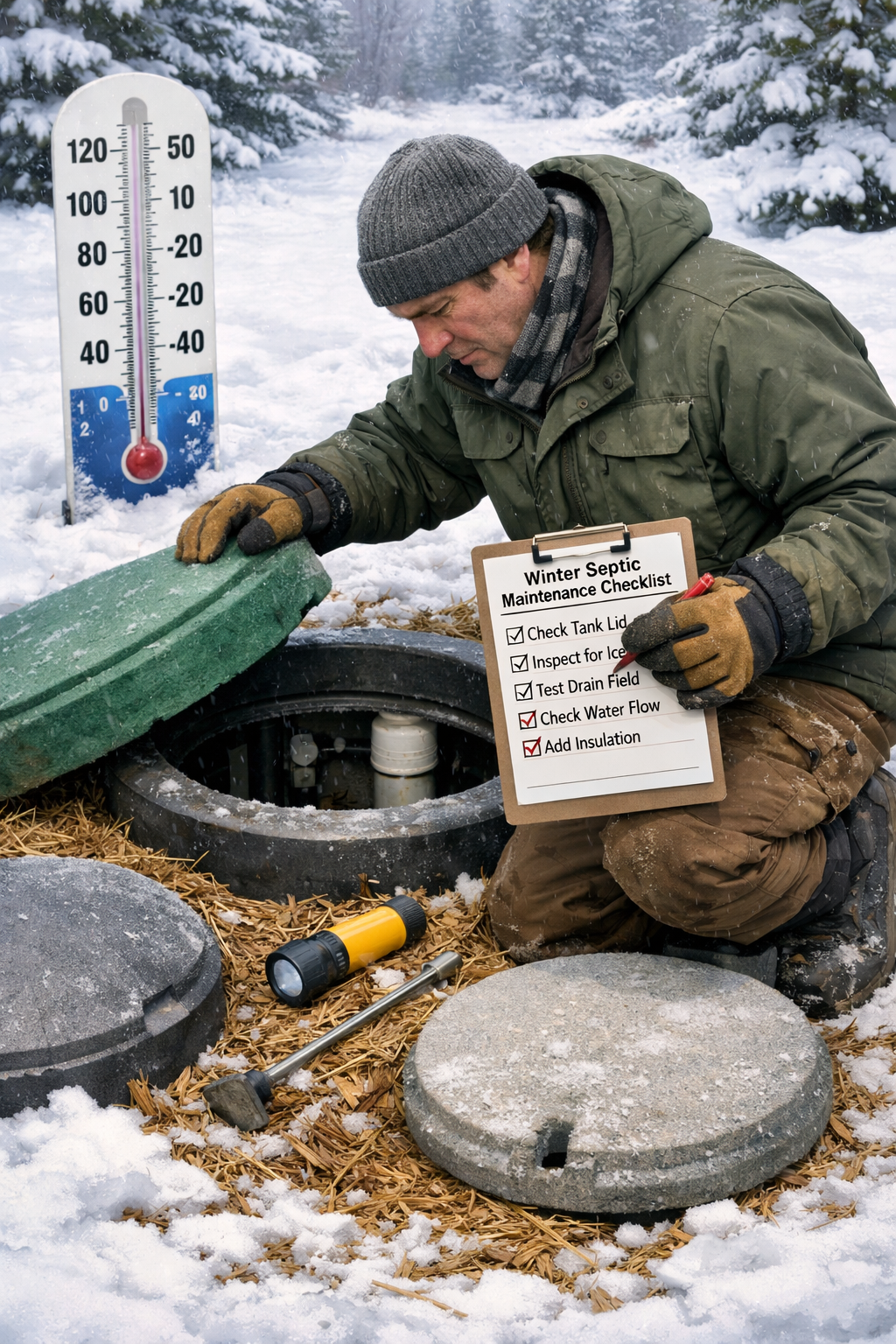
Winter septic tank maintenance requires three critical actions: pump your tank before the first freeze to remove excess solids, maintain regular water usage to prevent stagnation, and insulate exposed components with mulch or covers. These steps prevent costly freezing damage and system failures during cold months.
Why Winter Septic Tank Maintenance Matters
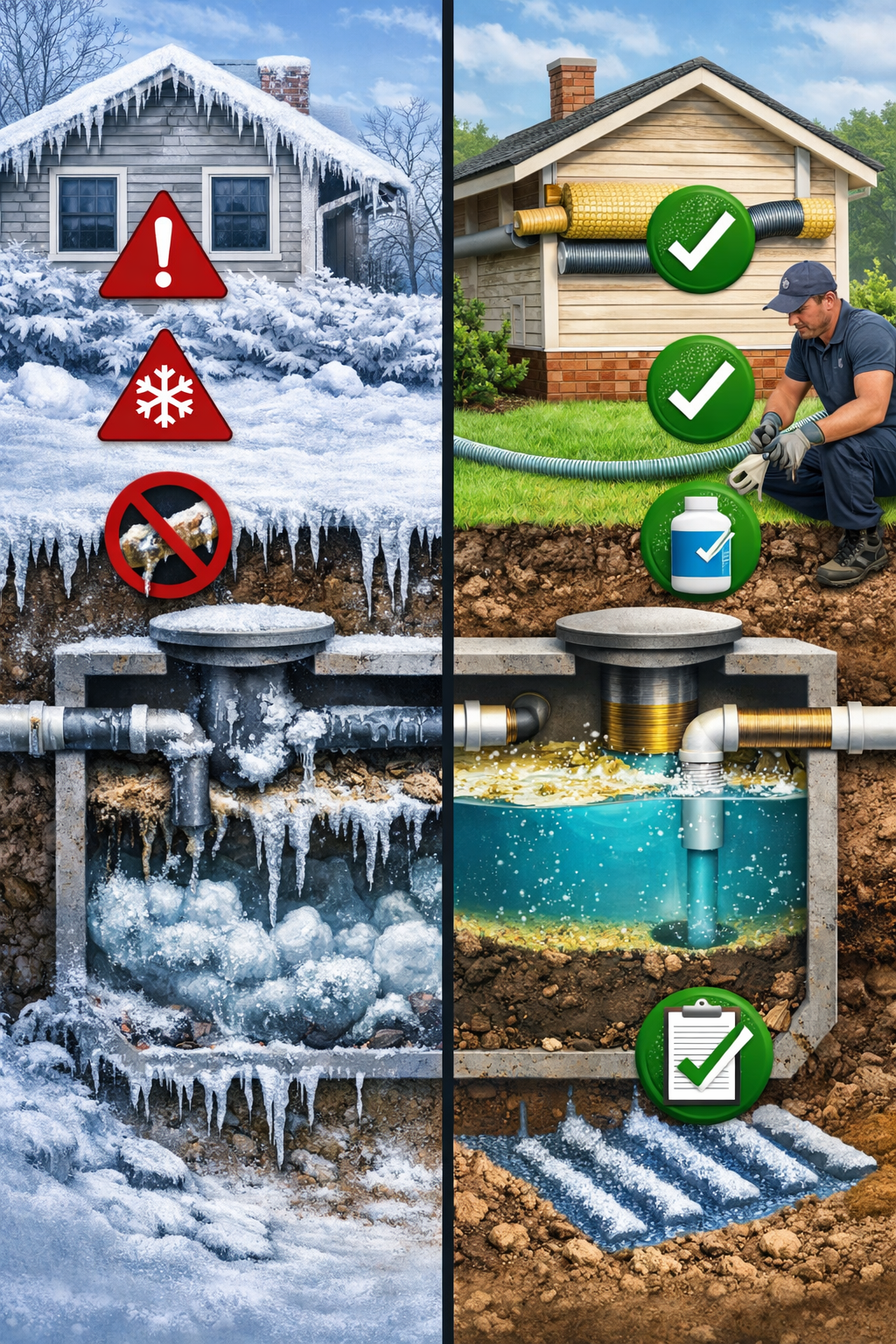
Winter poses unique challenges for septic systems that can lead to expensive repairs if ignored. Cold temperatures slow bacterial activity, increase the risk of pipe freezing, and create conditions where normal system functions can fail.
Proper winter maintenance prevents three major problems: frozen pipes and distribution lines, reduced bacterial efficiency, and system backups that can flood your home with sewage. The key is preparing your system before winter arrives and maintaining it throughout the cold season.
Most winter septic failures happen because homeowners don’t realize their system needs different care during cold months. Unlike city sewer systems that stay deep underground, septic components often sit closer to the surface where freezing becomes a real threat.
When Should You Start Winter Septic Tank Maintenance
Begin your winter preparation in late fall, at least 4-6 weeks before your area’s first sustained freeze. This timing allows you to complete pumping, inspections, and protective measures before cold weather arrives.
The ideal preparation window runs from September through November in most northern climates. Don’t wait for the first cold snap—once temperatures drop consistently below freezing, some maintenance tasks become difficult or impossible.
Critical Pre-Winter Timeline
8 weeks before winter: Schedule professional pumping and inspection
6 weeks before winter: Complete any needed repairs or system upgrades
4 weeks before winter: Install insulation and protective covers
2 weeks before winter: Final system check and emergency supply preparation
Choose earlier dates if you live in areas with sudden temperature drops or if your system has had previous winter issues. Mountain regions and northern states should start preparation by early September.
How to Pump Your Septic Tank Before Winter
Schedule tank pumping before the first sustained freeze to remove excess sludge and scum that can slow flow and increase freezing risk. A full tank processes waste more slowly, creating conditions where effluent can sit long enough to freeze in distribution lines.
For a household of four, septic tanks should be pumped every three years under normal conditions. However, pump before winter regardless of your normal schedule if your tank is more than 50% full or if you’ve noticed slow drains or gurgling sounds.
Pre-Winter Pumping Process
- Contact licensed professionals 6-8 weeks ahead – winter is their busy season
- Request full inspection during pumping to identify potential winter vulnerabilities
- Ask about sludge and scum levels – high levels indicate more frequent pumping needed
- Document the service date for your maintenance records
Skip pumping only if your tank was serviced within the last 12 months and shows no signs of fullness. When in doubt, pump it—the cost of pumping is far less than repairing frozen or backed-up systems.
For detailed guidance on recognizing when your tank needs pumping, check our complete septic tank maintenance checklist guide.
What Insulation Methods Protect Your System
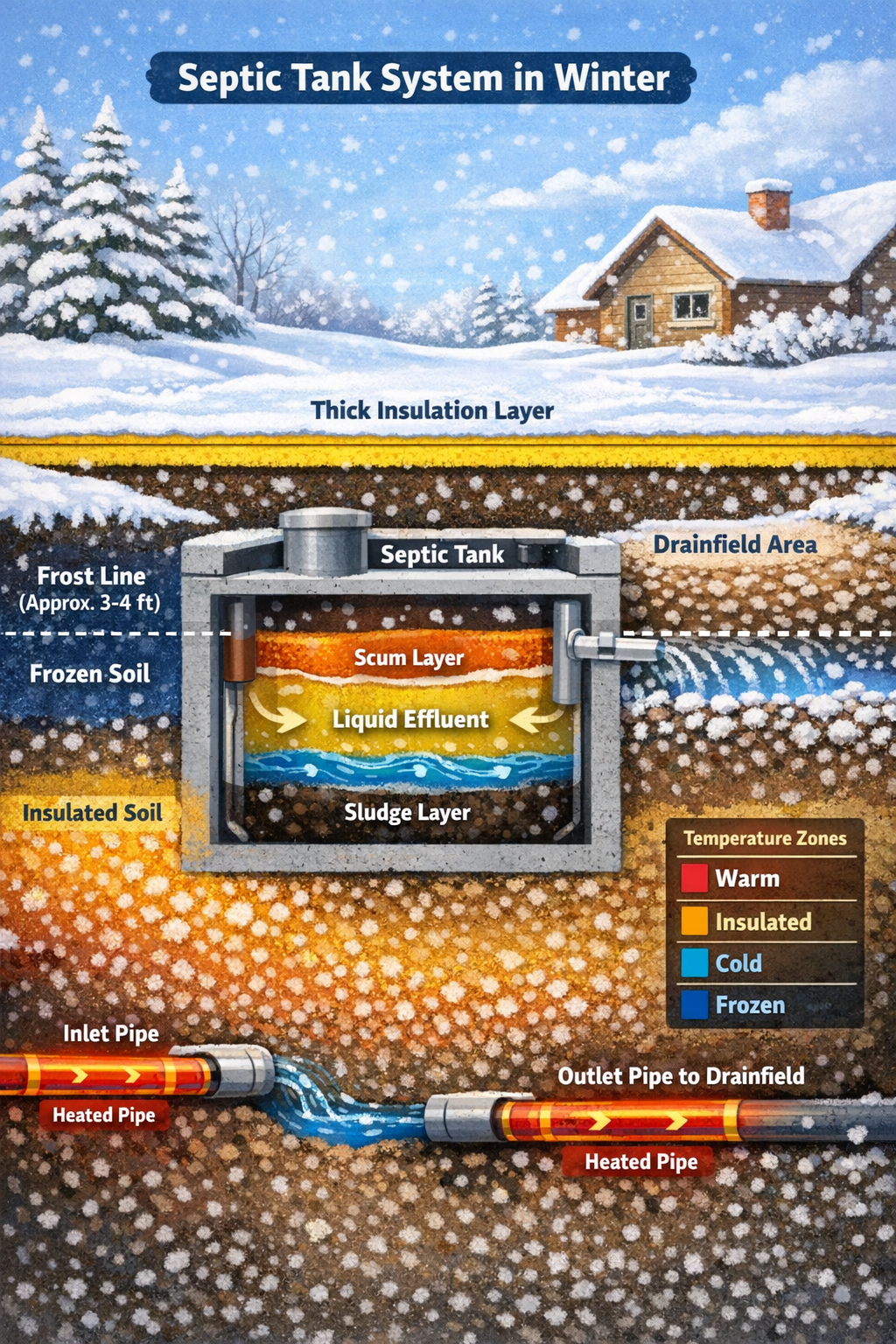
Use riser covers, mulch, and foam panels to trap ground heat and slow frost penetration into your septic system. Proper insulation can prevent freezing even when air temperatures drop well below freezing.
The most effective insulation creates a barrier that holds ground heat around your system components. Ground temperature stays warmer than air temperature, so your goal is preventing that heat from escaping upward.
Proven Insulation Materials
Organic mulch (most effective):
- 8-12 inches of straw, leaves, or wood chips over tank and distribution areas
- Creates air pockets that trap heat
- Naturally decomposes without system harm
Foam insulation:
- Rigid foam panels over access points and shallow pipes
- Custom-fitted covers for risers and inspection ports
- Removable for maintenance access
Insulating blankets:
- Heavy-duty covers designed for septic components
- Secure against wind but allow for expansion
- Reusable for multiple seasons
Never use plastic sheeting or non-breathable covers that can trap moisture and create ice formation. Avoid heavy materials that compress and lose insulating properties.
FYI: Some links may be affiliate links, which means I may earn a small commission at no extra cost to you.
If you want a simple way to support your septic system’s bacterial health during winter’s challenging conditions, Septifix tablets can help break down waste more efficiently when cold temperatures naturally slow bacterial activity. One monthly tablet helps maintain proper waste processing and reduces the risk of backups during winter months.
How Often to Inspect Your Winter Septic Tank Maintenance
Inspect your septic system at least once monthly during winter, and more frequently during cold spells or extended freezing periods. Winter conditions change rapidly, and early detection prevents minor issues from becoming major problems.
Monthly inspections catch problems like ice formation around access points, slow drainage development, and unusual odors that indicate system stress. During severe cold snaps, check your system weekly.
Monthly Winter Inspection Checklist
Inside your home:
- Test all drains for normal flow speed
- Listen for gurgling sounds from toilets or drains
- Check for sewage odors in bathrooms or basement
- Monitor water usage patterns
Outside inspection:
- Clear snow and ice from access points
- Check insulation materials for displacement
- Look for ice formation around pipes or covers
- Verify no vehicle traffic over system area
Red flag signs requiring immediate attention:
- Sewage backup in any drain
- Strong odors around the system area
- Ice or frost on access covers
- Slow draining throughout the house
Document each inspection with photos and notes. This creates a record that helps professionals diagnose problems and can be valuable for warranty claims.
Learn more about recognizing system problems in our guide on signs your septic tank needs maintenance.
Which Areas Need Special Winter Protection
Focus protection efforts on access points, distribution boxes, and any exposed or shallow pipes that are most vulnerable to freezing. These components typically sit closer to the surface where frost penetration poses the greatest risk.
Distribution boxes are particularly vulnerable because they handle liquid effluent that can freeze if flow slows or stops. Inspection risers and access ports need protection because they create direct pathways for cold air to reach your system.
Priority Protection Areas
Highest risk (protect first):
- Distribution box and outlet pipes
- Inspection risers and access covers
- Pump chambers (if you have a pump system)
- Any pipes within 3 feet of surface
Medium risk:
- Main tank access points
- Electrical connections (for pump systems)
- Vent pipes and caps
Lower risk but still important:
- Main tank body (usually deeper)
- Drainfield pipes (typically below frost line)
Remove trees and plants with strong root systems from over your septic components. Winter drives roots deeper seeking moisture and warmth, potentially damaging pipes and tanks.
Keep vehicle traffic off your entire septic area. Compacted snow pushes frost deeper into the ground, and vehicle weight can damage buried components.
How to Maintain Proper Water Usage in Winter
Maintain regular, consistent water usage throughout winter to keep your septic system active and prevent stagnation that leads to freezing. Flowing water resists freezing much better than standing water.
Spread water usage evenly throughout the day rather than using large amounts all at once. This creates steady flow through your system and prevents the stop-and-start conditions that allow water to sit and freeze in pipes.
Optimal Winter Water Usage Patterns
Daily usage guidelines:
- Run water briefly every few hours during extreme cold
- Take showers and use dishwashers during warmest parts of day
- Avoid doing all laundry on one day
- Never let faucets drip continuously (wastes water without helping)
If leaving home for extended periods:
- Arrange for someone to run water every 2-3 days
- Consider hiring a house-sitter for trips longer than a week
- Never drain your system completely unless professionally advised
For vacation homes or seasonal properties:
- Have the system professionally winterized before extended vacancy
- Arrange for periodic water usage or system monitoring
- Plan professional restart service before returning
Extended periods of inactivity create uneven conditions that stress septic systems. Even small amounts of regular use help maintain the bacterial balance and prevent freezing.
For comprehensive guidance on year-round septic care, see our best septic tank maintenance practices guide.
What to Do If Your System Shows Winter Problems
Address winter septic problems immediately—waiting even 24 hours can turn minor issues into expensive emergencies. Cold weather accelerates system failures, and frozen components become much harder to repair.
Call a professional immediately if you notice sewage backups, complete drainage stoppage, or strong odors around your system. These indicate serious problems that require expert diagnosis and repair.
Emergency Response Steps
For slow drains or minor issues:
- Reduce water usage to essential needs only
- Check and clear any accessible ice from covers or vents
- Add extra insulation around problem areas
- Schedule professional inspection within 48 hours
For sewage backups or complete stoppage:
- Stop all water usage immediately
- Contact emergency septic service
- Evacuate affected areas if odors are strong
- Document the problem with photos for insurance
Never attempt to thaw frozen pipes with open flames, electric heaters, or hot water. These methods can crack pipes, damage system components, or create dangerous conditions.
Avoid chemical additives, antifreeze, or “septic treatments” that promise to solve freezing problems. These products can kill beneficial bacteria and create worse long-term issues.
Helpful Resource for Year-Round Septic Health
Maintaining your septic system during winter is just one part of year-round care. Septifix tablets offer a simple monthly solution that supports your system’s bacterial health throughout all seasons. With one easy flush per month, these tablets help break down waste, reduce odors, and maintain proper system function—especially valuable during winter when cold temperatures naturally slow bacterial activity.
Common Winter Septic Tank Maintenance Mistakes
Avoid these frequent errors that cause expensive winter septic failures: using antifreeze products, ignoring early warning signs, and assuming your system doesn’t need winter care because it worked fine last year.
The biggest mistake is waiting until problems appear before taking action. Winter septic issues develop quickly and become exponentially more expensive once freezing or backup occurs.
Mistakes That Cause Winter Failures
Using automotive antifreeze or RV antifreeze in septic systems kills beneficial bacteria and can contaminate groundwater. Only use products specifically designed for septic systems, and only when recommended by professionals.
Believing deeper systems don’t need winter care leads to surprise failures. Even systems with tanks 4+ feet deep can experience freezing in distribution lines, pump chambers, or access points.
Removing all snow from the septic area eliminates natural insulation. Light, fluffy snow actually insulates your system—only remove heavy, compacted snow or ice.
Assuming electric heat tape solves all problems without addressing underlying issues like full tanks or damaged pipes. Heat tape is a temporary solution that requires proper installation and monitoring.
Waiting for spring to address minor winter issues allows small problems to compound. Address any system changes immediately, even if they seem minor.
FAQ
Q: How often should I pump my septic tank before winter?
A: Pump every 3 years for a family of four under normal conditions, but always pump before winter if your tank is more than 50% full or if you’ve noticed any drainage issues.
Q: Can I use antifreeze in my septic system?
A: Never use automotive antifreeze or RV antifreeze in septic systems. These products kill beneficial bacteria and can contaminate groundwater. Only use septic-safe products when recommended by professionals.
Q: What’s the best insulation for septic tanks in winter?
A: Organic mulch like straw, leaves, or wood chips works best. Apply 8-12 inches over tank and distribution areas. Avoid plastic sheeting or non-breathable covers that trap moisture.
Q: Should I let faucets drip to prevent septic freezing?
A: No, continuous dripping wastes water without helping your septic system. Instead, maintain regular, spread-out water usage throughout the day during cold periods.
Q: How do I know if my septic system is frozen?
A: Signs include complete drainage stoppage, sewage backups, gurgling sounds, and strong odors around the system area. Contact professionals immediately if you notice these symptoms.
Q: Can I drive over my septic system when it’s snow-covered?
A: Never drive vehicles over septic systems. Vehicle weight can damage buried components, and compacted snow pushes frost deeper into the ground.
Q: What temperature is too cold for septic systems?
A: Most systems handle brief cold snaps, but extended periods below 20°F increase freezing risk, especially for shallow components or systems that aren’t properly maintained.
Q: Should I add bacteria supplements during winter?
A: Cold temperatures naturally slow bacterial activity, so supplements can help maintain proper waste breakdown. Choose products specifically designed for septic systems and follow manufacturer instructions.
Q: How much does winter septic system repair cost?
A: Emergency winter repairs typically cost $500-$3,000 depending on the problem severity. Preventive maintenance costs $200-$400 but prevents most expensive emergency situations.
Q: Can I inspect my septic system myself in winter?
A: You can perform basic visual inspections and monitor drainage inside your home, but leave technical inspections and repairs to professionals, especially in freezing conditions.
Q: What should I do if I’m leaving home for winter vacation?
A: Arrange for someone to run water every 2-3 days, or have your system professionally winterized for extended absences longer than two weeks.
Q: Is it normal for septic systems to smell more in winter?
A: Slight odor increases can occur due to reduced bacterial activity, but strong odors indicate problems requiring immediate professional attention.
Conclusion
Winter septic tank maintenance protects your system from costly freeze damage and ensures reliable operation throughout cold months. The three essential steps—pumping before winter, maintaining regular water usage, and proper insulation—prevent most winter septic emergencies.
Start your winter preparation 6-8 weeks before the first freeze by scheduling professional pumping and system inspection. Install insulation around vulnerable components and establish a monthly inspection routine to catch problems early.
Take action immediately if you notice slow drains, unusual odors, or any drainage issues during winter. Quick response prevents minor problems from becoming expensive emergencies that can cost thousands to repair.
Your septic system works hard year-round, and winter maintenance ensures it continues serving your household reliably. For ongoing support throughout all seasons, explore our complete septic tank maintenance checklist guide and essential septic tank care tips to keep your system running smoothly.
References
[1] Seasonal Care For Septic Systems The Most Important Winter Tasks – https://decentralizedwastewater.org/seasonal-care-for-septic-systems-the-most-important-winter-tasks/
[2] Winter Septic System Maintenance Tips – https://smartsepticpros.com/blog/winter-septic-system-maintenance-tips/
[3] Expert Advice For Maintaining Your Septic Tank T – https://www.wrenvironmental.com/blog/2024/january/expert-advice-for-maintaining-your-septic-tank-t/
[4] How To Winterize Your Septic System Essential Tips For Cold Weather – https://flohawks.com/how-to-winterize-your-septic-system-essential-tips-for-cold-weather/
[5] How Often To Clean Septic Tanks Essential Maintenance Guidelines – https://www.rciseptic.com/how-often-to-clean-septic-tanks-essential-maintenance-guidelines
[6] How To Protect Your Septic System During The Wintertime – https://www.mancoseptic.com/news/how-to-protect-your-septic-system-during-the-wintertime/