
Last updated: March 4, 2026
Key Takeaways
- Bacteria break down solid waste into simpler compounds, reducing sludge buildup by up to 50%
- Two main types work together: anaerobic bacteria (without oxygen) and aerobic bacteria (with oxygen)
- Waste treatment happens in layers: scum, liquid effluent, and sludge zones each rely on bacterial action
- System efficiency depends on bacterial health – without them, tanks fill faster and fail sooner
- Household chemicals kill beneficial bacteria, leading to system problems and expensive repairs
- Proper maintenance preserves bacterial colonies and extends system lifespan significantly
- Bacterial treatments can restore balance when natural populations become disrupted
Quick Answer
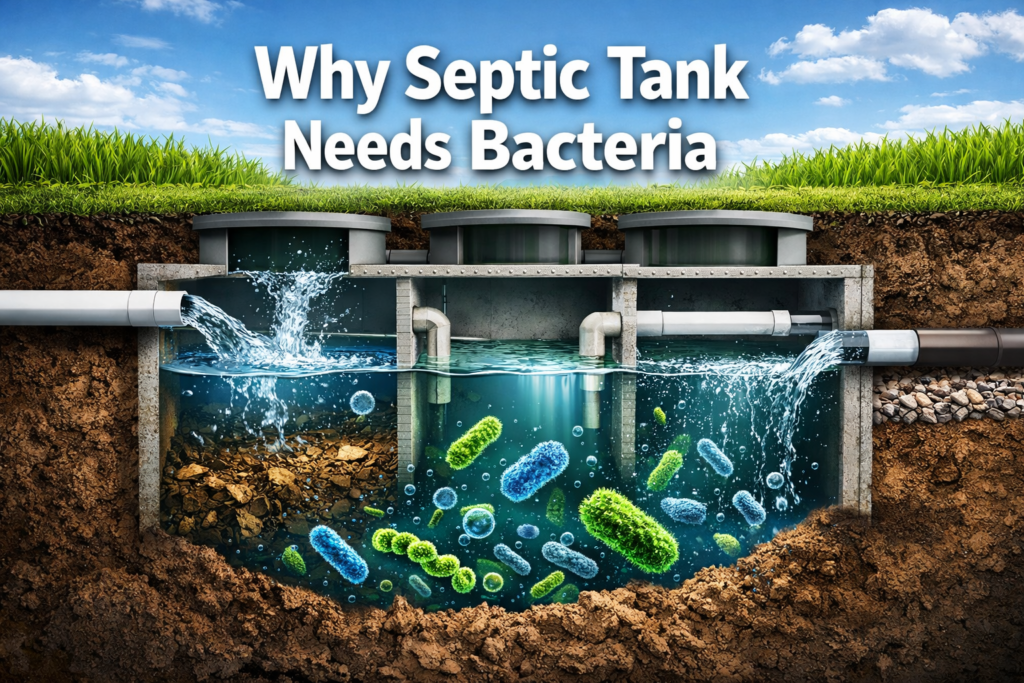
Your septic tank needs bacteria because they’re the biological engines that break down waste and keep your system functioning. Without healthy bacterial populations, solid waste accumulates rapidly, leading to frequent pump-outs, system backups, and potential failures that cost thousands to repair.
What Types of Bacteria Work in Your Septic Tank?
Septic tanks rely on two distinct types of bacteria to process waste effectively. Each type serves specific functions and operates under different conditions within your tank.
Anaerobic bacteria are the primary workforce in traditional septic systems. These microorganisms thrive without oxygen in the lower portions of your tank, where they slowly break down organic matter in the sludge layer. While they work more gradually than their oxygen-loving counterparts, anaerobic bacteria handle the bulk of waste decomposition in most residential systems.
Aerobic bacteria require oxygen to function but work much faster when conditions are right. These bacteria are particularly effective at:
- Breaking down organic material rapidly
- Reducing waste volume significantly
- Minimizing odors during decomposition
- Processing nutrients more efficiently
Advanced septic systems often include aerators specifically to support aerobic bacterial populations. Choose aerobic enhancement if you have a newer system with aeration capabilities, or stick with supporting natural anaerobic processes in traditional tanks.
Common mistake: Assuming all bacteria work the same way. Anaerobic systems can actually be harmed by too much oxygen introduction, while aerobic systems require consistent aeration to maintain bacterial health.
How Does Bacteria Break Down Waste in Your Septic Tank?
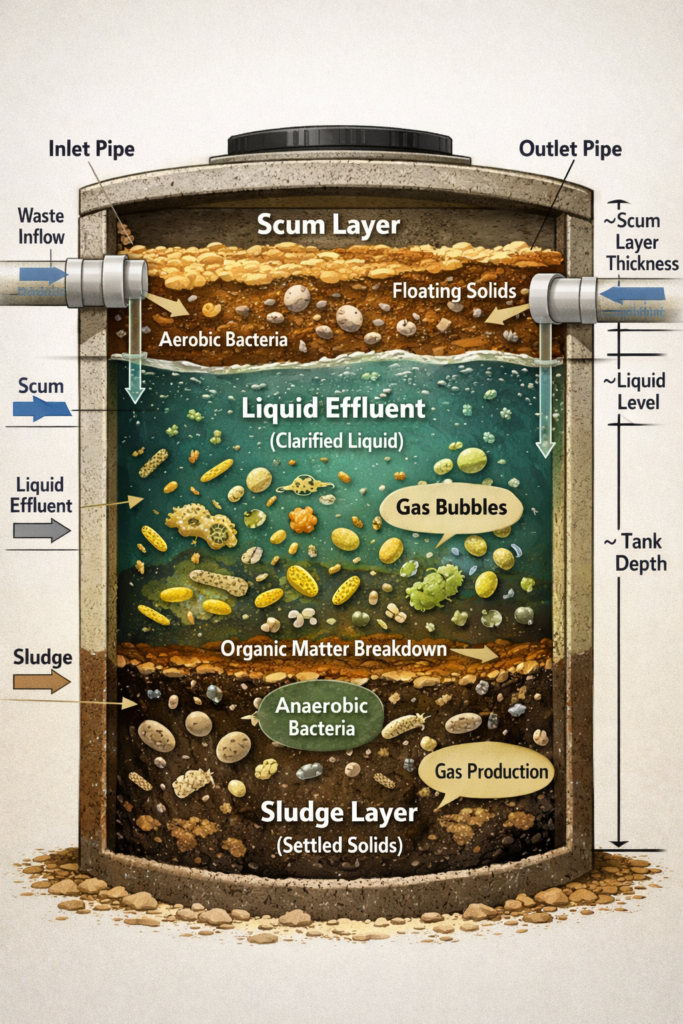
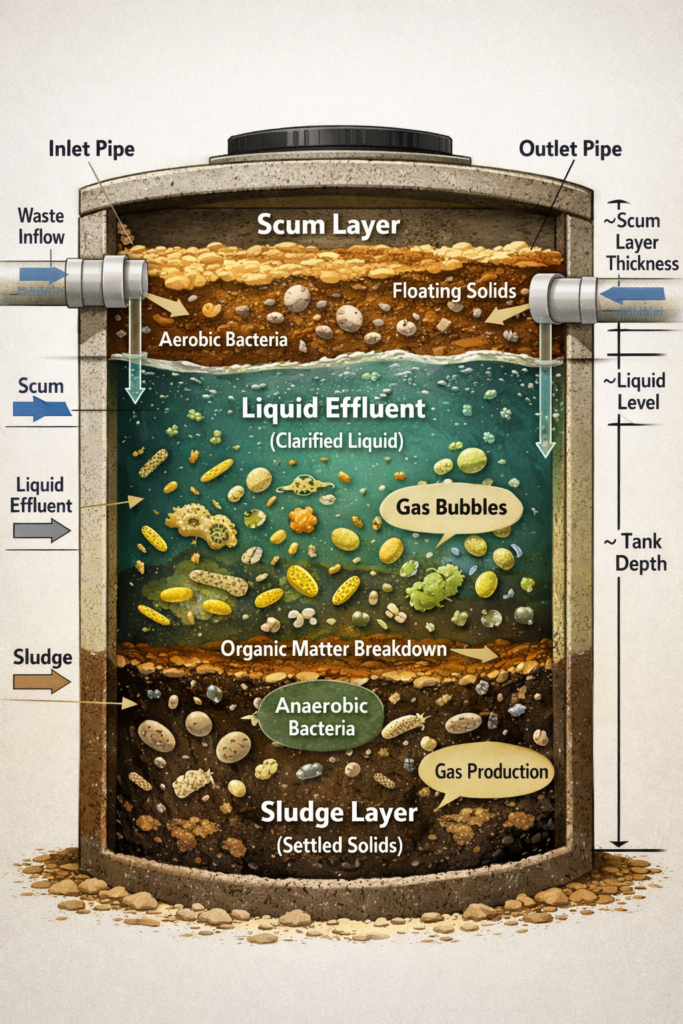
Bacteria transform complex organic compounds into simpler, safer substances through a multi-stage biological process. This breakdown occurs in three distinct layers within your septic tank.
The scum layer at the top contains floating materials like oils and grease. Bacteria here work to break down these lighter substances before they can clog your drain field. The liquid effluent layer in the middle houses bacteria that process dissolved organic matter and suspended particles.
The sludge layer at the bottom is where the heaviest bacterial activity occurs. Here, anaerobic bacteria decompose solid waste materials, reducing volume by up to 50% over time [3]. This dramatic reduction means less frequent pumping and lower maintenance costs for homeowners.
Key breakdown processes include:
- Liquefaction – Bacteria convert solid organic matter into liquid form
- Acidification – Acid-producing bacteria break down complex molecules
- Methanogenesis – Final-stage bacteria produce methane and carbon dioxide
- Nutrient cycling – Bacteria convert ammonia into safer nitrate compounds
Choose bacterial treatments if your system shows signs of slow breakdown, such as rising sludge levels between pump-outs. However, natural bacterial populations usually maintain themselves with proper care.
For homeowners looking to support this natural process, septic tank bacteria treatments can help restore bacterial balance when household chemicals or other factors disrupt the ecosystem.
Why Septic Tank Needs Bacteria for Proper System Function
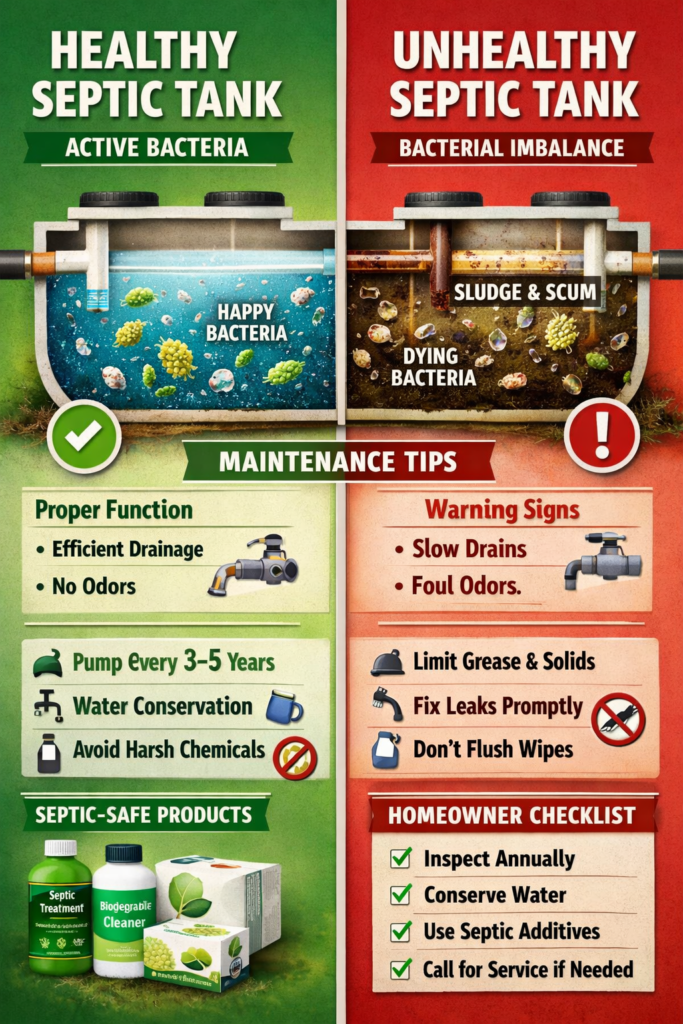
Without adequate bacterial populations, your septic system cannot perform its primary function of waste treatment. Bacteria are essential for preventing system failures that lead to expensive repairs and environmental contamination.
System efficiency depends entirely on bacterial health. When bacterial populations decline, solid waste accumulates faster than it can be processed. This leads to premature tank filling, requiring more frequent pump-outs and potentially causing system backups into your home.
Pathogen reduction protects your family and environment. Beneficial bacteria help eliminate harmful pathogens from wastewater before it reaches your drain field. This natural treatment process prevents contamination of groundwater and nearby water sources.
Proper waste flow requires bacterial action. Healthy bacteria ensure wastewater maintains the right consistency to flow through your system smoothly. Without bacterial breakdown, thick sludge can block pipes and cause sewage backups.
Cost implications are significant:
- Normal bacterial activity: Pump every 3-5 years
- Poor bacterial health: Pump every 1-2 years
- Bacterial failure: System replacement ($15,000-$25,000)
FYI: Some links may be affiliate links, which means I may earn a small commission at no extra cost to you.
If you’re concerned about maintaining healthy bacterial populations, products like Septifix tablets can help keep your septic system clean and efficient with minimal effort. These treatments are designed to support natural bacterial processes without disrupting the delicate ecosystem in your tank.
Understanding what happens in a septic tank helps homeowners appreciate why bacterial health is so critical to system longevity.
What Kills Beneficial Bacteria in Septic Systems?
Several common household products and practices can devastate bacterial populations in your septic tank. Understanding these threats helps you protect your system’s biological balance.
Household chemicals pose the biggest threat to septic bacteria. Bleach, disinfectants, and antibacterial cleaners are designed to kill microorganisms – unfortunately, they can’t distinguish between harmful germs and beneficial septic bacteria.
Products that harm bacteria include:
- Chlorine bleach and disinfectants
- Antibacterial soaps and cleaners
- Toilet bowl cleaners with harsh chemicals
- Drain cleaners and degreasers
- Excessive amounts of laundry detergent
Improper waste disposal also disrupts bacterial ecosystems. Flushing non-biodegradable items, grease, or food scraps forces bacteria to work on materials they can’t effectively process, throwing off the natural balance.
Water overuse can dilute bacterial populations and wash them out of your tank before they can establish stable colonies. Spreading out laundry loads and fixing leaky fixtures helps maintain proper bacterial concentrations.
Choose septic-safe alternatives when possible:
- Use biodegradable, septic-safe cleaning products
- Limit bleach use to essential disinfection only
- Dispose of grease in trash, not down drains
- Fix leaks promptly to prevent system overload
Edge case: Even “septic-safe” products can harm bacteria if used excessively. Moderation is key, even with approved cleaning products.
Regular septic tank maintenance includes monitoring for signs that bacterial populations may be struggling, such as slow drains or unusual odors.
How to Maintain Healthy Bacteria in Your Septic Tank
Protecting and nurturing bacterial populations requires consistent, thoughtful maintenance practices. Small daily actions make a significant difference in bacterial health over time.
Use septic-safe products consistently. Replace harsh household cleaners with biodegradable alternatives labeled as septic-safe. This single change protects bacterial colonies from chemical damage while maintaining cleaning effectiveness.
Practice proper waste disposal habits:
- Flush only human waste and septic-safe toilet paper
- Dispose of grease, food scraps, and chemicals in trash
- Avoid flushing medications, cigarettes, or personal care items
- Use garbage disposal sparingly, if at all
Manage water usage to support bacterial health. Spread out water-intensive activities like laundry and dishwashing throughout the week. This prevents overwhelming your system and gives bacteria time to process waste effectively.
Schedule regular maintenance to monitor bacterial health:
- Pump every 3-5 years or as recommended
- Inspect annually for signs of bacterial imbalance
- Address slow drains or odors promptly
Consider bacterial treatments when needed. If your system shows signs of bacterial disruption – such as slow processing or unusual odors – quality treatments can help restore balance without harmful side effects.
Warning signs of bacterial problems:
- Sewage odors around tank or drains
- Slow-draining fixtures throughout the house
- Gurgling sounds from plumbing
- Wet spots over the drain field
Understanding signs your septic tank needs maintenance helps you catch bacterial issues before they become expensive problems.
When Should You Add Bacteria to Your Septic Tank?
Certain situations call for bacterial supplementation to restore or maintain healthy populations in your septic system. Knowing when to intervene can prevent costly system failures.
After antibiotic use or illness in your household, bacterial populations may be reduced through medications that pass through your system. Adding beneficial bacteria helps restore the biological balance more quickly than waiting for natural recovery.
Following heavy chemical cleaning or accidental introduction of harsh substances, bacterial treatments can help rebuild damaged populations. This is particularly important after using strong disinfectants during illness or deep cleaning projects.
When your system shows stress signs:
- Slow drains throughout the house
- Unusual odors from drains or around the tank
- Rising sludge levels between regular pump-outs
- Recent pumping that may have removed beneficial bacteria
For new or recently pumped systems, bacterial treatments can help establish healthy populations more quickly than natural colonization alone.
Seasonal considerations matter in colder climates where bacterial activity slows significantly. Adding cold-weather bacterial strains can help maintain system function during winter months.
Helpful Resource for Septic System Care
If you want a simple, reliable way to maintain healthy bacterial populations in your septic system, Septifix tablets offer an easy solution. These tablets are specifically formulated to support the natural bacterial processes that keep your system running efficiently, helping prevent the buildup and blockages that lead to expensive repairs.
Many homeowners find that consistent use of quality bacterial treatments reduces odors, improves waste breakdown, and extends the time between pump-outs. While not absolutely necessary for every system, they can be particularly helpful if you’ve had bacterial disruptions or want extra peace of mind about your system’s health.
For comprehensive guidance on septic care, check out our complete septic tank maintenance checklist to ensure you’re covering all aspects of system health.
FAQ
How long does it take for bacteria to establish in a new septic tank?
Natural bacterial populations typically establish within 2-4 weeks in a new system. Adding bacterial treatments can reduce this time to 1-2 weeks and ensure more robust initial populations.
Can I use regular yeast to boost bacteria in my septic tank?
While yeast can provide some benefit, it’s not a substitute for proper septic bacteria. Specialized bacterial treatments contain the specific strains needed for effective waste breakdown in septic conditions.
Do I need to add bacteria every month?
Monthly additions aren’t necessary for healthy systems. Most homeowners benefit from bacterial treatments only after disruptions like heavy chemical use, pumping, or when systems show stress signs.
Will pumping my tank remove all the beneficial bacteria?
Pumping removes some bacteria along with sludge, but bacterial populations quickly reestablish from remaining colonies on tank walls and in residual liquid. The system typically recovers within 2-3 weeks.
How do I know if my septic bacteria are healthy?
Healthy bacterial activity produces minimal odors, processes waste efficiently (normal drain speeds), and maintains appropriate sludge levels between pump-outs. Problems indicate potential bacterial issues.
Can cold weather kill septic tank bacteria?
Cold weather slows bacterial activity significantly but rarely kills established populations. Insulating your tank area and using cold-weather bacterial strains can help maintain winter efficiency.
Are septic-safe toilet papers really necessary?
Yes, septic-safe toilet papers break down more easily, reducing the workload on bacterial populations. Regular toilet papers can accumulate and disrupt the bacterial balance in your tank.
What’s the difference between bacterial treatments and chemical additives?
Bacterial treatments add living microorganisms that naturally process waste. Chemical additives often disrupt natural processes and can harm beneficial bacteria while providing only temporary effects.
How often should I have my septic system inspected for bacterial health?
Annual inspections can identify bacterial health issues early. However, monitoring your system’s performance daily (drain speeds, odors) provides the best indication of bacterial activity.
Can antibacterial hand soap harm my septic bacteria?
Moderate use of antibacterial soap typically won’t harm established bacterial populations, but excessive use can reduce bacterial effectiveness. Choose regular soap when possible to minimize impact.
Do garbage disposals affect septic tank bacteria?
Garbage disposals add food waste that bacteria must process, potentially overwhelming bacterial populations and disrupting the natural balance. Limit use or avoid entirely in septic systems.
How long do bacterial treatments remain effective in the tank?
Quality bacterial treatments establish self-sustaining populations that continue working indefinitely under proper conditions. The initial treatment provides the foundation for ongoing bacterial health.
Conclusion
Understanding why septic tank needs bacteria is fundamental to maintaining a healthy, efficient septic system. These microscopic workers break down waste, reduce sludge buildup, and prevent the costly failures that plague neglected systems. Without adequate bacterial populations, your septic tank becomes little more than a holding container that fills rapidly and fails frequently.
The key to bacterial health lies in protecting existing populations through septic-safe practices while supporting them with proper maintenance. Avoid harsh chemicals, manage water usage wisely, and dispose of waste appropriately to create conditions where beneficial bacteria can thrive.
Take action today by evaluating your current household practices. Switch to septic-safe cleaning products, schedule your next inspection if it’s been over a year, and watch for early warning signs like slow drains or unusual odors. Remember that regular pumping schedules work hand-in-hand with bacterial health to keep your system functioning optimally.
Your septic system’s bacterial ecosystem is both resilient and fragile – resilient enough to recover from minor disruptions, but fragile enough to fail under consistent neglect. By understanding and supporting these essential microorganisms, you’re investing in years of reliable system performance and avoiding the expense and hassle of premature system failure.
References
[1] Role Of Bacteria In Septic Systems – https://www.acesepticandwaste.com/blog/role-of-bacteria-in-septic-systems/
[2] The Role Of Bacteria In Septic Systems For Year Round Health – https://dirtydeedsseptic.com/blog/the-role-of-bacteria-in-septic-systems-for-year-round-health/
[3] Importance Of Septic Tank Bacteria – https://www.biocleanseptic.in/blogs/news/importance-of-septic-tank-bacteria