Why Is My Septic Tank Full So Fast: Common Causes and Solutions for Homeowners
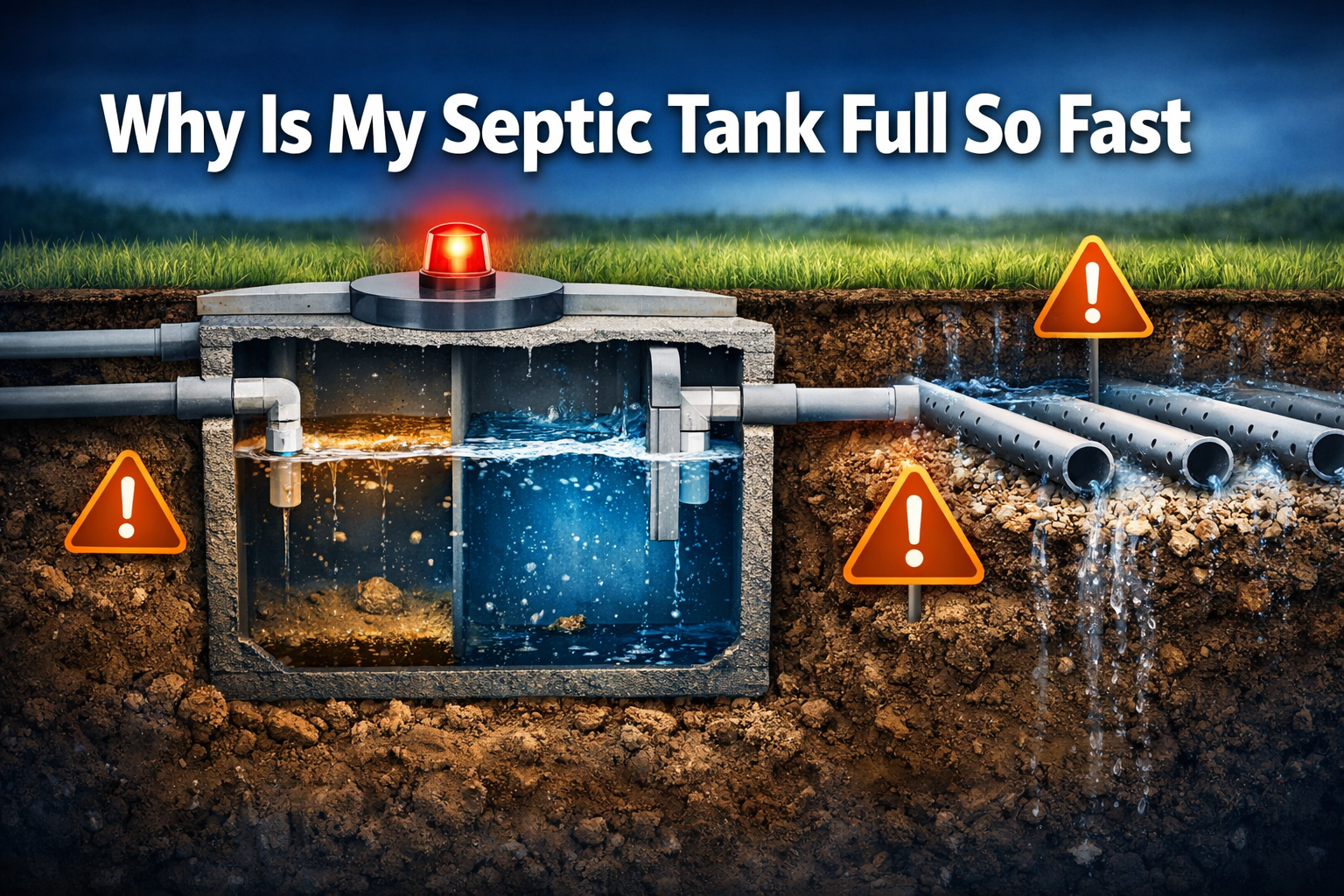
Picture this: you just had your septic tank pumped six months ago, yet here you are again, dealing with slow drains, gurgling sounds, and that unmistakable smell wafting from your yard. If you’re asking yourself “Why is my septic tank full so fast,” you’re not alone—this frustrating problem affects thousands of homeowners across the country and can signal serious underlying issues with your septic system.
A properly functioning septic tank should typically require pumping every 3-5 years for most households. When your tank fills up much faster than expected, it’s usually a red flag that something in your system isn’t working correctly. Understanding the root causes can save you thousands of dollars in emergency repairs and help you maintain a healthy, efficient septic system for years to come.
Key Takeaways
• Excessive water usage is the most common cause of rapid septic tank filling, often from leaky fixtures or inefficient appliances
• Blocked drain fields and outlet filters prevent proper wastewater flow, causing tanks to fill faster than they can empty
• Poor maintenance practices like infrequent pumping and using harsh chemicals can significantly reduce your system’s capacity
• Early detection and prevention through regular inspections can prevent costly emergency repairs
• Simple household changes in water usage and maintenance can extend your septic system’s lifespan dramatically
Understanding How Your Septic System Works
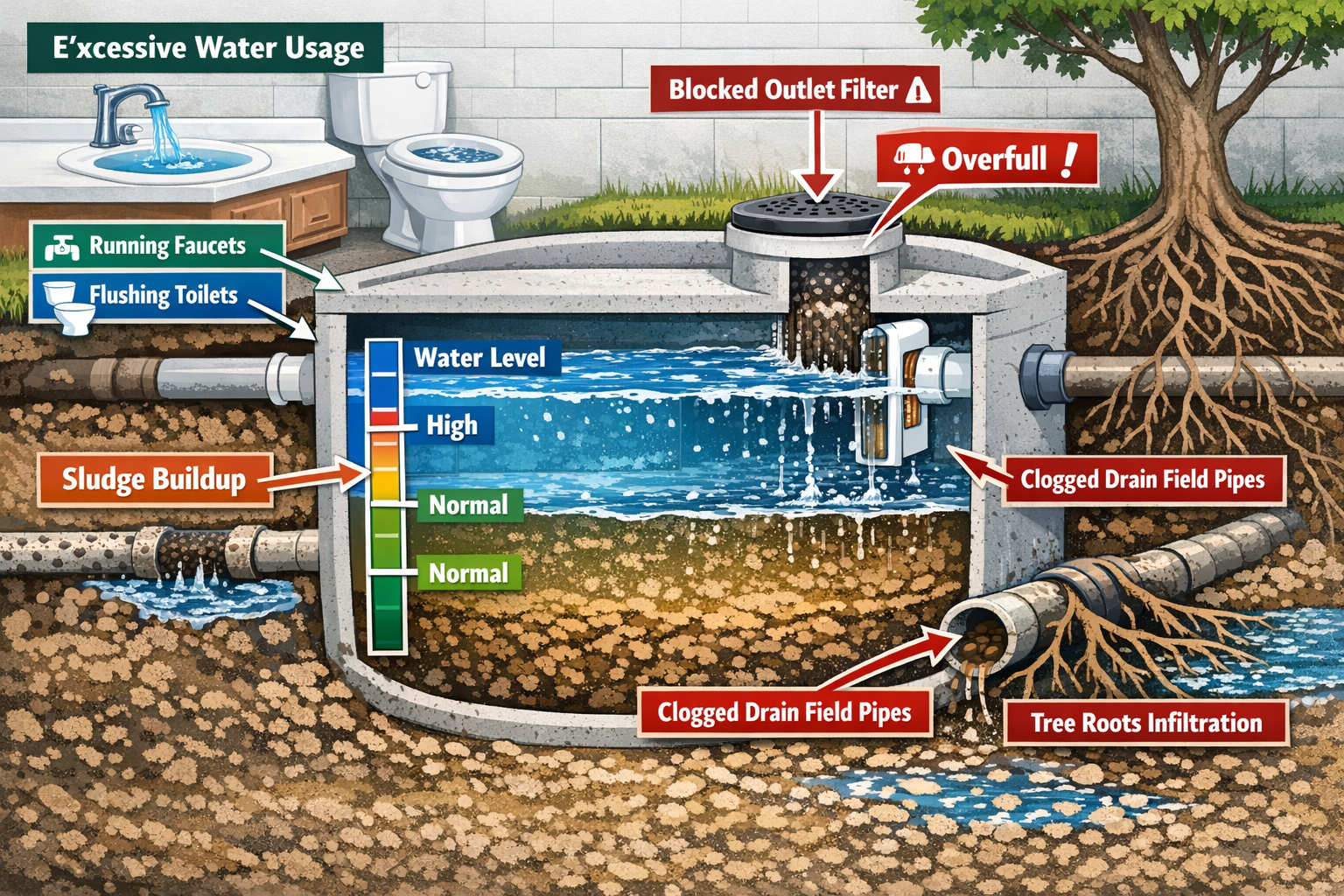
Before diving into why your septic tank might be filling too quickly, it’s helpful to understand the basic mechanics of your septic system. Your septic tank serves as the first stage of wastewater treatment, where solids settle to the bottom as sludge, oils and grease float to the top as scum, and the middle layer of clarified liquid (effluent) flows out to your drain field.
In a healthy system, this process creates a natural balance. Bacteria break down organic matter, the tank maintains proper liquid levels, and wastewater flows smoothly through the system. When this balance gets disrupted, your tank can fill up much faster than normal.
The typical septic tank is designed to hold about 1,000 gallons for a standard household, with the capacity to process daily wastewater while maintaining proper treatment levels. When functioning correctly, only the middle liquid layer should exit the tank, leaving solids behind for bacterial decomposition.
Most Common Reasons Why Your Septic Tank Fills Up Too Fast
Excessive Water Usage
Excessive water usage consistently ranks as the number one cause of rapid septic tank filling. When your household uses more water than your septic system was designed to handle, the tank simply can’t keep up with the incoming flow.
This problem often develops gradually as families grow, add new appliances, or change their water usage habits. Modern washing machines, dishwashers, and long showers can easily overwhelm an older septic system that was sized for different usage patterns.
Common sources of excessive water usage include:
- Multiple loads of laundry done in one day
- Long showers or filling large bathtubs frequently
- Running dishwashers multiple times daily
- Inefficient appliances that use more water than necessary
- Increased household occupancy beyond the system’s design capacity
Undetected Plumbing Leaks
Hidden leaks create a constant flow of water into your septic system, dramatically accelerating how quickly your tank fills. These leaks often go unnoticed for months, quietly overwhelming your system 24/7.
The most problematic leaks include:
- Running toilets that continuously cycle water
- Dripping faucets that seem minor but add up over time
- Leaking pipes inside walls or underground
- Faulty water heater connections
- Irrigation system backflow into household plumbing
A single running toilet can waste up to 200 gallons per day—that’s enough to significantly impact your septic system’s performance and explain why your tank fills up so fast.
Clogged or Failing Drain Field
Your drain field (also called a leach field) is where the real magic happens in septic treatment. When this system fails or becomes clogged, wastewater can’t properly absorb into the soil, forcing your septic tank to hold more liquid than intended.
Signs of drain field problems include:
- Standing water over the drain field area
- Lush, green grass growing above the pipes (from nutrient-rich wastewater)
- Sewage odors in your yard
- Slow drains throughout your house
- Gurgling sounds from plumbing fixtures
Drain field failure can result from soil saturation, pipe damage, or biomat buildup that prevents proper water absorption.
Blocked Outlet Filters
Many homeowners don’t realize their septic tank has an outlet filter designed to prevent solids from entering the drain field. When this filter becomes clogged, wastewater can’t exit the tank properly, causing rapid filling.
Outlet filter problems often stem from:
- Lack of regular cleaning (should be done during routine pumping)
- Excessive solid waste entering the system
- Improper household products that don’t break down naturally
- Damaged or missing filters that need replacement
FYI: Some links may be affiliate links, which means I may earn a small commission at no extra cost to you.
For homeowners looking to maintain their septic systems more effectively, products like Septifix tablets can help break down waste and reduce buildup that contributes to filter blockages. These easy-to-use treatments work to maintain a healthy bacterial balance in your tank, potentially reducing the frequency of filter clogs and system backups.
How to Diagnose Why Is My Septic Tank Full So Fast
Conducting a Water Usage Audit
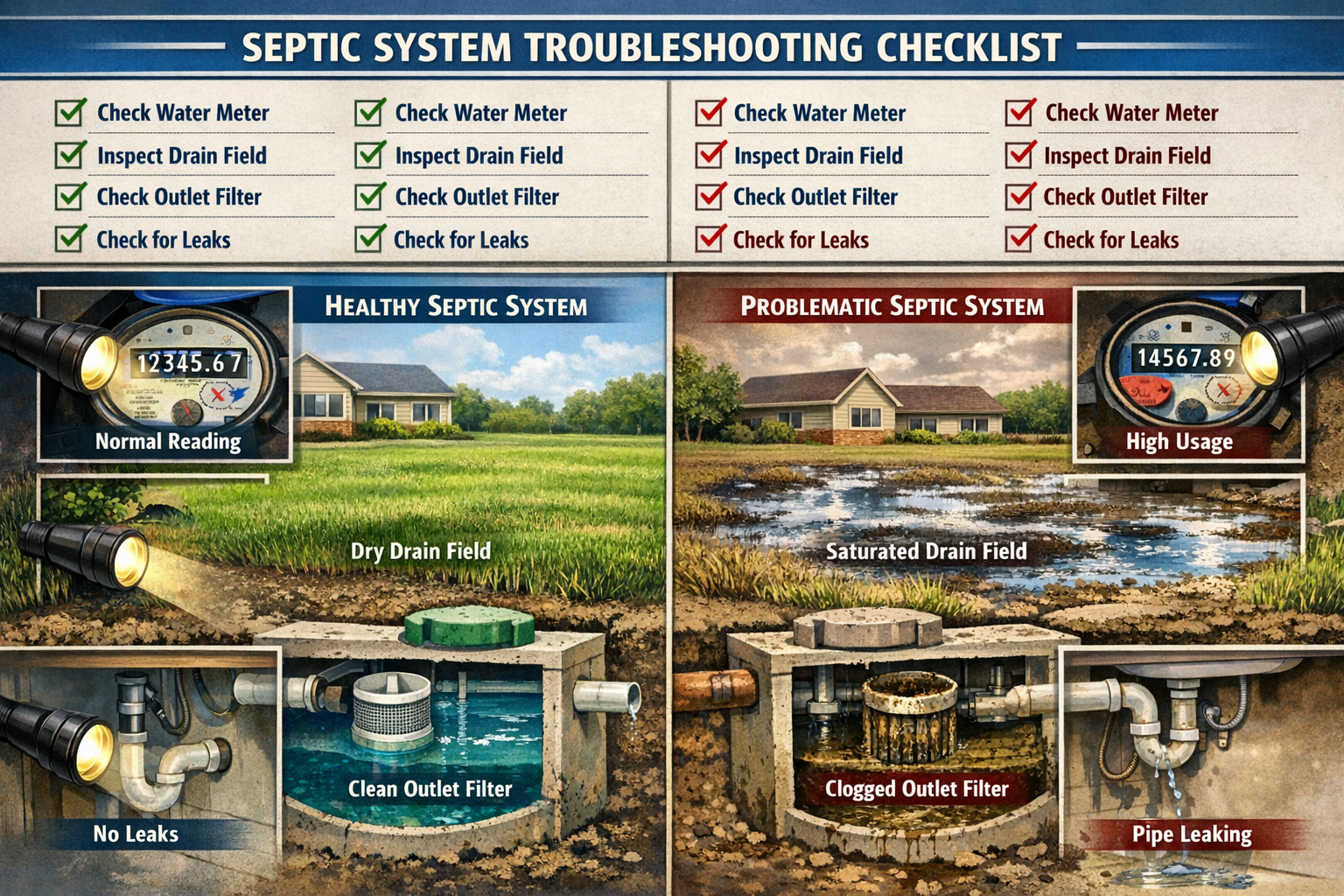
The first step in diagnosing rapid septic tank filling is understanding your household’s water consumption patterns. Start by checking your water meter at the beginning and end of a day when no one will be home—any usage indicates a leak somewhere in your system.
Daily water usage checklist:
- Record shower lengths and frequency
- Count dishwasher and washing machine cycles
- Note any running water sounds
- Check all faucets and toilets for drips or continuous running
- Monitor outdoor water usage that might connect to your septic system
Most households should use between 50-100 gallons per person per day. If your usage significantly exceeds this range, you’ve likely found a major contributor to your septic tank filling too quickly.
Inspecting for Plumbing Leaks
Systematic leak detection can reveal hidden problems that explain why your septic tank fills up so fast. Start with the most common culprits and work your way through less obvious sources.
Toilet leak test: Add food coloring to your toilet tank. If color appears in the bowl without flushing, you have a leak that could be sending hundreds of gallons daily to your septic system.
Faucet and fixture inspection: Check every faucet, showerhead, and water connection in your home. Even minor drips add up over time and can overwhelm your septic capacity.
Underground leak signs: Look for unexplained wet spots in your yard, unusually green patches of grass, or areas where the ground feels soft or spongy.
Evaluating Your Drain Field
Visual drain field inspection can provide important clues about why your septic system isn’t processing wastewater effectively. Walk the area above your drain field and look for obvious problems.
Warning signs to check for:
- Pooling water or soggy ground
- Strong sewage odors
- Unusually lush vegetation growth
- Visible pipe damage or collapse
- Areas where the ground has settled or shifted
If you notice multiple warning signs, your drain field may need professional attention to restore proper function and prevent your septic tank from filling too rapidly.
Professional System Inspection
While homeowners can identify many obvious problems, a professional septic inspection provides the most comprehensive diagnosis of why your tank fills up so fast. Licensed septic professionals have specialized tools and expertise to detect issues that aren’t visible during basic inspections.
Professional inspections typically include:
- Tank pumping and cleaning to assess actual capacity
- Outlet filter examination and cleaning
- Baffle and pipe integrity checks
- Drain field performance testing
- System capacity evaluation based on current household needs
For comprehensive guidance on septic system maintenance and troubleshooting, check out our complete septic care resources that cover everything from basic maintenance to emergency problem-solving.
Prevention Strategies to Keep Your Septic Tank Working Properly
Water Conservation Techniques
Smart water management is your first line of defense against rapid septic tank filling. By reducing overall water usage and spreading it throughout the day, you can significantly extend the time between pumpings and improve system performance.
Effective water conservation strategies:
🚿 Bathroom improvements:
- Install low-flow showerheads and faucets
- Replace old toilets with high-efficiency models
- Take shorter showers and avoid filling bathtubs frequently
- Fix leaks immediately when discovered
🧺 Laundry modifications:
- Spread wash loads throughout the week instead of doing multiple loads in one day
- Use appropriate water levels for load sizes
- Consider upgrading to a high-efficiency washing machine
- Avoid excessive use of fabric softeners that can clog systems
Proper Septic Maintenance Schedule
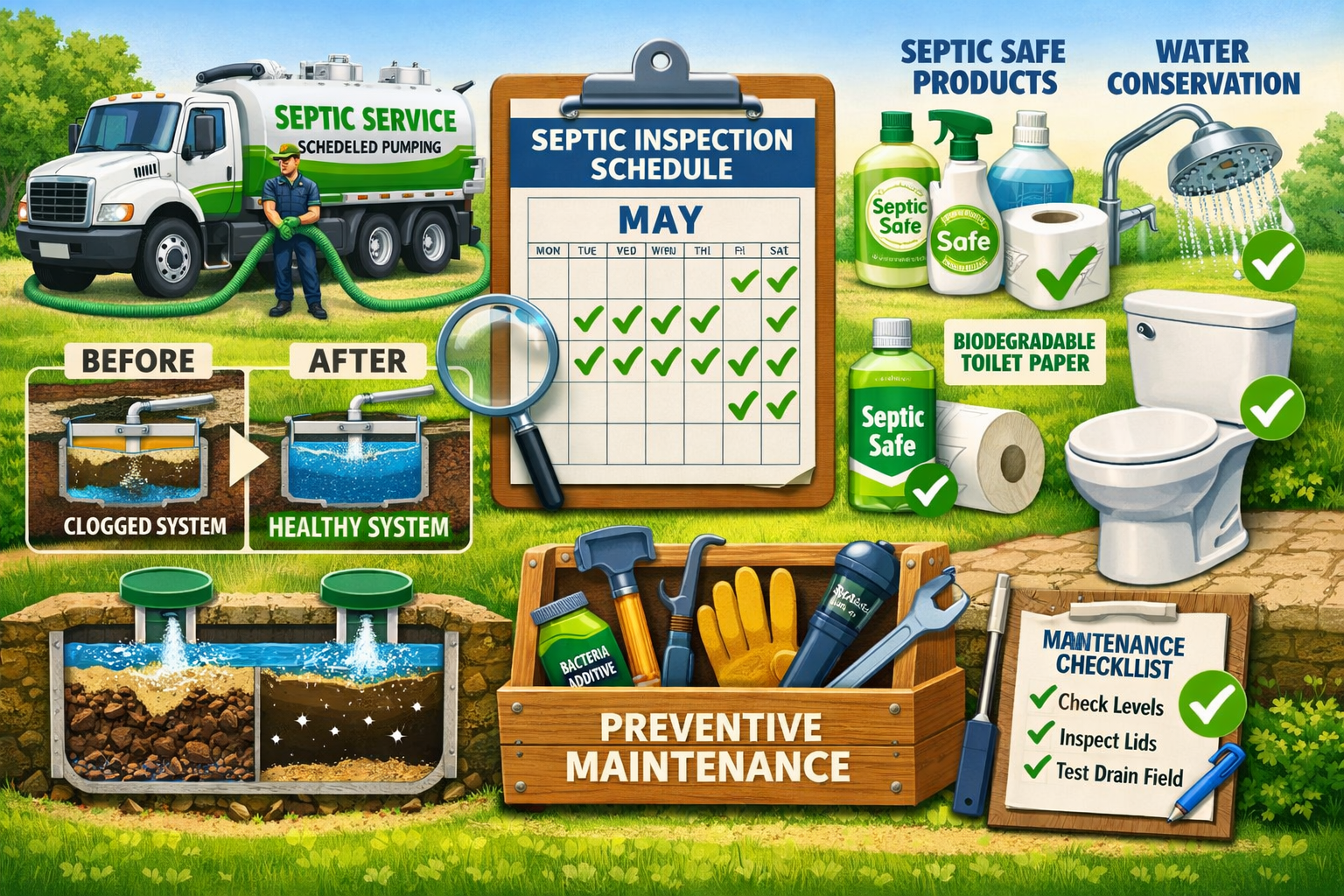
Regular maintenance prevents most problems that cause septic tanks to fill too quickly. Establishing a consistent schedule helps catch issues before they become expensive emergencies.
Essential maintenance timeline:
| Frequency | Task | Purpose |
|---|---|---|
| Every 3-5 years | Professional pumping | Remove accumulated sludge and scum |
| Annually | Outlet filter cleaning | Prevent blockages and backups |
| Every 2 years | System inspection | Identify potential problems early |
| Monthly | Household usage review | Monitor water consumption patterns |
| As needed | Drain field assessment | Ensure proper wastewater absorption |
Household Product Choices
What goes down your drains directly impacts how quickly your septic tank fills and how well it functions. Many common household products can disrupt the bacterial balance essential for proper waste breakdown.
Septic-safe practices:
- Use biodegradable cleaning products
- Avoid antibacterial soaps that kill beneficial bacteria
- Never flush medications, chemicals, or non-biodegradable items
- Limit garbage disposal use for grease and food scraps
- Choose septic-safe toilet paper and personal care products
Products to avoid:
- Bleach-based cleaners in large quantities
- Drain cleaners with harsh chemicals
- Excessive amounts of laundry detergent
- Cat litter (even “flushable” varieties)
- Feminine hygiene products and diapers
For additional maintenance support, our frequently asked questions section addresses common concerns about septic-safe products and maintenance schedules.
When to Call Professional Help
Emergency Warning Signs
Some situations require immediate professional attention to prevent system failure and costly damage. If you notice these emergency indicators, contact a septic professional right away rather than trying to diagnose why your septic tank fills up so fast on your own.
Call immediately for:
- 🚨 Sewage backing up into your house
- 🚨 Strong sewage odors inside your home
- 🚨 Standing sewage water in your yard
- 🚨 Complete drainage failure (nothing drains)
- 🚨 Gurgling sounds from multiple drains simultaneously
Schedule professional service soon for:
- Slow drains throughout the house
- Toilet flushing problems
- Unusual odors around the septic tank area
- Wet spots over the drain field
- Tank filling faster than every 2 years
Choosing the Right Septic Professional
Finding qualified help ensures you get accurate diagnosis and effective solutions for your septic tank problems. Not all contractors have the same level of expertise with septic systems, so it’s worth researching your options.
Questions to ask potential contractors:
- Are you licensed for septic system work in this area?
- How many years of experience do you have with septic systems?
- Can you provide references from recent customers?
- Do you offer emergency service calls?
- What diagnostic tools do you use for system evaluation?
Red flags to avoid:
- Contractors who give estimates without inspecting your system
- Extremely low bids that seem too good to be true
- Pressure to replace your entire system without clear justification
- Lack of proper licensing or insurance
- Unwillingness to explain their findings and recommendations
Cost-Effective Solutions and Maintenance Tips
Budget-Friendly Prevention Methods
Preventing problems costs far less than fixing them after your septic system fails. Most homeowners can implement these cost-effective strategies without major investments while significantly reducing the likelihood of rapid tank filling.
Low-cost prevention strategies:
- Regular pumping schedule ($300-500 every 3-5 years vs. $15,000+ for system replacement)
- Water usage monitoring (free with existing water meter)
- Leak detection and repair ($50-200 for most fixes vs. thousands in system damage)
- Proper household product choices (minimal cost difference for septic-safe alternatives)
DIY Maintenance Tasks
While major septic work requires professionals, homeowners can handle several routine maintenance tasks that help prevent rapid tank filling and extend system life.
Safe DIY tasks:
- ✅ Monitoring water usage patterns
- ✅ Checking for visible leaks
- ✅ Keeping records of pumping and maintenance
- ✅ Protecting the drain field from vehicle traffic
- ✅ Maintaining proper landscaping around the system
Tasks requiring professionals:
- ❌ Pumping the septic tank
- ❌ Cleaning or replacing outlet filters
- ❌ Repairing drain field problems
- ❌ Diagnosing complex system failures
- ❌ Any work requiring tank entry or excavation
For more detailed maintenance guidance, visit our septic care blog for step-by-step tutorials and seasonal maintenance checklists.
Long-Term Investment Considerations
Strategic improvements to your septic system can prevent future problems and reduce long-term costs. While these investments require upfront spending, they often pay for themselves through reduced maintenance needs and extended system life.
Worthwhile upgrades:
- High-efficiency appliances that reduce water usage
- Advanced treatment units for challenging soil conditions
- Effluent filters to protect drain field integrity
- Alarm systems for early problem detection
- Distribution box improvements for better drain field performance
Helpful Resource for Septic System Maintenance
If you’re looking for a simple way to support your septic system’s health and potentially reduce the frequency of rapid filling, Septifix tablets offer a convenient maintenance solution. These tablets work by introducing beneficial bacteria that help break down waste more effectively, potentially reducing sludge buildup and maintaining better system balance.
The tablets are designed to be easy to use—simply flush them monthly to help maintain optimal bacterial levels in your tank. While not a cure-all for serious system problems, they can be a useful part of a comprehensive maintenance routine for homeowners who want to be proactive about their septic care.
Keep in mind that proper maintenance, water conservation, and regular professional service remain the most important factors in preventing rapid septic tank filling. Products like Septifix work best as part of an overall maintenance strategy rather than a standalone solution.
Conclusion
Understanding why your septic tank fills up so fast empowers you to take control of your system’s health and avoid costly emergency repairs. The most common culprits—excessive water usage, hidden leaks, drain field problems, and poor maintenance—are all preventable with the right knowledge and consistent attention.
Take action today by:
- Conducting a water usage audit to identify any excessive consumption or leaks
- Scheduling a professional inspection if your tank has been filling faster than every 2-3 years
- Implementing water conservation measures throughout your household
- Establishing a regular maintenance schedule with a qualified septic professional
- Monitoring your system for early warning signs of problems
Remember that your septic system is a significant investment in your property—typically lasting 20-30 years with proper care. The time and money you invest in understanding and maintaining your system will pay dividends in reliable performance and avoided emergency costs.
Don’t wait until you’re dealing with sewage backups or complete system failure. By addressing the question “Why is my septic tank full so fast” proactively, you can ensure your septic system serves your household effectively for decades to come.
For ongoing support and detailed maintenance guidance, explore our complete septic care resources and don’t hesitate to contact us with specific questions about your septic system concerns.
References
[1] Why Your Septic Tank Keeps Filling Up Too Fast – https://www.simsseptic.com/why-your-septic-tank-keeps-filling-up-too-fast/
[2] Understanding The Causes Behind A Quickly Filling Septic Tank – https://lionhomeservice.com/septic/understanding-the-causes-behind-a-quickly-filling-septic-tank/
[3] 10 Reasons Why Your Septic Tank May Be Filling Too Quickly – https://vikingavl.com/blog/10-reasons-why-your-septic-tank-may-be-filling-too-quickly
[4] Why Is My Septic Tank Full When After Pumping – https://www.septicconnection.com/why-is-my-septic-tank-full-when-after-pumping