
Why Does My Septic Tank Smell? A Complete Guide to Identifying and Fixing Septic Odors

Picture this: you’re enjoying a peaceful evening in your backyard when suddenly, an unmistakable sewage smell hits you. If you’re asking yourself “why does my septic tank smell,” you’re not alone. Septic odors are one of the most common—and concerning—issues that homeowners face with their wastewater systems.
A properly functioning septic system should operate virtually odor-free. When unpleasant smells start wafting from your tank, drains, or yard, it’s your system’s way of telling you something needs attention. The good news? Most septic odor problems have straightforward solutions once you understand what’s causing them.
Key Takeaways
• Natural gases like hydrogen sulfide and methane are the primary sources of septic odors, but a healthy system should contain these smells effectively
• Overfilled tanks are the most common cause of septic odors, preventing proper waste breakdown and allowing gases to escape
• Ventilation problems and damaged seals allow sewage gases to escape into your home and yard instead of venting safely
• Regular maintenance including pumping every 3-5 years and proper household habits can prevent most odor issues
• Professional inspection is recommended when odors persist, as some problems like cracked pipes require expert repair
Understanding the Science Behind Septic Tank Odors
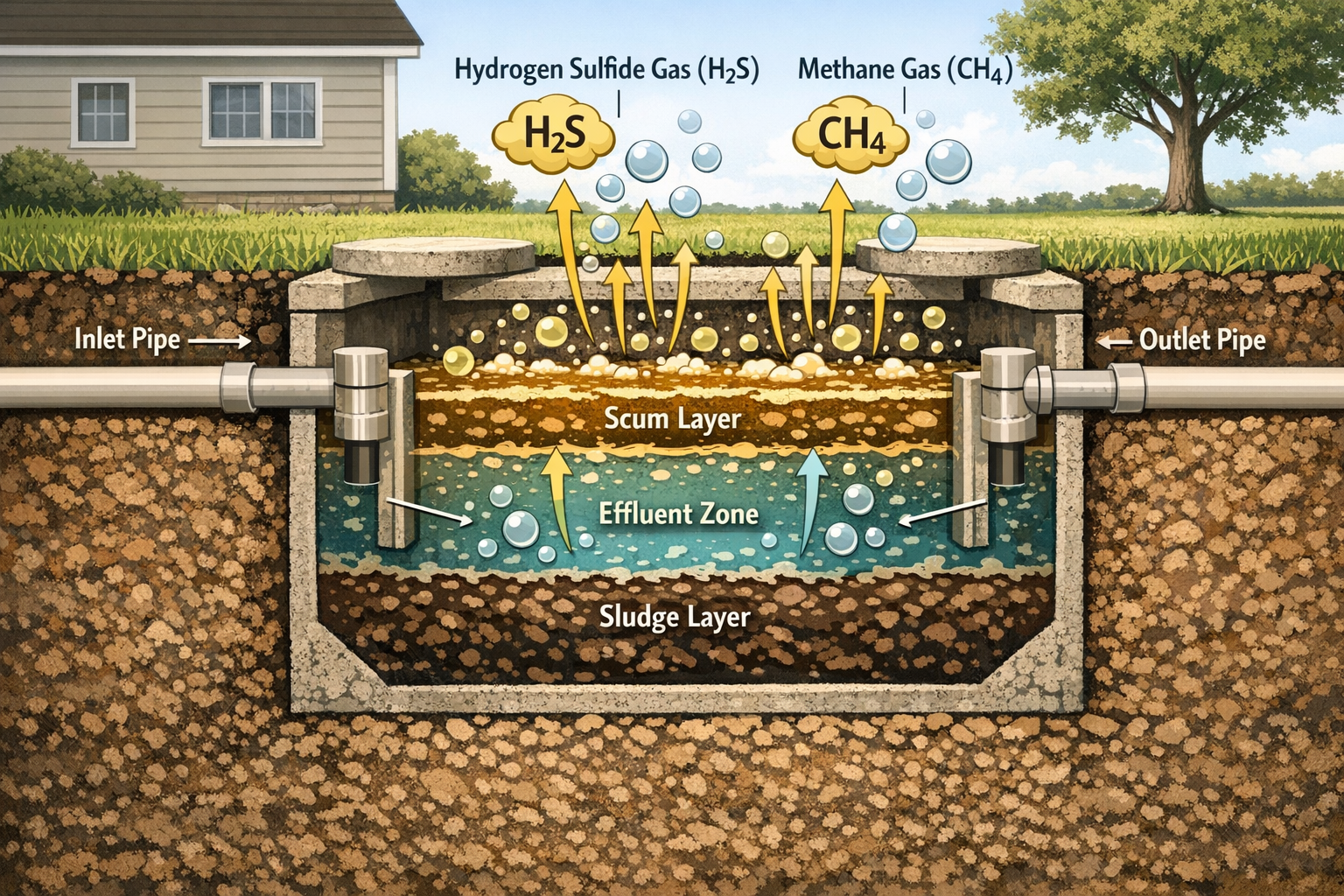
What Causes Septic Smells?
When you wonder “why does my septic tank smell,” the answer lies in the natural decomposition process happening inside your system. Septic tanks rely on bacteria to break down organic waste, and this process produces gases as a byproduct.
The two main culprits behind septic odors are:
Hydrogen Sulfide (H₂S) 🥚
- Creates that distinctive “rotten egg” smell
- Produced when sulfur-containing materials decompose
- Most noticeable septic odor that homeowners encounter
Methane (CH₄) 💨
- Has a sweet, musty odor
- Highly flammable gas requiring proper ventilation
- Less noticeable but equally important to manage
These gases are completely normal in a septic system. The problem arises when they escape from where they should be contained and properly vented.
How a Healthy Septic System Contains Odors
A well-designed septic system has multiple safeguards to prevent odors from reaching your nose:
- Proper ventilation through vent pipes that extend above your roofline
- Water traps in drains that create a barrier against rising gases
- Sealed connections between pipes and tank components
- Adequate soil cover over the tank and distribution system
When these systems work together correctly, you shouldn’t notice any septic odors around your property. For more information about maintaining your septic system, check out our comprehensive septic care resources.
Common Causes: Why Does My Septic Tank Smell?
1. Overfilled or Full Septic Tanks
The #1 reason homeowners ask “why does my septic tank smell” is an overfilled tank. When your septic tank reaches capacity, several problems occur simultaneously:
- Waste cannot break down properly in the crowded environment
- Gases have nowhere to go except up and out
- Solid waste may back up into your home’s plumbing
- The natural settling process gets disrupted
Signs your tank is too full:
- Strong odors around the tank area
- Slow-draining sinks and toilets
- Gurgling sounds from drains
- Wet spots or standing water near the tank
2. Broken Seals and Damaged Components
Septic systems rely on tight seals to contain gases and direct them through proper ventilation channels. When these seals fail, odors escape directly into the environment.
Common seal failure points:
- Tank lid and access port seals
- Pipe connections entering and leaving the tank
- Baffle seals inside the tank
- Distribution box connections
Unlike some septic issues that may resolve themselves, broken seals require immediate attention and won’t improve without repair.
3. Ventilation Problems
Proper ventilation is crucial for odor control, yet many homeowners overlook this aspect of their septic system.
Ventilation issues include:
| Problem | Cause | Solution |
|---|---|---|
| Blocked vents | Debris, bird nests, ice | Clear obstruction |
| Insufficient height | Vent doesn’t extend above roofline | Extend pipe height |
| Missing carbon filter | No odor filtration | Install carbon filter |
| Damaged vent pipe | Cracks or breaks in pipe | Repair or replace |
Pro tip: Carbon filters in vent pipes can significantly reduce odors but need replacement every 1-5 years depending on usage.
4. Inadequate Oxygen Levels
Your septic tank depends on the right balance of aerobic (oxygen-loving) and anaerobic (oxygen-free) bacteria. When oxygen levels drop too low throughout the system, beneficial aerobic bacteria die off.
This creates a domino effect:
- Less efficient waste breakdown
- Increased sludge buildup
- More gas production
- Stronger, more persistent odors
FYI: Some links may be affiliate links, which means I may earn a small commission at no extra cost to you.
If you’re dealing with bacterial imbalance issues, Septifix tablets can help restore healthy bacterial activity in your septic system. These easy-to-use treatments are designed to break down waste more efficiently and reduce odor-causing buildup, helping maintain the delicate bacterial balance your system needs to function properly.
5. Household Contaminants
What goes down your drains directly impacts your septic system’s health and odor production. Many common household products can disrupt the bacterial balance that keeps odors under control.
Harmful items that worsen septic odors:
- Harsh chemical cleaners and bleach
- Antibacterial soaps and sanitizers
- Wet wipes and “flushable” products
- Sanitary products and cotton swabs
- Grease and cooking oils
- Non-biodegradable materials
These contaminants don’t just cause odors—they can damage your entire septic system over time.
Seasonal and Environmental Factors
Winter Weather Impacts
Cold weather presents unique challenges that can make septic odors more noticeable:
Frozen ground conditions:
- Reduced soil absorption in the drain field
- Backup of effluent in the system
- Increased gas pressure and odor escape
Wind patterns:
- Strong winter winds carry odors farther
- Changed air pressure affects ventilation
- Odors that might normally dissipate become more concentrated
Soil and Drainage Issues
Your septic system’s location and surrounding soil conditions play a major role in odor control:
Problematic soil conditions:
- Clay soil that doesn’t absorb effluent well
- Saturated soil from heavy rainfall
- Compacted soil over the drain field
- Poor drainage around the tank area
Drain field problems:
- Clogged distribution pipes
- Biomat buildup preventing absorption
- Standing water in the absorption area
- Tree roots infiltrating the system
When the drain field can’t properly process effluent, backup occurs, leading to strong sewage smells and potential system failure.
Troubleshooting Steps: Diagnosing Why Your Septic Tank Smells
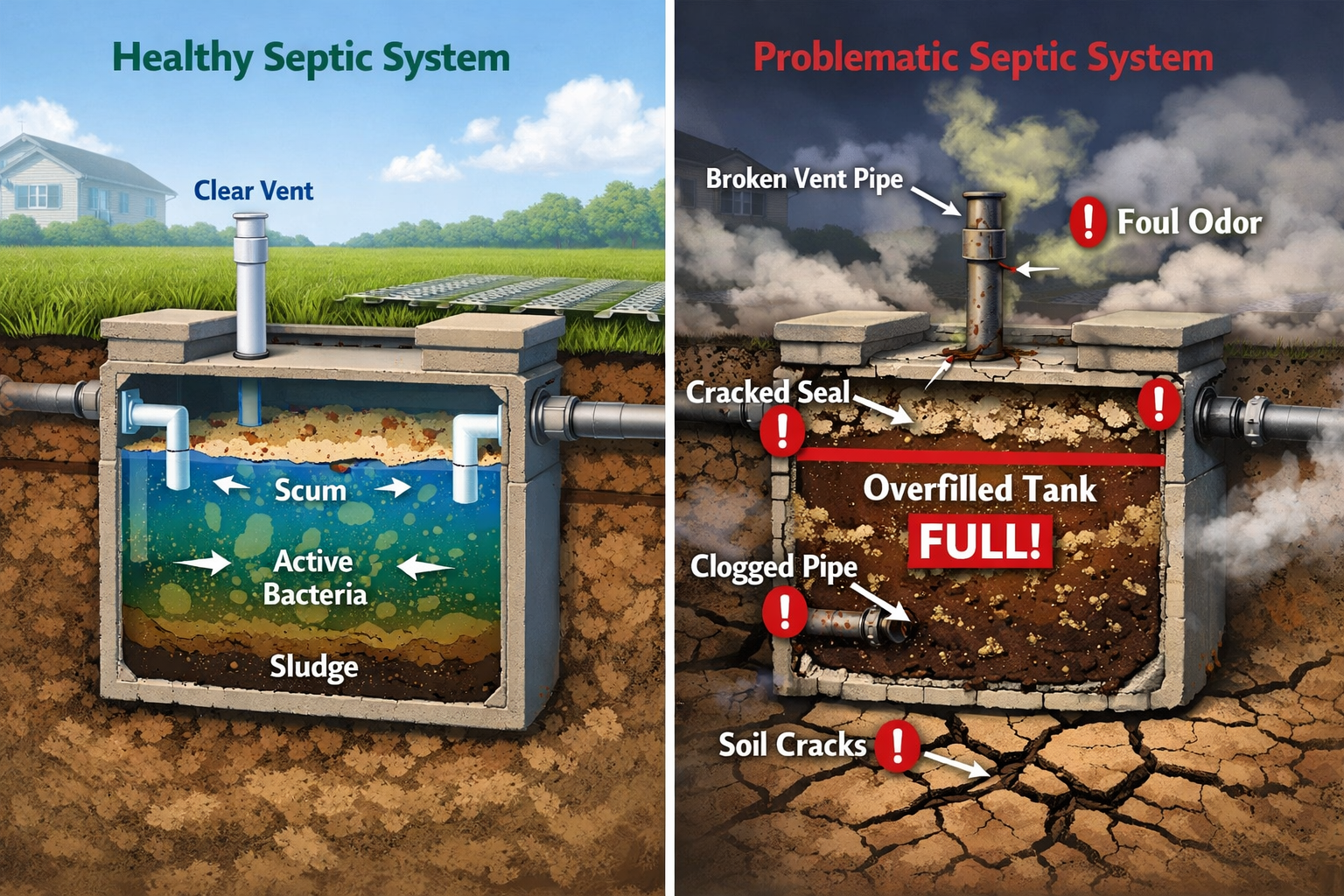
Step 1: Locate the Source of the Odor
Before you can fix the problem, you need to pinpoint where the smell is coming from:
Indoor odors:
- Check all drains for sewer gas smells
- Inspect areas around toilets and floor drains
- Look for signs of backup or standing water
- Test water traps by running water in unused drains
Outdoor odors:
- Walk around your septic tank area
- Check the drain field for wet spots or strong smells
- Inspect vent pipes on your roof
- Look for obvious signs of system failure
Step 2: Check Tank Levels
If you suspect your tank is full, here’s how to check safely:
⚠️ Safety first: Never enter a septic tank or lean directly over an open tank. Septic gases can be dangerous or even deadly.
Safe inspection methods:
- Remove the tank lid carefully (may require professional help)
- Use a long stick or measuring device
- Look for the scum layer level
- Check if waste is backing up toward the inlet
Normal levels:
- Scum layer should be 6+ inches below the outlet pipe
- Clear space should exist between waste and tank lid
- No backup toward the house connection
Step 3: Inspect Ventilation Systems
Proper ventilation is critical for odor control:
Roof vent inspection:
- Ensure vents extend at least 6 inches above the roofline
- Check for blockages (leaves, snow, bird nests)
- Look for damaged or disconnected vent pipes
- Verify carbon filters are present and functional
Ground-level vents:
- Some systems have additional ground vents
- Ensure these aren’t blocked or damaged
- Check that covers are secure but allow airflow
Step 4: Evaluate Household Habits
Sometimes the answer to “why does my septic tank smell” lies in recent changes to your household routine:
Recent changes to consider:
- New cleaning products or detergents
- Increased water usage (guests, new appliances)
- Medications that might affect bacterial balance
- Changes in what’s being flushed or drained
For additional troubleshooting guidance, visit our frequently asked questions section where we address common septic system concerns.
Professional Solutions and When to Call for Help
DIY Fixes vs. Professional Repairs
Some septic odor issues you can handle yourself, while others require professional expertise:
Safe DIY solutions:
- Pumping water into dry drain traps
- Clearing visible vent blockages (safely from roof)
- Reducing harmful household chemical use
- Basic tank level checking
Requires professional help:
- Tank pumping and cleaning
- Repairing broken seals or damaged pipes
- Replacing or extending vent systems
- Drain field repairs or replacement
- Soil stack crack repairs
Signs You Need Professional Intervention
Call a septic professional immediately if you notice:
🚨 Emergency signs:
- Sewage backup into your home
- Standing water or wet spots near the tank
- Strong odors that persist after basic troubleshooting
- Visible cracks in tank components
- Unusual sounds from the septic system
Routine professional services:
- Tank pumping every 3-5 years
- Annual system inspections
- Bacterial additive treatments
- Drain field maintenance
Cost Considerations
Understanding potential costs helps you budget for septic repairs:
| Service | Typical Cost Range | Frequency |
|---|---|---|
| Tank pumping | $200-$500 | Every 3-5 years |
| Seal repairs | $150-$400 | As needed |
| Vent system repair | $200-$800 | As needed |
| Drain field repair | $1,000-$5,000+ | Rare, but major |
Prevention is always cheaper than repair. Regular maintenance costs far less than emergency repairs or system replacement.
Prevention Strategies: Keeping Your Septic System Odor-Free
Regular Maintenance Schedule
The best way to avoid asking “why does my septic tank smell” is to prevent odor problems before they start:
Annual tasks:
- Professional system inspection
- Check and clean vent systems
- Inspect tank lids and seals
- Evaluate drain field condition
Every 3-5 years:
- Professional tank pumping
- Bacterial balance assessment
- Update system records and maintenance logs
Monthly habits:
- Monitor water usage patterns
- Check for slow drains or unusual odors
- Maintain proper household chemical use
- Inspect visible system components
Proper Household Practices
Your daily habits significantly impact your septic system’s health and odor production:
Septic-safe practices:
- Use biodegradable, septic-safe cleaning products
- Limit water usage during peak times
- Never flush non-biodegradable items
- Dispose of grease and oils properly (not down drains)
- Space out laundry loads throughout the week
Water conservation tips:
- Fix leaky faucets and toilets promptly
- Install low-flow fixtures where possible
- Take shorter showers
- Only run dishwashers and washing machines with full loads
Beneficial Bacteria Management
Maintaining healthy bacterial populations prevents many odor issues:
Supporting good bacteria:
- Avoid antibacterial products when possible
- Limit bleach and harsh chemical use
- Consider periodic bacterial additives
- Maintain consistent waste input (avoid long vacant periods)
Warning signs of bacterial imbalance:
- Increased odors despite recent pumping
- Slower waste breakdown
- More frequent need for pumping
- Changes in effluent appearance
Helpful Resource for Septic System Maintenance

If you’re looking for a simple way to maintain your septic system and prevent odor issues, Septifix tablets offer an easy solution for busy homeowners. These treatments are designed to break down waste more effectively, reduce sludge buildup, and help prevent the blockages that often lead to unpleasant smells.
Many homeowners find that regular use of quality septic treatments, combined with proper maintenance, helps keep their systems running efficiently with minimal odor issues. While not a replacement for professional pumping and inspection, Septifix tablets can be a helpful addition to your regular septic care routine.
The tablets are easy to use—simply flush them down your toilet according to the package directions, and they work to maintain the bacterial balance that keeps your septic system functioning properly.
Long-term System Health
Monitoring System Performance
Keeping track of your septic system’s performance helps you catch problems early:
Keep records of:
- Pumping dates and tank condition
- Any repairs or maintenance performed
- Household changes that might affect the system
- Seasonal patterns in system performance
- Water usage patterns and any issues
Warning signs to watch for:
- Gradual increase in odor frequency
- Changes in drain performance
- Unusual sounds from the system
- Wet areas developing near tank or drain field
Planning for System Upgrades
Sometimes persistent odor issues indicate that your septic system needs upgrading rather than just repair:
Consider upgrades when:
- Your system is over 20 years old
- Frequent repairs are needed
- Household size has increased significantly
- Local regulations have changed
- Chronic odor issues persist despite proper maintenance
Modern system improvements:
- Advanced treatment units with better odor control
- Improved ventilation systems
- Enhanced bacterial treatment capabilities
- Better monitoring and maintenance access
For more information about septic system planning and maintenance, explore our complete septic care guide.
Conclusion
Understanding why your septic tank smells is the first step toward maintaining a healthy, odor-free wastewater system. Most septic odors stem from common, fixable issues: overfilled tanks, ventilation problems, broken seals, or household practices that disrupt bacterial balance.
The key to preventing septic odors lies in consistent maintenance and proper household habits. Regular tank pumping every 3-5 years, mindful use of household chemicals, and prompt attention to warning signs will keep your system running smoothly and your property smelling fresh.
Your next steps:
- Identify the odor source using the troubleshooting steps outlined above
- Address immediate issues like full tanks or blocked vents
- Establish a maintenance routine with professional inspections and pumping
- Adopt septic-safe household practices to prevent future problems
- Keep detailed records of maintenance and system performance
Remember, a properly functioning septic system should produce no noticeable odors. If problems persist after basic troubleshooting, don’t hesitate to contact a qualified septic professional. Early intervention prevents minor odor issues from becoming major, expensive repairs.
If you have additional questions about septic system maintenance or need personalized advice for your situation, feel free to contact our septic care experts who can provide guidance tailored to your specific system and local conditions.
References
[1] Why Does My Septic Tank Smell Even After It S Be – https://www.wrenvironmental.com/blog/2026/january/why-does-my-septic-tank-smell-even-after-it-s-be/
[2] Why Does My Septic Tank Smell – https://www.owlshall.co.uk/guide/sewage-treatment/why-does-my-septic-tank-smell/
[3] Odor – https://septic.umn.edu/news/odor
[4] Troubleshooting Odor Issues In Residential Aerobic Treatment Units – https://www.infiltratorwater.com/blog/troubleshooting-odor-issues-in-residential-aerobic-treatment-units/