
Last updated: February 24, 2026
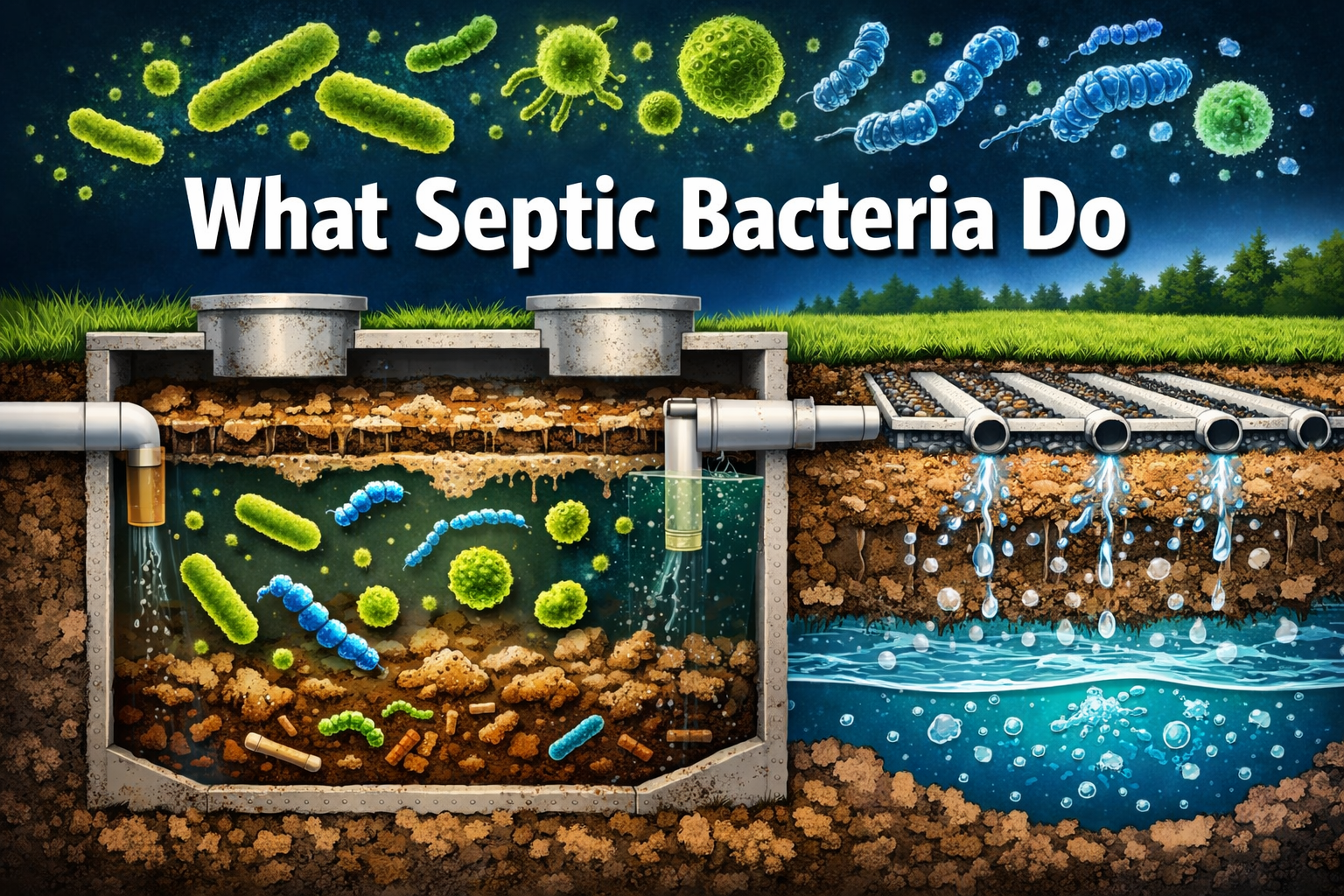
Your septic tank isn’t just a holding container for waste—it’s a living ecosystem where billions of microscopic workers break down everything you flush and drain. Understanding what septic bacteria do can save you thousands in repairs and keep your system running smoothly for decades.
Key Takeaways
• Septic bacteria break down organic waste into simpler compounds, preventing system backups and failures
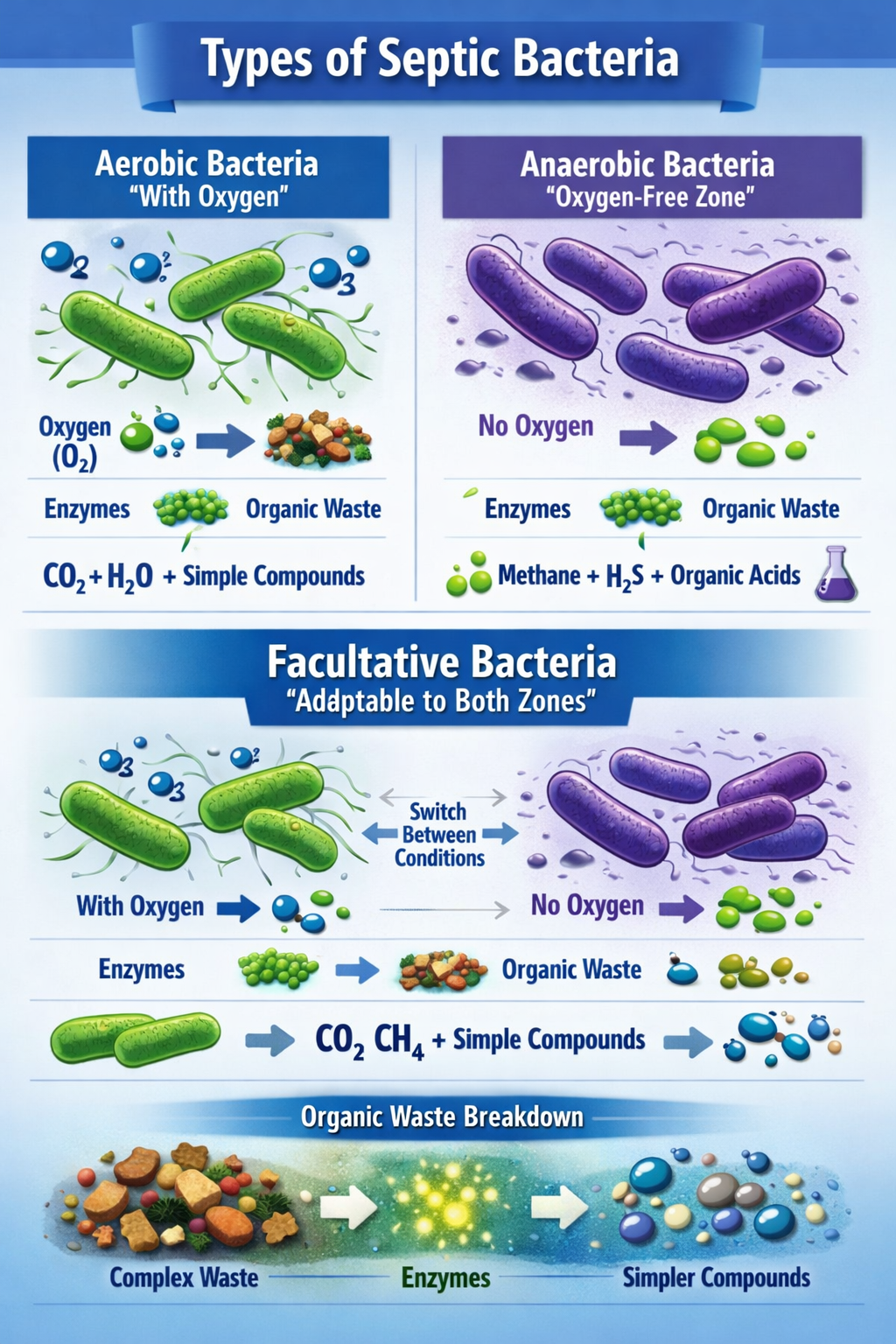
• Three types of bacteria work together: aerobic (with oxygen), anaerobic (without oxygen), and facultative (adaptable)
• Bacteria reduce solid waste by up to 90%, converting it into liquid effluent and minimal sludge
• Healthy bacterial colonies prevent odors and maintain proper system drainage
• Antibacterial products can kill beneficial bacteria, leading to system problems
• Bacterial treatments can restore depleted populations when systems become unbalanced
• Temperature and pH levels affect bacterial activity, with optimal performance between 77-95°F
Quick Answer
Septic bacteria are the living foundation of your waste treatment system. They digest organic matter, break down toilet paper and waste, control odors, and convert solid materials into liquid effluent that safely filters through your drain field. Without these microscopic workers, your septic tank would quickly fill with unprocessed waste and fail.
How Do Septic Bacteria Break Down Waste?
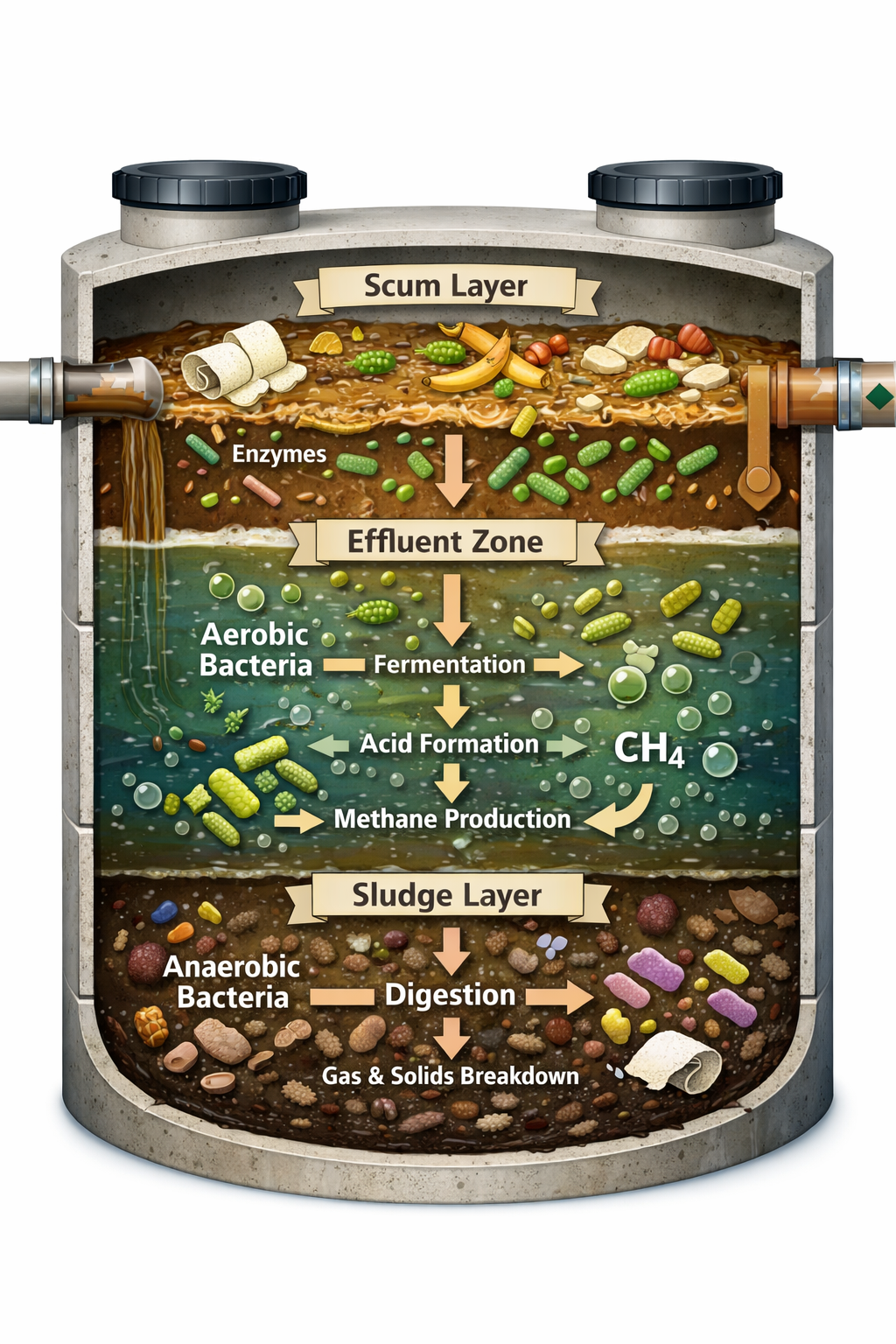
Septic bacteria work like a biological recycling plant, using specialized enzymes to break down complex organic materials into simpler, safer compounds. This process happens continuously in your septic tank’s oxygen-rich and oxygen-poor zones.
The breakdown process starts when bacteria produce enzymes—biological catalysts that split large waste molecules into smaller pieces. These enzymes target different materials:
• Protease enzymes break down proteins from food waste and human waste
• Lipase enzymes digest fats and oils from cooking and personal care products
• Cellulase enzymes decompose toilet paper and other cellulose materials
• Amylase enzymes process starches and carbohydrates
Temperature matters for bacterial activity. Most septic bacteria work best between 77-95°F. In colder climates, bacterial activity slows significantly during winter months, which is why some homeowners notice slower drainage or system sluggishness.
The entire breakdown process typically takes 24-48 hours for most organic materials, though tougher items like toilet paper may take several days to fully decompose. Research shows that advanced microbial consortia are designed to work across varying temperatures and pH levels for more consistent waste processing.
Common mistake: Using antibacterial soaps, bleach, or harsh cleaners regularly can kill beneficial bacteria and slow waste breakdown significantly.
What Types of Bacteria Work in Septic Systems?
Three distinct types of bacteria collaborate to process waste in your septic system, each adapted to different oxygen conditions and waste materials.
Aerobic bacteria thrive in oxygen-rich areas near the tank’s surface and inlet. These bacteria work fastest and break down waste most completely, but they need oxygen to survive. They’re particularly effective at processing fresh waste and preventing odor formation.
Anaerobic bacteria dominate the deeper, oxygen-free zones of your septic tank. These bacteria work slower but handle the heavy-duty breakdown of settled solids and sludge. They produce methane and hydrogen sulfide gases as byproducts, which is why proper venting is essential.
Facultative bacteria adapt to both oxygen-rich and oxygen-poor conditions, making them the most versatile workers in your system. They help bridge the gap between aerobic and anaerobic zones and maintain system balance during fluctuating conditions.
| Bacteria Type | Location | Primary Function | Processing Speed |
|---|---|---|---|
| Aerobic | Surface/inlet areas | Fresh waste, odor control | Fast (24-48 hours) |
| Anaerobic | Deep tank/sludge layer | Solid breakdown, sludge digestion | Slow (3-7 days) |
| Facultative | Throughout tank | System balance, adaptation | Medium (2-4 days) |
Choose bacterial treatments if your system shows signs of bacterial imbalance: slow drains, odors, or frequent backups. These treatments can help restore healthy bacterial populations after antibiotic use, heavy cleaning product use, or system shock.
For more details on how the complete septic process works, see our comprehensive guide to what happens in a septic tank.
Why Are Septic Bacteria Essential for System Health?
Septic bacteria prevent system failure by maintaining the delicate balance between waste input and waste processing. Without healthy bacterial populations, your septic tank becomes a simple storage container that fills up rapidly with unprocessed solids.
Bacteria reduce solid waste volume by 80-90%, converting most organic materials into liquid effluent that flows to your drain field. This dramatic volume reduction is why properly functioning septic systems only need pumping every 3-5 years instead of monthly emptying.
Odor control happens through bacterial action. Healthy aerobic bacteria consume odor-causing compounds before they can escape your tank. When bacterial populations decline, anaerobic processes dominate and produce more hydrogen sulfide (rotten egg smell) and other offensive gases.
Effluent quality depends on bacterial processing. Research indicates traditional septic systems release approximately 80 milligrams of nitrogen per liter, while systems with enhanced bacterial activity can reduce this to below 10 milligrams per liter. Cleaner effluent protects groundwater and prevents environmental contamination.
System longevity increases with healthy bacteria. Microbial additives help control odors and reduce sludge accumulation while minimizing groundwater contamination. This means fewer pumping requirements, reduced maintenance costs, and longer system life.
Edge case: Homes with garbage disposals put extra strain on bacterial populations because food waste requires more bacterial processing than typical household waste. These systems may benefit from regular bacterial supplements.
FYI: Some links may be affiliate links, which means I may earn a small commission at no extra cost to you.
If you want to support your septic bacteria naturally, Septifix tablets can help maintain healthy bacterial populations. These easy-to-use tablets are designed to break down waste, reduce buildup, and keep your system running efficiently with minimal effort from homeowners.
What Happens When Septic Bacteria Die or Become Imbalanced?
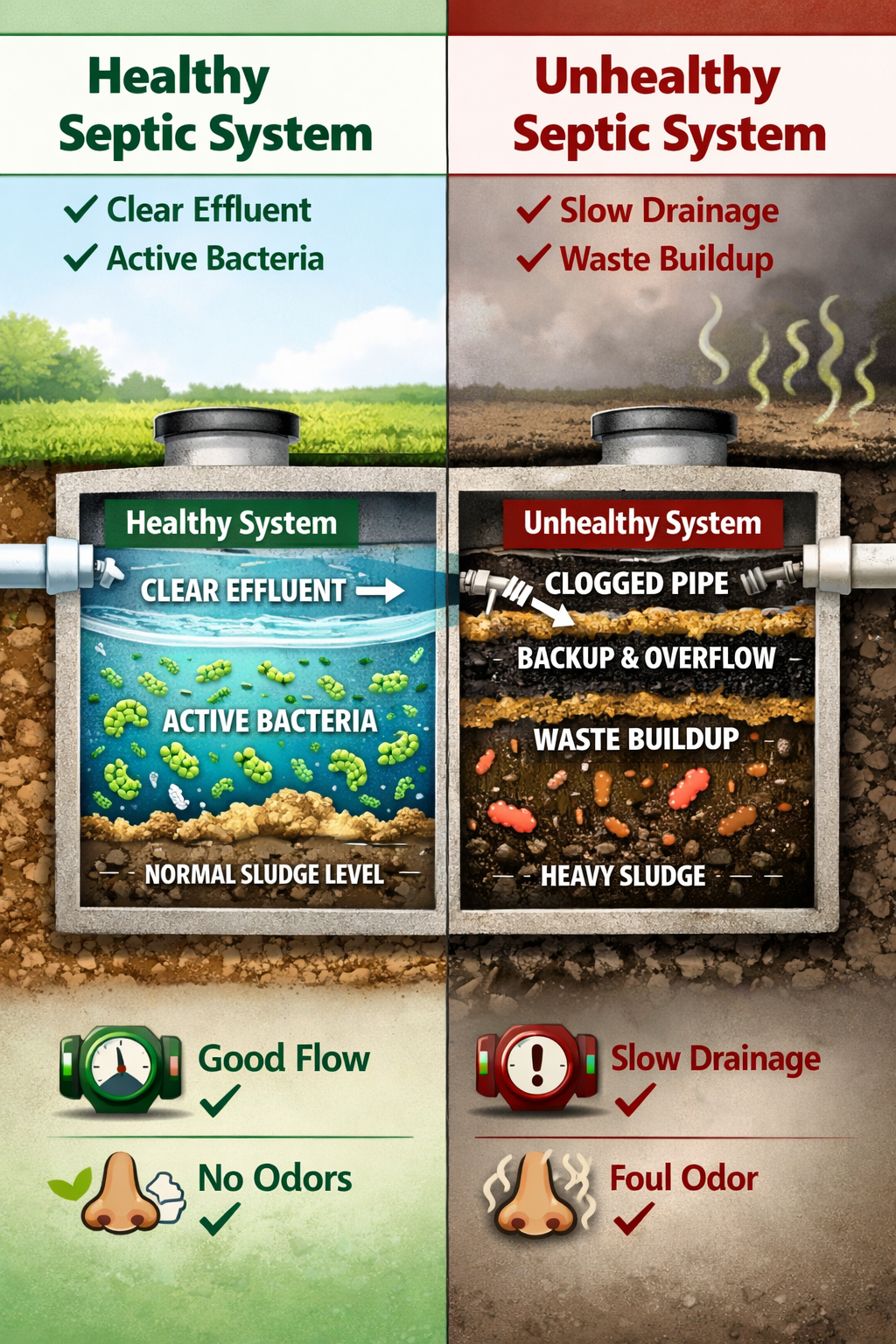
When septic bacteria populations crash or become unbalanced, your entire waste treatment system suffers immediate and cascading problems that can lead to expensive repairs or complete system replacement.
Slow drainage is often the first sign of bacterial problems. Without enough bacteria to break down waste, solids accumulate faster than they decompose. This creates blockages in pipes and reduces the tank’s effective capacity for new waste.
Strong odors emerge when anaerobic bacteria dominate without aerobic bacteria to balance the ecosystem. The result is increased production of hydrogen sulfide, methane, and other foul-smelling gases that escape through drains, vents, or even soil above the tank.
System backups occur when unprocessed solids fill the tank beyond capacity. When septic tanks back up, raw sewage can flow back into your home through floor drains, toilets, and sinks—creating health hazards and expensive cleanup costs.
Drain field failure happens when poorly processed effluent clogs soil pores in your leach field. Without proper bacterial breakdown, effluent contains too many suspended solids and organic matter, leading to biomat formation that prevents proper soil filtration.
Common causes of bacterial death include:
• Excessive use of antibacterial products or bleach
• Flushing antibiotics or medications down drains
• Sudden influx of hot water that raises tank temperature
• Chemical drain cleaners or harsh household cleaners
• Extended periods without waste input (vacation homes)
Recovery time for bacterial populations typically takes 2-4 weeks with proper conditions and potential bacterial supplements. However, severe bacterial crashes may require professional system restoration.
For guidance on recognizing these problems early, check our signs your septic tank needs maintenance.
How to Support Healthy Septic Bacteria Populations
Maintaining thriving bacterial colonies requires consistent care and avoiding practices that harm these beneficial microorganisms. Small daily choices make a huge difference in bacterial health and system performance.
Use septic-safe products for all household cleaning. Choose biodegradable soaps, detergents without phosphates, and cleaners labeled as septic-safe. Avoid antibacterial soaps for regular use—save them only for genuine sanitation needs.
Moderate water usage to prevent bacterial washout. Spread laundry loads throughout the week rather than doing multiple loads in one day. Fix leaky faucets and toilets promptly to prevent continuous water flow that dilutes bacterial populations.
Feed bacteria regularly with normal household waste. Bacteria need consistent organic matter to maintain healthy populations. Vacation homes or seasonally used properties may benefit from periodic bacterial supplements to maintain active colonies.
Maintain proper temperature by insulating exposed pipes and tank areas in cold climates. Consider tank insulation blankets in regions where ground freezing affects bacterial activity during winter months.
Monitor pH levels if you have hard water or use water softeners. Extremely acidic or alkaline conditions can stress bacterial populations. Most bacteria prefer pH levels between 6.8-7.2 for optimal activity.
Bacterial treatment schedule:
• Monthly treatments for high-use systems or homes with garbage disposals
• Quarterly treatments for average households with normal usage patterns
• After-shock treatments following antibiotic use, heavy cleaning, or system problems
• Seasonal treatments for vacation homes or properties with irregular use
Avoid these bacterial killers:
• Chlorine bleach in large quantities
• Antibacterial hand soaps and body washes
• Chemical drain cleaners (Drano, Liquid Plumber)
• Excessive amounts of household cleaners
• Flushing medications or antibiotics
Learn more about septic tank treatment options to keep your bacterial ecosystem healthy.
When Should You Add Bacterial Supplements to Your Septic System?
Bacterial supplements become necessary when natural bacterial populations can’t keep up with waste processing demands or have been damaged by external factors. Timing these treatments correctly can prevent major system problems.
After antibiotic use, bacterial supplements help restore populations killed by medications. If anyone in your household has taken antibiotics, especially broad-spectrum types, consider adding bacterial treatment 1-2 weeks after completing the medication course.
Following heavy cleaning sessions, bacterial supplements can counteract the effects of cleaning product overuse. This includes deep spring cleaning, post-renovation cleanup, or any situation where you’ve used more cleaning chemicals than usual.
During high-usage periods, bacterial supplements support overwhelmed natural populations. This includes holiday gatherings, extended house guests, or any time your household waste production significantly increases for several days.
For new system startup, bacterial supplements can establish healthy populations faster than waiting for natural colonization. New septic installations benefit from bacterial inoculation to begin waste processing immediately.
Seasonal maintenance helps maintain bacterial health during challenging periods. Cold weather, extended dry spells, or other environmental stresses may warrant bacterial support treatments.
Warning signs that indicate bacterial supplements are needed:
• Persistent odors despite normal maintenance
• Slow draining throughout the house
• Gurgling sounds from drains or toilets
• Visible scum buildup or unusual tank conditions
• Recent system pumping that removed beneficial bacteria
Application timing matters. Add bacterial supplements in the evening when household water usage is lowest, allowing bacteria time to establish before being diluted by morning activities. Flush treatments down the toilet closest to your septic tank for most direct delivery.
Choose quality bacterial products that contain multiple bacterial strains and enzymes. Look for products specifically designed for septic systems rather than general drain treatments, which may contain harsh chemicals.
If you need a reliable bacterial supplement, consider Septifix tablets—they’re specifically formulated to maintain septic system health by supporting beneficial bacteria populations and helping prevent common system problems.
How Long Does It Take for Septic Bacteria to Process Different Materials?
Understanding bacterial processing times helps you manage waste input and recognize when your system might be overwhelmed. Different materials require varying amounts of time and bacterial effort to break down completely.
Toilet paper breaks down in 2-4 days with healthy bacterial populations. Single-ply and septic-safe brands decompose fastest, while thick, quilted papers may take up to a week. Learn more about toilet paper breakdown in septic systems.
Human waste processes within 24-48 hours under normal conditions. Solid waste breaks down faster than you might expect when bacterial populations are healthy and active.
Food waste varies dramatically by type:
• Soft fruits and vegetables: 3-5 days
• Meat and protein: 5-7 days
• Fats and oils: 7-14 days (and may cause problems)
• Bones and hard materials: weeks to months (should be avoided)
Household chemicals either break down quickly if biodegradable or persist indefinitely if synthetic. Soap residues typically process within 1-2 days, while non-biodegradable chemicals accumulate and may harm bacterial populations.
Factors affecting processing speed:
• Temperature: Cold weather slows bacterial activity by 50% or more
• Bacterial population health: Stressed bacteria work much slower
• Waste concentration: Too much waste at once overwhelms bacteria
• pH levels: Extreme acidity or alkalinity slows processing
• Oxygen availability: Proper aeration speeds breakdown significantly
Seasonal variations affect processing times substantially. Winter bacterial activity may slow processing by 2-3 times normal rates, while summer heat can accelerate breakdown but may stress bacteria if temperatures exceed 95°F.
System overload indicators:
• Materials taking longer than normal to break down
• Visible unprocessed waste floating in tank
• Backup problems during normal usage periods
• Persistent odors indicating incomplete processing
Optimize processing times by spreading waste input throughout the day, using septic-safe products, and maintaining steady bacterial populations through proper care and occasional supplements.
Helpful Resource for Septic Bacteria Maintenance
Maintaining healthy septic bacteria doesn’t have to be complicated or time-consuming. Septifix tablets offer a simple solution for homeowners who want to support their septic system’s bacterial ecosystem without guesswork or messy liquid treatments.
These tablets are designed to:
• Restore bacterial populations after system stress or chemical exposure
• Break down organic waste more efficiently to prevent accumulation
• Reduce odors by supporting proper bacterial balance
• Help prevent costly system failures through consistent bacterial support
The convenient tablet form makes dosing simple—no measuring, mixing, or mess. Just flush the recommended number of tablets monthly to maintain optimal bacterial health in your septic system.
While not required for every system, Septifix tablets can be particularly helpful if you have a garbage disposal, use a water softener, or live in an area with challenging soil conditions that stress your septic system.
FAQ
How often should I add bacteria to my septic tank?
Most systems benefit from monthly bacterial treatments, though this varies by household size and usage. High-use systems or homes with garbage disposals may need bi-weekly treatments, while low-use systems might only need quarterly supplements.
Can I use too much bacterial supplement?
Generally no—excess bacteria will simply die off naturally when food sources are consumed. However, follow manufacturer dosing guidelines to avoid wasting product and ensure optimal bacterial balance.
Do bacterial supplements work immediately?
Bacterial supplements typically show effects within 1-2 weeks as populations establish and begin processing accumulated waste. Full system improvement may take 3-4 weeks for severely compromised systems.
What kills septic bacteria most quickly?
Chlorine bleach, antibacterial soaps, and chemical drain cleaners kill beneficial bacteria fastest. Even small amounts of these products can significantly impact bacterial populations within hours.
How do I know if my septic bacteria are healthy?
Healthy bacterial populations produce minimal odors, process waste without backups, and maintain clear effluent. Signs of bacterial problems include persistent odors, slow drains, and visible unprocessed waste in the tank.
Can cold weather kill septic bacteria?
Cold weather slows bacterial activity dramatically but rarely kills established populations completely. However, frozen systems stop bacterial processing entirely until temperatures rise above freezing.
Should I add bacteria after pumping my septic tank?
Yes, pumping removes beneficial bacteria along with waste. Adding bacterial supplements within a week of pumping helps re-establish healthy populations faster than natural recolonization.
Do garbage disposals affect septic bacteria?
Garbage disposals significantly increase bacterial workload by adding food waste that requires more processing than typical household waste. Homes with disposals often benefit from more frequent bacterial supplements.
How long do septic bacteria live?
Individual bacteria live only hours to days, but bacterial colonies continuously reproduce to maintain stable populations. Established bacterial ecosystems can persist for years with proper conditions and regular waste input.
Can medications affect my septic bacteria?
Yes, antibiotics and some other medications can kill beneficial bacteria when flushed or excreted. Consider bacterial supplements during and after antibiotic treatments to restore healthy populations.
What’s the difference between enzymes and bacteria for septic systems?
Bacteria are living organisms that produce enzymes to break down waste. Enzyme-only products provide temporary waste breakdown but don’t establish ongoing bacterial colonies. Bacterial supplements provide both immediate enzymes and long-term bacterial populations.
Do bacterial supplements prevent the need for pumping?
No, bacterial supplements optimize waste breakdown but don’t eliminate the need for regular pumping. They can extend time between pumpings by reducing sludge accumulation, but periodic pumping remains necessary for system health.
Related Reading
For comprehensive septic system care, explore our guides on septic tank bacteria treatment, how septic systems work, and septic tank maintenance best practices.
Conclusion
Septic bacteria are the unsung heroes of your home’s waste management system, working 24/7 to break down organic matter, control odors, and protect your property investment. Understanding what septic bacteria do empowers you to make informed decisions about household products, maintenance schedules, and system care.
Take action today by switching to septic-safe cleaning products, moderating your water usage, and considering bacterial supplements if your system shows signs of stress. Small changes in daily habits can dramatically improve bacterial health and extend your septic system’s lifespan.
Monitor your system regularly for signs of bacterial imbalance: persistent odors, slow drainage, or backup problems. Early intervention with proper bacterial support can prevent thousands of dollars in repair costs and system replacement.
Remember that healthy bacteria equal a healthy septic system. By protecting and supporting these microscopic workers, you’re investing in reliable waste treatment, environmental protection, and long-term property value. Your septic bacteria work hard for you—return the favor with proper care and maintenance.
References
[1] Septic Shock Therapeutics 1220738 – https://www.datainsightsmarket.com/reports/septic-shock-therapeutics-1220738
[2] Microbial Septic Market – https://www.24chemicalresearch.com/reports/305160/microbial-septic-market
[3] 12.26.25 Sbu Researchers Develop Alternative Septic Systems – https://www.stonybrook.edu/commcms/innovation/news/12.26.25-sbu-researchers-develop-alternative-septic-systems.php
[4] Bio Septic Tank Innovations In 2026 – https://biosepticfrptank.com/bio-septic-tank-innovations-in-2026/
[5] Microbial Colony Development In Septic Systems – https://www.teamonebiotech.com/blog/microbial-colony-development-in-septic-systems/