Last updated: March 3, 2026
Key Takeaways
• Only human waste and septic-safe toilet paper should ever be flushed into your septic system
• “Flushable” wipes don’t actually break down and cause expensive blockages despite marketing claims
• Cooking grease and oils harden in pipes when cooled, creating stubborn clogs that damage your system
• Harsh chemicals kill beneficial bacteria that your septic tank needs to break down waste properly
• Medications contaminate groundwater and should go to approved disposal programs, not down drains
• Paper towels and tissues resist breaking down, causing rapid sludge buildup in your tank
• Food scraps and coffee grounds contribute to clogs and should go in trash or compost instead
• Feminine hygiene products expand when wet and create blockages that interfere with wastewater flow
• Cat litter accumulates in tanks and reduces capacity, even brands labeled as “flushable”
• Proper septic care prevents costly repairs and extends your system’s lifespan significantly
Quick Answer
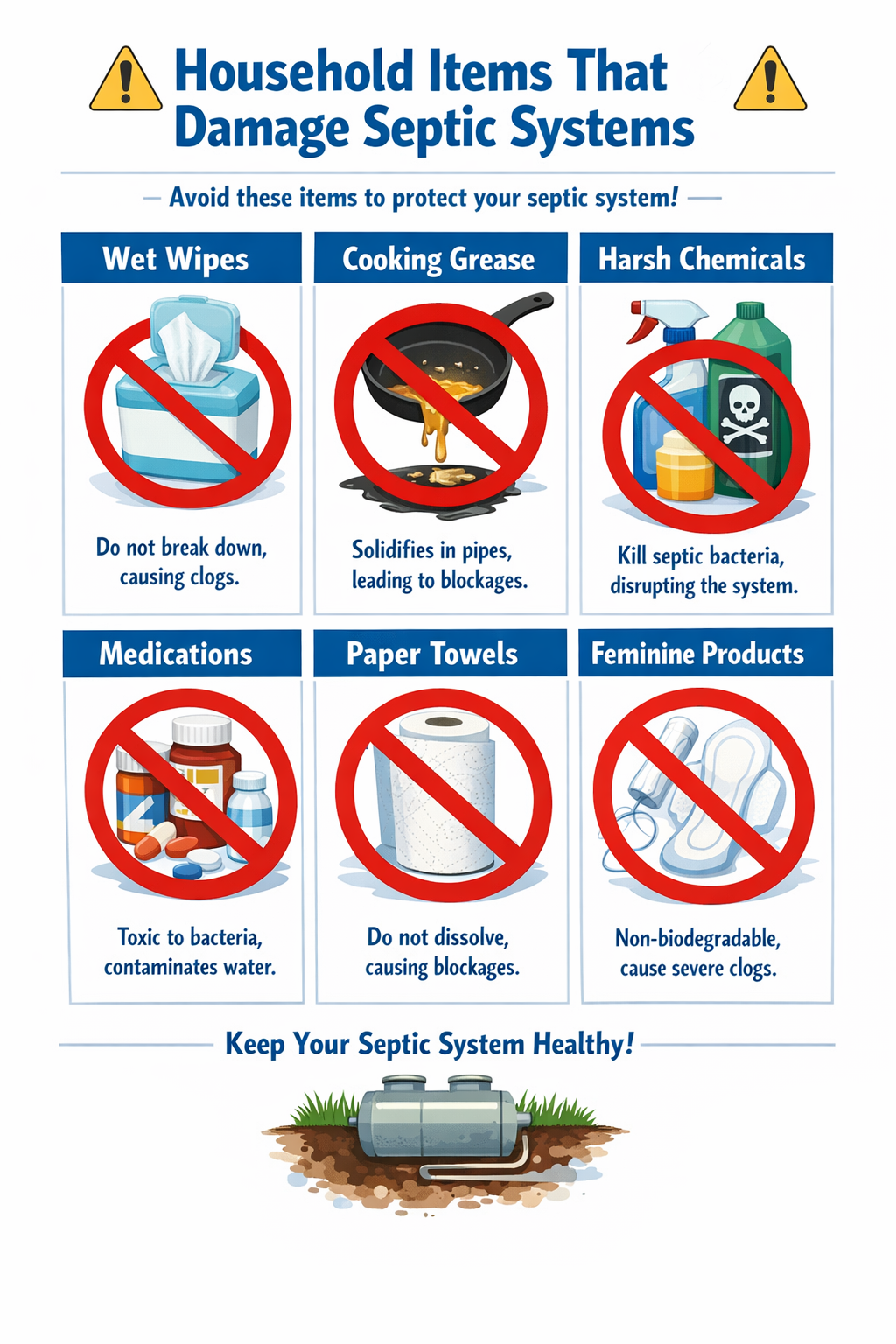
What not to put in septic tank includes anything other than human waste and septic-safe toilet paper. Never flush wipes, grease, chemicals, medications, paper towels, feminine products, food scraps, or cat litter. These items kill beneficial bacteria, create blockages, and cause expensive system failures that can cost thousands to repair.
Why Knowing What Not to Put in Septic Tank Matters
Your septic system depends on a delicate balance of beneficial bacteria to break down waste naturally. When you put the wrong items down your drains or toilet, you disrupt this process and risk expensive damage that can cost thousands to repair.
Unlike city sewer systems that use industrial treatment processes, your septic tank relies on biological decomposition. The bacteria in your tank work around the clock to break down organic matter, but they can’t handle synthetic materials, harsh chemicals, or excessive grease. Understanding how septic tanks work helps you make better decisions about what goes down your drains.
When you put prohibited items in your septic system, you’re essentially sabotaging your own investment. A properly maintained septic system can last 20-30 years, but poor disposal habits can cut that lifespan in half.
What Not to Put in Septic Tank: Items That Kill Bacteria
Harsh chemicals and household cleaners kill the beneficial bacteria your septic tank needs to function properly. These bacteria break down organic waste naturally, but they can’t survive exposure to toxic substances.
Never put these chemical products in your septic system:
• Bleach and disinfectants – Small amounts for normal cleaning won’t hurt, but avoid pouring large quantities down drains
• Antibacterial soaps and cleaners – These specifically target bacteria, including the good ones in your tank
• Paint thinners and solvents – These toxic chemicals require hazardous waste disposal
• Pesticides and herbicides – These poison beneficial microorganisms
• Gasoline and motor oil – These petroleum products contaminate groundwater and kill bacteria
• Antifreeze – This toxic substance requires special disposal at auto shops
Choose septic-safe cleaning products that are biodegradable and won’t harm your system’s bacterial balance. Many eco-friendly cleaners work just as well without the toxic impact.
Common mistake: Using too much bleach for cleaning. While small amounts during normal use are okay, avoid pouring bleach directly down drains or using it excessively.
Grease, Oils, and Fats: What Not to Put in Septic Tank Drains
Cooking grease, oils, and fats harden inside pipes when they cool, forming blockages that restrict wastewater flow and damage your system. Even small amounts accumulate over time, creating stubborn clogs that are expensive to remove.
These kitchen items should never go down your drains:
• Cooking oil and grease from frying, roasting, or sautéing
• Butter, margarine, and other dairy fats
• Meat drippings and bacon grease
• Salad dressings and mayonnaise
• Coconut oil and other solid-at-room-temperature oils
Proper disposal method: Let grease cool and solidify, then scrape it into your trash. For liquid oils, collect them in a disposable container and throw it away when full.
FYI: Some links may be affiliate links, which means I may earn a small commission at no extra cost to you.
If you want something to help break down organic waste naturally, Septifix tablets can be helpful for maintaining healthy bacteria levels in your septic tank. These monthly tablets help break down waste, reduce odors, and support the bacterial balance your system needs to function properly.
Paper Products and Personal Items: What Not to Put in Septic Tank
Paper towels, tissues, and feminine hygiene products resist breaking down in water, causing rapid sludge buildup and blockages. Unlike toilet paper designed for septic systems, these items maintain their structure when wet.
Never flush these paper and personal items:
• Paper towels and napkins – These are designed to stay strong when wet
• Facial tissues and kleenex – These don’t break down like toilet paper
• Feminine hygiene products – Pads and tampons expand when wet and create clogs
• Disposable diapers – These contain absorbent materials that swell with moisture
• Cotton swabs and cotton balls – These synthetic fibers don’t decompose
• Dental floss – This can wrap around pump components and cause mechanical failure
• Condoms – These latex products don’t break down and can cause blockages
Choose septic-safe toilet paper that breaks down quickly in water. Look for brands specifically labeled as septic-safe or biodegradable.
Decision rule: If it’s not human waste or septic-safe toilet paper, it belongs in the trash, not your septic system.
The Truth About “Flushable” Wipes
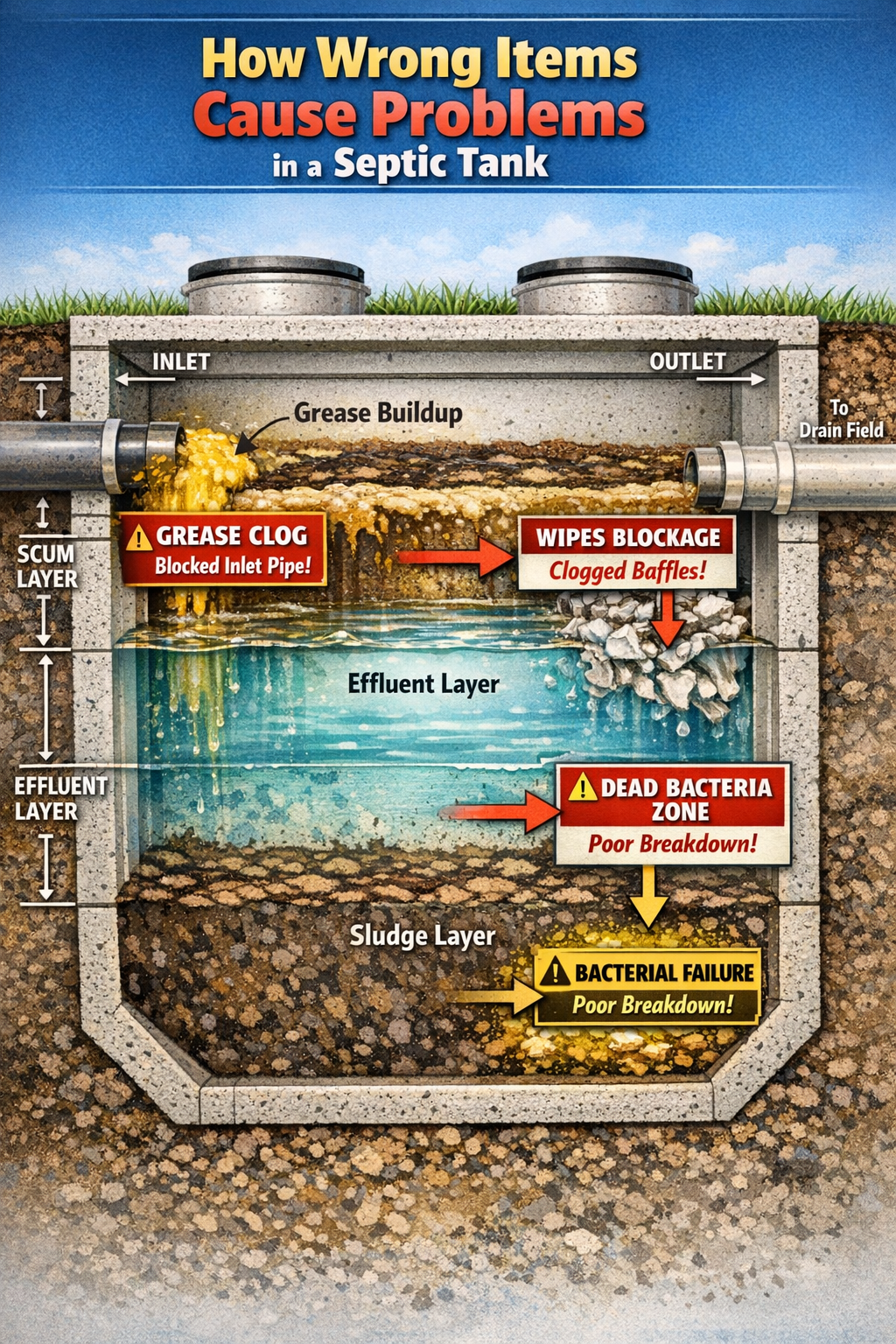
“Flushable” wipes do not break down like toilet paper despite marketing claims, and they accumulate in tanks and pipes causing blockages that lead to backups and expensive repairs. This is one of the most common misconceptions among septic system owners.
Even wipes labeled as “septic-safe” or “biodegradable” cause problems because:
• They take much longer to break down than toilet paper
• They accumulate in your tank and reduce capacity
• They can wrap around pump components in advanced systems
• They create clogs in the pipes leading to your drain field
All wet wipes belong in the trash, including baby wipes, personal hygiene wipes, and cleaning wipes. No exceptions.
Common mistake: Believing marketing claims about flushability. Independent testing shows that even “flushable” wipes don’t break down adequately in septic systems.
Food Waste and Kitchen Scraps
Coffee grounds, food scraps, and kitchen waste contribute to sludge buildup and don’t break down efficiently in septic systems. Your septic tank isn’t designed to handle solid food particles, even small ones.
Keep these kitchen items out of your drains:
• Coffee grounds and tea leaves – These accumulate as sludge
• Eggshells and nut shells – These hard materials don’t decompose
• Fruit and vegetable peels – These add unnecessary organic load
• Rice, pasta, and grains – These expand with water and create clogs
• Meat scraps and bones – These decompose slowly and attract pests
Better alternatives: Use a garbage disposal sparingly if you have one, but composting or trash disposal is better for septic systems. If you must use a garbage disposal, run plenty of water and only put small amounts of soft food waste down it.
Edge case: If you accidentally drop small food scraps down the drain occasionally, it won’t damage your system. The problem comes from regular disposal of food waste.
Medications and Personal Care Products
Medications flushed into septic systems can contaminate local groundwater and should be disposed of through approved drug take-back programs. Your septic system can’t filter out pharmaceutical compounds, which then enter the soil and potentially contaminate drinking water.
Never flush these medications:
• Prescription medications – Antibiotics, hormones, and other drugs
• Over-the-counter drugs – Pain relievers, cold medicines, vitamins
• Topical treatments – Creams, ointments, and medicated patches
• Expired medications – These don’t become safer to flush over time
Proper disposal: Use pharmacy take-back programs, DEA collection events, or follow FDA guidelines for safe home disposal in trash.
Personal care products that harm septic systems include:
• Hair dye and chemical treatments
• Nail polish and remover
• Makeup and cosmetics in large quantities
Cat Litter and Pet Waste
Cat litter does not dissolve properly in water and accumulates in the tank, reducing capacity and increasing system strain. Even “flushable” cat litter causes problems in septic systems.
Problems with flushing cat litter:
• Clay-based litters expand and create concrete-like masses
• Crystal litters don’t break down and accumulate as sludge
• Even biodegradable litters add unnecessary solid waste
• Cat waste can contain parasites harmful to the treatment process
Proper disposal: Always put used cat litter in the trash. Consider switching to a low-dust, biodegradable litter to reduce environmental impact, but still dispose of it in trash.
Decision rule: If it comes from a litter box, it goes in the trash, not down any drain.
How These Items Damage Your Septic System
Understanding why certain items harm your septic system helps you make better disposal decisions. How your septic tank deals with waste involves a three-stage process that these prohibited items disrupt.
Bacterial disruption happens when chemicals kill the microorganisms that break down waste. Without healthy bacteria, organic matter accumulates instead of decomposing, leading to system failure.
Physical blockages occur when non-biodegradable items accumulate in pipes, the tank, or the drain field. These blockages prevent proper wastewater flow and can cause sewage backups into your home.
Accelerated sludge buildup results from items that don’t break down properly. This reduces your tank’s effective capacity and requires more frequent pumping, increasing maintenance costs.
Drain field damage happens when inappropriate items reach your leach field, clogging the soil and preventing proper filtration. This is often the most expensive component to repair or replace.
Signs You’ve Put the Wrong Things in Your Septic Tank
Recognizing early warning signs helps you address problems before they become expensive emergencies. Signs your septic tank needs maintenance include several indicators that you may have put inappropriate items down your drains.
Immediate warning signs:
• Slow drains throughout your home
• Gurgling sounds from pipes or drains
• Sewage odors inside or outside your house
• Water backing up in sinks, tubs, or toilets
Advanced warning signs:
• Wet spots or standing water in your yard
• Lush, green grass over your drain field
• High nitrate levels in nearby wells
• Frequent need for tank pumping
What to do: If you notice these signs, contact a septic professional immediately. What happens when your septic tank backs up can cause serious health hazards and property damage.
Septic-Safe Alternatives and Best Practices
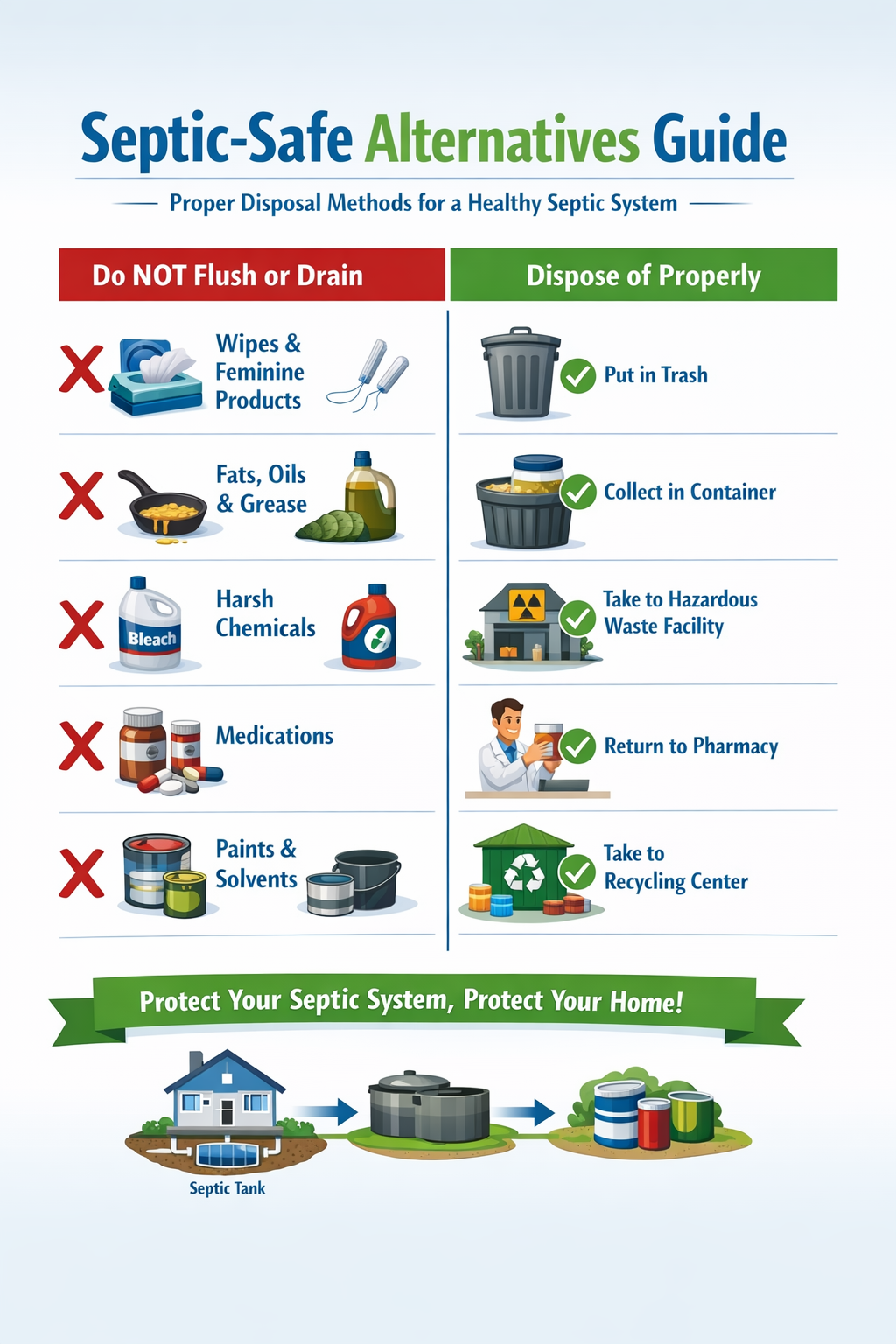
Making simple changes to your household habits protects your septic system and saves money on repairs. Focus on prevention rather than trying to fix problems after they occur.
For cleaning:
• Use biodegradable, septic-safe cleaning products
• Make your own cleaners with vinegar, baking soda, and mild soap
• Avoid antibacterial products for routine cleaning
• Use bleach sparingly and never pour it directly down drains
For kitchen waste:
• Scrape plates into trash before washing
• Collect grease in disposable containers
• Compost food scraps instead of using garbage disposal
• Run full loads in dishwashers to minimize water usage
For bathroom habits:
• Use only septic-safe toilet paper
• Keep a small trash can next to the toilet for non-flushable items
• Dispose of medications through take-back programs
• Choose natural personal care products when possible
For maintenance:
• Schedule regular tank inspections and pumping
• Keep detailed records of maintenance and repairs
• Learn the location of your tank and drain field
• Educate all household members about proper septic care
Helpful Resource for Septic Tank Maintenance
If you want a simple way to support your septic system’s health, Septifix tablets offer an easy monthly maintenance solution. These tablets help break down waste, reduce bad smells, and keep beneficial bacteria thriving in your septic tank. With one easy monthly flush, you can help prevent blockages, protect your plumbing, and avoid costly repairs. While not required for basic septic care, many homeowners find this type of regular treatment helpful for maintaining system balance.
Emergency Response: What to Do If You’ve Made Mistakes
If you’ve accidentally put prohibited items in your septic system, quick action can minimize damage. Don’t panic, but do take these steps immediately:
For recent chemical spills:
• Flush the system with plenty of clean water
• Avoid using the affected drains for 24-48 hours
• Consider adding septic-safe bacteria supplements
• Monitor for signs of system distress
For physical blockages:
• Stop using all drains immediately
• Don’t attempt to clear blockages with chemical drain cleaners
• Contact a septic professional for assessment
• Document what was flushed for the technician
For ongoing problems:
• Schedule an emergency septic inspection
• Pump the tank if it’s been more than 3-5 years
• Test nearby wells for contamination
• Consider temporary alternative arrangements if backups occur
Prevention going forward: Complete septic tank maintenance includes regular inspections, proper disposal habits, and prompt attention to warning signs.
Conclusion
Protecting your septic system starts with understanding what not to put in septic tank drains and toilets. Remember that only human waste and septic-safe toilet paper should ever be flushed, while everything else belongs in trash, compost, or proper disposal programs.
The key items to avoid include “flushable” wipes, cooking grease, harsh chemicals, medications, paper towels, feminine products, food scraps, and cat litter. These items kill beneficial bacteria, create blockages, and cause expensive system failures that can cost thousands to repair.
Your next steps:
- Audit your current disposal habits and identify items you’ve been putting down drains incorrectly
- Switch to septic-safe cleaning and personal care products
- Educate all household members about proper septic care practices
- Schedule regular maintenance and inspections to catch problems early
- Keep emergency contact information for septic professionals readily available
By following these guidelines and maintaining good disposal habits, you’ll extend your septic system’s lifespan, prevent costly repairs, and protect your property value. Your septic system is a significant investment that deserves proper care and attention.
FAQ
Q: Can I flush cat litter that’s labeled as “flushable”?
A: No, even “flushable” cat litter doesn’t break down properly in septic systems and will accumulate in your tank, reducing capacity and requiring more frequent pumping.
Q: Are baby wipes safe for septic systems if they say “biodegradable”?
A: No, all wet wipes including baby wipes should go in the trash. They don’t break down quickly enough and can cause blockages even when labeled as biodegradable.
Q: How much bleach is safe to use with a septic system?
A: Small amounts during normal cleaning won’t harm your system, but avoid pouring bleach directly down drains or using excessive amounts that could kill beneficial bacteria.
Q: Can I put coffee grounds down the garbage disposal if I have a septic tank?
A: No, coffee grounds accumulate as sludge in your septic tank and don’t break down efficiently. Put them in compost or trash instead.
Q: What should I do with expired medications?
A: Use pharmacy take-back programs, DEA collection events, or follow FDA guidelines for safe disposal in household trash. Never flush medications.
Q: Is it okay to flush tissues occasionally?
A: No, facial tissues don’t break down like toilet paper and will contribute to sludge buildup. Keep a trash can in the bathroom for tissues and other non-flushable items.
Q: Can I use regular laundry detergent with a septic system?
A: Choose biodegradable, phosphate-free detergents labeled as septic-safe. Avoid detergents with antibacterial additives that can kill beneficial bacteria.
Q: How often should I pump my septic tank if I follow proper disposal practices?
A: Most residential septic tanks need pumping every 3-5 years, but proper disposal habits can help you stay closer to the 5-year mark rather than needing more frequent service.
Q: What happens if I accidentally flush something I shouldn’t?
A: One-time accidents usually won’t cause immediate damage, but monitor your system for signs of problems and avoid making it a habit. Contact a professional if you notice any warning signs.
Q: Are septic tank additives necessary if I follow proper disposal practices?
A: Proper disposal habits and regular maintenance are more important than additives. While some products can be helpful, they’re not required if you maintain good septic care practices.
Q: Can I use a garbage disposal with a septic system?
A: Use garbage disposals sparingly and only for small amounts of soft food waste. Run plenty of water and avoid putting grease, bones, or fibrous materials down the disposal.
Q: How do I know if my cleaning products are septic-safe?
A: Look for products labeled as biodegradable, phosphate-free, and septic-safe. Avoid products with antibacterial agents, bleach, or harsh chemicals as primary ingredients.
References
[1] Essential Facts About Buying Homes With Septic Systems In – https://www.amerisave.com/learn/essential-facts-about-buying-homes-with-septic-systems-in
[2] What Not To Flush In A Septic System Howell Livingston County Homeowners Guide – https://www.septicserviceshowell.com/post/what-not-to-flush-in-a-septic-system-howell-livingston-county-homeowners-guide
[3] What Not To Allow In Your Septic System – https://allclearseptic.com/what-not-to-allow-in-your-septic-system/