
Last updated: February 21, 2026
Key Takeaways
• Full septic tanks cause sewage backups, slow drains, and foul odors throughout your home
• Untreated wastewater can contaminate groundwater and pose serious health risks to your family
• Drain field failure from overfull tanks costs $10,000-$20,000 to repair
• Regular pumping every 3-5 years prevents most full tank problems
• Early warning signs include gurgling pipes, standing water, and persistent sewage smells
Quick Answer
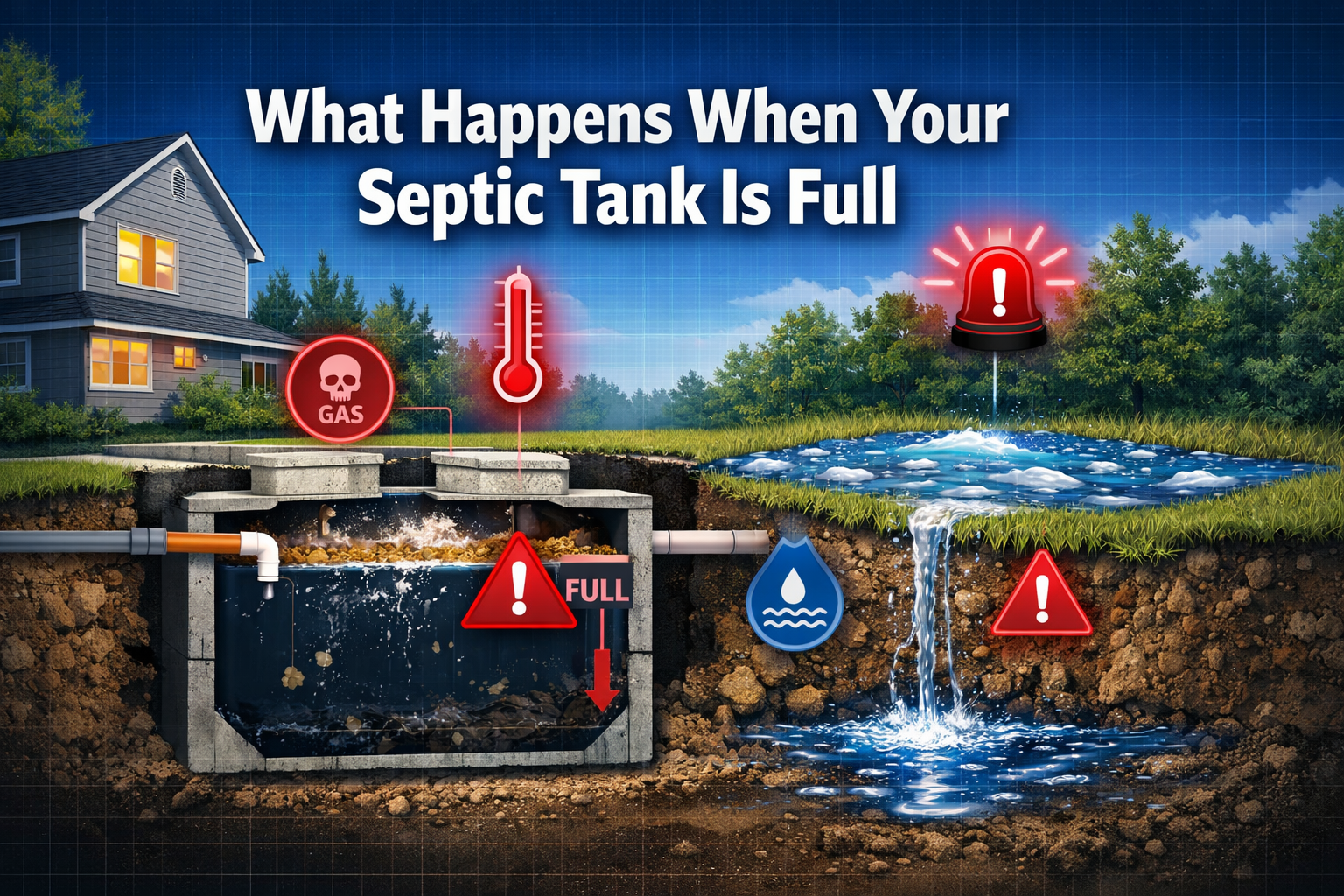
When your septic tank is full, untreated sewage backs up into your home through drains and toilets, creating health hazards and property damage. The excess waste also flows into your drain field, clogging it permanently and potentially contaminating groundwater. Most homeowners face repair costs of $10,000-$20,000 when full tanks cause drain field failure.
Picture this: you flush your toilet one morning and instead of the water going down, it starts rising back up. That’s just the beginning of what happens when your septic tank is full. As a homeowner who’s dealt with septic systems for years, I’ve seen firsthand how a full tank can quickly turn from a minor inconvenience into a major disaster.
Understanding what happens when your septic tank is full isn’t just about avoiding unpleasant smells—it’s about protecting your family’s health, your property value, and your bank account. Let me walk you through exactly what occurs when your septic system reaches capacity and why immediate action is crucial.
How Does a Septic Tank Work Normally?
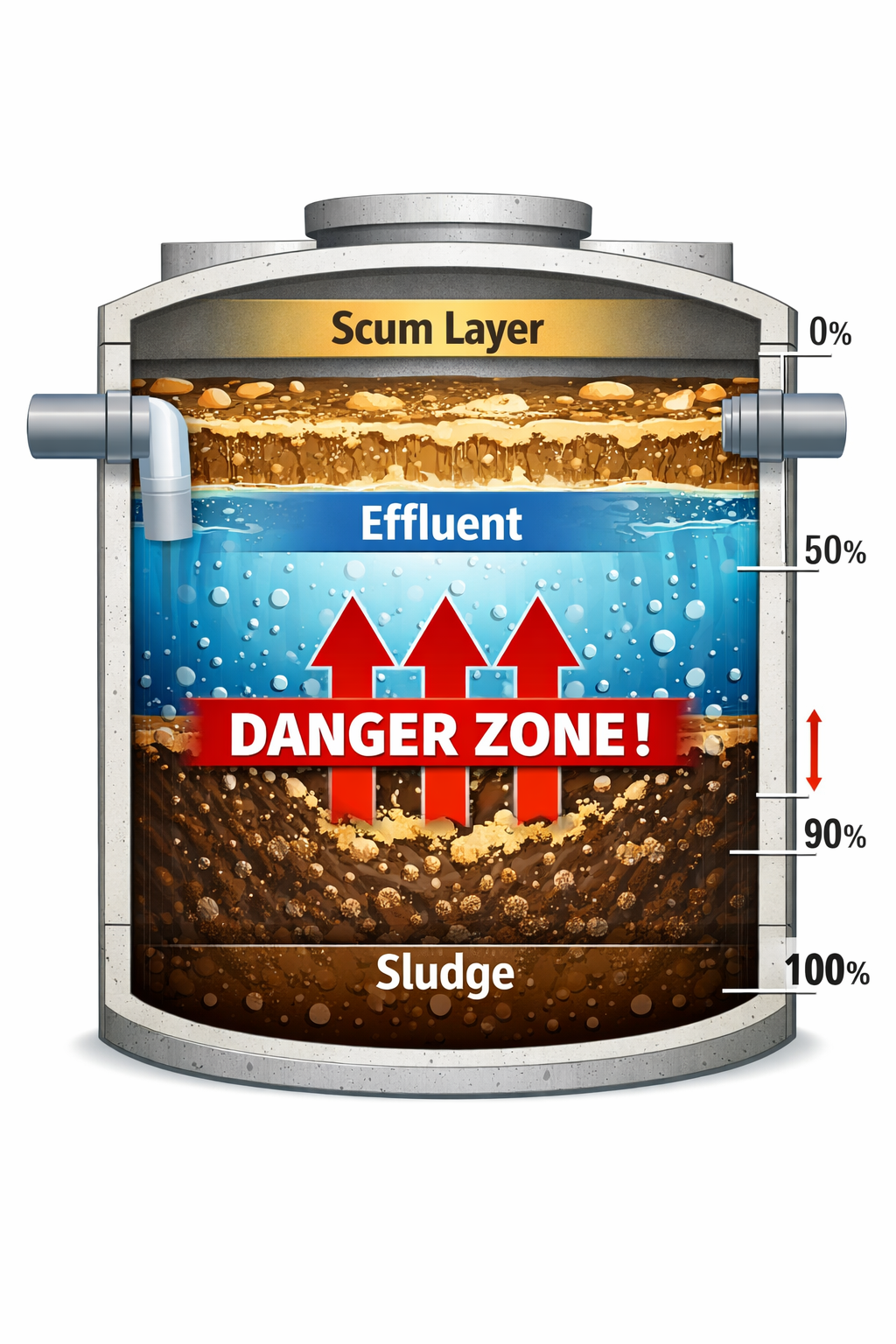
A properly functioning septic tank operates as a three-layer system that treats household wastewater before releasing it into the environment. The top layer contains floating scum (oils, grease, and lightweight debris), the middle layer holds liquid effluent, and the bottom layer accumulates heavy sludge from solid waste.
Under normal conditions, bacteria in your septic tank break down organic matter while solids settle to the bottom. The partially treated liquid effluent flows out to your drain field, where soil filters it further before it reaches groundwater. This natural process works efficiently when the tank maintains proper capacity levels.
Key components of normal septic function:
- Scum layer: 10-25% of tank capacity
- Effluent zone: 50-70% of tank capacity
- Sludge layer: 15-25% of tank capacity
When these proportions stay balanced through regular maintenance, your septic system can last 20-30 years. However, problems begin when the sludge layer grows too thick, reducing the tank’s effective capacity and disrupting the natural treatment process.
For a deeper understanding of normal septic operations, check out our guide on how septic tank systems work.
What Are the Warning Signs Your Septic Tank Is Full?
Slow drainage across multiple fixtures is the earliest and most reliable indicator that your septic tank is reaching capacity. When sinks, tubs, and toilets all drain sluggishly, it signals that wastewater has nowhere to go efficiently.
Common warning signs include:
• Persistent sewage odors inside or outside your home, especially near the tank or drain field area
• Gurgling sounds from pipes when you flush toilets or drain sinks
• Standing water pooling around your septic tank or in the yard above your drain field
• Sewage backups in lowest-level drains, toilets, or floor drains
• Unusually green grass over your drain field, indicating nutrient-rich wastewater is surfacing
Choose immediate professional help if: you see sewage backing up into your home, smell strong odors throughout your house, or notice standing water that doesn’t drain within 24 hours. These indicate emergency situations requiring prompt attention.
Common mistake: Many homeowners assume slow drains mean a simple clog and try chemical drain cleaners. This actually makes septic problems worse by killing beneficial bacteria and can damage your system permanently.
The key is recognizing these signs early. If you’re unsure whether your symptoms indicate a full tank, our detailed guide on signs your septic tank needs maintenance can help you identify specific problems.
What Happens When Your Septic Tank Is Full: Immediate Consequences
When your septic tank reaches capacity, untreated sewage immediately begins backing up into your home through the lowest drains, creating health hazards and property damage. The tank can no longer separate waste properly, causing the entire system to malfunction.
Immediate problems you’ll experience:
Inside your home:
- Toilets overflow or won’t flush completely
- Sinks and tubs drain extremely slowly or not at all
- Sewage odors permeate bathrooms and kitchen areas
- Basement floor drains back up with raw sewage
Outside your property:
- Standing wastewater pools around the septic tank area
- Foul smells emanate from your yard, especially near the drain field
- Wet, soggy ground appears over your septic system even in dry weather
Health and safety risks:
- Exposure to harmful bacteria like E. coli and salmonella from raw sewage
- Contaminated air quality inside your home from sewer gases
- Potential skin and respiratory infections from contact with untreated waste
Choose emergency pumping if: sewage is actively backing up into your home or you see raw waste on your property surface. Don’t wait for regular business hours—many septic companies offer 24/7 emergency services for these situations.
Critical mistake: Never try to “fix” backups by repeatedly flushing or using more water. This forces more waste into an already overwhelmed system and can cause permanent damage to your drain field.
FYI: Some links may be affiliate links, which means I may earn a small commission at no extra cost to you.
For immediate relief while waiting for professional help, consider using Septifix tablets to help break down waste and reduce odors. These monthly treatments can help maintain your septic system’s bacterial balance, though they won’t solve an already full tank situation.
Long-Term Damage: What Happens When Your Septic Tank Stays Full
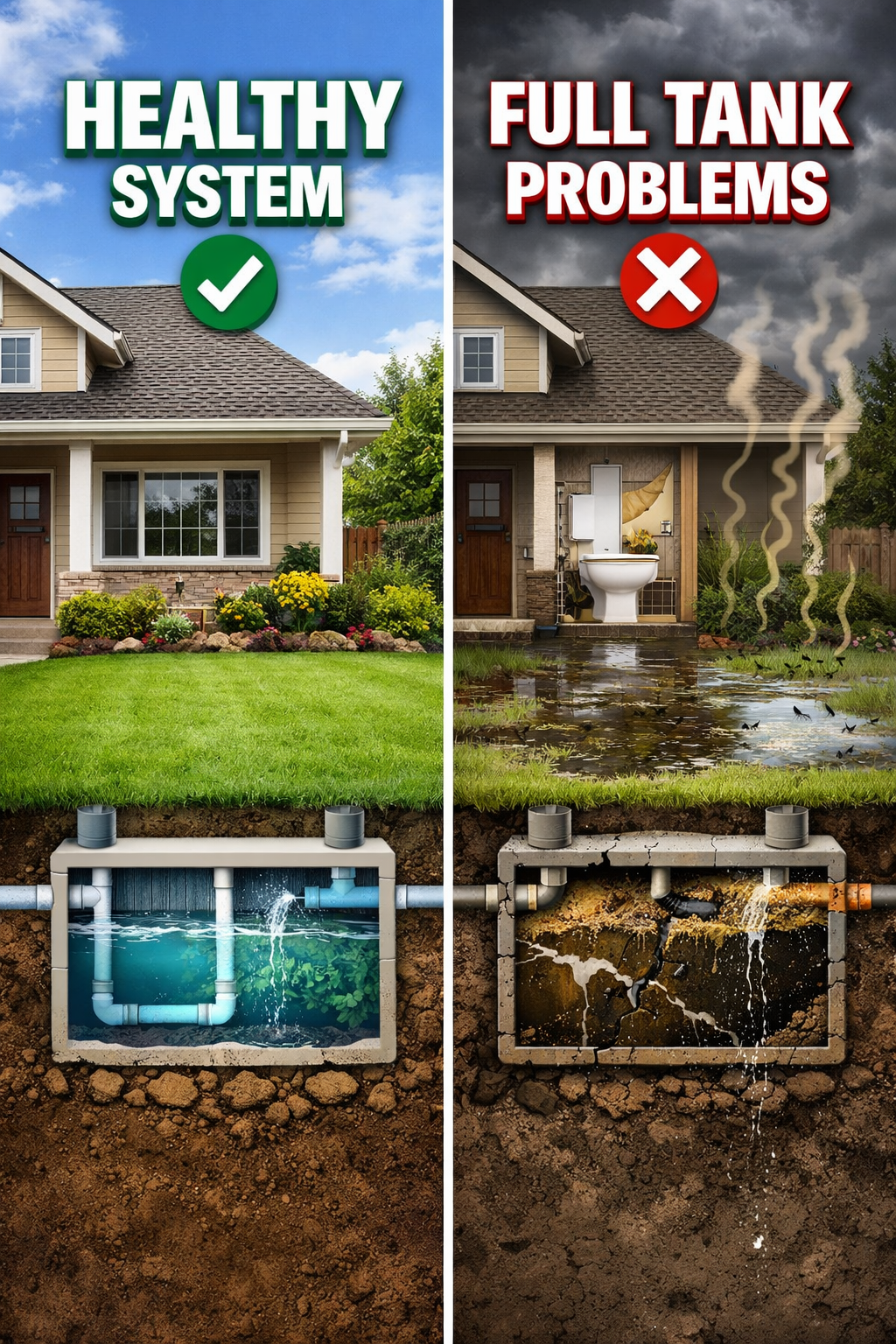
Prolonged septic tank fullness causes permanent drain field failure, the most expensive repair homeowners face, with replacement costs ranging from $10,000-$20,000 or more. When tanks stay full, solids escape into the drainage field, clogging soil pores irreversibly.
Progressive system breakdown:
Drain field destruction (6-12 months):
- Solid waste clogs soil absorption areas permanently
- Biomat formation creates impermeable barriers in soil
- Effluent pools on surface instead of filtering through ground
Septic tank structural damage (1-2 years):
- Excessive pressure cracks concrete or fiberglass tanks
- Inlet and outlet baffles deteriorate from constant overflow
- Tank walls weaken from prolonged exposure to high waste levels
Property and environmental impact:
- Groundwater contamination threatens drinking water sources
- Surface water pollution increases disease risk for communities
- Soil contamination makes land unusable for gardens or wells
Financial consequences beyond repairs:
- Decreased home value as buyers avoid properties with septic problems
- Municipal fines from health departments for system violations
- Potential liability for neighboring property contamination
Choose system replacement when: your drain field shows permanent failure signs like constant surface pooling, vegetation die-off, or soil that stays saturated. At this point, repairs won’t restore function.
Edge case consideration: In areas with high water tables or clay soil, even minor overfilling can cause disproportionate damage. These conditions require more frequent pumping—every 2-3 years instead of the standard 3-5 years.
Understanding why septic tanks fill quickly can help you prevent reaching this critical stage.
How to Prevent Your Septic Tank from Becoming Full
Regular pumping every 3-5 years is the single most effective way to prevent septic tank overflow and system failure. Professional pumping removes accumulated sludge before it reaches critical levels that compromise your system’s function.
Essential prevention strategies:
Pumping schedule by household size:
- 1-2 people: Every 4-5 years
- 3-4 people: Every 3-4 years
- 5+ people: Every 2-3 years
- Heavy usage homes: Every 1-2 years
Daily habits that extend tank life:
- Spread laundry loads throughout the week instead of doing multiple loads in one day
- Fix leaky faucets and running toilets that add unnecessary water volume
- Use septic-safe toilet paper that breaks down easily
- Avoid garbage disposal use or limit to small amounts of organic waste
Items to never put down drains:
- Cooking grease, oils, and fats
- Coffee grounds and food scraps
- Cat litter, cigarette butts, or feminine hygiene products
- Harsh chemicals, bleach, or antibacterial soaps
- Paint, solvents, or automotive fluids
Monthly maintenance routine:
Consider using Septifix tablets as part of your regular septic care. These tablets help break down waste, reduce bad smells, and maintain proper bacterial balance with just one easy monthly flush. While not a substitute for pumping, they can help keep your system working efficiently between professional services.
Choose professional inspection if: you haven’t had your tank pumped in over 3 years, you’re unsure of your last service date, or you’re experiencing any early warning signs.
For comprehensive maintenance guidance, see our complete septic tank maintenance tips.
Emergency Steps When Your Septic Tank Is Full
Stop using all water immediately and contact a septic pumping service for emergency removal—continuing to add water to a full system causes sewage backups and permanent damage. Most companies offer 24/7 emergency services for critical situations.
Immediate action checklist:
Step 1: Stop all water usage (within 15 minutes)
- Turn off washing machines and dishwashers mid-cycle if necessary
- Stop all non-essential water activities like showers or laundry
- Inform family members about the water restriction
- Locate your main water shut-off valve in case of emergency
Step 2: Assess the situation safely (next 30 minutes)
- Check for sewage backups in basement drains or lowest toilets
- Look for standing water around your septic tank area
- Document damage with photos for insurance purposes
- Avoid direct contact with any sewage or contaminated water
Step 3: Contact professionals immediately
- Call septic pumping services—explain it’s an emergency situation
- Request same-day or next-day service if sewage is backing up
- Ask about temporary measures while waiting for service
- Get estimated arrival time and cost for emergency pumping
Step 4: Temporary damage control
- Ventilate areas with sewage odors by opening windows
- Keep children and pets away from contaminated areas
- Use fans to circulate air and reduce harmful gas buildup
- Place towels or barriers to prevent sewage spread if minor backup occurs
Choose hotel accommodations if: sewage has backed up extensively into living areas, odors make your home uninhabitable, or you have young children or elderly family members at risk.
Critical safety note: Never enter confined spaces near your septic system or attempt DIY repairs. Septic gases can be deadly, and untreated sewage carries serious disease risks.
For guidance on identifying your system’s location for emergency services, check our guide on how to locate your septic tank.
Cost Breakdown: Repairing Full Septic Tank Damage
Emergency septic pumping costs $300-$600, while full system replacement from neglect can reach $15,000-$25,000 depending on your property size and local regulations. Understanding these costs helps homeowners prioritize preventive maintenance over emergency repairs.
| Repair Type | Cost Range | Timeline | Prevention Method |
|---|---|---|---|
| Emergency pumping | $300-$600 | Same day | Regular 3-5 year pumping ($200-$400) |
| Drain field repair | $3,000-$7,000 | 1-2 weeks | Avoid overloading system |
| Complete drain field replacement | $10,000-$20,000 | 2-4 weeks | Proper waste disposal habits |
| Full system replacement | $15,000-$25,000 | 3-6 weeks | Regular maintenance and inspections |
| Soil contamination cleanup | $5,000-$15,000 | 1-3 months | Immediate attention to warning signs |
Additional hidden costs:
- Permit fees: $500-$2,000 for major repairs or replacements
- Soil testing: $300-$800 to assess contamination levels
- Temporary accommodations: $100-$200 per night if home becomes uninhabitable
- Property value loss: 5-10% reduction for homes with recent septic problems
- Insurance deductibles: Most policies don’t cover septic system failures
Choose immediate pumping when: early warning signs appear, even if it seems expensive. The $400 cost of emergency pumping is minimal compared to $20,000 drain field replacement.
Regional cost variations: Rural areas often have higher service costs due to travel time, while urban areas may have more competitive pricing but stricter environmental regulations that increase repair complexity.
Smart financial strategy: Budget $100-$150 annually for septic maintenance. This covers regular pumping costs spread over time and prevents the financial shock of emergency repairs.
For detailed pumping cost information, see our guide on septic tank pumping costs.
Helpful Resource: Simple Septic Tank Maintenance
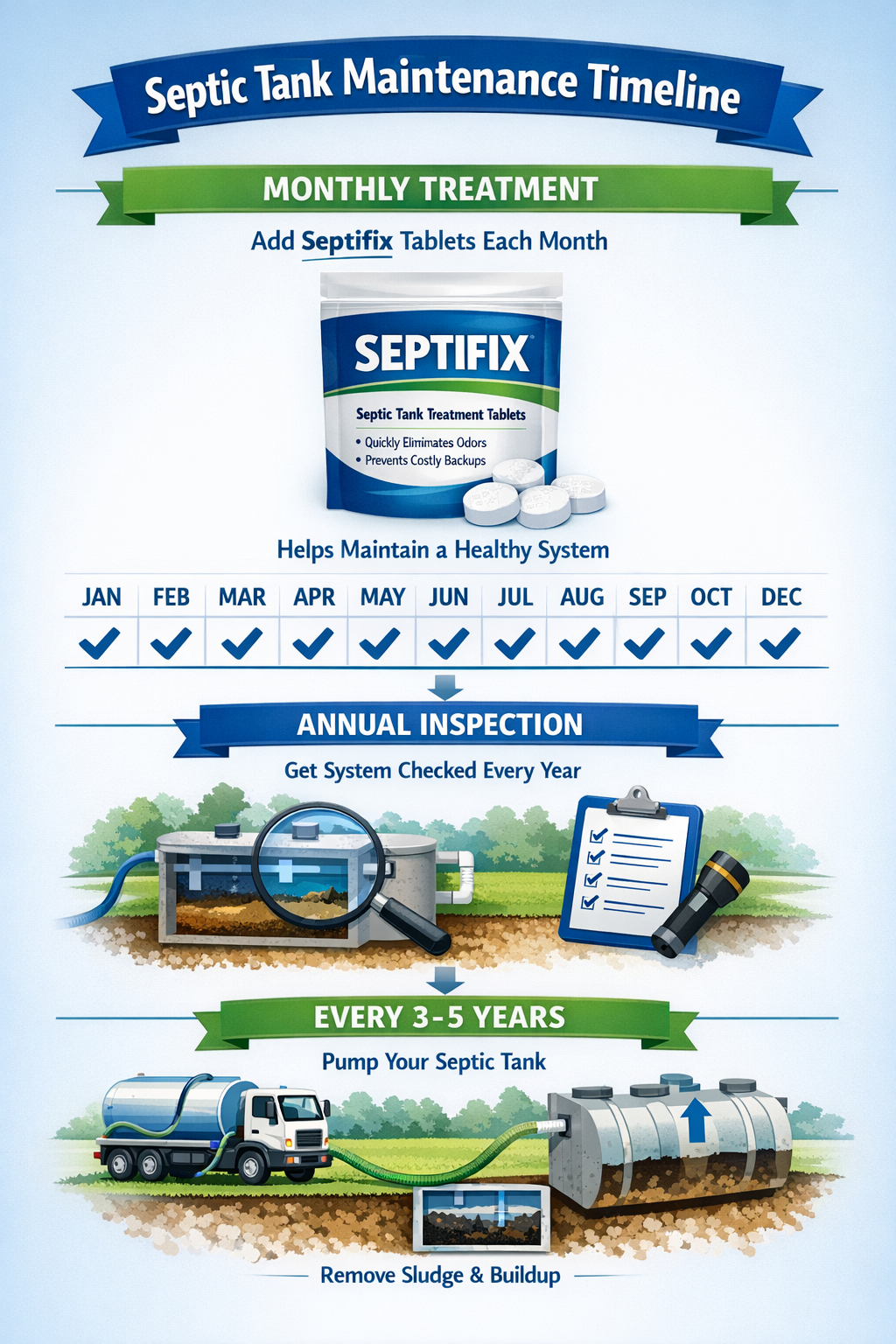
If you want a simple, effective way to maintain your septic system between professional pumpings, Septifix tablets offer an easy monthly solution. These tablets help break down waste, reduce bad smells, and keep your septic tank working properly with beneficial bacteria.
How Septifix helps prevent full tank problems:
- Breaks down solid waste more efficiently, reducing sludge buildup
- Maintains healthy bacterial balance for optimal waste processing
- Reduces odors that often signal system problems
- Simple monthly flush—no mixing or measuring required
While Septifix tablets aren’t a substitute for regular pumping, they can help extend the time between services and keep your system running smoothly. This is especially useful for households with heavy usage or homes that have experienced septic problems before.
The convenience of one tablet per month makes it easy to stay consistent with septic care, helping you avoid the serious consequences of a full tank.
FAQ
How often should I pump my septic tank to prevent it from becoming full?
Most septic tanks need pumping every 3-5 years, but household size affects this schedule. Homes with 1-2 people can wait 4-5 years, while families of 5+ should pump every 2-3 years.
Can I tell if my septic tank is full without calling a professional?
Yes, common signs include slow drains throughout your home, sewage odors, gurgling pipes, and standing water around your tank area. However, professional inspection provides the most accurate assessment.
What happens if I ignore a full septic tank?
Ignoring a full tank leads to sewage backups in your home, drain field failure costing $10,000-$20,000 to replace, groundwater contamination, and potential health hazards from untreated waste exposure.
How much does emergency septic pumping cost?
Emergency septic pumping typically costs $300-$600, depending on your location and tank size. This is significantly less expensive than the thousands of dollars needed for drain field repairs.
Can heavy rain cause my septic tank to overflow?
Yes, excessive rainfall can overwhelm an already near-full septic tank by adding groundwater infiltration. This is why regular pumping before rainy seasons is important for preventing overflow situations.
Is it safe to stay in my home if my septic tank is backing up?
No, sewage backups create serious health risks from harmful bacteria and toxic gases. You should limit home occupancy and seek emergency pumping immediately when backups occur.
Will pumping a full septic tank solve all my problems?
Pumping removes immediate overflow risk, but if your drain field is already damaged from prolonged fullness, you may need additional repairs. Early pumping prevents most serious complications.
How long does emergency septic pumping take?
Professional pumping typically takes 1-3 hours depending on tank size and access. Most companies offer same-day emergency service when sewage is backing up into homes.
Can I use my washing machine if my septic tank is full?
No, adding any water to a full septic system worsens backups and can cause permanent drain field damage. Stop all water usage until professional pumping is completed.
What’s the difference between a full septic tank and a clogged drain?
A full septic tank affects multiple drains simultaneously and often includes sewage odors, while a single clogged drain usually affects only one fixture without system-wide symptoms.
Do septic tank additives help when my tank is full?
Additives cannot solve an already full tank situation—only professional pumping removes excess sludge. However, monthly treatments like Septifix can help prevent future problems by maintaining bacterial balance.
How do I find my septic tank for emergency pumping?
Look for a rectangular depression in your yard, check your home’s original blueprints, or follow the main sewer line from your house. Professional pumpers can also locate tanks using specialized equipment.
Key Takeaways
• Full septic tanks cause immediate sewage backups, health hazards, and property damage requiring emergency pumping
• Prolonged fullness leads to permanent drain field failure costing $10,000-$20,000 to replace
• Warning signs include slow drains, sewage odors, gurgling pipes, and standing water around your system
• Regular pumping every 3-5 years prevents most full tank problems and saves thousands in repair costs
• Emergency pumping costs $300-$600 compared to tens of thousands for system replacement
• Stop all water usage immediately if your tank is full to prevent additional damage
• Groundwater contamination from overfull tanks poses serious health risks to your family and community
• Monthly maintenance products like Septifix can help maintain bacterial balance between professional services
• Early intervention saves money—address warning signs before they become emergencies
• Professional inspection every 3 years helps identify problems before they cause system failure
Conclusion
Understanding what happens when your septic tank is full empowers you to protect your family’s health, your property value, and your financial well-being. The consequences range from immediate sewage backups and health hazards to long-term drain field failure costing tens of thousands to repair.
The good news is that most full tank problems are completely preventable through regular maintenance. By scheduling pumping every 3-5 years, watching for early warning signs, and maintaining good household habits, you can avoid the nightmare scenarios I’ve described.
Take action today: If you haven’t had your septic tank pumped in over three years, or if you’re experiencing any warning signs like slow drains or odors, contact a professional septic service immediately. The $400 cost of routine pumping is insignificant compared to the $20,000 price tag of drain field replacement.
Remember, your septic system works hard every day to protect your family and the environment. Give it the care it deserves, and it will serve you reliably for decades to come.
For more detailed guidance on maintaining your septic system, explore our comprehensive septic tank care resources.
References
[1] Warning Signs Septic Tank Full – https://tlsepticpumper.com/septic-system-education/warning-signs-septic-tank-full/
[2] Signs Your Septic Tank Is Full And Needs Emptying – https://jtserviceco.com/signs-your-septic-tank-is-full-and-needs-emptying/
[3] Signs Septic Tank Is Full – https://www.crystalhpe.com/signs-septic-tank-is-full/
[4] Scary Things That Can Happen If You Neglect Your – https://www.wrenvironmental.com/blog/2024/october/scary-things-that-can-happen-if-you-neglect-your/
[5] How To Check If Your Septic Tank Is Full Signs Solutions And Preventive Measures – https://wini.com/articles/how-to-check-if-your-septic-tank-is-full-signs-solutions-and-preventive-measures/
[6] Signs Your Septic Tank Is Too Full When To Call The Pros – https://www.metroseptic.com/blog/signs-your-septic-tank-is-too-full-when-to-call-the-pros/
[7] Essential Facts About Buying Homes With Septic Systems In – https://www.amerisave.com/learn/essential-facts-about-buying-homes-with-septic-systems-in
[8] What Happens If You Wait Too Long Between Septic Pump Outs – https://www.awsanitation.com/post/what-happens-if-you-wait-too-long-between-septic-pump-outs