
Last updated: February 21, 2026
Key Takeaways
- Sewage backup into your home creates immediate health hazards and can cost thousands in cleanup and repairs
- Drain field failure is the most expensive consequence, with replacement costs ranging from $10,000-$20,000 or more
- Early warning signs include slow drains, foul odors, gurgling sounds, and wet spots in your yard
- Groundwater contamination poses serious environmental and health risks to your family and neighbors
- Regular pumping every 2-3 years prevents most full tank disasters and saves money long-term
Quick Answer
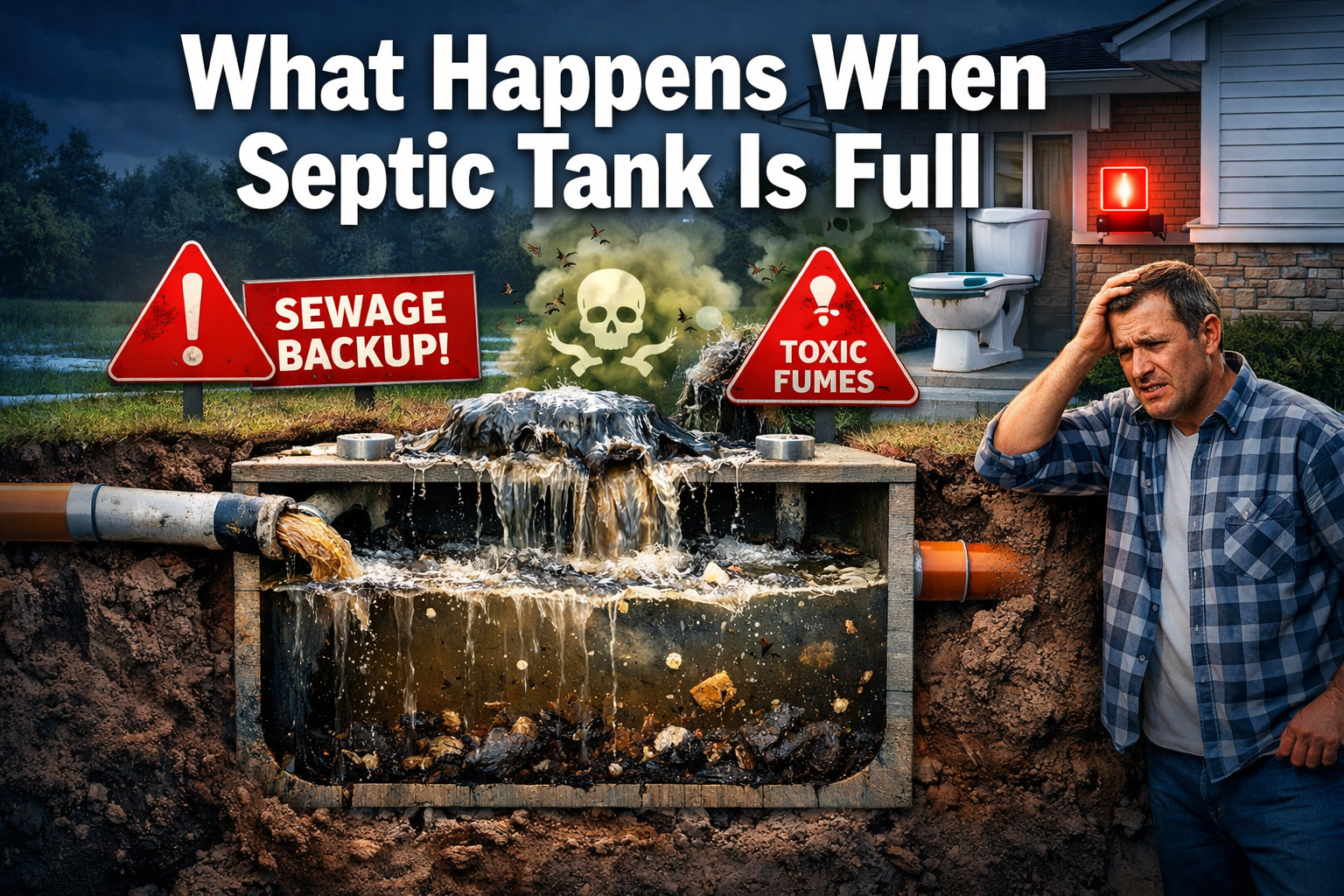
When a septic tank becomes full, untreated wastewater backs up into your home through drains and toilets, creating unsanitary conditions and health hazards. The excess waste also overflows into the drain field, potentially causing permanent soil damage that requires expensive repairs or complete system replacement costing $10,000-$20,000 or more.
What Happens When Septic Tank Is Full: The Immediate Dangers
Sewage backup into your home is the most urgent threat when your septic tank reaches capacity. Raw wastewater begins flowing backward through your plumbing system, emerging from toilets, sinks, floor drains, and showers throughout your house.
This creates an immediate health emergency for several reasons:
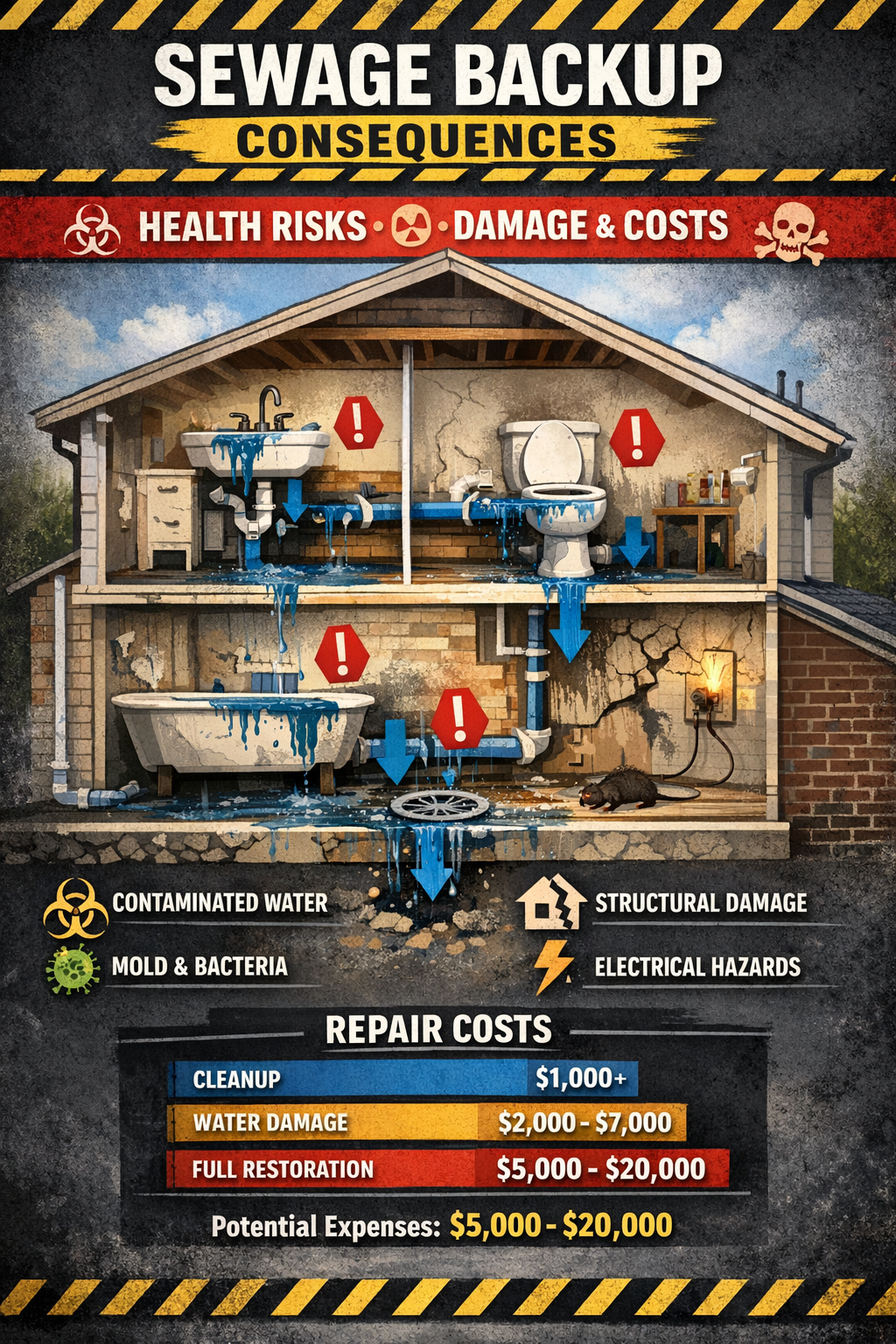
- Pathogen exposure – Raw sewage contains harmful bacteria, viruses, and parasites that cause serious illness
- Toxic gas release – Hydrogen sulfide and methane gases create breathing hazards
- Property contamination – Sewage soaks into flooring, walls, and personal belongings
- Structural damage – Standing wastewater weakens building materials and promotes mold growth
The cleanup process alone can cost $3,000-$7,000, not including repairs to damaged flooring, drywall, or personal property. Many homeowners insurance policies don’t cover sewage backup damage, leaving you responsible for the full cost.
Choose immediate professional help if you see any sewage backup – this isn’t a DIY situation. Turn off your water supply and avoid using any plumbing until a septic professional can assess the situation.
How a Full Septic Tank Destroys Your Drain Field
Drain field failure represents the most expensive consequence of an overfull septic tank, with replacement costs often exceeding $15,000. When solids escape from your tank, they clog the tiny soil pores that filter and absorb wastewater.
Here’s how the damage progresses:
- Solids overflow from the tank into distribution pipes
- Soil pores become blocked by waste particles and grease
- Water absorption capacity drops dramatically
- Surface pooling appears as the ground can’t absorb effluent
- Complete system failure requires drain field replacement
The soil damage is often permanent because once the microscopic spaces between soil particles fill with waste solids, they can’t be cleaned or restored. This is why understanding what happens in your septic tank during normal operation is so important for prevention.
Common mistake: Homeowners often think pumping the tank after drain field problems appear will fix everything. Unfortunately, soil damage typically requires complete drain field replacement regardless of tank pumping.
Environmental and Health Consequences of Septic Tank Overflow
Groundwater contamination occurs when untreated sewage seeps into the soil and reaches underground water supplies. This creates widespread environmental damage that extends far beyond your property.
Immediate Environmental Impacts
- Well water contamination affecting drinking water for you and neighbors
- Surface water pollution in nearby streams, ponds, and lakes
- Algal blooms from excess nutrients that harm aquatic life
- Soil contamination that can persist for years
Health Risks for Your Family
Raw sewage contains dangerous pathogens including:
- E. coli bacteria causing severe gastrointestinal illness
- Hepatitis A virus leading to liver infection
- Parasites like Giardia causing chronic digestive problems
- Salmonella bacteria resulting in food poisoning symptoms
Edge case consideration: If your property is near a public water supply or environmentally sensitive area, regulatory agencies may impose fines and require immediate remediation at your expense.
Children and pets are especially vulnerable because they’re more likely to come into contact with contaminated soil or water during outdoor play.
Warning Signs Your Septic Tank Is Full

Recognizing early warning signs can prevent catastrophic failure and save thousands in repair costs. Most homeowners notice multiple symptoms before complete system breakdown occurs.
Indoor Warning Signs
- Slow-draining sinks and toilets – Water takes longer than usual to drain
- Gurgling sounds from drains when running water elsewhere
- Sewage odors inside the house, especially near plumbing fixtures
- Water backing up in basement floor drains or utility sinks
Outdoor Warning Signs
- Pooling water or wet spots in the yard, especially near the drain field
- Unusually lush grass over the septic system from nutrient-rich wastewater
- Strong sewage odors outside, particularly on humid days
- Sewage surfacing in the yard during or after heavy rains
Decision rule: If you notice two or more of these signs, schedule a septic inspection immediately. Waiting often turns a $300-500 pumping service into a $10,000+ emergency repair.
For a comprehensive guide on identifying these issues, check out our detailed article on how to know if your septic tank is full.
FYI: Some links may be affiliate links, which means I may earn a small commission at no extra cost to you.
Helpful maintenance tip: Consider using Septifix tablets as part of your regular septic care routine. These monthly tablets help break down waste, reduce odors, and maintain proper bacterial balance in your tank. While not a substitute for regular pumping, Septifix can help prevent some of the buildup issues that lead to full tank problems. One tablet per month helps keep your system running efficiently between professional services.
Financial Impact: What Full Septic Tanks Really Cost
The financial consequences of septic tank overflow extend far beyond the initial pumping service, often reaching tens of thousands of dollars in total costs. Understanding these expenses helps homeowners prioritize preventive maintenance.
Emergency Response Costs
| Service Type | Cost Range | Timeline |
|---|---|---|
| Emergency pumping | $400-$800 | Same day |
| Sewage cleanup | $3,000-$7,000 | 3-7 days |
| Plumbing repairs | $500-$2,500 | 1-3 days |
| Property restoration | $2,000-$15,000 | 1-4 weeks |
Long-Term Repair Expenses
- Drain field replacement: $10,000-$20,000+ depending on soil conditions and local regulations[8]
- Complete system replacement: $15,000-$30,000 for new tank and drain field
- Soil remediation: $5,000-$12,000 if contamination requires special treatment
- Well testing and treatment: $500-$2,000 if groundwater contamination occurs
Real-world example: A homeowner in New Jersey delayed pumping for 6 years to save money. The resulting drain field failure cost $18,500 to repair – enough to pay for 37 years of regular maintenance pumping.
Choose preventive maintenance if your tank hasn’t been pumped in 3+ years – the cost comparison makes regular service an obvious financial decision.
Immediate Steps When Your Septic Tank Is Full
Stop using water immediately and contact a septic professional within 24 hours to prevent sewage backup and additional damage. Quick action can often prevent minor problems from becoming major disasters.
Emergency Action Checklist
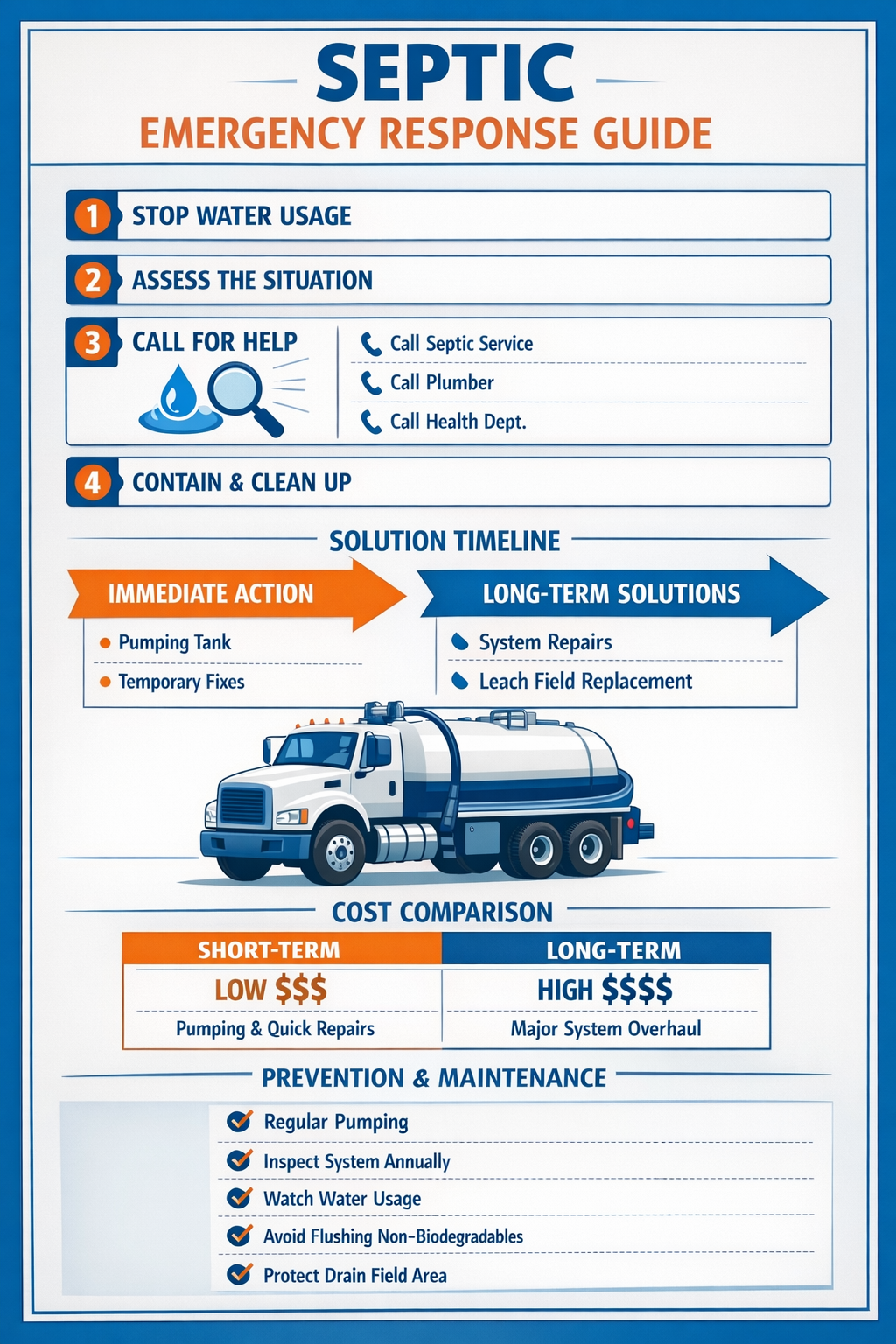
- Stop all water use – No laundry, dishwashing, or long showers
- Turn off water supply if sewage backup has already occurred
- Document damage with photos for insurance purposes
- Contact septic pumping service for emergency response
- Keep family and pets away from contaminated areas
- Ventilate affected spaces to reduce toxic gas buildup
What NOT to Do
- Don’t use drain cleaners or chemicals – These kill beneficial bacteria and worsen problems
- Don’t attempt DIY repairs – Septic systems require professional expertise
- Don’t ignore the problem hoping it will resolve itself
- Don’t flush toilets repeatedly if water isn’t draining properly
Common mistake: Some homeowners try to solve the problem by reducing water use without calling professionals. This delay often allows sewage to continue backing up, increasing cleanup costs and health risks.
For detailed guidance on recognizing when to call professionals, see our guide on signs your septic tank needs maintenance.
Prevention: How to Avoid Septic Tank Disasters
Regular pumping every 2-3 years prevents most septic emergencies and costs far less than emergency repairs. However, several factors affect how quickly your tank fills and when pumping becomes necessary.
Factors That Affect Pumping Frequency
- Household size – More people create more waste
- Tank size – Smaller tanks fill faster
- Water usage patterns – High-efficiency appliances extend pumping intervals
- Waste disposal habits – Flushing inappropriate items accelerates filling
Maintenance Best Practices
Water conservation strategies:
- Fix leaky faucets and running toilets promptly
- Use high-efficiency washing machines and dishwashers
- Take shorter showers and spread laundry loads throughout the week
- Install low-flow fixtures to reduce overall water usage
Waste management guidelines:
- Never flush medications, chemicals, or non-biodegradable items
- Limit garbage disposal use or eliminate it entirely
- Use septic-safe toilet paper and cleaning products
- Avoid excessive grease and oil disposal down drains
Professional maintenance schedule:
- Pump every 2-3 years for most households
- Annual inspections for older systems (15+ years)
- Immediate service if warning signs appear
- Keep detailed maintenance records for warranty and resale purposes
For comprehensive maintenance guidance, check our complete septic tank maintenance guide.
When to Call Professionals vs. DIY Solutions
Always call professionals for pumping, repairs, and inspections – septic systems require specialized equipment and expertise that homeowners shouldn’t attempt to handle alone. However, some maintenance tasks can be done safely by homeowners.
Professional Services Required
- Tank pumping and cleaning – Requires vacuum trucks and proper waste disposal
- System inspections – Need specialized cameras and testing equipment
- Drain field repairs – Involve excavation and soil analysis
- Permit applications – Must comply with local health department regulations
Safe DIY Maintenance
- Water usage monitoring – Track daily consumption to avoid overloading
- Drain field protection – Keep vehicles and heavy equipment off the area
- Surface maintenance – Remove debris and maintain proper drainage
- Record keeping – Document pumping dates and maintenance activities
Decision rule: If the task involves opening the tank, handling sewage, or diagnosing system problems, hire professionals. The health risks and potential for expensive mistakes far outweigh any cost savings.
Edge case: Some homeowners with mechanical experience attempt minor plumbing repairs, but septic-related plumbing often requires understanding of the entire system’s hydraulics and local codes.
Helpful Resource for Ongoing Septic Care
Maintaining a healthy septic system requires consistent attention to bacterial balance and waste breakdown. Septifix tablets offer a simple monthly solution that helps break down waste, reduce odors, and support the natural processes in your septic tank.
While regular pumping remains essential, Septifix can help extend the time between services by promoting efficient waste decomposition. Each tablet contains beneficial bacteria and enzymes that work to break down solid waste and maintain proper pH levels in your tank.
Benefits of regular Septifix use:
- Helps prevent solid buildup that leads to full tank problems
- Reduces unpleasant odors both inside and outside your home
- Supports natural bacterial processes for better waste breakdown
- Simple monthly application – just flush one tablet
This isn’t a replacement for professional maintenance, but it’s a useful tool for homeowners who want to take proactive steps in septic care. Many users report fewer odor problems and longer intervals between pumping services when using monthly treatments consistently.
FAQ
How quickly does a septic tank fill up?
Most residential septic tanks fill to capacity within 2-3 years under normal usage conditions. Larger households or excessive water use can reduce this to 1-2 years, while water-conscious families might extend it to 4-5 years.
Can I pump my septic tank myself?
No, septic tank pumping requires specialized vacuum trucks and proper waste disposal facilities that only licensed professionals possess. DIY pumping attempts are dangerous and illegal in most areas.
What’s the difference between a full tank and a backed-up system?
A full tank means the solids layer has reached capacity but the system might still function poorly. A backed-up system means wastewater is actively flowing backward into your home, creating an immediate emergency.
How long can I wait once I notice warning signs?
Contact professionals within 24-48 hours of noticing warning signs like slow drains or odors. Waiting longer often turns a routine pumping into an expensive emergency repair situation.
Does pumping fix all septic problems?
Pumping resolves issues caused by excess solids but won’t fix drain field damage, broken pipes, or soil contamination. These problems require additional repairs or system replacement.
Can heavy rain cause a full septic tank to overflow?
Yes, saturated soil from heavy rain prevents proper drainage, causing wastewater to surface in your yard or back up into your home when the tank is already full.
What happens if I keep using water when my tank is full?
Continued water use forces raw sewage to back up through your drains and toilets, creating health hazards and potentially causing thousands of dollars in cleanup and repair costs.
How do I find my septic tank for inspection?
Look for the tank lid 10-25 feet from your home’s main sewer line exit. You can also check your property survey or contact your local health department for records.
Are there regulations about septic tank maintenance?
Yes, most counties and municipalities have regulations requiring regular pumping and proper maintenance. Violations can result in fines and mandatory system upgrades at your expense.
Can a full septic tank contaminate my well water?
Absolutely. Overflowing septic systems can contaminate groundwater, including private wells, with dangerous bacteria and chemicals that make water unsafe to drink.
What’s the most expensive consequence of septic neglect?
Drain field replacement is typically the costliest result, often exceeding $15,000-20,000. This occurs when solids from a full tank permanently damage the soil’s ability to filter wastewater.
How can I tell if my drain field is failing?
Signs include pooling water in your yard, unusually green grass over the drain field area, strong sewage odors outside, and sewage surfacing during rain events.
Key Takeaways
- Sewage backup into your home creates immediate health emergencies requiring professional cleanup costing $3,000-$7,000 or more
- Drain field failure from tank overflow is the most expensive consequence, with replacement costs reaching $10,000-$20,000+
- Early warning signs like slow drains, odors, and wet spots in your yard indicate immediate action is needed
- Groundwater contamination poses serious health risks and can affect drinking water for you and your neighbors
- Emergency pumping costs $400-$800 but prevents much more expensive repairs and cleanup
- Regular maintenance every 2-3 years prevents most septic disasters and saves thousands in emergency costs
- Professional help is required for pumping, repairs, and system inspections – never attempt DIY septic work
- Water conservation and proper waste disposal habits extend the time between pumping services
- Documentation and record-keeping help track maintenance schedules and satisfy local regulations
- Quick action when problems appear often prevents minor issues from becoming major disasters
Understanding what happens when septic tank is full empowers you to take preventive action and avoid costly emergencies. Regular maintenance, professional inspections, and prompt attention to warning signs protect your home, health, and wallet from the serious consequences of septic system failure.
For ongoing septic care guidance and maintenance schedules, visit our comprehensive septic tank care resources to keep your system running efficiently for years to come.
References
[1] Scary Things That Can Happen If You Neglect Your – https://www.wrenvironmental.com/blog/2024/october/scary-things-that-can-happen-if-you-neglect-your/
[2] What Happens If You Wait Too Long Between Septic Pump Outs – https://www.awsanitation.com/post/what-happens-if-you-wait-too-long-between-septic-pump-outs
[3] Don T Let Your Septic Tank Backfire The 2 3 Year Rule Explained – https://www.septiccheck.com/post/don-t-let-your-septic-tank-backfire-the-2-3-year-rule-explained
[4] Essential Facts About Buying Homes With Septic Systems In – https://www.amerisave.com/learn/essential-facts-about-buying-homes-with-septic-systems-in
[5] Signs Your Septic Tank Is Too Full When To Call The Pros – https://www.metroseptic.com/blog/signs-your-septic-tank-is-too-full-when-to-call-the-pros/
[8] 7 Septic Myths Debunked Blog October 2025 – https://www.billsseweranddrain.com/7-septic-myths-debunked-blog-october-2025