
Last updated: February 22, 2026
Key Takeaways
• Toilet paper breaks down through bacterial decomposition in septic tanks, but the type you use dramatically affects this process
• Septic-safe toilet paper dissolves up to 4 times faster than traditional varieties, preventing clogs and system failures
• Chemical additives in regular toilet paper can kill beneficial bacteria that your septic system depends on
• Only single-ply, recycled, or specifically labeled septic-safe toilet paper should be used in septic systems
• Wrong toilet paper choices lead to expensive repairs, backups, and premature system failure
Quick Answer
When you flush toilet paper in a septic tank, beneficial bacteria break it down as part of the natural waste decomposition process. However, traditional toilet paper with chemical additives and multiple plies can accumulate faster than bacteria can decompose it, leading to clogs and system strain. Septic-safe toilet paper dissolves quickly and supports healthy bacterial activity, while regular toilet paper can kill essential bacteria and cause expensive problems.
Understanding what happens to toilet paper in a septic tank can save you thousands in repairs and keep your system running smoothly for decades.
How Septic Tanks Process Toilet Paper
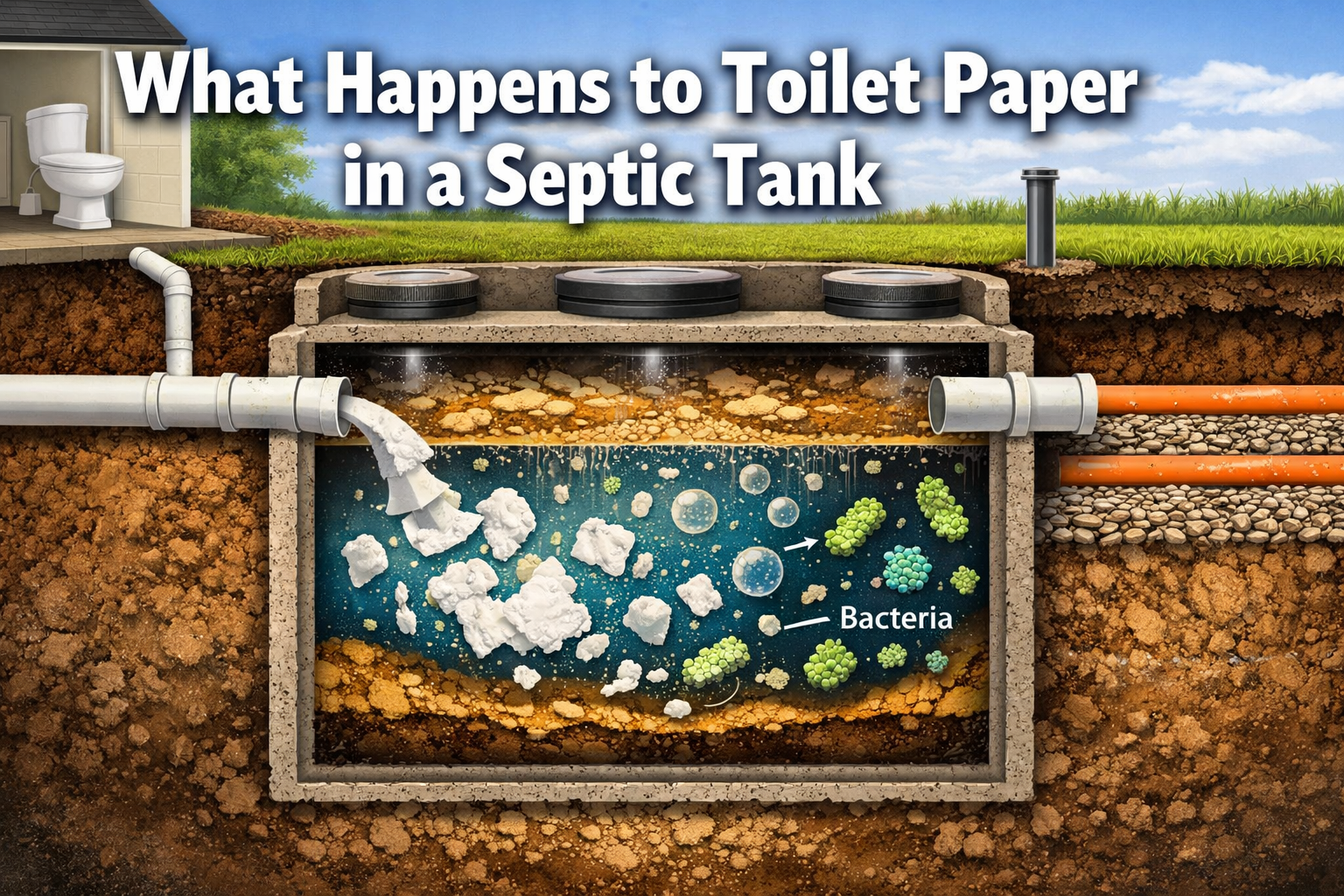
Toilet paper enters your septic tank and immediately begins interacting with the three-layer system designed to break down waste. The tank contains beneficial bacteria that digest organic materials, including toilet paper fibers, as part of the natural decomposition cycle.
When toilet paper reaches the tank, it initially floats in the effluent layer before bacteria begin breaking down the cellulose fibers. Septic-safe toilet paper starts dissolving within seconds, while traditional varieties can take hours or days to begin decomposing. This difference determines whether your system stays healthy or develops problems.
The bacterial breakdown process works best when toilet paper doesn’t contain chemicals that interfere with microbial activity. Bleach, formaldehyde, and chlorine commonly found in regular toilet paper can kill the beneficial bacteria your system relies on. Without these bacteria, waste accumulates faster than it decomposes.
Choose single-ply, unbleached toilet paper if you want to support your septic system’s natural processes. The faster breakdown means less strain on your tank and fewer maintenance issues over time.
For more details about how septic systems work, see our complete guide to how septic tanks work.
What Happens to Toilet Paper in a Septic Tank: The Three-Layer Breakdown Process
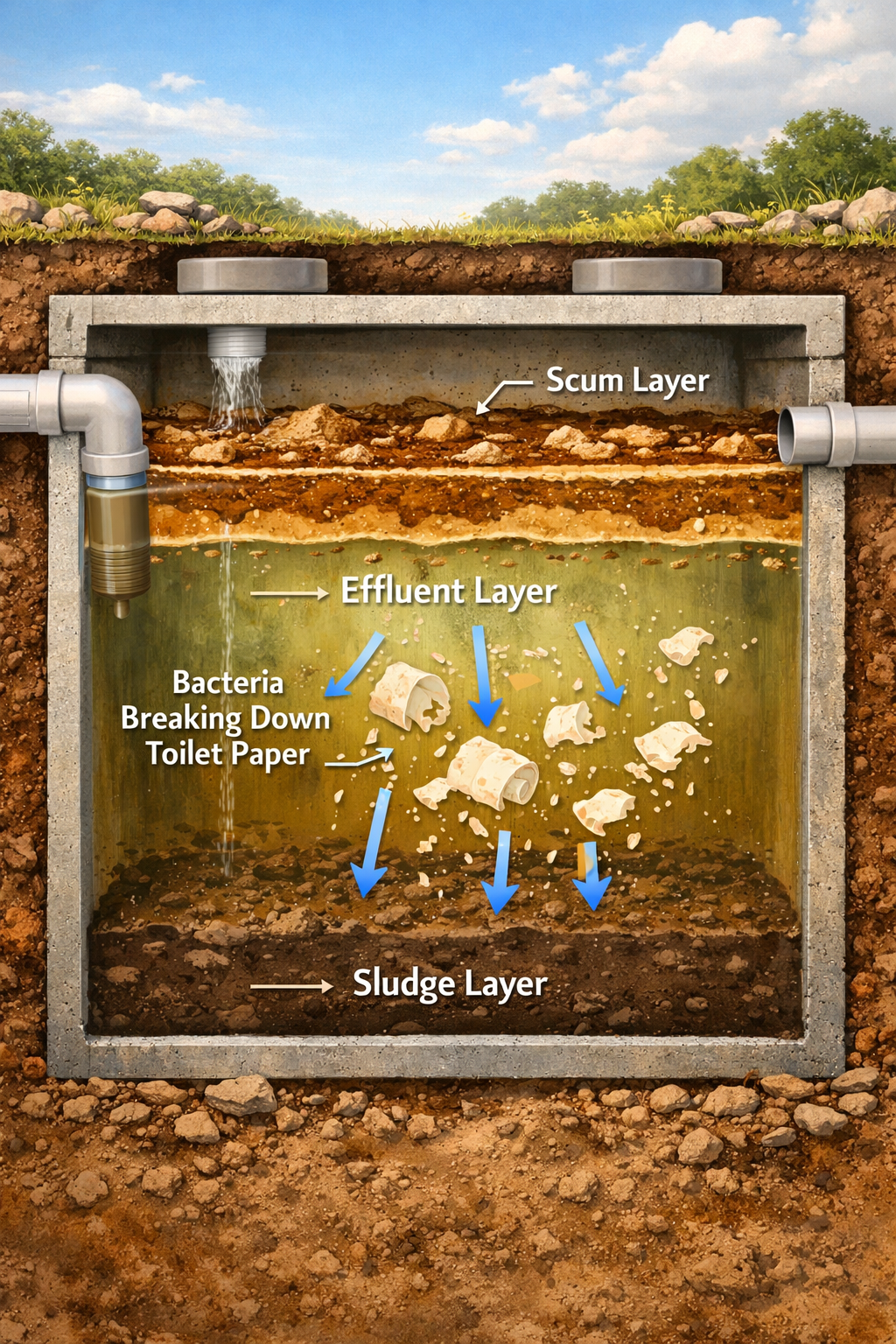
Your septic tank operates through a three-layer system where toilet paper moves through different stages of decomposition. Understanding this process helps you choose the right products and maintain system health.
The Scum Layer
Toilet paper initially enters the top scum layer, where it floats alongside oils and other lightweight materials. Septic-friendly toilet paper begins breaking apart immediately in this layer, while traditional varieties may float intact for extended periods.
The Effluent Zone
Most toilet paper breakdown occurs in the middle effluent layer, where beneficial bacteria are most active. Here, cellulose fibers dissolve and bacteria convert them into harmless byproducts. This process takes 3-5 years for complete decomposition in healthy systems.
The Sludge Layer
Toilet paper that doesn’t break down properly sinks to the bottom sludge layer, where it accumulates with other solid waste. This accumulation forces more frequent pumping and can lead to system backups if traditional toilet paper is used consistently.
The key difference between toilet paper types is how quickly they move through these layers. Septic-safe options dissolve in the effluent zone, while problematic varieties accumulate in the sludge layer.
Why Traditional Toilet Paper Causes Septic Tank Problems
Traditional toilet paper creates multiple problems in septic systems due to its design and chemical composition. These issues compound over time, leading to expensive repairs and system failures.
Chemical additives kill beneficial bacteria that your septic tank needs for proper waste decomposition. Bleach, softening agents, and formaldehyde commonly used in traditional toilet paper manufacturing disrupt the bacterial balance essential for system function.
Fiber Length and Strength Issues
Virgin paper fibers used in traditional toilet paper are longer and stronger, making them resist breakdown in septic environments. Multi-ply products compound this problem by creating thicker, more durable materials that bacteria struggle to decompose.
Accumulation Problems
Traditional toilet paper accumulates in septic tanks faster than bacteria can break it down, leading to:
- Increased solid waste layers
- More frequent pumping requirements
- Higher risk of clogs and backups
- Premature system failure
Chemical Interference
The chemicals in regular toilet paper don’t just resist breakdown—they actively harm your septic system by:
- Killing beneficial bacteria populations
- Disrupting natural decomposition cycles
- Creating toxic conditions for microbial activity
Switch to recycled or septic-safe toilet paper to avoid these problems. The investment in proper products costs far less than septic system repairs or replacement.
FYI: Some links may be affiliate links, which means I may earn a small commission at no extra cost to you.
If you want to support your septic system’s bacterial health, Septifix tablets can help maintain the beneficial bacteria that break down waste and toilet paper. These monthly tablets help prevent blockages and keep your system working efficiently alongside proper toilet paper choices.
What Happens to Toilet Paper in a Septic Tank: Chemical Impact on Bacterial Health
The chemicals in toilet paper directly affect the bacterial ecosystem that keeps your septic tank functioning. This bacterial health determines how effectively toilet paper and other waste break down in your system.
Chlorine and bleach are the biggest bacterial killers found in traditional toilet paper. These chemicals sterilize surfaces in your home, but they also sterilize your septic tank, destroying the beneficial microorganisms essential for waste processing.
Chemical Additives That Harm Septic Systems
- Formaldehyde: Preserves toilet paper but kills bacteria
- Softening agents: Create plush feel but resist decomposition
- Bleaching compounds: Whiten paper but sterilize tank environment
- Wet-strength additives: Prevent tearing but slow breakdown
Bacterial Recovery Time
When chemicals kill septic bacteria, the ecosystem takes weeks or months to recover. During this time, waste accumulates faster than it decomposes, leading to backups and system strain. Consistent use of chemical-laden toilet paper prevents full bacterial recovery.
Supporting Bacterial Health
Choose unbleached, chemical-free toilet paper to maintain healthy bacterial populations. Recycled toilet paper typically contains fewer harmful additives because it’s already been processed and doesn’t require extensive bleaching.
Bamboo toilet paper offers another excellent option since it’s naturally antimicrobial-resistant and doesn’t require chlorine processing. This supports long-term bacterial health while providing effective waste breakdown.
For comprehensive information about maintaining septic system health, check our septic tank maintenance guide.
Septic-Safe vs Regular Toilet Paper: What Actually Breaks Down
The breakdown speed difference between septic-safe and regular toilet paper can make or break your septic system’s health. Understanding these differences helps you make informed choices that prevent costly problems.
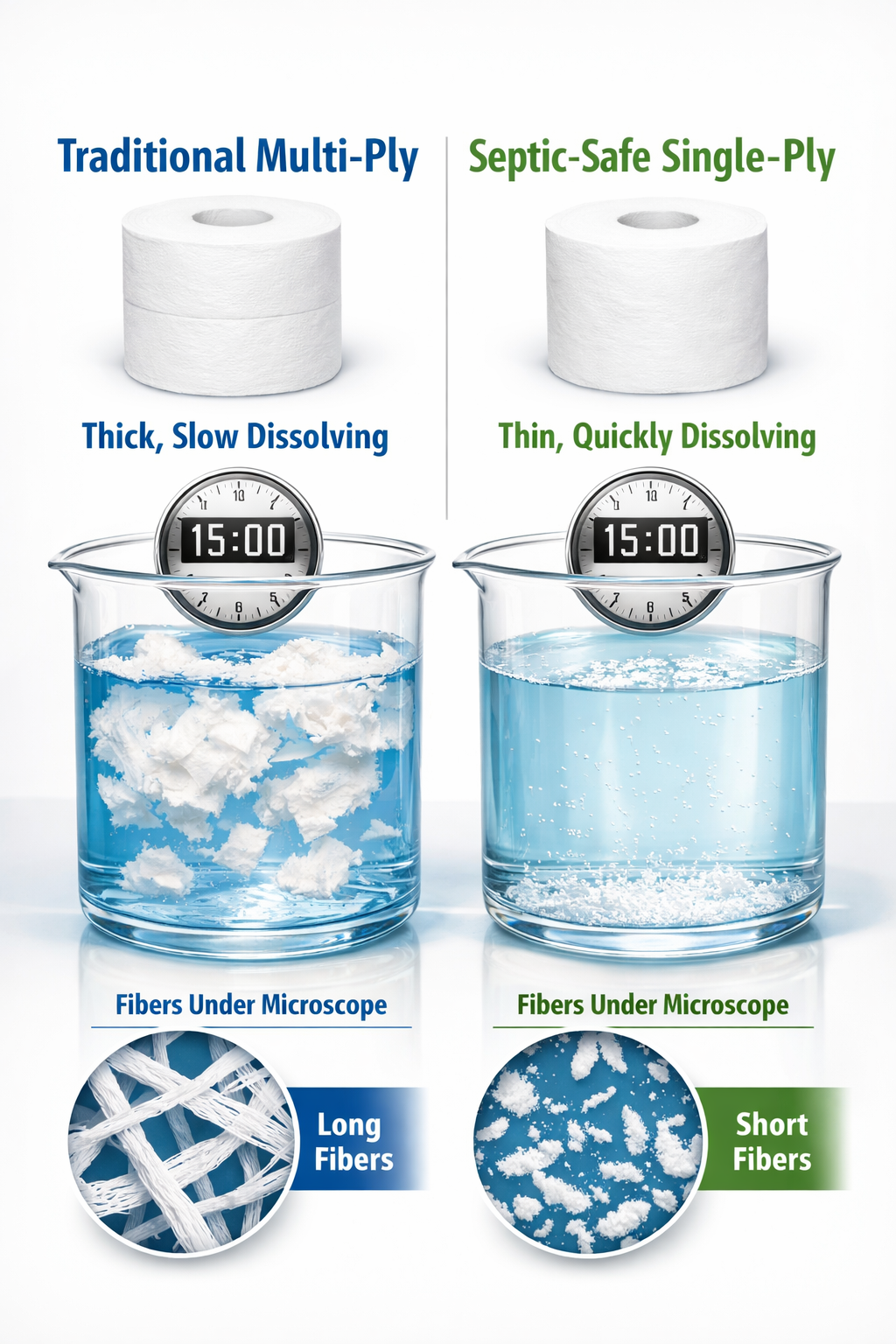
Septic-safe toilet paper breaks down up to 4 times faster than traditional varieties, dissolving almost immediately when it hits water. Regular toilet paper can take hours or days to begin decomposing, during which it accumulates and creates potential blockages.
Breakdown Speed Comparison
| Toilet Paper Type | Breakdown Time | Septic Impact |
|---|---|---|
| Septic-safe single-ply | Seconds to minutes | Minimal strain |
| Recycled paper | 5-15 minutes | Low impact |
| Traditional 2-ply | Hours to days | Moderate strain |
| Ultra-plush 3+ ply | Days to weeks | High risk |
Fiber Composition Differences
Septic-safe toilet paper uses shorter, pre-processed fibers that dissolve quickly in water. Regular toilet paper uses virgin fibers that are longer and stronger, designed to resist breakdown during normal use.
Testing Toilet Paper at Home
You can test toilet paper breakdown by placing a few sheets in a jar of water and shaking vigorously. Septic-safe paper should break apart within 10-20 seconds, while problematic varieties remain largely intact.
Chemical-Free Processing
Septic-safe options typically avoid harsh chemicals during manufacturing. This means they won’t interfere with bacterial activity while breaking down more readily in your tank environment.
The extra cost of septic-safe toilet paper is minimal compared to the thousands you’ll spend on repairs if you use the wrong products consistently.
Common Toilet Paper Mistakes That Damage Septic Systems
Many homeowners unknowingly damage their septic systems through poor toilet paper choices and flushing habits. These mistakes accumulate over time, leading to expensive repairs and system failures.
Using “flushable” products beyond toilet paper represents the biggest mistake septic owners make. Items marketed as “flushable” or “septic-safe” often fail to meet actual septic system standards and cause catastrophic damage.
The Multi-Ply Problem
Choosing multi-ply toilet paper for comfort creates long-term septic problems. Three-ply and ultra-plush varieties take significantly longer to break down, putting excessive strain on tank bacteria and increasing solid accumulation[3].
Quantity Mistakes
Using excessive amounts of even septic-safe toilet paper can overwhelm your system’s bacterial capacity. Large volumes of paper, even if it breaks down quickly, can temporarily disrupt the bacterial balance needed for proper decomposition.
Chemical Product Mixing
Combining toilet paper use with chemical cleaners, bleach-based products, or antibacterial soaps creates a toxic environment for beneficial bacteria. This chemical cocktail prevents proper toilet paper breakdown and waste processing.
Ignoring Warning Signs
Common warning signs that toilet paper choices are damaging your system include:
- Slow drains throughout the house
- Gurgling sounds from plumbing
- Sewage odors near the tank
- Wet spots in the drain field area
The “Biodegradable” Myth
Not all products labeled “biodegradable” work well in septic systems. True septic compatibility requires rapid breakdown in anaerobic conditions, not just eventual decomposition in ideal environments.
Address these mistakes immediately to prevent system failure. If you notice warning signs, consider our guide on signs your septic tank needs maintenance.
How to Choose the Right Toilet Paper for Your Septic Tank
Selecting proper toilet paper for your septic system requires understanding specific characteristics that support bacterial health and rapid breakdown. The right choice prevents problems and extends system life.
Look for single-ply, recycled, or specifically labeled septic-safe toilet paper as your primary options. These products dissolve quickly without introducing harmful chemicals that kill beneficial bacteria.
Key Selection Criteria
- Single-ply construction: Breaks down faster than multi-ply alternatives
- Recycled content: Contains shorter, pre-processed fibers that dissolve readily
- Chemical-free processing: Avoids bleach, formaldehyde, and softening agents
- Rapid dissolve rating: Should break apart within 10-20 seconds in water
- Septic-safe certification: Look for specific septic system compatibility claims
Recommended Product Types
Bamboo toilet paper offers excellent septic compatibility because it’s naturally processed without chlorine and breaks down quickly in anaerobic conditions. Recycled toilet paper provides another reliable option since it’s already been processed and contains fewer harmful additives.
Testing Before Committing
Test any new toilet paper using the jar method: place several sheets in water, shake vigorously for 10 seconds, and observe breakdown. Septic-friendly options should disintegrate almost completely, while problematic varieties remain intact.
Brands to Avoid
Avoid ultra-plush, quilted, or heavily perfumed toilet papers. These products contain chemicals and fiber treatments that resist breakdown and harm bacterial populations in your septic tank.
Cost vs. Value Consideration
Septic-safe toilet paper may cost slightly more upfront, but it prevents expensive repairs and extends time between pumpings. The investment pays for itself through reduced maintenance costs and system longevity.
For additional septic system protection, consider monthly treatments that support bacterial health alongside proper toilet paper choices.
What Happens to Toilet Paper in a Septic Tank: Maintenance and Prevention
Proper maintenance ensures toilet paper breaks down effectively in your septic tank while preventing accumulation that leads to system problems. Regular care combined with smart product choices keeps your system healthy for decades.
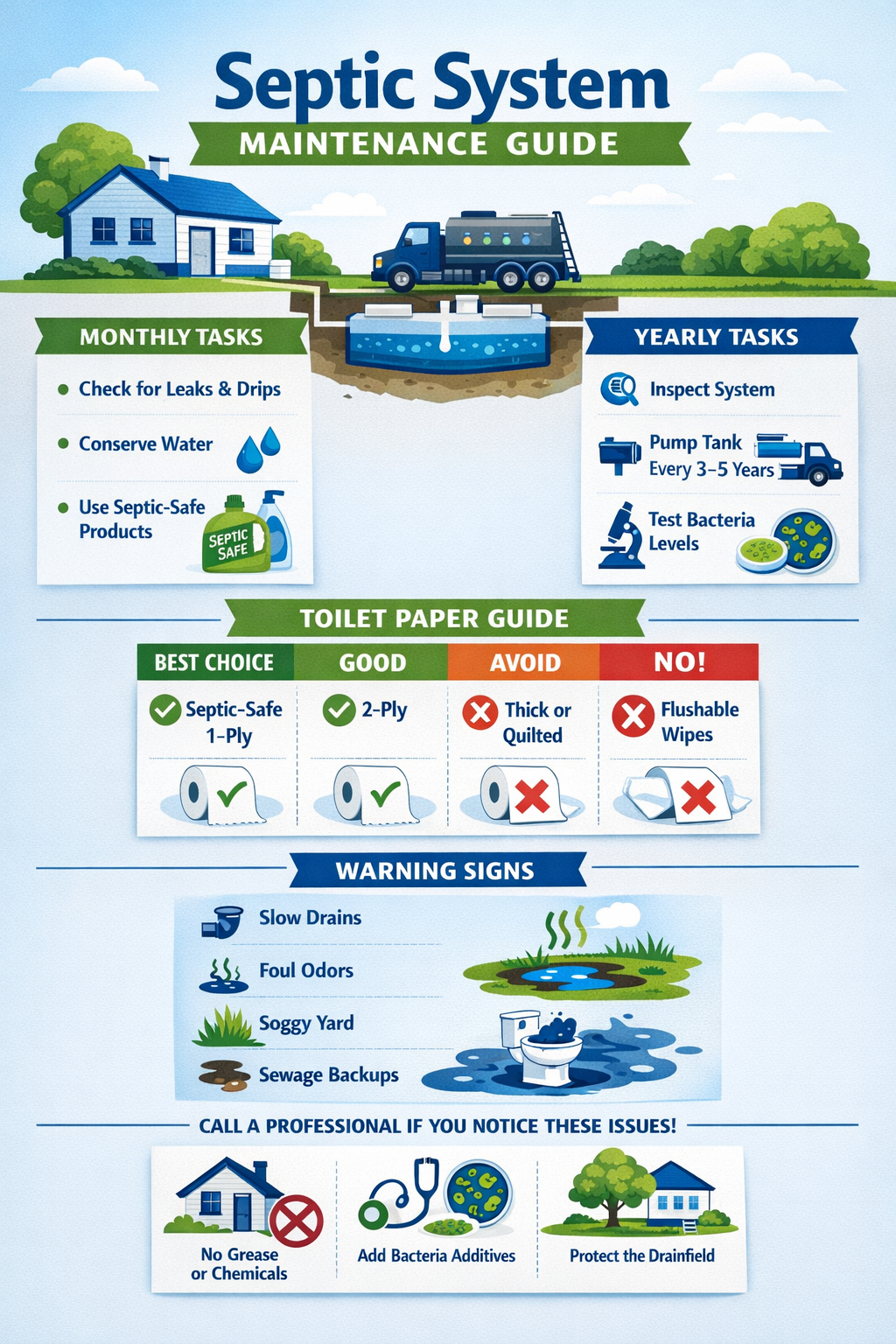
Regular pumping every 3-5 years removes accumulated solids that bacteria can’t fully decompose, including toilet paper residue that builds up over time. This maintenance prevents the sludge layer from overwhelming your system’s capacity.
Monthly Maintenance Tasks
- Monitor water usage to prevent system overload
- Check for slow drains or gurgling sounds
- Inspect the area around your tank for wet spots or odors
- Use bacterial treatments to maintain healthy microbial populations
Annual Inspections
Schedule professional inspections to assess:
- Sludge and scum layer thickness
- Bacterial health and activity levels
- Pipe condition and flow rates
- Overall system performance
Supporting Bacterial Health
Septifix tablets provide monthly bacterial support that helps break down toilet paper and other waste more effectively. These treatments maintain the microbial balance essential for proper decomposition, especially if you’ve accidentally used harsh chemicals or antibacterial products.
Prevention Strategies
- Educate household members about septic-safe practices
- Keep a list of approved toilet paper brands near bathrooms
- Install low-flow toilets to reduce water volume
- Avoid chemical drain cleaners and antibacterial soaps
Warning Sign Response
Address problems immediately when you notice:
- Backups or slow drainage
- Unusual odors from drains or tank area
- Wet spots in the drain field
- Gurgling sounds from plumbing
Early intervention prevents minor issues from becoming expensive repairs. For detailed troubleshooting, see our septic tank problem diagnosis guide.
Long-Term System Health
Consistent use of septic-safe toilet paper, combined with regular maintenance and bacterial support, extends your system’s life significantly. Proper care can help your septic system last 20-30 years instead of requiring premature replacement due to preventable problems.
Helpful Resource
If you want a simple way to support your septic system’s health alongside proper toilet paper choices, Septifix tablets offer convenient monthly maintenance. These tablets help maintain the beneficial bacteria that break down waste and toilet paper, reduce odors, and prevent blockages. With one easy monthly flush, you can help protect your plumbing and avoid costly repairs while ensuring toilet paper breaks down properly in your system.
FAQ
How long does toilet paper take to break down in a septic tank?
Septic-safe toilet paper breaks down within minutes to hours, while traditional toilet paper can take days to weeks. The complete decomposition process takes 3-5 years in healthy septic systems.
Can I use regular toilet paper in my septic tank?
Regular toilet paper can harm septic systems due to chemical additives and slower breakdown rates. It’s better to use septic-safe, recycled, or single-ply options designed for septic compatibility.
What toilet paper dissolves the fastest in septic tanks?
Single-ply, recycled, and bamboo toilet papers dissolve fastest. These should break apart within 10-20 seconds when tested in water and contain fewer chemicals that interfere with bacterial breakdown.
Does toilet paper kill septic bacteria?
Chemical additives in traditional toilet paper—including bleach, formaldehyde, and softening agents—can kill beneficial septic bacteria. Choose chemical-free, unbleached options to protect bacterial health.
How much toilet paper is too much for a septic tank?
Even septic-safe toilet paper can overwhelm your system if used excessively. Use reasonable amounts and educate household members about septic-friendly practices to prevent bacterial overload.
What happens if I flush the wrong toilet paper?
Wrong toilet paper choices lead to accumulation in the sludge layer, more frequent pumping needs, potential clogs, and bacterial population disruption. Switch to septic-safe options immediately to prevent further damage.
Can bamboo toilet paper be used in septic tanks?
Yes, bamboo toilet paper is excellent for septic systems. It breaks down quickly, doesn’t require chlorine processing, and supports healthy bacterial activity in septic tanks.
How do I test if toilet paper is septic-safe?
Place a few sheets in a jar of water, shake vigorously for 10 seconds, and observe breakdown. Septic-safe paper should disintegrate almost completely within this timeframe.
Will septic-safe toilet paper prevent all septic problems?
Septic-safe toilet paper prevents problems related to poor breakdown and chemical interference, but you still need regular pumping, proper maintenance, and avoiding other harmful products for complete system health.
Does recycled toilet paper work better than new paper in septic tanks?
Yes, recycled toilet paper typically works better because it contains shorter, pre-processed fibers that dissolve more readily and fewer harmful chemical additives than virgin paper products.
Key Takeaways
• Toilet paper breaks down through bacterial decomposition, but the type you choose dramatically affects this process and system health
• Septic-safe toilet paper dissolves up to 4 times faster than traditional varieties, preventing dangerous accumulation and clogs
• Chemical additives in regular toilet paper kill beneficial bacteria that your septic system depends on for proper waste processing
• Single-ply, recycled, and bamboo toilet papers offer the best septic compatibility due to rapid breakdown and minimal chemical processing
• Test toilet paper breakdown at home using the jar method—septic-safe options should disintegrate within 10-20 seconds
• Multi-ply and ultra-plush toilet papers create long-term problems by resisting breakdown and straining bacterial populations
• Regular maintenance including pumping every 3-5 years removes accumulated toilet paper residue and prevents system overload
• Supporting bacterial health with monthly treatments helps ensure proper toilet paper decomposition and overall system function
• Wrong toilet paper choices lead to expensive repairs, premature system failure, and more frequent pumping requirements
• Proper toilet paper selection combined with good maintenance practices can extend septic system life to 20-30 years
Understanding what happens to toilet paper in a septic tank empowers you to make choices that protect your investment and prevent costly problems. Start using septic-safe toilet paper today, maintain your system regularly, and support bacterial health for decades of reliable performance.
For ongoing septic system care, explore our complete maintenance resources and pumping guidelines to keep your system running smoothly.
References
[1] How Toilet Paper Affects Septic Systems – https://lasvegassepticservice.com/blog/how-toilet-paper-affects-septic-systems/
[2] Best Toilet Paper For Septic Tanks – https://savetrees.co/blogs/save-trees-blog/best-toilet-paper-for-septic-tanks
[3] Why Paper Matters With Your Septic System – https://supeckseptic.com/why-paper-matters-with-your-septic-system/
[4] Best Toilet Paper For Septic Tanks – https://smartsepticpros.com/blog/best-toilet-paper-for-septic-tanks/
[5] Bamboo Toilet Paper Septic Safe – https://blog.whogivesacrap.org/home/bamboo-toilet-paper-septic-safe
[6] Best Toilet Tissue For Septic Tanks – https://oerap.oregon.gov/best-toilet-tissue-for-septic-tanks/
[7] What Not To Flush Keep Your Septic System Functioning Properly – https://extension.psu.edu/what-not-to-flush-keep-your-septic-system-functioning-properly/
[8] Are Flushable Bathroom Products Safe For Sewer And Septic Systems – https://www.canr.msu.edu/news/are_flushable_bathroom_products_safe_for_sewer_and_septic_systems