Last updated: February 23, 2026
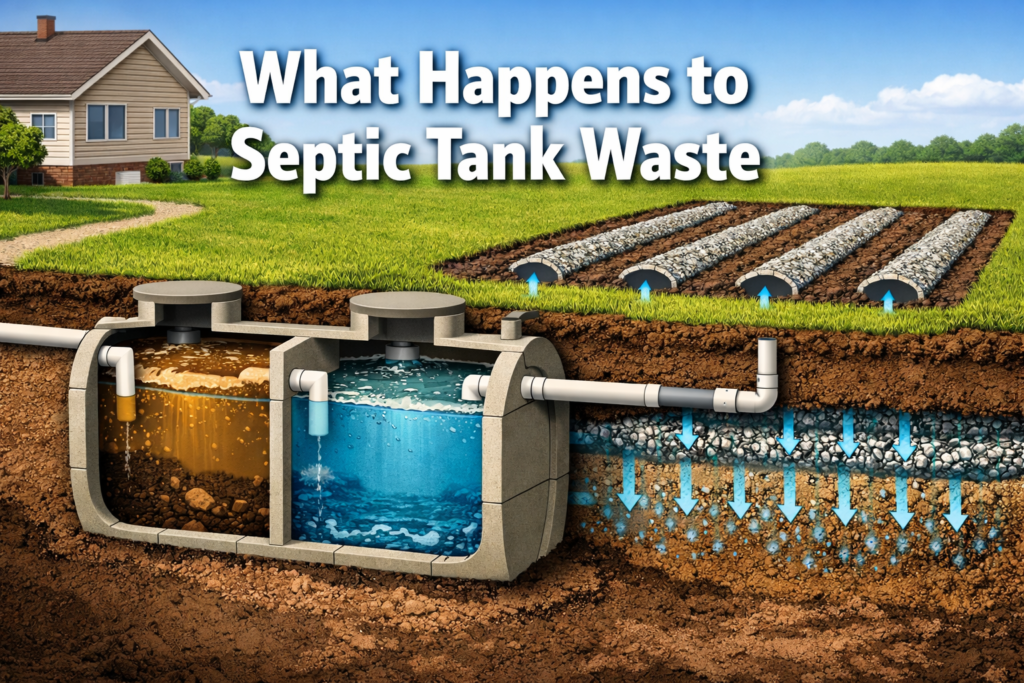
Understanding what happens to septic tank waste is crucial for every homeowner with an on-site wastewater treatment system. Your septic tank transforms household waste through a natural biological process that separates solids, treats liquids, and safely returns clean water to the environment.
Key Takeaways
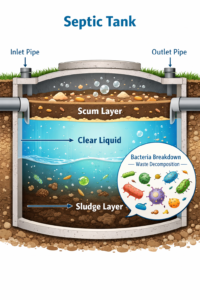
• Waste separates into three layers: scum (oils/grease), effluent (liquid), and sludge (heavy solids)
• Bacteria naturally break down organic matter in the tank through anaerobic digestion
• Treated liquid flows to the drain field where soil provides final filtration
• Solid waste accumulates as sludge and requires periodic pumping every 3-5 years
• Proper maintenance prevents system failure and protects groundwater quality
• Advanced systems use aerobic treatment for enhanced waste processing
• Smart monitoring technology helps track waste levels and optimize pumping schedules
• Environmental regulations require proper sludge disposal through licensed operators
Quick Answer
Septic tank waste undergoes a multi-stage treatment process where solids settle to the bottom as sludge, oils float to the top as scum, and liquid waste in the middle gets partially treated by bacteria before flowing to the drain field for final soil filtration. The accumulated sludge must be pumped out every 3-5 years by professionals for proper disposal and treatment.
How Does Waste Separation Work in Your Septic Tank?
Waste separation in your septic tank happens through gravity and density differences, creating three distinct layers that allow for natural treatment processes. When wastewater enters your tank, heavier solids sink to the bottom while lighter materials float to the surface.
The separation process creates these layers:
• Scum layer (top): Contains oils, grease, soap residue, and floating debris
• Effluent zone (middle): Partially clarified liquid that flows to the drain field
• Sludge layer (bottom): Heavy solids, food particles, and bacterial waste
Tank baffles control the flow and prevent disturbing these layers. The inlet baffle directs incoming waste downward, while the outlet baffle ensures only middle-layer effluent exits to the drain field.
Choose a larger tank if your household produces more waste than average – a 1,000-gallon tank works for most 3-4 person homes, but larger families need 1,200-1,500 gallons to maintain proper separation time.
Common mistake: Flushing grease down drains disrupts layer separation and can clog the system. Always dispose of cooking oils in the trash instead.
What Happens to Septic Tank Waste During Bacterial Breakdown?
Bacterial breakdown in septic tanks occurs through anaerobic digestion, where beneficial bacteria consume organic waste and convert it into simpler compounds, gases, and water. This natural process reduces solid waste volume by 40-60% over time.
The bacterial treatment process works in stages:
Primary digestion: Bacteria break down proteins, carbohydrates, and fats into smaller molecules
Secondary decomposition: Acid-producing bacteria convert organic matter into organic acids
Final stage: Methane-producing bacteria convert acids into methane, carbon dioxide, and water
Key factors affecting bacterial efficiency:
• Temperature: Bacteria work best at 70-85°F (cold weather slows the process)
• pH levels: Optimal range is 6.8-7.2 (harsh chemicals can kill bacteria)
• Retention time: Waste should stay in tank 24-48 hours for proper treatment
• Oxygen levels: Anaerobic bacteria thrive without oxygen in sealed tanks
FYI: Some links may be affiliate links, which means I may earn a small commission at no extra cost to you.
If you want to boost your septic tank’s bacterial activity, Septifix tablets can help maintain healthy bacteria levels. These monthly tablets break down waste more effectively, reduce odors, and help prevent system backups by supporting the natural bacterial process your tank relies on.
Edge case: New septic systems or recently pumped tanks may need 2-4 weeks to rebuild bacterial populations before operating at full efficiency.
Where Does Treated Liquid Waste Go After the Septic Tank?
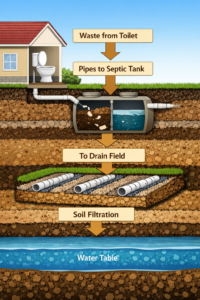
Treated liquid waste flows from your septic tank to the drain field (also called leach field) where soil provides final filtration before the water reaches groundwater. This effluent contains fewer solids but still needs soil treatment to remove harmful bacteria and nutrients.
The drain field process involves:
Distribution box: Evenly spreads effluent across multiple drain field lines
Perforated pipes: Allow liquid to seep slowly into surrounding soil
Gravel bed: Provides initial filtration and prevents soil compaction
Soil filtration: Removes remaining bacteria, viruses, and excess nutrients
Groundwater recharge: Clean water eventually reaches the water table
Soil requirements for effective treatment:
• Percolation rate: 1-60 minutes per inch (too fast or slow creates problems)
• Depth to groundwater: Minimum 2-4 feet separation
• Soil composition: Sandy loam works best; clay and rock cause issues
For challenging sites, advanced alternative systems like mound systems or elevated drain fields can provide proper treatment where standard systems won’t work.
Choose a pump system if your drain field sits higher than your septic tank or if soil conditions require pressurized distribution for even effluent spreading.
What Happens to Solid Waste and Sludge in Septic Tanks?
Solid waste in septic tanks accumulates as sludge at the bottom of the tank, where it undergoes partial bacterial decomposition but never fully disappears. This sludge layer grows over time and requires professional pumping every 3-5 years to prevent system failure.
Sludge composition includes:
• Organic solids: Food particles, human waste, toilet paper
• Inorganic materials: Sand, grit, small objects that shouldn’t be flushed
• Bacterial biomass: Dead and living microorganisms from the treatment process
• Partially decomposed matter: Materials bacteria couldn’t fully break down
Sludge accumulation timeline:
- Year 1-2: Minimal impact on tank capacity
- Year 3-4: Sludge reaches 25-30% of tank volume
- Year 5+: Risk of sludge reaching outlet baffle and clogging drain field
Under current regulations, 92% of extracted sludge must undergo biodegradable treatment through licensed operators[2]. Professional pumping services transport sludge to treatment facilities where it’s processed into biosolids for agricultural use or safely disposed of according to environmental standards.
Warning signs your sludge layer is too thick:
• Slow drains throughout the house
• Sewage odors near the tank or drain field
• Wet spots or standing water over the drain field
• Gurgling sounds from plumbing fixtures
How Do Advanced Septic Systems Handle Waste Differently?
Advanced septic systems use enhanced treatment methods like aerobic bacteria, UV disinfection, and multi-stage processing to handle waste more effectively than conventional systems. These systems can treat wastewater to much higher standards, often producing effluent 10 times cleaner than basic septic tanks.
Aerobic Treatment Units (ATUs) inject air into the treatment chamber, encouraging oxygen-loving bacteria that break down waste faster and more completely than anaerobic systems. This process reduces odors and produces higher-quality effluent.
Advanced system types:
| System Type | Treatment Method | Effluent Quality | Best For |
|---|---|---|---|
| ATU | Aerobic bacteria + air injection | High | Small lots, poor soil |
| Sand Filter | Multi-stage filtration | Very High | Environmentally sensitive areas |
| UV Disinfection | Ultraviolet sterilization | Excellent | Direct discharge to waterways |
| Recirculating Systems | Multiple treatment cycles | Superior | Maximum treatment needed |
Tertiary treatment systems add final polishing steps like sand filtration, UV disinfection, or chlorination to remove remaining pathogens and nutrients. These systems allow treated water to be safely discharged into streams or reused for irrigation.
Smart monitoring technology is growing at 12% annually, with IoT sensors tracking sludge levels, flow rates, and system performance in real-time. These systems can alert homeowners when maintenance is needed and optimize pumping schedules.
Choose an advanced system if your property has poor soil conditions, limited space, or strict environmental requirements that conventional septic systems can’t meet.
What Are the Environmental Impacts of Septic Waste Treatment?
Septic waste treatment has both positive and negative environmental impacts, depending on proper system design, maintenance, and local soil conditions. Well-functioning systems protect groundwater while poorly maintained ones can cause contamination.
Positive environmental impacts:
• Natural treatment process: Uses beneficial bacteria instead of chemicals
• Groundwater recharge: Returns treated water to local aquifers
• Decentralized treatment: Reduces burden on municipal wastewater plants
• Lower energy use: Gravity-fed systems require no electricity
Potential environmental risks:
• Nutrient pollution: Excess nitrogen and phosphorus can contaminate groundwater
• Bacterial contamination: Failing systems release harmful pathogens
• Surface water impacts: Poorly treated effluent can reach streams and lakes
• Soil contamination: Overloaded drain fields can saturate surrounding soil
Approximately 25% of U.S. homes rely on septic systems, representing over 60 million Americans. This makes proper septic waste management crucial for protecting water resources nationwide.
Best practices for environmental protection:
• Regular pumping every 3-5 years to prevent overflows
• Proper maintenance to ensure optimal bacterial function
• Water conservation to prevent system overload
• Avoiding harsh chemicals that kill beneficial bacteria
Regulatory trends: Stricter environmental regulations globally are driving waste management toward standardized compliance methods, with increased focus on nutrient removal and pathogen elimination.
How Can You Optimize What Happens to Septic Tank Waste?
You can optimize septic tank waste treatment by maintaining healthy bacterial populations, controlling what enters your system, and following proper maintenance schedules. Small changes in daily habits significantly impact how effectively your tank processes waste.
Daily practices that improve waste treatment:
• Use septic-safe products: Choose biodegradable soaps, detergents, and toilet paper
• Spread laundry loads: Don’t do multiple loads in one day to avoid overwhelming the system
• Fix leaks promptly: Dripping faucets and running toilets disrupt treatment timing
• Avoid antibacterial products: These kill beneficial bacteria your tank needs
What never to flush or drain:
- Cooking grease and oils
- Chemical drain cleaners
- Feminine hygiene products
- Cat litter or pet waste
- Paint, solvents, or pesticides
- Cigarette butts
- Excessive amounts of toilet paper
Monthly maintenance boost: If you want a simple way to support your septic system’s waste processing, Septifix tablets provide beneficial bacteria and enzymes that help break down waste more effectively. One tablet per month can help reduce odors, prevent backups, and keep your system running smoothly between professional pumpings.
Professional maintenance schedule:
- Inspection: Every 1-3 years depending on usage
- Pumping: Every 3-5 years for most households
- System evaluation: Every 5-10 years to check for wear
Monitor your system by watching for warning signs like slow drains, odors, or wet spots over the drain field. Early detection prevents costly repairs and environmental damage.
Helpful Resource for Septic Tank Care
Maintaining your septic system doesn’t have to be complicated. Septifix tablets offer a simple monthly solution to support your tank’s natural waste treatment process. These tablets help break down organic waste, reduce unpleasant odors, and maintain the bacterial balance your system needs to function properly.
Each tablet contains beneficial bacteria and enzymes that work alongside your tank’s natural processes. Simply flush one tablet monthly to help prevent blockages, protect your plumbing, and potentially extend the time between professional pumpings.
While not a replacement for regular maintenance and pumping, Septifix can be a helpful addition to your septic care routine – especially if you want an easy way to support your system’s waste processing capabilities.
FAQ
How long does waste stay in a septic tank?
Waste typically remains in a septic tank for 24-48 hours for liquid effluent, while solid waste accumulates as sludge over 3-5 years until professional pumping removes it.
What kills bacteria in septic tanks?
Antibacterial soaps, bleach, chemical drain cleaners, excessive amounts of household cleaners, and certain medications can kill beneficial bacteria that break down waste in septic tanks.
Can you see waste breakdown happening in your septic tank?
No, waste breakdown occurs through invisible bacterial processes. You might notice reduced odors and proper drainage as signs that bacterial treatment is working effectively.
What happens if sludge isn’t pumped out?
Excessive sludge buildup can clog the outlet baffle, cause sewage backups into your home, contaminate the drain field, and lead to complete system failure requiring expensive repairs.
Do septic tanks ever stop working?
Septic tanks can fail due to excessive sludge, damaged baffles, clogged drain fields, or bacterial die-off from chemical contamination. Most failures are preventable with proper maintenance.
How much waste can a septic tank handle daily?
A typical 1,000-gallon septic tank can handle 250-300 gallons of wastewater daily from a 3-4 person household. Exceeding this capacity disrupts proper treatment processes.
What happens to waste during winter?
Cold temperatures slow bacterial activity and waste breakdown. Insulating your tank location and avoiding excessive water use helps maintain treatment efficiency during winter months.
Can heavy rain affect septic waste treatment?
Yes, saturated soil around the drain field can prevent proper effluent absorption, causing backups. Heavy rain can also dilute bacterial concentrations if surface water enters the tank.
How do you know if waste treatment is working properly?
Signs include normal drainage throughout your home, absence of sewage odors, no wet spots over the drain field, and clear effluent in the tank’s liquid layer during inspections.
What’s the difference between gray water and black water in septic treatment?
Gray water (from sinks, showers, laundry) and black water (from toilets) both enter the septic tank together, where bacteria treat all organic waste through the same anaerobic digestion process.
Can you add anything to help waste break down faster?
Septic-safe bacterial additives and enzyme products can support natural waste breakdown, but avoid chemical additives that claim to eliminate pumping needs – these often contain harmful substances.
How does toilet paper affect waste treatment in septic tanks?
Septic-safe toilet paper breaks down quickly through bacterial action, while thick or quilted papers can accumulate as sludge and fill your tank faster than normal.
Conclusion
Understanding what happens to septic tank waste empowers you to make better decisions about system care and maintenance. Your septic tank performs a remarkable natural treatment process, transforming household waste through bacterial breakdown, gravity separation, and soil filtration to protect both your property and the environment.
The key to optimal waste treatment lies in supporting your system’s natural processes. Maintain healthy bacterial populations by avoiding harsh chemicals, control what enters your system by following proper disposal practices, and stick to regular maintenance schedules including professional inspections and pumping every 3-5 years.
Take action today:
• Schedule a professional inspection if you haven’t had one in the past 3 years
• Review your household products and switch to septic-safe alternatives
• Learn the warning signs of potential problems
• Consider beneficial bacterial treatments to support waste breakdown
• Create a maintenance calendar to track pumping and inspection dates
Remember that septic systems are designed to last decades with proper care. By understanding how waste treatment works in your tank, you can prevent costly failures, protect groundwater quality, and ensure reliable wastewater treatment for your home. Small investments in maintenance today prevent major expenses tomorrow while keeping your system processing waste effectively for years to come.
For more detailed information about septic system processes, visit our complete guide to how septic tanks work.
References
[1] Fall City Gets Green Light From State For Final Phase Of Septic Project – https://kingcountylocalblog.com/2025/10/15/fall-city-gets-green-light-from-state-for-final-phase-of-septic-project/
[2] Global Septic Tank Cleaningpumping Forecast Market 26825 – https://www.intelmarketresearch.com/global-septic-tank-cleaningpumping-forecast-market-26825
[4] Septic System Types – https://www.premiertechaqua.com/en-us/blog/septic-system-types
[5] The Future Of Septic Systems In Rural Coastal Areas Considering The Options – https://efcnetwork.org/the-future-of-septic-systems-in-rural-coastal-areas-considering-the-options/
[8] Essential Facts About Buying Homes With Septic Systems In – https://www.amerisave.com/learn/essential-facts-about-buying-homes-with-septic-systems-in