Last updated: February 21, 2026
Key Takeaways
• Septic tanks use natural bacterial processes to break down household waste through three distinct layers: scum, effluent, and sludge
• Anaerobic bacteria decompose organic matter without oxygen, converting solid waste into liquid and gas byproducts
• The three-chamber separation process allows heavier solids to settle while oils and grease float to the surface
• Proper bacterial balance is essential for efficient waste breakdown and preventing system backups
• Regular maintenance and bacterial treatments help maintain optimal tank performance and extend system lifespan
Quick Answer
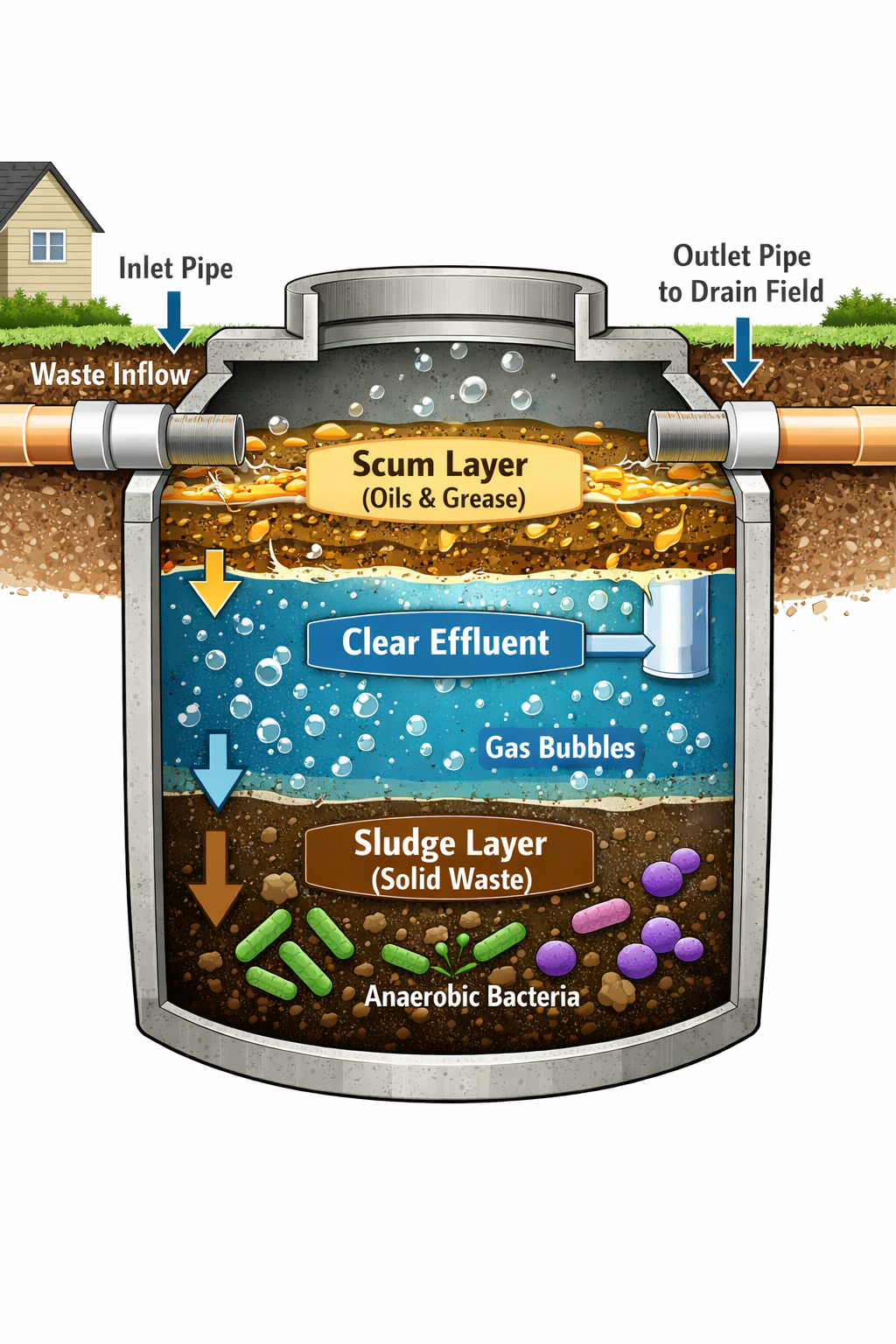
What happens in a septic tank is a natural biological process where anaerobic bacteria break down household waste into three layers. Solid waste settles to the bottom as sludge, oils and grease float to the top as scum, and partially treated liquid (effluent) sits in the middle before flowing to the drain field for final filtration.
How Does the Septic Tank Separation Process Work?
What happens in a septic tank begins the moment wastewater enters through the inlet pipe. The tank’s design forces waste to slow down and separate based on density and composition.
When wastewater flows into your septic tank, gravity immediately starts the separation process. Heavier materials sink to the bottom, while lighter substances rise to the surface. This isn’t random—it’s a carefully engineered system that takes advantage of natural physics.
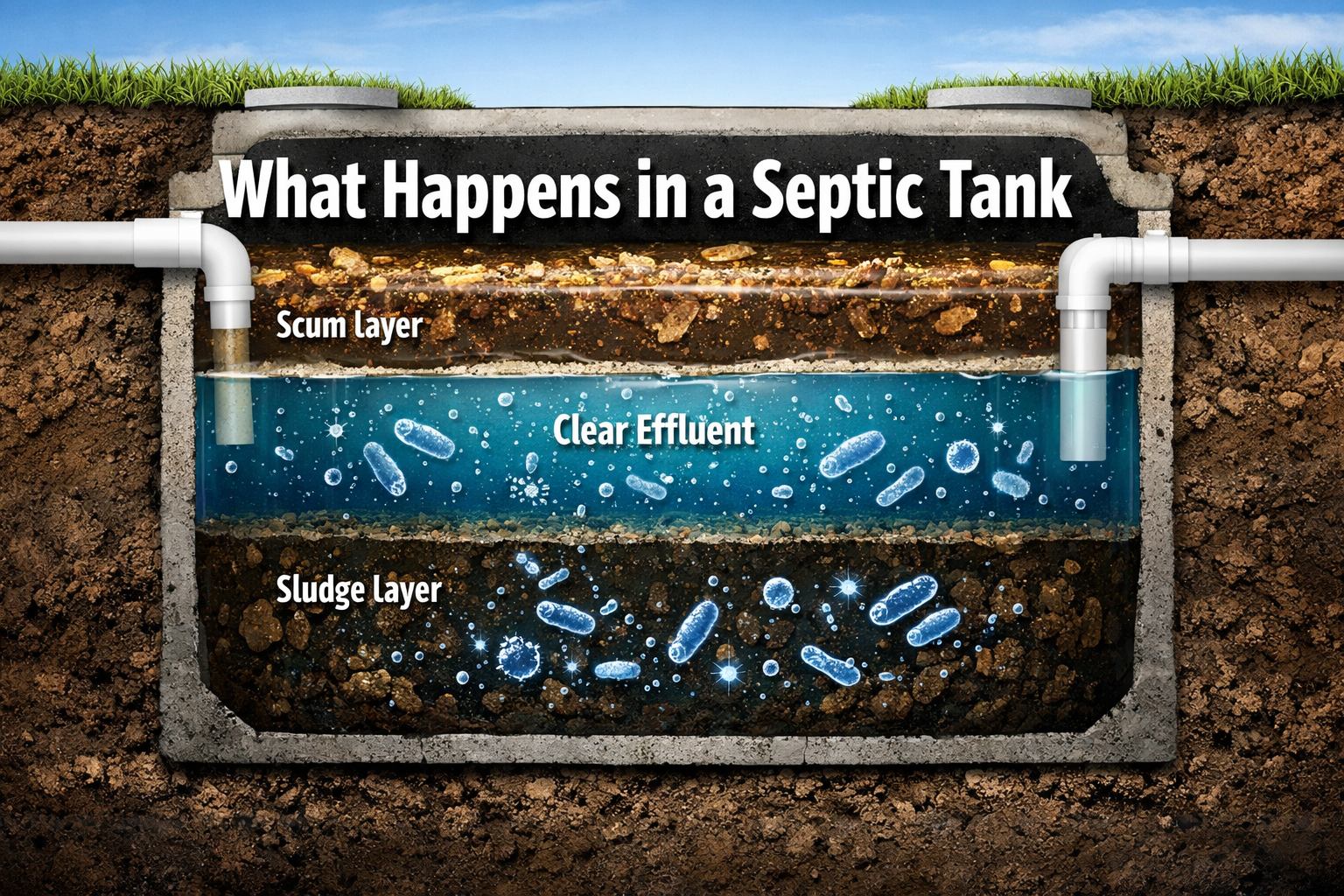
The separation happens in three distinct zones:
• Scum layer (top): Contains oils, grease, soap residue, and floating debris
• Effluent zone (middle): Holds partially treated liquid wastewater
• Sludge layer (bottom): Accumulates solid waste, food particles, and bacterial biomass
Choose a larger tank capacity if your household generates more wastewater than average. A common mistake homeowners make is underestimating their daily water usage, which can overwhelm the separation process.
The inlet and outlet pipes are positioned at specific heights to maintain these layers. The inlet pipe sits higher than the outlet, and both have baffles or tees that prevent surface scum from flowing out with the effluent.
What Role Do Bacteria Play in Septic Tank Waste Breakdown?
Anaerobic bacteria are the workhorses of your septic tank, breaking down organic matter without requiring oxygen. These naturally occurring microorganisms digest solid waste and convert it into simpler compounds.
The bacterial process happens in several stages:
Primary breakdown: Bacteria attack organic solids like food waste, human waste, and toilet paper. They secrete enzymes that dissolve complex molecules into smaller, more manageable pieces.
Fermentation: Without oxygen present, bacteria ferment organic matter, producing methane, carbon dioxide, and hydrogen sulfide gases. This is why septic tanks need proper venting.
Liquefaction: Solid materials gradually transform into liquid form, reducing the overall volume of waste in the tank.
The bacterial population needs specific conditions to thrive:
• pH levels between 6.8-7.2 for optimal enzyme activity
• Consistent temperature (bacteria slow down in cold weather)
• Adequate retention time (typically 24-48 hours minimum)
Avoid antibacterial cleaners and harsh chemicals that can kill beneficial bacteria. A single dose of strong disinfectant can disrupt the bacterial balance for weeks.
FYI: Some links may be affiliate links, which means I may earn a small commission at no extra cost to you.
For homeowners looking to support their tank’s bacterial health, Septifix tablets offer a simple monthly solution. These tablets help maintain the right bacterial balance to break down waste effectively, reduce odors, and prevent the buildup that leads to costly problems. One tablet per month can help keep your system running smoothly without the guesswork.
Understanding the Three Layers: Scum, Effluent, and Sludge
What happens in a septic tank creates three distinct layers that each serve a specific purpose in the waste treatment process. Understanding these layers helps you recognize when your system needs attention.
The Scum Layer (Top Zone)
The scum layer floats on the surface and contains:
• Cooking oils and fats that solidify in cooler tank temperatures
• Soap scum and detergent residues
• Toilet paper that hasn’t fully decomposed
• Hair, lint, and other lightweight debris
This layer should be 6 inches thick or less. When it gets thicker, it can clog the outlet pipe and cause backups into your home.
The Effluent Zone (Middle Layer)
The effluent zone holds partially treated wastewater that appears relatively clear compared to raw sewage. Bacteria continue working in this zone, further breaking down dissolved organic matter.
Key indicators of healthy effluent:
• Clear to slightly cloudy appearance
• Minimal floating particles
• No strong sewage odors
• Proper liquid level (not too high or low)
The Sludge Layer (Bottom Zone)
The sludge layer accumulates the heaviest materials that bacteria cannot fully decompose:
• Human waste solids
• Food particles from garbage disposals
• Sand, dirt, and inorganic debris
• Dead bacterial biomass
Sludge builds up over time and requires regular pumping. When the sludge layer reaches one-third of the tank’s depth, it’s time for professional removal.
Edge case to watch for: Homes with garbage disposals accumulate sludge 25-50% faster than homes without them. You’ll need more frequent pumping if you regularly grind food waste.
For more details about maintaining proper tank levels, see our complete guide on how often to pump your septic tank.
How Long Does the Waste Treatment Process Take?
The complete waste treatment process in a septic tank takes 24-48 hours for initial breakdown, but full decomposition continues for weeks or months depending on the waste type.
Immediate separation (0-2 hours): Gravity separates waste into the three basic layers as soon as wastewater enters the tank.
Active bacterial breakdown (1-3 days): Anaerobic bacteria begin attacking organic matter, with the most aggressive decomposition happening in the first 72 hours.
Extended decomposition (weeks to months): Complex materials like fats, proteins, and cellulose continue breaking down slowly. Some materials may take 6 months or longer to fully decompose.
Factors that affect processing time:
• Water temperature (cold slows bacterial activity)
• Waste composition (organic matter breaks down faster than synthetic materials)
• Tank size relative to household usage
• Bacterial health and population levels
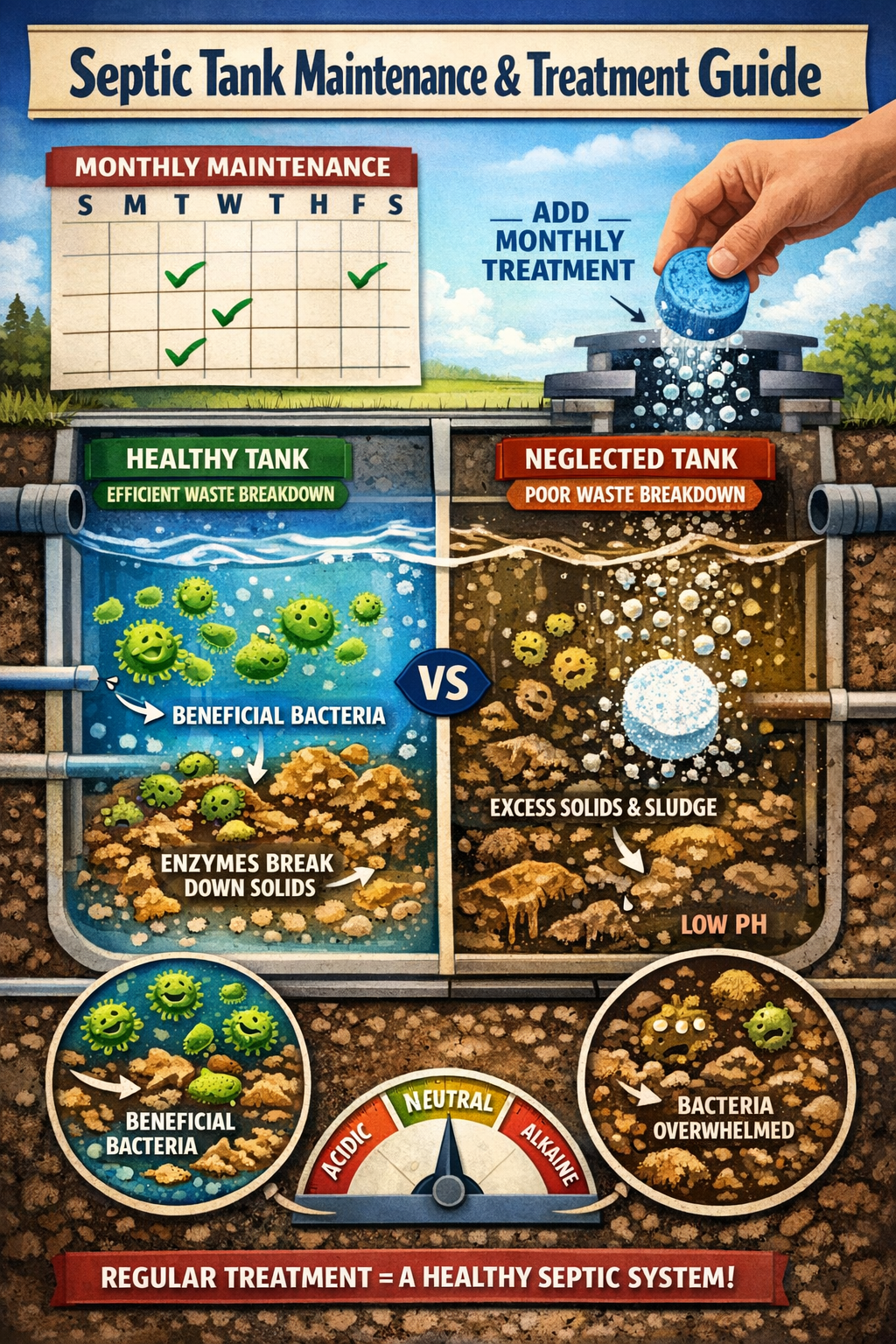
Choose bacterial treatments if your tank processes waste slowly or you notice incomplete breakdown. Cold weather, antibiotic use by household members, or excessive chemical cleaners can all slow the natural process.
Common mistake: Assuming faster is always better. Waste needs adequate retention time in the tank. If effluent flows through too quickly, solids can escape to the drain field and cause expensive damage.
What Happens to Different Types of Household Waste?
Different materials break down at vastly different rates in your septic tank, and understanding these differences helps you make better disposal decisions.
Organic Waste (Breaks Down Well)
• Human waste: Decomposes completely within days to weeks
• Toilet paper: Dissolves in hours to days (septic-safe brands)
• Food scraps: Break down in days to weeks, but add to sludge buildup
• Natural soap residues: Decompose readily with minimal impact
Slow-Decomposing Materials
• Cooking fats and oils: Eventually break down but can cause clogs first
• Hair and lint: Decompose very slowly, accumulate in scum layer
• Cigarette butts: Take months to years, contain harmful chemicals
• Cotton swabs and dental floss: Minimal breakdown, accumulate as debris
Materials That Don’t Break Down
• Cat litter (even “flushable” types)
• Condoms and feminine hygiene products
• Medications and chemicals
• Plastic items, wipes, and synthetic materials
Decision rule: If it’s not human waste, toilet paper, or wastewater, don’t put it in your septic system. When in doubt, throw it out.
Real-world example: A single “flushable” wipe can take 6 months to break down partially, while toilet paper dissolves in under 24 hours. That’s why wipes cause so many septic backups despite marketing claims.
Learn more about what causes septic tank backups and how to prevent them.
How the Effluent Moves from Tank to Drain Field
Effluent flows from the septic tank to the drain field through a carefully designed distribution system that ensures even soil filtration and prevents groundwater contamination.
The process works through several stages:
Outlet pipe positioning: The outlet sits 1-3 inches lower than the inlet, creating a gentle flow that doesn’t disturb the tank’s layers.
Distribution box: Effluent flows to a distribution box that splits the flow evenly among multiple drain field lines. This prevents any single area from becoming oversaturated.
Perforated pipes: Effluent enters perforated pipes buried in gravel beds. The pipes have holes that allow liquid to seep out slowly and evenly.
Soil filtration: As effluent moves through soil layers, beneficial bacteria and physical filtration remove remaining pathogens and nutrients.
Key factors for proper effluent flow:
• Proper pipe slope (typically 1/4 inch per foot)
• Adequate soil percolation rates
• Correct pipe sizing for household flow rates
• Regular distribution box maintenance
Choose professional inspection if you notice wet spots, odors, or lush grass growth over your drain field. These signs indicate the effluent distribution system may be failing.
Edge case: Homes built on slopes or with poor soil drainage may need advanced treatment systems or pump systems to ensure proper effluent distribution.
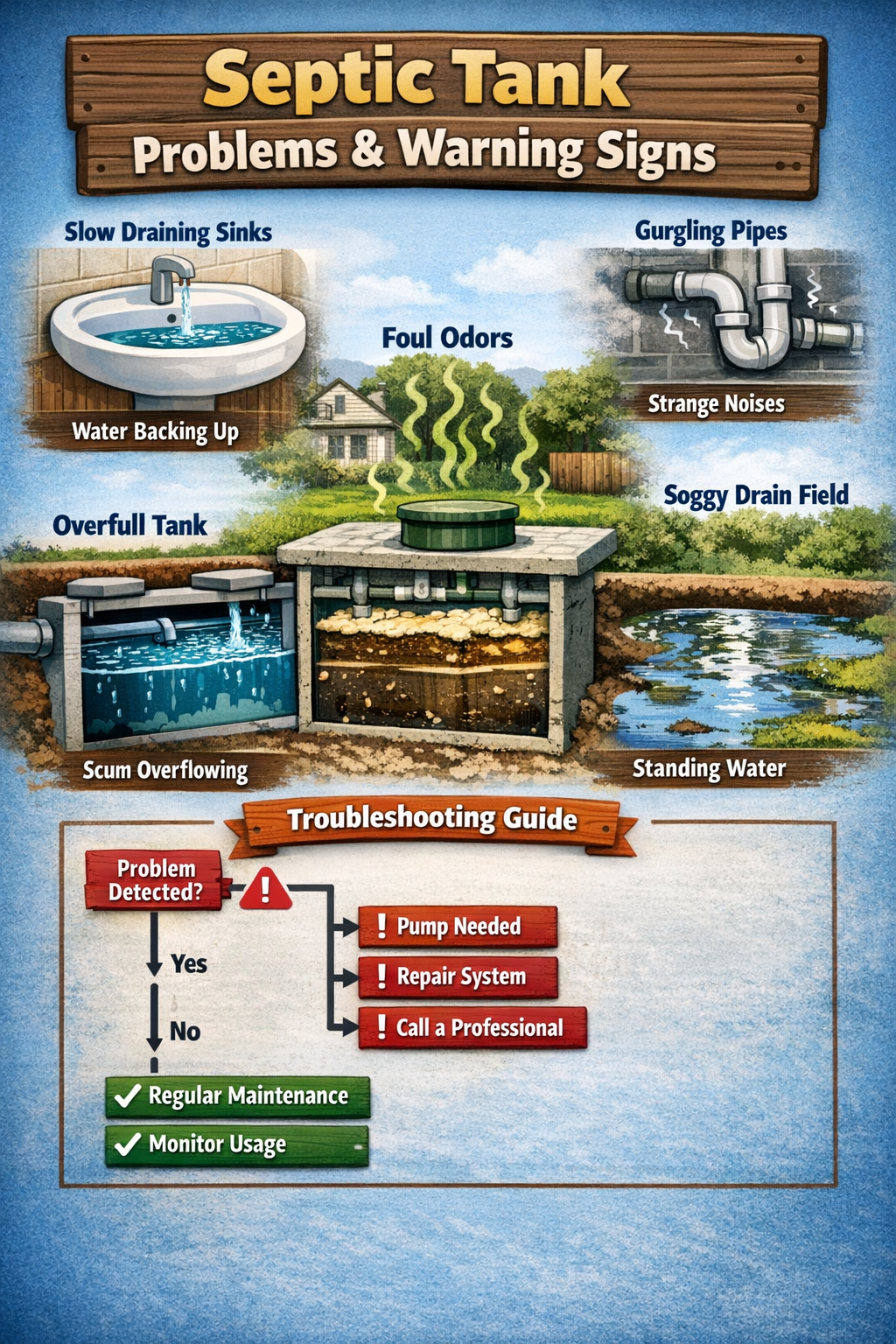
Signs Your Septic Tank Process Isn’t Working Properly
Warning signs of septic tank problems often appear weeks or months before complete system failure, giving you time to address issues before they become expensive emergencies.
Early Warning Signs
• Slow drains throughout the house (not just one fixture)
• Gurgling sounds from drains when water flows out
• Sewage odors near the tank or in your home
• High nitrate levels in well water (if you have a private well)
Moderate Problems
• Standing water over the tank or drain field area
• Lush, green grass growing above the septic system
• Sewage backup in basement drains or lowest fixtures
• Toilet water levels that rise and fall unexpectedly
Serious System Failure
• Raw sewage backing up into your home
• Strong sewage odors that persist despite ventilation
• Wet, soggy soil that doesn’t dry out over the drain field
• Visible sewage on the ground surface
Decision rule: Address slow drains and odors immediately. Once you see standing water or sewage backups, you’re looking at emergency repairs that can cost thousands.
Common mistake: Assuming problems will resolve themselves. Septic issues almost always get worse without intervention, and early treatment is much less expensive than system replacement.
For detailed guidance, check our signs your septic tank needs maintenance guide.
Maintaining Optimal Bacterial Balance in Your Tank
Maintaining healthy bacterial populations is essential for proper waste breakdown and preventing costly system failures. The right bacterial balance keeps your septic tank processing waste efficiently year-round.
Protecting Beneficial Bacteria
Avoid these bacterial killers:
• Antibacterial soaps and cleaners in large quantities
• Bleach and harsh chemical drain cleaners
• Paint, solvents, and automotive fluids
• Excessive amounts of laundry detergent
Support bacterial health with:
• Moderate use of septic-safe cleaning products
• Regular water usage patterns (avoid “shock loading”)
• Proper food waste disposal practices
• Maintaining consistent tank temperatures
When to Add Bacterial Treatments
Consider bacterial supplements if:
• Your household recently used antibiotics
• You’ve had to use harsh drain cleaners
• The tank shows signs of slow waste breakdown
• You’re experiencing unusual odors or backups
Timing matters: Add treatments during periods of normal water usage, not right before vacations when the tank sits idle.
Natural vs. Commercial Bacterial Products
Natural approaches:
• Reduce chemical cleaner usage
• Use septic-safe toilet paper and detergents
• Maintain steady water flow patterns
Commercial treatments: Products like Septifix tablets provide concentrated beneficial bacteria that can help restore balance after disruptions. The monthly dosing schedule makes it easy to maintain consistent bacterial populations without guesswork about timing or quantities.
Edge case: Homes with multiple antibiotic treatments or frequent chemical usage may need more aggressive bacterial restoration programs working with septic professionals.
Advanced Septic Treatment Technologies
Modern septic systems incorporate advanced technologies that enhance the natural bacterial processes and improve treatment efficiency for challenging soil conditions or environmental requirements.
Aerobic Treatment Units (ATUs)
Aerobic treatment units inject oxygen into the treatment process, allowing aerobic bacteria to work alongside anaerobic bacteria. This dramatically speeds up waste breakdown and produces cleaner effluent.
Benefits of aerobic systems:
• Faster waste processing (hours instead of days)
• Higher quality effluent output
• Better performance in poor soil conditions
• Reduced drain field size requirements
Considerations: ATUs require electricity and more frequent maintenance than conventional systems.
Enhanced Treatment Systems
Enhanced treatment systems are required for:
• Properties within 200 feet of surface water bodies
• Homes in watershed protection areas
• Lots with challenging soil conditions
• Areas with strict environmental regulations
These systems typically cost $20,000-$40,000 compared to $15,000-$25,000 for conventional systems, but they provide superior environmental protection.
Smart Monitoring Technology
IoT-enabled sensors now allow real-time monitoring of septic tank conditions, including:
• Sludge and scum layer depths
• Effluent quality measurements
• Bacterial activity levels
• System performance alerts
Choose smart monitoring if you want predictive maintenance capabilities or live in an area with strict environmental oversight.
For comprehensive information about different system types, visit our complete guide on how septic tank systems work.
Helpful Resource for Septic Tank Care
If you want a simple, reliable way to support your septic tank’s bacterial health, Septifix tablets offer an easy monthly maintenance solution. These tablets help break down waste more effectively, reduce unpleasant odors, and maintain the bacterial balance that keeps your system running smoothly.
What makes Septifix practical:
• One tablet per month – no measuring or mixing required
• Supports natural bacterial processes without harsh chemicals
• Helps prevent common problems like slow drains and odor buildup
• Works with your existing system – no equipment changes needed
This isn’t a magic fix for serious septic problems, but it can be a valuable part of regular maintenance alongside proper usage habits and professional pumping. Many homeowners find it gives them peace of mind knowing they’re actively supporting their system’s health.
Best used when you want to be proactive about septic care rather than waiting for problems to develop. It’s particularly helpful if your household uses antibiotics occasionally or you want extra assurance during heavy usage periods.
FAQ
How often should I have my septic tank pumped?
Most septic tanks need pumping every 3-5 years, depending on household size and tank capacity. A family of four with a 1,000-gallon tank typically needs pumping every 3 years.
Can I use regular toilet paper in my septic system?
Yes, but choose septic-safe toilet paper that breaks down quickly. Avoid ultra-thick or quilted papers that take longer to decompose in your tank.
What happens if I put grease down the drain?
Grease solidifies in the septic tank and accumulates in the scum layer. Large amounts can clog pipes and interfere with normal bacterial processes.
Is it normal to smell septic odors outside my home?
Occasional mild odors near the tank or vent pipes are normal. Persistent strong odors indicate problems with ventilation, tank levels, or system failure.
Can heavy rain affect my septic tank?
Yes, heavy rain can saturate the drain field and slow effluent absorption. This can cause temporary backups until soil conditions improve.
Should I add yeast or other home remedies to my septic tank?
No, healthy septic tanks have sufficient natural bacteria. Home remedies like yeast can actually disrupt the bacterial balance and cause problems.
What cleaning products are safe for septic systems?
Use biodegradable, phosphate-free cleaners in moderate amounts. Avoid antibacterial products, bleach, and chemical drain cleaners that kill beneficial bacteria.
How do I know if my septic tank is full?
Signs include slow drains, gurgling sounds, sewage odors, and standing water over the tank area. Professional inspection can determine actual tank levels.
Can I install a garbage disposal with a septic system?
Yes, but garbage disposals increase sludge buildup by 25-50%, requiring more frequent pumping and potentially larger tank capacity.
What should I do if sewage backs up into my house?
Stop using water immediately, contact a septic professional for emergency service, and avoid contact with sewage. This indicates serious system failure requiring immediate attention.
How long do septic tanks last?
Concrete septic tanks typically last 40+ years with proper maintenance. Plastic and fiberglass tanks last 20-30 years. Regular pumping and care extend system lifespan significantly.
Can I drive or park over my septic tank?
No, vehicle weight can crack tanks and compact soil. Keep heavy equipment and vehicles away from the entire septic system area.
Key Takeaways
• Septic tanks rely on natural bacterial processes to break down household waste through anaerobic decomposition in oxygen-free environments
• The three-layer separation system (scum, effluent, sludge) allows different waste types to be processed at appropriate rates and locations within the tank
• Proper bacterial balance is crucial for efficient waste breakdown—avoid antibacterial products and harsh chemicals that disrupt microbial populations
• Different waste materials decompose at vastly different rates, from toilet paper (hours) to synthetic materials (never), making proper disposal habits essential
• Early warning signs like slow drains and odors indicate developing problems that are much less expensive to address than complete system failures
• Regular maintenance including pumping every 3-5 years and bacterial treatments help maintain optimal tank performance and extend system lifespan
• Advanced treatment technologies like aerobic systems and smart monitoring are becoming more common for challenging sites and environmental protection
• Understanding what happens in your septic tank empowers you to make better decisions about household waste disposal and system care
• Professional inspections and maintenance are essential for long-term system health, especially given new regulations and environmental requirements
• Simple monthly treatments can support bacterial health and prevent common problems when combined with proper usage habits and regular professional service
Conclusion
Understanding what happens in a septic tank gives you the knowledge to protect your investment and avoid costly repairs. The natural bacterial processes that break down waste in your tank are remarkably effective when properly maintained, but they require your cooperation through smart disposal habits and regular care.
Your next steps should include:
- Schedule a professional inspection if you haven’t had one in the past 3 years or notice any warning signs
- Review your household habits and eliminate septic-harmful products like antibacterial cleaners and non-biodegradable items
- Consider a monthly bacterial treatment to support your tank’s natural processes and provide peace of mind
- Keep detailed maintenance records including pumping dates, inspections, and any problems to help professionals diagnose issues quickly
Remember that prevention is always less expensive than repair. The bacterial processes happening in your septic tank work reliably when you give them the right conditions, but they can’t overcome abuse or neglect.
For ongoing support with your septic system care, explore our comprehensive septic tank maintenance guide and stay informed about best maintenance practices that will keep your system running smoothly for decades.
References
[1] The Future Of Septic Systems Embracing Smart Technology And Eco Friendly Solutions – https://www.pumper.com/bytes/2024/08/the-future-of-septic-systems-embracing-smart-technology-and-eco-friendly-solutions
[2] Nj Septic Regulations For 2026 – https://www.atsenvironmental.com/blog/nj-septic-regulations-for-2026/
[3] Septic – https://www.epa.gov/septic
[4] Septic System Types – https://www.premiertechaqua.com/en-us/blog/septic-system-types