

Last updated: February 21, 2026
Key Takeaways
- A full septic tank causes sewage backups, slow drains, and potential health hazards that require immediate professional attention
- Emergency pumping typically costs 2-3 times more than regular maintenance and may not solve underlying drain field problems
- Raw sewage exposure creates serious health risks including bacterial infections and toxic gas exposure
- Prevention through regular pumping every 3-5 years costs significantly less than emergency repairs
- Professional assessment is essential since pumping alone may not fix saturated drain fields
Quick Answer

When your septic tank is full, wastewater has nowhere to go and backs up into your home through toilets, sinks, and drains. This creates immediate health hazards from raw sewage exposure and requires emergency pumping services. However, if the drain field is also saturated, pumping may only provide temporary relief before backups return within days or weeks.
What Are the Immediate Warning Signs When Your Septic Tank Is Full?
Slow drains and gurgling sounds from plumbing fixtures serve as the first warning signs that your septic tank has reached capacity. When the tank can no longer accept additional waste, water backs up through your home’s lowest plumbing connections first.
The most obvious signs include:
- Toilets that drain slowly or won’t flush completely
- Sinks and tubs that empty sluggishly
- Gurgling sounds from drains and plumbing fixtures
- Strong sewage odors inside and outside your home
- Standing water or wet spots around the septic tank area
- Unusually lush, green grass over the drain field
Choose immediate action if: You notice multiple slow drains combined with sewage odors. This indicates your tank is at or near capacity and backups will worsen quickly without intervention.
A common mistake homeowners make is assuming slow drains mean a simple clog. However, when multiple fixtures drain slowly simultaneously, this points to a full septic tank rather than individual pipe blockages. If you’re unsure about the warning signs, check our guide on how to tell if your septic tank is full for detailed identification steps.
What Happens If Your Septic Tank Is Full and Overflows?
Sewage backs up into your home through toilets, sinks, and bathtubs when your septic tank overflows—creating one of the most serious emergency scenarios homeowners face. Raw sewage contains dangerous bacteria like E. coli, viruses, and parasites that pose immediate health risks to your family.
The overflow process follows this sequence:
- Tank reaches maximum capacity with no room for additional waste
- Wastewater seeks the path of least resistance back through your plumbing
- Lowest fixtures flood first (basement toilets, floor drains, laundry sinks)
- Sewage spreads throughout affected areas contaminating floors, walls, and belongings
- Drain field becomes saturated if the problem continues unchecked
Health hazards from sewage exposure include:
- Bacterial infections (E. coli, Salmonella, Campylobacter)
- Viral illnesses (Hepatitis A, Norovirus)
- Parasitic infections (Giardia, Cryptosporidium)
- Respiratory problems from toxic gases
Emergency protocol: Stop all water usage immediately, evacuate contaminated areas, and contact professional septic services. Do not attempt cleanup without proper protective equipment including gloves, masks, and waterproof clothing.
The drain field saturation that often accompanies tank overflow means pumping alone may not solve the problem. Even after emergency pumping, backups can return within days if the drain field cannot absorb effluent properly.
What Emergency Steps Should You Take When Your Septic Tank Is Full?
Stop all water usage in your home immediately and contact emergency septic services when you discover your tank is full and backing up. Every gallon of additional water worsens the backup and increases contamination risks.
Immediate emergency actions:
- Stop water usage completely
- Turn off water at the main shutoff if necessary
- Avoid flushing toilets, running faucets, or using appliances
- Redirect family members to alternative facilities
- Ensure safety first
- Evacuate areas with standing sewage
- Keep children and pets away from contaminated zones
- Avoid breathing sewer gases which can be toxic
- Contact professionals immediately
- Call emergency septic pumping services
- Document the situation with photos for insurance
- Request immediate assessment of both tank and drain field
- Protect your property
- Remove valuable items from affected areas
- Turn off electricity to flooded areas if safe to do so
- Avoid walking through sewage without protective gear
Choose emergency pumping if: Sewage is actively backing up into your home. Standard pumping services may have 24-48 hour delays, but emergency services respond within hours.
FYI: Some links may be affiliate links, which means I may earn a small commission at no extra cost to you.
For ongoing septic health, consider using Septifix tablets to help break down waste and reduce the risk of future backups. These monthly treatments can help maintain proper bacterial balance and prevent waste buildup that leads to full tank emergencies.
A critical mistake is attempting DIY cleanup of raw sewage. Professional remediation services have specialized equipment and training to safely remove contaminated materials and sanitize affected areas.
How Do Professionals Handle Emergency Septic Tank Pumping?

Emergency septic pumping requires specialized equipment and safety protocols since professionals must extract liquid effluent, sludge, and floating scum while monitoring tank integrity to prevent structural damage. Professional technicians use protective suits, gloves, and respirators due to hazardous gas exposure and bacterial contamination risks.
Professional emergency pumping process:
- Safety assessment and setup
- Test for dangerous gases (hydrogen sulfide, methane)
- Establish safety perimeter around work area
- Deploy emergency ventilation equipment if needed
- Tank access and inspection
- Locate and safely open tank access ports
- Assess tank condition and waste levels
- Identify any structural damage or blockages
- Systematic waste removal
- Pump liquid effluent first to reduce pressure
- Extract accumulated sludge from tank bottom
- Remove floating scum layer from surface
- Clean tank walls and baffles as needed
- System evaluation
- Inspect inlet and outlet pipes for blockages
- Test drain field absorption capacity
- Identify root causes of tank overflow
Emergency pumping typically costs 2-3 times more than scheduled maintenance due to after-hours service, urgent response requirements, and additional safety protocols.
Choose emergency services if: Raw sewage is backing up into your home or you detect strong gas odors around the tank area. These situations require immediate professional intervention for safety reasons.
Important limitation: Emergency pumping may only provide temporary relief if the drain field is saturated. Professionals often recommend follow-up inspections within 24-48 hours to ensure the system functions properly after pumping.
For more information about regular maintenance that prevents emergencies, see our complete septic tank maintenance guide.
What Happens If Your Septic Tank Is Full But the Drain Field Fails?
Drain field saturation means pumping your septic tank may only provide temporary relief, with backups returning within days or weeks as the soil cannot absorb wastewater properly. This scenario requires more extensive repairs than simple tank pumping and often indicates system failure requiring professional assessment.
Signs of drain field failure:
- Standing water or soggy areas above the drain field
- Strong sewage odors outdoors near the drain field
- Unusually green or lush grass in specific patterns
- Backups that return quickly after pumping
- Gurgling sounds that persist after tank pumping
Why pumping alone fails with drain field problems:
- Soil becomes saturated with wastewater and cannot absorb more
- Biomat (bacterial layer) clogs soil pores permanently
- Tree roots or physical damage blocks distribution pipes
- System design inadequate for household size or soil conditions
Repair options for failed drain fields:
- Soil fracturing to restore absorption capacity
- Drain field renovation or expansion
- Advanced treatment system installation
- Complete system replacement in severe cases
Cost implications: Drain field repairs range from thousands to tens of thousands of dollars, making prevention through regular maintenance crucial for homeowners.
Choose immediate professional assessment if: Backups return within 1-2 weeks after emergency pumping. This timeline indicates drain field problems rather than simple tank overflow.
The most expensive mistake is ignoring recurring backups after pumping. Continued system operation with a failed drain field can contaminate groundwater and violate local health regulations.
Understanding how septic systems work helps homeowners recognize when problems extend beyond the tank to the entire system.
How Much Does It Cost When Your Septic Tank Is Full?
Emergency septic pumping costs $400-800 compared to $200-400 for routine maintenance, with additional expenses for sewage cleanup, property damage, and potential drain field repairs that can reach $10,000-25,000. The total cost depends on the extent of backup damage and whether the drain field requires repair or replacement.
Emergency cost breakdown:
| Service Type | Emergency Cost | Regular Cost | Difference |
|---|---|---|---|
| Tank Pumping | $400-800 | $200-400 | 100-200% more |
| After-hours Service | $150-300 | $0 | Additional fee |
| Sewage Cleanup | $1,000-5,000 | $0 | Emergency only |
| Property Restoration | $2,000-10,000 | $0 | Emergency only |
Additional emergency expenses:
- Temporary lodging if home is uninhabitable
- Replacement of contaminated belongings
- Professional sanitization services
- Potential health care costs from exposure
- Insurance deductibles and uncovered damages
Long-term repair costs:
- Drain field restoration: $3,000-8,000
- Complete system replacement: $10,000-25,000
- Soil testing and permits: $500-1,500
- Landscaping restoration: $1,000-3,000
Choose preventive maintenance if: Your tank hasn’t been pumped in 3-5 years. Regular maintenance costs roughly $200-400 annually compared to emergency scenarios costing thousands.
The financial impact extends beyond immediate repairs. Property values can decrease if septic problems become known to neighbors or appear in disclosure documents for future sales.
For budget-friendly maintenance between professional services, Septifix tablets offer an affordable monthly treatment option to help maintain bacterial balance and reduce waste buildup that leads to costly emergencies.
Learn more about typical pumping costs in our complete septic pumping cost guide.
How Can You Prevent Your Septic Tank From Getting Full?
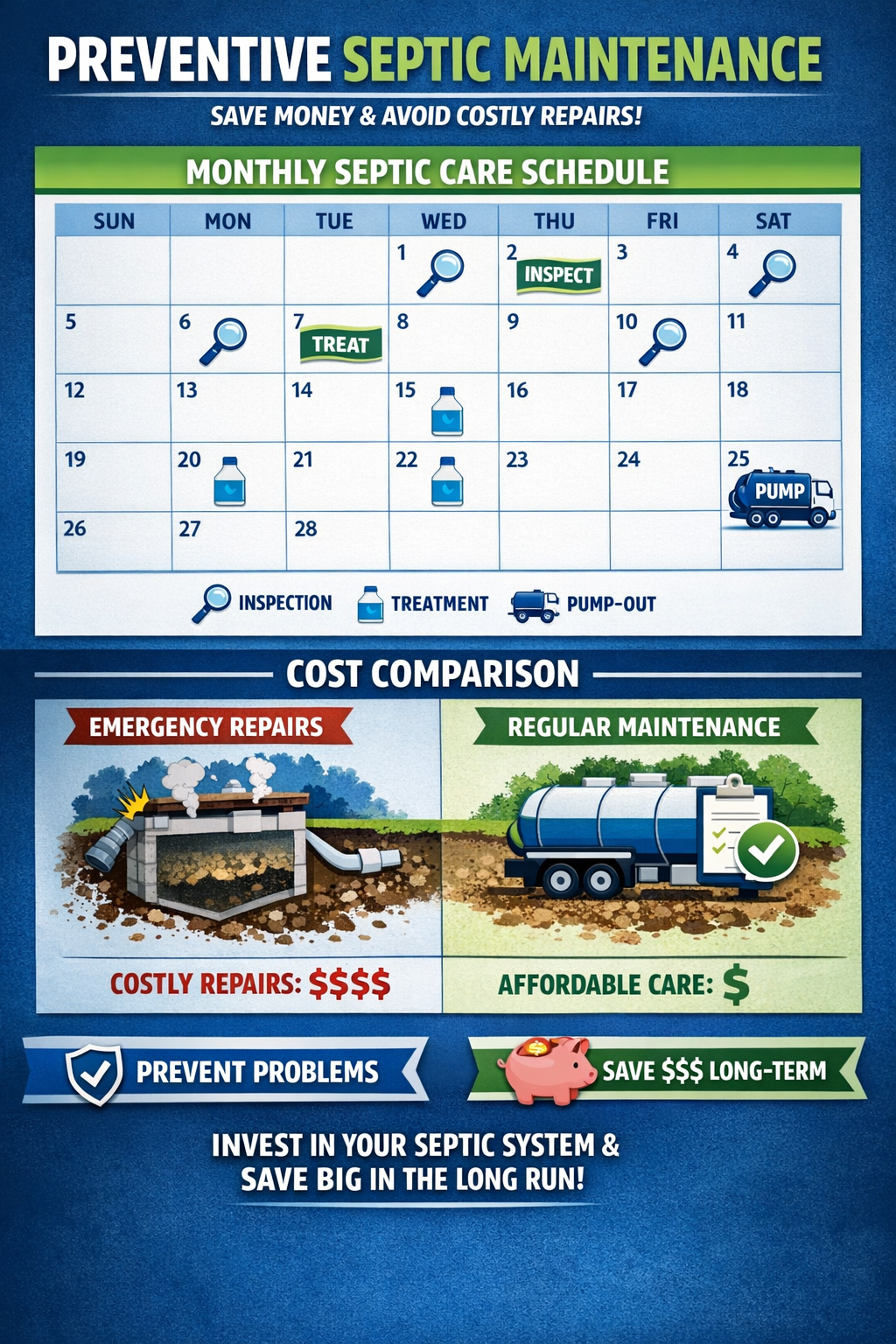
Regular pumping every 3-5 years prevents tank overflow by removing accumulated sludge before it reaches capacity, while proper household practices reduce waste buildup that leads to premature filling. Prevention costs significantly less than emergency repairs and protects your family’s health and property value.
Essential prevention strategies:
Pumping schedule based on household size:
- 1-2 people: Every 5 years
- 3-4 people: Every 3-4 years
- 5+ people: Every 2-3 years
- Heavy usage homes: Annual inspection with pumping as needed
Daily practices that prevent problems:
- Use water efficiently with high-efficiency fixtures
- Spread laundry loads throughout the week
- Fix leaky faucets and running toilets promptly
- Avoid excessive water usage during single days
Items to never flush or drain:
- Grease, oils, and cooking fats
- Feminine hygiene products and diapers
- Cigarette butts and cat litter
- Harsh chemicals and antibacterial soaps
- Coffee grounds and food scraps
Monthly maintenance options:
- Bacterial treatments to maintain healthy microbe levels
- Filter cleaning and inspection
- Visual checks for warning signs around tank and drain field
Choose professional inspection if: You notice any early warning signs like slow drains or odors. Early intervention prevents full tank emergencies and costly repairs.
Advanced prevention: High-level alarm systems can notify homeowners via smartphone when water levels rise unexpectedly, providing early warning before overflow occurs.
The most effective prevention combines regular professional maintenance with daily household practices that protect your septic system. Homeowners who follow consistent maintenance schedules rarely experience emergency situations.
For comprehensive maintenance guidance, check our best septic tank maintenance practices guide and learn about signs your septic tank needs maintenance.
Helpful Resource for Septic Tank Care
If you want a simple way to maintain your septic system between professional services, Septifix tablets can help break down waste, reduce odors, and keep your tank functioning properly. With one easy monthly flush, these tablets help maintain the bacterial balance needed for proper waste decomposition and can reduce the risk of premature tank filling.
While not a replacement for regular pumping, Septifix offers a convenient maintenance option that many homeowners find helpful for ongoing septic care. This is especially useful if you want to extend the time between pumpings or if you’ve experienced faster-than-normal tank filling in the past.
FAQ
What happens if you never pump your septic tank?
Your septic tank will eventually fill completely with sludge and scum, causing sewage to back up into your home and potentially contaminating your drain field permanently. This leads to expensive emergency repairs and health hazards.
How quickly does a septic tank fill up after pumping?
A properly functioning septic tank should take 3-5 years to fill under normal usage. If your tank fills faster, you may have drain field problems, excessive water usage, or items being flushed that shouldn’t be.
Can you pump a septic tank too often?
Yes, over-pumping removes beneficial bacteria needed for waste breakdown. Pumping more than annually is usually unnecessary unless you have specific system problems or extremely high usage.
What’s the difference between a full tank and a backup?
A full tank means the waste levels have reached capacity but may not cause immediate problems. A backup occurs when sewage actually flows back into your home through drains and toilets.
How do you know if your septic tank is full or if there’s a clog?
Multiple slow drains throughout the house indicate a full tank, while a single slow drain suggests a localized clog. Sewage odors and standing water around the tank area also point to tank fullness rather than clogs.
Is it safe to shower when your septic tank is full?
No, adding any water to a full septic system worsens backups and increases health risks. Stop all water usage until professional pumping is completed.
How long can you go without pumping a septic tank?
Most tanks need pumping every 3-5 years, but going beyond 7-10 years almost guarantees problems. The exact timeline depends on tank size, household size, and usage patterns.
What happens to toilet paper in a full septic tank?
Toilet paper accumulates in the sludge layer and takes up valuable tank space when the system is full. Excessive toilet paper use can accelerate tank filling and contribute to backups.
Can heavy rain cause septic tank overflow?
Yes, if your drain field is already saturated or your tank is nearly full, heavy rainfall can push the system over capacity and cause backups into your home.
Do septic tank additives prevent overflow?
Quality bacterial additives can help maintain proper waste breakdown, but they cannot prevent overflow if you don’t pump regularly. Additives supplement but don’t replace proper maintenance.
How much water causes septic tank overflow?
This varies by tank size and current waste levels, but even 50-100 gallons can trigger backups in a nearly full tank. A typical household uses 200-300 gallons daily.
What’s the worst thing that can happen with a full septic tank?
Complete system failure requiring drain field replacement costing $15,000-25,000, plus potential groundwater contamination, health department violations, and extensive property damage from sewage backups.
Key Takeaways
- Immediate action required: Stop all water usage and contact emergency septic services when sewage backs up into your home to prevent health hazards and property damage
- Emergency costs are severe: Full tank emergencies cost 2-3 times more than regular maintenance, with total expenses potentially reaching $25,000 for complete system failure
- Health risks are serious: Raw sewage exposure can cause bacterial infections, viral illnesses, and respiratory problems requiring immediate medical attention
- Pumping may not solve everything: If your drain field is saturated, emergency pumping only provides temporary relief before backups return within weeks
- Prevention is cost-effective: Regular pumping every 3-5 years costs $200-400 compared to thousands in emergency repairs and cleanup
- Professional assessment is essential: Emergency situations require specialized equipment and safety protocols that homeowners cannot safely handle alone
- Early warning signs matter: Slow drains, gurgling sounds, and sewage odors indicate problems before catastrophic failure occurs
- System-wide problems are common: Full tank situations often reveal broader issues with drain fields that require comprehensive evaluation and repair
- Insurance may not cover everything: Septic system failures and resulting damage may have limited coverage, making prevention financially critical
- Long-term property impact: Septic problems can affect property values and require disclosure during future home sales
Conclusion
Understanding what happens if your septic tank is full empowers you to recognize warning signs, take appropriate emergency action, and most importantly, prevent these costly and dangerous situations through proper maintenance. The consequences of a full septic tank extend far beyond inconvenience—they threaten your family’s health, your property’s value, and your financial stability.
The key to avoiding septic emergencies lies in consistent preventive care. Schedule regular pumping every 3-5 years, monitor your system for warning signs, and address problems promptly before they escalate. Remember that emergency pumping may only provide temporary relief if underlying drain field problems exist, making professional assessment crucial for long-term solutions.
Take action today: If your septic tank hasn’t been pumped in over three years, schedule an inspection now. If you notice any warning signs like slow drains or sewage odors, contact a professional immediately. Don’t wait for a full-blown emergency that could cost thousands and endanger your family’s health.
For ongoing maintenance between professional services, consider implementing a monthly treatment routine and following proper household practices that protect your septic system. The small investment in prevention pays enormous dividends compared to the devastating costs of emergency repairs and system replacement.
References
[1] Emergency Septic Tank Pumping 101 How The Pros Handle Crisis Calls – https://www.theseptictankman.com/blog/emergency-septic-tank-pumping-101-how-the-pros-handle-crisis-calls
[2] Septictank Overflow Complete Guide – https://www.vdwws.com/blog/septictank-overflow-complete-guide
[3] Emergency Septic Service – https://www.birosseptic.com/blog/emergency-septic-service/
[4] Emergency Septic System Services Top Actions To Take When Disaster Strikes – https://blog.drainfieldsolutions.com/emergency-septic-system-services-top-actions-to-take-when-disaster-strikes/
[6] Here Are 5 Emergency Septic Scenarios That Require Action Immediately – https://www.superiorseptictx.net/here-are-5-emergency-septic-scenarios-that-require-action-immediately
[7] Septicsmart Week 9 Tips Your Septic System And Health – https://www.dph.ncdhhs.gov/blog/2025/09/11/septicsmart-week-9-tips-your-septic-system-and-health
[9] Septic Pumping – https://mornetic.com/septic-pumping/