
Last updated: February 23, 2026
Key Takeaways
• Drowning is the primary cause of death when someone falls into a septic tank, even with immediate rescue attempts
• Toxic gases like hydrogen sulfide and methane can cause unconsciousness within seconds
• Children are most at risk due to defective or compromised septic tank lids
• Immediate emergency response (call 911) is critical for any septic tank accident
• Prevention through proper lid maintenance is the most effective safety measure
• Abandoned septic systems pose hidden dangers if not properly filled in
• Regular inspections can identify hazardous conditions before accidents occur
• Proper safety barriers around tank access points protect families and visitors
Quick Answer
Falling into a septic tank is a life-threatening emergency that primarily results in drowning, even with quick rescue attempts. The combination of deep water, toxic gases, and contaminated conditions creates multiple immediate dangers. Most documented cases involve young children who fall through defective or compromised tank lids, with fatal outcomes occurring despite immediate response efforts.
What Are the Immediate Dangers If You Fall into a Septic Tank?
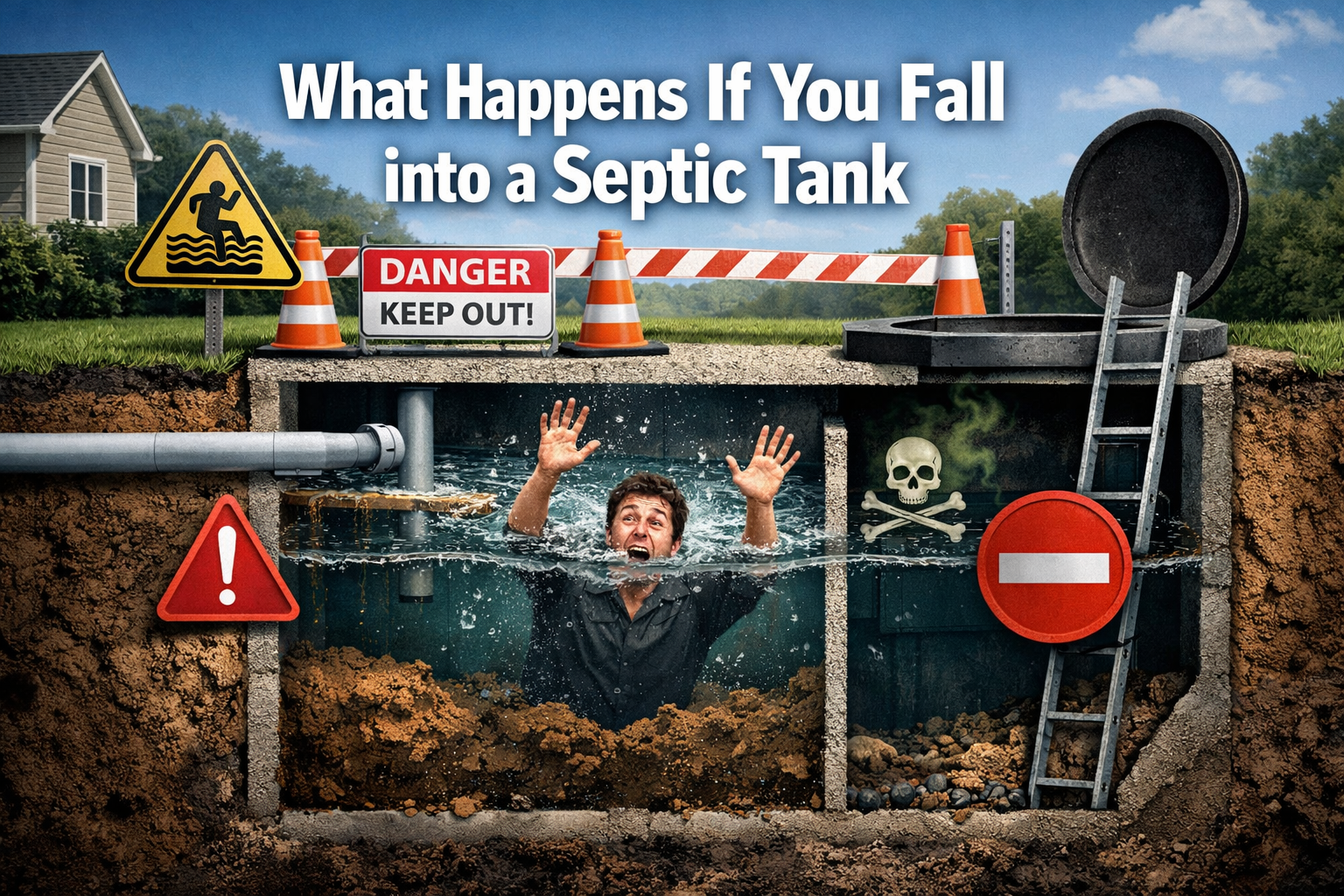
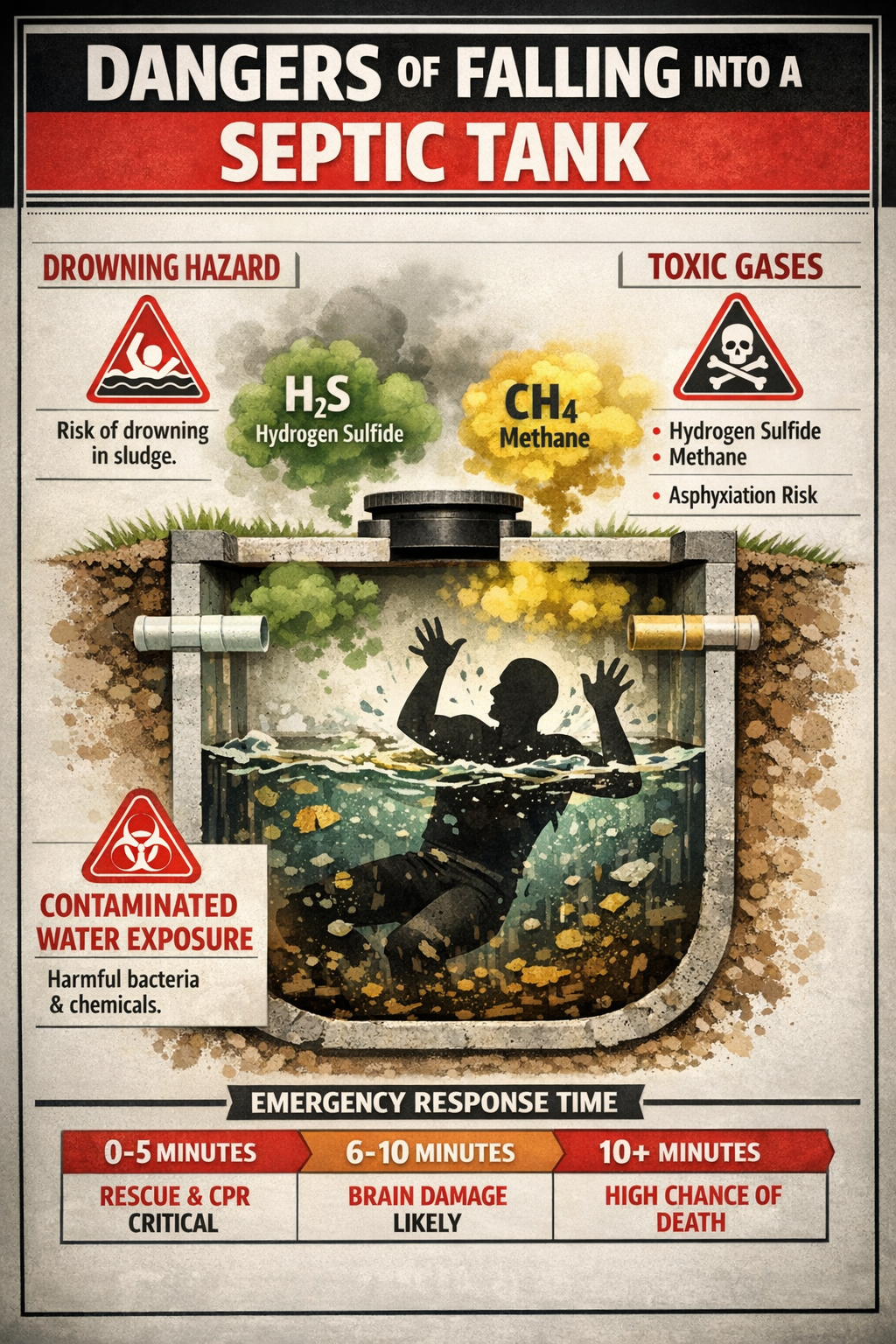
Drowning is the most serious immediate threat when someone falls into a septic tank, followed by toxic gas exposure and contamination from raw sewage. These dangers work together to create a rapidly fatal situation that requires immediate emergency response.
The documented cases show a clear pattern of tragic outcomes. According to septic safety reports, drowning occurs as the primary cause of death in septic tank accidents, regardless of supervision or response time. In one Arizona case from June 2014, a child was seen falling and aid arrived immediately, but the child still drowned.
Toxic Gas Exposure
Septic tanks produce dangerous gases including:
- Hydrogen sulfide – can cause unconsciousness within seconds
- Methane – displaces oxygen and is highly flammable
- Carbon dioxide – contributes to oxygen depletion
- Ammonia – causes respiratory irritation and burns
Physical Dangers
- Deep water levels – most residential tanks are 4-6 feet deep
- Steep walls – concrete or plastic walls are difficult to climb
- Heavy clothing – becomes waterlogged and pulls victims down
- Panic response – reduces ability to stay calm and find exit
Contamination Risks
- Raw sewage exposure – contains harmful bacteria and viruses
- Chemical exposure – household cleaners and toxins concentrate in tanks
- Infection risk – open wounds become severely contaminated
The combination of these factors explains why even witnessed accidents with immediate response often result in fatalities. Understanding these dangers helps homeowners recognize why prevention is absolutely critical.
How Do People Fall into Septic Tanks?
Most septic tank accidents occur when tank lids fail, collapse, or are missing entirely, creating hidden traps that people unknowingly step on. Children are particularly vulnerable because they’re less likely to recognize warning signs and may not have enough weight to test unstable surfaces.
Defective or Compromised Lids
Tank lids fail for several reasons:
- Vehicle damage – trucks, lawnmowers, or heavy equipment knock off lids
- Natural decay – older concrete lids crack and weaken over time
- Poor installation – lids not properly secured during installation
- Intentional removal – lids removed for maintenance and not replaced
In July 2014, a four-year-old girl’s septic tank lid flipped like a “trap door” as she ran over it, causing her to fall in. This case illustrates how even seemingly intact lids can become deadly traps.
Newer Tank Materials
Modern septic systems sometimes use lighter materials for easier access, but this creates new risks:
- Plastic lids wear more quickly than concrete
- Fiberglass covers can crack from UV exposure
- Composite materials may not support unexpected weight loads
Abandoned Systems
Old septic systems pose hidden dangers when:
- Properties change ownership and new owners don’t know locations
- Systems are decommissioned but not properly filled in
- Vegetation grows over abandoned tank openings
- Property development occurs around forgotten systems
A three-year-old fell into a 15-foot-deep trench from an abandoned septic tank in June 2014. This demonstrates why proper decommissioning of old systems is essential for safety.
Common Scenarios
- Children playing in yards where tank lids are compromised
- Maintenance workers stepping on unstable covers
- Property visitors who don’t know tank locations
- Landscaping activities that disturb lid placement
Understanding how these accidents happen helps homeowners take specific prevention steps to protect their families and visitors.
What Should You Do If Someone Falls into a Septic Tank?
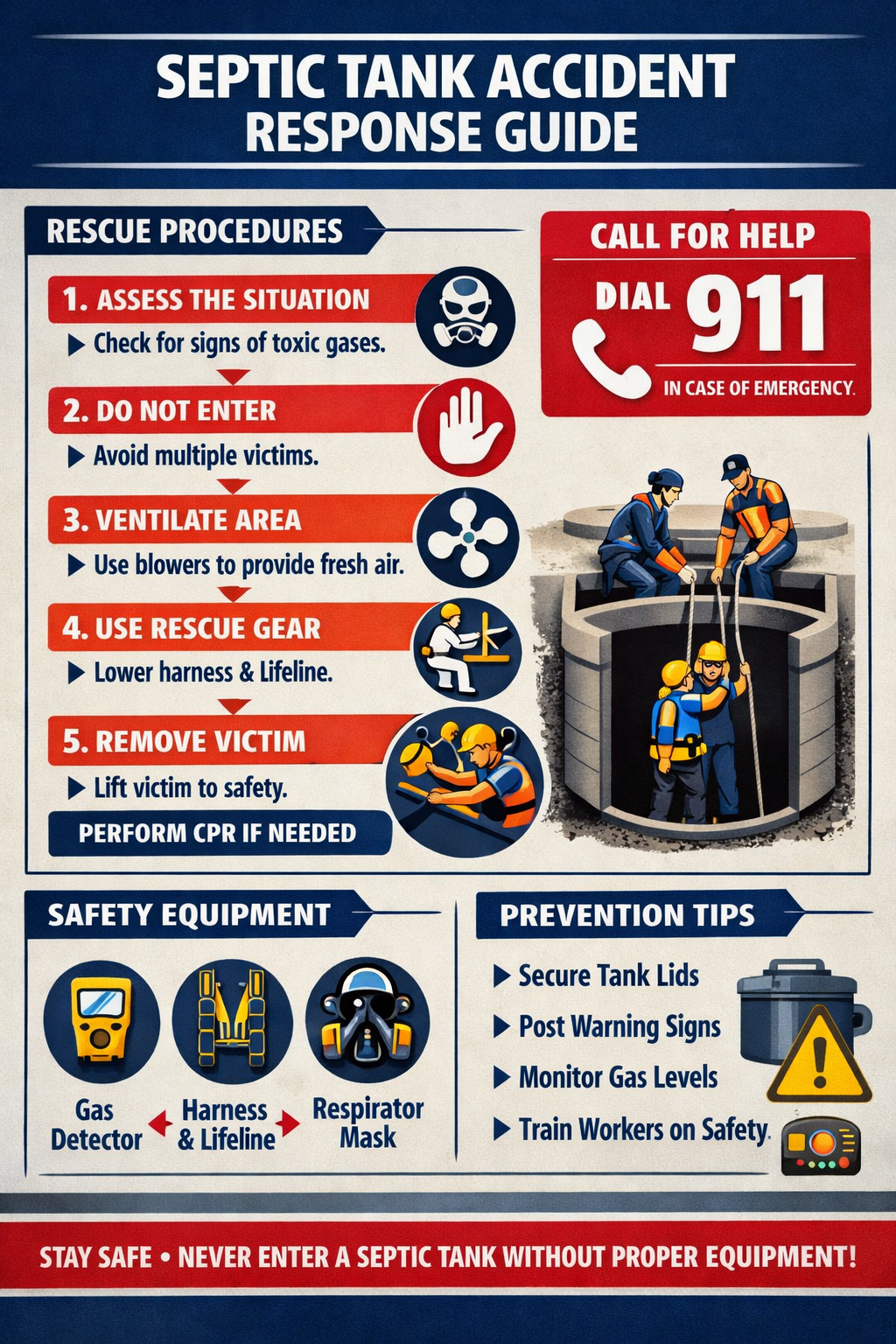
Call 911 immediately and do not attempt to enter the tank yourself – the same conditions that endanger the victim will endanger rescuers. Professional emergency responders have specialized equipment and training for confined space rescues.
Immediate Response Steps
- Call 911 first – report septic tank accident and request specialized rescue
- Stay at surface level – do not climb down or enter the tank
- Maintain voice contact – keep talking to the victim if they’re conscious
- Clear the area – keep other people away from the tank opening
- Provide information – tell responders about tank depth and access points
What NOT to Do
- Don’t enter the tank – you’ll become a second victim
- Don’t use ladders or ropes without proper safety equipment
- Don’t delay calling professionals – time is critical
- Don’t assume the person can climb out – tank walls are typically unclimbable
While Waiting for Help
- Ventilate the area if possible using fans or blowers
- Gather tank information – system age, depth, recent maintenance
- Clear access routes for emergency vehicles
- Locate shut-off valves for the home’s water system
Professional Rescue Equipment
Emergency responders use specialized tools including:
- Breathing apparatus for toxic gas protection
- Confined space entry gear with safety lines
- Ventilation equipment to clear dangerous gases
- Extraction devices designed for tank rescues
The documented cases show that even immediate response doesn’t guarantee survival, which reinforces why prevention through proper tank maintenance is so important. For homeowners wanting to maintain their septic systems properly, understanding how septic tanks work helps identify potential safety issues before they become dangerous.
How Can You Prevent Septic Tank Accidents?
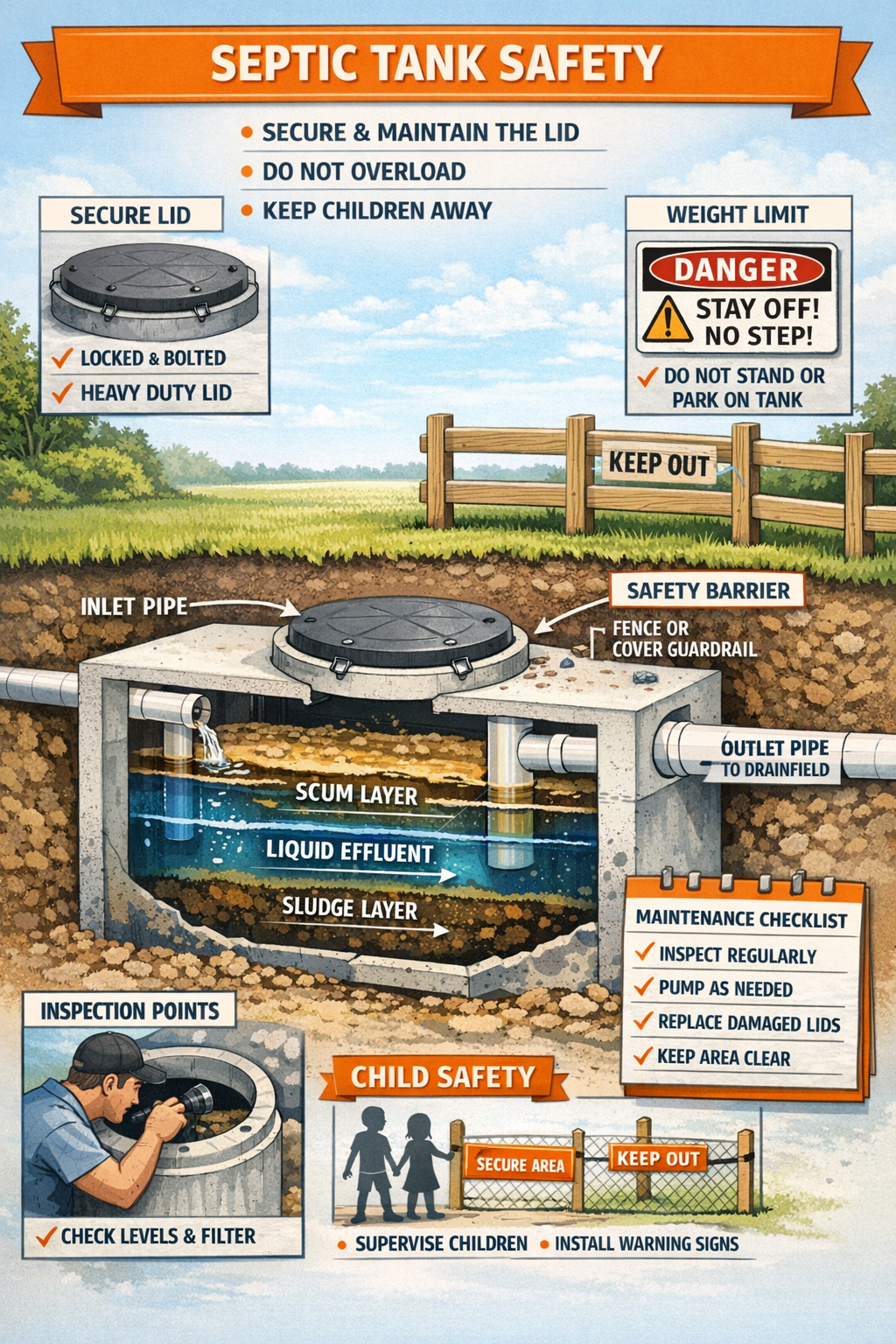
Regular lid inspection and maintenance is the most effective way to prevent septic tank accidents, combined with marking tank locations and installing safety barriers where appropriate. Prevention focuses on eliminating the conditions that allow people to fall through compromised openings.
Lid Maintenance Checklist
- Inspect lids monthly for cracks, shifting, or damage
- Test lid stability by pressing gently with a tool (never step on lids)
- Replace damaged lids immediately – don’t wait for convenient timing
- Secure lids properly according to manufacturer specifications
- Mark lid locations with permanent markers or flags
Safety Barriers and Marking
- Install protective covers over tank openings in high-traffic areas
- Use warning signs near tank locations, especially for visitors
- Create physical barriers like decorative fencing around access points
- Maintain clear sight lines – don’t let vegetation hide tank locations
- Educate family members about tank locations and dangers
Professional Inspections
Schedule regular professional inspections to:
- Assess lid condition with expert evaluation
- Check structural integrity of tank walls and openings
- Identify potential problems before they become dangerous
- Update safety measures based on current standards
- Document tank condition for insurance and safety records
Property Management
- Map tank locations on property surveys and share with family
- Inform visitors about tank locations during outdoor activities
- Coordinate with landscapers to prevent accidental lid damage
- Plan vehicle routes to avoid driving over tank areas
- Maintain access roads for emergency and maintenance vehicles
Child Safety Measures
Since children are most at risk, specific precautions include:
- Supervise outdoor play in areas near septic systems
- Teach children to recognize and avoid tank markings
- Install child-proof barriers around tank access points
- Regular safety reminders about staying away from marked areas
- Emergency response training for older children and caregivers
FYI: Some links may be affiliate links, which means I may earn a small commission at no extra cost to you.
Maintaining System Health
Proper septic system maintenance reduces the need for frequent access and lid removal:
- Regular pumping schedules prevent emergency maintenance needs
- Proper waste disposal reduces system stress and failures
- Quality treatments like Septifix tablets help break down waste, reduce bad smells, and keep your septic tank working properly, potentially reducing maintenance frequency
- Monitor system performance to catch problems early
For homeowners who want to stay on top of maintenance, learning to recognize signs of a full septic tank helps prevent emergency situations that require urgent lid access.
What Are the Long-Term Health Effects After Septic Tank Exposure?
Survivors of septic tank accidents face serious long-term health risks from sewage contamination, toxic gas exposure, and potential neurological damage from oxygen deprivation. Even brief exposure to septic tank conditions can cause lasting health problems that require ongoing medical care.
Contamination-Related Health Issues
Exposure to raw sewage creates multiple infection risks:
- Bacterial infections from E. coli, Salmonella, and other pathogens
- Viral infections including Hepatitis A and gastroenteritis
- Parasitic infections from contaminated water exposure
- Skin and wound infections that may become antibiotic-resistant
- Respiratory infections from inhaling contaminated water or gases
Toxic Gas Effects
Hydrogen sulfide and other septic gases cause both immediate and long-term damage:
- Neurological damage from oxygen deprivation during unconsciousness
- Respiratory system damage from chemical burns to lung tissue
- Cognitive effects including memory problems and concentration issues
- Sensory damage particularly to smell and taste functions
- Cardiovascular stress from the body’s response to toxic exposure
Psychological Impact
Septic tank accidents often result in lasting psychological effects:
- Post-traumatic stress disorder from the life-threatening experience
- Anxiety and panic disorders related to confined spaces or water
- Depression from dealing with ongoing health complications
- Sleep disorders and recurring nightmares about the incident
Treatment and Recovery
Medical treatment typically includes:
- Immediate decontamination and wound cleaning
- Antibiotic therapy to prevent and treat infections
- Respiratory support for gas exposure damage
- Neurological evaluation and rehabilitation if needed
- Ongoing monitoring for delayed-onset complications
Prevention Through System Care
Maintaining septic system health reduces the risk of emergency situations that might expose people to these dangers. Regular septic tank maintenance keeps systems functioning properly and reduces the need for emergency repairs that might compromise safety.
The severity of these potential health effects reinforces why prevention through proper lid maintenance and safety measures is so critical for homeowner safety.
Who Is Most at Risk for Septic Tank Accidents?
Young children between ages 1-4 face the highest risk of septic tank accidents, accounting for the majority of documented cases. However, maintenance workers, property visitors, and elderly individuals also face significant risks under certain circumstances.
Children’s Vulnerability Factors
Children are particularly susceptible because:
- Size and weight – may not trigger unstable lid collapse until they’re already on it
- Curiosity and exploration – naturally drawn to investigate unfamiliar objects
- Limited danger recognition – can’t identify warning signs of compromised lids
- Mobility patterns – run and play without checking ground stability
- Supervision gaps – brief moments without direct adult oversight
The documented cases show this pattern clearly. A two-year-old boy died in April 2015 after falling into a septic tank in Skagit County, Washington, and a one-year-old Florida boy died in August 2015 after falling into a tank at an Ocala apartment complex.
High-Risk Situations
- New property residents who don’t know tank locations
- Maintenance workers accessing systems with damaged equipment
- Landscaping crews working around septic areas without proper information
- Property visitors unfamiliar with septic system locations
- Elderly individuals who may have difficulty detecting unstable surfaces
Occupational Risks
Workers face specific dangers:
- Septic pumping technicians working with heavy equipment around tank openings
- Plumbers and repair workers accessing systems for maintenance
- Construction crews working on properties with existing septic systems
- Landscapers operating equipment near tank locations
Property-Specific Risk Factors
Some properties present higher risks:
- Older homes with aging septic infrastructure
- Rural properties with multiple or abandoned septic systems
- Rental properties where tenants may not know system locations
- Properties with poor maintenance history and compromised safety features
Seasonal Risk Variations
Certain times of year increase accident risk:
- Spring and summer when outdoor activities increase
- After heavy rains that may weaken soil around tank openings
- During maintenance seasons when lids are removed more frequently
- Holiday gatherings with unfamiliar visitors on the property
Understanding these risk patterns helps homeowners take targeted prevention measures. For properties where septic tank problems have required frequent maintenance, extra safety precautions become even more important.
What Legal and Insurance Issues Arise from Septic Tank Accidents?
Property owners face significant liability exposure for septic tank accidents, with potential lawsuits, insurance claims, and regulatory violations that can result in substantial financial consequences. Understanding these legal implications helps homeowners take appropriate protective measures.
Property Owner Liability
Homeowners can be held responsible for:
- Premises liability if visitors are injured due to unsafe conditions
- Negligent maintenance if accidents result from poor upkeep
- Failure to warn about known hazards on the property
- Code violations if septic systems don’t meet safety standards
- Attractive nuisance claims involving children injured on the property
Insurance Coverage Issues
Standard homeowner’s insurance may not cover all septic-related accidents:
- Policy exclusions for certain types of septic system incidents
- Coverage limits that may not cover full liability exposure
- Premium increases following claims or safety violations
- Policy cancellation for properties deemed high-risk
- Additional coverage may be needed for comprehensive protection
Regulatory Compliance
Local and state regulations often require:
- Proper lid installation meeting current safety standards
- Regular inspections by certified professionals
- Safety barriers in certain high-risk situations
- Proper decommissioning of abandoned systems
- Notification requirements for accidents or safety violations
Documentation Requirements
Property owners should maintain records of:
- Regular maintenance and inspection schedules
- Safety improvements and lid replacements
- Professional service records and certifications
- Property disclosures for sales or rental agreements
- Insurance communications regarding septic system safety
Protective Measures
To reduce legal exposure:
- Maintain comprehensive insurance with adequate liability coverage
- Follow manufacturer guidelines for all septic system components
- Document safety efforts with photos and maintenance records
- Consult legal counsel for high-risk property situations
- Stay current with regulations and safety standard updates
Real Estate Implications
Septic safety issues can affect:
- Property values if safety concerns are documented
- Sale negotiations when buyers discover safety risks
- Disclosure requirements that may be legally mandated
- Inspection results that could delay or prevent sales
- Title insurance considerations for properties with septic systems
For homeowners dealing with septic system failures, addressing safety concerns promptly helps avoid both physical dangers and legal complications.
Helpful Resource for Septic Tank Care
If you want a simple way to maintain your septic system and reduce the need for frequent lid access, Septifix tablets offer an easy monthly maintenance solution. These tablets help break down waste, reduce bad smells, and keep your septic tank working properly. With one easy monthly flush, you can help prevent blockages, protect your plumbing, and potentially reduce the frequency of maintenance visits that require opening tank lids.
While proper safety measures are always essential, maintaining a healthy septic system reduces emergency situations that might put people at risk around tank openings.
Frequently Asked Questions
How deep are most residential septic tanks?
Most residential septic tanks are 4-6 feet deep, which is deep enough to pose serious drowning risks. The depth varies based on local codes and soil conditions, but even shallow tanks present significant dangers.
Can you survive falling into a septic tank?
Survival is possible but unlikely without immediate professional rescue. The combination of drowning risk, toxic gases, and contaminated conditions creates multiple life-threatening dangers that work against survival.
What gases are in septic tanks that make them dangerous?
Septic tanks contain hydrogen sulfide, methane, carbon dioxide, and ammonia. These gases can cause unconsciousness, oxygen displacement, respiratory burns, and other serious health effects within seconds of exposure.
How often should septic tank lids be inspected?
Septic tank lids should be inspected monthly for damage and tested for stability. Professional inspections should occur annually or whenever maintenance is performed on the system.
Are plastic septic tank lids safer than concrete ones?
Neither material is inherently safer – both can fail if damaged or improperly maintained. Plastic lids may be lighter and easier to handle but can also wear more quickly than concrete in some conditions.
What should I do if I find a damaged septic tank lid?
Replace damaged lids immediately and mark the area to prevent access until repairs are complete. Don’t wait for convenient timing – damaged lids present immediate safety hazards.
Can septic tank accidents happen to adults?
Yes, adults can fall into septic tanks, especially maintenance workers and property visitors who aren’t familiar with tank locations. However, children face the highest statistical risk.
How much weight can a septic tank lid support?
Weight capacity varies by lid type and condition, but lids are designed for access, not as walkways. Never assume a lid can support body weight, and always test stability with tools rather than stepping on lids.
What’s the difference between active and abandoned septic tank dangers?
Both present similar falling risks, but abandoned tanks may have additional hazards like deeper excavations, structural deterioration, and unknown locations that make them harder to avoid.
Should I install safety barriers around my septic tank?
Safety barriers are recommended for tanks in high-traffic areas, properties with children, or anywhere tank lids are frequently accessed. Barriers should allow maintenance access while preventing accidental contact.
How do I find all septic tanks on my property?
Check property surveys, contact previous owners, hire professionals with locating equipment, and review local permit records. Some properties have multiple tanks or abandoned systems that may not be obvious.
What insurance coverage do I need for septic tank safety?
Standard homeowner’s liability coverage may apply, but review your policy for exclusions and consider additional coverage if your property has higher risks. Consult with insurance professionals for specific recommendations.
Conclusion
Falling into a septic tank represents one of the most serious safety hazards on residential properties, with documented cases showing that drowning remains the primary cause of death even when rescue attempts begin immediately. The combination of deep water, toxic gases, and contaminated conditions creates a rapidly fatal situation that demands prevention rather than response.
The evidence clearly shows that children face the highest risk, with most documented fatalities involving toddlers who fall through compromised or defective tank lids. However, the danger extends to maintenance workers, property visitors, and anyone who might encounter unstable tank openings.
Your immediate action steps:
- Inspect your septic tank lids this week – look for cracks, shifting, or damage
- Mark tank locations clearly so family and visitors can avoid them
- Replace any damaged lids immediately – don’t delay this critical safety measure
- Educate your family about tank locations and safety procedures
- Schedule professional inspections to catch problems before they become dangerous
- Consider safety barriers for high-traffic areas or properties with children
The tragic cases documented in septic safety reports remind us that this isn’t a theoretical risk – it’s a real danger that has claimed lives across the country. The good news is that these accidents are entirely preventable through proper maintenance and safety awareness.
Remember that maintaining your septic system properly not only protects your investment but also reduces the frequency of maintenance activities that require lid access, ultimately making your property safer for everyone.
Don’t wait for a close call or accident to take septic safety seriously. The few minutes you spend this week checking your tank lids and implementing basic safety measures could prevent a tragedy that would change your family forever.
References
[1] Toddler Deaths From Falling Into Septic Systems 33170 – https://www.timfrankseptic.com/news/toddler-deaths-from-falling-into-septic-systems-33170