
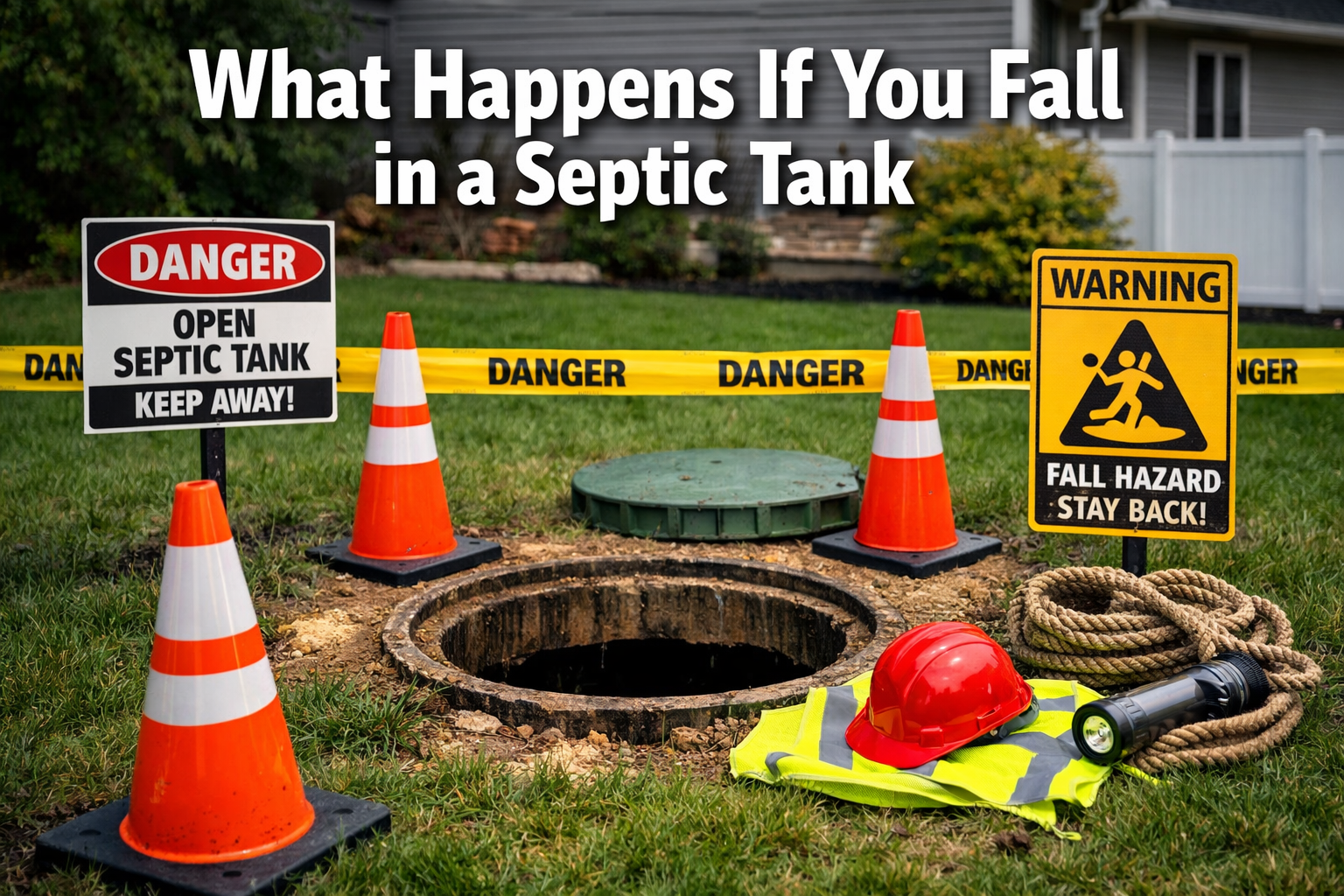
Last updated: February 23, 2026
Key Takeaways
• Immediate drowning risk – Septic tanks pose fatal drowning hazards due to deep liquid levels and difficulty climbing out
• Toxic gas exposure – Hydrogen sulfide and methane gases can cause unconsciousness within seconds
• Never attempt direct rescue – Call 911 immediately and avoid entering the tank yourself
• Contamination dangers – Raw sewage exposure leads to serious infections and diseases
• Prevention is critical – Secure tank lids, regular inspections, and proper maintenance prevent accidents
• Children are most vulnerable – Multiple documented fatalities involve young children falling through damaged covers
• Professional help required – Emergency responders have specialized equipment for safe tank rescues
• Legal liability exists – Property owners face responsibility for maintaining secure septic systems
Quick Answer
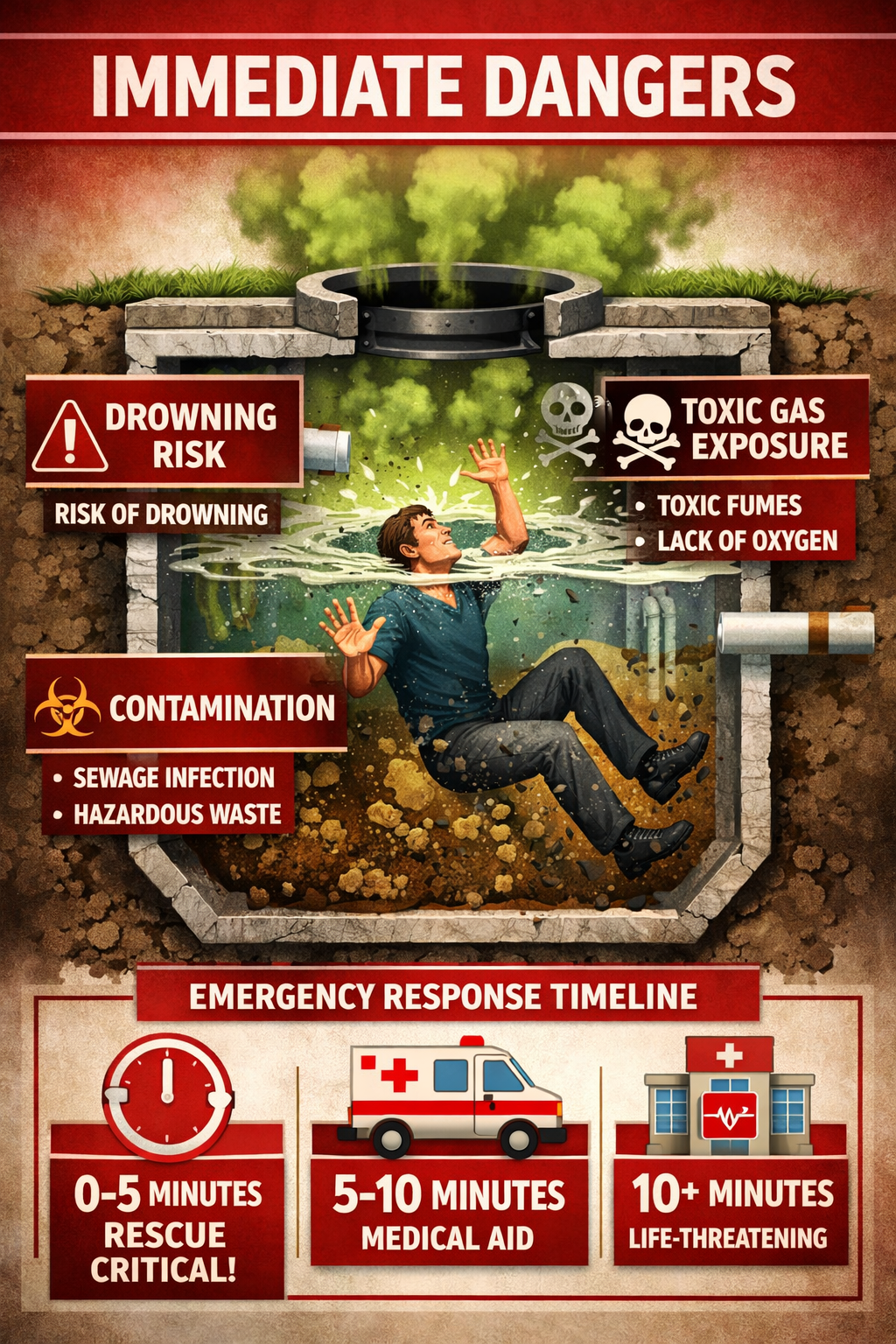
Falling into a septic tank creates an immediate life-threatening emergency involving drowning risk, toxic gas exposure, and severe contamination. The primary danger is rapid drowning in deep sewage water, often complicated by toxic gases that can cause unconsciousness. Multiple documented fatalities show that even brief exposure can be fatal, particularly for children. Never attempt direct rescue – call 911 immediately and wait for emergency responders with proper safety equipment.
What Are the Immediate Dangers If You Fall in a Septic Tank?
Falling into a septic tank presents multiple life-threatening dangers that can prove fatal within minutes. The combination of drowning risk, toxic gas exposure, and contamination creates an emergency situation requiring immediate professional response.
Primary Fatal Risks
Drowning represents the most immediate threat. Septic tanks typically contain 3-6 feet of liquid sewage, making it extremely difficult for victims to stay afloat or climb out. The tank walls are smooth and offer no grip points for escape. Understanding how septic tanks work helps explain why these systems create such dangerous conditions.
Toxic gas exposure can incapacitate victims within seconds. Septic tanks produce hydrogen sulfide, methane, and carbon dioxide gases that displace oxygen. These gases can cause:
- Immediate unconsciousness
- Respiratory failure
- Cardiac arrest
- Death from asphyxiation
Documented Fatal Cases
Multiple tragic incidents demonstrate these dangers. In April 2015, a two-year-old boy in Skagit County, Washington died after falling into an uncovered septic tank. Similarly, a one-year-old in Ocala, Florida suffered the same fate in August 2015. These cases show how quickly septic tank accidents become fatal, even with immediate discovery.
Contamination risks include exposure to harmful bacteria, viruses, and parasites present in raw sewage. This leads to serious infections affecting the digestive system, respiratory tract, and open wounds.
Why Escape Is Nearly Impossible
The design of septic tanks makes self-rescue extremely difficult:
- Smooth concrete or plastic walls provide no handholds
- Tank openings are typically 20+ inches above the liquid surface
- Heavy sewage makes swimming nearly impossible
- Toxic gases impair cognitive function and physical strength
How Should You Respond If Someone Falls in a Septic Tank?
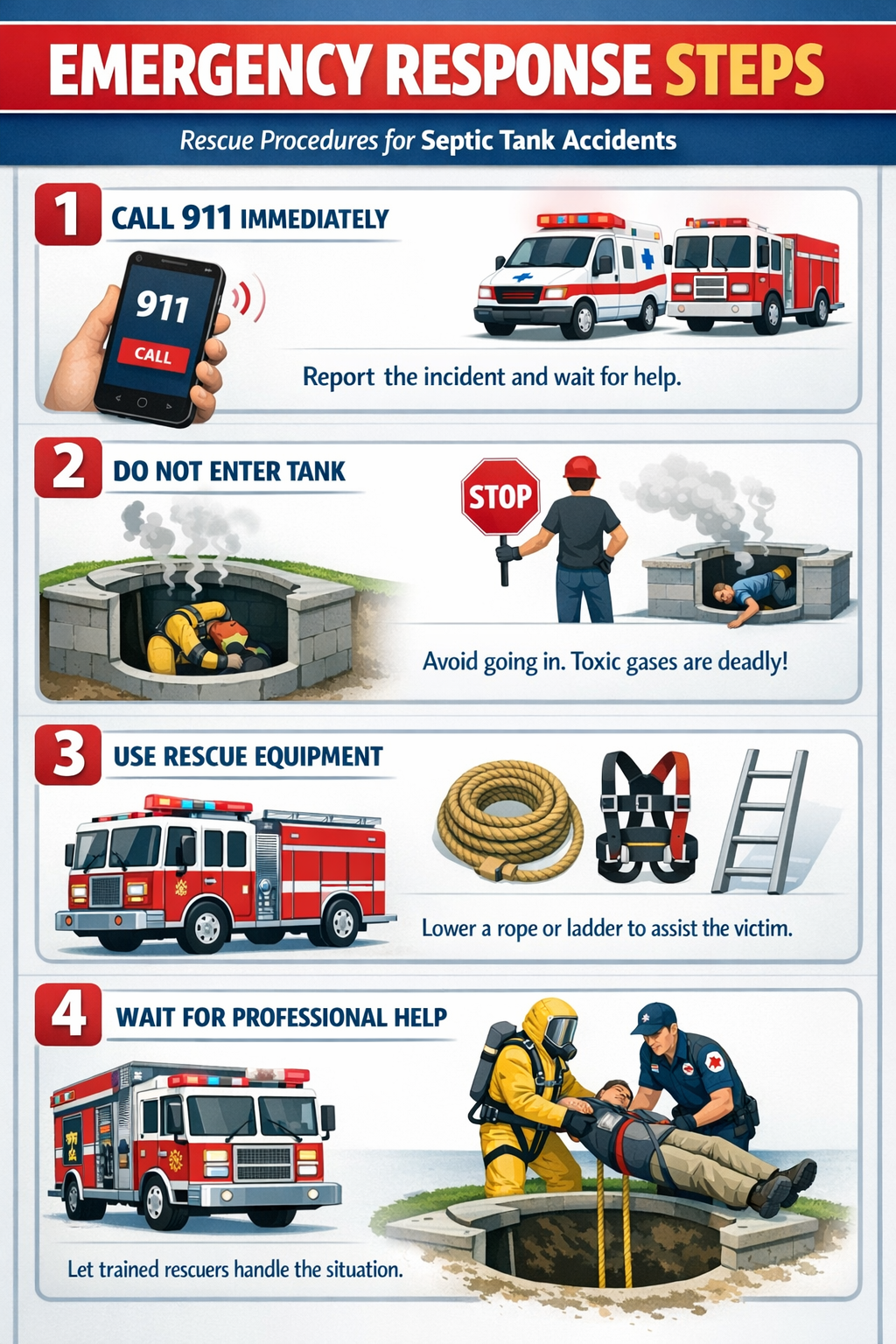
Call 911 immediately and do not attempt direct rescue under any circumstances. Emergency responders have specialized breathing apparatus and rescue equipment designed for confined space emergencies. Your safety depends on following proper emergency protocols.
Critical Response Steps
- Call 911 first – Request emergency services and specifically mention “septic tank accident” and “confined space rescue”
- Stay outside the tank – Do not enter or lean over the opening
- Maintain voice contact – Talk to the victim if conscious to provide reassurance
- Clear the area – Keep other people, especially children, away from the tank
- Prepare for responders – Have someone guide emergency vehicles to the exact location
What NOT to Do
Never attempt direct rescue – Multiple fatalities occur when would-be rescuers also fall victim to toxic gases. Even brief exposure to septic tank gases can cause unconsciousness, turning one emergency into multiple casualties.
Avoid these dangerous actions:
- Climbing into the tank
- Leaning over the opening for extended periods
- Using makeshift rescue equipment without proper safety gear
- Delaying professional emergency response
Professional Rescue Equipment
Emergency responders arrive equipped with:
- Self-contained breathing apparatus (SCBA)
- Confined space rescue harnesses and ropes
- Gas detection equipment
- Ventilation fans to clear toxic gases
- Medical equipment for immediate treatment
The complexity of this equipment explains why amateur rescue attempts prove so dangerous.
What Health Complications Result from Septic Tank Exposure?
Septic tank exposure causes severe health complications ranging from serious infections to permanent organ damage. The combination of sewage contamination, toxic gas inhalation, and potential drowning creates multiple medical emergencies requiring immediate treatment.
Immediate Medical Concerns
Respiratory complications from toxic gas exposure include:
- Chemical pneumonia from hydrogen sulfide inhalation
- Pulmonary edema (fluid in lungs)
- Oxygen deprivation leading to brain damage
- Respiratory failure requiring mechanical ventilation
Contamination-related infections develop from exposure to raw sewage containing dangerous pathogens:
- Hepatitis A and E
- E. coli infections
- Salmonella poisoning
- Parasitic infections including Giardia
- Tetanus from wound contamination
Long-term Health Effects
Survivors often face ongoing health challenges. Neurological damage from oxygen deprivation can cause permanent cognitive impairment. Respiratory damage may result in chronic breathing problems and increased infection susceptibility.
Psychological trauma frequently affects both victims and witnesses. The traumatic nature of septic tank accidents often requires professional counseling and support.
Treatment Requirements
Medical treatment typically involves:
- Immediate decontamination and wound cleaning
- Broad-spectrum antibiotics to prevent infections
- Respiratory support and oxygen therapy
- Tetanus and hepatitis vaccinations
- Ongoing monitoring for delayed complications
FYI: Some links may be affiliate links, which means I may earn a small commission at no extra cost to you.
Maintaining your septic system properly reduces accident risks significantly. If you want a simple way to keep your system healthy, Septifix tablets help break down waste and reduce harmful bacteria buildup that can create dangerous conditions. This monthly treatment supports proper system function and helps prevent the overflow conditions that often lead to emergency tank access.
What Causes Septic Tank Accidents and Falls?
Septic tank accidents primarily result from lid failures, improper maintenance, and inadequate safety measures around tank access points. Understanding these causes helps property owners prevent dangerous situations before they occur.
Common Lid Failure Modes
Structural deterioration affects older septic tank covers made from concrete or metal. Weather exposure, ground settling, and age cause these covers to crack, shift, or completely collapse. Knowing how to locate your septic tank helps you inspect these critical safety components regularly.
Design flaws in newer lightweight covers create trap-door effects. Some plastic or fiberglass lids flip open when stepped on, providing no warning before the fall. These covers may appear secure but lack proper weight distribution or locking mechanisms.
Maintenance-related exposure occurs when covers are removed for pumping or inspection and not properly replaced. Sometimes covers are left off intentionally for extended periods, creating obvious fall hazards.
Environmental and Human Factors
Vehicle and equipment damage frequently compromises tank integrity. Lawnmowers, cars, and heavy equipment can crack covers or shift them out of position. Property owners often don’t realize this damage has occurred until an accident happens.
Abandoned system hazards pose ongoing risks. Old septic systems that weren’t properly decommissioned remain dangerous for decades. A three-year-old fell into a 15-foot-deep trench from an abandoned septic system remnant in June 2014.
High-Risk Scenarios
Children face the greatest danger due to their size and curiosity about outdoor structures. Most documented fatalities involve children under age 5 who fall through damaged or missing covers during normal play activities.
Property transitions create increased risk when new owners aren’t familiar with septic system locations and safety requirements. Regular septic tank maintenance includes safety inspections that prevent these accidents.
How Can You Prevent Septic Tank Falls and Accidents?
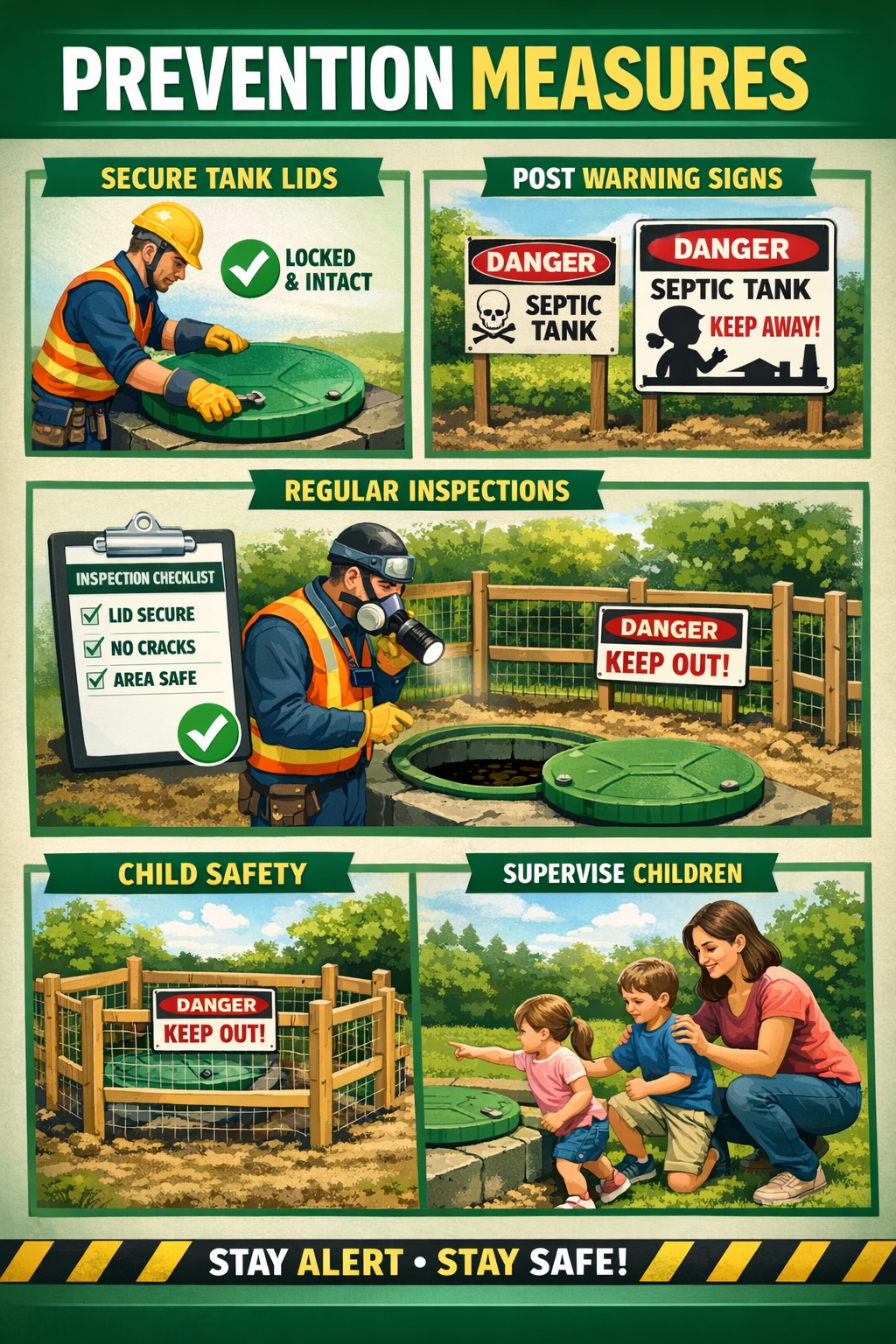
Effective septic tank accident prevention requires secure covers, regular safety inspections, and proper system maintenance. Property owners must take proactive steps to eliminate fall hazards and protect family members and visitors.
Essential Safety Measures
Install secure, weight-rated covers designed to support at least 300 pounds. Modern safety covers include:
- Locking mechanisms that prevent accidental opening
- Reinforced construction that won’t crack under normal loads
- Proper sealing to contain gases and odors
- Clear marking or labeling for identification
Establish regular inspection schedules to catch problems before they become dangerous. Signs your septic tank needs maintenance include cover damage that creates safety hazards.
Property Safety Protocols
Create physical barriers around septic system components:
- Install fencing around tank access points in yards with children
- Use landscaping to discourage foot traffic over tank areas
- Post warning signs near septic system components
- Maintain clear sight lines to spot potential hazards
Develop family safety rules including:
- Teaching children to avoid septic system areas
- Establishing “no play zones” around utility areas
- Creating emergency response plans
- Ensuring all household members know tank locations
Professional Maintenance Requirements
Annual professional inspections should include safety assessments of all covers and access points. Qualified technicians can identify structural problems, improper installations, and potential failure points.
Proper abandonment procedures for unused systems prevent future accidents. This involves completely filling old tanks and removing covers rather than simply disconnecting them.
Documentation and mapping help ensure safety measures remain effective over time. Keep records of tank locations, cover replacement dates, and safety improvements for future reference.
What Should Property Owners Know About Legal Responsibility?
Property owners bear legal responsibility for maintaining safe septic systems and preventing accidents on their property. This liability extends to family members, visitors, and even trespassers in many jurisdictions, making proper safety measures both ethical and legal necessities.
Liability Scope and Requirements
Duty of care requires property owners to maintain septic systems in safe condition and warn others of known hazards. This includes:
- Regular inspection and maintenance of tank covers
- Prompt repair of damaged safety components
- Proper securing of access points
- Warning signs where appropriate
Premises liability laws hold property owners responsible for injuries occurring due to unsafe conditions, even if the injured party was trespassing. Children receive special protection under “attractive nuisance” doctrines that recognize their inability to understand dangers.
Insurance and Financial Implications
Homeowner’s insurance may not cover septic tank accidents if negligent maintenance contributed to the incident. Insurance companies increasingly require documentation of proper septic system maintenance and safety measures.
Financial exposure from septic tank accidents can include:
- Medical expenses for injured parties
- Legal defense costs and settlements
- Property damage from emergency response
- Increased insurance premiums
- Potential criminal charges in cases of gross negligence
Compliance Requirements
Local regulations often mandate specific safety requirements for septic systems. These may include:
- Approved cover types and installation methods
- Regular professional inspections
- Proper abandonment procedures for unused systems
- Permits for system modifications or repairs
Documentation requirements help demonstrate compliance with safety standards. Keep records of all maintenance, inspections, and safety improvements to protect against liability claims.
Understanding what happens when septic tanks are full helps property owners recognize when emergency access might be needed, allowing for proper safety planning during maintenance activities.
Helpful Resource for Septic System Maintenance
Preventing septic tank accidents starts with proper system maintenance that reduces the need for emergency access. Septifix tablets offer a simple monthly treatment that helps break down waste, reduce harmful bacteria, and maintain proper system function. By keeping your septic system working efficiently, you minimize the situations that require tank access and reduce overall safety risks. This isn’t required for safety, but it’s useful for maintaining system health and reducing maintenance frequency.
FAQ
Q: How deep are most septic tanks?
A: Most residential septic tanks are 4-6 feet deep with 3-4 feet of liquid sewage inside. This depth makes escape extremely difficult and creates immediate drowning risk for anyone who falls in.
Q: Can you survive falling in a septic tank?
A: Survival depends on immediate professional rescue. The combination of drowning risk and toxic gas exposure makes septic tank falls extremely dangerous, with multiple documented fatalities even when help arrives quickly.
Q: What gases are in septic tanks that make them dangerous?
A: Septic tanks contain hydrogen sulfide, methane, and carbon dioxide gases that displace oxygen. These gases can cause unconsciousness within seconds and death from asphyxiation.
Q: How often should septic tank covers be inspected?
A: Inspect septic tank covers monthly for cracks, shifts, or damage. Professional inspections should occur annually as part of regular septic system maintenance.
Q: Are plastic septic tank covers safer than concrete ones?
A: Modern plastic covers designed for safety can be safer than old concrete covers, but only if properly installed with locking mechanisms. Some lightweight covers create trap-door hazards if not designed correctly.
Q: What should I do if I discover a damaged septic tank cover?
A: Immediately secure the area to prevent access, mark the hazard clearly, and contact a septic professional for emergency cover replacement. Don’t delay – damaged covers create immediate fall risks.
Q: Can septic tank accidents happen to adults?
A: Yes, adults can fall into septic tanks, especially when covers fail unexpectedly or during maintenance activities. However, children face higher risk due to their size and inability to recognize dangers.
Q: How much does it cost to install a safety septic tank cover?
A: Safety septic tank covers typically cost $200-500 depending on size and features. This investment is minimal compared to the potential costs and consequences of accidents.
Q: Are there warning signs before a septic tank cover fails?
A: Yes, warning signs include visible cracks, sagging, rust on metal covers, gaps around edges, and covers that move when stepped on. Any of these signs requires immediate attention.
Q: What happens to rescue workers who enter septic tanks?
A: Professional rescue workers use specialized breathing apparatus and confined space rescue equipment. They’re trained to handle toxic gas environments that would be fatal to untrained individuals.
Q: How long can someone survive in a septic tank?
A: Survival time is extremely limited – often measured in minutes due to drowning risk and toxic gas exposure. This is why immediate professional rescue response is critical.
Q: Do septic tank accidents happen frequently?
A: While not common, septic tank accidents occur regularly enough to be a recognized safety hazard. Most involve children and result from inadequate cover maintenance or safety measures.
References
[1] Toddler Deaths From Falling Into Septic Systems 33170 – https://www.timfrankseptic.com/news/toddler-deaths-from-falling-into-septic-systems-33170