Last updated: February 21, 2026
Key Takeaways
• Immediate drainage failure occurs when your septic tank reaches capacity, causing toilets and drains to back up into your home
• Raw sewage backup creates serious health hazards and can contaminate your living space with dangerous bacteria like E. coli
• Emergency response requires stopping all water use immediately and calling professional septic services
• Drainfield damage happens when overflow saturates the soil, potentially requiring expensive repairs
• Prevention through regular pumping every 3-5 years prevents most overflow emergencies and protects your investment
Quick Answer
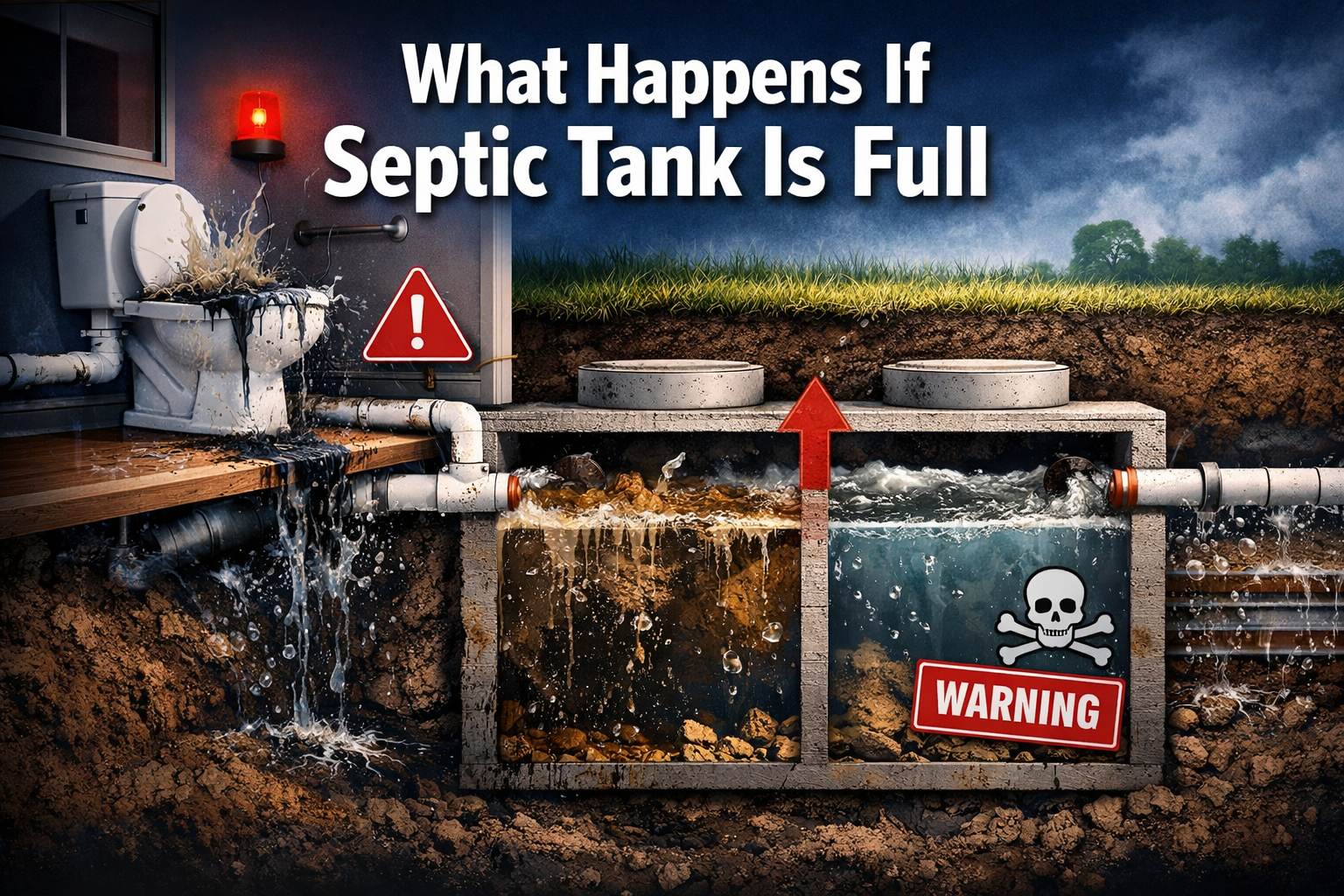
When a septic tank becomes full, wastewater has nowhere to go and backs up into your home through toilets, sinks, and drains. This creates immediate health hazards from raw sewage exposure and can damage your drainfield system. You must stop using all water immediately and contact emergency septic services to prevent further contamination and costly repairs.
How Does a Full Septic Tank Affect Your Home’s Drainage?
A full septic tank immediately disrupts your entire home’s drainage system because wastewater has nowhere to flow. When the tank reaches maximum capacity, new wastewater from your home cannot enter the system, causing backups throughout your plumbing.
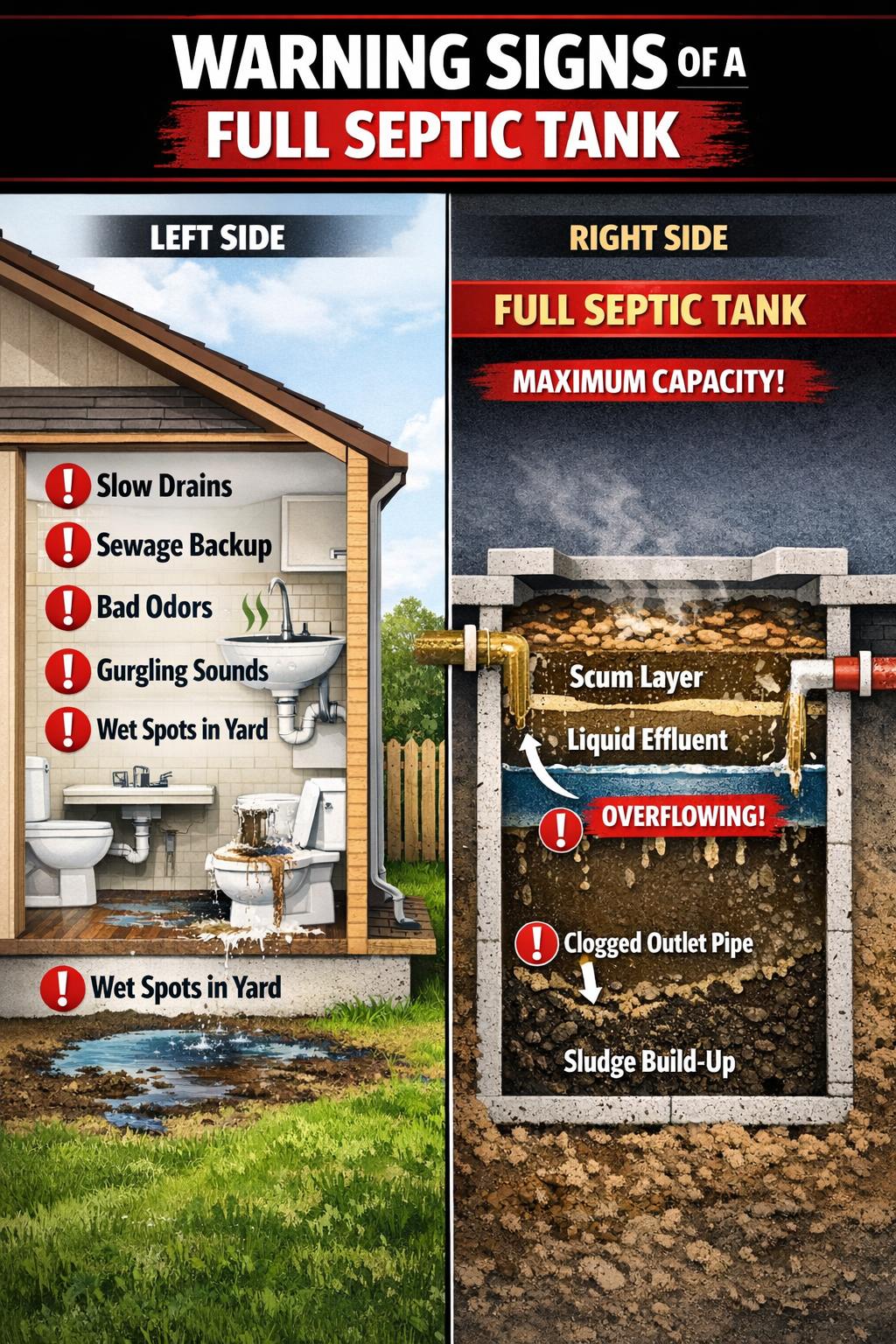
Drainage problems start with these symptoms:
• Toilets that won’t flush or flush very slowly
• Sinks and showers that drain sluggishly or not at all
• Gurgling sounds from drains and plumbing fixtures
• Complete system shutdown in severe cases
The drainage failure happens because your septic tank works on a simple displacement principle. As new wastewater enters from your home, treated water should exit to the drainfield. When the tank is full, this process stops working entirely.
Choose immediate action if you notice multiple drains backing up simultaneously – this indicates a full tank rather than a simple clog in one fixture. A single slow drain usually means a localized blockage, but system-wide drainage problems point to septic capacity issues.
Understanding how septic tank systems work helps you recognize when drainage problems indicate a full tank versus other issues.
What Happens If Septic Tank Is Full: Sewage Backup Dangers
Raw sewage backing up into your home creates immediate health emergencies that require swift action. When septic tanks overflow, contaminated wastewater flows back through your plumbing system into toilets, sinks, bathtubs, and floor drains.
Health hazards from sewage backup include:
• E. coli bacteria that causes severe gastrointestinal illness
• Hepatitis and other viral infections from contaminated water contact
• Respiratory problems from toxic gases and fumes
• Skin infections from direct contact with raw sewage
The sewage contains everything that goes down your drains – human waste, food particles, chemicals, and bacteria that multiply rapidly in warm conditions. Children and elderly family members face higher risks from exposure to these contaminants.
Avoid these common mistakes when dealing with sewage backup:
- Never try to clean up raw sewage without proper protective equipment
- Don’t use regular household cleaners on sewage contamination
- Avoid walking through contaminated areas without waterproof boots
If sewage has backed up into your home, you’re facing a serious emergency that requires professional cleanup services beyond just septic pumping.
What Are the Warning Signs Before Your Septic Tank Gets Full?
Recognizing early warning signs prevents emergency situations and gives you time to schedule routine maintenance. Most septic tanks don’t go from normal to completely full overnight – they show progressive symptoms over weeks or months.
Early warning signs include:
• Slow drains throughout the house, not just one fixture
• Bad odors near the septic tank or drainfield area
• Wet spots or standing water in your yard above the drainfield
• Lush grass growth in patches over the septic system
• Gurgling sounds when water drains from sinks or toilets
Advanced warning signs that require immediate attention:
• Multiple toilets backing up simultaneously
• Sewage odors inside your home
• Water backing up in basement floor drains
• Visible sewage in your yard
The key difference between early and advanced signs is scope – early warnings affect drainage speed and odors, while advanced signs involve actual sewage backup.
Choose professional inspection if you notice any combination of these symptoms, especially during high-usage periods like holidays when your system handles extra wastewater.
For detailed guidance on recognizing these symptoms, check our comprehensive guide on signs of a full septic tank.
How Does a Full Septic Tank Damage Your Drainfield?
A full septic tank can permanently damage your drainfield by forcing untreated wastewater into the soil absorption system. When the tank overflows, solid waste and scum layers get pushed into the drainfield pipes, clogging the distribution system.
Drainfield damage occurs through these mechanisms:
• Soil clogging from solid particles that should stay in the tank
• Biomat thickening when too much organic matter reaches the soil
• Soil compaction from oversaturation with wastewater
• Pipe blockages in the distribution system
The drainfield relies on properly treated effluent – partially clear water with minimal solids. When a full tank sends raw sewage into this system, the soil becomes overwhelmed and loses its filtering capacity.
Signs of drainfield damage include:
- Standing water or wet spots that don’t dry out
- Strong sewage odors in your yard
- Sewage surfacing above the drainfield
- Extremely lush or discolored grass growth
Recovery time varies depending on damage severity. Minor oversaturation might resolve in weeks with proper pumping, but severe damage requiring drainfield replacement can cost thousands of dollars and take months to complete.
The most expensive mistake homeowners make is continuing to use water when they suspect septic problems, which accelerates drainfield damage.
What Happens If Septic Tank Is Full: Environmental Impact
Full septic tanks pose serious environmental risks that extend beyond your property boundaries. When systems overflow, untreated sewage can contaminate groundwater, surface water, and soil in your neighborhood.
Environmental contamination occurs through:
• Groundwater pollution when sewage seeps into underground water supplies
• Surface water runoff carrying bacteria into streams, lakes, or storm drains
• Soil contamination that persists long after the overflow stops
• Nitrogen loading that causes algae blooms in nearby water bodies
The contamination spreads because sewage contains high levels of nitrogen, phosphorus, and bacteria that don’t break down quickly in the environment. These pollutants can travel significant distances through groundwater systems.
Legal consequences may include fines from environmental agencies, liability for neighboring property damage, and requirements for expensive soil remediation. Some municipalities impose emergency response costs on homeowners whose septic systems contaminate public areas.
Choose immediate containment by stopping all water use and keeping people away from contaminated areas. The faster you respond, the less environmental damage occurs.
Understanding proper septic tank maintenance prevents these environmental emergencies and protects your community’s water resources.
Emergency Steps When Your Septic Tank Is Full
When you discover your septic tank is full, immediate action prevents health hazards and limits property damage. Emergency response focuses on containment, safety, and professional intervention rather than DIY fixes.
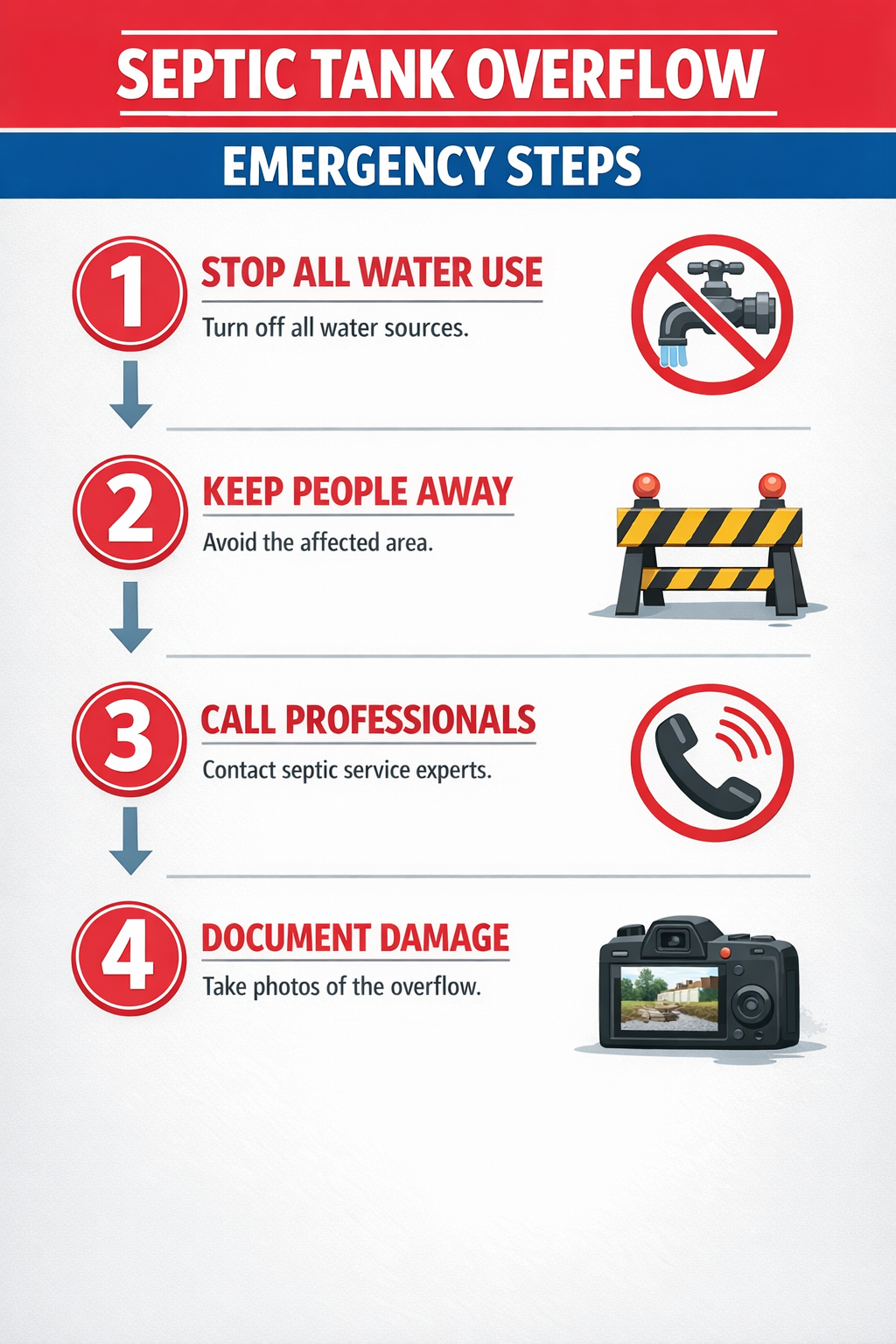
Immediate emergency steps:
- Stop all water use immediately
- No flushing toilets, even for emergencies
- Turn off washing machines and dishwashers mid-cycle if needed
- Avoid running any taps or showers
- Unplug garbage disposals to prevent accidental use
- Isolate contaminated areas
- Keep family members and pets away from sewage backup
- Rope off or mark contaminated yard areas
- Ventilate rooms with sewage odors if safe to do so
- Document damage with photos for insurance purposes
- Contact emergency septic services
- Call 24-hour septic pumping services immediately
- Explain the urgency and scope of backup
- Ask about emergency response timeframes
- Get cost estimates for emergency service calls
- Protect your health
- Wear protective gear if you must enter contaminated areas
- Wash hands thoroughly after any potential exposure
- Keep children away from all affected areas
- Consider temporary accommodation if backup is severe
Don’t attempt these dangerous actions:
- Pumping the tank yourself with rental equipment
- Using chemical drain cleaners or additives
- Trying to “fix” the problem by running more water through
FYI: Some links may be affiliate links, which means I may earn a small commission at no extra cost to you.
For ongoing prevention, products like Septifix tablets can help maintain proper bacterial balance in your septic system. These monthly treatments help break down waste and reduce the buildup that leads to full tank emergencies, though they’re not a substitute for regular pumping.
Emergency septic situations require professional expertise and specialized equipment that homeowners don’t have access to.
How Much Does Emergency Septic Service Cost?
Emergency septic pumping costs significantly more than routine maintenance, but delaying action increases expenses exponentially. Understanding cost factors helps you budget for emergency situations and makes the case for preventive maintenance.
Emergency pumping costs typically include:
| Service Type | Cost Range | Timeline |
|---|---|---|
| Emergency pumping (nights/weekends) | $400-$800 | 2-4 hours |
| Standard pumping (business hours) | $200-$400 | Same day |
| Sewage cleanup (per room) | $500-$2,000 | 1-3 days |
| Drainfield repair | $2,000-$10,000 | 1-2 weeks |
Additional costs for full tank emergencies:
• Professional sewage cleanup for contaminated indoor areas
• Temporary housing if your home becomes uninhabitable
• Plumbing repairs for damaged fixtures or pipes
• Insurance deductibles for water damage claims
• Environmental remediation if contamination spreads
Emergency service premiums exist because companies must respond immediately, often outside normal business hours, and handle hazardous conditions.
Choose routine maintenance to avoid these costs – regular pumping every 3-5 years costs a fraction of emergency intervention. The price difference between prevention and emergency response often exceeds 300-500%.
Most homeowner’s insurance policies have limited coverage for septic system failures, making prevention your best financial protection.
How Often Should You Pump to Prevent Full Tank Emergencies?
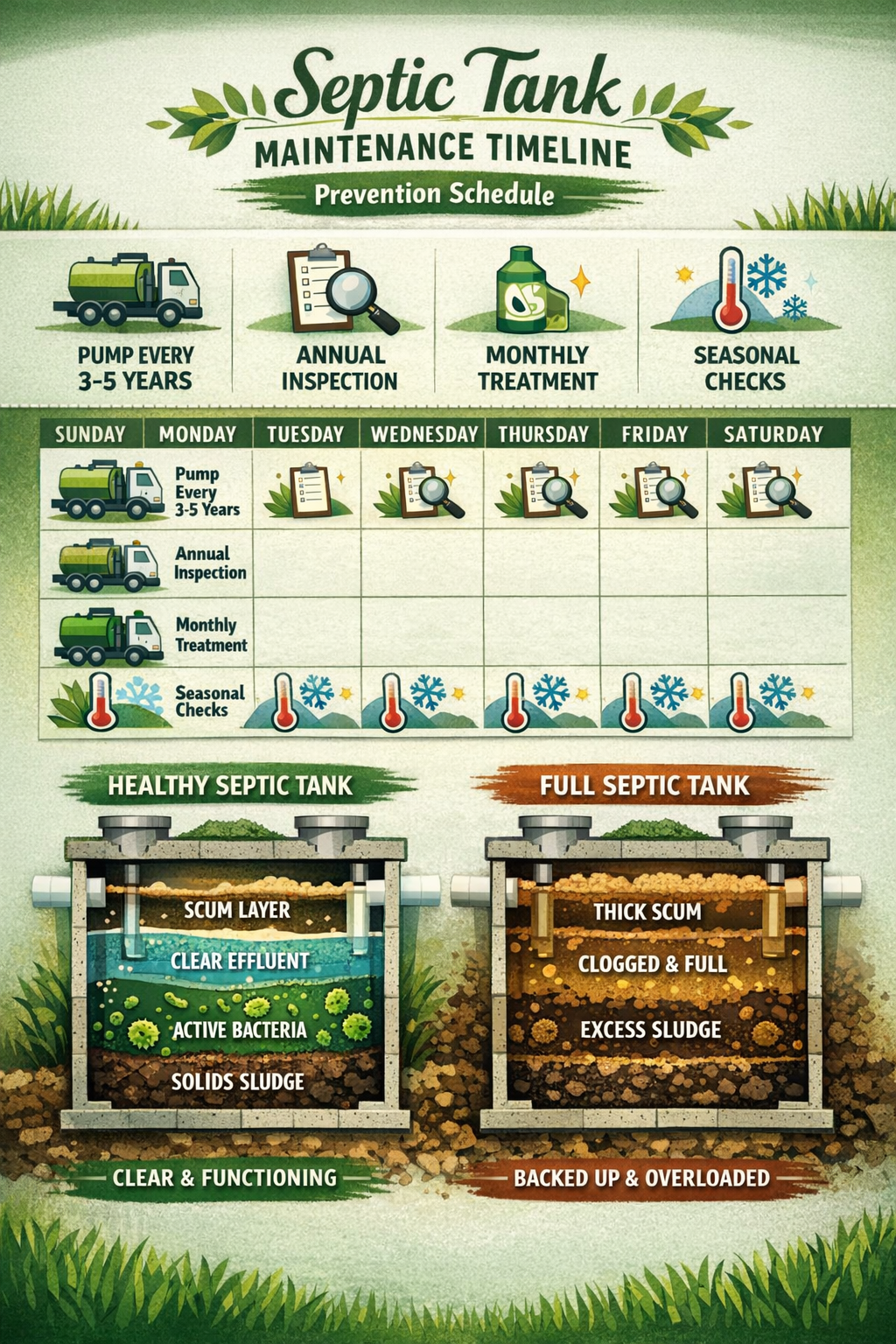
Regular pumping prevents full tank emergencies and maintains your septic system’s efficiency. Pumping frequency depends on household size, tank capacity, and water usage patterns rather than arbitrary time schedules.
Standard pumping guidelines:
• 1-2 people: Every 4-5 years for tanks 1,000+ gallons
• 3-4 people: Every 3-4 years for standard residential tanks
• 5+ people: Every 2-3 years or monitor annually
• High water usage households: Every 2-3 years regardless of size
Factors that increase pumping frequency:
- Garbage disposal use (increases solids by 25-50%)
- Large families or frequent guests
- Home businesses that increase water usage
- Older tanks with reduced capacity
- Clay or poorly draining soil conditions
The 20-30% rule provides the most accurate timing – pump when solids reach 20-30% of your tank’s total capacity. This requires professional inspection to measure sludge and scum layers accurately.
Avoid these pumping mistakes:
- Waiting for problems before scheduling service
- Assuming all tanks need the same frequency
- Skipping inspections between pumping cycles
Monitor your system with annual inspections during the first few years to establish your household’s specific pumping needs. Usage patterns change over time as families grow or water habits shift.
For detailed pumping schedules, see our guide on how often to pump septic tanks.
Helpful Resource for Ongoing Prevention
While emergency pumping solves immediate crises, ongoing prevention keeps your septic system healthy between professional services. Septifix tablets offer a simple monthly maintenance routine that supports proper bacterial balance in your tank.
These tablets help break down waste, reduce bad smells, and keep your septic tank working properly with one easy monthly flush. The bacterial treatment can help prevent the buildup that leads to full tank situations, though it doesn’t replace the need for regular pumping.
Septifix works best for homeowners who want:
- Simple maintenance without complex schedules
- Odor reduction around their septic system
- Support for proper waste breakdown
- Peace of mind between pumping cycles
The monthly treatment approach fits well with other preventive measures like water conservation and proper waste disposal habits. While not a magic solution, it provides an easy way to support your septic system’s natural processes.
FAQ
How quickly does a septic tank fill up?
Most residential septic tanks fill gradually over 3-5 years under normal usage. However, tanks can fill much faster during high-usage periods, with garbage disposal use, or if the drainfield isn’t working properly.
Can I pump my own septic tank?
No, septic tank pumping requires specialized vacuum trucks and professional expertise. DIY pumping attempts are dangerous due to toxic gases and lack of proper waste disposal methods.
What’s the difference between a full tank and a clogged drain?
A clogged drain affects one fixture, while a full septic tank causes slow drainage or backup in multiple locations throughout your home simultaneously.
How long can I wait if my septic tank is full?
Don’t wait at all – stop water use immediately and call emergency services. Continuing to use water when your tank is full causes sewage backup and expensive damage.
Does homeowner’s insurance cover septic tank overflow damage?
Coverage varies significantly between policies. Many standard policies exclude septic system failures or provide limited coverage for resulting damage.
Can heavy rain cause my septic tank to overflow?
Yes, saturated soil from heavy rain prevents proper drainage from your tank to the drainfield, which can cause backup even if your tank isn’t technically “full.”
What should I do if sewage backs up into my basement?
Stop all water use immediately, evacuate the area, and call both emergency septic services and professional sewage cleanup companies. Don’t attempt cleanup yourself.
How do I know if my drainfield is damaged after an overflow?
Look for persistent wet spots, sewage odors, or standing water in your yard above the drainfield area. Professional inspection determines actual damage extent.
Can I use my washing machine if my septic tank is full?
Absolutely not. Using any water when your septic tank is full forces more sewage backup into your home and worsens the emergency.
What’s the fastest emergency septic service response time?
Most emergency septic services respond within 2-4 hours, though response times vary by location and time of day. Call immediately rather than waiting.
Are there temporary solutions while waiting for emergency service?
The only safe temporary solution is stopping all water use completely. There are no quick fixes or temporary repairs for a full septic tank.
How can I prevent my septic tank from filling up so quickly?
Regular pumping every 3-5 years, water conservation, avoiding garbage disposal overuse, and proper waste disposal prevent rapid tank filling.
Key Takeaways
• Emergency response saves money – stopping water use immediately prevents thousands in additional damage from sewage backup and drainfield contamination
• Professional intervention is required – full septic tanks need specialized pumping equipment and expertise that homeowners cannot safely provide
• Health hazards are serious – raw sewage contains dangerous bacteria like E. coli that can cause severe illness through direct contact or airborne exposure
• Prevention costs less than emergencies – routine pumping every 3-5 years costs a fraction of emergency services, sewage cleanup, and drainfield repairs
• Environmental damage spreads quickly – septic overflow can contaminate groundwater and neighboring properties, creating legal liability and cleanup requirements
• Insurance coverage is limited – most homeowner policies exclude or limit septic system failure coverage, making prevention your primary financial protection
• Warning signs appear gradually – slow drains, odors, and wet spots in your yard indicate developing problems before emergency situations occur
• Drainfield damage is expensive – full tanks can permanently damage soil absorption systems, requiring replacement costs of $5,000-$15,000
• Water conservation extends tank life – reducing household water usage through efficient fixtures and conservative habits decreases pumping frequency
• Regular inspections catch problems early – annual or biannual professional inspections identify issues before they become emergencies
For comprehensive guidance on maintaining your septic system, explore our complete septic tank care resources and learn how to tell if your septic tank is full before emergencies develop.
References
[1] Septictank Overflow Complete Guide – https://www.vdwws.com/blog/septictank-overflow-complete-guide
[2] Emergency Septic Service – https://www.birosseptic.com/blog/emergency-septic-service/
[3] Septic Tank Backup Remedies – https://smartsepticpros.com/blog/septic-tank-backup-remedies/
[4] How Often To Pump A Septic Tank – https://clearriverenvironmental.com/how-often-to-pump-a-septic-tank/
[5] Here Are 5 Emergency Septic Scenarios That Require Action Immediately – https://www.superiorseptictx.net/here-are-5-emergency-septic-scenarios-that-require-action-immediately
[6] Septic Emergencies 101 What To Do Before You Call The Professionals – https://gullettsanitation.com/2025/05/septic-emergencies-101-what-to-do-before-you-call-the-professionals/
[7] Emergency Septic Services What Homeowners Need To Know – https://www.urgentservicesllc.com/emergency-septic-services-what-homeowners-need-to-know