
Last updated: March 1, 2026
Key Takeaways
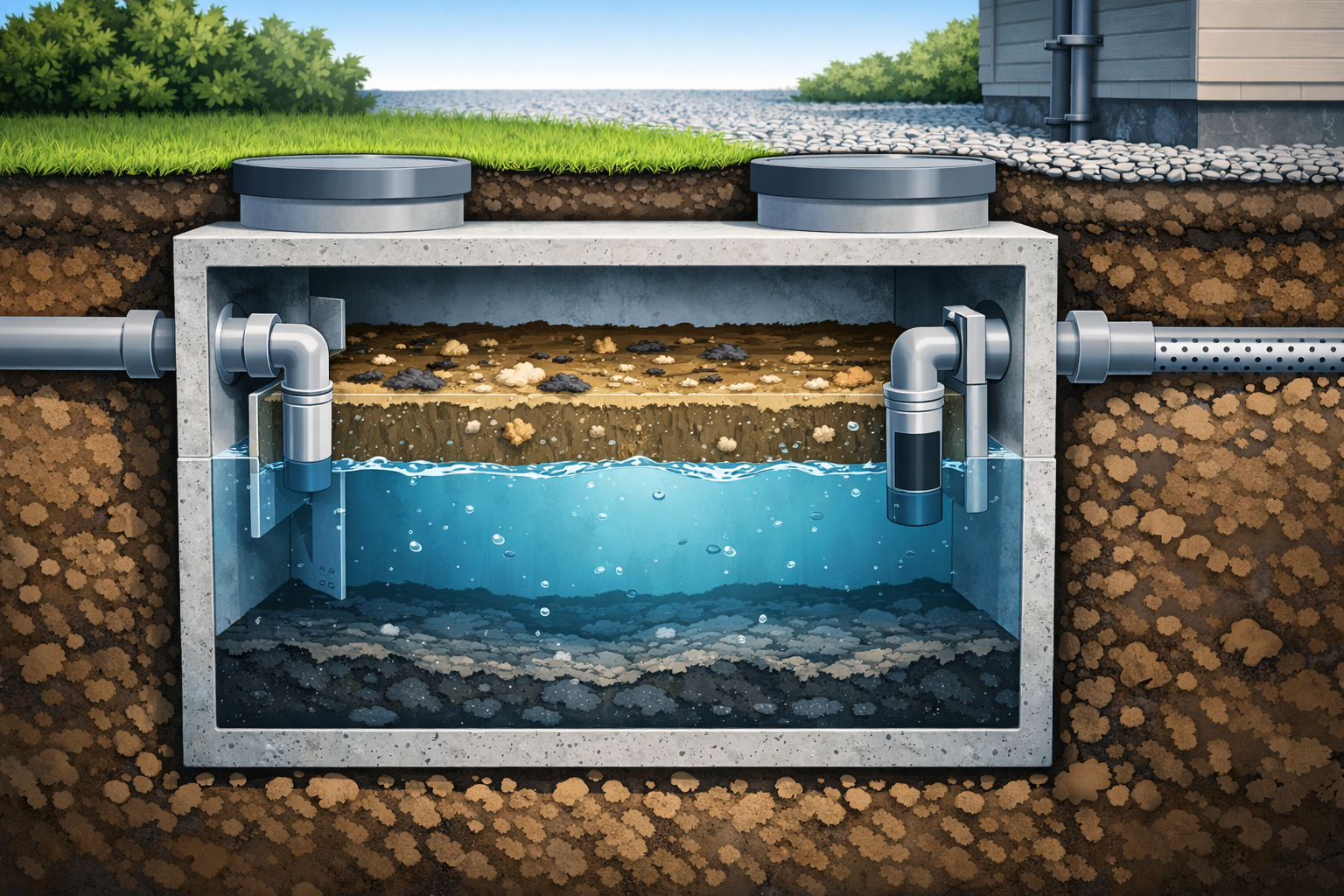
• Septic tanks are rectangular concrete boxes buried underground, typically 8-12 feet long and 4-6 feet wide
• Most residential tanks hold 750-1,500 gallons and sit 1-3 feet below ground level
• You’ll see only the access cover at ground surface – the tank itself is completely buried
• Interior features include inlet/outlet baffles, T-pipes, and often two compartments for better waste processing
• Standard tanks are 4-5 feet deep with thick concrete walls (minimum 3 inches) for structural integrity
• Access openings range from 12-20 inches wide depending on tank depth
• Professional installation ensures proper slope, soil coverage, and drainage field connection
Quick Answer
A septic tank looks like a large rectangular concrete box buried in your yard with only a small access cover visible at ground level. The typical residential tank measures 8-12 feet long, 4-6 feet wide, and 4-5 feet deep, holding between 750-1,500 gallons of wastewater. Inside, you’ll find inlet and outlet baffles, T-shaped pipes, and often two compartments that separate and process waste through natural bacterial action.
What Does a Septic Tank Look Like from the Outside?
From ground level, a septic tank is almost completely invisible. You’ll only see a small access cover or manhole lid, usually made of concrete or plastic, sitting flush with or slightly above the soil surface.
The access cover typically measures 12-20 inches across and may be round or rectangular. Some newer systems have risers that bring the access point closer to ground level for easier maintenance. The cover should be clearly marked and easily removable for regular pumping and inspection.
Common mistake: Many homeowners lose track of their tank location over time. Mark the access point clearly and keep a property diagram showing the tank and drain field locations. This saves time and money during maintenance visits.
What Are the Physical Dimensions of a Septic Tank?
Residential septic tanks follow specific size requirements based on household capacity and local regulations. Standard dimensions ensure proper waste processing and structural integrity.
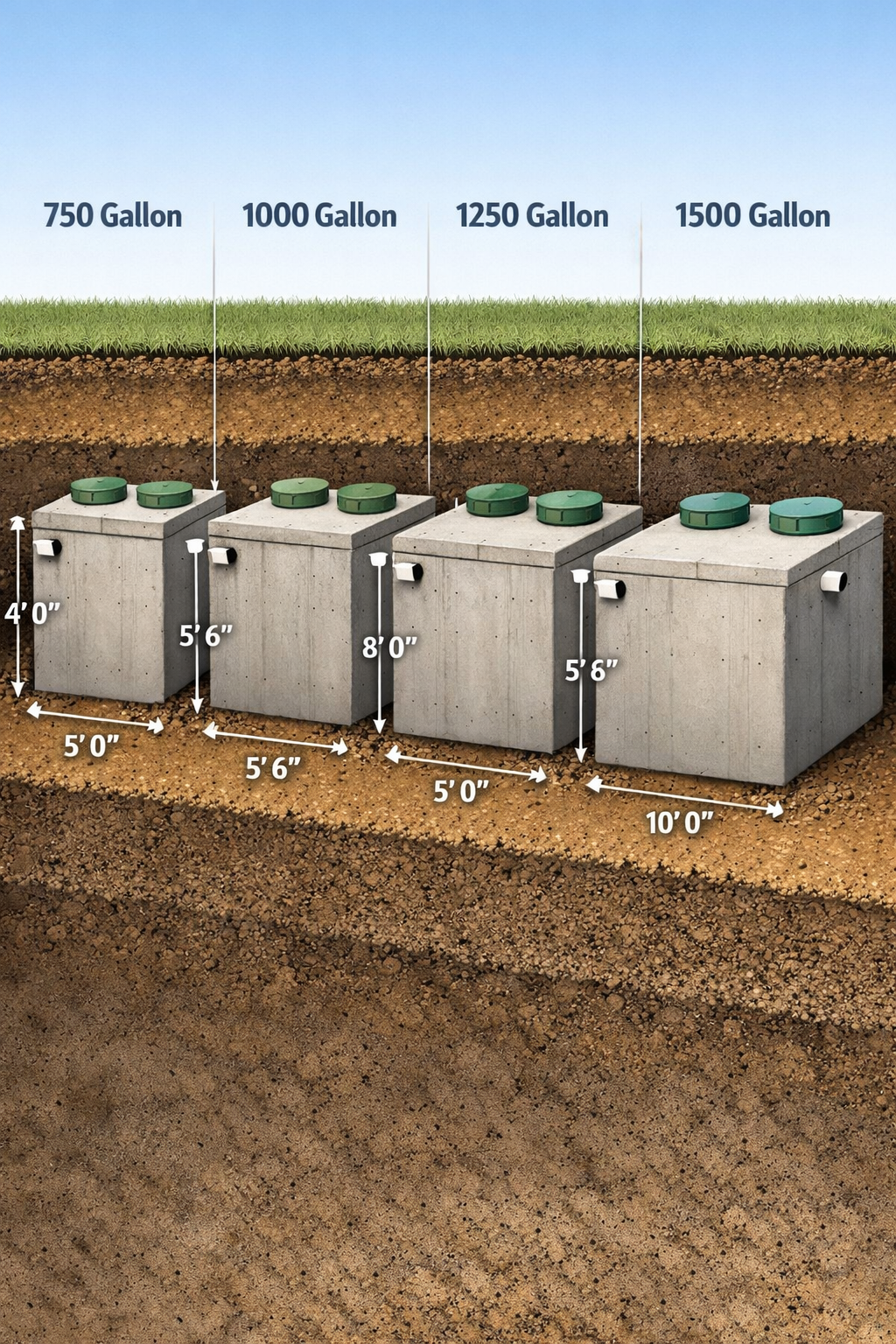
Typical residential tank sizes:
- 750 gallons: 92″ x 60″ x 51″ high
- 1,000 gallons: 102″ x 60″ x 60″ high
- 1,250 gallons: 120″ x 72″ x 51″ high
- 1,500 gallons: 157″ x 69″ x 51″ high
The length-to-width ratio should be 2:1 to 4:1 for optimal performance. This rectangular shape allows proper flow patterns and settling time for solids. Maximum design depth is typically 60 inches, though some tanks go deeper for extra sludge storage capacity.
Choose larger capacity if: You have a garbage disposal, frequently host guests, or local regulations require it based on bedroom count. Most codes require 1,000+ gallons for homes with 3+ bedrooms.
What Does a Septic Tank Look Like Inside?
The interior of a septic tank reveals a carefully engineered system designed to separate and process wastewater through natural bacterial breakdown.
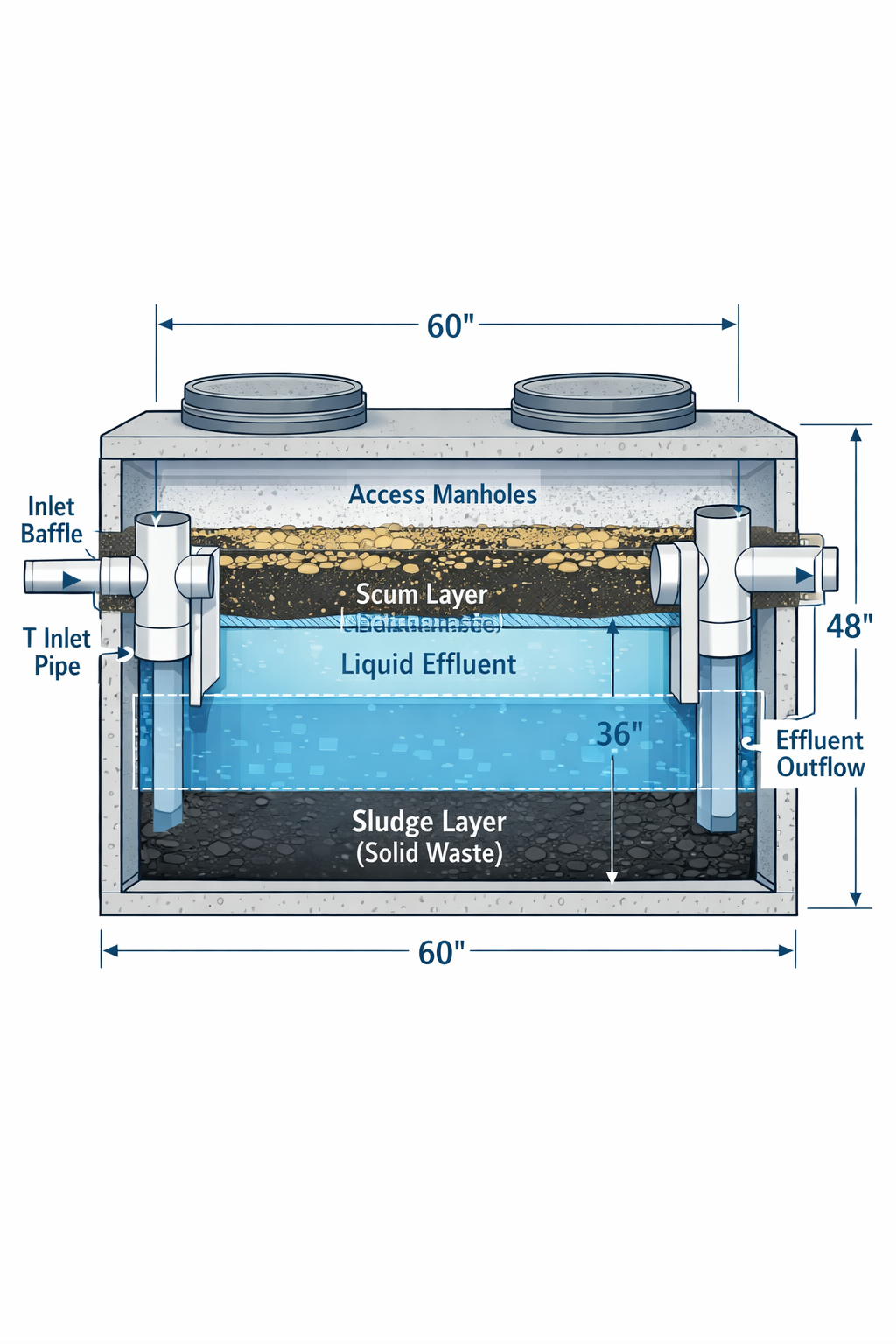
Key internal components:
- Inlet baffle: Directs incoming wastewater downward to prevent stirring up settled solids
- Outlet baffle: Prevents scum and solids from flowing to the drain field
- T-pipes: Extend 12-18 inches below liquid level for proper flow control
- Two compartments: First chamber (60-75% of volume) for primary settling, second for final processing
The tank contains three distinct layers: floating scum on top, clear effluent in the middle, and settled sludge at the bottom. Understanding how waste moves through these layers helps you recognize when maintenance is needed.
Important note: Never enter a septic tank or lean over an open tank. Dangerous gases can cause unconsciousness or death. Always hire professionals for internal inspections.
FYI: Some links may be affiliate links, which means I may earn a small commission at no extra cost to you.
For homeowners looking to maintain their septic system between professional services, Septifix tablets offer a simple monthly maintenance solution. These tablets help break down waste naturally and can reduce odors while supporting the bacterial balance your tank needs to function properly.
What Materials Are Septic Tanks Made From?
Most residential septic tanks are constructed from reinforced concrete due to its durability and structural strength when buried underground.
Concrete specifications:
- Minimum 2,500 psi compressive strength
- 3-inch minimum wall thickness for structural integrity
- Reinforced with steel rebar for crack resistance
- Waterproof cement plaster coating on interior surfaces
Alternative materials include:
- Fiberglass: Lighter weight, corrosion-resistant, but more expensive
- Plastic/Polyethylene: Affordable, easy to install, but may require special anchoring
- Stone or brick: Older installations with cement plaster lining
Concrete remains the most common choice because it handles soil pressure well and lasts 20-30 years with proper maintenance. The thick walls resist cracking from freeze-thaw cycles and settling.
Red flag: Avoid tanks with visible cracks, rust stains, or structural damage. These issues can lead to groundwater contamination or system failure.
How Deep Are Septic Tanks Buried?
Septic tanks are typically buried 1-3 feet below ground surface, with the exact depth depending on local frost lines, soil conditions, and drainage requirements.
Depth considerations:
- Minimum soil cover: 6-12 inches over the tank top
- Maximum depth: Usually 8 feet from ground to tank bottom
- Frost protection: Deeper burial in cold climates to prevent freezing
- Slope requirements: Proper grade from house to tank (1/4 inch per foot minimum)
The tank location and depth affect access for pumping trucks and maintenance equipment. Tanks buried too deep may require risers to bring access points closer to the surface.
Installation tip: Professional installers use laser levels to ensure proper slope and depth. Improper installation can cause backup problems and premature system failure.
What Does the Septic Tank Access Look Like?
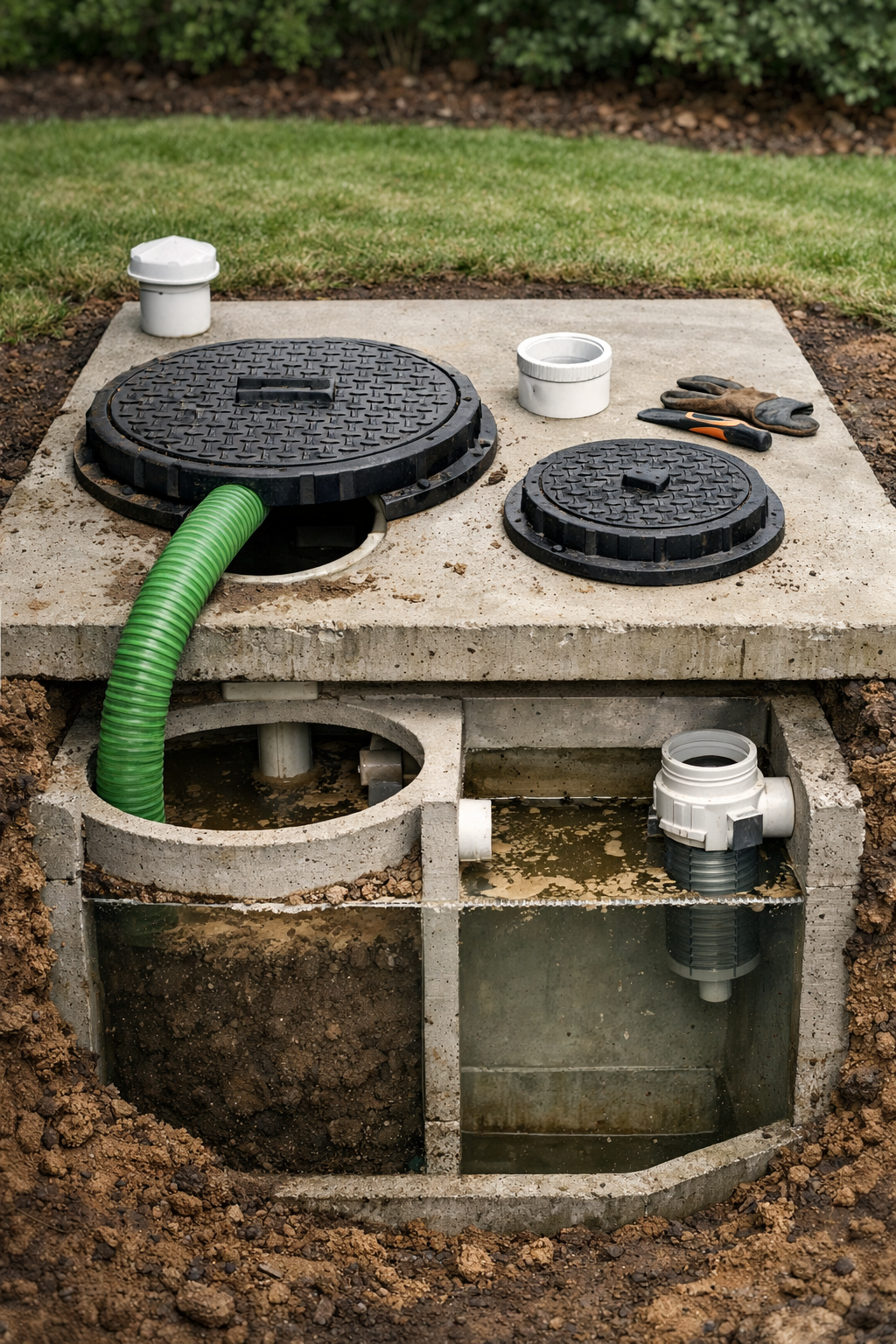
Access openings provide entry points for inspection, pumping, and maintenance without excavating the entire tank.
Access specifications:
- Shallow tanks (under 48″ liquid depth): Minimum 12-inch opening
- Deep tanks (48″+ liquid depth): Minimum 20-inch opening
- Multiple access points: Larger tanks often have separate inlet and outlet access covers
- Riser systems: Extend access to ground level for easier maintenance
Modern installations include risers that eliminate the need to dig down to the tank for routine service. These plastic or concrete extensions bring the access point to within 6 inches of ground surface.
Safety feature: Proper covers should be secure enough to prevent accidental entry but removable by service professionals. Never prop open or leave covers unsecured.
What Warning Signs Indicate Tank Problems?
Visual inspection of your septic tank area can reveal problems before they become expensive emergencies.
Surface warning signs:
- Soggy areas: Standing water or unusually green grass over the tank
- Odors: Sewage smells near the tank or drain field
- Sunken areas: Soil settling may indicate structural problems
- Exposed components: Pipes or tank parts visible above ground
Inside the house indicators:
- Slow drains throughout the home
- Gurgling sounds from plumbing fixtures
- Sewage backups in lowest-level drains
- Unusual smells from drains
Take action if: You notice any of these signs. Early intervention prevents costly repairs and protects your property value.
Helpful Resource for Tank Maintenance
Maintaining proper bacterial balance in your septic tank is crucial for waste breakdown and system longevity. Septifix tablets provide an easy way to support your tank’s natural processes with a simple monthly flush. These tablets help break down waste, reduce odors, and may extend the time between pump-outs when used as part of a complete maintenance routine.
While not a replacement for professional pumping and inspection, Septifix can be a useful addition to your regular septic maintenance schedule.
FAQ
How big is a typical residential septic tank?
Most residential septic tanks range from 750-1,500 gallons, measuring approximately 8-12 feet long, 4-6 feet wide, and 4-5 feet deep when buried underground.
Can I see my septic tank from ground level?
No, only the access cover is visible at ground surface. The entire tank is buried 1-3 feet underground with soil covering the top.
What does the inside of a septic tank look like?
Inside, you’ll see three layers: floating scum on top, clear liquid in the middle, and settled sludge at the bottom, plus inlet/outlet baffles and T-pipes for flow control.
How thick are septic tank walls?
Concrete septic tank walls are minimum 3 inches thick and made with 2,500+ psi concrete reinforced with steel rebar for underground structural strength.
Do all septic tanks have two compartments?
Not all, but two-compartment tanks are recommended for better waste processing and required for tanks with interior lengths over 10 feet.
How do I find my septic tank if I can’t see it?
Look for the access cover, check property records, or hire a professional with locating equipment. The tank is usually 10-25 feet from the house.
What materials are septic tanks made from?
Most are reinforced concrete, but fiberglass and plastic tanks are also available. Concrete is most common due to durability and cost-effectiveness.
How deep should a septic tank be buried?
Typically 1-3 feet below ground surface, with minimum 6-12 inches of soil cover over the top and maximum 8 feet total depth.
What size access opening do septic tanks have?
Access openings range from 12 inches (shallow tanks) to 20+ inches (deep tanks), designed for inspection and pumping equipment access.
How long do septic tanks last?
Concrete septic tanks typically last 20-30 years with proper maintenance, while fiberglass and plastic tanks may last 30-40 years.
Can septic tanks be above ground?
No, residential septic tanks must be buried underground for proper function, temperature control, and safety regulations.
What happens if my septic tank cracks?
Cracked tanks can leak sewage into groundwater or allow groundwater to enter the system, requiring professional repair or replacement to prevent contamination.
Conclusion
Understanding what a septic tank looks like helps you better maintain your system and recognize potential problems early. These rectangular concrete structures, buried just below your yard’s surface, work quietly to process your home’s wastewater through carefully engineered internal components.
Key points to remember:
- Only the small access cover is visible at ground level
- Interior baffles and T-pipes control waste flow and separation
- Proper dimensions and materials ensure decades of reliable service
- Regular visual inspections can catch problems before they become expensive
Next steps: Locate your tank’s access cover, mark it clearly on a property map, and schedule regular professional inspections every 1-3 years. Monitor your system for warning signs and maintain proper bacterial balance through responsible use and optional treatments like monthly maintenance tablets.
Taking care of your septic system protects your investment and prevents costly emergency repairs that can disrupt your daily life.
References
[1] Nys75 A.6 Septic Tank Design Specs – https://inspectapedia.com/septic/NYS75-A.6_Septic_Tank_Design_Specs.php
[3] Septic Tank Guidelines – https://www.oxfamwash.org/septic-tank-guidelines/
[4] Septic Tank Size Chart Common Dimensions Capacities – https://www.tank-depot.com/blog/septic-tank-size-chart-common-dimensions–capacities