Last updated: March 22, 2026
Quick Answer
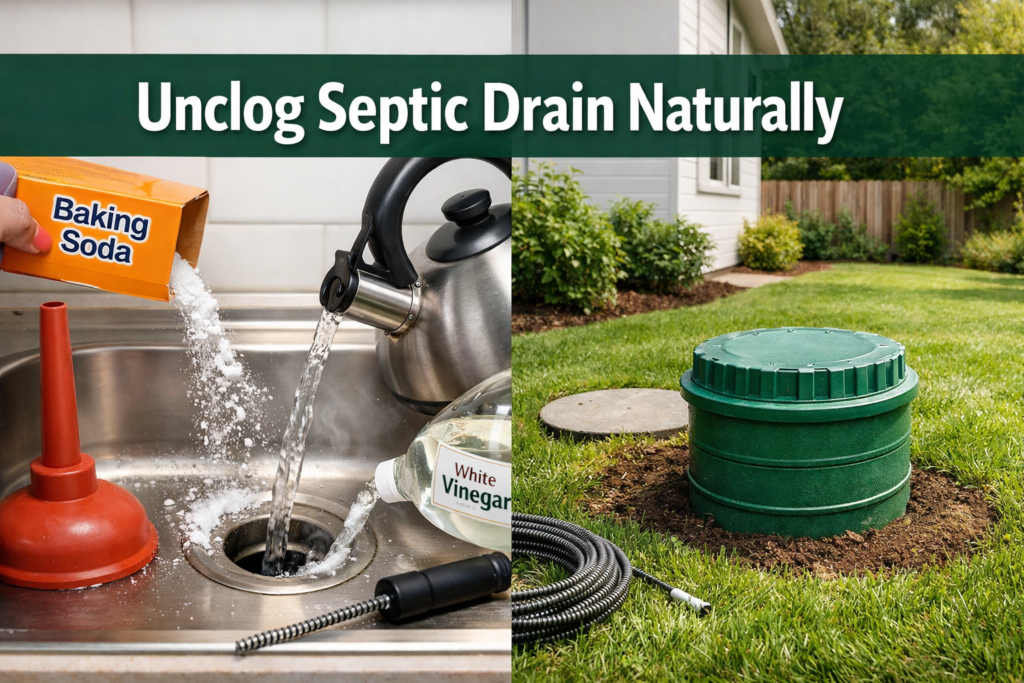
If you want to Unclog Septic Drain Naturally, start with the safest methods first: hot water, dish soap for grease, and a baking soda and vinegar septic drain unclog routine. These options are generally septic-safe because they avoid harsh chemical drain cleaners that can disrupt the bacterial balance in your system or damage pipes.
If the drain stays slow, use a plunger or a plastic drain tool before moving to a hand snake. If several drains back up at once, or sewage appears indoors or in the yard, the problem may be in the septic tank or drain field, and a professional should inspect it.
Septifix Tablets: The Easy Monthly Septic Tank Solution
Septifix is a septic tank treatment tablet designed to reduce odors, break down sludge, and keep your system running smoothly. Just flush one tablet monthly to help prevent clogs, backups, and expensive pumping costs while maintaining a cleaner, healthier septic system.
👉Check the latest price and see how Septifix can protect your septic system today
Key Takeaways
- Hot water is the best first try for mild clogs caused by soap residue or grease.
- Baking soda and vinegar is a common septic-safe DIY option for minor drain clogs.
- Dish soap plus hot water works well for greasy kitchen drains.
- Avoid harsh chemical drain cleaners because they may harm septic bacteria and plumbing.
- Use a plunger correctly by sealing the drain and using water pressure, not air pressure.
- Multiple slow drains usually mean a bigger septic issue, not a simple sink clog.
- Natural septic drain unclogging methods DIY work best on early, minor blockages.
- Manual tools like a plastic drain wand or hand snake are the last DIY step before calling for help.
- Prevention matters more than treatment: water use, what goes down the drain, and pumping schedule all affect clogs.
- Before rainy season, check drainage around the septic area to reduce overload risk.
Quick summary checklist
For busy homeowners, here is the short version:
- Try hot water in stages
- For kitchen grease, add dish soap first
- Use 1/2 to 1 cup baking soda, then 1/2 to 1 cup white vinegar
- Let it sit 30 minutes, or longer for a stubborn clog
- Flush with hot water
- Use a plunger if needed
- Try a plastic drain tool for hair clogs
- Stop DIY work if multiple drains, toilet backup, or yard seepage shows up
“A single slow sink often points to a local clog. Multiple fixtures draining slowly often point to the septic system.”
What are the signs a septic drain needs natural unclogging?
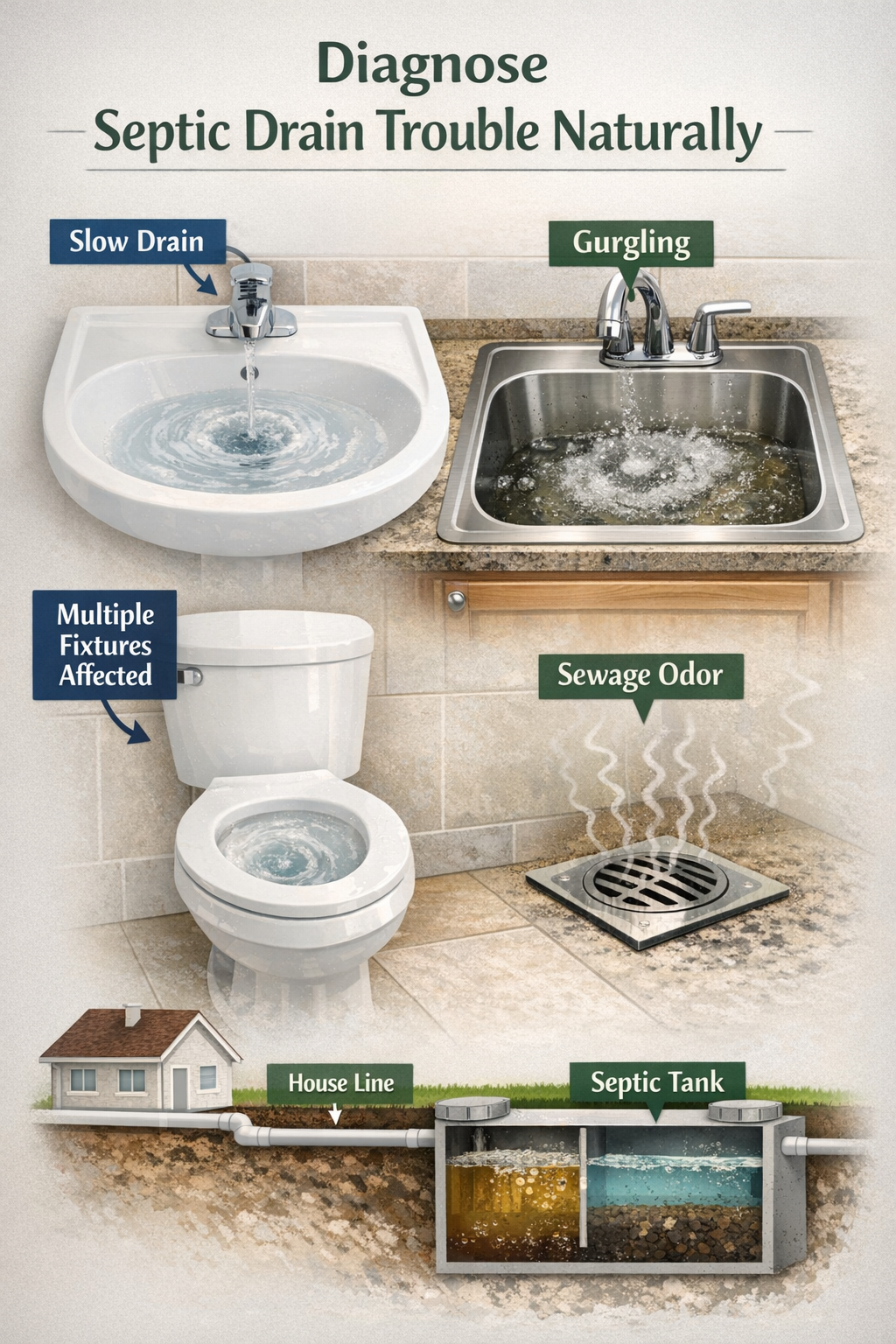
A septic drain usually needs natural unclogging when one fixture drains slowly, smells musty, or gurgles, but there is no full backup yet. A minor early clog is the best time to act because simple, septic-safe methods are more likely to work.
Common Signs Septic Drain Needs Natural Unclogging include:
- Water draining slowly in a sink, tub, or shower
- Gurgling sounds after flushing or draining water
- Mild sewage odor near one indoor drain
- Water pooling briefly around a floor drain
- A kitchen sink that slows after greasy cooking
More serious signs suggest the problem is not just a simple drain clog:
- Several drains slow down at once
- Toilet bubbling when the sink or washer drains
- Wastewater backing up into tubs or showers
- Wet, smelly patches in the yard above the septic area
- Recurring clogs soon after you clear them
Choose a natural drain-clearing method if the issue is limited to one drain and started recently. Choose a professional septic inspection if the whole house is affected. If you need a broader overview, see this guide on how to know if your septic tank is full and these warning signs your septic tank needs immediate care.
How can you Unclog Septic Drain Naturally at home?
You can often Unclog Septic Drain Naturally at home with hot water, dish soap, baking soda and vinegar, then light mechanical help if needed. Start with the least aggressive method and work up only as far as needed.
Step 1: Try hot water first
Hot water is the simplest first option for a mild clog, especially in bathroom and kitchen drains with soap residue or light grease.
How to do it:
- Heat water until it is very hot, not boiling, around 120 to 140°F.
- Pour some into the drain.
- Wait a minute.
- Repeat in stages.
Choose hot water first if:
- The drain is slow, not blocked solid
- The problem started recently
- You suspect soap scum or grease
Common mistake: pouring boiling water into older pipes or porcelain fixtures without caution.
Step 2: Use dish soap for greasy kitchen clogs
Dish soap helps loosen grease so hot water can carry it away. This method is especially useful for kitchen sinks connected to septic systems.
How to do it:
- Pour about 1/4 cup liquid dish soap into the drain
- Let it sit for 20 to 30 minutes
- Flush with very hot water
Choose this if the sink slowed down after washing oily pans or fatty foods.
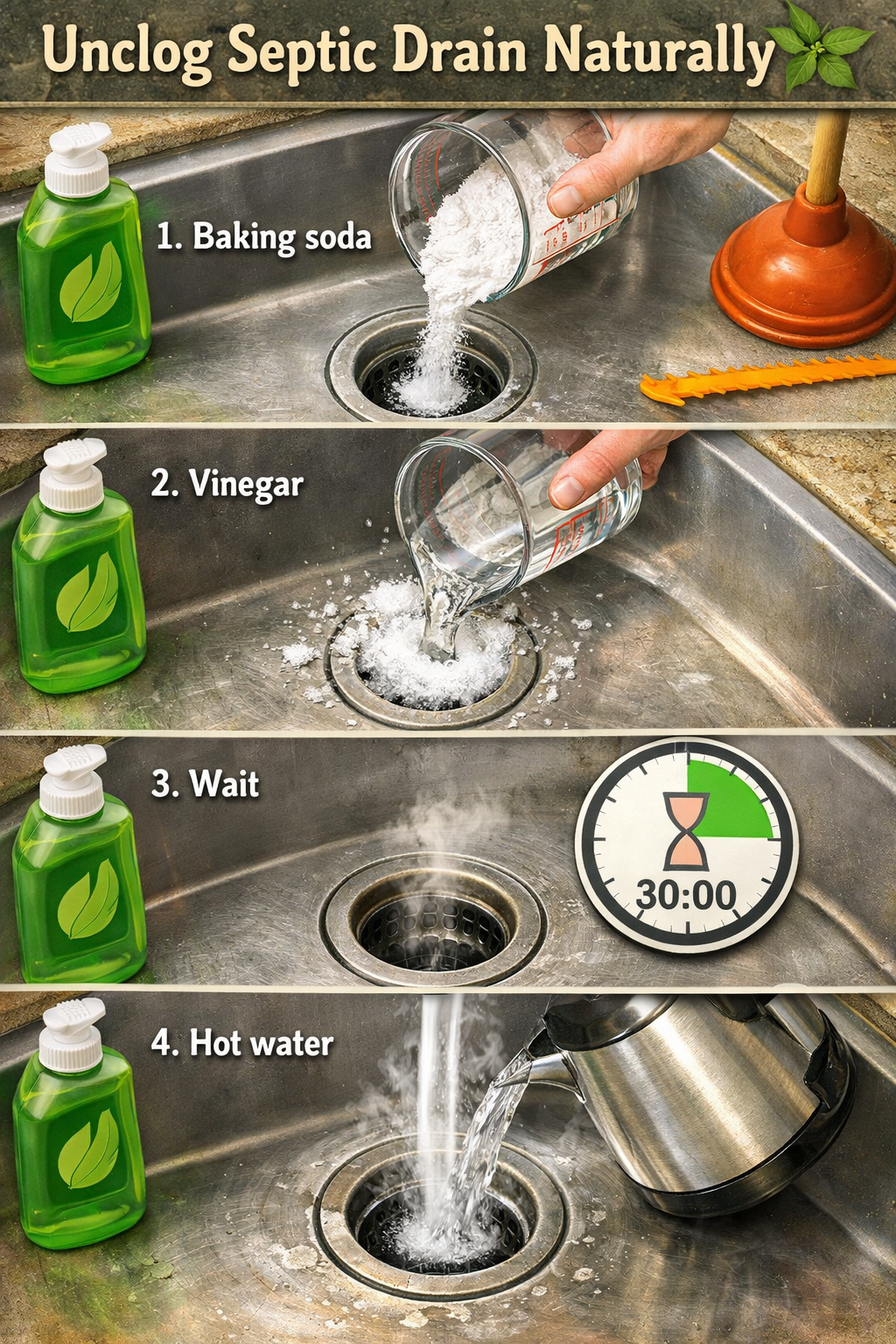
Step 3: Do a baking soda vinegar septic drain unclog
The baking soda vinegar septic drain unclog method is the best-known natural DIY fix for many minor drain clogs. The fizzing reaction helps loosen residue and small organic blockages, and both ingredients are considered biodegradable.
Use:
- 1/2 to 1 cup baking soda
- 1/2 to 1 cup white vinegar
Steps:
- Pour baking soda into the drain.
- Add white vinegar.
- Cover the drain loosely if you can.
- Let it sit for 30 minutes. For a tougher clog, leave it longer or overnight.
- Flush with hot water.
This works best for:
- Soap buildup
- Light organic sludge
- Early hair and grime clogs
- Smelly drains that are still moving some water
It works less well for:
- Solid blockages deep in the line
- Tree root intrusion
- A full septic tank
- Drain field failure
For related eco-friendly care ideas, read natural septic tank care methods and our guide to septic additives and treatments.
Which natural septic drain unclogging methods DIY actually work best?
The best Natural Septic Drain Unclogging Methods DIY depend on what caused the clog. Grease responds to dish soap and hot water, light organic buildup responds to baking soda and vinegar, and hair or debris often needs a manual tool.
Best method by clog type
| Clog type | Best natural first step | Good backup step | When to stop DIY |
|---|---|---|---|
| Grease in kitchen sink | Dish soap + hot water | Baking soda + vinegar | If sink backs up fast |
| Soap scum in bath drain | Hot water | Baking soda + vinegar | If tub and toilet both slow |
| Hair near drain opening | Plastic drain tool | Baking soda + vinegar after removal | If clog is deep and recurring |
| Mild odor with slow flow | Baking soda + vinegar | Enzyme cleaner | If odor returns quickly |
| One stubborn drain | Plunger | Hand snake | If line feels blocked far down |
What about enzyme and bacterial cleaners?
Enzymatic and bacterial cleaners can help digest organic waste like grease, hair, and food particles while being gentler on septic systems than harsh chemicals. They are not instant fixes, but they can help restore flow in slow drains and support the bacterial balance in the system.
Choose an enzyme cleaner if:
- You want a slower, maintenance-focused option
- The drain is sluggish but not fully blocked
- You want to avoid caustic products
Do not expect enzymes to fix:
- A crushed pipe
- Root damage
- A full tank
- A flooded drain field
If you want a full walkthrough, our how to unclog septic drain guide expands on when to use each method.
How do you use a plunger or tool without harming a septic system?
A plunger, plastic drain tool, or hand snake is usually safe for a septic system when used gently and on a local clog. The key is to avoid damaging pipes or forcing a blockage farther into the line.
How to plunge the right way
The plunger method works by water pressure, not air pressure .
Steps:
- Add enough water to cover the plunger cup.
- Seal the plunger tightly over the drain.
- If you have a double sink, plug the other drain with a wet rag.
- Use steady up-and-down strokes for 20 to 30 seconds.
- Test the drain.
How to use a plastic drain tool
A plastic drain wand works well for hair near the top of a bathroom drain.
- Insert slowly
- Twist gently
- Pull out debris
- Flush with hot water afterward
How to use a hand snake
Manual removal with a snake is the last DIY step before calling a pro.
Use a hand snake if:
- You believe the clog is beyond the trap
- Hot water and fizzing methods did not work
- The problem is isolated to one fixture
Stop if:
- The snake binds hard
- You feel resistance that does not release
- The clog returns right away
- Sewage odor becomes strong
A common mistake is using too much force. Old pipes, thin plastic lines, and some traps can be damaged by aggressive snaking.
Septifix Tablets: The Easy Monthly Septic Tank Solution
Septifix is a septic tank treatment tablet designed to reduce odors, break down sludge, and keep your system running smoothly. Just flush one tablet monthly to help prevent clogs, backups, and expensive pumping costs while maintaining a cleaner, healthier septic system.
👉Check the latest price and see how Septifix can protect your septic system today
When should you avoid trying to Unclog Septic Drain Naturally?
You should avoid trying to Unclog Septic Drain Naturally when the signs point to a system-wide septic problem instead of a simple local drain clog. Natural methods help early, minor clogs, but they cannot fix a full tank, failed baffle, or saturated drain field.
Call a professional if you notice:
- Multiple drains backing up
- Toilet overflow along with slow sinks
- Sewage coming up in a tub or floor drain
- Standing water or bad odor in the yard
- Backups after heavy rain
- Repeated clogs within days
Edge case: after a storm, the house drain may be fine but the drain field may be too wet to accept wastewater. In that situation, any extra water use can make symptoms worse.
If you suspect a full tank, these pages can help you confirm the pattern: easy ways to tell if your septic tank is full and what happens when your septic tank is full.
What should you never pour down a septic drain?
You should never pour harsh chemical drain cleaners, grease, paint, solvents, or disinfectants in large amounts down a septic drain. These materials can damage plumbing, disrupt the natural bacteria in the tank, or create a harder clog.
Avoid:
- Caustic drain openers
- Acid-based cleaners
- Bleach in heavy repeated doses
- Antibacterial products used excessively
- Cooking grease and fats
- Coffee grounds
- Wipes, paper towels, and hygiene products
Choose septic-safe, low-impact cleaners if you clean drains often. Harsh products may seem faster, but they can create bigger septic issues later.
For a practical refresher, read what happens to toilet paper in a septic tank and these do’s and don’ts of septic tank maintenance.
How can you prevent septic drain clogs naturally?
You can Prevent Septic Drain Clogs Naturally Tips by reducing what goes into the drain, spacing out water use, and keeping the septic system maintained on schedule. Prevention is cheaper and easier than clearing backups.
Weekly habits that help
- Run hot water after greasy kitchen cleanup
- Scrape plates into the trash, not the sink
- Use drain screens in showers and tubs
- Fix dripping faucets and running toilets
- Spread laundry loads across the week
- Choose septic-safe cleaners
Monthly habits that help
- Flush a problem-prone drain with hot water
- Check for slow drainage and odors
- Clean sink stoppers and hair catchers
- Inspect for soggy spots outdoors
Long-term habits that help
- Pump the tank on schedule
- Protect the drain field from parking and compaction
- Route roof and surface water away from septic components
- Learn where your tank and lines are located
Choose a maintenance-first plan if you manage a rental or multi-person home. Higher use means clogs develop faster. For more help, see how often to pump a septic tank and the complete 2026 guide to maintaining a septic tank system.
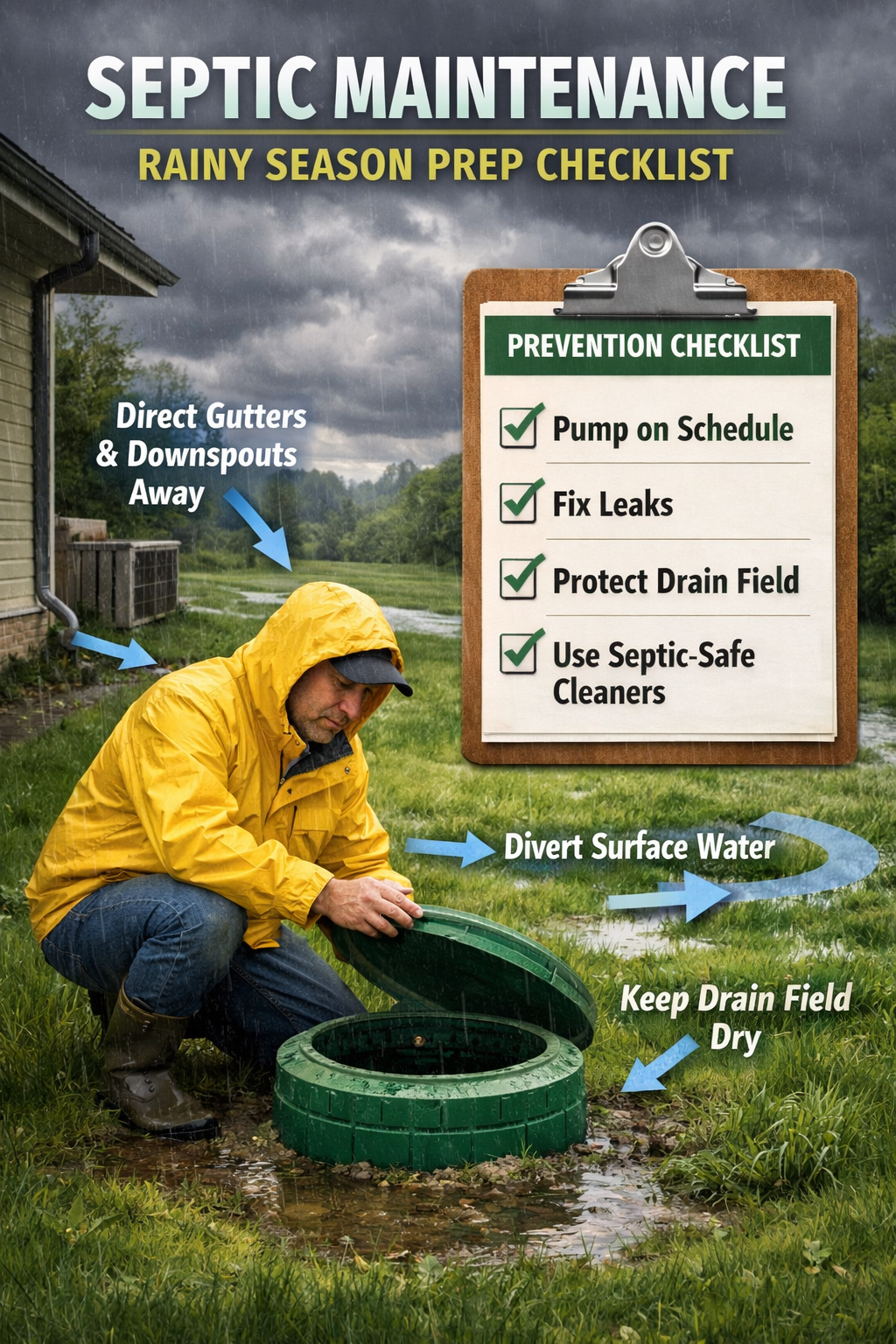
What is the best natural septic drain care before rainy season?
The best Natural Septic Drain Care Before Rainy Season is to reduce water stress on the system and keep stormwater away from the septic area. Heavy rain can saturate soil, which makes septic drainage slower and can turn a mild problem into a backup.
Before rainy season:
- Pump the tank if it is due
- Fix leaks and running toilets
- Redirect downspouts away from the drain field
- Avoid driving over the septic area
- Keep sump pump discharge away from septic components
- Watch for low spots that collect water
Choose extra caution if:
- Your yard drains poorly
- The drain field is in clay-heavy soil
- You had septic trouble in past rainy seasons
Quick example: a home with one slow shower drain in dry weather may still function. The same home can back up after several days of rain if the drain field becomes saturated. The indoor symptom changes because the outdoor soil condition changes.
How long should natural drain methods take before you call a professional?
Natural drain methods should show some improvement the same day for a minor local clog. If there is no change after trying the right method once or twice, the problem likely needs a different tool or a professional inspection.
A simple timing rule:
- Hot water or dish soap: look for improvement within minutes to a few hours
- Baking soda and vinegar: check results after the wait period and final hot water flush
- Enzyme cleaner: allow more time because it works gradually
- Plunger: flow should improve right away if it works
Call for help if:
- The drain gets worse
- Another fixture starts slowing
- You smell sewage outdoors
- You hear gurgling in multiple rooms
- Backups happen after laundry or showers
Related reading
If you want to go deeper, these guides are the most useful next steps:
- How to unclog septic drain
- Natural septic tank care methods
- How to know if your septic tank is full
- How often to pump a septic tank
- Maintaining a septic tank system: complete 2026 guide
FAQ
Can baking soda and vinegar damage a septic system?
No, baking soda and vinegar are widely used as a septic-safe option for minor drain clogs because they are biodegradable and gentler than harsh chemical cleaners.
What is the best first step for a slow septic drain?
The best first step is usually hot water, especially for mild soap or grease buildup in one drain.
Does dish soap help unclog a septic drain?
Yes, dish soap can help loosen greasy kitchen clogs when followed by very hot water.
Are enzyme drain cleaners safe for septic systems?
Many enzyme and bacterial cleaners are designed to be gentler on septic systems and can help digest organic buildup.
When will natural methods not work?
Natural methods usually will not solve a full septic tank, damaged pipe, root intrusion, or saturated drain field.
Can I use a plunger on a septic-connected sink?
Yes, a plunger is safe for a septic-connected sink when used with a tight seal and steady strokes.
How do I know if the clog is in the septic system, not just the drain?
If several fixtures drain slowly or sewage backs up in more than one place, the problem is more likely in the septic system than in one drain.
Is boiling water safe for septic drains?
Very hot water can help, but boiling water may be too harsh for some pipes or fixtures. Use caution and follow a hot-water approach rather than extreme heat.
Should I keep trying DIY methods for a recurring clog?
No, a recurring clog usually means the blockage is deeper or the septic system needs inspection.
Septifix Tablets: The Easy Monthly Septic Tank Solution
Septifix is a septic tank treatment tablet designed to reduce odors, break down sludge, and keep your system running smoothly. Just flush one tablet monthly to help prevent clogs, backups, and expensive pumping costs while maintaining a cleaner, healthier septic system.
👉Check the latest price and see how Septifix can protect your septic system today
Conclusion
If you want to Unclog Septic Drain Naturally, keep it simple: start with hot water, use dish soap for grease, and try a baking soda and vinegar septic drain unclog for mild organic buildup. Those steps are practical, inexpensive, and usually septic-safe for one slow drain.
What I recommend most is knowing when to stop. A single slow sink is a DIY job. Multiple slow drains, yard odors, and backups are septic-system warnings, not cleaning tasks. Your next best step is to clear the local clog if it is minor, then shift into prevention: reduce grease, spread out water use, and stay on top of pumping and inspections.
References
[1] Septic Safe Diy – https://speedyseptic.com/septic-services/drain-cleaning/septic-safe-diy/
[2] Effective And Eco Friendly Solutions For Clearing Clogged Drains Naturally – https://culleokacompany.com/blogs/news/effective-and-eco-friendly-solutions-for-clearing-clogged-drains-naturally
[3] Unclog Drains – https://supeckseptic.com/unclog-drains/
[4] How Do You Unclog A Drain With A Septic System – https://www.wrenvironmental.com/blog/2022/may/how-do-you-unclog-a-drain-with-a-septic-system-/
[9] How To Unclog A Drain – https://davidsuzuki.org/living-green/how-to-unclog-a-drain/