
Last updated: March 8, 2026
Key Takeaways
- Slow drains across multiple fixtures signal septic tank problems, not simple clogs
- Reduce water usage for 24-48 hours when early warning signs appear to allow system recovery
- Gurgling sounds and sewage odors indicate immediate attention needed to prevent costly damage
- Check circuit breakers first if your system has a pump before calling professionals
- Stop using chemical cleaners immediately as they kill beneficial bacteria essential for waste breakdown
- Emergency response required for sewage backups, standing water, or sinkholes near the system
- Regular pumping every 3-5 years prevents most major septic failures and expensive repairs
- Clean effluent filters every six months to maintain proper drainage and prevent backups
Quick Answer

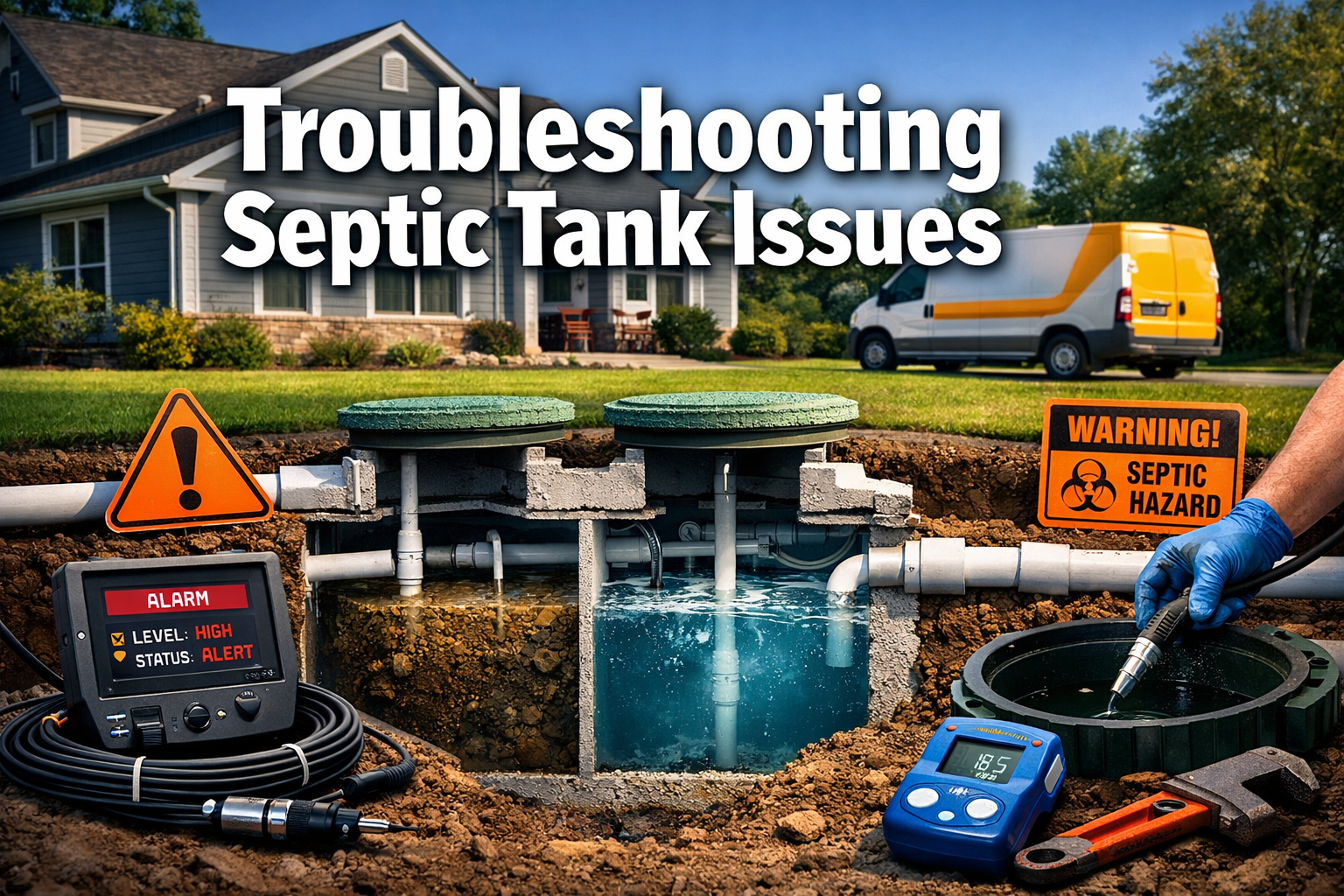
Troubleshooting septic tank issues starts with identifying warning signs like slow drains, gurgling sounds, and sewage odors. Most problems stem from high water levels, pump failures, or bacterial imbalances that homeowners can address by reducing water usage, checking electrical connections, and avoiding harmful chemicals. However, sewage backups or standing water require immediate professional intervention.
How Do I Know If My Septic Tank Has Problems?
Multiple slow drains throughout your home indicate septic tank issues, not individual fixture clogs. When toilets, sinks, and showers all drain slowly simultaneously, your septic system struggles to process wastewater effectively.
Watch for these critical warning signs:
Drainage Issues:
- Slow draining across multiple fixtures
- Toilets that won’t flush completely
- Water backing up in floor drains
- Bathtubs filling with water during toilet flushes
Sounds and Smells:
- Gurgling noises when flushing toilets or running water
- Sewage odors inside your home or yard
- Unusual sounds from pipes or drains
Yard Indicators:
- Wet spots or standing water over the drain field
- Unusually green grass in the septic area
- Sewage surfacing in your yard
Choose immediate action if you notice sewage odors or wet spots – these indicate system failure that worsens rapidly without intervention. For detailed guidance on recognizing tank capacity issues, see our complete guide on how to know when your septic tank is full.
What Should I Do When My Septic System Shows Warning Signs?
Reduce your household water usage immediately for 24-48 hours to allow your septic system time to recover. This simple step prevents minor issues from becoming major emergencies.
Immediate Actions:
- Stop all non-essential water use – no laundry, dishwasher, or long showers
- Check your electrical panel for tripped breakers if you have a pump system
- Avoid chemical drain cleaners and bleach products completely
- Document the problems with photos and notes for potential service calls
Water Conservation Steps:
- Take shorter showers (under 5 minutes)
- Run only essential dishwasher and washing machine loads
- Fix any dripping faucets or running toilets immediately
- Spread water usage throughout the day instead of heavy morning/evening use
When to Call Professionals:
Call immediately if problems persist beyond 24 hours of reduced water use, or if you see sewage backing into your home. For pump systems, contact a professional if the alarm stays on for more than 10-15 hours despite minimal water usage.
FYI: Some links may be affiliate links, which means I may earn a small commission at no extra cost to you.
If you’re looking for a simple way to support your septic system’s bacterial balance during troubleshooting, Septifix tablets can help maintain proper waste breakdown with just one monthly flush. This isn’t required for emergency situations, but can be useful for ongoing system health once immediate issues are resolved.
Why Is My Septic Alarm Going Off?
High water levels trigger most septic air pump alarms, typically caused by submersible pump failures, faulty float switches, or clogged effluent filters. The alarm warns you before sewage backs into your home.
Common Alarm Causes:
- Pump failure – submersible pump stops working
- Electrical issues – tripped breakers or loose connections
- Clogged effluent filter – blocks water flow to drain field
- Float switch problems – sensor fails to detect water levels
- Power outages – temporary loss of pump operation
Troubleshooting Steps:
- Check the circuit breaker – reset if tripped
- Reduce water usage immediately – allow levels to drop
- Locate the effluent filter – clean if accessible and safe
- Test the alarm – ensure it’s functioning properly
Reset Procedures:
Most alarms have a reset button on the control panel. Press and hold for 5-10 seconds after addressing the underlying issue. If the alarm returns within hours, you need professional diagnosis.
Don’t ignore septic alarms – they prevent expensive damage to your drain field and home. For more details about backup situations, check our emergency guide for septic tank backing up into house.
When Do I Need Emergency Professional Help?
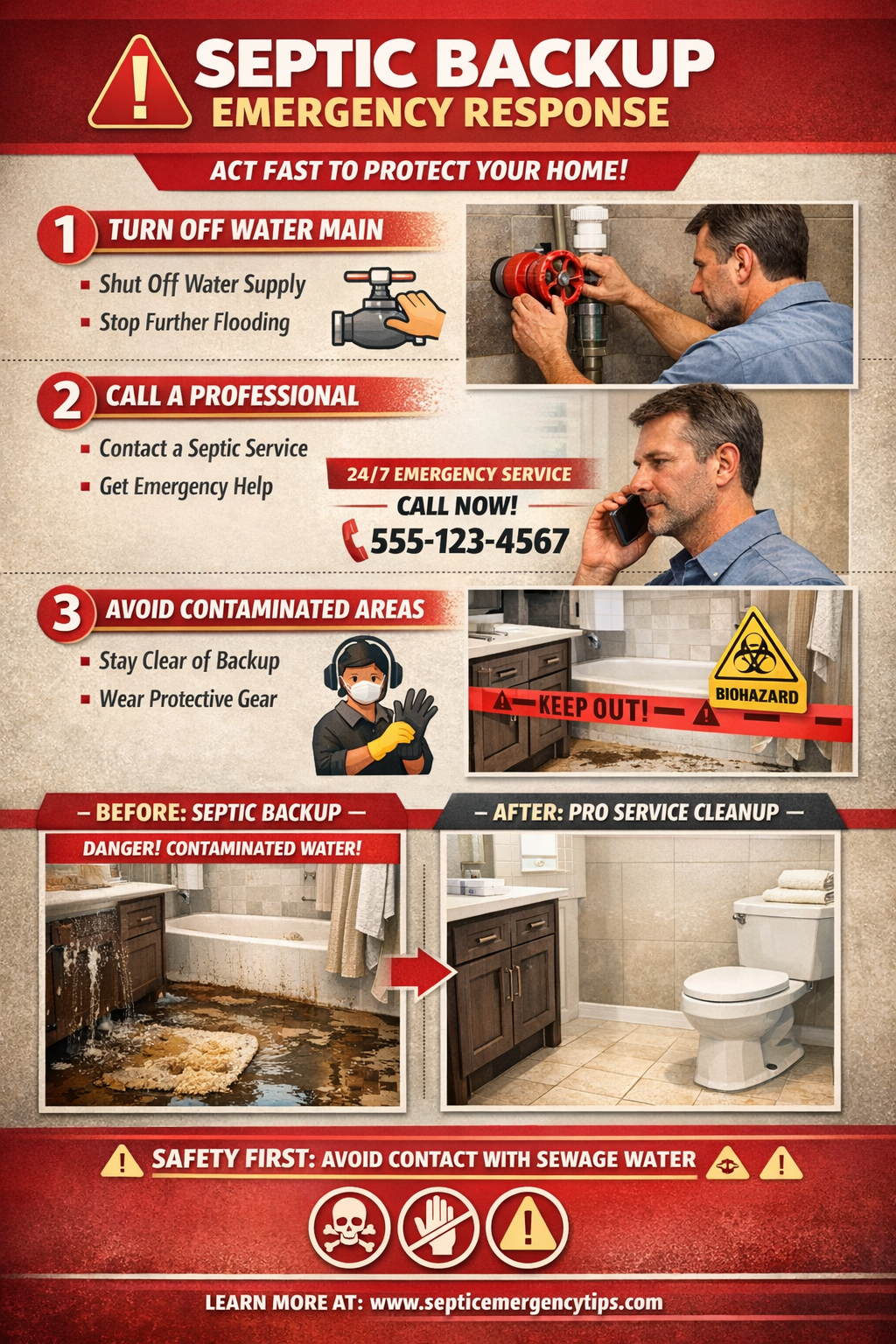
Call emergency septic services immediately for sewage backups into your home, sinkholes near the system, or standing effluent in your yard. These situations pose health risks and cause expensive property damage.
Emergency Situations:
- Sewage backing into house – through toilets, drains, or basement
- Sinkholes or pits – ground collapse near septic components
- Standing sewage – raw effluent pooling in yard or drain field
- Strong sewage odors – persistent smells inside your home
- Complete system failure – no drainage from any fixtures
Safety Precautions:
- Avoid contact with sewage or contaminated areas
- Keep children and pets away from affected zones
- Ventilate your home if odors are present indoors
- Don’t use electrical appliances in flooded areas
Before the Professional Arrives:
- Turn off your home’s main water supply if sewage is backing up
- Document damage with photos for insurance purposes
- Gather system records – installation date, last pumping, recent repairs
- Clear access to septic tank lids and electrical panels
Emergency repairs typically cost $1,000-$5,000, while complete system replacement ranges from $15,000-$30,000. Quick professional response often prevents minor issues from requiring full system replacement.
How Can I Prevent Future Septic Tank Problems?
Regular pumping every 3-5 years prevents solids from overflowing into your drain field and causing complete system failure. This single maintenance step eliminates most major septic problems.
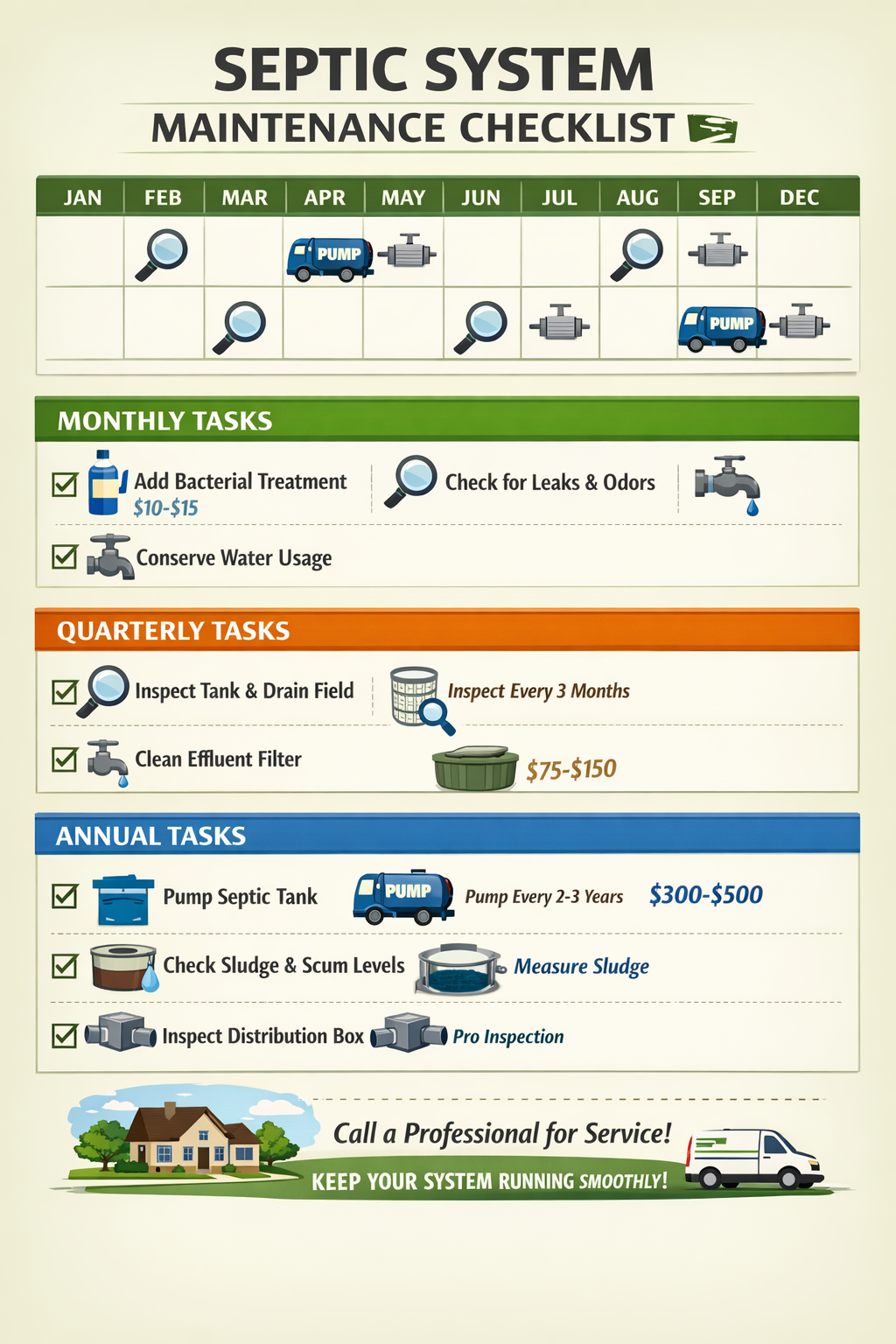
Essential Maintenance Schedule:
- Every 6 months: Clean effluent filter and inspect visible components
- Every 1-3 years: Professional system inspection and testing
- Every 3-5 years: Tank pumping and comprehensive evaluation
- As needed: Bacterial treatment and minor repairs
Daily Protection Habits:
- Use septic-safe products – avoid antibacterial soaps and harsh chemicals
- Spread laundry loads throughout the week instead of marathon wash days
- Fix leaks immediately – dripping faucets and running toilets overload the system
- Avoid garbage disposal overuse – compost food scraps when possible
What Never Goes Down Drains:
- Grease, oils, and fats
- Cat litter, diapers, or feminine products
- Cigarette butts and coffee grounds
- Paint, solvents, or automotive fluids
- Prescription medications
For comprehensive maintenance strategies, see our best septic tank maintenance practices guide and learn about essential septic safety tips.
What Causes Most Septic Tank Failures?
Excessive water usage and lack of regular pumping cause 80% of septic system failures. Modern households often overwhelm older systems designed for lower water consumption[6].
Primary Failure Causes:
- Hydraulic overload – too much water too quickly
- Solids accumulation – delayed pumping allows sludge buildup
- Chemical damage – harsh cleaners kill beneficial bacteria
- Physical damage – vehicles driving over system components
- Age and deterioration – systems typically last 20-30 years
Bacterial Balance Issues:
Your septic tank relies on anaerobic bacteria to break down waste. Antibacterial products, bleach, and excessive cleaning chemicals disrupt this biological process, leading to incomplete waste treatment and drain field clogging.
Drain Field Problems:
- Soil compaction from heavy vehicles or equipment
- Root intrusion from trees and large shrubs
- Biomat formation from untreated effluent
- Seasonal water table changes affecting absorption
System Age Factors:
Septic systems installed before 1990 often lack modern safety features and may not meet current household water usage patterns. Consider upgrading if your system requires frequent repairs or struggles with normal usage.
Understanding these failure patterns helps you make informed decisions about repairs versus replacement. For more information about system longevity, check our guide on how long septic tanks last.
How Much Do Septic Repairs Typically Cost?
Minor repairs like pump replacement or filter cleaning cost $200-$800, while major issues requiring drain field work range from $3,000-$15,000. Emergency calls add 50-100% to standard rates.
Common Repair Costs:
- Pump replacement: $400-$800
- Effluent filter cleaning: $100-$200
- Electrical repairs: $150-$400
- Tank pumping: $200-$500
- Drain field repair: $3,000-$10,000
- Complete system replacement: $15,000-$30,000
Emergency vs. Scheduled Service:
Emergency weekend or holiday calls typically cost double normal rates. Preventive maintenance during business hours saves significant money compared to emergency repairs.
Insurance Coverage:
Most homeowner’s insurance doesn’t cover septic system repairs unless caused by covered perils like lightning or vehicle accidents. Budget $300-$500 annually for routine maintenance and minor repairs.
DIY vs. Professional Work:
Homeowners can safely clean accessible effluent filters and perform basic visual inspections. However, electrical work, pumping, and any repairs involving tank access require licensed professionals for safety and legal compliance.
For detailed cost breakdowns, see our complete septic tank cost guide and pumping cost information.
Helpful Resource for Ongoing Septic Care
Septifix tablets offer a simple solution for maintaining your septic system’s bacterial balance between professional services. With one easy monthly flush, these tablets help break down waste, reduce odors, and support proper system function. While not a replacement for regular pumping and maintenance, Septifix can be a useful addition to your septic care routine, especially after resolving troubleshooting issues.
This approach works well for homeowners who want a structured, low-maintenance way to support their septic system’s health throughout the year.
FAQ
Q: How often should I pump my septic tank?
A: Most residential septic tanks need pumping every 3-5 years, depending on household size and water usage. Smaller tanks or larger families may require more frequent pumping.
Q: Can I use bleach with a septic system?
A: Use bleach sparingly – no more than 1 cup per week. Excessive bleach kills beneficial bacteria that break down waste in your septic tank.
Q: What should I do if my septic alarm goes off?
A: Check your circuit breaker first, then reduce water usage immediately. If the alarm stays on for more than 10-15 hours despite minimal water use, call a professional.
Q: Why does my septic tank smell bad?
A: Sewage odors indicate ventilation problems, overfull tanks, or system backups. Check for clogged vent pipes and reduce water usage. Persistent odors require professional diagnosis.
Q: Can I drive over my septic system?
A: Never drive vehicles over septic tanks or drain fields. The weight can crack tanks and compact soil, leading to expensive repairs.
Q: How do I find my septic tank?
A: Check your home’s original blueprints, follow the main sewer line from your house, or use a metal detector to locate the tank lid. Professional locating services cost $100-$200.
Q: What happens if I don’t pump my septic tank?
A: Unpumped tanks overflow solids into the drain field, causing clogs and system failure. This typically requires drain field replacement costing $10,000-$20,000.
Q: Can I flush cat litter down the toilet?
A: No, even “flushable” cat litter clogs septic systems. Dispose of all cat litter in regular trash to prevent expensive blockages.
Q: How long do septic systems last?
A: Well-maintained septic systems typically last 20-30 years. Concrete tanks last longer than plastic or fiberglass, but proper maintenance matters more than material type.
Q: Should I add bacteria to my septic tank?
A: Bacterial additives can help after antibiotic use or chemical damage, but healthy systems generate sufficient bacteria naturally. Focus on avoiding harmful chemicals instead.
Q: What causes gurgling sounds in my plumbing?
A: Gurgling indicates air being pushed back through your plumbing due to high water levels or blockages in your septic system. Reduce water usage and check for clogs.
Q: Can I install a garbage disposal with a septic system?
A: Yes, but use it sparingly. Garbage disposals increase solid waste in your tank by 25-50%, requiring more frequent pumping and potentially causing clogs.
Conclusion
Troubleshooting septic tank issues successfully depends on recognizing warning signs early and taking appropriate action. Start with simple steps like reducing water usage and checking electrical connections before calling professionals. Remember that slow drains across multiple fixtures, gurgling sounds, and sewage odors signal system problems requiring immediate attention.
Your next steps: Inspect your septic system for warning signs this week, schedule pumping if it’s been over three years, and create a maintenance calendar to prevent future problems. Keep emergency contact information for septic professionals readily available, and never ignore persistent alarms or odors.
Regular maintenance costs far less than emergency repairs, and early intervention prevents minor issues from becoming expensive system failures. By following these troubleshooting guidelines and maintaining consistent care habits, you’ll keep your septic system functioning reliably for decades.
References
[1] Septic Tank Troubleshooting Made Simple – https://mathisandsonsseptic.com/mathis-sons-septic-blog-orlando-fl/septic-tank-troubleshooting-made-simple/
[2] Septic System Maintenance – https://www.nearbyhunt.com/articles/septic-system-maintenance
[3] Septic Air Pump Alarm Troubleshooting Guide – https://www.vdwws.com/blog/septic-air-pump-alarm-troubleshooting-guide
[4] Troubleshooting Septic System Problems – https://www.securityseptic.com/troubleshooting-septic-system-problems/
[5] How Often To Pump A Septic Tank – https://clearriverenvironmental.com/how-often-to-pump-a-septic-tank/
[6] Septic Tank And Drainfield Troubleshooting For Novices – https://biomicrobics.com/articles/septic-tank-and-drainfield-troubleshooting-for-novices/