Last updated: March 3, 2026
Key Takeaways
• Schedule pumping every 3-5 years and consider summer timing for optimal access and service availability
• Monitor increased water usage from summer activities like lawn watering, pool maintenance, and frequent guests
• Protect your drain field from soil oversaturation during heavy summer rains and prevent root intrusion
• Use septic-safe products especially during peak usage months when bacterial balance is most critical
• Address summer-specific challenges like beach sand, increased laundry, and amplified odors from heat
• Inspect regularly for warning signs that become more apparent during active summer months
• Maintain proper drainage around your system to handle seasonal rainfall and irrigation runoff
• Plan professional inspections during warm weather when access is easier and problems more detectable
Quick Answer
Summer septic tank care requires monitoring increased water usage from seasonal activities, scheduling maintenance during optimal weather conditions, and protecting your system from oversaturation and heat-related stress. Focus on regular pumping schedules, drain field protection, and using septic-safe products during peak usage months.
Why Summer Septic Tank Care Requires Special Attention
Summer months place unique stress on septic systems due to increased household activity, higher water usage, and environmental factors. Warm weather accelerates bacterial activity while simultaneously increasing system demand, creating both opportunities and challenges for proper maintenance.
During summer, families typically use 20-30% more water for activities like:
- Lawn and garden irrigation
- Pool filling and maintenance
- Frequent laundry from outdoor activities
- Additional guests and entertaining
- More frequent showers and cleanup
The combination of increased usage and heat means your septic system works harder just when environmental conditions can either help or hinder its performance. Heat speeds up waste decomposition but can also amplify odors and stress the bacterial balance that keeps your system functioning properly.
For comprehensive year-round maintenance strategies, check out our essential septic tank care tips for homeowners.
How to Schedule Summer Septic Tank Maintenance
Plan your septic maintenance during late spring or early summer when weather conditions provide optimal access and service availability. This timing allows you to address any issues before peak usage months and ensures your system can handle increased summer demands.
Optimal Timing for Summer Maintenance
Late May through early July offers the best window for septic maintenance because:
- Ground conditions are typically dry and accessible
- Service companies have better availability before peak season
- Any repairs can be completed before heavy summer usage
- Weather conditions allow for thorough inspections
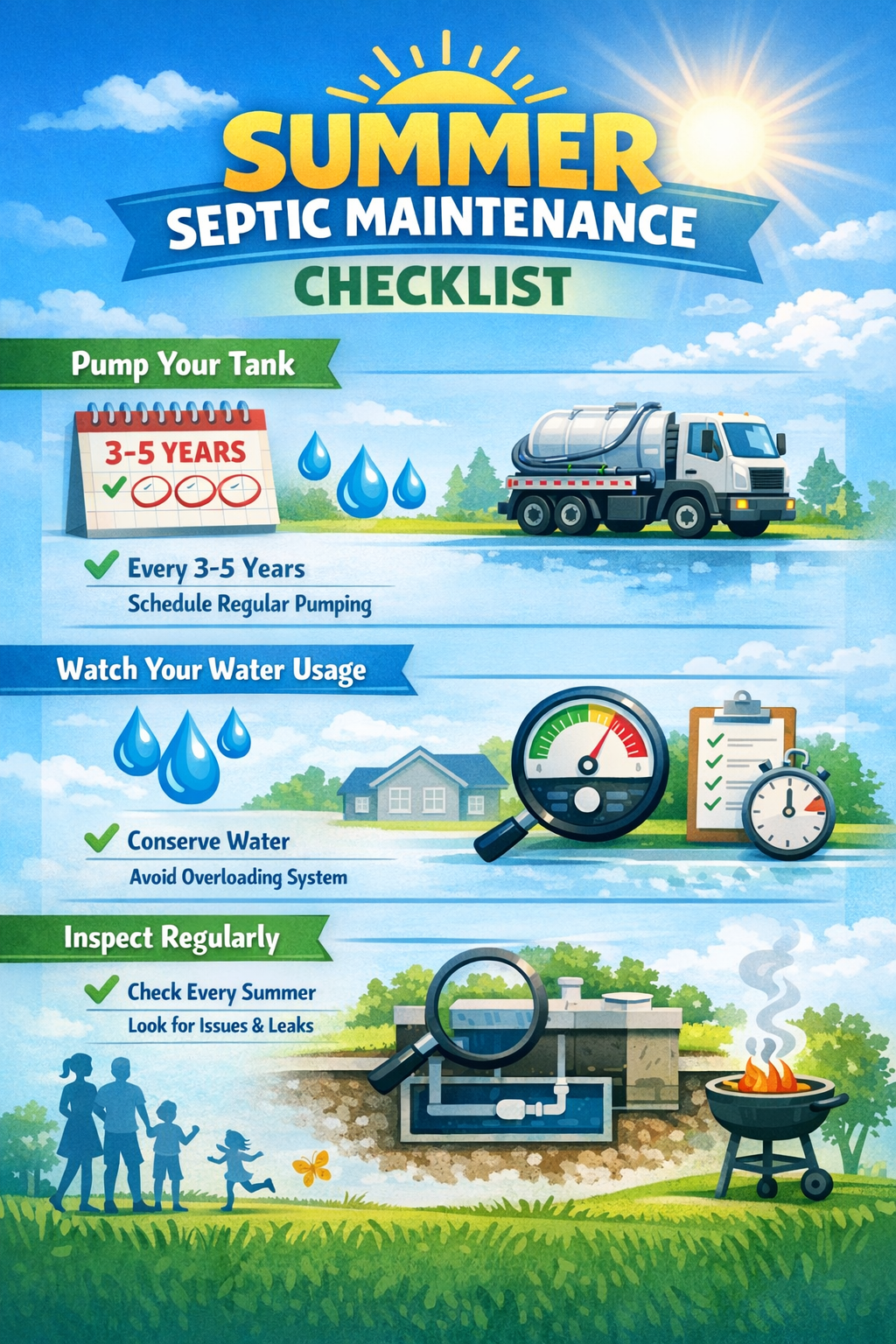
Essential Summer Maintenance Schedule
Professional Inspection (Every 3 Years):
- Check sludge and scum levels
- Inspect tank integrity and baffles
- Evaluate drain field performance
- Test soil absorption rates
Pumping Schedule (Every 3-5 Years):
- 2-person household: Every 5 years
- 4-person household: Every 3-4 years
- 6+ person household: Every 2-3 years
- Adjust frequency based on summer usage patterns
Monthly Summer Checks:
- Monitor for surface water around drain field
- Check for unusual odors or slow drains
- Inspect area around tank for settling or damage
- Document any changes in system performance
Choose more frequent pumping if you regularly host summer gatherings or have seasonal residents. Heavy usage during short periods can overwhelm even well-maintained systems.
Managing Increased Water Usage During Summer Months
Distribute water usage throughout the day and week to prevent overwhelming your septic system’s processing capacity. Summer activities can easily double your normal water consumption, potentially causing backups and system stress.
Smart Water Management Strategies
Spread laundry loads across the entire week rather than doing multiple loads in one day. Your septic system needs time to process wastewater, and concentrated usage can flood the drain field.
Time major water activities:
- Morning lawn watering (6-8 AM) when evaporation is minimal
- Evening pool maintenance to avoid peak usage hours
- Stagger shower times for large families or guests
- Run dishwashers overnight when other water use is minimal
Summer Water Conservation Tips
Install water-efficient fixtures before summer peak usage:
- Low-flow toilets (1.28 gallons per flush vs. 3.5+ gallons)
- Water-saving showerheads and faucets
- High-efficiency washing machines
- Shorter shower timers for family members
Address leaks immediately since even small drips contribute significantly to septic overload. A running toilet can waste 200+ gallons daily, equivalent to adding an extra person to your household.
Set up outdoor rinse stations for muddy shoes, sandy feet, and sports equipment. This prevents excess soil and debris from entering your septic system where it can accumulate and reduce efficiency.
For detailed guidance on recognizing when your system is reaching capacity, see our guide on how to know when septic tank is full.
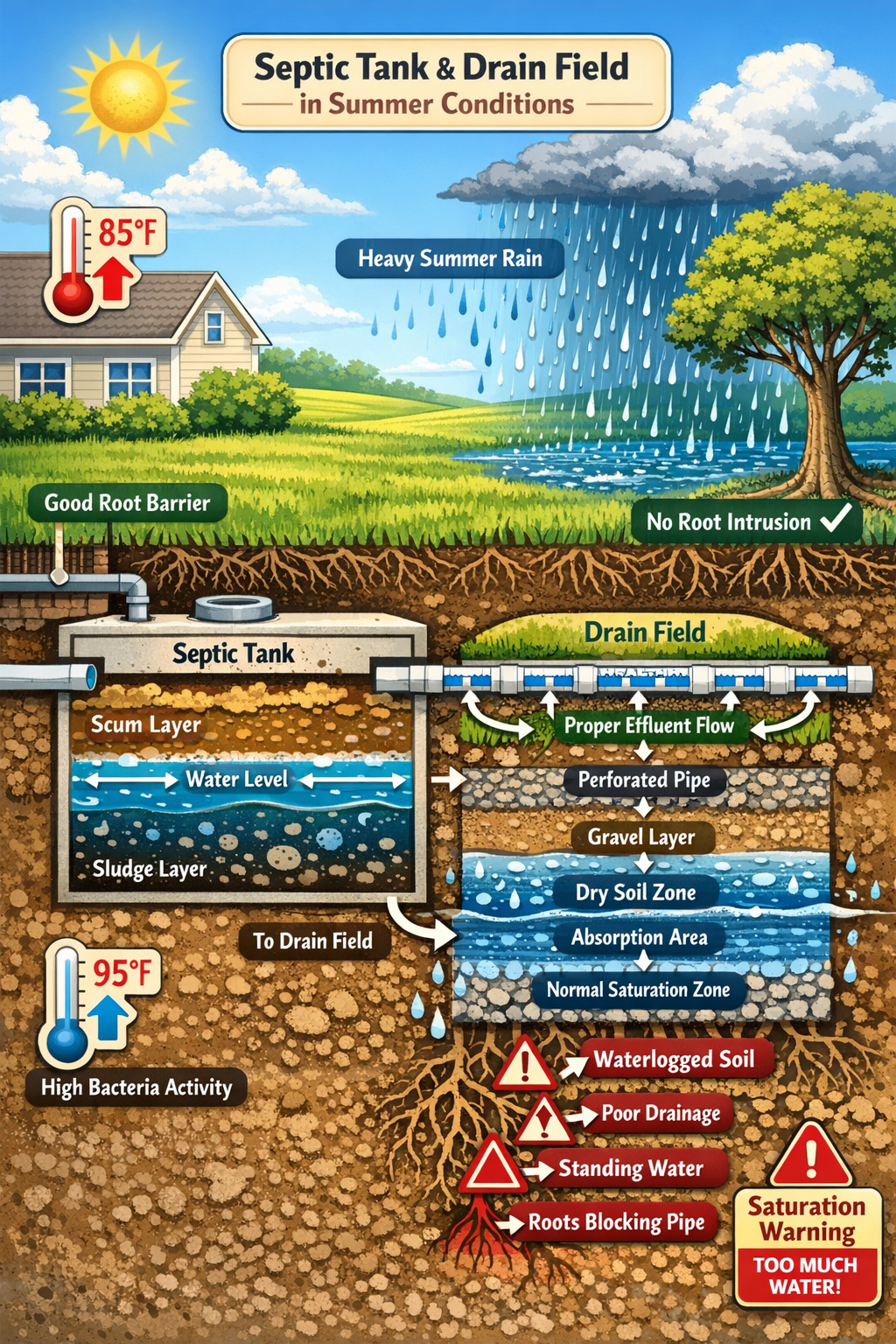
Protecting Your Drain Field from Summer Challenges
Keep vehicles, heavy equipment, and temporary structures off your drain field to prevent soil compaction that disrupts wastewater absorption. Summer activities often involve additional traffic around your property, making drain field protection especially important.
Preventing Soil Oversaturation
Divert rainwater and irrigation away from your drain field area through:
- Proper gutter placement with downspouts directing water at least 10 feet away
- Strategic landscaping that channels surface water around the system
- French drains if your property has persistent drainage issues
- Reduced irrigation near the drain field during wet periods
Monitor soil conditions regularly during summer storms. Oversaturated soil cannot absorb and filter wastewater effectively, leading to surface pooling and potential contamination.
Root Intrusion Prevention
Maintain a 10-foot buffer zone around your septic tank and drain field. Tree and shrub roots are attracted to the moisture and nutrients in septic systems and can cause expensive damage to pipes and tank walls.
Safe landscaping choices for septic areas include:
- Shallow-rooted grasses for ground cover
- Small flowering plants with minimal root systems
- Mulched areas instead of deep-rooted shrubs
- Gravel or stone for decorative elements
Install root barriers if existing trees pose a threat. These underground barriers redirect root growth away from septic components without harming established landscaping.
Avoid planting anything within the drain field itself, as roots can clog the distribution pipes and reduce system efficiency.
Summer Septic Tank Care: Product Safety and Bacterial Balance
Use only biodegradable, septic-safe products during summer months when increased usage puts extra stress on your system’s bacterial balance. Harsh chemicals can kill the beneficial bacteria that break down waste, leading to system failure.
Septic-Safe Summer Products
Cleaning supplies that won’t harm your system:
- Biodegradable dish soap for increased summer dishwashing
- Septic-safe laundry detergent for frequent clothing changes
- Natural bathroom cleaners without antibacterial agents
- Enzyme-based drain cleaners for minor clogs
Avoid these common summer hazards:
- Chlorine bleach in large quantities (small amounts occasionally are acceptable)
- Antibacterial soaps that kill beneficial bacteria
- Chemical drain cleaners that disrupt the biological process
- Excessive fabric softener that can clog drain field pipes
Managing Summer-Specific Waste
Beach and lake activities introduce sand and sediment that don’t decompose like organic waste. Rinse sandy swimwear and equipment outside before washing to prevent accumulation in your tank.
FYI: Some links may be affiliate links, which means I may earn a small commission at no extra cost to you.
Consider septic additives during peak usage months. Products like Septifix tablets can help maintain bacterial balance when your system is working harder. These monthly treatments help break down waste more effectively and reduce odors that become more noticeable in hot weather.
Grease and food waste from summer barbecues and entertaining should never go down drains. Set up outdoor cleanup stations and dispose of cooking grease in the trash rather than washing it down sinks.
For more information about maintaining proper bacterial balance, read our guide on septic tank bacteria treatment.
Recognizing Summer Septic Problems Early
Watch for warning signs that become more apparent during active summer months when your system is under increased stress. Early detection prevents minor issues from becoming expensive emergencies.
Key Warning Signs
Immediate attention required:
- Sewage backup in drains or toilets
- Standing water around the septic tank or drain field
- Strong sewage odors near the system or in your home
- Gurgling sounds from drains when water is running
Schedule professional inspection:
- Slow-draining sinks or showers throughout the house
- Lush green grass over the drain field during dry periods
- Wet spots in the yard that don’t dry out
- High nitrate levels in nearby wells (if applicable)
Heat-Related Issues
Summer heat amplifies septic odors and can indicate system problems. Ensure vent pipes are clear and functioning properly to allow gases to escape safely rather than building up in your home.
Increased bacterial activity from warm temperatures can actually improve waste breakdown, but it also means faster accumulation of solids that need pumping. Monitor your pumping schedule more closely during hot summers.
Soil conditions change with temperature and moisture, affecting how well your drain field processes wastewater. Document any changes in system performance to discuss with your septic professional.
If you notice multiple warning signs, consult our guide on signs your septic tank needs maintenance for detailed troubleshooting steps.
Emergency Prevention During Peak Summer Usage

Create a summer septic emergency plan before problems occur, including contact information for 24/7 septic services and temporary usage reduction strategies. Summer weekends and holidays often coincide with service limitations.
Immediate Response Strategies
If you suspect system overload:
- Reduce water usage immediately across all household activities
- Avoid using garbage disposal, dishwasher, and washing machine
- Limit shower and bath time until professional assessment
- Contact septic service for emergency evaluation
Temporary usage reduction methods:
- Use paper plates to reduce dishwashing
- Take shorter showers or use public facilities temporarily
- Postpone laundry until system capacity is restored
- Direct guests to alternative facilities if hosting events
Professional Emergency Services
Maintain contact information for:
- 24/7 septic pumping services in your area
- Emergency plumbing for backup situations
- Septic system repair specialists familiar with your tank type
- Local health department for contamination concerns
Document system details including tank size, last pumping date, and any recent maintenance for quick reference during emergencies.
Consider temporary solutions like portable restrooms for large summer gatherings that might overwhelm your system capacity.
For comprehensive emergency prevention strategies, review our complete septic tank maintenance checklist.
Helpful Resource for Simple Summer Septic Tank Care
If you want a straightforward way to support your septic system during demanding summer months, Septifix tablets offer a simple monthly maintenance routine. These tablets help break down waste more effectively, reduce unpleasant odors that become more noticeable in hot weather, and support the bacterial balance that keeps your system functioning properly.
Septifix works well for busy homeowners who want to maintain their septic system without complicated procedures. One tablet per month can help prevent blockages and support your system during peak usage periods when summer activities put extra stress on your septic tank.
While not required for basic septic maintenance, Septifix can be particularly helpful during summer months when increased usage and heat create additional challenges for your system’s natural processes.
FAQ
How often should I pump my septic tank during summer?
Follow the standard 3-5 year pumping schedule unless you notice signs of overload. Summer usage alone doesn’t require more frequent pumping, but heavy seasonal activity might warrant moving up your next scheduled service.
Can I do laundry every day with a septic system in summer?
Spread laundry throughout the week rather than doing multiple loads daily. One load per day is generally acceptable for most systems, but avoid running the washing machine simultaneously with other high-water activities.
Is it safe to use chlorine pool chemicals with a septic system?
Small amounts of pool backwash won’t harm your septic system, but avoid draining large volumes of chlorinated water into your system. Let pool water sit for 24-48 hours before disposal to allow chlorine to dissipate.
What should I do if my septic system smells worse in summer?
Heat amplifies septic odors. Check that vent pipes are clear, ensure proper ventilation, and consider bacterial additives to improve waste breakdown. Persistent strong odors may indicate system problems requiring professional inspection.
Can heavy summer rain damage my septic system?
Excessive rainfall can oversaturate soil and reduce drain field efficiency. Ensure proper drainage around your system and avoid using high amounts of water during heavy rain periods to prevent overloading.
Should I avoid having guests during summer to protect my septic system?
You can host guests with proper planning. Spread water usage throughout their visit, consider temporary facilities for large gatherings, and monitor your system for signs of overload.
What plants are safe to grow near my septic system?
Choose shallow-rooted grasses and small flowering plants. Avoid trees, shrubs, and deep-rooted vegetables within 10 feet of your tank and drain field to prevent root intrusion.
How do I know if beach sand is affecting my septic system?
Watch for slower drains and reduced system efficiency. Rinse sandy items outside before washing, and consider more frequent pumping if your family regularly brings sand and sediment into the house.
Can I use a garbage disposal with my septic system in summer?
Minimize garbage disposal use year-round, but especially during high-usage summer months. Food waste adds unnecessary solids to your system and can disrupt bacterial balance.
What’s the best time of day to do high-water activities in summer?
Spread activities throughout the day and week. Avoid clustering multiple high-water activities like laundry, dishwashing, and long showers within short time periods.
Should I add bacteria to my septic tank during summer?
Bacterial additives can help during peak usage periods, especially if you’ve used antibacterial products or noticed system stress. Choose products specifically designed for septic systems.
How can I reduce septic system stress during summer parties?
Set up outdoor hand-washing stations, use disposable plates to reduce dishwashing, provide clear bathroom guidelines for guests, and consider portable facilities for large gatherings exceeding 10-15 additional people.
Conclusion
Effective summer septic tank care centers on managing increased usage while protecting your system from seasonal stresses. Focus on spreading water consumption throughout each day and week, schedule maintenance during optimal weather conditions, and monitor your drain field for signs of oversaturation or damage.
Key actions for this summer:
- Schedule professional inspection if it’s been over three years
- Implement water conservation strategies before peak usage begins
- Stock up on septic-safe cleaning products for increased summer cleaning
- Create emergency contact list for weekend and holiday septic issues
- Document your system’s performance to track any changes
Start with one change this week — whether that’s scheduling your next pumping appointment, switching to septic-safe laundry detergent, or setting up an outdoor rinse station for sandy feet. Small preventive steps taken now can save you from expensive emergency repairs during peak summer months.
Your septic system works hard during summer’s increased demands. Proper care and attention during these active months will extend your system’s life and keep your household running smoothly throughout the season.
For ongoing maintenance guidance beyond summer, explore our complete septic tank care routine guide to keep your system functioning properly year-round.