Last updated: March 1, 2026
Key Takeaways
• Slow drains throughout your home are often the first warning sign your septic tank needs pumping
• Foul odors near your drain field or around your property indicate wastewater accumulation
• Gurgling sounds from toilets and drains signal restricted wastewater movement due to a full tank
• Standing water or wet spots in your yard during dry weather show septic system overflow
• Sewage backup into your home requires immediate professional pumping service
• Most septic tanks need pumping every 3-5 years, but warning signs can appear sooner
• Lush grass over your septic area may indicate nutrient-rich wastewater leakage
• Ignoring these signs leads to costly repairs, system failure, and potential health hazards
Quick Answer
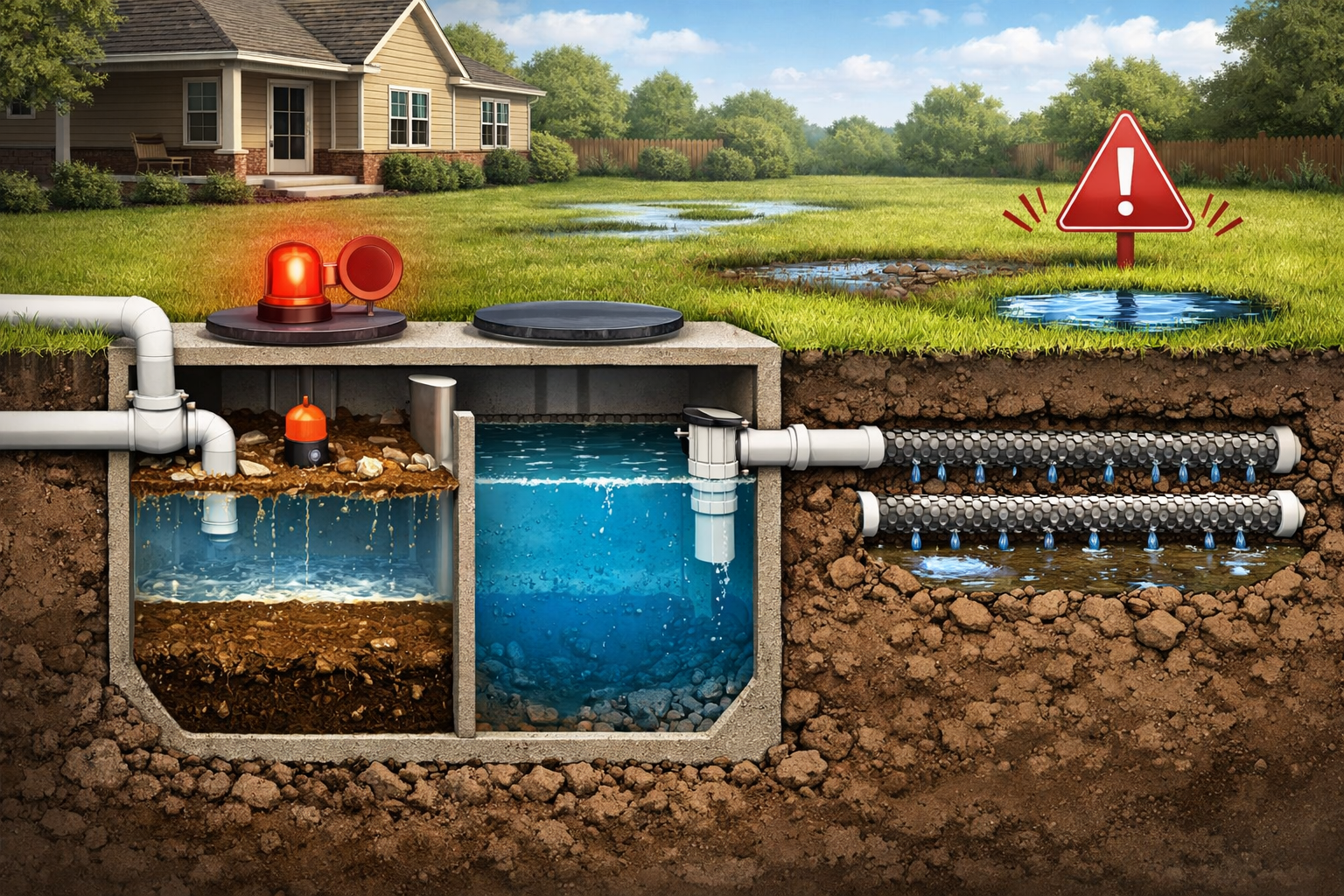
The most common signs your septic tank needs pumping include slow drains throughout your home, foul odors near the septic area, gurgling sounds from plumbing fixtures, and standing water in your yard. If you notice sewage backing up into your home or it’s been more than 3-5 years since your last pumping, schedule professional service immediately to prevent system failure and expensive repairs.
What Are the Early Warning Signs Your Septic Tank Needs Pumping?
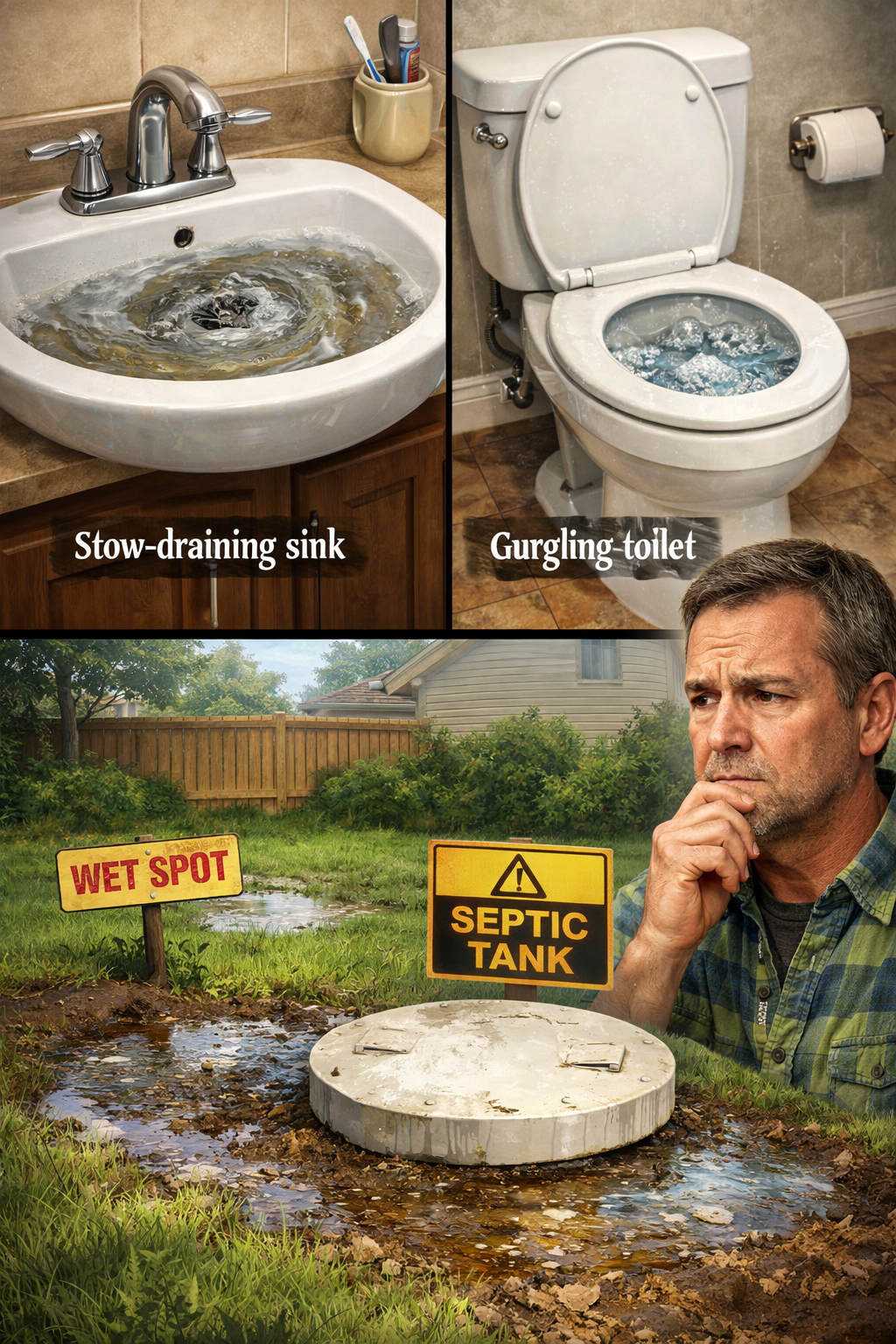
Slow drains throughout your house are typically the first indicator that your septic tank is approaching capacity. When your tank fills with solid waste, wastewater can’t flow out efficiently, creating a bottleneck effect that slows drainage from sinks, showers, tubs, and washing machines.
The early warning signs include:
• Kitchen and bathroom sinks draining slower than normal
• Showers and bathtubs taking longer to empty
• Washing machine drain cycles extending beyond usual time
• Multiple fixtures affected simultaneously (not just one isolated drain)
• Gradual worsening over several weeks or months
Choose immediate inspection if: You notice slow drains in multiple locations at once, as this indicates a system-wide issue rather than a simple clog. Single-drain problems usually point to localized blockages, while widespread slow drainage signals septic tank capacity issues.
Common mistake: Homeowners often assume slow drains mean pipe clogs and waste time with drain cleaners. If multiple drains slow down together, skip the chemical solutions and focus on septic tank maintenance.
How Do Odors Indicate Your Septic Tank Needs Pumping?
Persistent foul odors around your property, especially near the drain field or septic tank area, signal that wastewater is accumulating where it shouldn’t be. When your tank reaches capacity, gases and partially treated wastewater can escape through the soil or back up through your plumbing system.
Key odor warning signs:
• Sewage smells in your yard, particularly during warm weather
• Rotten egg or sulfur odors near the septic tank location
• Bathroom smells coming from drains even when not in use
• Musty or swampy odors around the drain field area
• Stronger smells after heavy water usage (laundry, long showers)
Decision rule: If odors persist for more than a few days and worsen with household water usage, your tank likely needs pumping. Temporary odors during hot weather might be normal, but consistent smells indicate system overload.
Edge case: New odors appearing suddenly after years of normal operation often mean your tank has reached critical capacity faster than expected due to increased household size or water usage changes.
What Sounds Signal Your Septic Tank Needs Pumping?
Gurgling or bubbling sounds from toilets, drains, and plumbing fixtures occur when air becomes trapped due to restricted wastewater movement in an overfull septic system. These sounds indicate your tank can’t process wastewater at the rate your household produces it.
Listen for these audio warning signs:
• Toilets gurgling when flushed or when other fixtures drain
• Sink drains making bubbling noises during normal use
• Shower drains producing unusual sounds when water flows
• Washing machine drain creating loud gurgles during discharge cycles
• Multiple fixtures making sounds simultaneously
Quick example: When you flush an upstairs toilet and hear gurgling from the downstairs bathroom sink, this cross-fixture noise indicates your septic system is backing up due to limited tank capacity.
FYI: Some links may be affiliate links, which means I may earn a small commission at no extra cost to you.
If you’re dealing with these warning signs, consider adding Septifix tablets to your monthly maintenance routine. These tablets help break down waste more efficiently and can reduce the frequency of pumping needs while keeping your system running smoothly.
How Does Standing Water Show Your Septic Tank Needs Pumping?
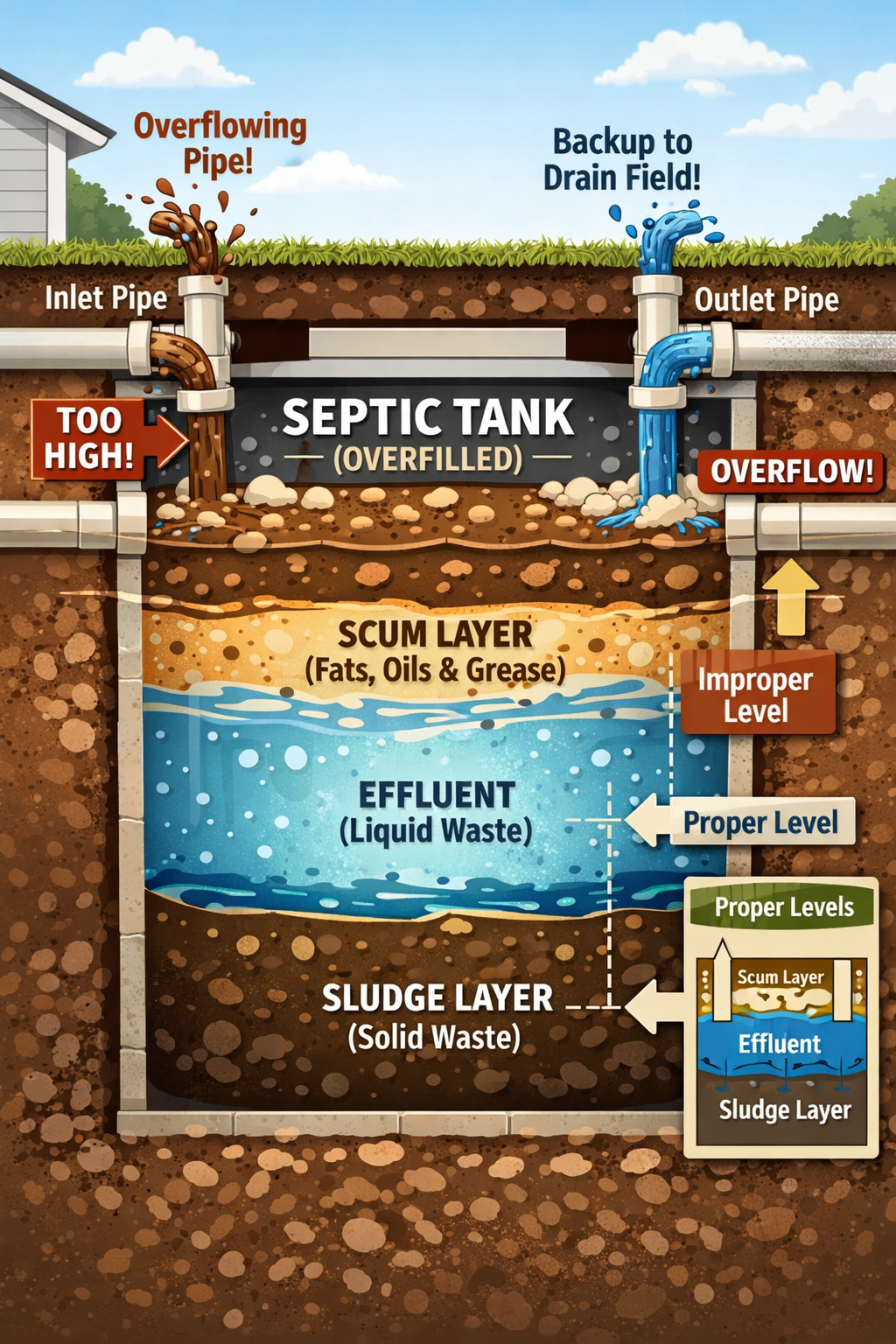
Standing water or persistently wet spots in your yard, especially during dry weather and near your drain field, indicate that wastewater is surfacing because your septic tank can’t contain or process the volume. This visible overflow is a serious sign requiring immediate attention.
Watch for these yard warning signs:
• Wet or soggy areas around the septic tank or drain field
• Standing puddles that don’t dry up after several sunny days
• Muddy spots in areas that should be dry
• Water pooling near septic system components
• Soggy ground that feels spongy when walked on
Critical timing: Standing water during dry weather is an emergency sign. If you see surface water after 2-3 days without rain, your system is likely overflowing and needs immediate professional pumping.
Health consideration: Never allow children or pets near standing water from septic overflow, as it contains harmful bacteria and pathogens that pose serious health risks.
When Does Sewage Backup Mean Emergency Pumping?
Sewage backing up into your home through toilets, sinks, showers, or floor drains is a critical emergency requiring immediate professional pumping service. This backup occurs when your septic tank reaches absolute capacity and can’t accept any more wastewater.
Emergency backup scenarios include:
• Raw sewage coming up through floor drains in basements or utility rooms
• Toilets overflowing with sewage when flushed normally
• Bathtubs or showers filling with wastewater from the drain
• Sinks backing up with sewage instead of draining
• Multiple fixtures backing up simultaneously
Immediate action required: Stop all water usage immediately and contact a septic pumping service. Don’t use toilets, sinks, showers, or washing machines until the system is pumped and inspected.
Safety protocol: Sewage backup creates serious health hazards. Wear protective equipment if you must clean affected areas, and consider professional remediation for extensive contamination.
For ongoing prevention after emergency pumping, learn about proper pumping frequency to avoid future emergencies.
How Does Grass Growth Indicate Septic Tank Problems?
Abnormally lush, green grass over your septic tank or drain field can signal wastewater leakage that’s fertilizing the soil with excess nutrients. While this might seem positive, it indicates your system isn’t containing wastewater properly.
Vegetation warning signs include:
• Unusually green grass in a distinct pattern over the septic area
• Faster grass growth compared to surrounding lawn areas
• Lush patches that stay green during dry periods
• Different grass texture over the septic system
• Thriving vegetation in areas that typically struggle
Seasonal consideration: This sign is most obvious during dry summer months when the rest of your lawn shows stress, but the septic area remains vibrant green due to constant moisture and nutrients from leaking wastewater.
Environmental impact: Nutrient-rich wastewater reaching the surface can eventually contaminate groundwater and nearby water sources, making prompt pumping essential for environmental protection.
What Time-Based Factors Indicate Pumping Needs?
If it’s been more than 3-5 years since your last septic tank pumping, you should schedule service regardless of whether you notice other warning signs. The EPA recommends this timeframe for most residential systems, though your specific needs may vary.
Time-based pumping considerations:
• Standard recommendation: Every 3-5 years for average households
• Large families (5+ people): Every 2-3 years due to higher waste volume
• Small households (1-2 people): May extend to 5-7 years safely
• Heavy water usage: More frequent pumping needed
• Garbage disposal use: Reduces time between pumpings significantly
Calculation method: Track your last pumping date and household changes. If you’ve added family members, installed new appliances, or increased water usage since the last service, you may need pumping sooner than the standard interval.
Record keeping: Maintain a simple log of pumping dates, household size changes, and any warning signs to help predict future pumping needs and communicate effectively with service providers.
Understanding what happens if you don’t pump regularly can help motivate consistent maintenance scheduling.
Septic Tank Warning Signs Comparison
| Warning Sign | Urgency Level | Typical Timeline | Action Required |
|---|---|---|---|
| Slow drains | Moderate | 1-2 weeks to worsen | Schedule pumping within 2 weeks |
| Foul odors | Moderate-High | Days to weeks | Schedule pumping within 1 week |
| Gurgling sounds | Moderate | Days to weeks | Schedule pumping within 1 week |
| Standing water | High | Immediate concern | Call for emergency service |
| Sewage backup | Critical | Immediate emergency | Stop water use, call immediately |
| Lush grass | Low-Moderate | Seasonal observation | Schedule inspection and pumping |
| 3+ years elapsed | Moderate | Preventive timing | Schedule routine pumping |
Helpful Resource for Ongoing Maintenance
Septifix tablets offer a simple way to maintain your septic system between pumpings. With one easy monthly flush, these tablets help break down waste more effectively, reduce odors, and can extend the time between required pumpings. While not a replacement for regular pumping, they’re useful for homeowners who want to keep their systems running optimally and potentially reduce emergency situations.
Frequently Asked Questions
How quickly do warning signs develop when a septic tank needs pumping?
Warning signs typically develop gradually over 2-4 weeks, starting with slow drains and progressing to odors and gurgling sounds. Sewage backup can happen suddenly once the tank reaches critical capacity.
Can I pump my septic tank myself to save money?
No, septic tank pumping requires specialized equipment and proper waste disposal methods that only licensed professionals possess. DIY attempts are dangerous and often illegal in most areas.
How much does emergency septic pumping cost compared to routine service?
Emergency pumping typically costs 50-100% more than routine service due to after-hours rates and urgent response fees. Regular pumping costs are significantly lower.
Will pumping solve all septic system problems immediately?
Pumping resolves capacity-related issues but won’t fix damaged pipes, failed drain fields, or structural tank problems. Some issues may require additional repairs after pumping.
How long after pumping should warning signs disappear?
Most warning signs should resolve within 24-48 hours after proper pumping. Persistent problems may indicate additional system issues requiring professional diagnosis.
Can heavy rain affect when my septic tank needs pumping?
Yes, heavy rain can accelerate the appearance of warning signs by adding extra water to an already full system. You may need pumping sooner during wet seasons.
What’s the difference between a full septic tank and a clogged drain?
A full septic tank affects multiple drains simultaneously, while clogged drains typically impact one fixture. Full tanks also cause odors and yard symptoms that clogs don’t produce.
Should I reduce water usage when I notice warning signs?
Yes, immediately reduce water usage when you notice warning signs to prevent sewage backup. Limit showers, laundry, and dishwashing until pumping is completed.
How do I find my septic tank for inspection?
Look for the tank access lid in your yard, typically 10-25 feet from your home’s foundation. Check your property records or contact a professional to locate it safely.
Can septic tank additives eliminate the need for pumping?
No, additives cannot replace pumping. While products like bacterial treatments may help system efficiency, solid waste accumulation still requires regular professional removal.
What happens if I ignore these warning signs?
Ignoring warning signs leads to system failure, expensive repairs, property damage, and potential health hazards from sewage contamination. Learn more about the consequences of delayed maintenance.
How can I prevent frequent pumping needs?
Use water efficiently, avoid flushing non-biodegradable items, maintain your system regularly, and consider bacterial treatments to enhance waste breakdown between pumpings.
Conclusion
Recognizing the signs your septic tank needs pumping can save you thousands of dollars in repairs and prevent serious health hazards. Start by monitoring for slow drains throughout your home, as this is typically the first warning sign. Pay attention to foul odors around your property, gurgling sounds from plumbing fixtures, and any standing water in your yard during dry weather.
Take immediate action if you notice sewage backing up into your home – this is an emergency requiring professional pumping service right away. Don’t wait for multiple warning signs to appear, as the progression from slow drains to sewage backup can happen quickly once your tank reaches capacity.
Schedule routine pumping every 3-5 years regardless of warning signs, and adjust this timeline based on your household size and water usage patterns. Keep records of your pumping dates and any symptoms you observe to help predict future maintenance needs.
Your next steps: If you’re experiencing any of these warning signs, contact a licensed septic pumping service immediately. For ongoing maintenance, consider implementing monthly septic treatments and water conservation practices to extend the time between required pumpings and keep your system functioning properly.
Remember that septic system maintenance is far less expensive than system replacement, making prompt attention to these warning signs one of the best investments you can make in your property.
References
[1] 7 Signs Your Septic Tank Needs Pumping – https://www.wrenvironmental.com/blog/2025/september/7-signs-your-septic-tank-needs-pumping/
[2] 7 Signs Your Septic Tank Needs Pumping – https://www.hamboneplumbing.com/7-signs-your-septic-tank-needs-pumping
[3] How Often To Pump A Septic Tank – https://clearriverenvironmental.com/how-often-to-pump-a-septic-tank/
[4] Signs Your Septic Tank Is Full And Needs Emptying – https://farmersseptic.com/signs-your-septic-tank-is-full-and-needs-emptying/
[5] Recognizing The Warning Signs And Getting Septic Tank Pumping – https://www.superiorseptictx.net/recognizing-the-warning-signs-and-getting-septic-tank-pumping
[6] 7 Clear Signs Its Time To Schedule A Septic Tank Pump Out – https://www.awsanitation.com/post/7-clear-signs-its-time-to-schedule-a-septic-tank-pump-out
[7] Septic Tank Full – https://www.adt.com/resources/septic-tank-full