

Last updated: March 9, 2026
If you’ve ever dealt with a slow drain, a foul smell from your yard, or a surprise pump-out bill, you already know how stressful septic system problems can be. Septifix has become one of the more talked-about septic treatments on the market, and understanding the full picture of Septifix pros and cons can help you decide whether it belongs in your maintenance routine. This guide covers what the product actually does, where it works well, where it falls short, and what real users are saying.
Key Takeaways
- Septifix is a monthly tablet-based septic treatment that uses aerobic bacteria and an oxygen-releasing formula to break down waste.
- Many users report faster odor reduction and improved drain flow within days of first use.
- The product claims to contain 10 billion aerobic bacteria strains per gram, roughly 3 times more than typical competitors.
- It works best as a preventive maintenance tool, not as a fix for already-damaged or severely neglected systems.
- Consistent monthly use is required; skipping treatments reduces effectiveness.
- It cannot repair mechanical or structural failures in a septic system.
- About 87% of customers are reported to be repeat buyers, suggesting strong satisfaction among regular users.
- Cost and availability are mainly online, which may be inconvenient for some buyers.
Quick Answer
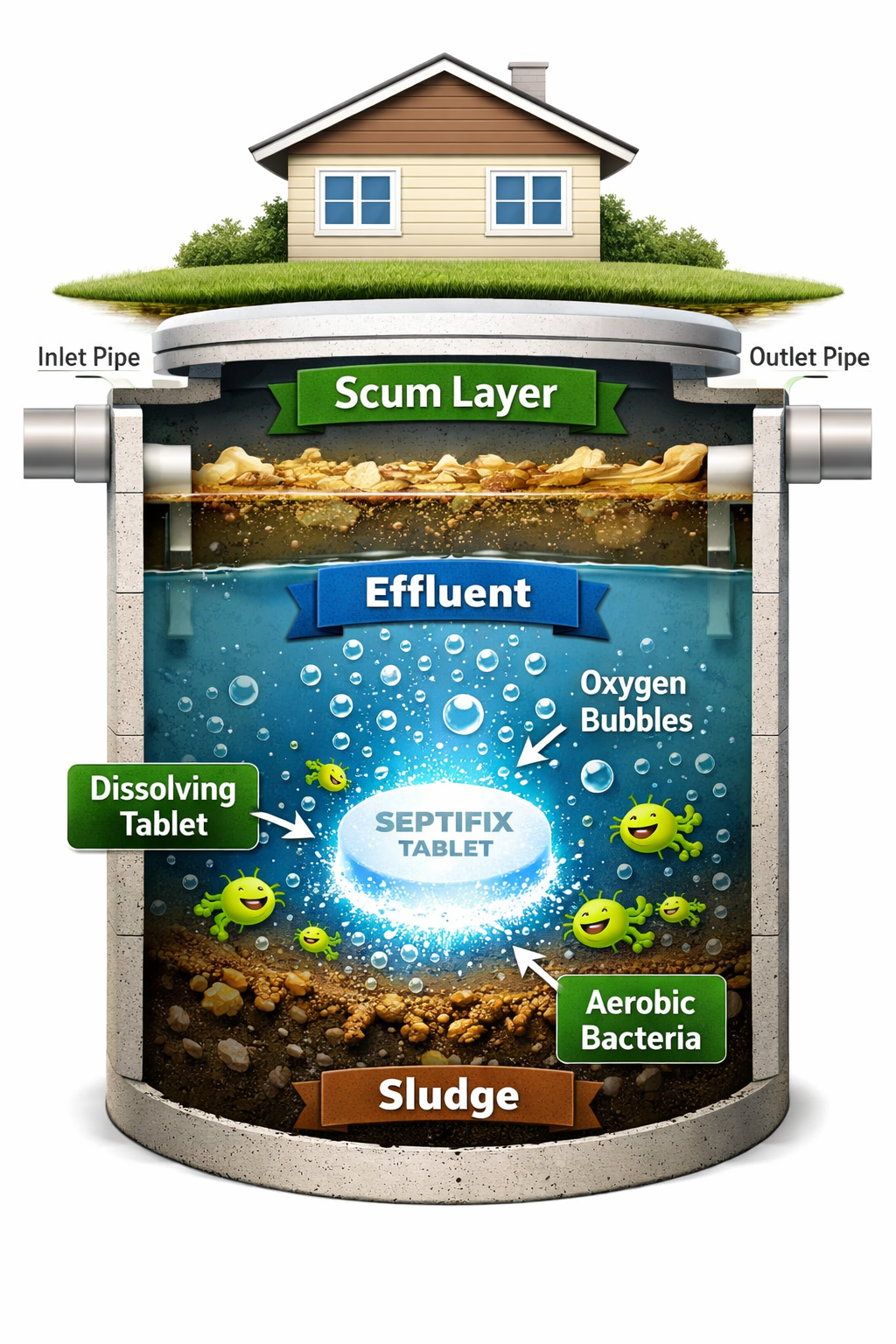
Septifix is a tablet-based septic treatment that adds aerobic bacteria and releases oxygen into your tank to speed up waste breakdown and reduce odors. It works well as a preventive maintenance product for healthy or mildly stressed systems, but it won’t fix mechanical failures or severely damaged tanks. If you use it consistently every month, most homeowners see real improvements in odor control and drain performance.
What Is Septifix and How Does It Work?
Septifix is a septic tank treatment sold in tablet form. Each tablet is designed to dissolve slowly in your tank, releasing aerobic bacteria and oxygen to accelerate the natural breakdown of organic waste.
Most traditional septic systems rely on anaerobic bacteria (bacteria that work without oxygen). Septifix markets itself as the only oxygen-releasing septic treatment available in the U.S., claiming each tablet releases up to 10 liters of oxygen. That oxygen boost supports aerobic bacteria, which tend to break down waste faster and more completely than their anaerobic counterparts.
To use it, you simply flush one tablet down the toilet each month. No tools, no professional visit, no mixing. For a deeper look at how bacterial treatments support your tank’s natural processes, see our guide on how septic tanks digest waste.
Key ingredients and claims:
- 10 billion aerobic bacteria strains per gram
- Oxygen release of up to 10 liters per tablet
- Sodium carbonate-based formula to neutralize acids
- Designed to be non-toxic and safe for standard plumbing
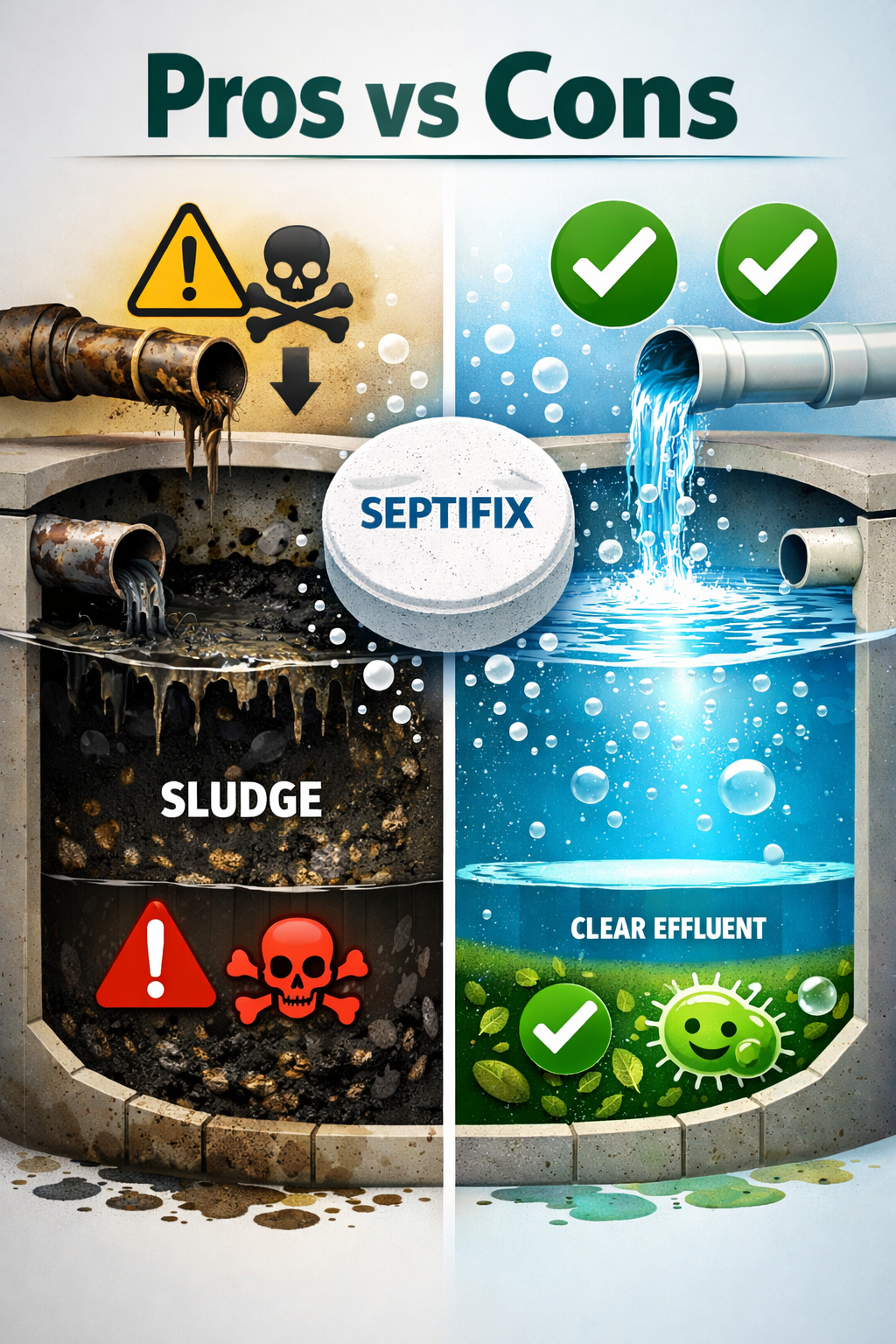
A Balanced Look at the Septifix Pros and Cons
Here’s an honest breakdown. No product is perfect, and Septifix is no exception.
✅ The Pros
1. Fast odor reduction
Multiple user reviews report a noticeable drop in septic odors within a few days of first use. The formula targets hydrogen sulfide, the compound responsible for that classic “rotten egg” smell. If odors near your tank or drain field are a recurring issue, this is one of the most consistent benefits users mention. For more on tackling this problem, see our complete guide to septic tank odor solutions.
2. High bacterial concentration
At 10 billion bacteria strains per gram, Septifix claims to deliver about 3 times more active bacteria than competing products. More bacteria means faster organic waste breakdown, which can reduce sludge buildup over time.
3. Long-lasting bacterial activity
Unlike some treatments where bacteria die off within days, Septifix claims its bacteria remain active for up to 90 days per treatment . That’s a meaningful difference if you’re trying to maintain a healthy microbial balance between monthly doses.
4. Simple monthly routine
Flush one tablet per month. That’s the whole process. No special tools, no measuring, no mess. For homeowners who want a low-effort addition to their septic care routine, this simplicity is a real advantage.
5. Environmentally safer formula
The product is formulated without harsh chemicals and is marketed as non-toxic and plumbing-safe when used as directed. This matters if you’re cautious about what goes into your system and eventually into the surrounding soil.
6. Strong repeat buyer rate
An estimated 87% of customers are repeat buyers, which is a reasonable indicator that people who try it tend to stick with it.
❌ The Cons
1. Limited impact on severely damaged systems
This is the most common complaint. Users with heavily neglected tanks, broken baffles, or failed drain fields often report little to no improvement. Septifix is a maintenance aid, not a repair tool. If your system has serious structural issues, you’ll need professional service first.
2. Requires consistent monthly use
The product only works well with regular application. Skip a month or two, and the bacterial colony in your tank may decline significantly. For homeowners who travel frequently or tend to forget, this consistency requirement can be a real drawback.
3. Not a fix for mechanical failures
Septifix cannot address broken pipes, cracked tanks, clogged drain fields caused by soil saturation, or pump failures. If your system has a mechanical problem, no biological treatment will solve it.
4. Mixed results for some users
Not everyone sees the same benefits. Some users describe the product as “not a miracle solution,” particularly for systems that were already in poor condition before treatment began. Results vary based on tank size, household water usage, and existing bacterial health.
5. Online-only availability
Septifix is primarily sold through its official website, which can be inconvenient if you prefer to buy locally or need a quick replacement.
💬 “Septifix works best as a preventive tool. Think of it like a daily vitamin for your septic system — it supports health over time, but it can’t cure an existing illness.”
Who Should (and Shouldn’t) Use Septifix?
Choose Septifix if:
- Your septic system is in reasonably good working condition
- You want a simple, low-effort monthly maintenance product
- You’ve been dealing with mild odors or slow drains without a clear mechanical cause
- You’re looking to reduce how often you need professional pump-outs over time
Skip Septifix (or use it only after professional service) if:
- Your tank hasn’t been pumped in many years and has heavy sludge buildup
- You’re experiencing active sewage backups or drain field issues
- You have a known mechanical failure (broken pump, cracked tank, etc.)
- You’re expecting a one-time treatment to solve a long-standing problem
Common mistake: Homeowners sometimes buy Septifix as a last resort when their system is already failing, then blame the product when it doesn’t work. Biological treatments like this are most effective as ongoing prevention, not emergency repair.
How Does Septifix Compare to Other Septic Treatments?
Septifix sits in the premium tier of biological septic treatments. Here’s how it generally stacks up:
| Feature | Septifix | Standard Bacterial Additives | Chemical Treatments |
|---|---|---|---|
| Bacteria count | ~10 billion/gram | Typically lower | None |
| Oxygen release | Yes (up to 10L/tablet) | No | No |
| Bacterial longevity | Up to 90 days | Days to weeks | N/A |
| Odor control | Strong | Moderate | Moderate |
| Safe for plumbing | Yes | Usually yes | Varies |
| Works on mechanical failures | No | No | No |
| Application method | Monthly tablet | Powder/liquid | Liquid |
For a broader look at how bacterial additives compare to other approaches, our septic tank treatment guide is a good starting point.
(FYI: Some links in this article may be affiliate links, which means I may earn a small commission at no extra cost to you.)
If you want a structured monthly treatment option, 👉 see how Septifix tablets can keep your septic system clean and efficient.
What Do Real Users Say About the Septifix Pros and Cons?
User feedback on Septifix is generally positive but not universal. Here’s a fair summary of what people report:
Positive experiences:
- Odor near the tank or yard reduced noticeably within days
- Drains running more smoothly after a few months of consistent use
- Fewer emergency pump-outs needed over time
- Easy to remember and use as part of a monthly routine
Negative experiences:
- No improvement in tanks with pre-existing damage or severe sludge
- Some users felt the price was high relative to results
- A few noted that results took longer than expected
The pattern is clear: homeowners with well-maintained systems tend to see the best results. Those with neglected systems are often disappointed, which is more a reflection of realistic expectations than product failure.
How to Get the Most Out of Septifix
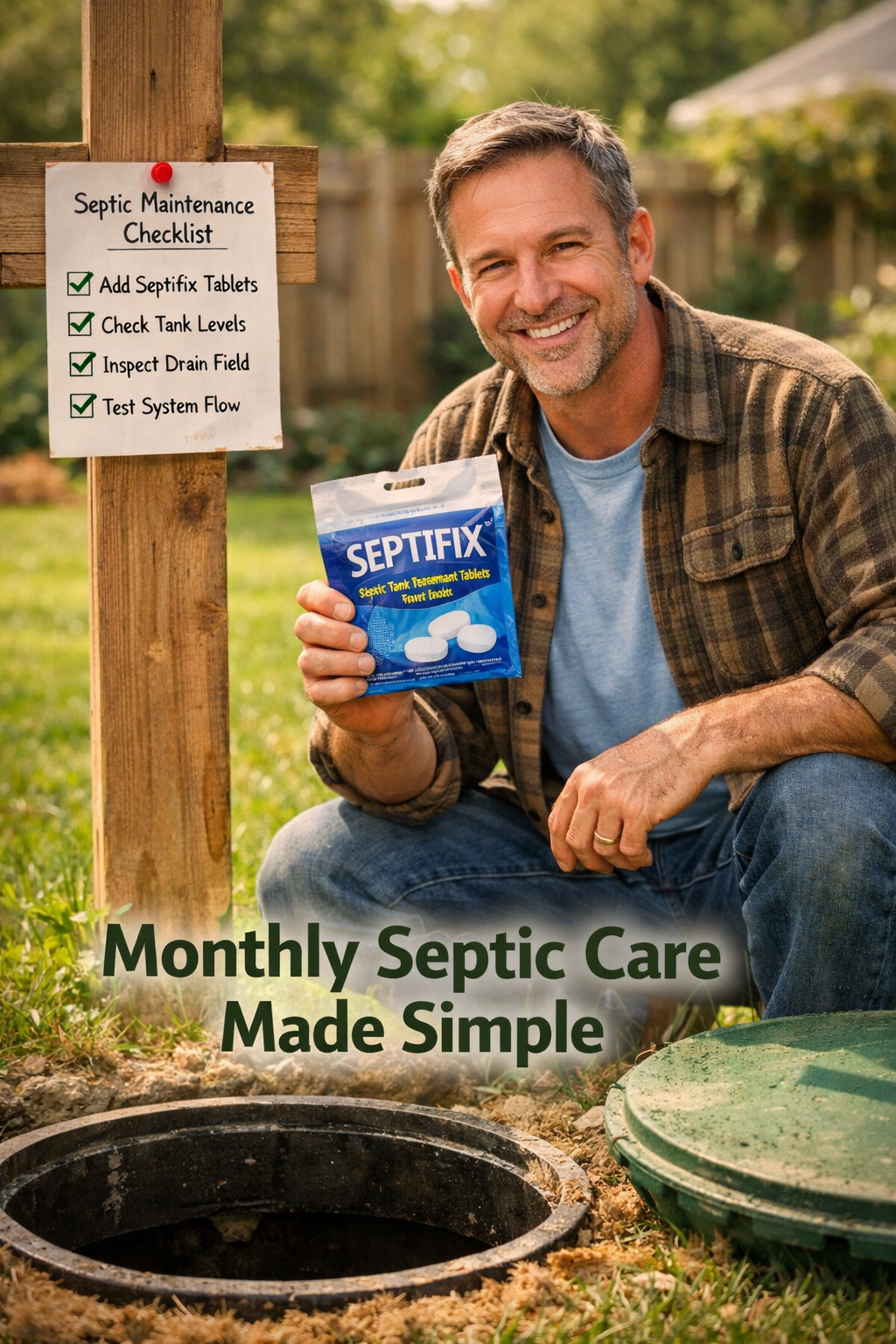
If you decide to try Septifix, a few simple habits will improve your results:
- Pump your tank first if it hasn’t been serviced in 3+ years. Starting with a cleaner baseline gives the bacteria a better environment to work in. Check our guide on septic pump-out costs to plan ahead.
- Flush one tablet monthly on a consistent schedule (same week each month works well).
- Avoid antibacterial products in large quantities — they can kill the bacteria Septifix introduces. Be mindful of what not to flush down your drains.
- Reduce water load during the first few weeks if your system has been stressed recently.
- Watch for warning signs and don’t rely on Septifix alone if you notice septic system warning signs like gurgling drains or wet spots near the tank.
Frequently Asked Questions
Q: How quickly does Septifix work?
Many users notice odor reduction within 3 to 5 days of first use. Full improvement in waste breakdown typically develops over 2 to 3 months of consistent monthly use.
Q: Can Septifix replace regular pump-outs?
No. Biological treatments reduce sludge buildup over time, but they don’t eliminate the need for periodic professional pump-outs. Most systems still need pumping every 3 to 5 years depending on household size and usage.
Q: Is Septifix safe for all septic systems?
It’s formulated to be non-toxic and safe for standard septic systems and plumbing. If you have an unusual system type (aerobic treatment unit, mound system, etc.), check with the manufacturer or a professional first.
Q: What if I miss a month?
Missing one month occasionally won’t ruin your system, but consistent gaps reduce the bacterial population in your tank. Try to stay on a regular monthly schedule for best results.
Q: Can Septifix fix a backed-up septic system?
No. If you’re experiencing active sewage backup, that’s a mechanical or capacity problem that requires professional attention. Biological treatments are preventive, not emergency solutions.
Q: How does Septifix differ from regular septic additives?
The main differences are the oxygen-releasing formula and the higher bacteria concentration (approximately 3x more than typical competitors). Most standard additives don’t release oxygen, which limits bacterial activity to anaerobic strains.
Q: Is Septifix worth the cost?
For homeowners with healthy systems who want a simple monthly maintenance product, most users find it worthwhile, especially given the 87% repeat buyer rate. For severely damaged systems, it’s not the right first step.
Q: Where can I buy Septifix?
Septifix is primarily sold online through its official website. If you’re ready to try it, 👉 see how Septifix tablets can keep your septic system clean and efficient.
Conclusion
Understanding the Septifix pros and cons comes down to one key point: this product is a solid preventive maintenance tool, not a repair solution. For homeowners with reasonably healthy septic systems, it offers real benefits — faster odor control, higher bacterial activity, and a genuinely simple monthly routine. The oxygen-releasing formula and high bacteria concentration set it apart from most generic additives on the market.
Where it falls short is equally clear. Severely neglected systems, mechanical failures, and active backups are beyond what any biological treatment can fix. If your system is already struggling, start with a professional pump-out and inspection before adding any treatment product.
Actionable next steps:
- If your tank hasn’t been pumped recently, schedule that first.
- Review your complete septic care routine to build good habits alongside any treatment product.
- If you want a simple, consistent monthly treatment, Septifix is worth considering for a well-maintained system.
- Keep watching for septic warning signs and don’t delay professional service when something seems off.
A healthy septic system is mostly about consistency. Septifix can be one useful part of that routine — just don’t expect it to do the heavy lifting alone.
References
[1] Septifix Reviews And Complaints 2025 – https://vocal.media/lifehack/septifix-reviews-and-complaints-2025
[2] Watch – https://www.youtube.com/watch?v=NPneRiRMmwk
[3] Septifix Reviews And Complaints 2026 Scam Or Legit The Truth Exposed – https://scribehow.com/page/Septifix_Reviews_and_Complaints_2026_Scam_or_Legit_The_Truth_Exposed__ec5C-3mIToevyW86DQIwOw
[4] Septifix Review – https://septifix-review.com