
Last updated: March 4, 2026
Your home’s wastewater doesn’t just disappear when you flush the toilet or drain the sink. Understanding the septic tank wastewater path is crucial for every homeowner with an onsite system because this knowledge helps you prevent costly backups, protect your family’s health, and maintain your property value.
Key Takeaways
• Wastewater flows through three main stages: tank separation, distribution, and soil filtration
• The tank separates waste into three layers: scum (top), effluent (middle), and sludge (bottom)
• Proper flow depends on bacterial breakdown of organic matter in the tank
• Blockages anywhere in the path cause system-wide problems including backups and overflows
• Regular maintenance prevents 90% of septic failures and extends system life
• Modern monitoring technology can detect early warning signs of flow problems
• Environmental protection requires understanding how your system affects groundwater
• Simple household practices significantly impact wastewater treatment effectiveness
Quick Answer
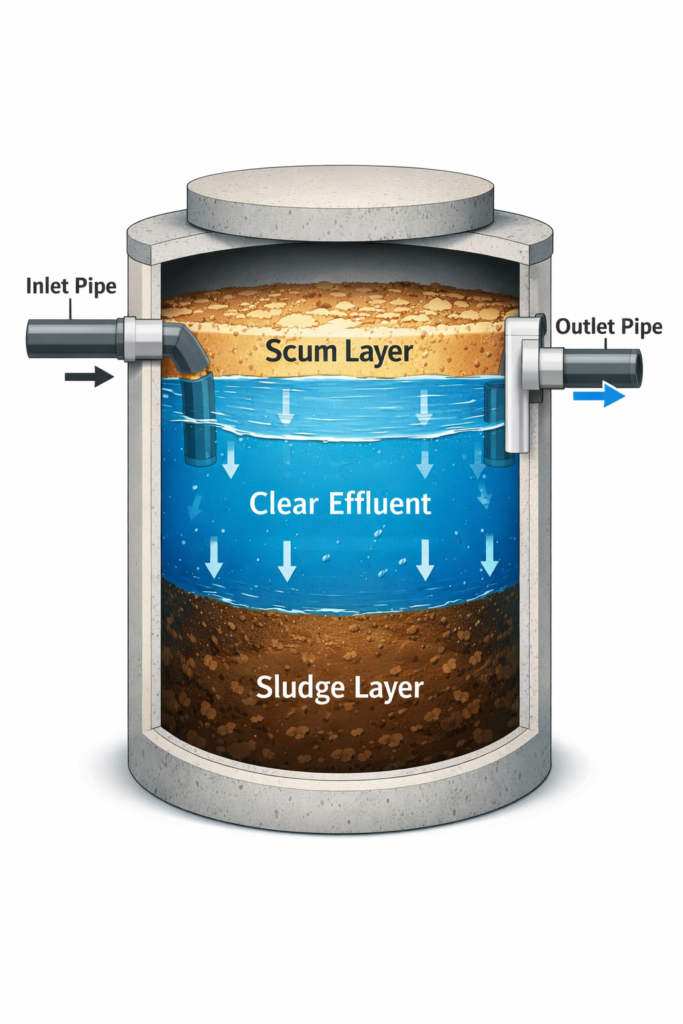
The septic tank wastewater path involves three critical stages: wastewater enters your septic tank where solids separate and bacteria break down waste, clarified liquid flows to a distribution box, then disperses through drain field pipes where soil naturally filters remaining contaminants before clean water returns to groundwater. This process requires proper bacterial balance, unobstructed flow, and regular maintenance to function effectively.
How Does Wastewater Enter Your Septic Tank?
Wastewater from your home flows directly into the septic tank through the main inlet pipe, typically located 4-6 inches below the tank’s top. This initial entry point determines how effectively your entire system will function.
The inlet pipe connects all your home’s drains—toilets, sinks, showers, and laundry—into one main line. When wastewater enters the tank, it should flow smoothly without creating turbulence that would disturb the settling process. A properly designed inlet includes a baffle or tee that directs flow downward, preventing scum layer disruption.
Common inlet problems that disrupt the wastewater path:
- Pipe clogs from grease, hair, or non-biodegradable items
- Root intrusion in older clay or concrete pipes
- Pipe settling or cracking due to soil movement
- Improper slope causing slow drainage or backups
Choose professional inspection if you notice slow drains throughout your home, gurgling sounds, or sewage odors near the tank area. These symptoms often indicate inlet pipe problems that can cascade through your entire septic tank wastewater path.
The volume of wastewater entering your tank matters significantly. A typical household produces 70 gallons per person daily, but water-saving fixtures and conscious usage can reduce this by 20-30%. Learn more about how septic tanks handle daily waste loads.
What Happens Inside the Septic Tank During Waste Separation?
Inside your septic tank, wastewater naturally separates into three distinct layers through gravity and bacterial action. This separation process is the foundation of effective wastewater treatment and determines how well your system protects both your home and the environment.
The three-layer system works as follows:
Scum Layer (Top 25%): Oils, grease, and floating debris rise to the surface. This layer should remain relatively thin—typically 6-12 inches. Excessive scum indicates too much grease disposal or insufficient bacterial activity.
Effluent Zone (Middle 50%): Clear liquid occupies the middle section. This partially treated wastewater contains dissolved nutrients and some bacteria but should be free of solid particles. Quality effluent appears slightly cloudy but not murky.
Sludge Layer (Bottom 25%): Heavy solids settle to the tank bottom where anaerobic bacteria slowly decompose organic matter. Sludge accumulation rate depends on household size, waste types, and bacterial health.
Bacterial breakdown occurs continuously in both the sludge layer and throughout the tank. Anaerobic bacteria thrive in the oxygen-free environment, converting organic waste into simpler compounds, gases, and water. This process typically takes 24-48 hours for initial treatment.
FYI: Some links may be affiliate links, which means I may earn a small commission at no extra cost to you.
Maintaining healthy bacterial populations is essential for proper waste separation. If you want something that helps support bacterial balance naturally, Septifix tablets can keep your septic system clean and efficient by providing beneficial bacteria and enzymes that break down waste more effectively.
Temperature, pH levels, and chemical exposure all affect bacterial activity. Avoid antibacterial soaps, bleach, and harsh cleaners that kill beneficial bacteria. Understanding what happens to waste in your septic tank helps you make better household decisions.
How Does Treated Wastewater Flow to the Drain Field?
Treated wastewater exits the septic tank through the outlet pipe when the liquid level rises above the outlet baffle. This outlet, positioned slightly lower than the inlet, ensures proper hydraulic flow and prevents short-circuiting where untreated wastewater bypasses the settling process.
The outlet baffle serves multiple critical functions in your septic tank wastewater path. It prevents scum and floating debris from entering the drain field while allowing only clarified effluent to flow out. Most modern systems include an effluent filter at this point to catch any remaining particles.
From tank to distribution box:
- Effluent flows through a solid pipe to the distribution box
- The distribution box divides flow equally among drain field lines
- Proper grading ensures gravity-fed flow without pumps (in most systems)
- Each drain field line receives proportional wastewater volume
Flow rate management is crucial. Too much water overwhelms the soil’s filtering capacity, while too little allows pipes to dry out and lose bacterial films. A typical system processes 200-400 gallons daily, depending on household size and usage patterns.
Hydraulic loading affects treatment effectiveness significantly. When you use excessive water—long showers, multiple loads of laundry, or running dishwashers and washing machines simultaneously—you can hydraulically overload the system. This pushes partially treated wastewater through too quickly.
Monitor signs that your septic tank might be full to prevent overflow into the drain field. Warning signs include slow drains, gurgling toilets, or wet spots over the drain field area.
Advanced systems may include pump chambers or dosing tanks that control effluent release timing and volume. These systems allow better management of hydraulic loading, especially beneficial for homes with variable water usage patterns or challenging soil conditions.
What Occurs During Final Soil Filtration and Groundwater Protection?
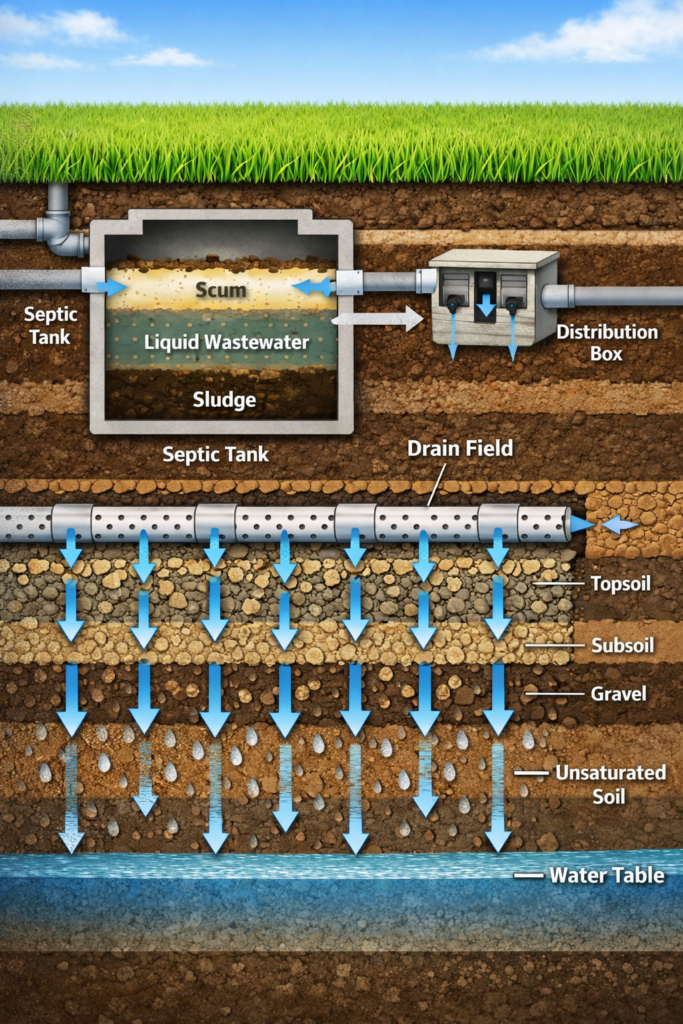
The drain field represents the final and most critical stage of your septic tank wastewater path. Here, soil acts as a natural filter, removing remaining bacteria, viruses, nutrients, and other contaminants before treated water rejoins the groundwater system.
Effluent flows through perforated pipes buried in gravel beds, typically 18-36 inches below ground surface. The gravel provides initial filtering and distributes wastewater evenly across the soil interface. As effluent percolates downward, multiple filtration processes occur simultaneously.
Soil filtration removes contaminants through:
- Physical straining captures particles larger than soil pore spaces
- Biological treatment by beneficial soil microorganisms
- Chemical adsorption binds nutrients and metals to soil particles
- Pathogen die-off from UV exposure, desiccation, and predation
Proper soil conditions are essential for effective filtration. Sandy loam soils with good drainage but adequate retention time provide ideal treatment. Clay soils may retain wastewater too long, causing surface ponding, while very sandy soils may allow inadequate treatment time.
Soil depth requirements vary by location but typically include:
- Minimum 2-4 feet of unsaturated soil below drain field pipes
- Adequate separation from bedrock, groundwater, or impermeable layers
- Proper slope (1-3%) for distribution without ponding or runoff
Recent research indicates that traditional septic systems may not effectively remove all modern contaminants. A 2024 study found that pharmaceuticals and emerging contaminants pass largely untreated through septic tanks, with all 68 studied compounds detected in both tank influent and effluent. This highlights the importance of proper system design and maintenance for environmental protection.
Environmental protection depends on this final filtration stage. When functioning properly, soil treatment removes 99% of bacteria and viruses, significantly reduces nitrogen and phosphorus levels, and produces water quality suitable for groundwater recharge. However, system failures can contaminate wells, surface water, and sensitive ecosystems.
Choose professional inspection if you notice wet spots, odors, or lush vegetation growth over your drain field. These symptoms suggest hydraulic failure or inadequate soil treatment that requires immediate attention.
Why Does Proper Flow Matter for System Health?
Proper flow through your septic tank wastewater path directly determines system longevity, treatment effectiveness, and environmental protection. When flow patterns become disrupted, problems cascade through the entire system, often requiring expensive repairs or complete replacement.
Hydraulic balance affects every system component. Too much water overwhelms bacterial treatment processes and soil absorption capacity. Too little water allows pipes to dry out, disrupting beneficial bacterial films and causing uneven distribution. Maintaining steady, appropriate flow rates ensures optimal treatment at each stage.
Flow disruptions create multiple problems simultaneously. Hydraulic overloading pushes partially treated wastewater through the system too quickly, reducing bacterial contact time and soil filtration effectiveness. This can result in groundwater contamination, surface ponding, and system backup into your home.
Key flow factors that impact system health:
- Daily water volume should not exceed 150% of system design capacity
- Peak usage timing affects hydraulic loading patterns
- Seasonal variations in groundwater and soil conditions
- Pipe integrity ensures unobstructed flow paths
Modern performance-based management approaches emphasize ongoing flow monitoring rather than “install and forget” mentalities. Industry trends for 2026 show increasing adoption of real-time monitoring systems that detect early flow problems before they cause system failures.
Common flow problems and their consequences:
- Grease accumulation restricts pipe diameter and reduces flow capacity
- Root intrusion creates partial blockages and uneven distribution
- Pipe settling causes low spots where solids accumulate
- Effluent filter clogging backs up the entire system
Regular maintenance prevents most flow problems. Professional septic tank care routines include flow testing, pipe inspection, and hydraulic load assessment. These preventive measures cost significantly less than emergency repairs or system replacement.
Advanced diagnostic tools now available include flow meters, pressure sensors, and remote monitoring systems that provide real-time data about your septic tank wastewater path performance. These technologies enable early intervention when flow patterns indicate developing problems.
How Can You Maintain Optimal Wastewater Flow?
Maintaining optimal flow through your septic tank wastewater path requires consistent household practices, regular professional maintenance, and early problem detection. Simple daily habits significantly impact long-term system performance and can prevent most common failures.
Daily practices that protect wastewater flow:
- Spread water usage throughout the day rather than concentrated periods
- Use septic-safe products that won’t kill beneficial bacteria
- Avoid flushing non-biodegradable items including wipes, feminine products, and medications
- Limit garbage disposal use to prevent excess organic loading
Water conservation directly improves treatment effectiveness. High-efficiency fixtures, shorter showers, and full loads for dishwashers and washing machines reduce hydraulic stress on your system. A family of four should aim for less than 280 gallons daily to maintain optimal treatment conditions.
Professional maintenance schedule:
- Annual inspection of tank levels, baffles, and effluent quality
- Pumping every 3-5 years depending on household size and usage
- Effluent filter cleaning every 1-2 years or as needed
- Drain field assessment for signs of hydraulic failure or soil saturation
Bacterial health requires ongoing attention. Harsh chemicals, antibiotics, and excessive bleach can disrupt the bacterial balance essential for waste breakdown. If you’re looking for a simple way to support healthy bacterial populations, Septifix tablets provide beneficial bacteria and enzymes that help maintain optimal waste processing and system efficiency.
Early warning signs of flow problems:
- Slow drains throughout the house
- Gurgling sounds from toilets or drains
- Sewage odors near the tank or drain field
- Wet spots or standing water over the drain field
- Unusually lush vegetation growth in the drain field area
Technology integration is becoming standard for septic system monitoring. Advanced diagnostic tools and real-time monitoring systems can detect early signs of flow problems, enabling timely intervention before major failures occur. These systems track flow rates, tank levels, and effluent quality continuously.
What Are Common Wastewater Path Problems and Solutions?
Understanding common problems in your septic tank wastewater path helps you recognize warning signs early and take appropriate action. Most issues develop gradually, making early detection and intervention crucial for preventing costly repairs or system replacement.
Inlet pipe problems affect the entire downstream system. Clogs from grease, hair, or foreign objects restrict flow and can cause sewage backup into your home. Tree root intrusion commonly occurs in older systems with clay or concrete pipes, creating partial blockages that worsen over time.
Solution approach: Professional drain cleaning removes most clogs, while root intrusion requires cutting and may need pipe relining or replacement. Choose hydro-jetting for thorough cleaning without damaging pipes.
Tank separation issues disrupt the natural layering process essential for treatment. Excessive scum accumulation indicates too much grease disposal or bacterial imbalance. Rapid sludge buildup suggests overloading or insufficient bacterial activity for waste breakdown.
Solution approach: Reduce grease disposal, use bacterial additives if recommended by professionals, and maintain regular pumping schedules. Understanding when your tank needs pumping prevents separation problems.
Outlet and distribution problems cause uneven drain field loading. Clogged effluent filters back up the entire system, while damaged distribution boxes create preferential flow paths that overload specific drain field areas.
Solution approach: Clean or replace effluent filters annually, repair distribution box damage promptly, and ensure proper grading for equal flow distribution.
Drain field failures represent the most serious and expensive problems. Hydraulic failure occurs when soil becomes saturated and cannot absorb additional effluent. Biological failure happens when bacterial films in soil become disrupted or overwhelmed.
Solution approach: Rest overloaded drain fields when possible, reduce water usage, and consider drain field rehabilitation or replacement for severe failures. Professional assessment determines the best repair strategy.
Emerging contaminant concerns are becoming more significant. Research shows that pharmaceuticals and personal care products pass through traditional septic systems largely untreated, potentially affecting groundwater quality. While homeowners cannot completely eliminate these contaminants, proper disposal practices help minimize environmental impact.
Prevention strategies that work:
- Never flush medications down drains or toilets
- Use minimal amounts of personal care products
- Choose biodegradable cleaning products when possible
- Maintain proper bacterial balance for optimal treatment
When to call professionals:
- Multiple slow drains throughout the house
- Sewage backup in lowest-level fixtures
- Strong odors persisting after basic troubleshooting
- Wet spots or standing water over the drain field
- System backing up after recent pumping
Helpful Resource for System Maintenance
Maintaining your septic tank wastewater path doesn’t have to be complicated, but it does require consistent attention to bacterial health and waste breakdown efficiency. If you want a simple way to support your system’s natural processes, Septifix tablets offer an easy solution for homeowners who prefer a structured maintenance approach.
These tablets provide beneficial bacteria and enzymes that help break down waste more effectively, reduce buildup in your tank, and support the natural treatment processes throughout your wastewater path. They’re particularly useful if your household uses antibacterial products or if you’ve noticed slower waste breakdown in your system.
Not required for every system, but helpful for maintaining optimal bacterial balance and preventing common problems that disrupt wastewater flow.
Frequently Asked Questions
How long does wastewater take to travel through the entire septic system?
Wastewater typically spends 24-48 hours in the septic tank for initial treatment, then 2-7 days moving through the drain field and soil filtration process. Total treatment time depends on soil conditions, system design, and hydraulic loading rates.
Can I use bleach and antibacterial products with a septic system?
Use these products sparingly. Small amounts for normal cleaning won’t harm your system, but excessive use can kill beneficial bacteria essential for waste breakdown. Choose septic-safe alternatives when possible and avoid concentrated antibacterial products.
What happens if wastewater backs up in the septic tank path?
Backups typically start with slow drains, then progress to gurgling sounds and sewage odors. Severe backups can cause sewage to enter your home through floor drains or lowest fixtures. Address backup situations immediately to prevent health hazards and property damage.
How do I know if my drain field is failing?
Warning signs include wet spots over the drain field, sewage odors outdoors, unusually green grass in the drain field area, and slow drains throughout your home. Professional inspection can determine whether the problem requires repair or replacement.
Does heavy rain affect the septic tank wastewater path?
Yes, excessive rainfall can saturate soil around your drain field, reducing its ability to absorb effluent. This can cause temporary system backup or surface ponding. Reduce water usage during heavy rain periods to prevent hydraulic overloading.
Can I install monitoring equipment for my septic system?
Modern monitoring systems track tank levels, flow rates, and effluent quality in real-time. These systems provide early warning of problems and help optimize maintenance timing. Professional installation ensures proper sensor placement and system integration.
What should I do if I smell sewage near my septic tank?
Sewage odors often indicate problems with tank venting, loose connections, or system overloading. Check that vent pipes are clear and unobstructed. Persistent odors require professional inspection to identify and address the underlying cause.
How does water softener discharge affect septic systems?
Water softener brine can disrupt bacterial balance and increase sodium levels in your system. Discharge softener regeneration water to a separate dry well when possible, or choose salt-free water conditioning systems for septic-friendly operation.
Can I use additives to improve wastewater treatment?
Quality bacterial additives can help maintain healthy bacterial populations, especially after antibiotic use or chemical exposure. Avoid products claiming to eliminate pumping needs—these often contain harmful chemicals that can damage your system.
What happens to wastewater during power outages?
Gravity-fed systems continue operating normally during power outages. Systems with pumps or advanced treatment units may experience reduced capacity or temporary shutdown. Have backup power available for critical system components if your area experiences frequent outages.
How do I prepare my septic system for vacation or extended absence?
Reduce water usage gradually before leaving, avoid harsh chemicals for several days prior, and consider bacterial additives if you’ll be away more than a month. The system benefits from some regular water flow, so brief usage every few weeks helps maintain bacterial health.
Can landscaping affect my septic tank wastewater path?
Yes, improper landscaping can damage pipes, compact soil, or interfere with evaporation. Plant only grass over drain fields, avoid heavy equipment or vehicles over system components, and maintain proper grading for surface water drainage away from the system.
Conclusion
Understanding your septic tank wastewater path empowers you to protect your investment, prevent costly repairs, and safeguard your family’s health. The journey from your home’s drains through tank treatment, distribution, and final soil filtration requires each component to function properly for effective wastewater treatment.
Key actions for maintaining optimal wastewater flow include spreading daily water usage, using septic-safe products, scheduling regular professional maintenance, and recognizing early warning signs of problems. These simple practices prevent most system failures and extend your septic system’s lifespan significantly.
Take these steps this week:
- Assess your household water usage patterns and identify opportunities for conservation
- Schedule annual professional inspection if you haven’t had one recently
- Review your maintenance records and plan for pumping if it’s been 3+ years
- Implement a regular septic care routine that includes monitoring and preventive measures
Remember that your septic system is an investment in your property and environmental stewardship. Proper understanding and maintenance of the wastewater path protects both your home and the groundwater that serves your community for years to come.
References
[1] New Article Septic Tanks As A Pathway For Emerging Contaminants To The Aquatic Environment Need For Alternative Rural Wastewater Treatment – https://ohbp.org/2024/12/17/new-article-septic-tanks-as-a-pathway-for-emerging-contaminants-to-the-aquatic-environment-need-for-alternative-rural-wastewater-treatment/
[2] Emerging Industry Technology Trends For 2026 – https://news.owpnc.com/emerging-industry-technology-trends-for-2026/
[3] Septic Tank Cleaning And Pumping 1426001 – https://www.datainsightsmarket.com/reports/septic-tank-cleaning-and-pumping-1426001