The Complete Guide to Septic Tank Pumping Frequency for Homeowners
Last updated: March 8, 2026
Picture this: you’re enjoying a quiet Sunday morning when suddenly your drains start backing up and an unpleasant odor fills your home. This nightmare scenario happens to thousands of homeowners each year who neglect their septic tank pumping schedule. Understanding the right septic tank pumping frequency can save you from costly emergency repairs and protect your property investment.
Key Takeaways
- Standard pumping interval: Most households need septic tank pumping every 3-5 years
- Household size matters: Larger families require more frequent pumping (1-2 people: 5-9 years, 4+ people: 2-4 years)
- Tank size affects timing: 1,000-gallon tanks need pumping every 3-4 years for average families
- Monitor sludge levels: Pump when solids reach 20-30% of tank capacity, not just on schedule
- Regular inspections help: Check your system every 1-3 years to track accumulation rates
- Usage patterns influence frequency: Heavy water use and garbage disposals require more frequent pumping
- State regulations vary: Some areas mandate pumping every 2-3 years regardless of tank condition
- Prevention costs less: Regular pumping ($300-700) prevents expensive system failures ($3,000-15,000)
Quick Answer
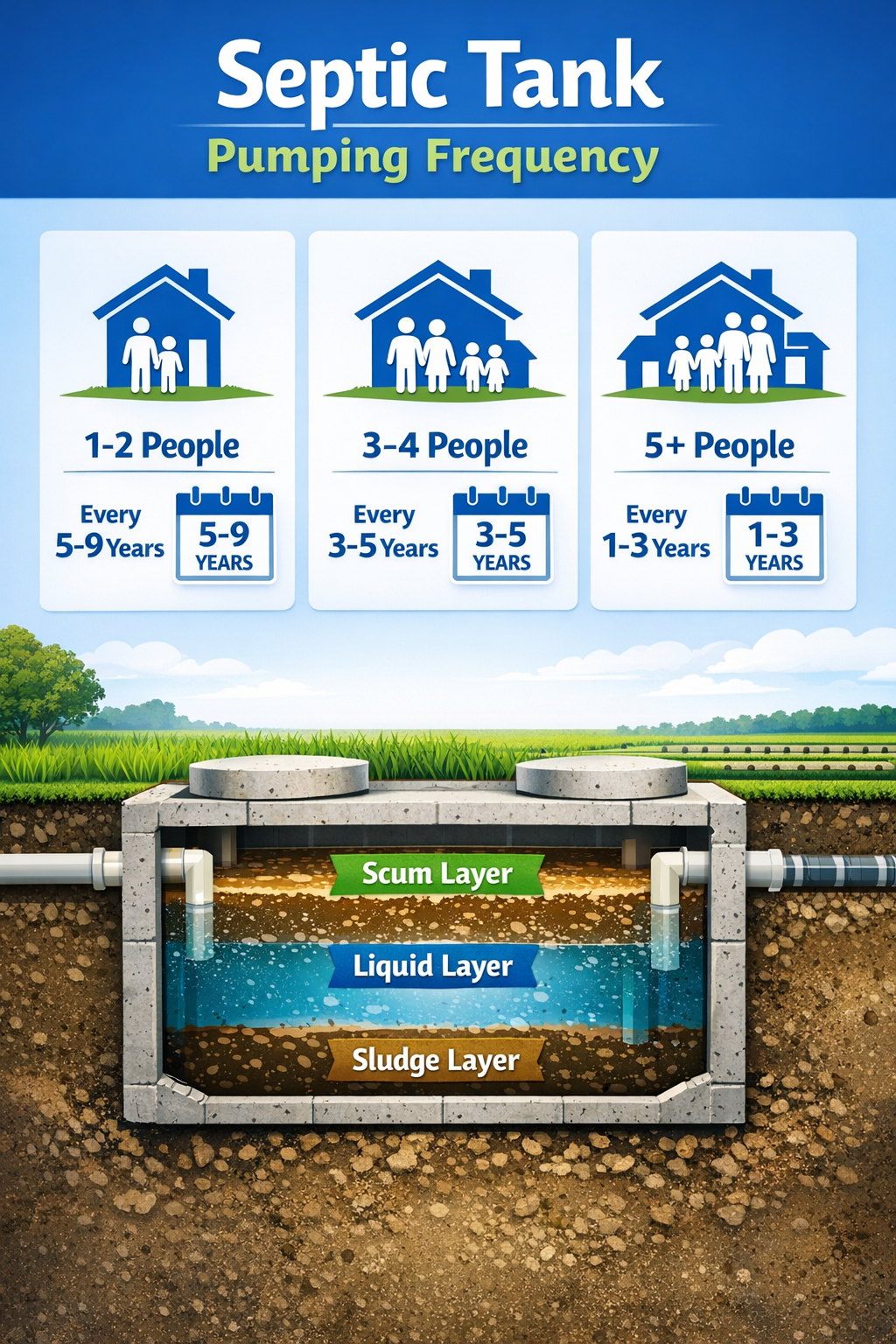
Most residential septic tanks need pumping every 3-5 years, but your specific septic tank pumping frequency depends on household size, tank capacity, and water usage patterns. A family of four with a standard 1,000-gallon tank typically requires pumping every 3-4 years, while smaller households can extend intervals to 5-9 years. Monitor sludge accumulation and pump when solids reach 20-30% of tank capacity.
How Does Household Size Affect Septic Tank Pumping Frequency?
Household size directly determines how quickly your septic tank fills with solids and requires pumping. More people generate more wastewater, food waste, and organic matter that accumulates as sludge in your tank’s bottom layer.
Pumping Schedule by Household Size:
- 1-2 people: Every 5-9 years for standard 1,000-gallon tanks
- 3-4 people: Every 3-5 years (most common residential scenario)
- 5-6 people: Every 2-3 years due to increased waste volume
- 7+ people: Annual to bi-annual pumping may be necessary
The reason household size matters so much is that each person contributes approximately 70-100 gallons of wastewater daily, along with solid waste that doesn’t break down completely. A family of four produces roughly 300-400 gallons daily, while a couple generates only 140-200 gallons.
Choose more frequent pumping if your household includes teenagers (higher water usage), you frequently host guests, or family members work from home full-time. Extend intervals slightly if household members travel frequently or you practice water conservation consistently.
Common mistake: Many homeowners use outdated pumping schedules when family size changes. Update your maintenance plan when children move out or new family members join the household.
What Tank Size and Capacity Mean for Pumping Schedules?
Tank capacity significantly impacts your septic tank pumping frequency because larger tanks hold more waste before reaching critical sludge levels. Most residential septic tanks range from 750 to 1,500 gallons, with 1,000-gallon systems being the standard.
Tank Size Guidelines:
- 750-gallon tanks: Pump every 2-3 years for families of 3-4
- 1,000-gallon tanks: Pump every 3-4 years for families of 3-4
- 1,250-gallon tanks: Pump every 4-5 years for families of 3-4
- 1,500-gallon tanks: Pump every 4-6 years for families of 4-6
The relationship between tank size and pumping frequency isn’t linear because larger tanks provide more settling time for waste separation. This allows beneficial bacteria more time to break down organic matter, reducing overall sludge accumulation rates.
Key decision rule: If your tank size seems too small for your household (less than 250 gallons per person), consider more frequent pumping or system upgrades. If your tank is oversized (more than 400 gallons per person), you can likely extend pumping intervals while maintaining regular inspections.
Edge case: Older homes may have tanks smaller than current building codes require. These undersized systems need pumping every 1-2 years regardless of household size.
How Do Usage Patterns Influence Septic Tank Pumping Frequency?
Your daily water usage habits and waste disposal practices dramatically affect how often your septic tank needs pumping. Heavy water users and households with garbage disposals typically require 25-50% more frequent pumping than average families.
High-Impact Usage Factors:
- Garbage disposal use: Increases pumping frequency by 25-50%
- Frequent laundry: More than 8 loads per week accelerates sludge buildup
- Long showers: Daily showers over 10 minutes increase system load
- Water softener discharge: Adds significant volume and salt content
- Hot tub or pool backwashing: Creates sudden high-volume surges
Garbage disposals are particularly problematic because they introduce food particles that don’t break down completely in septic systems. Households using garbage disposals daily may need pumping every 2-3 years instead of the standard 3-5 years.
FYI: Some links may be affiliate links, which means I may earn a small commission at no extra cost to you.
For households looking to reduce pumping frequency naturally, products like Septifix tablets can help break down waste more effectively and reduce bad smells between pumpings. With one easy monthly flush, these tablets help prevent blockages and support your septic system’s natural waste breakdown process.
Choose more frequent pumping if you use a garbage disposal regularly, have teenagers who take long showers, or run multiple loads of laundry daily. Extend intervals if you practice water conservation, avoid flushing inappropriate items, and limit garbage disposal use.
Common mistake: Homeowners often underestimate how much their water usage affects septic tank pumping frequency. Track your monthly water bills to identify usage spikes that may require schedule adjustments.
When Should You Monitor Sludge Levels Instead of Following Rigid Schedules?
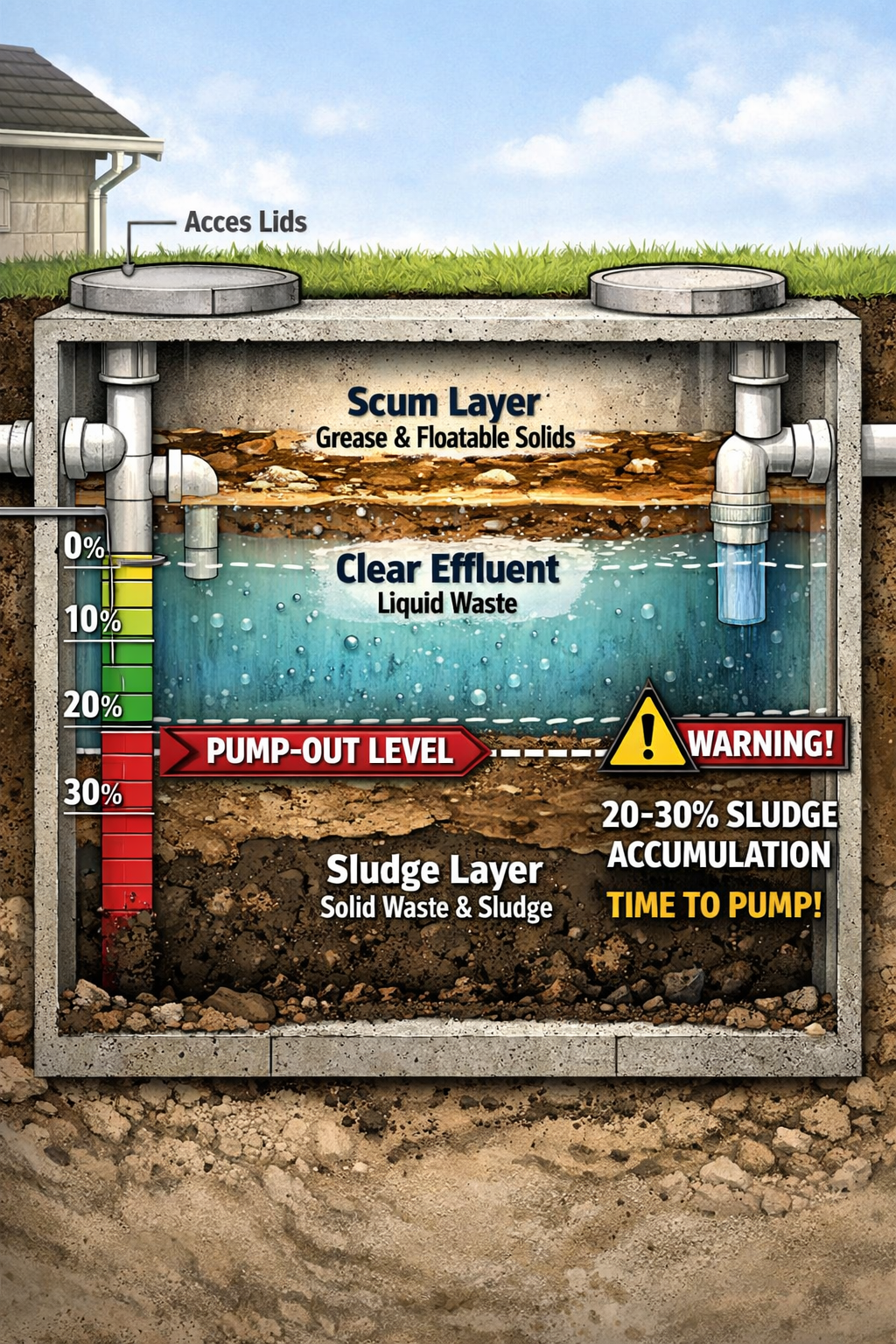
Professional septic tank pumping frequency should be based on actual sludge accumulation rather than arbitrary calendar dates. Monitoring your tank’s condition allows for more precise timing and can save money by avoiding unnecessary pumping or preventing emergency situations.
Sludge Level Guidelines:
- 0-10% accumulation: Tank functioning normally, no pumping needed
- 10-20% accumulation: Schedule inspection within 6-12 months
- 20-30% accumulation: Plan pumping within 3-6 months
- 30%+ accumulation: Pump immediately to prevent system failure
Professional inspections every 1-3 years help track accumulation rates and establish your household’s specific patterns. Some homes with light usage may safely extend pumping to 6-7 years, while others need annual service.
Monitor more frequently if you notice slow drains, gurgling sounds, or odors around your system. Extend monitoring intervals if your last inspection showed minimal sludge accumulation and stable system performance.
The 20-30% threshold is critical because higher sludge levels can clog the outlet pipe, cause backups into your home, and damage the drain field. Once sludge exceeds 30% of tank capacity, you’re at risk of expensive system failures that cost $3,000-15,000 to repair.
Decision rule: If your household’s sludge accumulation rate is consistent over 2-3 inspections, you can predict future pumping needs more accurately than following generic schedules.
What Are the Consequences of Ignoring Proper Pumping Frequency?
Neglecting your septic tank pumping frequency leads to progressively worse problems that become exponentially more expensive to fix. Understanding these consequences helps homeowners prioritize regular maintenance over reactive repairs.
Progressive Failure Timeline:
- 6 months overdue: Slow drains and occasional gurgling sounds
- 1 year overdue: Sewage odors and wet spots in yard
- 2+ years overdue: Sewage backups into home and drain field failure
- 3+ years overdue: Complete system replacement required
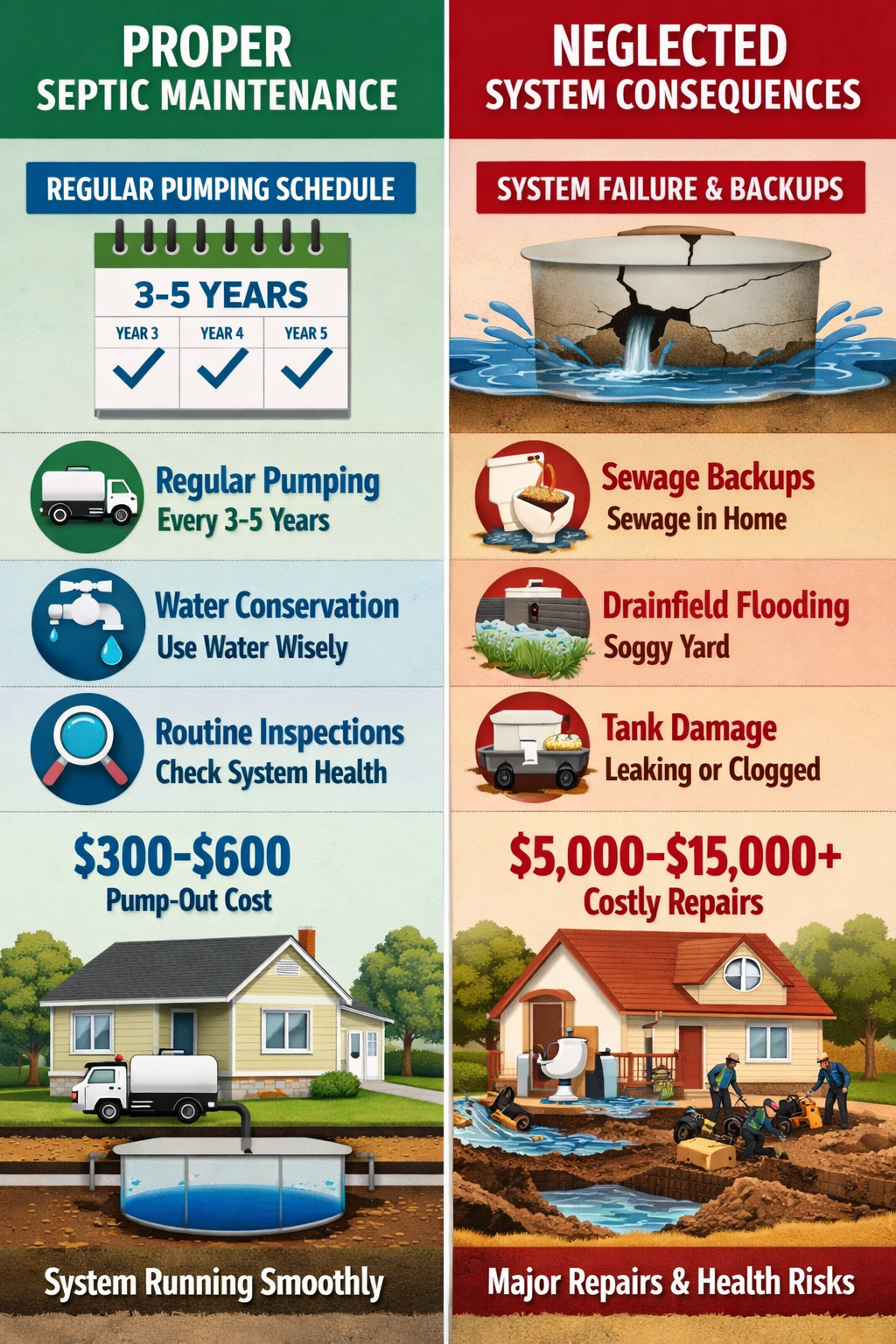
The most immediate consequence is sewage backing up into your home through toilets, tubs, and floor drains. This creates health hazards, property damage, and cleanup costs that far exceed regular pumping expenses [2].
Drain field failure is particularly costly because it requires excavating and replacing the entire leach field system. This process typically costs $5,000-15,000 and may require permits, soil testing, and temporary living arrangements during repairs.
Early warning signs include: slow-draining fixtures, sewage odors indoors or outdoors, wet spots over the drain field, and unusually green grass above the septic area. If you notice these symptoms, schedule emergency pumping immediately.
Prevention strategy: Regular pumping every 3-5 years costs $300-700 but prevents system failures that cost 10-20 times more to repair. For more details on what happens when you skip pumping, see our guide on what happens if you don’t pump your septic tank.
How Do Regional Regulations Affect Pumping Requirements?
State and local regulations often mandate specific septic tank pumping frequency requirements that override general recommendations. These rules exist to protect groundwater quality and prevent environmental contamination in sensitive areas.
Regional Pumping Requirements:
- Pennsylvania, New Jersey, New York: Mandatory pumping every 2-3 years
- Florida, Georgia: Required pumping every 3 years with annual coastal inspections
- Wisconsin, Minnesota: Recommended 3-year intervals with inspection records
- California: 3-5 year intervals with enhanced groundwater protection requirements
- Texas: County-specific rules ranging from 2-5 years depending on soil conditions
Coastal areas typically have stricter requirements because septic system failures can contaminate groundwater that flows into oceans, lakes, and rivers. Some municipalities require annual inspections even if pumping isn’t needed.
Check local requirements if you live near water bodies, in high-density neighborhoods, or areas with known groundwater issues. Standard recommendations apply if your area has no specific regulations beyond basic health department oversight.
Many areas also require permits for pumping and disposal, with licensed contractors maintaining records for regulatory compliance. Homeowners who skip required pumping may face fines, forced system upgrades, or connection to municipal sewer systems at significant cost.
Compliance tip: Contact your local health department or septic system installer to understand specific requirements in your area. Keep pumping receipts and inspection records for at least 5 years to demonstrate compliance.
What’s the Best Approach to Scheduling Your Septic Tank Pumping?
The most effective septic tank pumping frequency strategy combines regular inspections, household-specific factors, and professional recommendations rather than relying solely on generic timelines. This personalized approach maximizes system lifespan while minimizing costs.
Optimal Scheduling Strategy:
- Start with baseline recommendations: 3-5 years for average households
- Adjust for household size: Reduce interval by 1 year for each additional person over 4
- Factor in usage patterns: Reduce interval by 6-12 months for heavy water use or garbage disposal
- Schedule annual inspections: Monitor sludge accumulation to refine timing
- Track system performance: Note any changes in drainage or odors
Professional septic contractors can assess your specific system and provide customized recommendations based on tank size, soil conditions, and household patterns. This initial assessment is worth the cost because it establishes a baseline for future maintenance.
Create a maintenance calendar that includes pumping dates, inspection schedules, and system performance notes. Many homeowners forget when they last had service, leading to overdue maintenance or unnecessary early pumping.
For ongoing system support between pumpings, consider using products like Septifix tablets that help maintain healthy bacterial balance and reduce waste buildup. These monthly treatments can help extend the time between pumpings while keeping your system functioning properly.
Best practice: Schedule your next pumping service immediately after completing the current one. Most contractors offer reminder services and may provide discounts for advance scheduling.
To learn more about recognizing when your tank needs attention, check our guide on signs your septic tank needs pumping.
Helpful Resource for Easier Septic Maintenance
While proper pumping frequency is essential, you can also support your septic system between services with simple monthly maintenance. Septifix tablets offer an easy way to help break down waste, reduce odors, and maintain healthy bacterial levels in your tank.
With just one tablet flushed monthly, you can help prevent blockages and support your system’s natural waste processing. This isn’t a replacement for regular pumping, but it can help keep your system running smoothly and potentially extend the time between professional services.
👉 Discover the benefits of using Septifix for hassle-free septic maintenance
Frequently Asked Questions
How often should a family of 4 pump their septic tank?
A family of 4 with a standard 1,000-gallon septic tank should pump every 3-4 years. Households with high water usage or garbage disposals may need pumping every 2-3 years instead.
Can you pump a septic tank too often?
Yes, pumping too frequently removes beneficial bacteria needed for waste breakdown and costs money unnecessarily. Stick to 3-5 year intervals unless inspections show faster sludge accumulation.
What happens if you wait too long between pumpings?
Excessive sludge buildup causes sewage backups into your home, drain field failure, and complete system replacement costs of $5,000-15,000. Regular pumping prevents these expensive problems.
How much does septic tank pumping cost in 2026?
Professional septic tank pumping typically costs $300-700 depending on tank size, location, and accessibility. This cost is minimal compared to system replacement expenses.
Do septic tank additives reduce pumping frequency?
Quality bacterial additives may help break down waste but don’t eliminate the need for regular pumping. Solid waste still accumulates and requires professional removal every 3-5 years.
How can you tell if your septic tank is full?
Signs include slow drains, sewage odors, wet spots over the drain field, and gurgling sounds from plumbing fixtures. Schedule immediate inspection if you notice these symptoms.
Does tank size affect how often you need pumping?
Yes, larger tanks hold more waste before reaching critical levels. A 1,500-gallon tank may need pumping every 4-6 years while a 750-gallon tank requires service every 2-3 years.
Should you pump before or after heavy usage periods?
Pump before heavy usage periods like holidays or summer gatherings when possible. This provides maximum tank capacity when you need it most.
Can you pump your own septic tank?
Septic pumping requires specialized equipment and proper waste disposal. Most areas require licensed professionals for pumping to ensure environmental compliance and safety.
How do you find your septic tank for pumping?
Look for the tank lid near your home’s main drain line, check property records for system diagrams, or hire a professional to locate it using specialized equipment.
What time of year is best for septic pumping?
Spring and fall are ideal because ground conditions are typically dry and accessible. Avoid pumping during frozen ground conditions when possible.
Do you need to be home during septic pumping?
You don’t need to be present, but it’s helpful to show the contractor tank location and discuss any system concerns. Most pumping takes 30-60 minutes to complete.
Conclusion
Determining the right septic tank pumping frequency for your home requires balancing household size, tank capacity, usage patterns, and local regulations. While the standard 3-5 year recommendation works for most families, your specific situation may require more or less frequent service.
The key to successful septic maintenance is monitoring your system’s actual condition rather than blindly following calendar schedules. Regular inspections every 1-3 years help track sludge accumulation and prevent costly emergency repairs. Remember that a family of four typically needs pumping every 3-4 years, but heavy water usage or garbage disposal use may require more frequent service.
Take action today by scheduling an inspection if you haven’t had one in the past two years. Create a maintenance calendar with your next pumping date and set reminders for annual system checks. For comprehensive guidance on maintaining your system between pumpings, review our complete septic tank maintenance guide.
Proper septic tank pumping frequency protects your property investment, prevents health hazards, and saves thousands in emergency repair costs. Don’t wait for problems to develop – establish a proactive maintenance schedule that keeps your system functioning reliably for decades.
References
[1] How Often To Pump A Septic Tank – https://clearriverrenvironmental.com/how-often-to-pump-a-septic-tank/
[2] How Often To Pump Septic Tank – https://dandhsepticservices.com/how-often-to-pump-septic-tank/
[7] 5 Key Factors That Influence Septic Pumping Freq – https://www.wrenvironmental.com/blog/2025/november/5-key-factors-that-influence-septic-pumping-freq/
[8] Septic Tank Pumping Frequency – https://smartsepticpros.com/blog/septic-tank-pumping-frequency/