Last updated: February 24, 2026
Key Takeaways
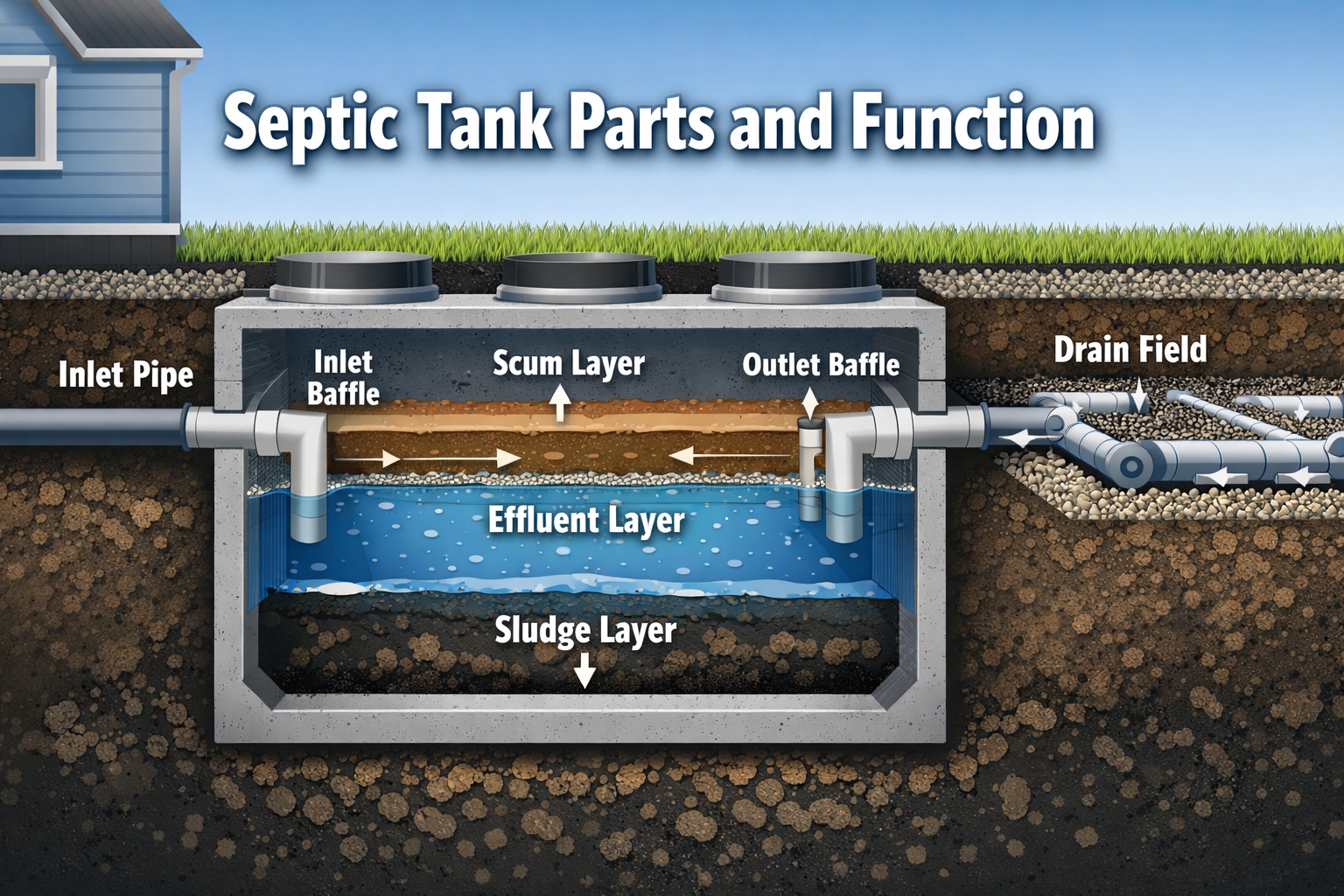
• Septic tanks have four main components: inlet pipe, tank chamber with three layers, outlet system with baffles, and drain field for final treatment
• Three distinct layers form inside the tank: scum layer (oils/grease), effluent zone (clarified liquid), and sludge layer (settled solids)
• Baffles prevent cross-contamination between layers and stop solids from entering the drain field, protecting your entire system
• Bacterial decomposition is essential for breaking down organic waste – disrupting this process leads to system failure
• Modern septic systems include smart monitoring and advanced filtration technologies that improve efficiency and reduce maintenance needs
• Regular maintenance protects expensive components – replacing a failed drain field can cost $10,000+ while routine pumping costs $300-500
• Understanding your system helps prevent emergencies like backups, overflows, and costly repairs through proper usage and care
Quick Answer
Septic tank parts and function work together in a four-stage process: wastewater enters through the inlet pipe, separates into three layers inside the tank where bacteria break down solids, passes through outlet baffles that prevent contamination, and flows to the drain field for final soil filtration. Each component serves a specific purpose in treating household wastewater before it returns safely to groundwater.
How Do Septic Tank Inlet and Outlet Systems Work?
The inlet and outlet systems control wastewater flow and maintain proper treatment conditions inside your septic tank. The inlet pipe receives all wastewater from your home, while the outlet system uses baffles and filters to ensure only properly treated effluent leaves the tank.
Inlet Pipe Function
Your inlet pipe connects directly to your home’s main sewer line and delivers wastewater into the septic tank. This pipe typically enters the tank at a slight downward angle to create proper flow velocity. The inlet includes a baffle or tee fitting that directs incoming waste downward, preventing it from disturbing the scum layer on the surface.
Key inlet components:
- Inlet baffle or tee: Directs flow downward and prevents backflow
- Proper slope: Usually 1-2% grade for adequate flow without excessive velocity
- Access port: Allows inspection and cleaning when needed
Outlet System Components
The outlet system is more complex because it must prevent solids from leaving while allowing treated effluent to flow freely. This system includes baffles, filters, and distribution components that protect your drain field from contamination.
Essential outlet parts:
- Outlet baffle: Prevents scum and sludge from exiting the tank
- Effluent filter: Catches any remaining particles before drain field entry
- Distribution box: Evenly distributes effluent across multiple drain field lines
- Flow control devices: Regulate discharge rates for optimal soil absorption
Choose professional inspection if you notice slow drains, gurgling sounds, or sewage odors – these often indicate inlet or outlet problems that require immediate attention.
What Are the Essential Internal Septic Tank Parts and Function?
The internal septic tank parts create a controlled environment where bacterial decomposition transforms raw sewage into clarified effluent. Understanding these components helps you recognize how your system processes waste and why each part matters for proper function.
Three-Layer Separation System
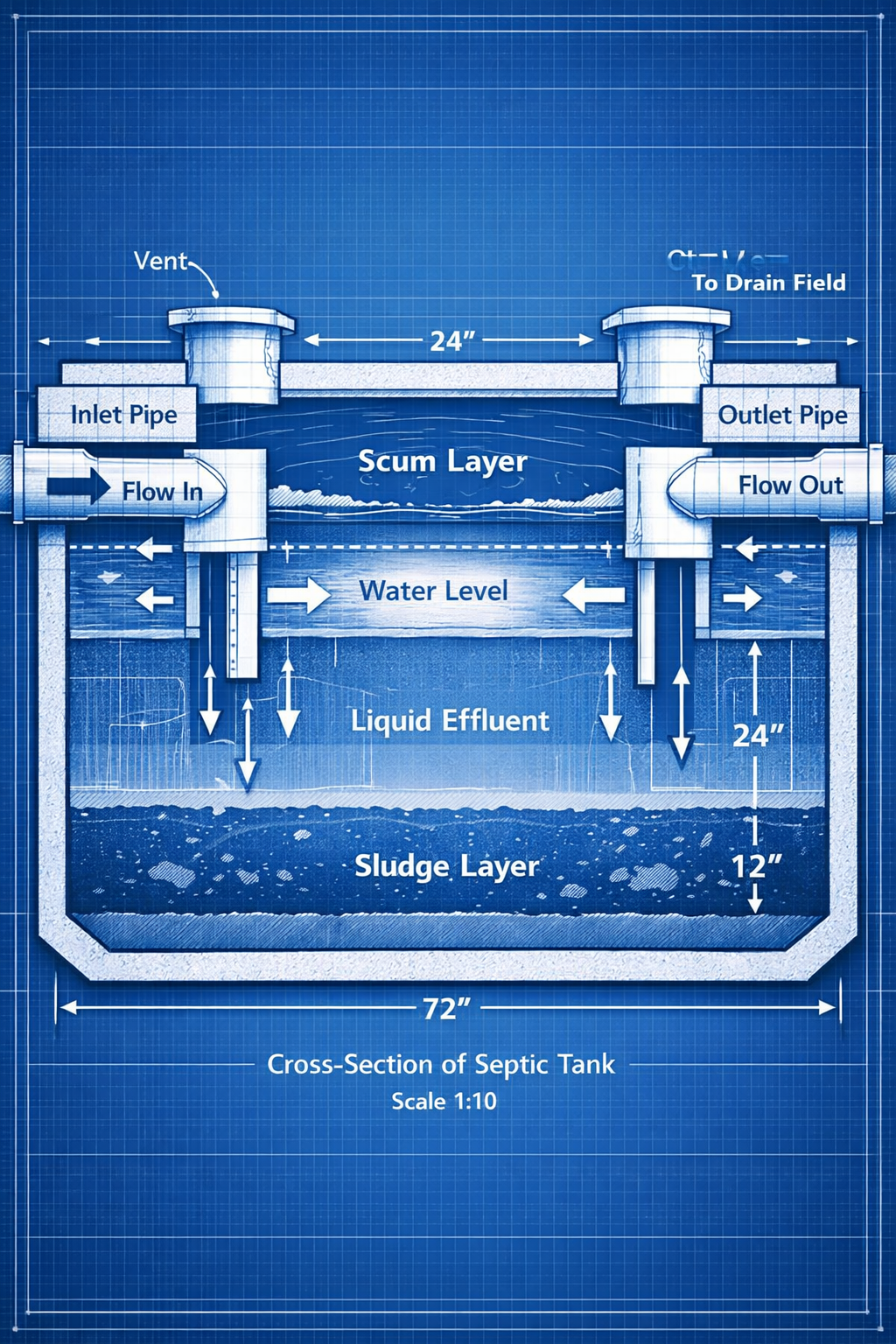
Inside your septic tank, wastewater naturally separates into three distinct layers based on density and composition. This separation is crucial for effective treatment and occurs within 24-48 hours of wastewater entering the tank.
Layer breakdown:
- Scum layer (top): Oils, grease, soap residue, and floating debris
- Effluent zone (middle): Clarified liquid ready for drain field treatment
- Sludge layer (bottom): Heavy solids, organic matter, and bacterial biomass
Bacterial Decomposition Process
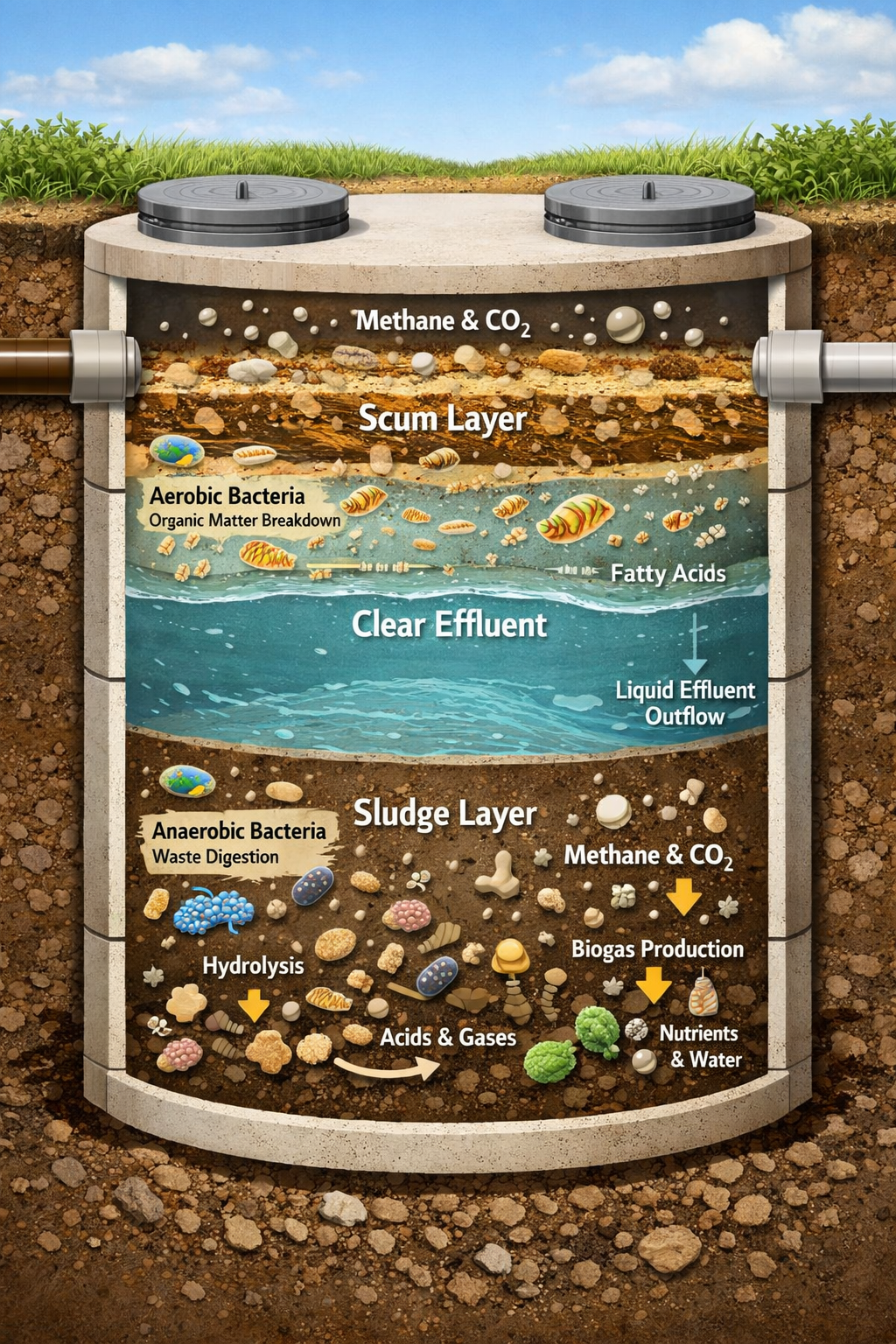
Anaerobic bacteria naturally present in your septic tank break down organic matter in the sludge layer. These microorganisms work without oxygen, slowly converting solid waste into liquid and gas byproducts. This biological process reduces solid volume by 50-60% over time.
Bacterial function stages:
- Acid production: Initial bacteria break complex materials into simpler compounds
- Methane formation: Secondary bacteria convert acids into methane and carbon dioxide
- Stabilization: Final bacterial action creates stable, reduced-volume sludge
Internal Baffles and Compartments
Many septic tanks include internal baffles that create separate compartments for enhanced treatment. The first compartment handles initial separation and heavy bacterial activity, while the second compartment provides additional settling time for clearer effluent.
Compartment benefits:
- Improved settling: Longer retention time for better solid separation
- Reduced turbulence: Less mixing between treatment zones
- Enhanced bacterial activity: Specialized conditions in each compartment
Common mistake: Adding antibacterial cleaners or excessive chemicals disrupts bacterial balance and reduces treatment effectiveness. Stick to septic-safe products to maintain healthy bacterial populations.
FYI: Some links may be affiliate links, which means I may earn a small commission at no extra cost to you.
For homeowners looking to maintain healthy bacterial activity, products like Septifix tablets can help support the natural decomposition process by introducing beneficial bacteria and enzymes that break down waste more efficiently, reducing buildup and preventing common septic problems.
How Do Septic Tank Baffles and Filters Prevent System Failure?
Septic tank baffles and filters serve as critical barriers that prevent untreated waste from contaminating your drain field. These components maintain the three-layer separation system and protect expensive downstream components from damage.
Baffle Design and Placement
Baffles are typically T-shaped or straight vertical barriers positioned at the inlet and outlet points of your septic tank. The inlet baffle forces incoming wastewater downward into the middle effluent zone, while the outlet baffle prevents the scum layer from flowing out and blocks sludge from entering the outlet pipe.
Baffle specifications:
- Inlet baffle depth: Extends 6-8 inches below scum layer
- Outlet baffle depth: Reaches 12-18 inches below surface
- Material: PVC, concrete, or fiberglass depending on tank type
- Inspection ports: Allow visual checking without opening main tank
Effluent Filter Function
Modern septic systems often include effluent filters at the outlet to catch particles that bypass the baffle system. These filters use fine mesh or synthetic materials to trap suspended solids before they reach the distribution box and drain field.
Filter benefits:
- Particle removal: Captures solids down to 1/16 inch in size
- Drain field protection: Prevents premature clogging of soil absorption area
- Easy maintenance: Most filters can be cleaned or replaced annually
- Cost savings: Extends drain field lifespan by decades
Advanced Filtration Systems
Newer septic systems may incorporate multi-stage filtration including sand filters, biofilm reactors, or membrane systems that produce exceptionally clean effluent. These advanced systems work well for properties with challenging soil conditions or environmental restrictions.
Advanced filter types:
- Sand filters: Use specially graded sand layers for enhanced particle removal
- Biofilm reactors: Support dense bacterial colonies for improved nutrient removal
- Membrane bioreactors: Combine biological treatment with ultra-fine physical filtration
Choose advanced filtration if your property has poor soil drainage, high groundwater, or strict environmental regulations that require enhanced treatment levels.
What Role Does the Drain Field Play in Septic Tank Function?
The drain field (also called leach field) provides the final treatment stage where soil naturally filters and purifies effluent before it reaches groundwater. This component typically represents 60-70% of your total septic system cost and requires proper design for long-term function.
Soil Filtration Process
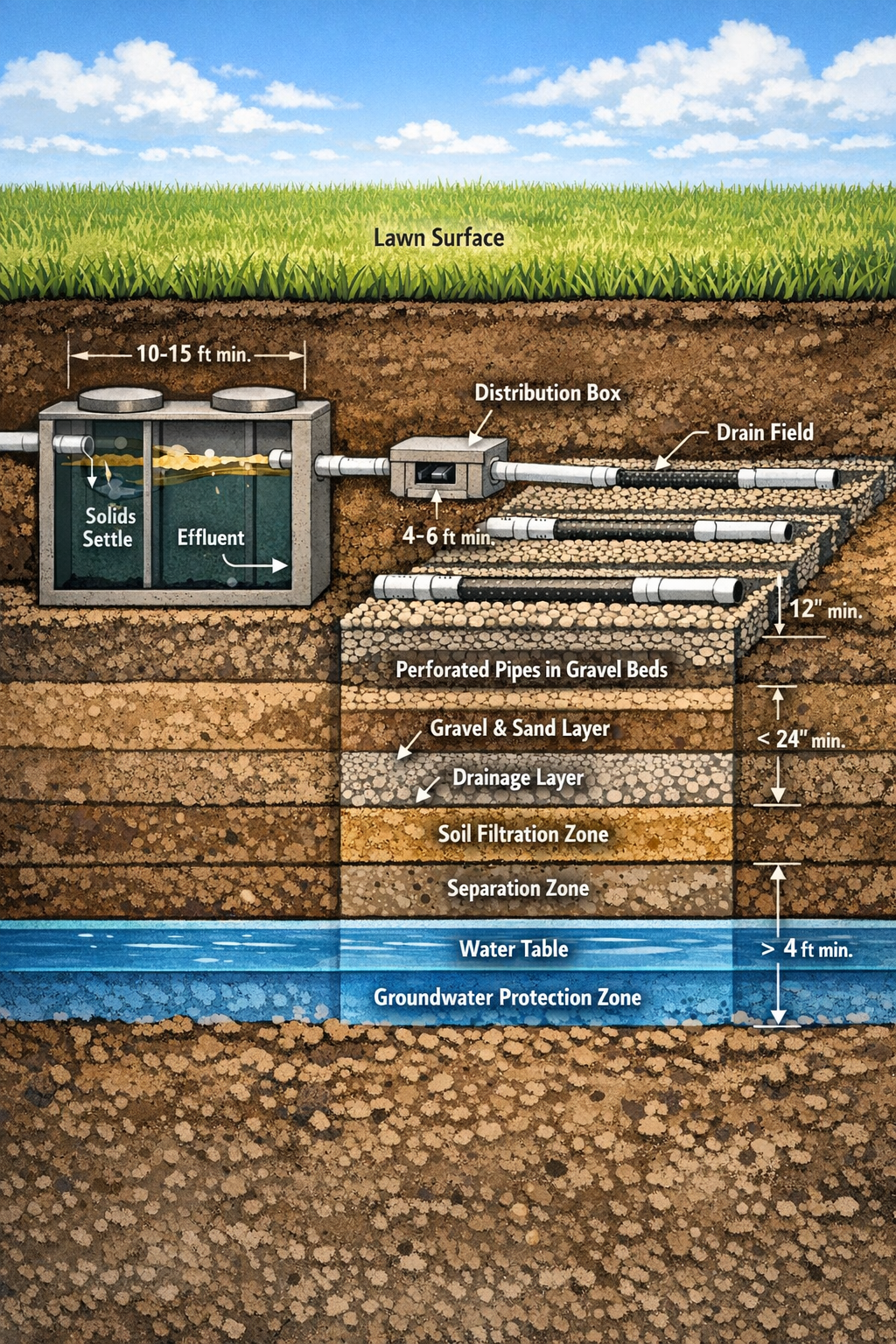
Effluent from your septic tank flows into perforated pipes buried in gravel beds within the drain field. As liquid moves through soil layers, physical, chemical, and biological processes remove remaining contaminants including bacteria, viruses, and excess nutrients.
Soil treatment mechanisms:
- Physical filtration: Soil particles trap suspended solids and pathogens
- Chemical absorption: Clay and organic matter bind phosphorus and other nutrients
- Biological activity: Soil bacteria further decompose organic compounds
- Dilution: Clean groundwater dilutes any remaining contaminants
Distribution System Components
The distribution system ensures effluent spreads evenly across the entire drain field area. Poor distribution creates wet spots that can lead to surface sewage and system failure, while proper distribution maximizes soil treatment capacity.
Key distribution parts:
- Distribution box: Divides effluent flow among multiple drain lines
- Perforated pipes: Allow controlled release of effluent into gravel beds
- Gravel beds: Provide temporary storage and even distribution around pipes
- Soil interface: Where final treatment and groundwater protection occurs
Drain Field Sizing and Design
Drain field size depends on daily wastewater volume, soil type, and local regulations. Sandy soils require smaller areas due to faster infiltration, while clay soils need larger areas and may require special design modifications.
Sizing factors:
- Household size: Typically 150-300 gallons per bedroom per day
- Soil percolation rate: Measured through percolation tests during design
- Setback requirements: Distance from wells, property lines, and water features
- Reserve area: Additional space for future expansion or replacement
Edge case consideration: Properties with seasonal high groundwater may need raised drain fields, sand mounds, or alternative treatment systems that work above natural soil levels.
How Do Modern Smart Monitoring Systems Enhance Septic Tank Parts and Function?
Smart monitoring technology transforms traditional septic systems into connected, data-driven treatment plants that prevent problems before they become expensive emergencies. These systems use sensors, AI analysis, and real-time alerts to track system performance 24/7.
IoT Sensor Integration
Modern septic tanks can include multiple sensors that monitor water levels, pH balance, temperature fluctuations, and bacterial activity. These sensors transmit data wirelessly to smartphone apps or web dashboards, giving homeowners unprecedented insight into system health.
Smart sensor capabilities:
- Level monitoring: Tracks sludge and scum layer thickness over time
- Flow measurement: Records daily wastewater volumes and peak usage periods
- Chemical analysis: Monitors pH levels and detects harmful substances
- Temperature tracking: Ensures optimal conditions for bacterial activity
Predictive Maintenance Alerts
AI algorithms analyze sensor data to predict maintenance needs before problems occur. The system can alert you when pumping is needed, detect unusual usage patterns, or warn about potential component failures.
Predictive features:
- Pumping schedules: Calculates optimal pumping timing based on actual accumulation rates
- Usage optimization: Identifies water conservation opportunities and peak load management
- Component monitoring: Tracks pump performance, filter condition, and baffle integrity
- Emergency prevention: Warns about backup risks, overflow potential, or system overload
Remote Monitoring Benefits
Smart systems allow septic professionals to monitor multiple properties remotely, providing faster response times and more efficient service scheduling. This technology particularly benefits vacation properties or rental homes where problems might otherwise go unnoticed.
Professional monitoring advantages:
- Proactive service: Technicians can schedule maintenance based on actual need
- Faster troubleshooting: Remote diagnostics identify problems before site visits
- Documentation: Detailed records support warranty claims and regulatory compliance
- Cost optimization: Prevents emergency service calls and extends component lifespan
Choose smart monitoring if you have a vacation home, rental property, or simply want peace of mind about your septic system’s performance and maintenance needs.
What Advanced Treatment Technologies Improve Septic System Performance?
Advanced treatment technologies significantly enhance septic tank parts and function by introducing oxygen, specialized bacteria, and enhanced filtration methods that produce cleaner effluent and reduce environmental impact.
Aerobic Treatment Units (ATUs)
Aerobic Treatment Units inject air into wastewater to support oxygen-loving bacteria that decompose waste faster and more completely than traditional anaerobic systems. ATUs can reduce biochemical oxygen demand by 85-95% compared to conventional septic tanks.
ATU system components:
- Aeration chamber: Where pumps inject air to maximize bacterial contact with waste
- Clarification zone: Allows treated effluent to separate from bacterial biomass
- Disinfection system: May include chlorine or UV treatment for pathogen removal
- Control panel: Manages air pumps, alarms, and maintenance schedules
Biofilm and Membrane Bioreactors
Biofilm reactors create dense microbial colonies on specially designed surfaces, while membrane bioreactors combine biological treatment with ultra-fine physical filtration. Both technologies produce exceptionally clean effluent suitable for surface discharge or reuse applications.
Advanced reactor benefits:
- Enhanced nutrient removal: Removes 90%+ of nitrogen and phosphorus
- Pathogen elimination: Membrane systems remove bacteria and viruses
- Compact design: Requires less space than conventional drain fields
- Consistent performance: Less affected by seasonal temperature changes
Energy-Efficient Innovations
Modern advanced systems incorporate energy-saving technologies including variable-speed pumps, smart controls, and renewable energy integration. These improvements reduce operating costs while maintaining superior treatment performance.
Energy optimization features:
- Variable-speed pumps: Adjust operation based on actual flow demands
- Solar integration: Powers aeration and monitoring systems with renewable energy
- Smart scheduling: Operates high-energy components during off-peak hours
- Heat recovery: Captures waste heat to maintain optimal treatment temperatures
Consider advanced treatment if your property has limited space, challenging soil conditions, or environmental restrictions that require enhanced effluent quality beyond conventional septic system capabilities.
Septic Tank Maintenance: Protecting Your System Components
Regular maintenance protects all septic tank parts and ensures optimal function while preventing expensive repairs or premature replacement. Understanding maintenance requirements helps you budget appropriately and avoid system failures.
Pumping Schedule and Sludge Management
Most septic tanks require pumping every 3-5 years to remove accumulated sludge that bacteria cannot fully decompose. However, actual pumping frequency depends on household size, tank capacity, and waste characteristics.
Pumping frequency factors:
- Tank size vs. household size: Larger tanks serve more people longer between pumpings
- Water usage patterns: High-efficiency fixtures extend pumping intervals
- Waste characteristics: Garbage disposals and certain medications increase sludge accumulation
- System age: Older systems may need more frequent pumping due to reduced efficiency
Component Inspection and Replacement
Regular inspections identify worn or damaged components before they cause system failure. Professional inspections should occur every 1-3 years and include checking baffles, filters, distribution boxes, and drain field condition.
Inspection checklist:
- Baffle integrity: Check for cracks, corrosion, or displacement
- Filter condition: Clean or replace effluent filters annually
- Liquid levels: Verify proper separation between layers
- Distribution system: Ensure even flow to all drain field sections
Preventive Care Practices
Simple preventive measures protect septic tank components and extend system lifespan. These practices cost nothing but save thousands in repair and replacement expenses.
Daily protection habits:
- Water conservation: Reduces hydraulic load on all system components
- Proper waste disposal: Keeps non-biodegradable items out of the system
- Chemical awareness: Use septic-safe cleaning products and detergents
- Grease management: Dispose of cooking fats in trash, not drains
For homeowners seeking an easy way to support their septic system between professional services, Septifix tablets provide a convenient maintenance solution that helps break down waste buildup and maintain healthy bacterial populations with minimal effort.
Common maintenance mistake: Waiting for problems to appear before scheduling service. Proactive maintenance costs far less than emergency repairs and prevents system failures that can damage your property and environment.
Troubleshooting Common Septic Tank Component Problems
Understanding how to identify and address common septic tank parts and function issues helps you respond quickly to problems and know when professional help is needed. Early intervention prevents minor issues from becoming major system failures.
Identifying Component-Specific Problems
Different septic tank components produce distinct warning signs when they malfunction. Learning to recognize these symptoms helps you pinpoint problems and communicate effectively with service technicians.
Inlet system problems:
- Slow drains throughout house: May indicate inlet blockage or baffle damage
- Gurgling sounds: Often caused by restricted inlet flow or improper venting
- Sewage odors: Can result from damaged inlet baffles allowing gas escape
Internal tank issues:
- Rapid tank filling: Suggests bacterial die-off or excessive non-biodegradable waste
- Surface sewage: Indicates outlet baffle failure or drain field problems
- Strong odors: May signal pH imbalance or toxic chemical contamination
Drain field symptoms:
- Wet spots in yard: Shows uneven distribution or soil saturation
- Lush grass growth: Indicates nutrient-rich effluent reaching surface
- Well water contamination: Suggests drain field failure and groundwater pollution
When to Call Professionals vs. DIY Solutions
Some septic issues require immediate professional attention, while others can be addressed through simple homeowner actions. Understanding the difference prevents dangerous situations and costly mistakes.
Professional service needed:
- Tank pumping and sludge removal: Requires specialized equipment and disposal
- Baffle repair or replacement: Involves entering confined space with toxic gases
- Drain field excavation: Needs permits, soil testing, and proper installation
- System component replacement: Requires knowledge of codes and regulations
Homeowner actions:
- Water usage reduction: Immediately reduces system load during problems
- Chemical elimination: Stop using harsh cleaners that disrupt bacterial activity
- Waste disposal changes: Redirect non-septic items to trash instead of drains
- Basic monitoring: Track symptoms and document changes for professional consultation
Emergency Response Procedures
Septic emergencies like sewage backups or surface discharge require immediate action to protect health and prevent environmental contamination. Having an emergency plan helps you respond effectively.
Emergency steps:
- Stop water usage: Immediately cease all non-essential water use
- Avoid contact: Keep people and pets away from sewage-contaminated areas
- Document problems: Take photos for insurance and professional assessment
- Call professionals: Contact emergency septic service for immediate response
Choose emergency service if you experience sewage backup into your home, surface sewage in your yard, or strong sewage odors that persist after reducing water usage.
For ongoing septic health support, many homeowners find that regular maintenance practices combined with quality bacterial treatments help prevent many common problems before they require emergency intervention.
Frequently Asked Questions
How often should septic tank components be inspected?
Professional inspections should occur every 1-3 years, with annual checks of effluent filters and visual monitoring of drain field areas. Smart monitoring systems provide continuous component oversight for enhanced protection.
What causes septic tank baffles to fail?
Baffle failure typically results from age-related deterioration, chemical corrosion from harsh cleaners, or physical damage from improper pumping techniques. Concrete baffles may crack over time, while plastic baffles can become displaced.
Can I replace septic tank parts myself?
Simple components like effluent filters can often be cleaned or replaced by homeowners, but major parts like baffles, pumps, or distribution boxes require professional installation due to safety concerns and permit requirements.
How do I know if my septic tank’s bacterial system is healthy?
Healthy bacterial activity produces minimal odors, maintains clear effluent in the middle layer, and steadily reduces sludge volume. pH levels between 6.8-7.2 and temperatures around 60-70°F indicate optimal bacterial conditions.
What’s the difference between conventional and advanced septic systems?
Conventional systems rely on gravity flow and natural bacterial decomposition, while advanced systems add aeration, specialized filtration, or electronic monitoring. Advanced systems typically cost more but produce cleaner effluent and work in challenging conditions.
How long do different septic tank components last?
Concrete tanks last 40+ years, plastic tanks 20-30 years, while pumps and electronic components need replacement every 10-15 years. Drain fields typically function 20-30 years with proper maintenance.
What happens if septic tank filters become clogged?
Clogged filters cause effluent backup, slow drains, and potential sewage overflow. Most filters can be cleaned with water spray, but severely damaged filters require replacement to protect the drain field.
Are smart septic monitoring systems worth the investment?
Smart systems cost $1,000-3,000 but can prevent emergency repairs costing $5,000-15,000. They’re particularly valuable for vacation homes, rental properties, or homeowners who want proactive maintenance alerts.
How does cold weather affect septic tank components?
Cold temperatures slow bacterial activity and can freeze exposed pipes or pumps. Insulating tank lids, maintaining steady water flow, and avoiding excessive water conservation during freezing periods helps protect system components.
What size septic tank do I need for my household?
Tank sizing depends on household size and daily water usage, typically 750-1,500 gallons for 2-5 bedrooms. Local codes may require specific sizing based on bedroom count rather than actual occupancy.
Can septic tank additives damage system components?
Chemical additives can disrupt bacterial balance and corrode tank materials, while biological additives generally support system health. Always choose septic-safe products and avoid additives claiming to eliminate pumping needs.
How do I locate my septic tank components for maintenance?
Tank locations are typically recorded in building permits or septic system records. Professional locating services use specialized equipment to map underground components without excavation damage.
Helpful Resource
If you want a simple way to support your septic system’s bacterial health and reduce maintenance concerns, Septifix tablets offer an easy solution for busy homeowners. These tablets help break down waste more effectively and maintain the bacterial balance that’s essential for proper septic tank parts and function, potentially extending the time between pumpings and preventing common system problems.
Conclusion
Understanding septic tank parts and function empowers you to maintain your system properly, recognize problems early, and make informed decisions about repairs or upgrades. Each component – from inlet pipes and internal baffles to advanced monitoring systems and drain fields – plays a crucial role in protecting your property and the environment.
The key to septic system success lies in respecting the biological processes that make treatment possible while protecting the physical components that control wastewater flow and filtration. Whether you have a conventional gravity system or an advanced treatment unit, regular maintenance and proper usage habits will extend component lifespan and prevent expensive failures.
Take these actions today:
- Schedule a professional inspection if your system hasn’t been checked in the past 2 years
- Locate and mark your septic components so you can monitor them regularly and provide easy access for service
- Review your household habits to ensure you’re not overwhelming your system or damaging components with harmful chemicals
- Consider smart monitoring technology if you want proactive alerts about system performance and maintenance needs
- Plan your maintenance budget by setting aside $300-500 annually for routine pumping and minor repairs
Remember that investing in proper septic tank maintenance and understanding how your system works will save you thousands of dollars in emergency repairs while protecting your family’s health and your property value. When in doubt, consult with septic professionals who can provide system-specific guidance based on your tank type, soil conditions, and household needs.
For more detailed guidance on maintaining your septic system, explore our comprehensive maintenance guide and learn about warning signs that indicate your system needs attention.
References
[1] Septic Tank Innovations – https://www.lanikseptic.com/septic-tank-innovations/
[4] How Does A Septic Tank Work – https://www.jensenprecast.com/resource-hub/product-resources/septic-tanks/how-does-a-septic-tank-work/
[5] Smart Septic Technology How Modern Innovations Are Transforming Environmental Protection In Cartersville – https://www.metroseptic.com/blog/smart-septic-technology-how-modern-innovations-are-transforming-environmental-protection-in-cartersville/
[6] Septic Tank Environmental Engineering – https://landperc.com/septic-tank-environmental-engineering/
[7] Septic System Types – https://www.premiertechaqua.com/en-us/blog/septic-system-types