Septic Tank Overflow Causes: Complete Prevention Guide for Homeowners
Last updated: January 15, 2026
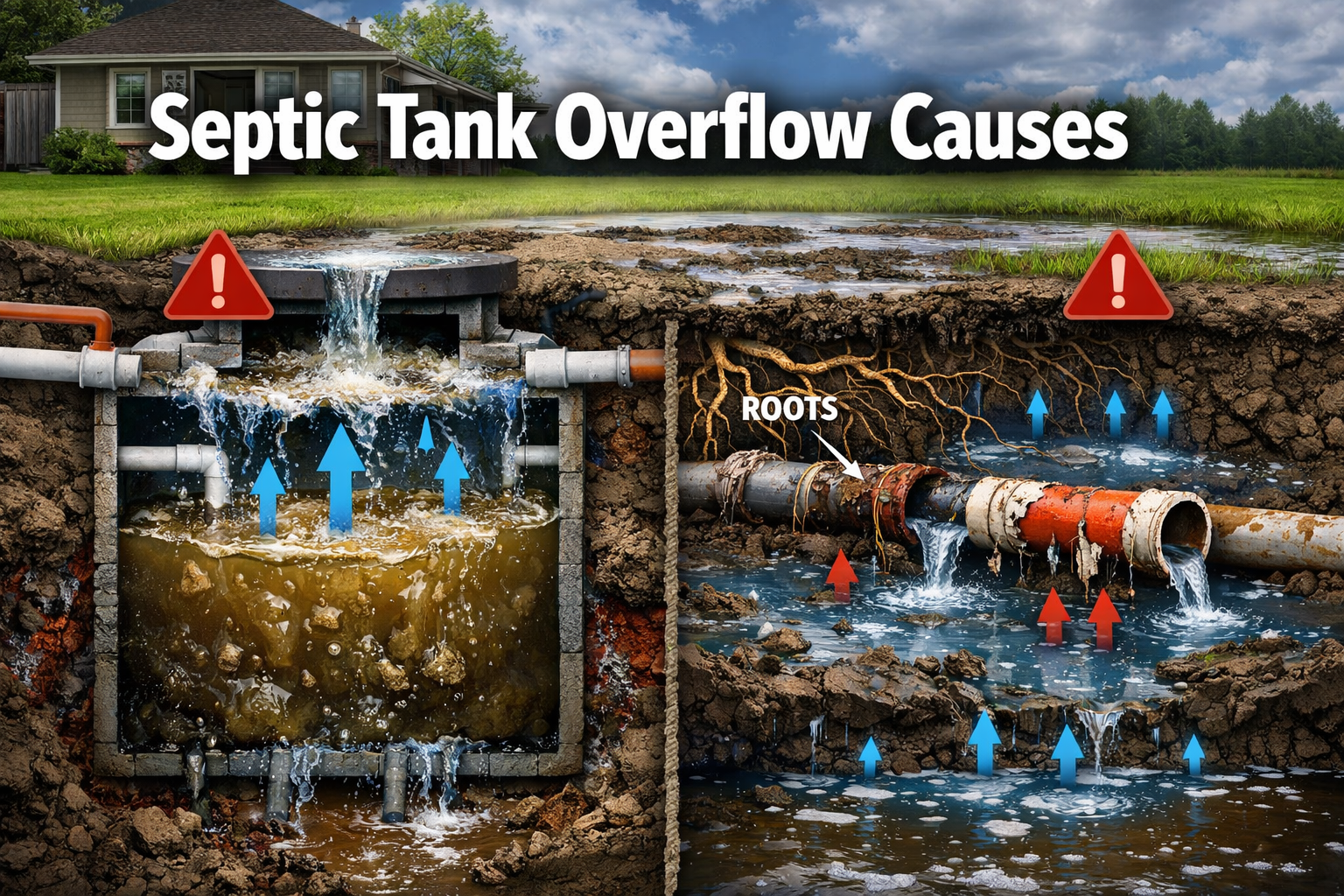
Picture this: You wake up to sewage backing up into your home, foul odors filling your yard, and the looming threat of thousands of dollars in emergency repairs. Septic tank overflow causes range from simple maintenance neglect to complex environmental factors, but understanding these triggers can save you from this nightmare scenario and protect your property investment.
Key Takeaways
- Insufficient pumping is the leading cause of septic overflows, with tanks requiring service every 3-5 years depending on household size
- Drainfield saturation from heavy rainfall or high water tables can overwhelm your system’s capacity
- Excessive water usage and improper waste disposal create hydraulic overload that leads to backup
- Tree root intrusion and pipe damage cause physical blockages that prevent normal wastewater flow
- Early detection and regular maintenance prevent costly emergency repairs and system replacement
Quick Answer
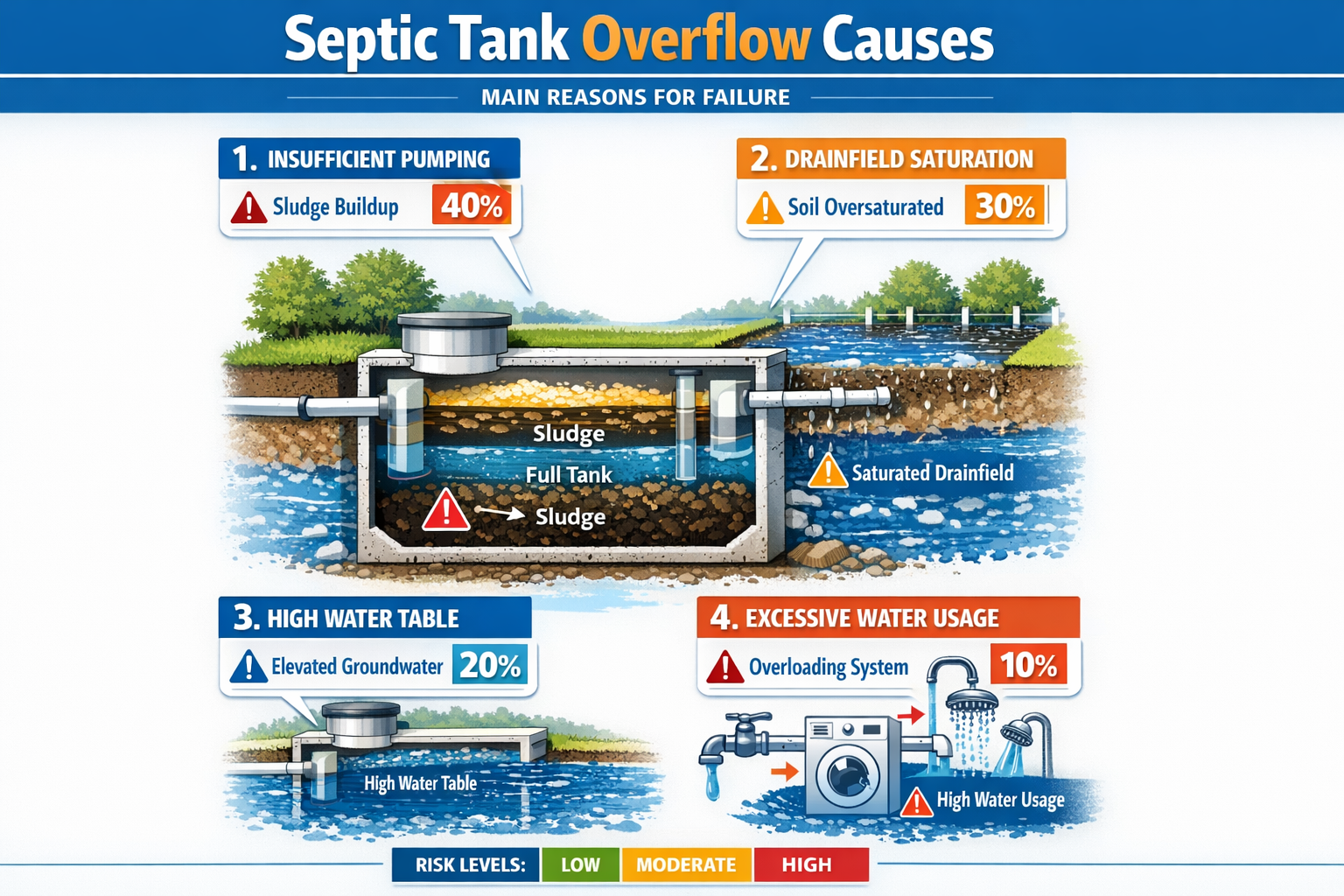
Septic tank overflows occur when wastewater cannot properly exit your system due to insufficient pumping, drainfield saturation, excessive water usage, or physical blockages. The most common cause is inadequate maintenance—specifically not pumping accumulated sludge every 3-5 years. Environmental factors like heavy rainfall, high water tables, and tree root intrusion also contribute to overflow situations that require immediate attention.
What Are the Primary Septic Tank Overflow Causes?
The leading septic tank overflow causes stem from insufficient pumping and maintenance neglect. When you don’t pump your tank regularly, solid waste accumulates as sludge at the bottom while oils and grease form a scum layer on top. This buildup reduces the tank’s effective capacity and prevents proper separation of wastewater.
Most Common Overflow Triggers:
- Insufficient pumping frequency (accounts for 60-70% of overflows)
- Drainfield saturation from environmental factors
- Hydraulic overload from excessive water usage
- Physical blockages in pipes and distribution systems
- System age and deterioration affecting performance
The EPA recommends pumping every 3-5 years for average households, but homes with garbage disposals, larger families, or smaller tanks need more frequent service. When you skip this maintenance, the tank fills beyond capacity and wastewater has nowhere to go except back toward your home.
Choose more frequent pumping if you have:
- Four or more people in your household
- A garbage disposal unit
- A tank smaller than 1,000 gallons
- Heavy water usage patterns
Understanding how septic tank systems work helps you recognize why these factors create overflow conditions. Regular maintenance prevents most overflow situations before they become emergencies.
How Does Drainfield Failure Lead to Septic Tank Overflow?
Drainfield failure creates septic tank overflow when soil becomes unable to absorb treated effluent, causing wastewater to back up through the entire system. This happens when the drainfield becomes waterlogged after heavy rainfall, snowmelt, or rising groundwater levels.
Drainfield Saturation Process:
- Soil becomes waterlogged from external water sources
- Absorption capacity drops dramatically or stops completely
- Effluent backs up into the septic tank
- Tank fills beyond normal levels and overflows
When your drainfield can’t absorb water, it’s like trying to pour liquid into an already full container. The treated wastewater has nowhere to go, so it accumulates in the tank and eventually backs up into your home’s plumbing system.
Environmental factors that cause drainfield saturation:
- Extended periods of heavy rainfall
- Rapid snowmelt in spring
- Seasonal high water table fluctuations
- Poor soil drainage characteristics
- Compacted soil from vehicle traffic
Common mistake: Many homeowners assume drainfield problems only occur during extreme weather, but even moderate rainfall can overwhelm a system that’s already stressed from other factors.
Drainfield failure represents the most expensive septic problem you can face, often requiring complete system replacement. If you notice signs of a full septic tank during or after wet weather, your drainfield may be compromised.
Why Does High Water Table Cause Septic Tank Overflow?
High water table conditions cause septic tank overflow when rising groundwater infiltrates your system and disrupts normal wastewater processing. Groundwater can enter through loose manhole covers, damaged pipes, or tank connections, essentially flooding your septic system with external water.
High Water Table Impact:
- Groundwater infiltration fills tank capacity with non-household water
- Reduced settling time prevents proper waste separation
- Hydraulic overload overwhelms drainfield absorption
- Buoyancy effects can cause tanks to shift or crack
When groundwater levels rise above your septic tank, the system becomes submerged and cannot function properly. Instead of processing your household wastewater, the tank fills with groundwater and loses its ability to separate solids from liquids.
Seasonal patterns that affect water table:
- Spring snowmelt raising groundwater levels
- Extended wet seasons increasing soil saturation
- Coastal areas experiencing tidal influences
- Areas with poor natural drainage
Critical consideration: Homes in coastal regions face increasing challenges from sea level rise, with over 1 million homes in Virginia alone relying on septic systems that are increasingly vulnerable to groundwater intrusion.
If your septic problems coincide with wet seasons or you live in a low-lying area, high water table may be contributing to your overflow issues. Professional assessment can determine if your system needs modifications to handle these conditions.
How Do Tree Roots and Physical Blockages Create Overflow?
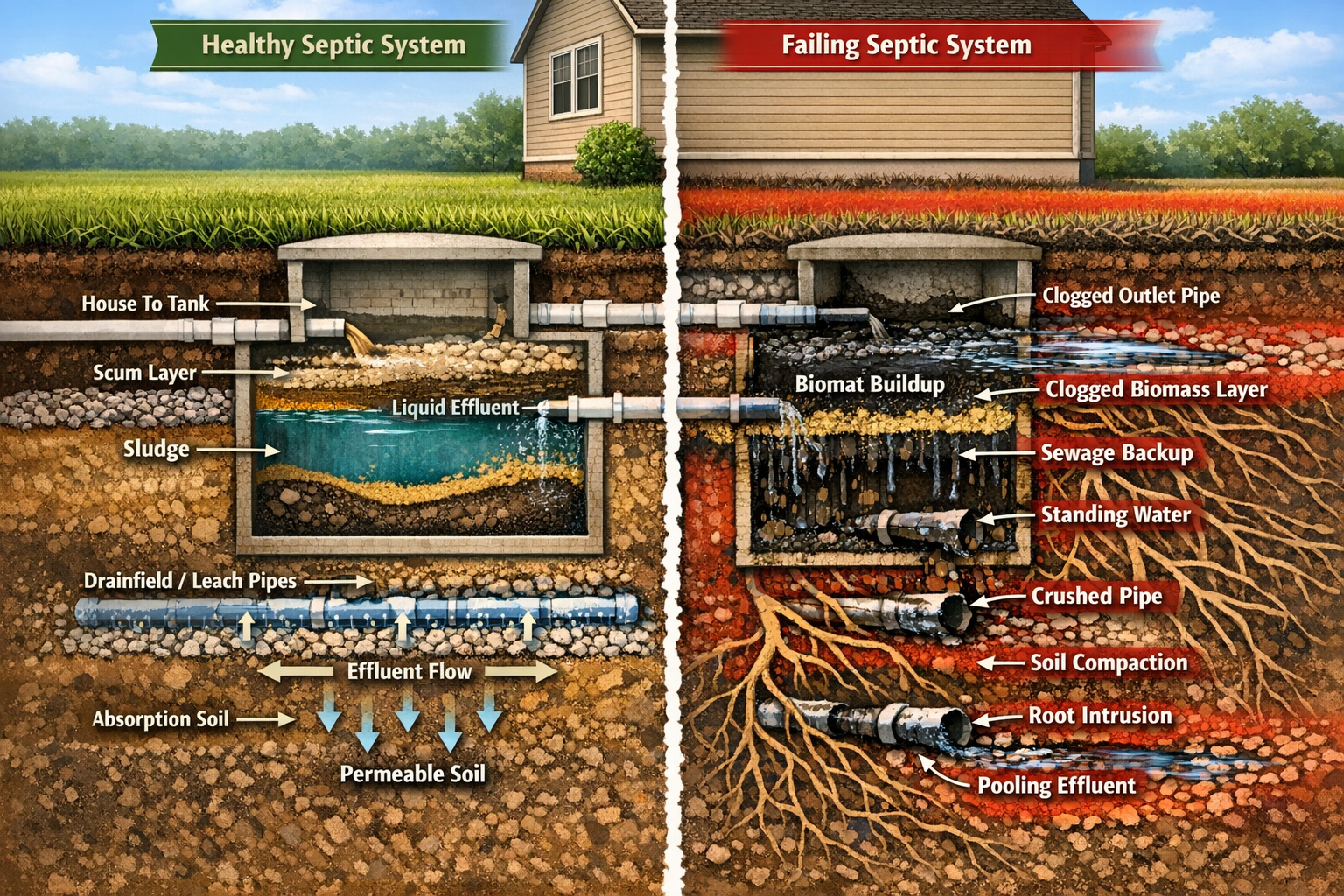
Tree roots create septic tank overflow by growing into pipes and forming dense blockages that prevent normal wastewater flow. Roots are naturally drawn to the moisture and nutrients in septic systems, and they can completely obstruct pipes within a few growing seasons.
Root Intrusion Process:
- Roots seek moisture from septic pipes and drainfield
- Small roots enter through pipe joints or minor cracks
- Roots expand and create larger openings
- Dense root masses form complete blockages
Beyond tree roots, several physical blockages can cause overflow conditions in your septic system:
Common Physical Blockages:
- Crushed or collapsed pipes from soil settling or vehicle weight
- Biomat buildup creating slimy bacterial layers that clog soil
- Foreign objects flushed into the system
- Grease accumulation hardening in pipes
- Soil compaction over drainfield reducing absorption
Quick example: A homeowner planted willow trees near their drainfield for privacy. Within three years, the fast-growing roots had completely blocked the distribution box, causing sewage to back up into the house during the next heavy rainfall.
Choose root-resistant landscaping if you have:
- Trees within 50 feet of your drainfield
- Fast-growing species like willows, poplars, or maples nearby
- Existing root problems in your plumbing
Regular inspection and strategic landscaping prevent most root-related blockages. If you’re experiencing septic tank slow drains, root intrusion may be developing in your system.
What Role Does Excessive Water Usage Play in Septic Tank Overflow Causes?
Excessive water usage creates septic tank overflow through hydraulic overload, where more wastewater enters the system than the drainfield can absorb. This overwhelms your system’s natural processing capacity and can cause immediate backup conditions.
Hydraulic Overload Scenarios:
- Multiple loads of laundry in a single day
- Extended shower usage from guests or teenagers
- Running dishwasher and washing machine simultaneously
- Hot tub or pool drainage into septic system
- Leaking toilets or faucets adding continuous water flow
Your septic system is designed to handle normal household water usage spread throughout the day. When you suddenly increase water volume, the drainfield cannot absorb the excess effluent quickly enough, causing backup through the entire system.
Daily water usage guidelines:
- Average household: 50-70 gallons per person per day
- High-usage warning: Over 100 gallons per person per day
- System capacity: Most residential systems handle 300-600 gallons daily
Common mistake: Many homeowners don’t realize that doing all weekly laundry in one day can overwhelm their septic system, especially if combined with other high-water activities.
FYI: Some links may be affiliate links, which means I may earn a small commission at no extra cost to you.
For homeowners looking to maintain optimal septic function while managing water usage, Septifix tablets can help break down waste more efficiently and reduce the impact of occasional high-water periods. These monthly treatments help maintain proper bacterial balance, which becomes especially important when your system experiences hydraulic stress.
How Do Improper Waste Disposal Practices Lead to Overflow?
Improper waste disposal creates septic tank overflow by disrupting bacterial balance and creating physical blockages that prevent normal system operation. When you flush non-biodegradable items or pour harmful chemicals down drains, you damage the biological processes that make septic systems work.
Harmful Items That Cause Overflow:
Non-biodegradable solids:
- Wet wipes and “flushable” wipes
- Feminine hygiene products
- Cigarette butts and cat litter
- Dental floss and cotton swabs
Chemical disruptors:
- Antibacterial soaps and cleaners
- Paint thinners and solvents
- Excessive bleach or disinfectants
- Prescription medications
Grease and food waste:
- Cooking oils and fats
- Coffee grounds and food scraps
- Large amounts of food from garbage disposals
These materials either accumulate as solids that fill tank capacity or kill the beneficial bacteria needed to break down waste. Without proper bacterial action, solids don’t decompose and the tank fills much faster than normal.
Critical rule: Your septic tank is not a garbage disposal. Only human waste, toilet paper, and normal household wastewater should enter the system.
When harmful substances enter your septic system, they can cause rapid failure that requires emergency pumping or even system replacement. Understanding what happens in a septic tank helps you make better decisions about what goes down your drains.
What Environmental Factors Contribute to Septic Tank Overflow?
Environmental factors contribute to septic tank overflow through conditions beyond your direct control, including weather patterns, soil characteristics, and climate change effects. These factors can overwhelm even well-maintained systems during extreme conditions.
Weather-Related Overflow Causes:
- Heavy rainfall saturating drainfield soil
- Rapid snowmelt creating temporary flooding
- Extended wet periods preventing soil recovery
- Drought conditions followed by sudden heavy rain
- Seasonal water table fluctuations
Soil and Geographic Factors:
- Clay soils with poor drainage characteristics
- High water table areas near lakes or rivers
- Coastal locations affected by tidal influences
- Steep slopes causing rapid water runoff
- Compacted soil from construction or traffic
Climate Change Impacts:
Climate change is creating new challenges for septic systems, particularly in coastal areas. Sea level rise threatens septic infrastructure, with some coastal regions experiencing increasing failure rates as groundwater levels rise. Areas that historically had stable conditions now face more frequent overflow events.
Choose professional assessment if you have:
- Repeated seasonal overflow problems
- Recent changes in local water table
- New construction affecting drainage patterns
- Increasing frequency of weather-related issues
Edge case consideration: Some areas that never experienced septic problems are now seeing regular failures due to changing precipitation patterns and rising sea levels, requiring system modifications or replacement.
Understanding these environmental factors helps you prepare for seasonal challenges and make informed decisions about system upgrades or modifications.
How Can You Prevent Septic Tank Overflow Causes?
Preventing septic tank overflow requires a combination of regular maintenance, proper usage habits, and proactive monitoring. Most overflow situations are preventable with consistent care and attention to early warning signs.
Essential Prevention Strategies:
Regular Maintenance Schedule:
- Pump every 3-5 years based on household size and usage
- Annual inspections to catch problems early
- Monitor sludge levels between pumpings
- Check and clean effluent filter if equipped
Daily Usage Practices:
- Spread water usage throughout the week
- Use septic-safe products for cleaning and personal care
- Dispose of grease in trash, not down drains
- Limit garbage disposal use or eliminate entirely
Monitoring and Early Detection:
- Watch for slow drains or gurgling sounds
- Notice odors around tank or drainfield areas
- Check for wet spots or lush grass over drainfield
- Monitor water usage during high-demand periods
Landscaping Considerations:
- Plant grass only over drainfield areas
- Keep trees at least 50 feet from system components
- Avoid soil compaction from vehicles or heavy equipment
- Direct surface water away from drainfield
Quick checklist for overflow prevention:
□ Schedule regular pumping based on your household needs
□ Use septic-safe cleaning products
□ Spread laundry loads throughout the week
□ Keep detailed records of maintenance and problems
□ Know the location of your tank and drainfield
Learning how to tell if your septic tank is full helps you catch problems before they become emergencies. Early intervention saves money and prevents property damage.
When Should You Call a Professional for Septic Tank Overflow?
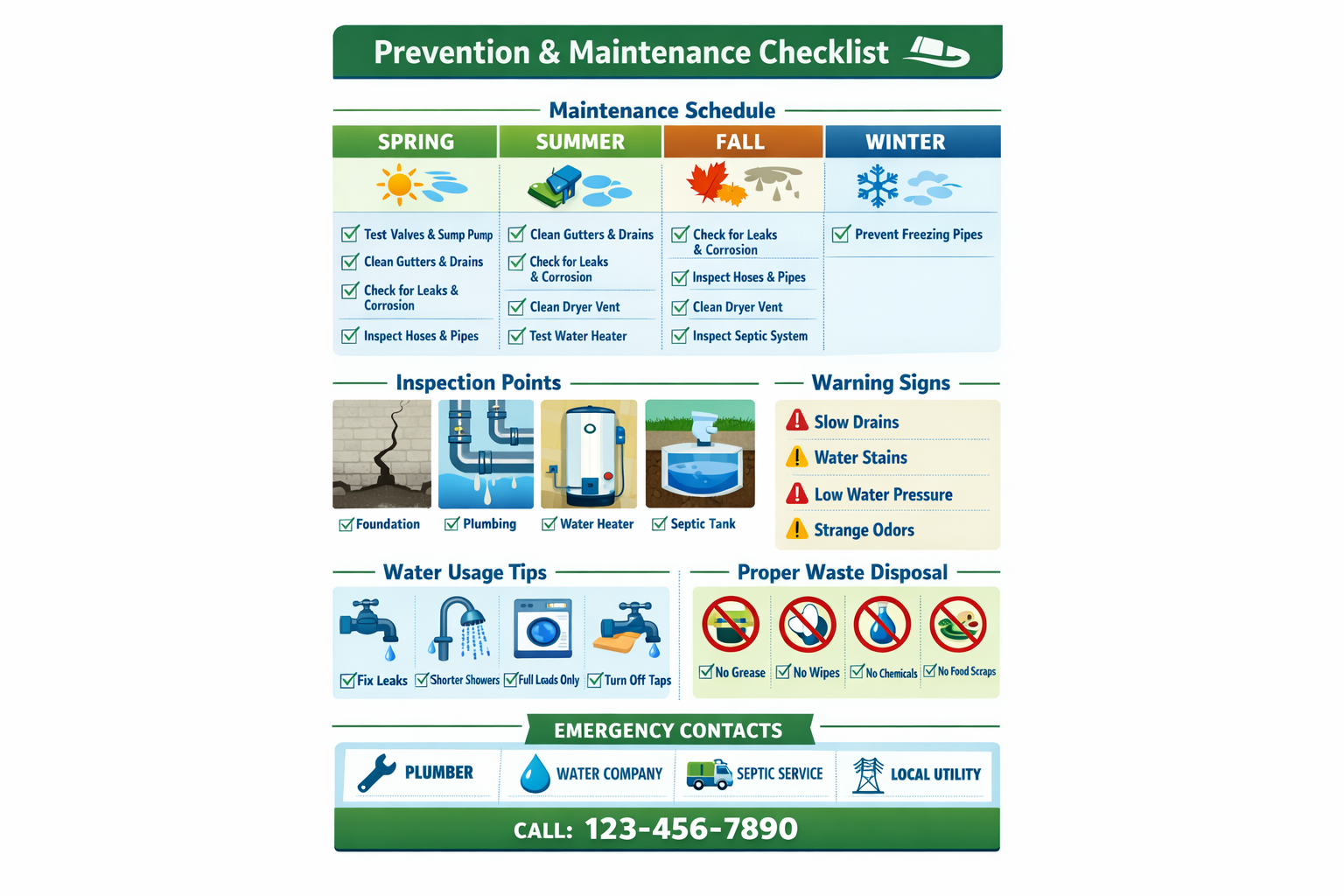
Call a professional immediately when you notice sewage backing up into your home, standing water over your drainfield, or strong sewage odors around your property. These signs indicate active overflow conditions that require emergency response to prevent health hazards and property damage.
Emergency Situations Requiring Immediate Professional Help:
Immediate dangers:
- Sewage backup in toilets, sinks, or floor drains
- Raw sewage surfacing in yard or drainfield area
- Strong sewage odors inside or outside your home
- Contaminated well water if you have a private well nearby
Urgent but non-emergency situations:
- Very slow drains throughout the house
- Gurgling sounds from multiple fixtures
- Wet spots appearing over drainfield
- Unusually green grass in drainfield area
Professional Assessment Needed:
- Repeated problems despite recent pumping
- System age over 20 years with increasing issues
- Environmental changes affecting your property
- Renovation plans that might impact septic system
What to expect from professional service:
- Emergency pumping to relieve immediate overflow
- System inspection to identify root causes
- Recommendations for repairs or upgrades
- Guidance on preventing future problems
Common mistake: Waiting to call professionals until sewage backs up into the house. Early intervention costs much less than emergency repairs and cleanup.
If you’re experiencing signs that might indicate septic tank backing up into house, don’t wait for the situation to worsen. Professional assessment can often resolve problems before they become emergencies.
Recommended Tool for Ongoing Septic Maintenance
For homeowners who want a simple way to support their septic system between professional services, Septifix tablets offer convenient monthly maintenance that helps prevent many overflow causes. These tablets help break down waste, reduce odors, and maintain the bacterial balance that keeps your septic tank functioning properly.
Septifix works by introducing beneficial bacteria that enhance waste breakdown and can help prevent the buildup of solids that leads to overflow conditions. With one easy monthly flush, you can help protect your system against some of the most common causes of septic problems.
While regular pumping and proper usage remain essential, Septifix tablets can be a helpful addition to your maintenance routine, especially if you have a busy household or want extra protection for your septic investment.
Frequently Asked Questions
Q: How often should I pump my septic tank to prevent overflow?
A: Pump every 3-5 years for average households, but pump every 2-3 years if you have a large family, garbage disposal, or smaller tank. Heavy usage requires more frequent pumping to prevent overflow conditions.
Q: Can heavy rain cause my septic tank to overflow?
A: Yes, heavy rain can saturate your drainfield and prevent proper effluent absorption, causing wastewater to back up into the tank and potentially into your home. This is especially common in clay soils or areas with high water tables.
Q: What are the first signs that my septic tank might overflow?
A: Early signs include slow drains throughout the house, gurgling sounds from fixtures, sewage odors around the tank area, and wet spots or unusually green grass over the drainfield.
Q: How much does it cost to fix a septic tank overflow?
A: Emergency pumping costs $300-500, but major repairs like drainfield replacement can cost $3,000-10,000. Prevention through regular maintenance is much more cost-effective than emergency repairs.
Q: Can I use regular household cleaners with a septic system?
A: Use septic-safe cleaners and avoid antibacterial products, bleach, or chemical drain cleaners. These products kill beneficial bacteria needed for proper waste breakdown and can contribute to overflow conditions.
Q: Will tree roots really damage my septic system?
A: Yes, tree roots actively seek moisture and nutrients from septic systems and can create complete blockages within a few years. Keep trees at least 50 feet away from your tank and drainfield.
Q: How do I know if my drainfield is failing?
A: Signs of drainfield failure include standing water over the drainfield, sewage odors outside, backup during wet weather, and lush green grass in the drainfield area even during dry periods.
Q: Can I repair septic overflow problems myself?
A: Never attempt DIY repairs for active overflow situations. Sewage backup creates health hazards that require professional equipment and expertise. You can prevent problems through proper maintenance, but repairs need professional service.
Q: What should I do immediately if sewage backs up into my house?
A: Stop using all water in the house, avoid contact with sewage, ventilate the area, and call a septic professional immediately. Don’t use toilets, sinks, or other drains until the problem is resolved.
Q: How does garbage disposal use affect septic tank overflow risk?
A: Garbage disposals increase solid waste entering your septic tank by 25-50%, requiring more frequent pumping and increasing overflow risk. Limit use or eliminate garbage disposal to reduce system stress.
Key Takeaways
- Regular pumping every 3-5 years prevents the most common cause of septic tank overflow – excessive sludge and scum buildup
- Drainfield saturation from heavy rainfall, high water tables, or soil compaction can overwhelm your system’s absorption capacity
- Excessive water usage and improper waste disposal create hydraulic overload and bacterial disruption leading to backup conditions
- Environmental factors including climate change and sea level rise are creating new challenges for septic systems in many regions
- Early detection through monitoring slow drains, odors, and wet spots allows for preventive action before emergency situations develop
- Professional assessment is essential for active overflow conditions, repeated problems, or systems over 20 years old
- Preventive maintenance including proper usage habits, septic-safe products, and regular inspections costs far less than emergency repairs
- Tree root intrusion and physical blockages can develop gradually but cause sudden overflow when pipes become completely obstructed
- Proper landscaping and water management around your drainfield protect against both root damage and surface water infiltration
Conclusion
Understanding septic tank overflow causes empowers you to protect your home, health, and financial investment through proactive maintenance and proper system care. Most overflow situations result from preventable factors like insufficient pumping, excessive water usage, or improper waste disposal – issues you can control through consistent attention and good habits.
The key to preventing costly septic emergencies lies in recognizing that your septic system is a living biological treatment facility that requires regular care. By maintaining proper pumping schedules, monitoring water usage, using septic-safe products, and watching for early warning signs, you can avoid the nightmare scenario of sewage backing up into your home.
Take action today by:
- Scheduling your next septic pumping if it’s been over 3 years
- Reviewing your household water usage patterns and waste disposal habits
- Learning the location of your tank and drainfield for proper monitoring
- Establishing relationships with qualified septic professionals in your area
- Creating a maintenance calendar to track pumping, inspections, and any problems
Remember that environmental factors and aging infrastructure can create challenges beyond your control, but proper maintenance and early intervention give you the best chance of avoiding overflow emergencies. When problems do arise, quick professional response prevents minor issues from becoming major disasters.
Your septic system is designed to provide decades of reliable service when properly maintained. By understanding these overflow causes and implementing preventive strategies, you’re investing in the long-term health of your system and the safety of your property.
References
[1] Septictank Overflow Complete Guide – https://www.vdwws.com/blog/septictank-overflow-complete-guide
[2] Sea Level Rise From Climate Change Is Threatening Home Septic Systems And Public Health – https://www.brookings.edu/articles/sea-level-rise-from-climate-change-is-threatening-home-septic-systems-and-public-health/
[3] Essential Facts About Buying Homes With Septic Systems In – https://www.amerisave.com/learn/essential-facts-about-buying-homes-with-septic-systems-in
[4] Sea Level Rise Puts Septic Sewers At Risk – https://coastalreview.org/2020/06/sea-level-rise-puts-septic-sewers-at-risk/
[5] Alabama Clean Water Polluti – https://www.circleofblue.org/2015/supply/water-management/infrastructure/alabama-clean-water-polluti/
[6] Septic Systems And High Water Tables – https://www.ag.ndsu.edu/waterquality/documents/septic-systems-and-high-water-tables
[7] Septic Tank Problems Signs 2025 – https://www.lanikseptic.com/septic-tank-problems-signs-2025/